
Grade VIII Getting started with Data Science Version


- Slides: 32
Grade VIII Getting started with Data Science Version 1. 0
Chapter 1: Introduction to data At the end of this chapter, students will understand what is data. They will know: • What are qualitative and quantitative data? • Difference between discrete and continuous data • Real world applications of data
Chapter 1: What is data? • We often use the term data to refer to computer information • This information is either transmitted or stored • Data comes in numerous forms • Any kind of information may it be in numbers or text, or pictures is termed as Data
Types of data Data comes in different types. Some of the common types of data include: • Text • Image • Video • Numbers • Spreadsheets • Sound
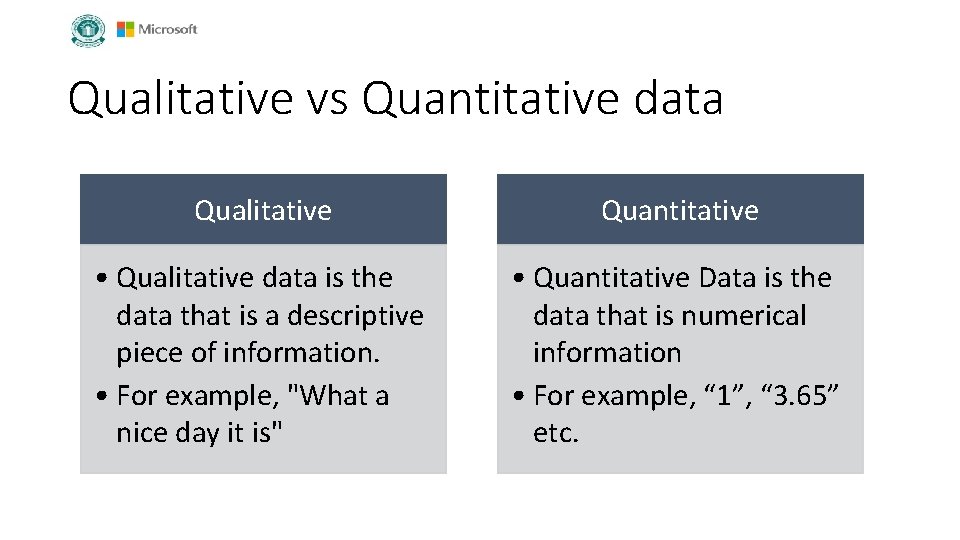
Qualitative vs Quantitative data Qualitative Quantitative • Qualitative data is the data that is a descriptive piece of information. • For example, "What a nice day it is" • Quantitative Data is the data that is numerical information • For example, “ 1”, “ 3. 65” etc.
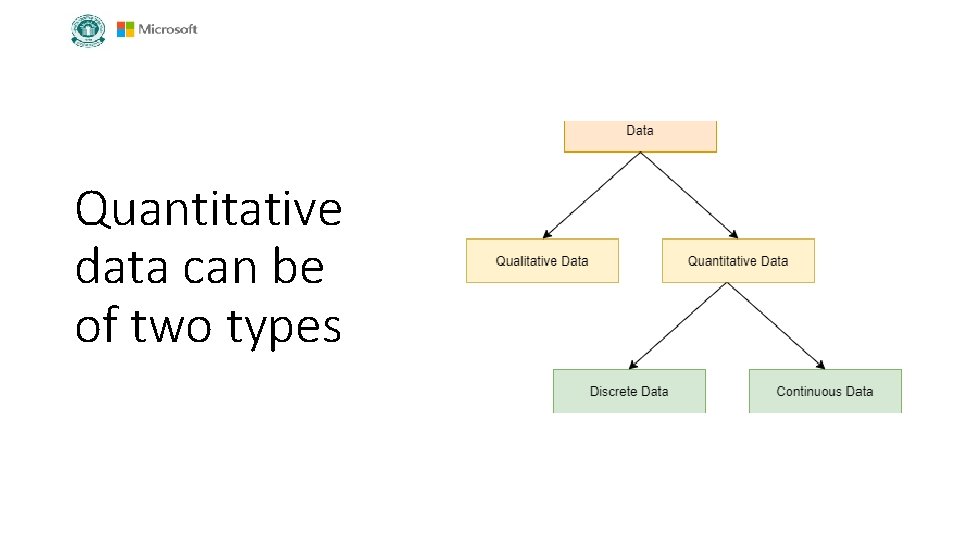
Quantitative data can be of two types
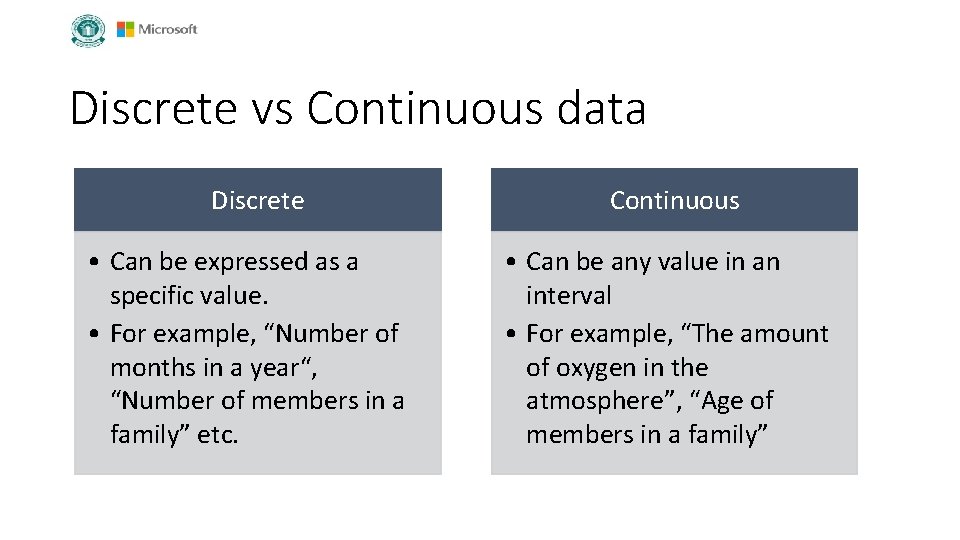
Discrete vs Continuous data Discrete • Can be expressed as a specific value. • For example, “Number of months in a year“, “Number of members in a family” etc. Continuous • Can be any value in an interval • For example, “The amount of oxygen in the atmosphere”, “Age of members in a family”
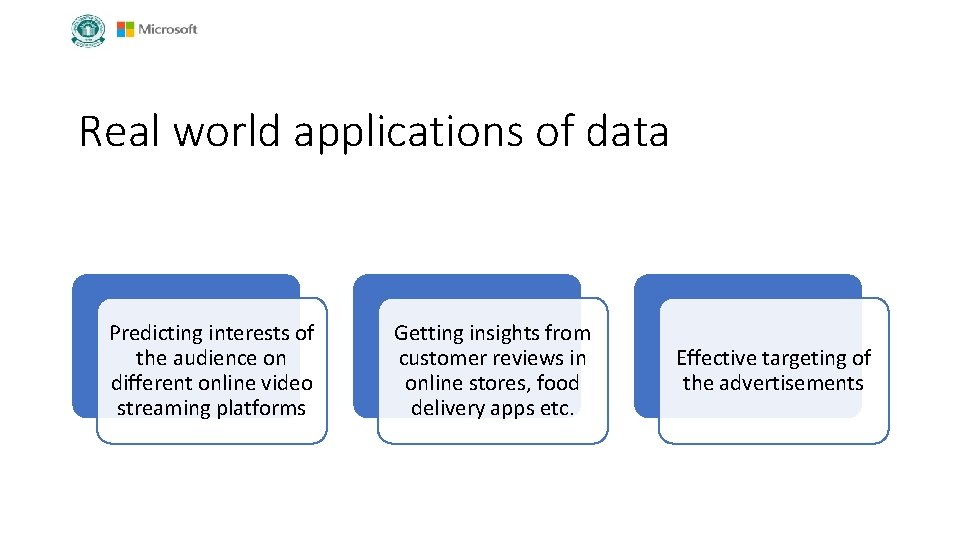
Real world applications of data Predicting interests of the audience on different online video streaming platforms Getting insights from customer reviews in online stores, food delivery apps etc. Effective targeting of the advertisements
Chapter 2: Introduction to data science At the end of this chapter, students will have a brief introduction to data science. They will know: • What is data science? • Careers in data science • What data science helps us achieve
What is data science? Extracting meaningful insights from data is known as data science. Data when investigated and carefully analyzed, provides insights which enriches our daily lives
Careers in data science? Learning data science offers multiple career options. Some of the common job titles for data scientists include • Data Scientist • Business Intelligence Analyst • Data Mining Engineer • Data Architect • Senior Data Scientist
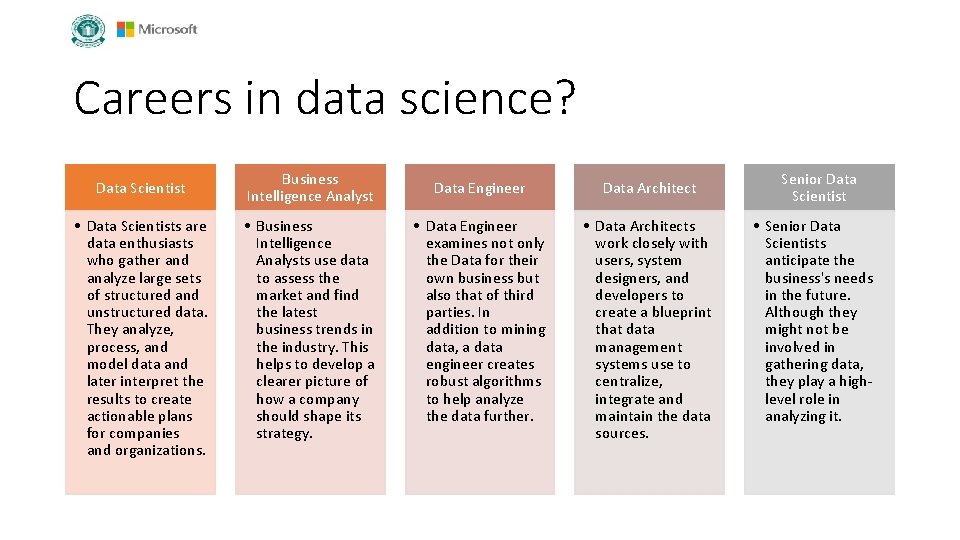
Careers in data science? Data Scientist • Data Scientists are data enthusiasts who gather and analyze large sets of structured and unstructured data. They analyze, process, and model data and later interpret the results to create actionable plans for companies and organizations. Business Intelligence Analyst • Business Intelligence Analysts use data to assess the market and find the latest business trends in the industry. This helps to develop a clearer picture of how a company should shape its strategy. Data Engineer Data Architect • Data Engineer examines not only the Data for their own business but also that of third parties. In addition to mining data, a data engineer creates robust algorithms to help analyze the data further. • Data Architects work closely with users, system designers, and developers to create a blueprint that data management systems use to centralize, integrate and maintain the data sources. Senior Data Scientist • Senior Data Scientists anticipate the business's needs in the future. Although they might not be involved in gathering data, they play a highlevel role in analyzing it.
How data science helps us? Simply stated, data science helps us answer different types of questions from data. Some common questions to ask from data are: • Which class does this belong to - A or B? • Is this an outlier? • What will probably be the value of this variable? • What should be done now?
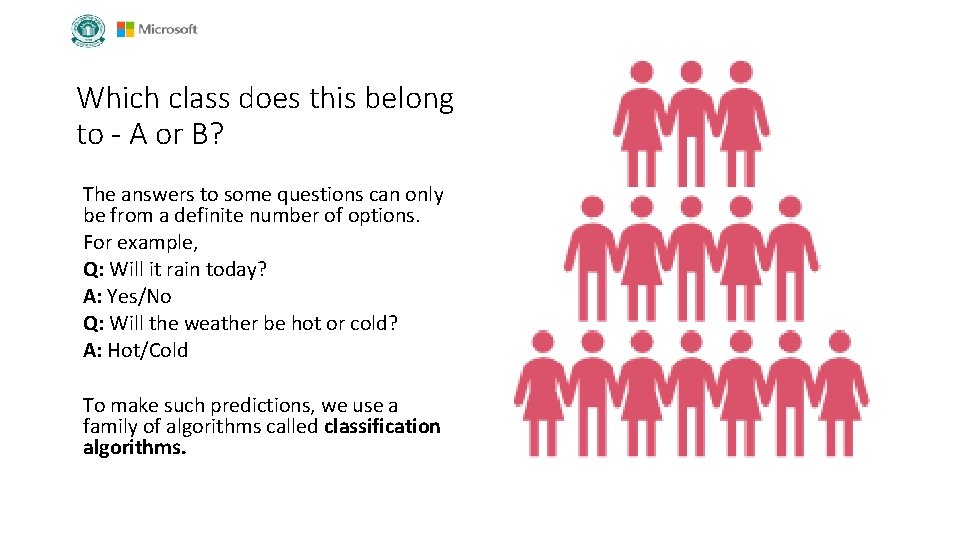
Which class does this belong to - A or B? The answers to some questions can only be from a definite number of options. For example, Q: Will it rain today? A: Yes/No Q: Will the weather be hot or cold? A: Hot/Cold To make such predictions, we use a family of algorithms called classification algorithms.
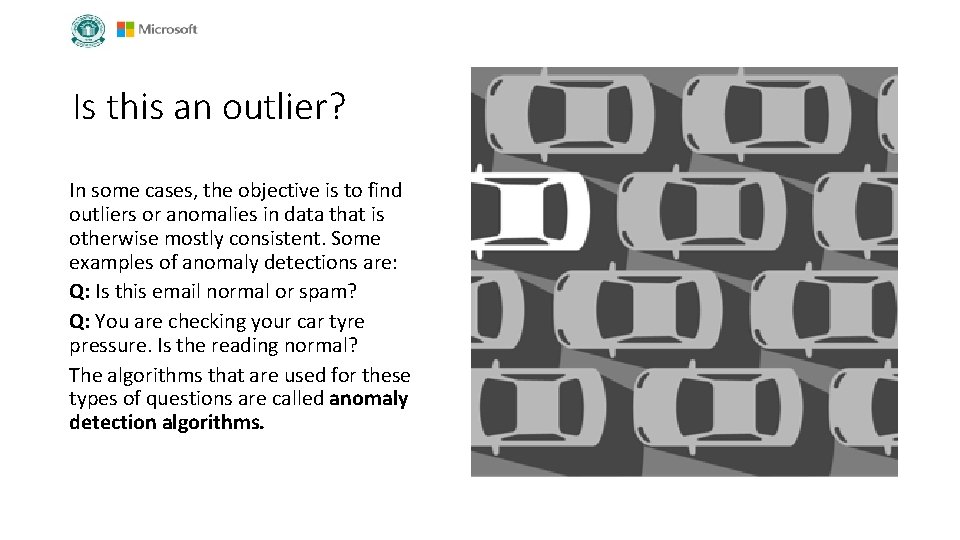
Is this an outlier? In some cases, the objective is to find outliers or anomalies in data that is otherwise mostly consistent. Some examples of anomaly detections are: Q: Is this email normal or spam? Q: You are checking your car tyre pressure. Is the reading normal? The algorithms that are used for these types of questions are called anomaly detection algorithms.
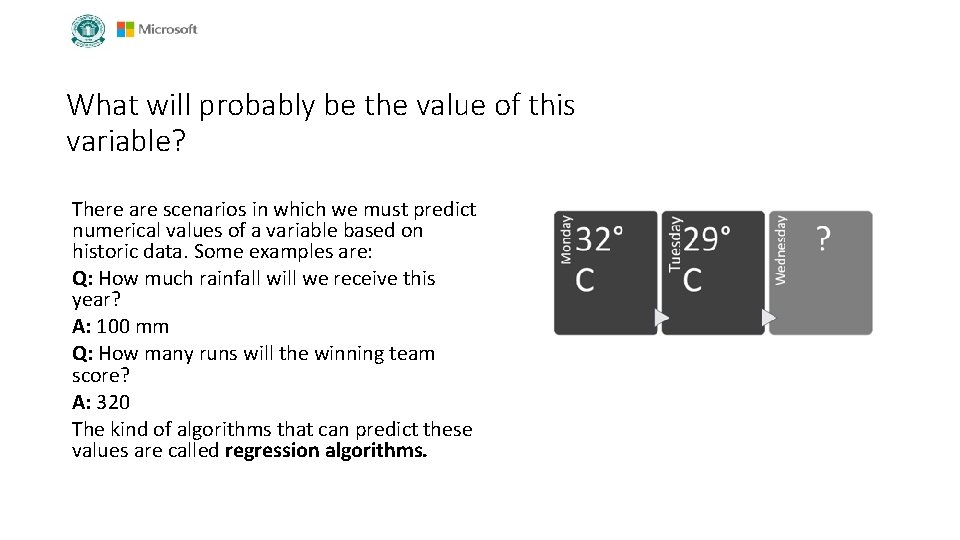
What will probably be the value of this variable? There are scenarios in which we must predict numerical values of a variable based on historic data. Some examples are: Q: How much rainfall will we receive this year? A: 100 mm Q: How many runs will the winning team score? A: 320 The kind of algorithms that can predict these values are called regression algorithms.
What should be done now? This question usually solves the problems of autonomous robots or self-driving cars that need to make decisions based on changes in external factors. Machine learning helps to solve such problems with the help of reinforcement learning.
Chapter 3: Data visualization At the end of this chapter, students will have a brief introduction to data visualizations. They will know: • What is data visualization? • Examples of data visualization • The importance of visualization • Collecting relevant data • Asking the right question • Predict an answer
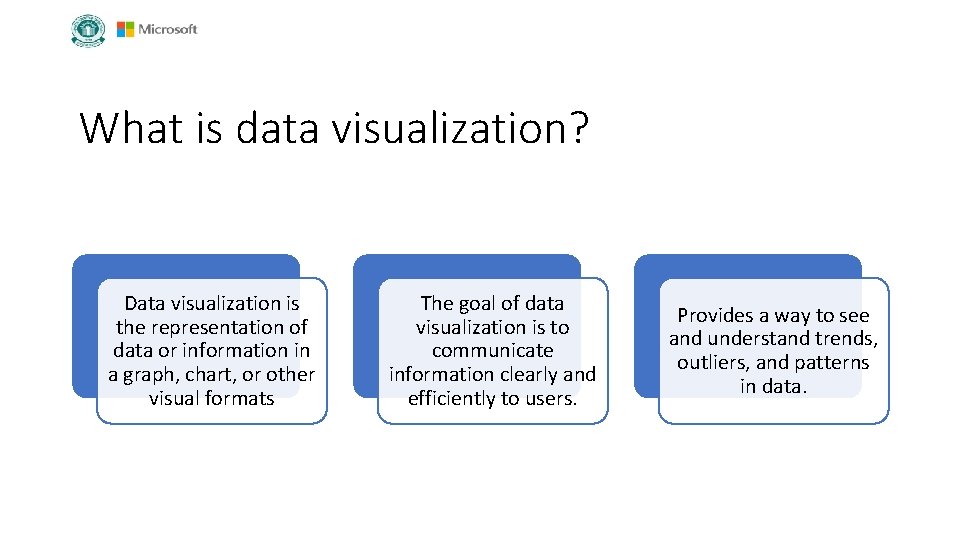
What is data visualization? Data visualization is the representation of data or information in a graph, chart, or other visual formats The goal of data visualization is to communicate information clearly and efficiently to users. Provides a way to see and understand trends, outliers, and patterns in data.
Common types of data visualizations? Common types of data visualizations are: • Charts • Graphs • Tables • Maps • Histograms
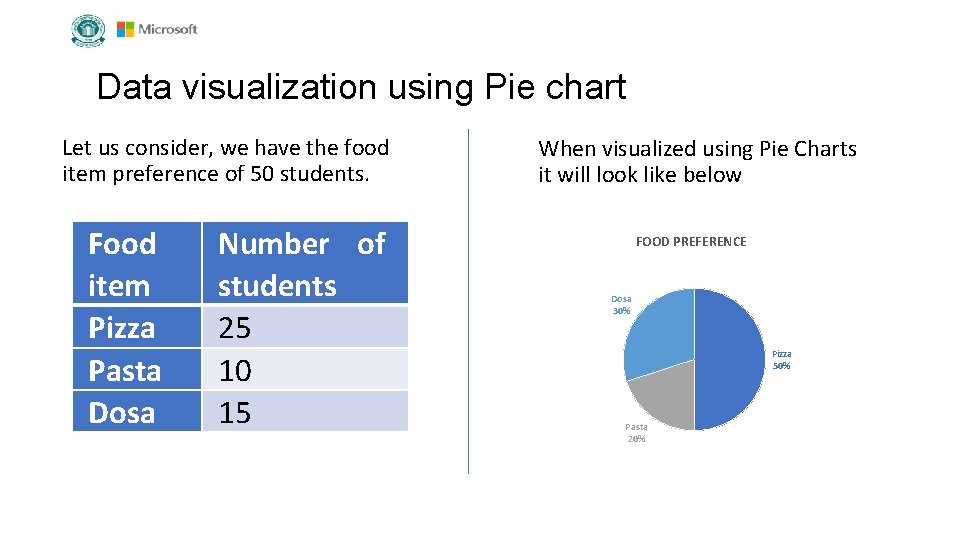
Data visualization using Pie chart Let us consider, we have the food item preference of 50 students. Food item Pizza Pasta Dosa Number of students 25 10 15 When visualized using Pie Charts it will look like below FOOD PREFERENCE Dosa 30% Pizza 50% Pasta 20%
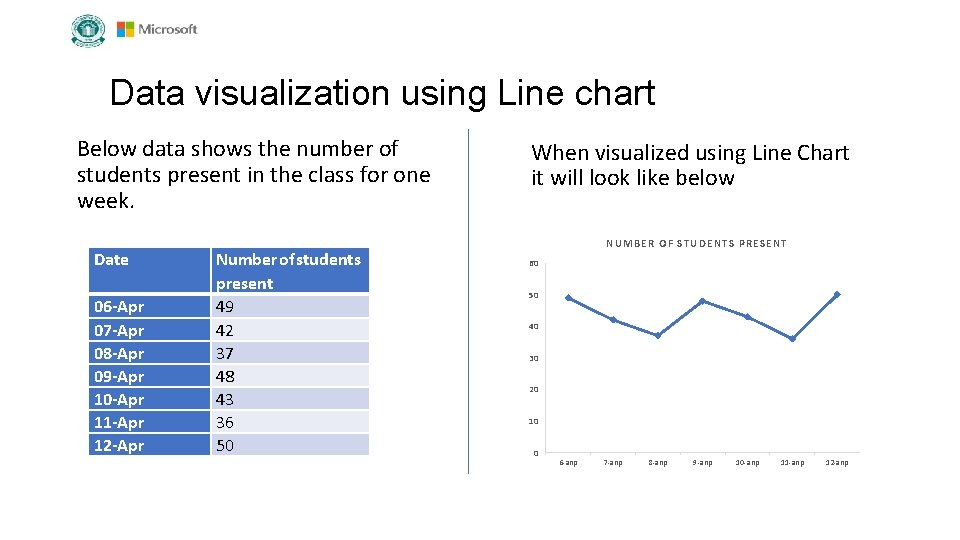
Data visualization using Line chart Below data shows the number of students present in the class for one week. Date 06 -Apr 07 -Apr 08 -Apr 09 -Apr 10 -Apr 11 -Apr 12 -Apr Number of students present 49 42 37 48 43 36 50 When visualized using Line Chart it will look like below NUMBER OF STUDENTS PRESENT 60 50 40 30 20 10 0 6 -апр 7 -апр 8 -апр 9 -апр 10 -апр 11 -апр 12 -апр
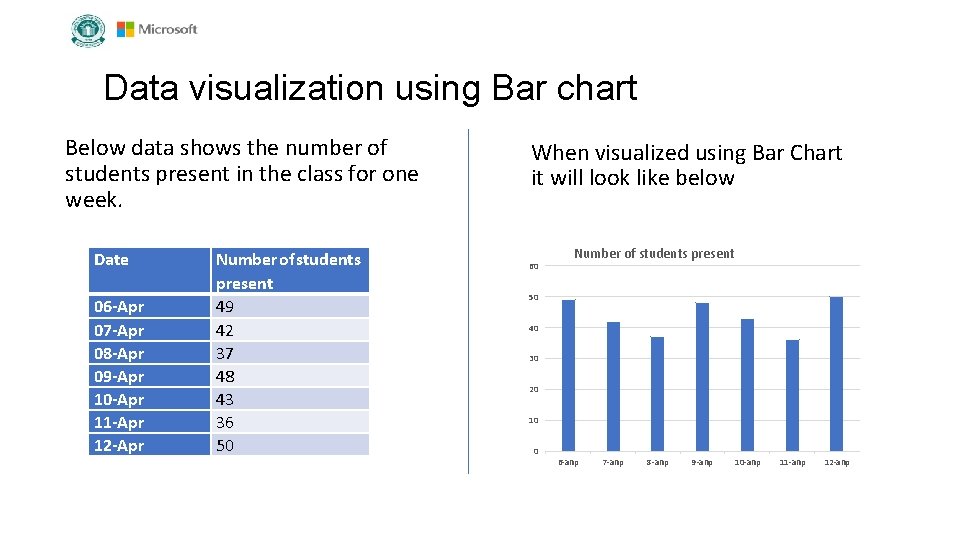
Data visualization using Bar chart Below data shows the number of students present in the class for one week. Date 06 -Apr 07 -Apr 08 -Apr 09 -Apr 10 -Apr 11 -Apr 12 -Apr Number of students present 49 42 37 48 43 36 50 When visualized using Bar Chart it will look like below 60 Number of students present 50 40 30 20 10 0 6 -апр 7 -апр 8 -апр 9 -апр 10 -апр 11 -апр 12 -апр
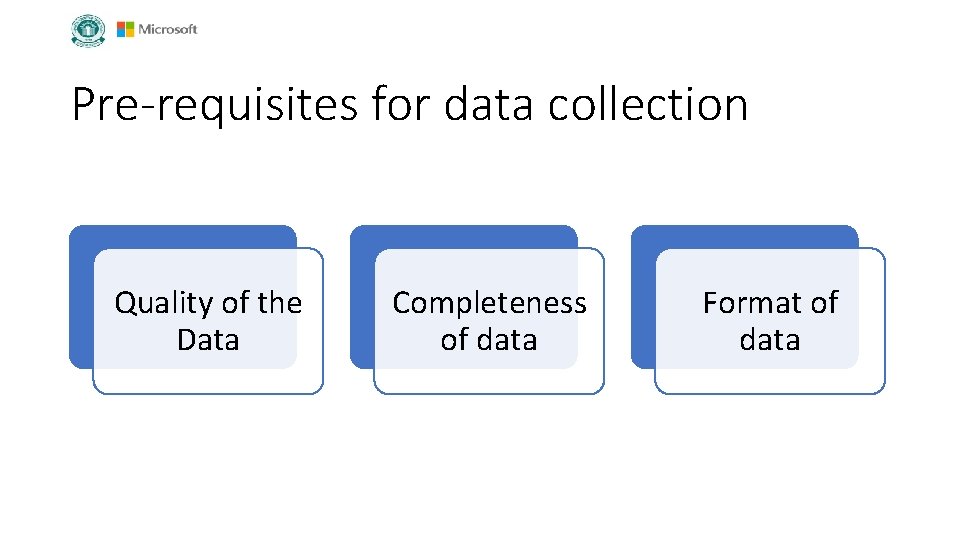
Pre-requisites for data collection Quality of the Data Completeness of data Format of data
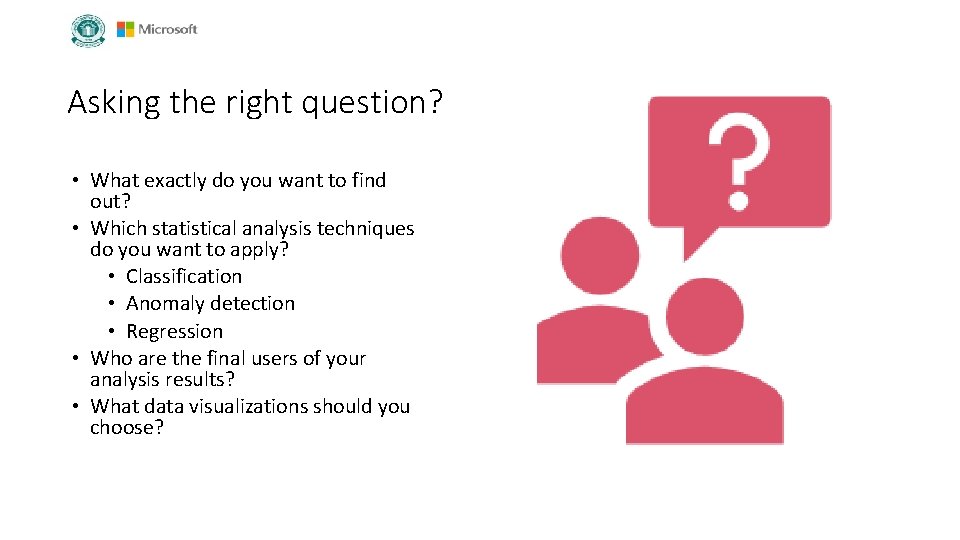
Asking the right question? • What exactly do you want to find out? • Which statistical analysis techniques do you want to apply? • Classification • Anomaly detection • Regression • Who are the final users of your analysis results? • What data visualizations should you choose?
Chapter 4: Data science and AI At the end of this chapter, students will have a brief introduction applications of data science in AI. They will know • Applications of data science • Analytics on text data • Analytics on image data • Overview of AI
Some applications of data science Digital Advertisements Speech Recognition
What is text analytics? Text analytics can be defined as the process of collecting unstructured text from various sources and analyzing and extracting relevant information from it. It can also be used for transforming it into structured information that can then be used in various other ways.
Analytics on image data Image recognition can be described as a process by which we can process images for identifying people, patterns, logos, objects, or places.
Overview of AI Artificial Intelligence is defined as the science and engineering of making intelligent machines. AI is a branch of Computer Science which deals with the research and design of intelligent systems that can take inputs from their environment and takes actions based on it as a human being would.
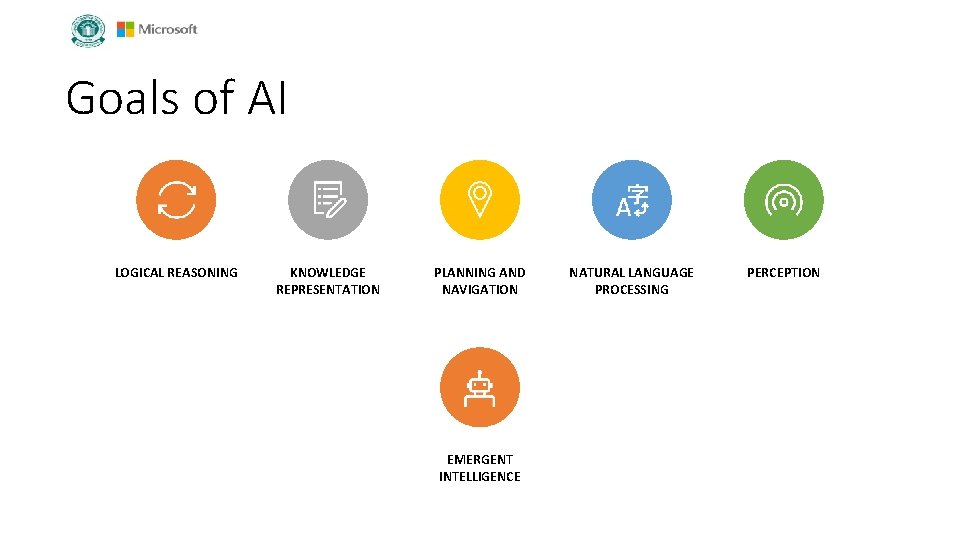
Goals of AI LOGICAL REASONING KNOWLEDGE REPRESENTATION PLANNING AND NAVIGATION EMERGENT INTELLIGENCE NATURAL LANGUAGE PROCESSING PERCEPTION
Thank You