
GRADE 9 Unit1 SEXUAL REPRODUCTION WHEN EVER YOU







- Slides: 86
GRADE 9 Unit#1: SEXUAL REPRODUCTION
WHEN EVER YOU SEE THIS: COPY!!!
RULES FOR HEALTH CLASS!! p Laughing is ok, sometimes this can be embarrassing for you. p Please respect your peers. Any comments made in class deserves your attention and your respect. p If you have a question or comment, please raise your hand. No hand, no speak!
p You must use the correct scientific terms for all reproductive system organs. p No personal stories!
Sexually Transmitted Diseases Definition: § § § An infectious disease that has been passed on through sexual contact. Examples: Chlamydia Genital Herpes Gonorrhoea Hiv/Aids Human Papillomavirus (HPV) Syphilis
WHAT CAN YOU DO? Following these suggestions may help you to protect yourself from contracting an STI: p p p Learn about safer sex methods; Make informed decisions and talk to your partner(s) about their STI status and the use of protection; Use condoms consistently and correctly; Get tested for STIs if you are sexually active; and And if you are diagnosed and treated for an STI, be sure to follow your health care provider's treatment and follow-up recommendations. You can easily be reinfected if your partner is not treated as well.
Assignment #1: Computer Lab p p p You will get into groups of 4 You will be assigned a sexual transmitted disease topic. Your job is to research the topic while fulfilling the following expectations: A) Answer the following questions: (on next page) n B) Each group will present their answers to the class (teacher evaluation) n C) Each group will print out (***need teacher permission first***) their STD answers for teacher evaluation n
Questions: p p p Define your STD. (What exactly does this infection do? ) State 2 -3 different statistics you have found about this STD What are the symptoms of this STD? (men and women) Are there any underlying health risks associated with this disease? How can people minimize the risk of contracting this disease? State 5 resources where people can acquire information on your STD topic
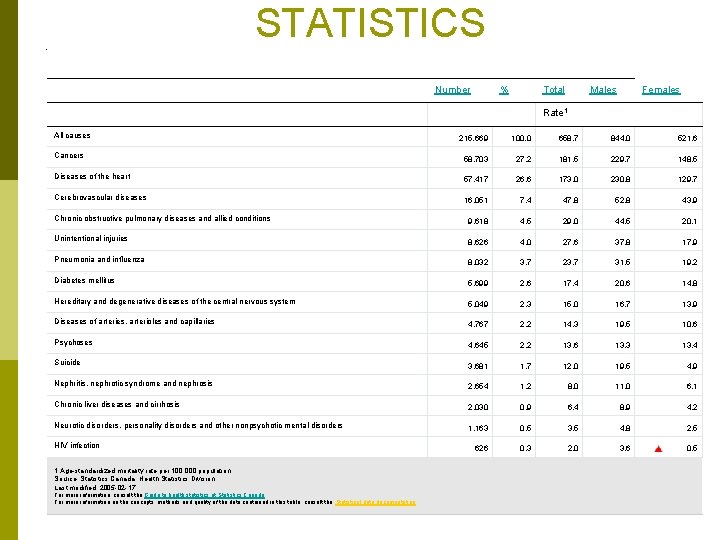
STATISTICS Number All causes % Total Males Females Rate 1 215, 669 100. 0 658. 7 844. 0 521. 6 Cancers 58, 703 27. 2 181. 5 229. 7 148. 5 Diseases of the heart 57, 417 26. 6 173. 0 230. 8 129. 7 Cerebrovascular diseases 16, 051 7. 4 47. 8 52. 8 43. 9 Chronic obstructive pulmonary diseases and allied conditions 9, 618 4. 5 29. 0 44. 5 20. 1 Unintentional injuries 8, 626 4. 0 27. 6 37. 8 17. 9 Pneumonia and influenza 8, 032 3. 7 23. 7 31. 5 19. 2 Diabetes mellitus 5, 699 2. 6 17. 4 20. 6 14. 8 Hereditary and degenerative diseases of the central nervous system 5, 049 2. 3 15. 0 16. 7 13. 9 Diseases of arteries, arterioles and capillaries 4, 767 2. 2 14. 3 19. 5 10. 6 Psychoses 4, 645 2. 2 13. 6 13. 3 13. 4 Suicide 3, 681 1. 7 12. 0 19. 5 4. 9 2, 654 1. 2 8. 0 11. 0 6. 1 2, 030 0. 9 Important Notices 6. 4 8. 9 4. 2 0. 5 3. 5 4. 8 2. 5 2. 0 3. 6 0. 5 Nephritis, nephrotic syndrome and nephrosis Chronic liver diseases and cirrhosis Home | Français Date modified: 2005 -02 -17 Neurotic disorders, personality disorders and other nonpsychotic mental disorders HIV infection 1 Age-standardized mortality rate per 100, 000 population. Source: Statistics Canada, Health Statistics Division. Last modified: 2005 -02 -17. For more information, consult the Guide to health statistics at Statistics Canada. For more information on the concepts, methods and quality of the data contained in this table, consult the Statistical data documentation. 1, 163 626 0. 3 Top of page
MORE STATISTICS!!! An estimated 12% of boys and 13% of girls have had sexual intercourse by ages 14 or 15, according to a new study based on data that the teenagers reported to a national survey. p According to CCHS data, 25% of 15 - to 24 -year-olds who had sex at least once reported having been diagnosed with a STD. The true figure is likely higher than reported because of a possible lack of symptoms or awareness. p
WHAT’S YOUR SEX IQ?
SEXUALITY VS. SEX What's the difference?
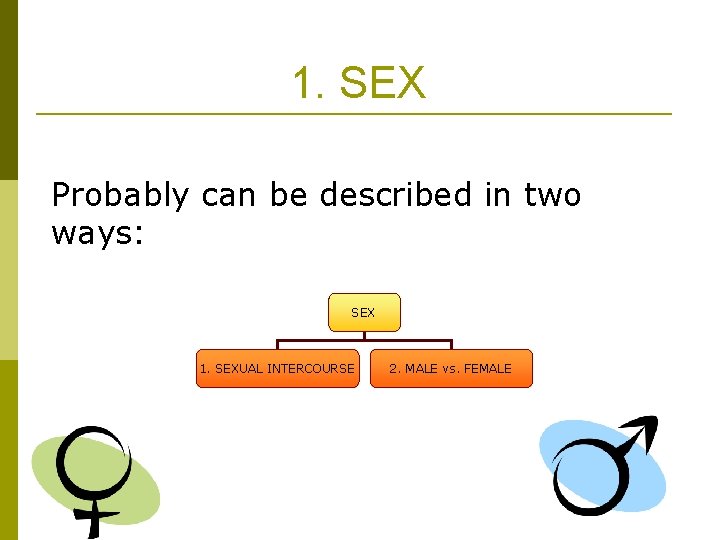
1. SEX Probably can be described in two ways: SEX 1. SEXUAL INTERCOURSE 2. MALE vs. FEMALE
2. SEXUALITY SEXUALTIY IS THE TOTAL EXPRESSION OF AN INDIVIDUAL’S FEMALENESS OR MALENESS THROUGH THAT PERSON’S FEELINGS, BELIEFS, ATTITUDES, VALUES AND BEHAVIOURS. It is a complex expression of the whole person. Sexuality reinforces and affirms the individual as a human being and allows the role of female or male to develop. One’s sexuality is the integration of a multitude of personal characteristics and factors.
2. SEXUALITY (Cont’d) Ø Is an integral part of our entire being from the time of birth. Ø It includes our physical, physiological, psychological, social, emotional, cultural, spiritual and ethical dimensions of sex and gender.
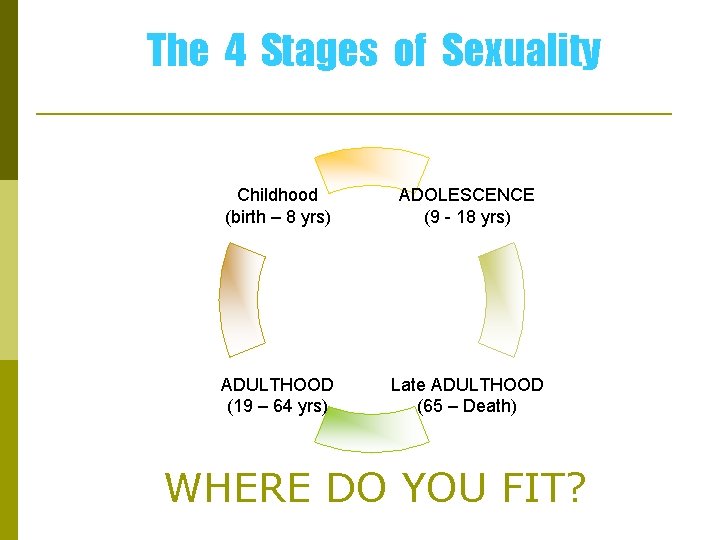
The 4 Stages of Sexuality Childhood (birth – 8 yrs) ADOLESCENCE (9 - 18 yrs) ADULTHOOD (19 – 64 yrs) Late ADULTHOOD (65 – Death) WHERE DO YOU FIT?
Adolescence (age 9 -18 yrs)
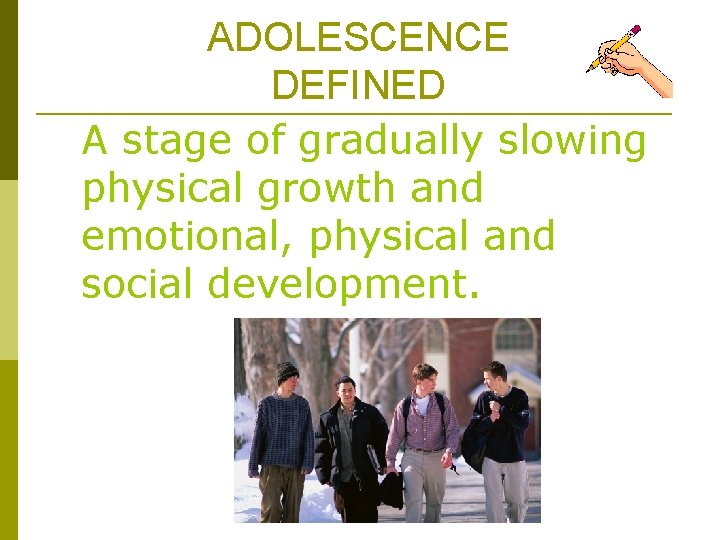
ADOLESCENCE DEFINED A stage of gradually slowing physical growth and emotional, physical and social development.
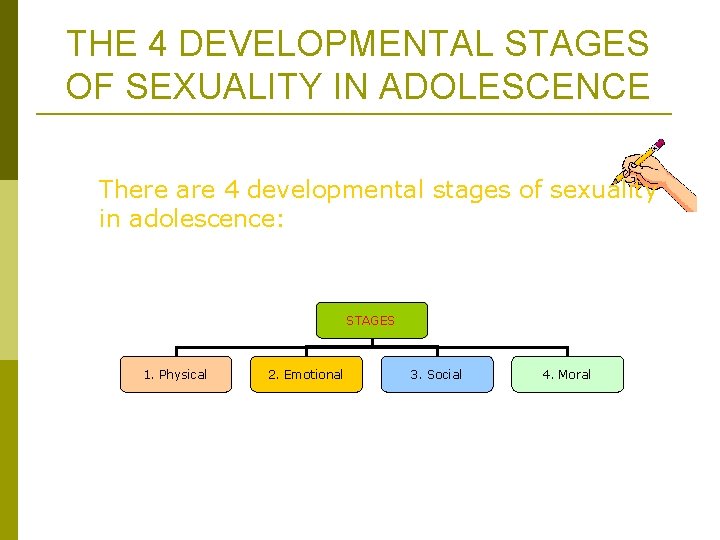
THE 4 DEVELOPMENTAL STAGES OF SEXUALITY IN ADOLESCENCE There are 4 developmental stages of sexuality in adolescence: STAGES 1. Physical 2. Emotional 3. Social 4. Moral
1. PHYSICAL p p p Puberty begins (growth of genitals, breasts, menstruation or sperm production Possibility of body exploration with others Possibility of sexual intercourse and pregnancy
2. EMOTIONAL p p Hormonal changes (emotional roller coaster) Strong need of independence Inability to communicate true feelings Feelings of infatuation often mistaken as love
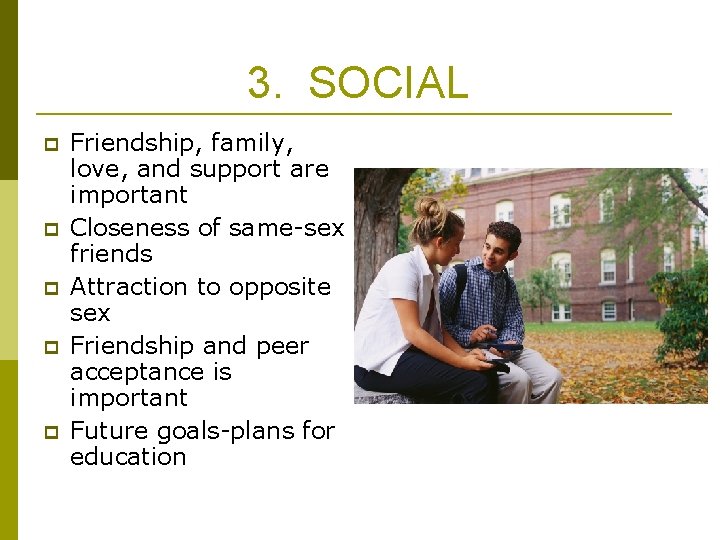
3. SOCIAL p p p Friendship, family, love, and support are important Closeness of same-sex friends Attraction to opposite sex Friendship and peer acceptance is important Future goals-plans for education
4. MORAL p p p Decision-making skills develop Ability to think logically and reason Further development of moral conscience through questioning authority and personal beliefs
PUBERTY DEFINED v Is the stage of development, which introduces adolescence. It is a time of transition or change.
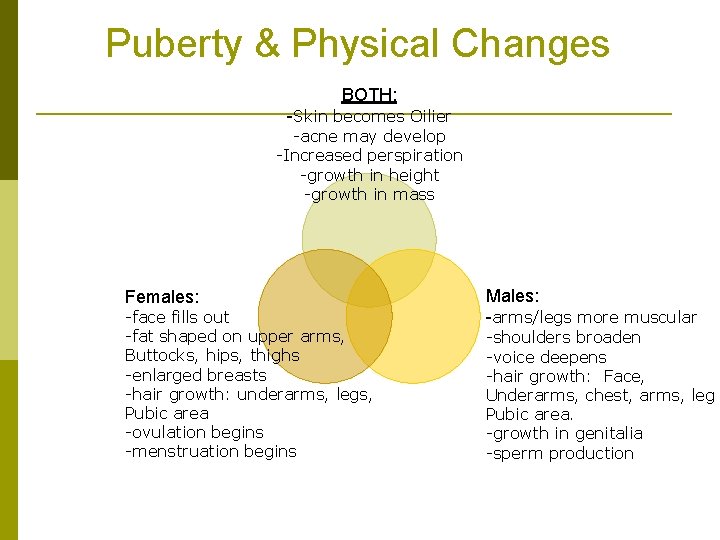
Puberty & Physical Changes BOTH: -Skin becomes Oilier -acne may develop -Increased perspiration -growth in height -growth in mass Females: -face fills out -fat shaped on upper arms, Buttocks, hips, thighs -enlarged breasts -hair growth: underarms, legs, Pubic area -ovulation begins -menstruation begins Males: -arms/legs more muscular -shoulders broaden -voice deepens -hair growth: Face, Underarms, chest, arms, leg Pubic area. -growth in genitalia -sperm production
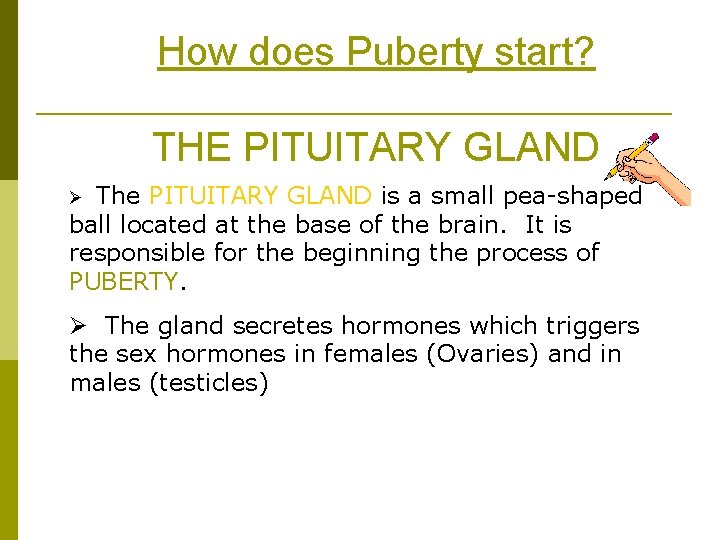
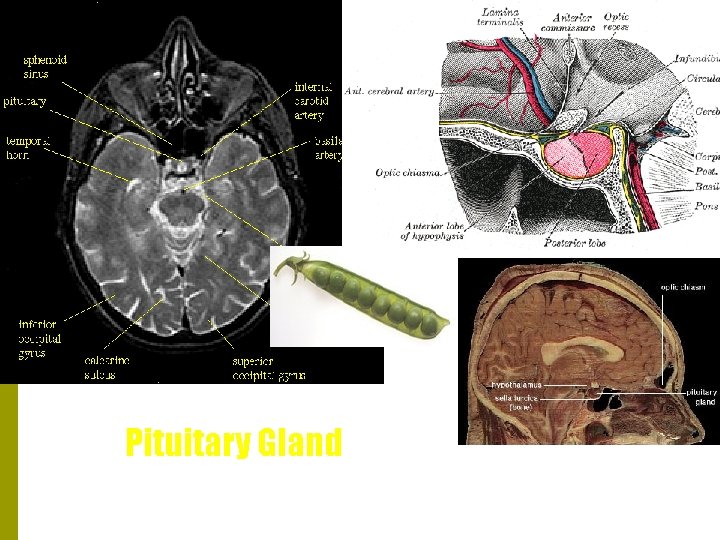
How does Puberty start? THE PITUITARY GLAND Ø The PITUITARY GLAND is a small pea-shaped ball located at the base of the brain. It is responsible for the beginning the process of PUBERTY. Ø The gland secretes hormones which triggers the sex hormones in females (Ovaries) and in males (testicles)
Pituitary Gland
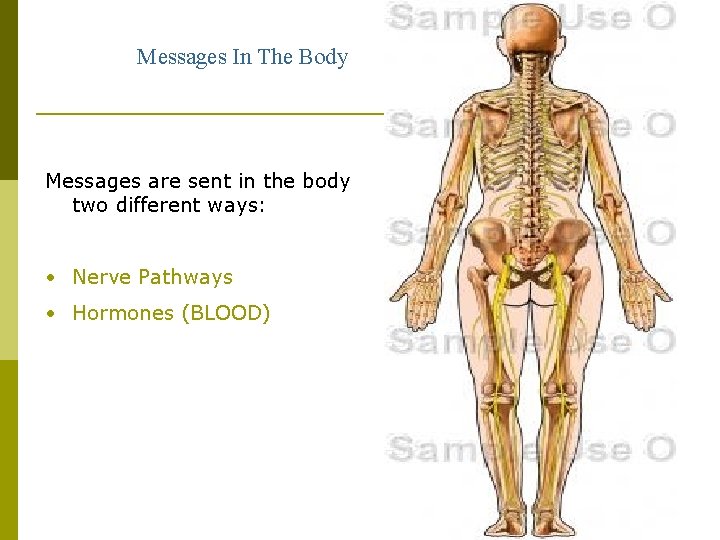
Messages In The Body Messages are sent in the body two different ways: • Nerve Pathways • Hormones (BLOOD)
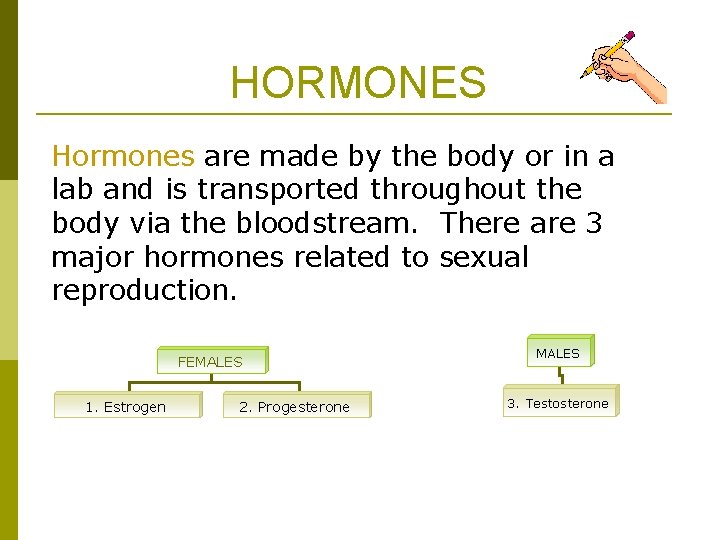
HORMONES Hormones are made by the body or in a lab and is transported throughout the body via the bloodstream. There are 3 major hormones related to sexual reproduction. FEMALES 1. Estrogen 2. Progesterone MALES 3. Testosterone
Estrogen/Progesteron q Promotes sexual development and helps prepare the uterus for implantation of a fertilized egg q. Responsible for the creation of Ova
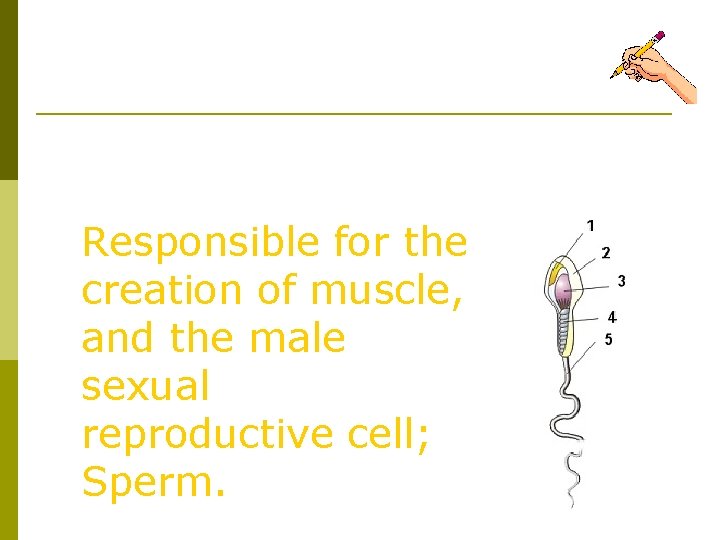
Testosterone Responsible for the creation of muscle, and the male sexual reproductive cell; Sperm.
Intimacy and Sexuality A Letter to Catholic Secondary Students in Ontario From the Roman Catholic Bishops of Ontario
Intimacy and Sexuality Questions 1. What is being promoted as ‘responsible’ behavior in today’s society? 2. Why is a strong friendship so valuable to people? 3. How would you define intimacy? 4. How would you define sexuality? 5. What is the Christian vision of sexuality and marriage? 6. How would you define chastity?
MALE REPRODUCTIVE SYSTEM Definitions:
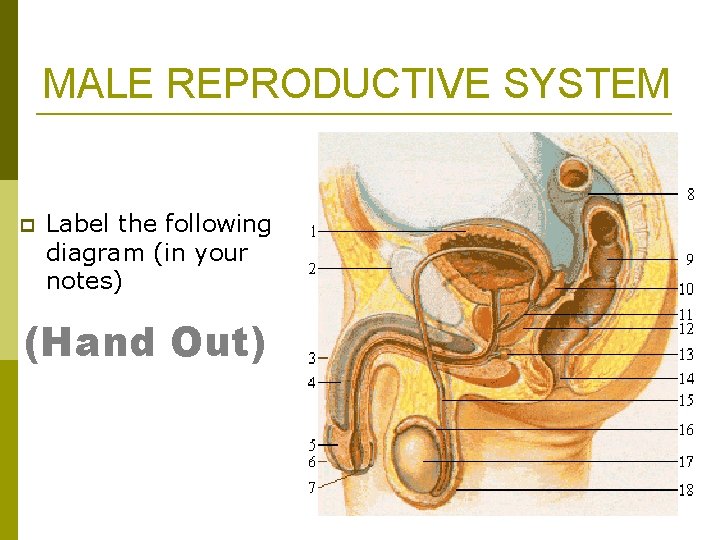
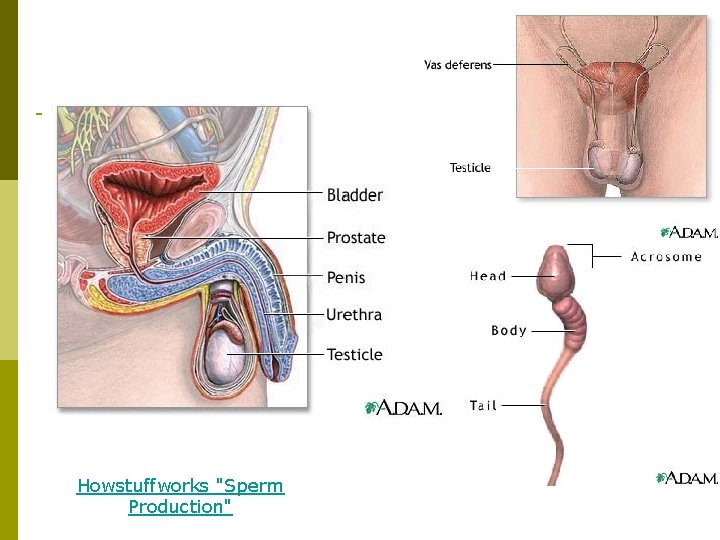
Penis: Contains urethra, becomes erect to enable sexual intercourse p Ejaculation: urine is sealed off, secretions from prostate gland, seminal vesicles are mixed and expelled. (about one quarter ounce of semen) p Sperm: male reproductive cell, about 400 million in each ejaculation p Erection: Small reservoirs in penis fill up with blood due to nervous stimulation p Impotance: male sexual inadequacy, no erection, premature ejaculation p
p Testicles: two glands that manufacture sperm p Vas deferens: 2 carry sperm to be stored in the seminal vesicles p Urethra: Tube that carries both urine and semen in the male; urine in the female p Scrotum: external sack holding the testicles
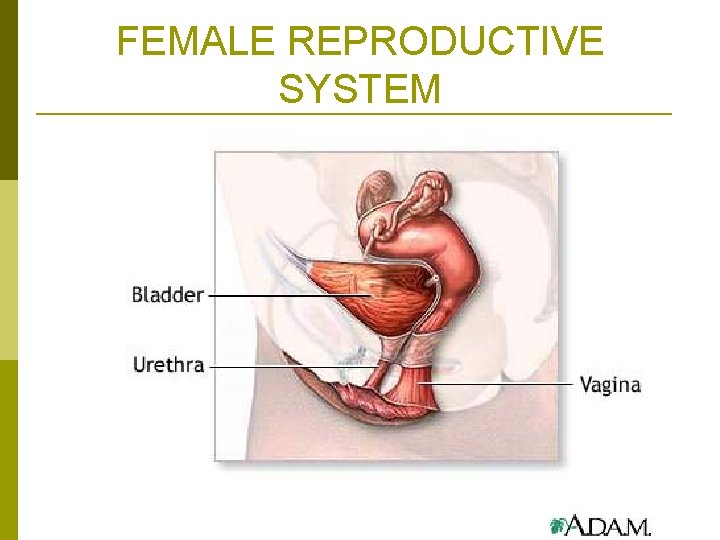
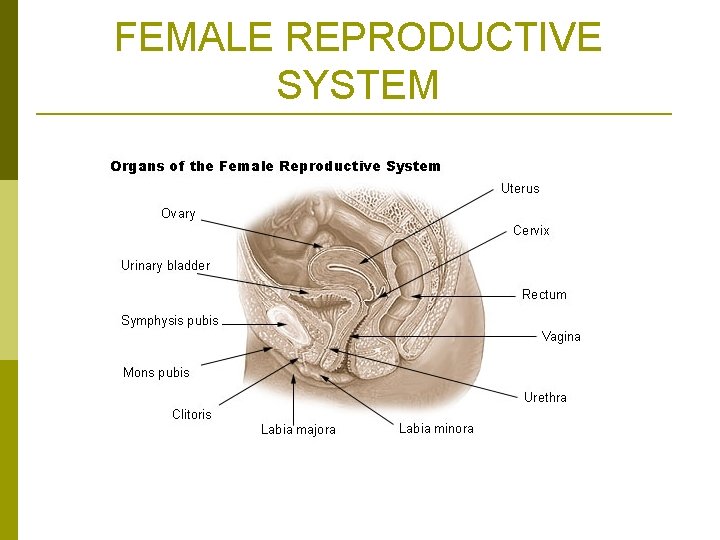
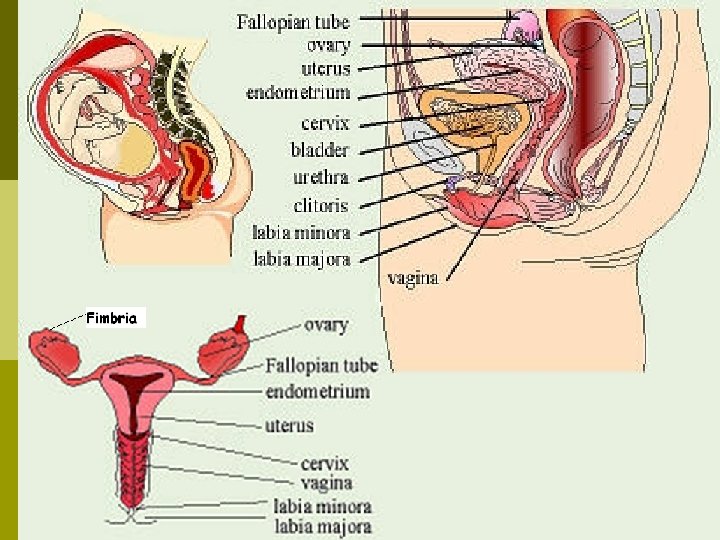
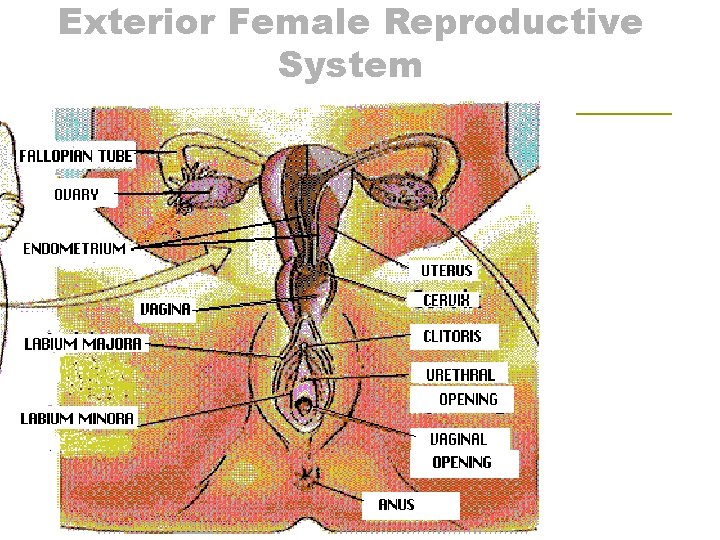
Terms p Prostate Gland: Supplies a fluid in which the sperm swim p Clitoris: At front of vagina; center of sexual stimulation for females p Hymen: membrane at the opening of the vagina p Vagina: Cavity where penis is placed during intercourse; also serves as birth canal.
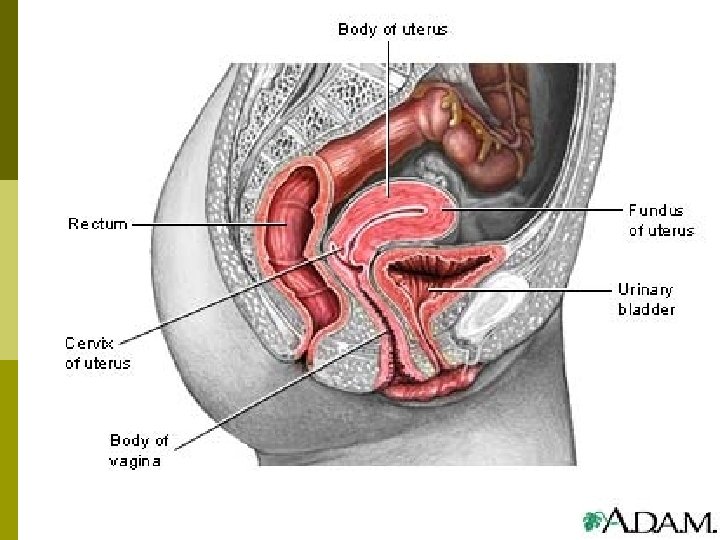
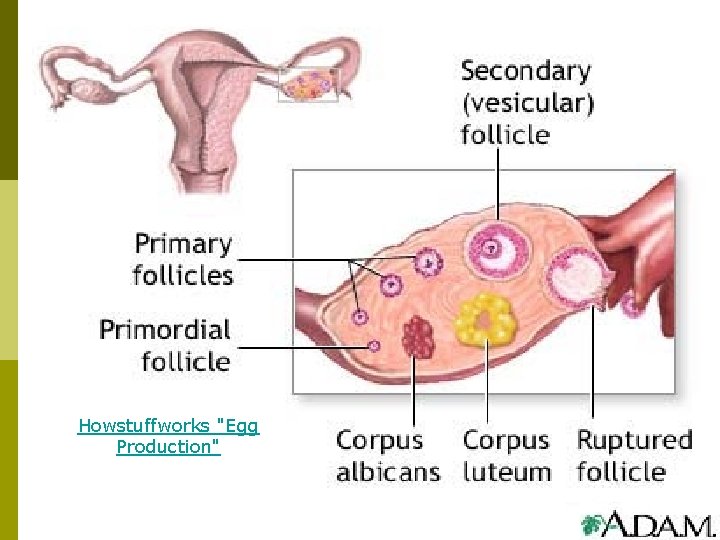
p Uterus: thick walled womb where baby develops p Ovaries: 2 glands that produce female reproductive eggs called OVA p Fallopian Tubes: 2 receive the ova and pass them to the uterus p Menstruation: discharge of the lining of the uterus. App. every 28 days
p Fimbra: lacy fingers at the end of the fallopian tubes. p Cervix: lower end of the uterus; site of cancer
MALE REPRODUCTIVE SYSTEM p Label the following diagram (in your notes) (Hand Out)
MALE REPRODUCTIVE SYSTEM http: //kidshealth. org/parent/medical/body_basics/male_reproductive. html
Male Reproductive Organs Howstuffworks "Sperm Production"
FEMALE REPRODUCTIVE SYSTEM INTERNAL EXTERNAL
FEMALE REPRODUCTIVE SYSTEM (INTERNAL) LABEL DIAGRAM
FEMALE REPRODUCTIVE SYSTEM
FEMALE REPRODUCTIVE SYSTEM
Howstuffworks "Egg Production"
FEMALE REPRODUCTIVE SYSTEM (EXTERNAL) p LABEL DIAGRAM
Exterior Female Reproductive System
PREGNANCY AND CHILD BIRTH
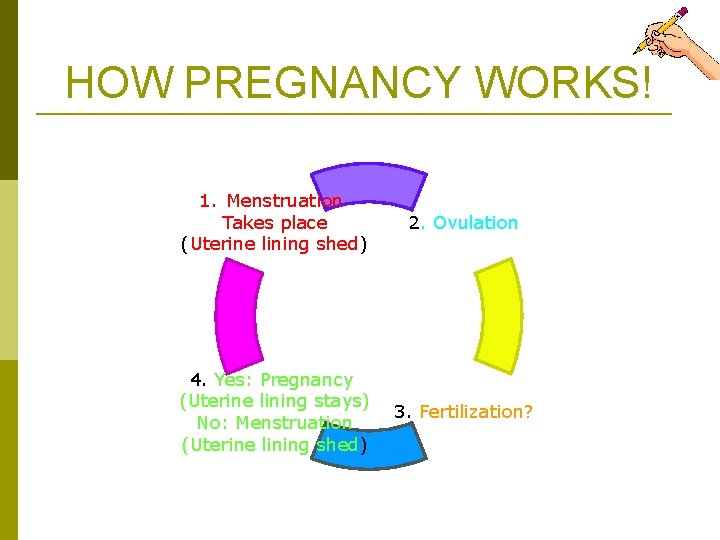
HOW PREGNANCY WORKS! 1. Menstruation Takes place (Uterine lining shed) 2. Ovulation 4. Yes: Pregnancy (Uterine lining stays) No: Menstruation (Uterine lining shed) 3. Fertilization?
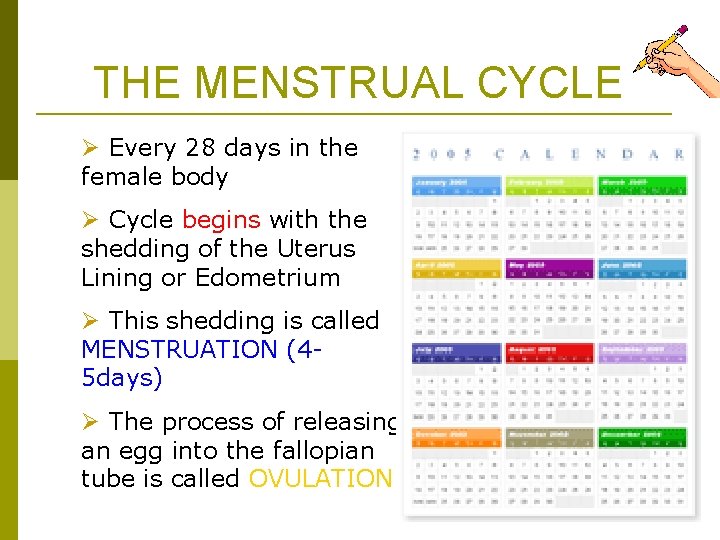
THE MENSTRUAL CYCLE Ø Every 28 days in the female body Ø Cycle begins with the shedding of the Uterus Lining or Edometrium Ø This shedding is called MENSTRUATION (45 days) Ø The process of releasing an egg into the fallopian tube is called OVULATION
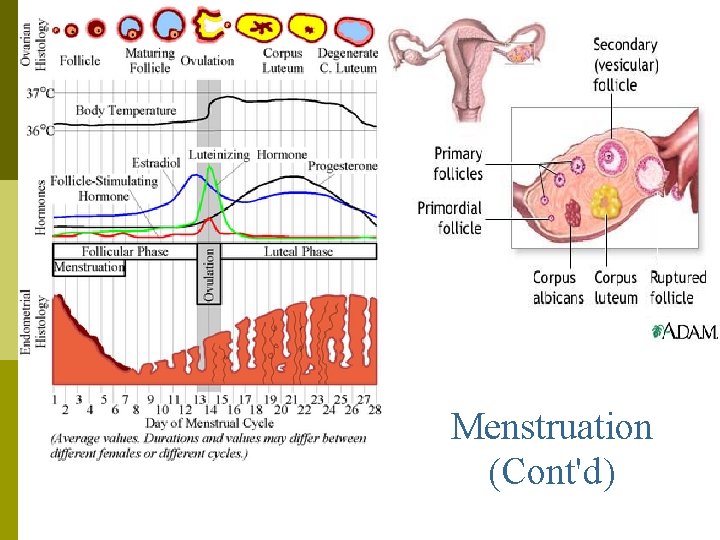
THE MENSTRUAL CYCLE (See Act. 4) 30 day cycle A) Cycle begins (days 1 -5) D) Lining becomes thicker as egg travels towards uterus (days 15 -30) B) Uterus lining very thin (days 69) C) Uterus lining begins thickening & ovulation takes place (days 10 -14)
Menstruation (con't) 1. DURING MENSRUATION (Days 1 -5): Menstruation occurs and the lining of the uterus, with a small amount of blood, leaves the body. At this time another egg is maturing in the ovary. 2. AFTER MENSRUATION (Days 6 -15): The lining of the uterus repairs itself and once again prepares for a fertilized egg. Around days 13 -15 and egg is released from an ovary. This is called OVULATION. 3. BEFORE MENSTRUATION (Days 16 -30): If the egg is fertilized by the male sperm cell, it embeds itself in the wall of the uterus. If the egg is not fertilized, the blood vessels in the wall of the uterus shrink & break down. Menstruation begins again.
Menstruation (Cont'd)
Am I Normal? The question most frequently asked during the profound changes that take place during puberty is, “Am I Normal? ” p Complete the handout
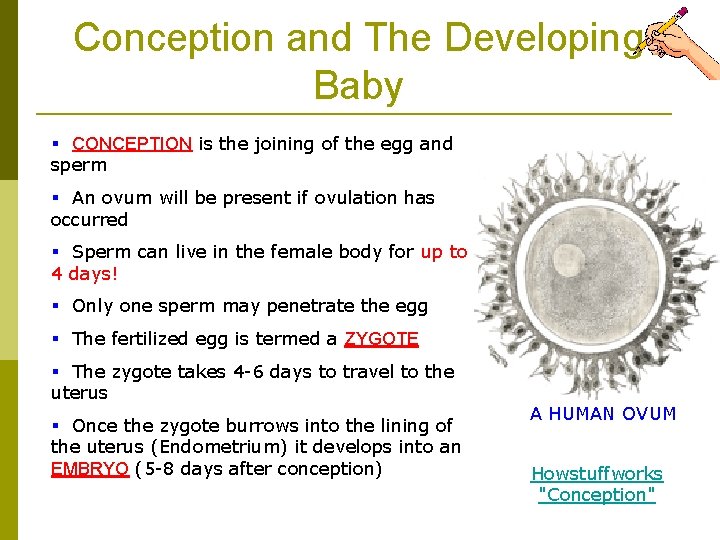
Conception and The Developing Baby § CONCEPTION is the joining of the egg and sperm § An ovum will be present if ovulation has occurred § Sperm can live in the female body for up to 4 days! § Only one sperm may penetrate the egg § The fertilized egg is termed a ZYGOTE § The zygote takes 4 -6 days to travel to the uterus § Once the zygote burrows into the lining of the uterus (Endometrium) it develops into an EMBRYO (5 -8 days after conception) A HUMAN OVUM Howstuffworks "Conception"
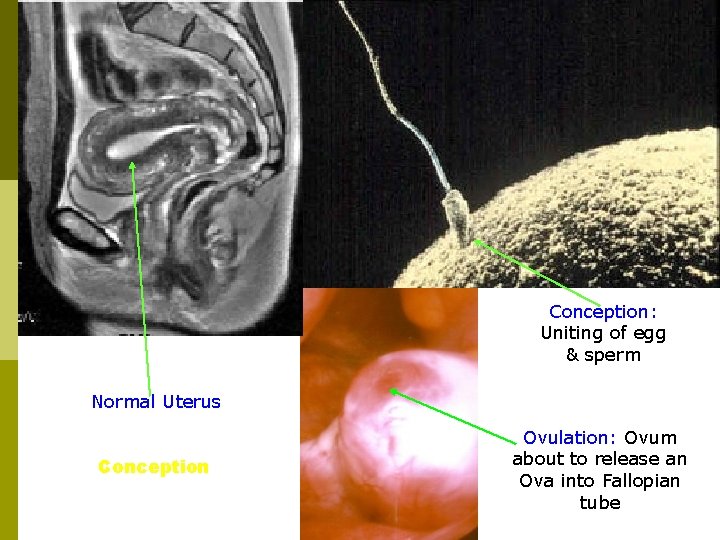
Conception: Uniting of egg & sperm Normal Uterus Conception Ovulation: Ovum about to release an Ova into Fallopian tube
FERTILIZATION (Stats) p p p During sexual intercourse, semen is ejaculated in the vagina. About 400 million sperm race to fertilize the ova (egg) The distance up the vagina, through the uterus, and along the fallopian tube is only 6 inches (15 cm). Sperm are microscopic in size (500 lying heat to tail approximately measure only 1 inch tall (2. 5 cm) The trip = equivalent of sprinting 4 miles (6 km) 1 hr to make journey
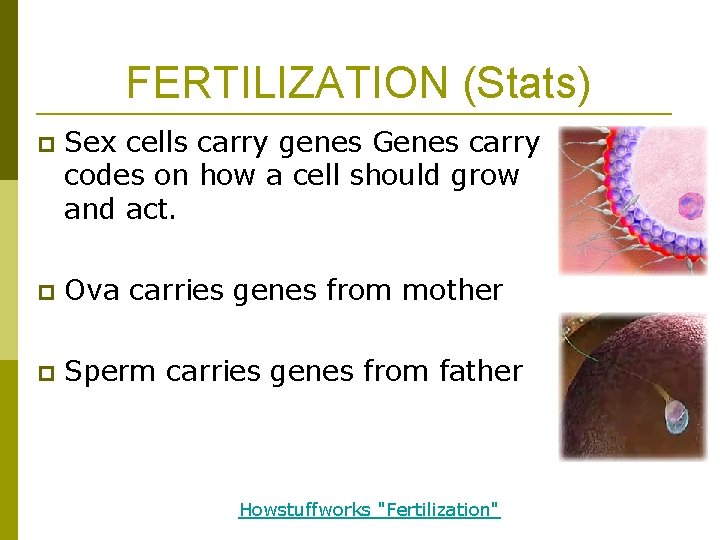
FERTILIZATION (Stats) p Sex cells carry genes Genes carry codes on how a cell should grow and act. p Ova carries genes from mother p Sperm carries genes from father Howstuffworks "Fertilization"
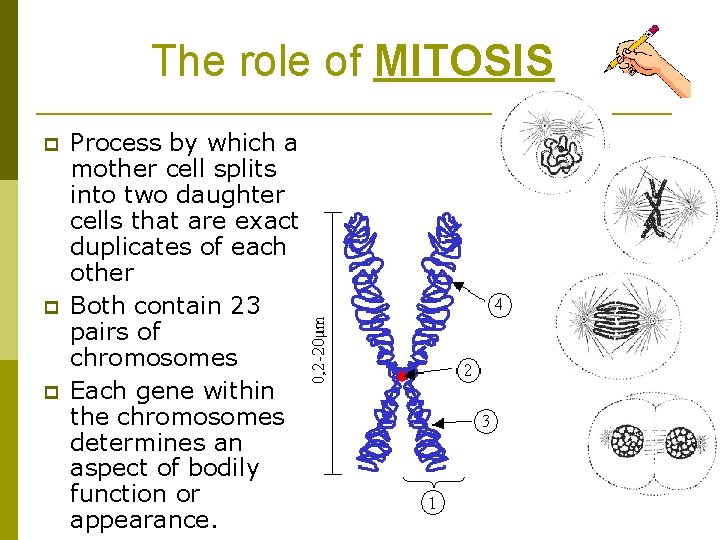
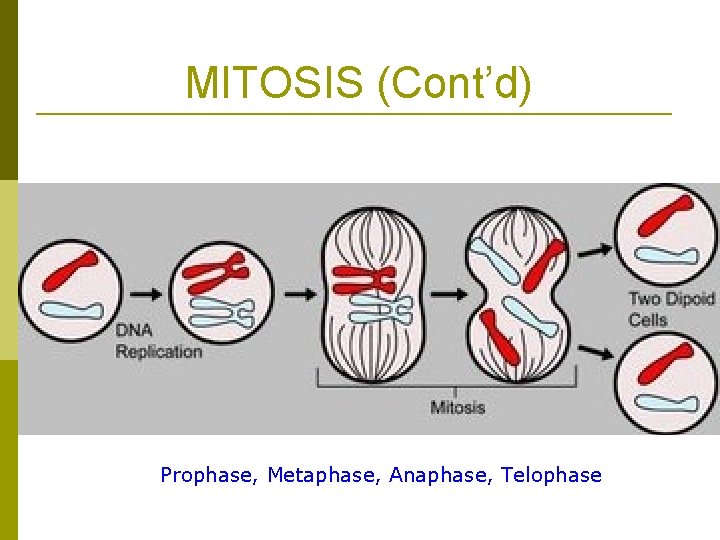
The role of MITOSIS p p p Process by which a mother cell splits into two daughter cells that are exact duplicates of each other Both contain 23 pairs of chromosomes Each gene within the chromosomes determines an aspect of bodily function or appearance.
MITOSIS (Cont’d) Prophase, Metaphase, Anaphase, Telophase
HOW IS MITOSIS RELEVANT TO THE TOPIC OF SEXUAL REPRODUCTION?
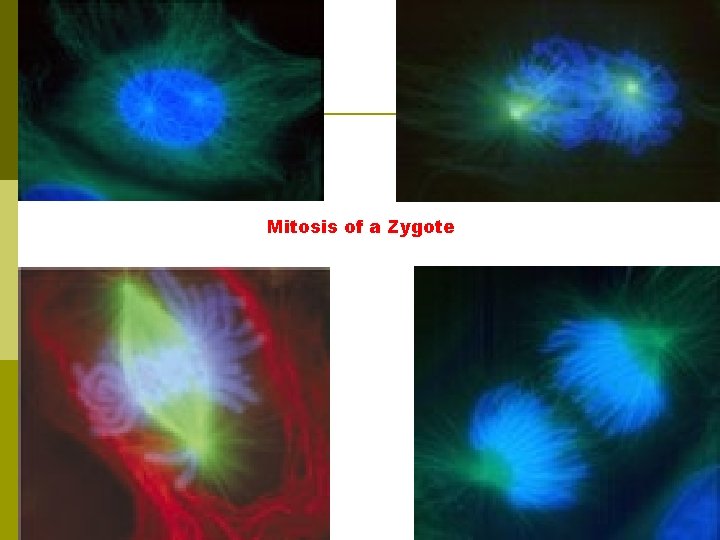
Mitosis of a Zygote
SIGNS OF PREGNANCY p Complete handout
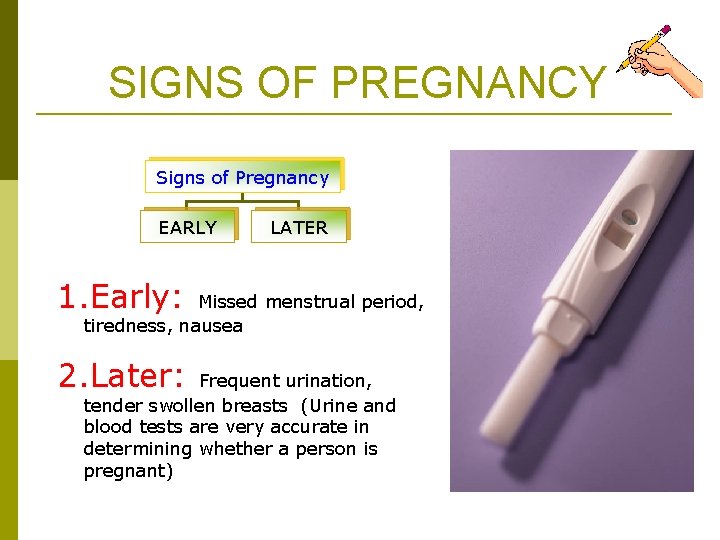
SIGNS OF PREGNANCY Signs of Pregnancy EARLY LATER 1. Early: Missed menstrual period, tiredness, nausea 2. Later: Frequent urination, tender swollen breasts (Urine and blood tests are very accurate in determining whether a person is pregnant)
Pregnancy Cont’d p If a woman know she is pregnant, she will undergo an ULTRA – SOUND in order to see if the baby is developing correctly Howstuffworks "Understanding Ultrasound Fetus Images"
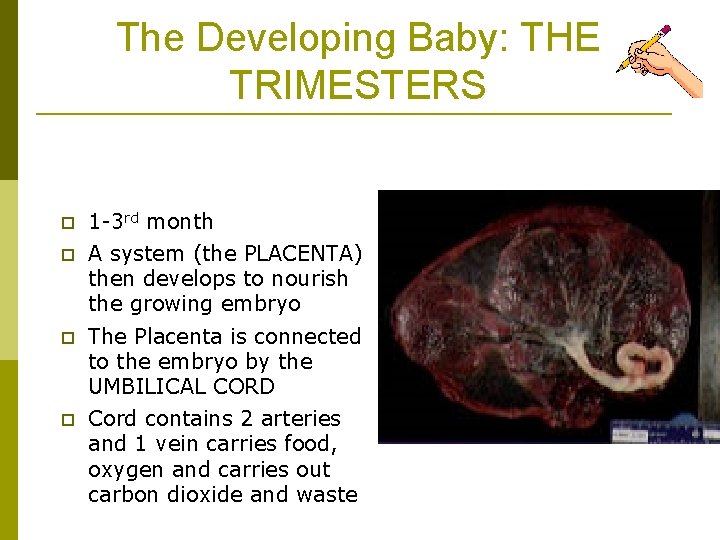
The Developing Baby: THE TRIMESTERS Trimester 1 p 1 -3 rd month p A system (the PLACENTA) then develops to nourish the growing embryo p The Placenta is connected to the embryo by the UMBILICAL CORD p Cord contains 2 arteries and 1 vein carries food, oxygen and carries out carbon dioxide and waste
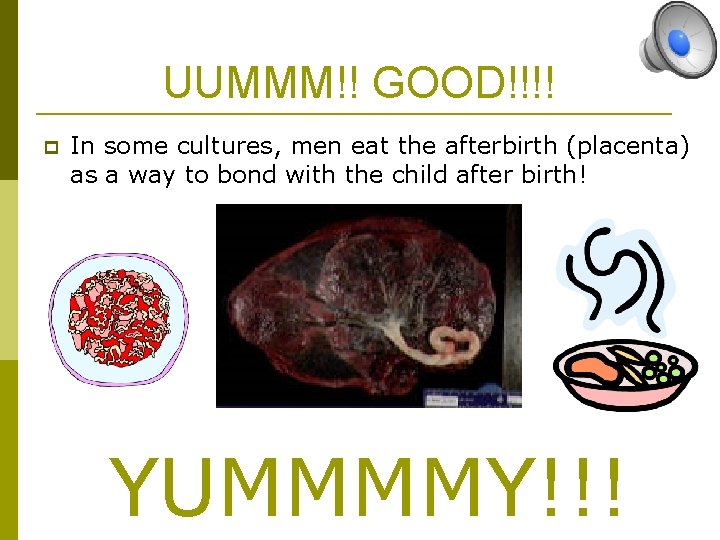
UUMMM!! GOOD!!!! p In some cultures, men eat the afterbirth (placenta) as a way to bond with the child after birth! YUMMMMY!!!
Trimester 1 (cont'd) p p p The blood stream of the mother and baby never mix Substances crossing the placenta do so by OSMOSIS: Osmosis is the passage of water from a region of high water concentration through a semipermeable membrane to a region of low water concentration Howstuffworks "Embryonic and Fetal Development"
Trimester 1 (cont'd) p A sac containing AMNIOTIC FLUID forms around the embryo to protect and cushion it. p AMNIOTIC FLUID: Clear fluid in the amniotic sac in which the fetus grows. Cushions the fetus, allows for fetal movement, helps the lungs develop, stabilizes the baby's temperature, and provides a barrier against infection p At the end of the second month the embryo develops into a fetus (See handout for characteristics of a fetus) Howstuffworks "The Role of Amniotic Fluid"
Trimester 2 3 -6 months p Sex is apparent p Small chance of survival in the sixth month if outside the womb. Respiratory system is not fully mature. p p See hand out for full details/characteristics
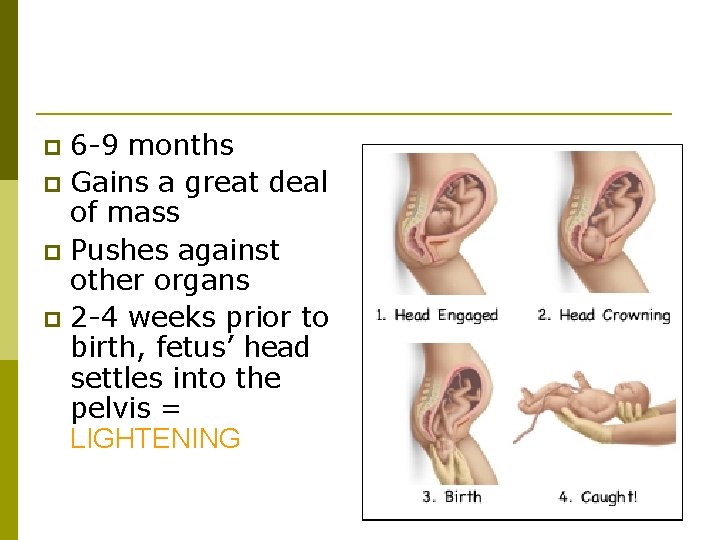
Trimester 3 6 -9 months p Gains a great deal of mass p Pushes against other organs p 2 -4 weeks prior to birth, fetus’ head settles into the pelvis = LIGHTENING p
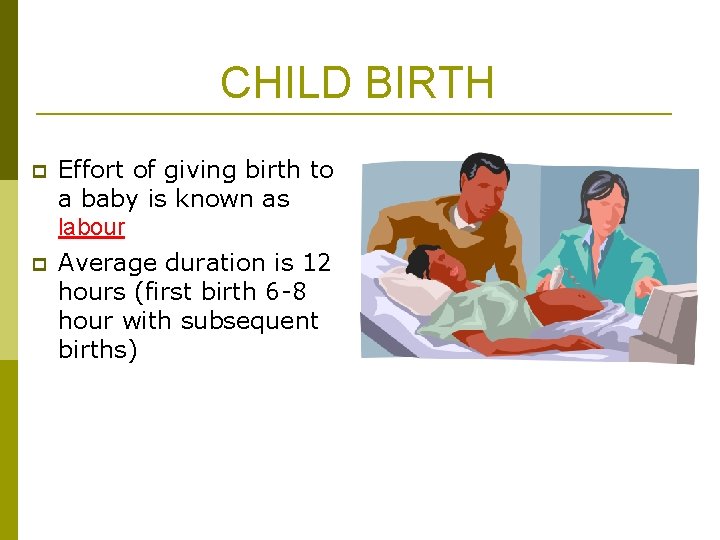
CHILD BIRTH p Effort of giving birth to a baby is known as labour p Average duration is 12 hours (first birth 6 -8 hour with subsequent births)
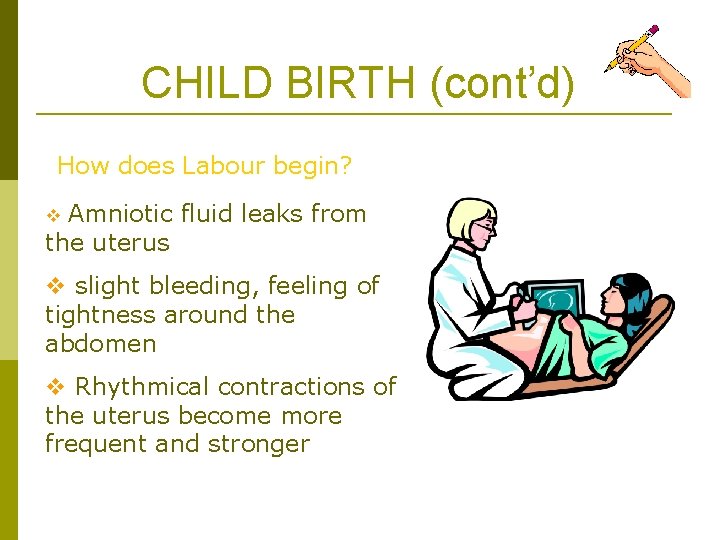
CHILD BIRTH (cont’d) How does Labour begin? v Amniotic fluid leaks from the uterus v slight bleeding, feeling of tightness around the abdomen v Rhythmical contractions of the uterus become more frequent and stronger
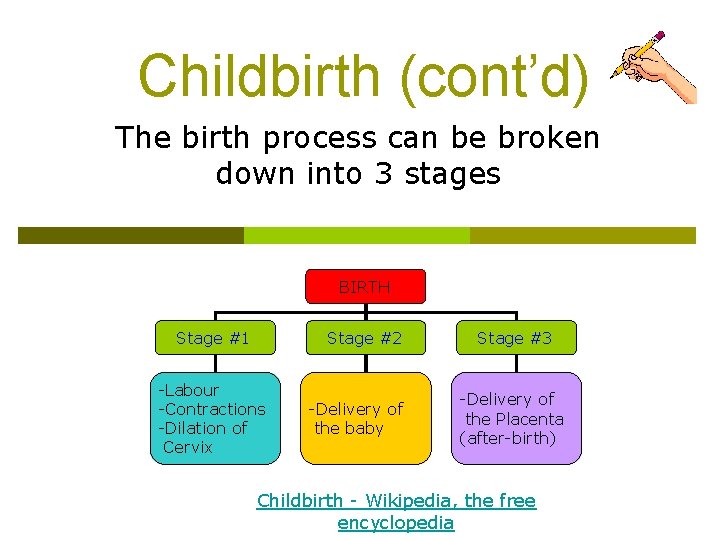
Childbirth (cont’d) The birth process can be broken down into 3 stages BIRTH Stage #1 Stage #2 -Labour -Contractions -Dilation of Cervix -Delivery of the baby Stage #3 -Delivery of the Placenta (after-birth) Childbirth - Wikipedia, the free encyclopedia
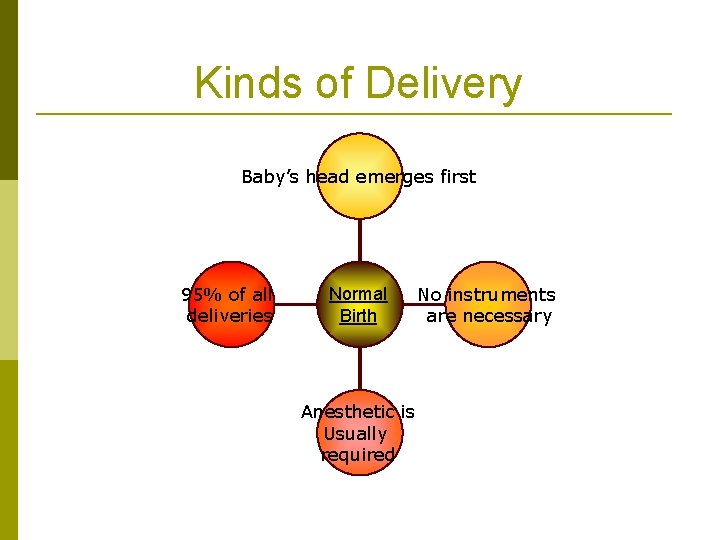
Kinds of Delivery Baby’s head emerges first 95% of all deliveries Normal Birth Anesthetic is Usually required No instruments are necessary
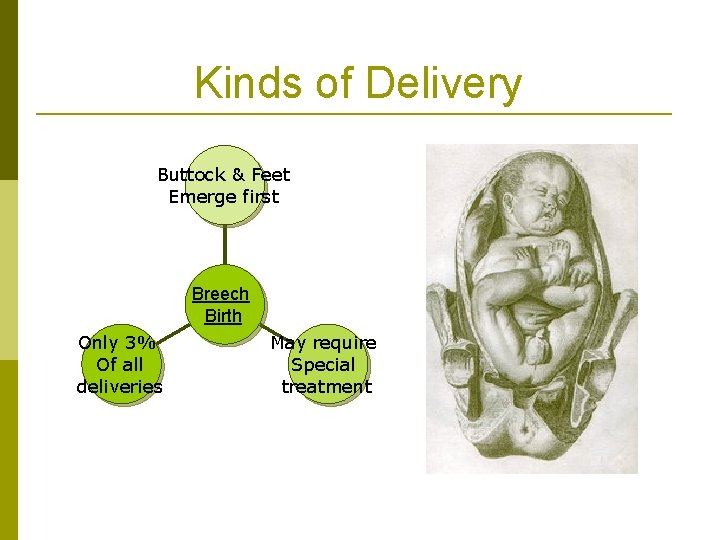
Kinds of Delivery Buttock & Feet Emerge first Breech Birth Only 3% Of all deliveries May require Special treatment
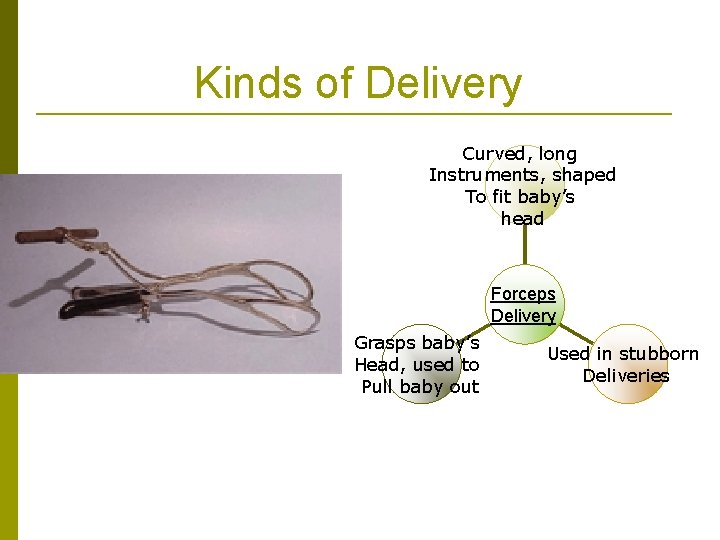
Kinds of Delivery Curved, long Instruments, shaped To fit baby’s head Forceps Delivery Grasps baby’s Head, used to Pull baby out Used in stubborn Deliveries
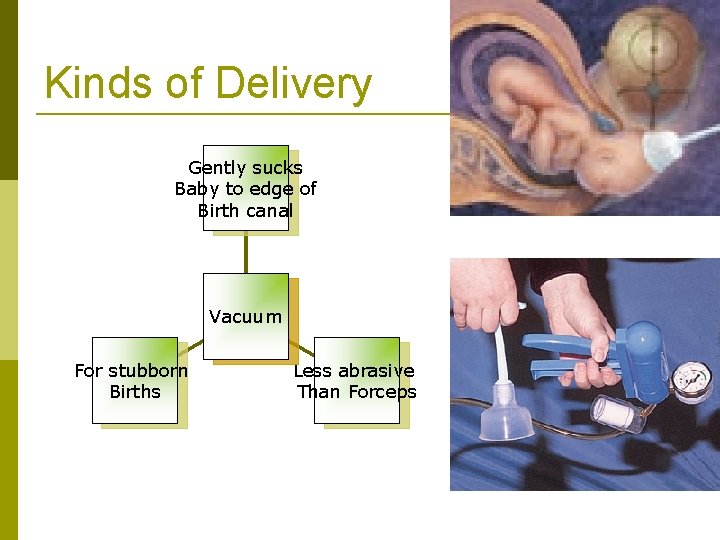
Kinds of Delivery Gently sucks Baby to edge of Birth canal Vacuum For stubborn Births Less abrasive Than Forceps
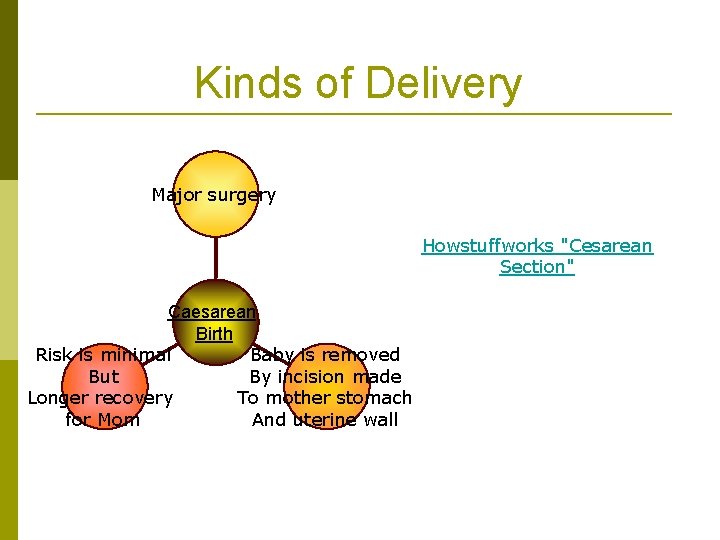
Kinds of Delivery Major surgery Howstuffworks "Cesarean Section" Caesarean Birth Baby is removed Risk is minimal By incision made But To mother stomach Longer recovery And uterine wall for Mom
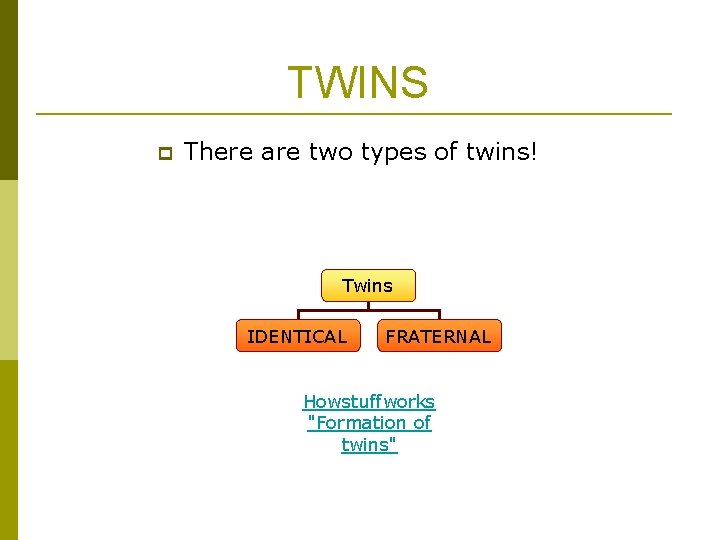
TWINS p There are two types of twins! Twins IDENTICAL FRATERNAL Howstuffworks "Formation of twins"
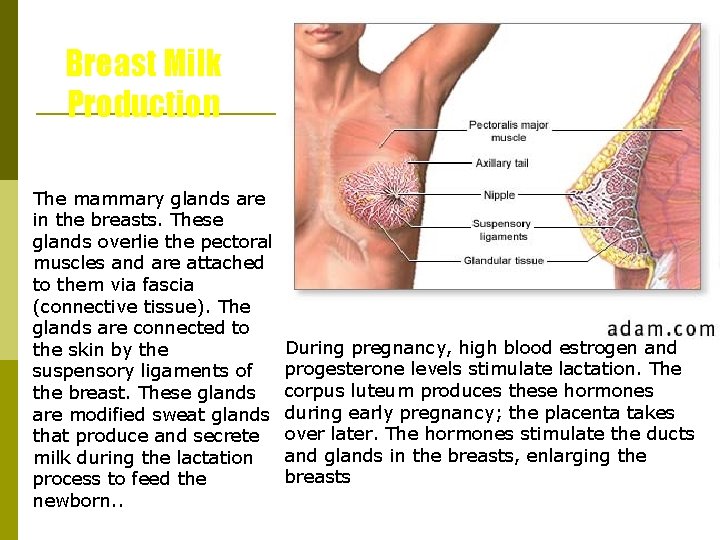
Breast Milk Production The mammary glands are in the breasts. These glands overlie the pectoral muscles and are attached to them via fascia (connective tissue). The glands are connected to the skin by the suspensory ligaments of the breast. These glands are modified sweat glands that produce and secrete milk during the lactation process to feed the newborn. . During pregnancy, high blood estrogen and progesterone levels stimulate lactation. The corpus luteum produces these hormones during early pregnancy; the placenta takes over later. The hormones stimulate the ducts and glands in the breasts, enlarging the breasts
THE END