
Grade 6 Nature of Science Big Idea 1
Grade 6 Nature of Science Big Idea 1: The Practice of Science WHAT IS SCIENCE? CHAPTER 1 LESSON 1 OFFICE OF ACADEMICS AND TRANSFORMATION
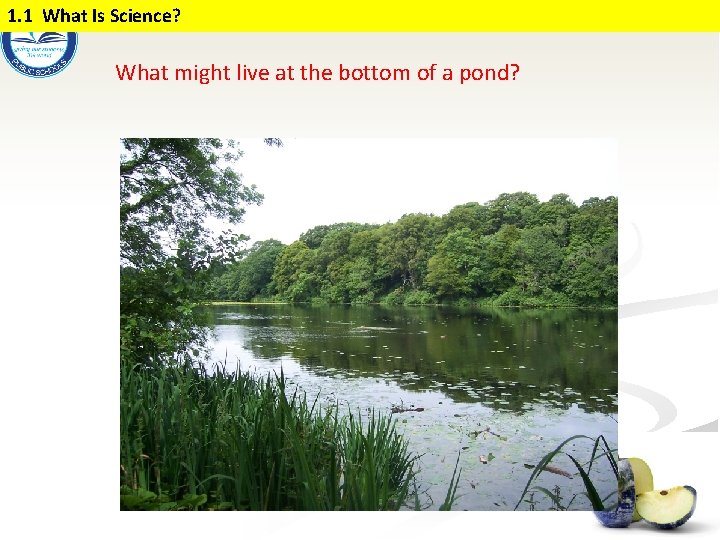
1. 1 What Is Science? What might live at the bottom of a pond?
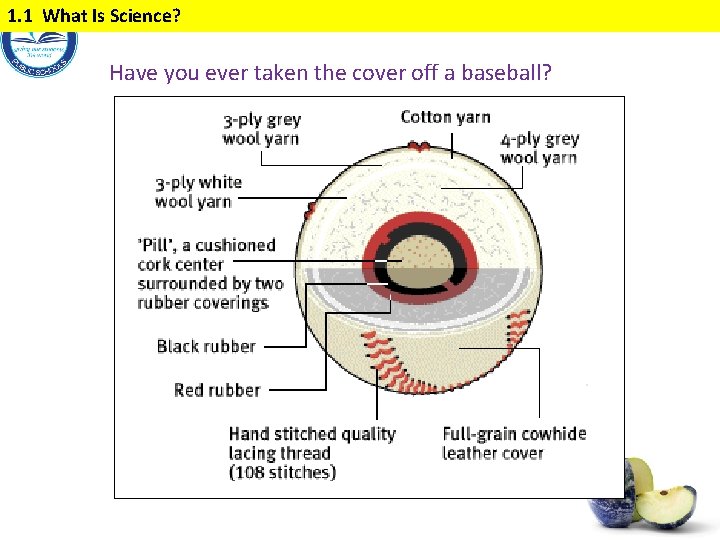
1. 1 What Is Science? Have you ever taken the cover off a baseball?
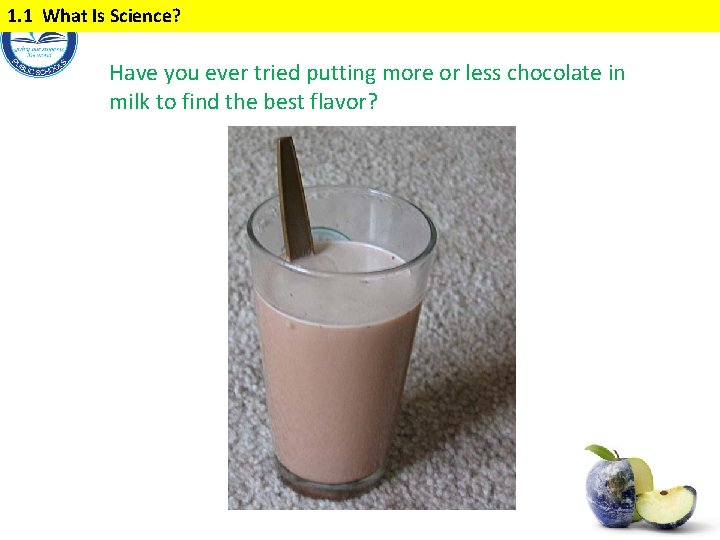
1. 1 What Is Science? Have you ever tried putting more or less chocolate in milk to find the best flavor?
1. 1 What Is Science? Why?
Practicing Science What is Science?

Science is a way of learning about the natural world.

1. 1 What Is Science? Science begins with curiosity and ends with discovery. To answer the questions of our curiosity we must make observations.
WHAT DO ALL SCIENTISTS DO?

Scientists at Work Process Skills: Observe Predict Measure Classify Infer Communicate Make models Evaluate 1. Using senses and tools to gather information 2. Think ahead about what might happen 3. Use tools to make precise or specific information with numbers 4. Put things into definite categories by common properties 5. Use reasoning to draw conclusions 6. Describe and share information with others 7. Creating representations of complex objects or processes 8. Comparing observations and data to reach a conclusion

OBSERVATION Observation is the process of using the senses to determine properties of an object or event.
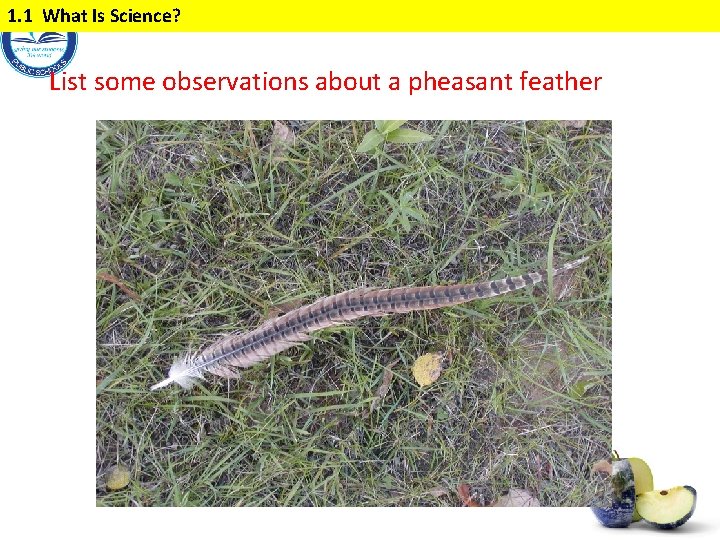
1. 1 What Is Science? List some observations about a pheasant feather
1. 1 What Is Science? Observations can be qualitative or quantitative Qualitative – Descriptions that can’t be expressed with numbers. Quantitative – Observing using numbers involving measurement of quantity or amount.
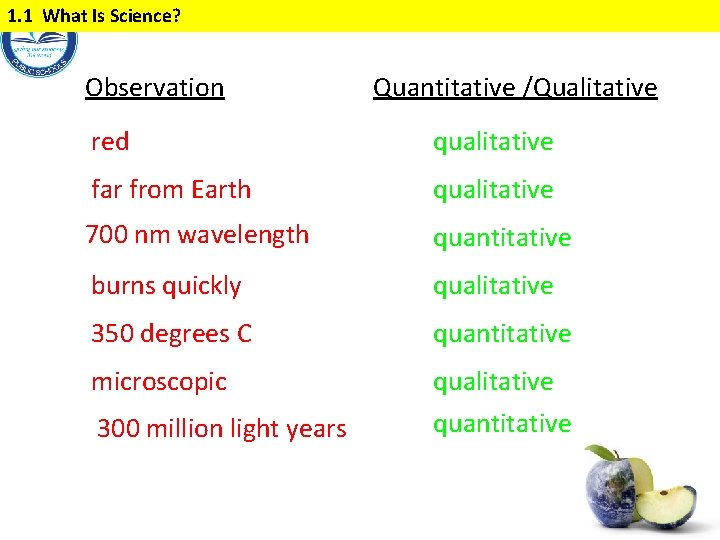
1. 1 What Is Science? Observation Quantitative /Qualitative red qualitative far from Earth qualitative 700 nm wavelength quantitative burns quickly qualitative 350 degrees C quantitative microscopic qualitative quantitative 300 million light years
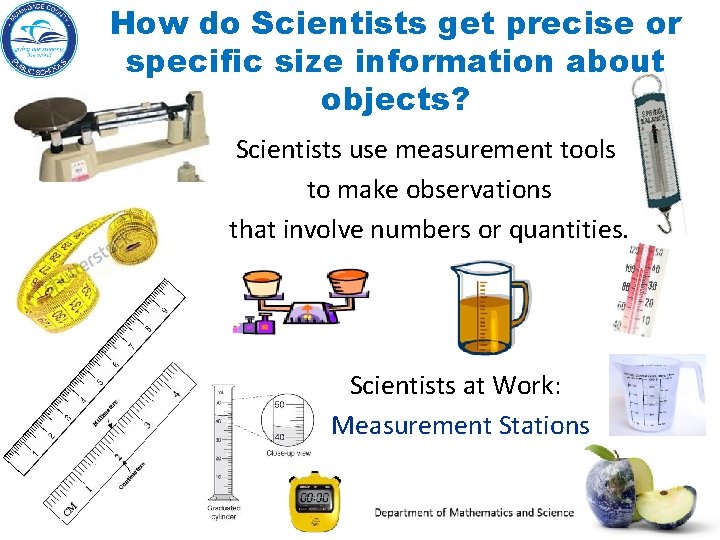
How do Scientists get precise or specific size information about objects? Scientists use measurement tools to make observations that involve numbers or quantities. Scientists at Work: Measurement Stations

Scientists Use Measurement Tools Name of Tool Ruler, tape measure, meter stick Use of Tool (Quantitative Observation) Metric Units
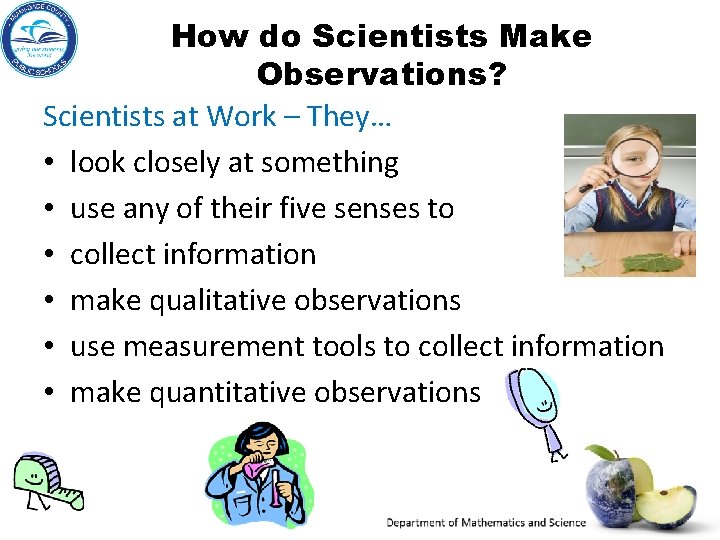
How do Scientists Make Observations? Scientists at Work – They… • look closely at something • use any of their five senses to • collect information • make qualitative observations • use measurement tools to collect information • make quantitative observations
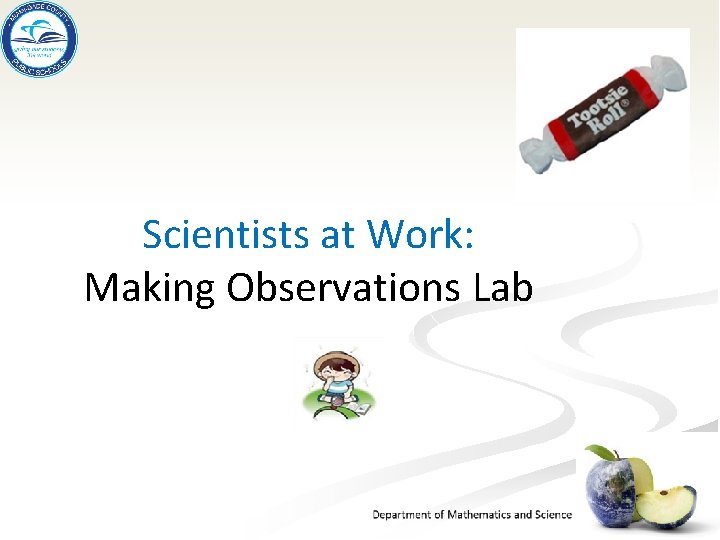
Scientists at Work: Making Observations Lab

Making Observations Lab Reflection Questions 1. Which of the senses was best for making observations about the candy? Explain your answer. 2. Is the sense listed above always the best one to use? Why or why not? Give reasons to support what you think. 3. Use evidence to explain why using tools to make observations is useful to scientists. 4. Based on your observations, write at least three new questions you could ask about the candy.
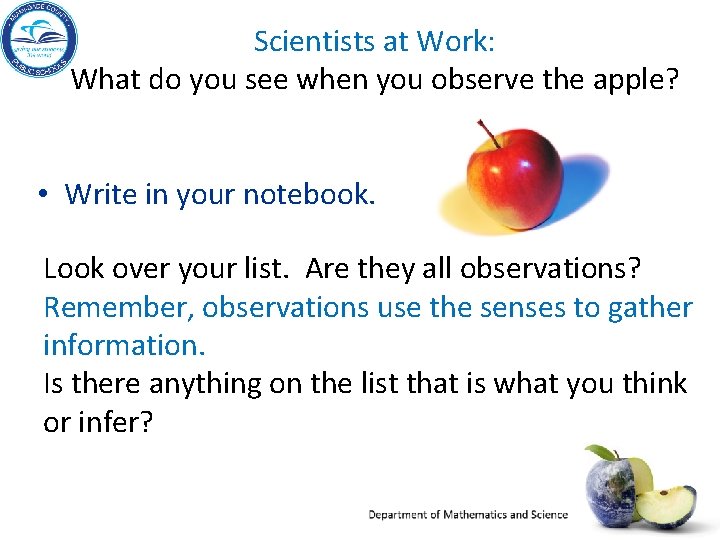
Scientists at Work: What do you see when you observe the apple? • Write in your notebook. Look over your list. Are they all observations? Remember, observations use the senses to gather information. Is there anything on the list that is what you think or infer?
Senses Observations Inferences Compare and Contrast Observation To observe is to look closely at something using any of the five senses and/or measurement tools. Inferences To infer is to use observations to reach a conclusion based on evidence. Opinion A personal belief that does not need proof.
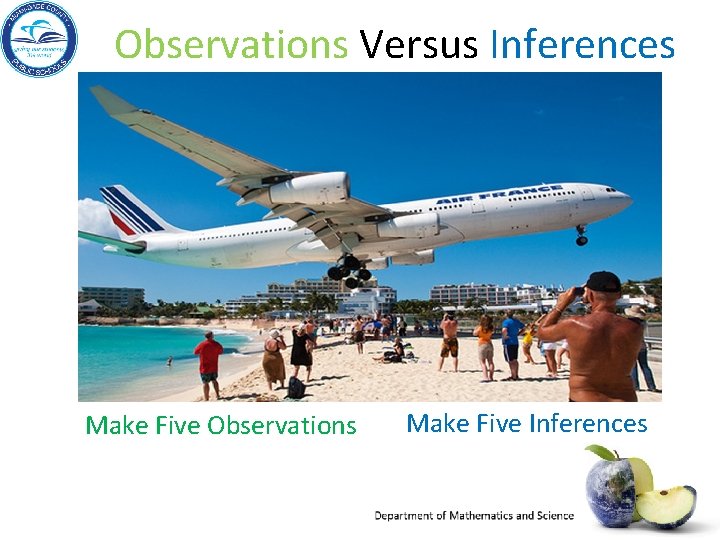
Observations Versus Inferences Make Five Observations Make Five Inferences
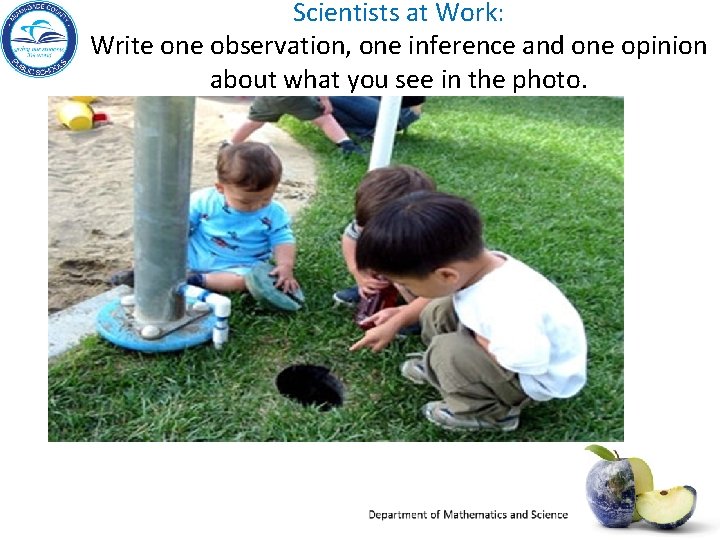
Scientists at Work: Write one observation, one inference and one opinion about what you see in the photo.
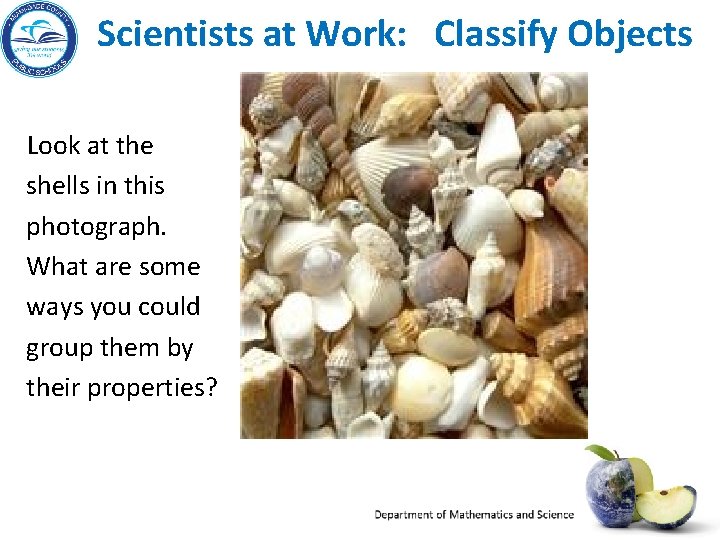
Scientists at Work: Classify Objects Look at the shells in this photograph. What are some ways you could group them by their properties?
Classify Objects Shoe Classification
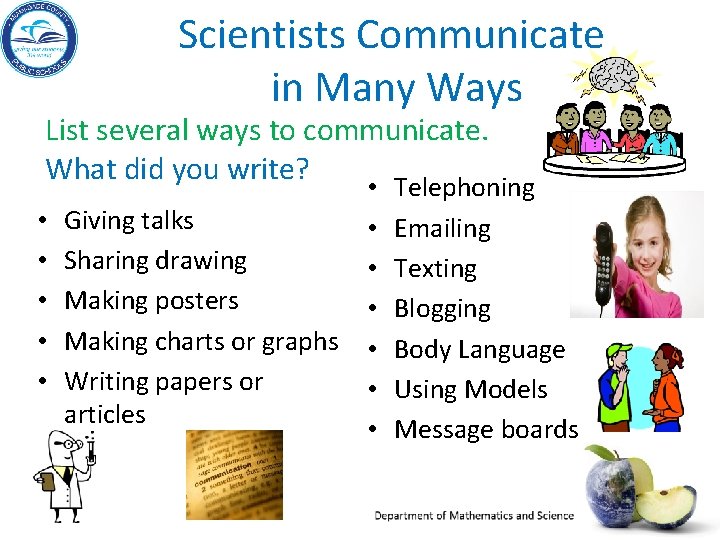
Scientists Communicate in Many Ways List several ways to communicate. What did you write? • • • Giving talks Sharing drawing Making posters Making charts or graphs Writing papers or articles • • Telephoning Emailing Texting Blogging Body Language Using Models Message boards
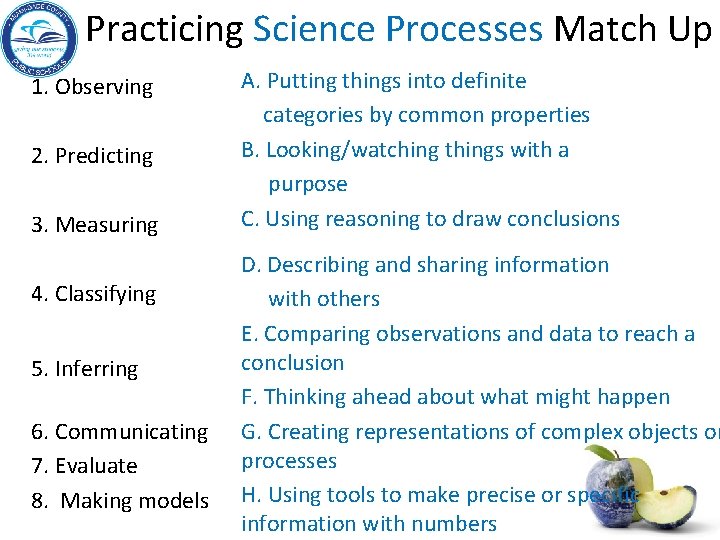
Practicing Science Processes Match Up 1. Observing 2. Predicting 3. Measuring 4. Classifying 5. Inferring 6. Communicating 7. Evaluate 8. Making models A. Putting things into definite categories by common properties B. Looking/watching things with a purpose C. Using reasoning to draw conclusions D. Describing and sharing information with others E. Comparing observations and data to reach a conclusion F. Thinking ahead about what might happen G. Creating representations of complex objects or processes H. Using tools to make precise or specific information with numbers
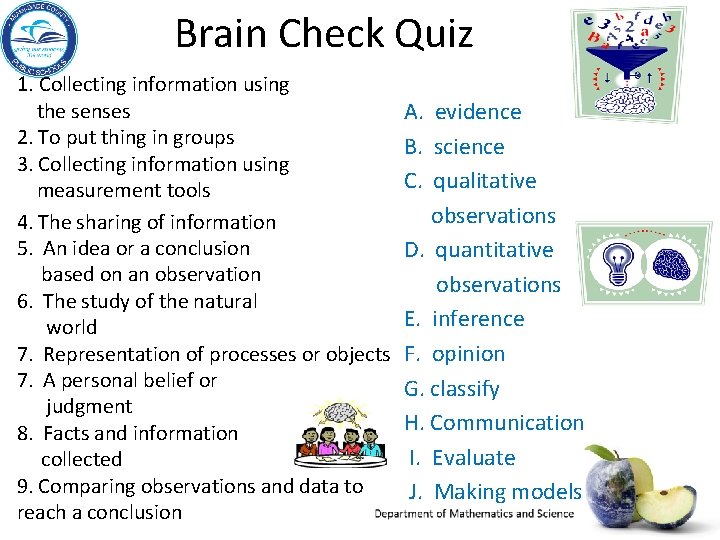
Brain Check Quiz 1. Collecting information using the senses 2. To put thing in groups 3. Collecting information using measurement tools 4. The sharing of information 5. An idea or a conclusion based on an observation 6. The study of the natural world 7. Representation of processes or objects 7. A personal belief or judgment 8. Facts and information collected 9. Comparing observations and data to reach a conclusion A. evidence B. science C. qualitative observations D. quantitative observations E. inference F. opinion G. classify H. Communication I. Evaluate J. Making models
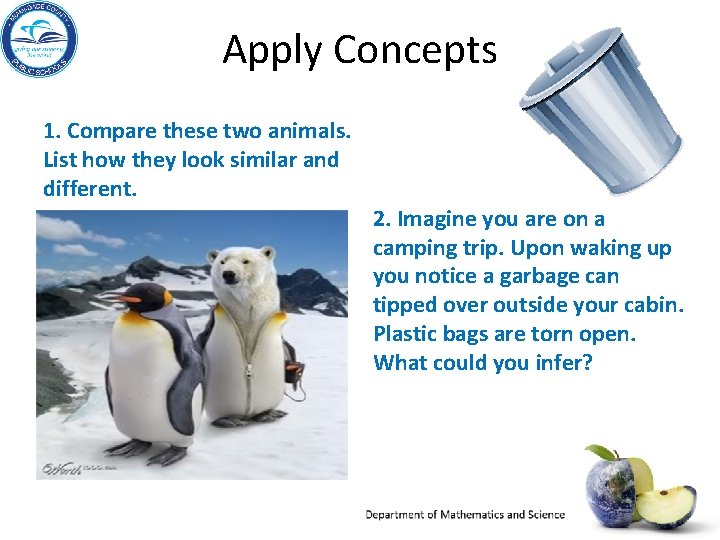
Apply Concepts 1. Compare these two animals. List how they look similar and different. 2. Imagine you are on a camping trip. Upon waking up you notice a garbage can tipped over outside your cabin. Plastic bags are torn open. What could you infer?
- Slides: 29