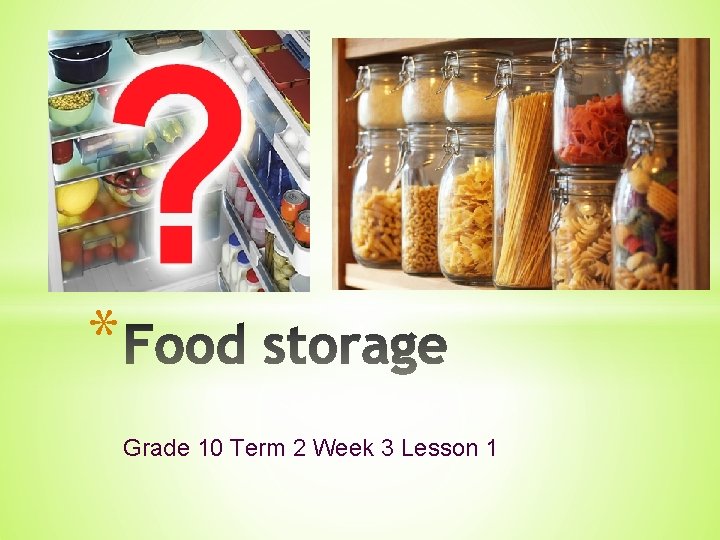
Grade 10 Term 2 Week 3 Lesson 1
- Slides: 7
* Grade 10 Term 2 Week 3 Lesson 1
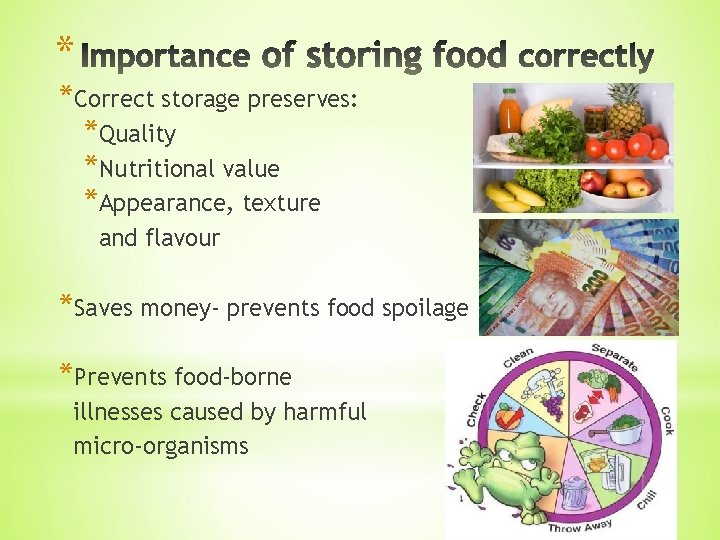
* *Correct storage preserves: *Quality *Nutritional value *Appearance, texture and flavour *Saves money- prevents food spoilage *Prevents food-borne illnesses caused by harmful micro-organisms
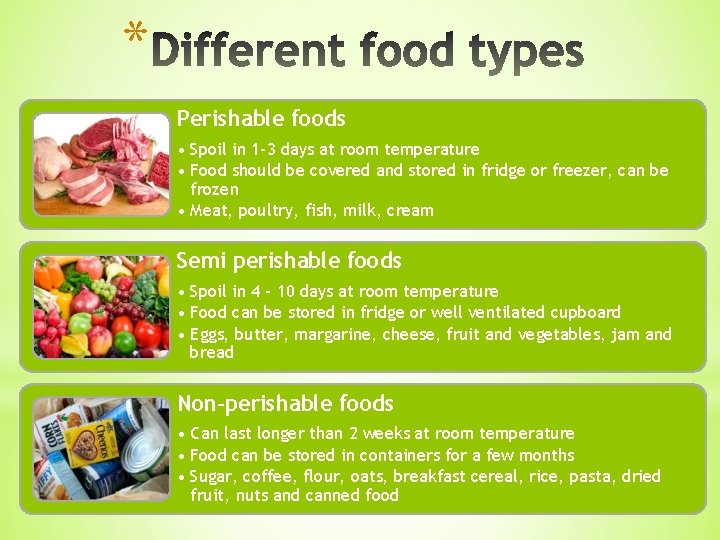
* Perishable foods • Spoil in 1 -3 days at room temperature • Food should be covered and stored in fridge or freezer, can be frozen • Meat, poultry, fish, milk, cream Semi perishable foods • Spoil in 4 – 10 days at room temperature • Food can be stored in fridge or well ventilated cupboard • Eggs, butter, margarine, cheese, fruit and vegetables, jam and bread Non-perishable foods • Can last longer than 2 weeks at room temperature • Food can be stored in containers for a few months • Sugar, coffee, flour, oats, breakfast cereal, rice, pasta, dried fruit, nuts and canned food
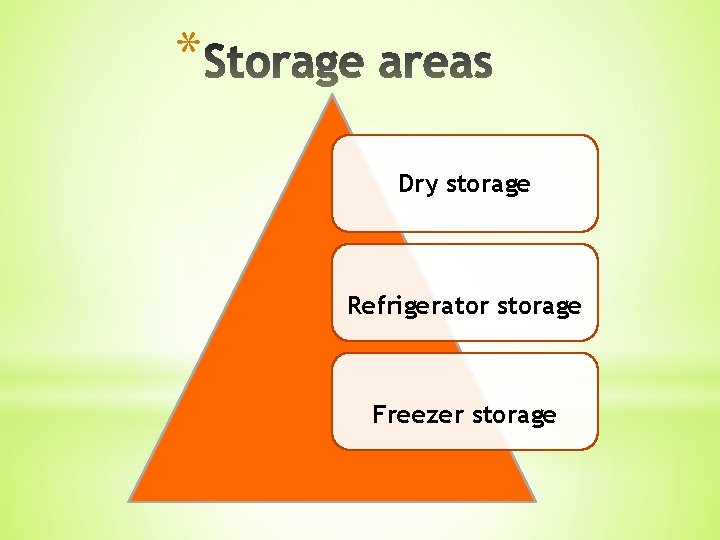
* Dry storage Refrigerator storage Freezer storage
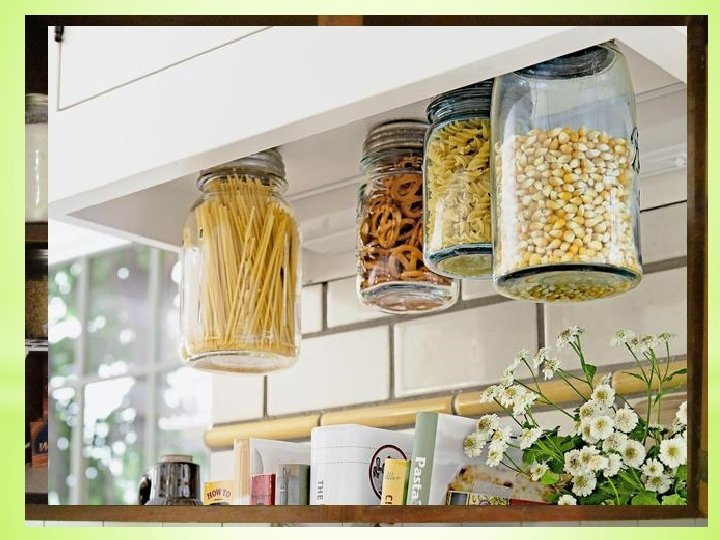
* *Must be cool, dry, dark and well ventilated *Temperature below 21ºC *No crumbs or open packets – attract mice, rats, cockroaches *Should be cleaned regularly *Unopened items must be stored in original containers *Opened items must be placed into glass or plastic containers, with tight fitting lids
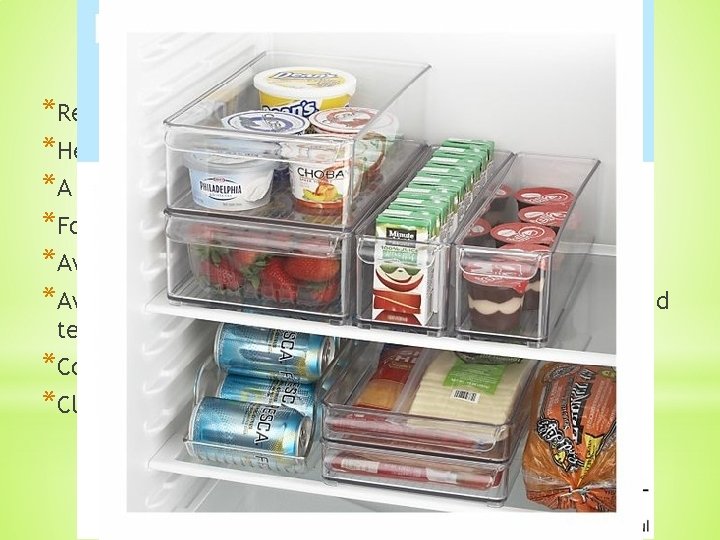
* *Refrigerating slows down bacterial growth *Helps to reduce the risk of food-borne illnesses *A refrigerator must operate between 0ºC and 4ºC *Food must be covered to maintain quality *Avoid overfilling of refrigerator *Avoid opening the door too often – warm air flows in and temperature raises *Cool hot food before putting it into the refrigerator *Clean regularly
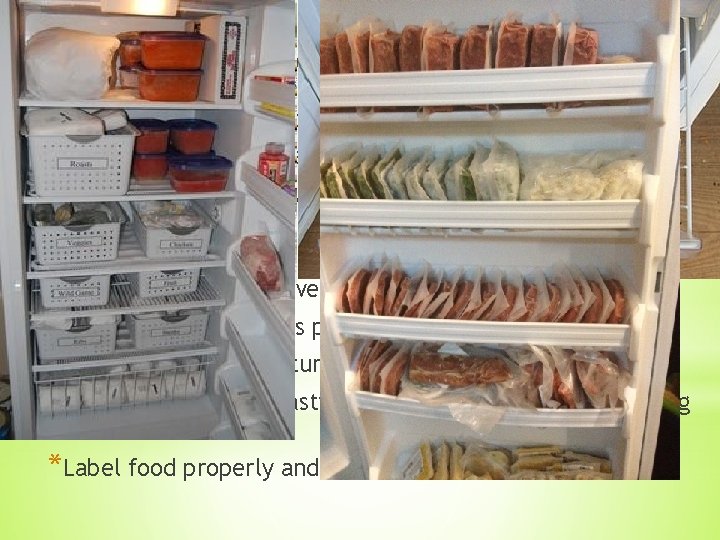
* *A freezer must operate at -18ºC *Bacteria is inactive below this temperature *These temperatures will stop bacteria growing but will not kill them *Before fresh food can be frozen it must be blanched to inactivate all the active enzymes *Freeze food as soon as possible *Package food in moisture-proof containers or wrappers. *Squeeze air out of plastic bags to prevent air from coming in contact with food. *Label food properly and add a date