
Grade 10 Physics Knowledge area Electricity and magnetism
- Slides: 7
Grade 10 Physics Knowledge area: Electricity and magnetism
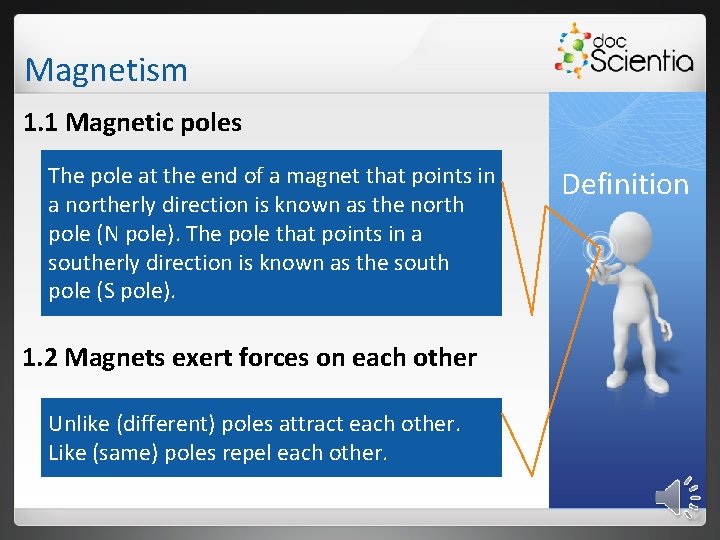
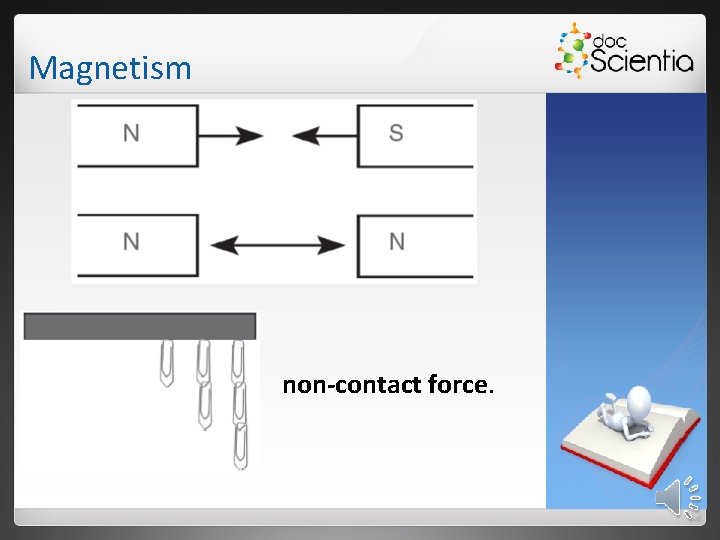
Magnetism 1. 1 Magnetic poles The pole at the end of a magnet that points in a northerly direction is known as the north pole (N pole). The pole that points in a southerly direction is known as the south pole (S pole). 1. 2 Magnets exert forces on each other Unlike (different) poles attract each other. Like (same) poles repel each other. Definition
Magnetism non-contact force.
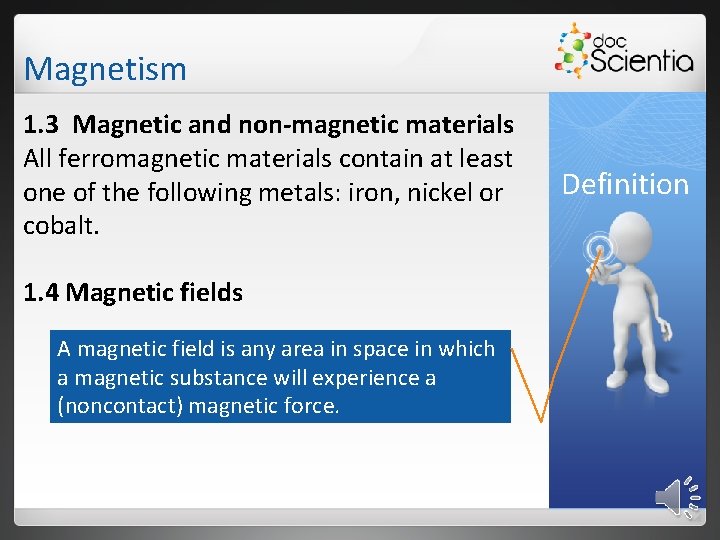
Magnetism 1. 3 Magnetic and non-magnetic materials All ferromagnetic materials contain at least one of the following metals: iron, nickel or cobalt. 1. 4 Magnetic fields A magnetic field is any area in space in which a magnetic substance will experience a (noncontact) magnetic force. Definition
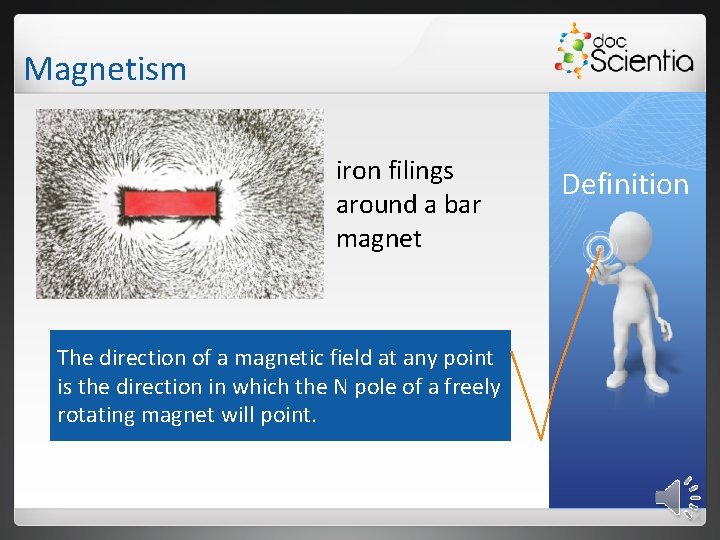
Magnetism iron filings around a bar magnet The direction of a magnetic field at any point is the direction in which the N pole of a freely rotating magnet will point. Definition
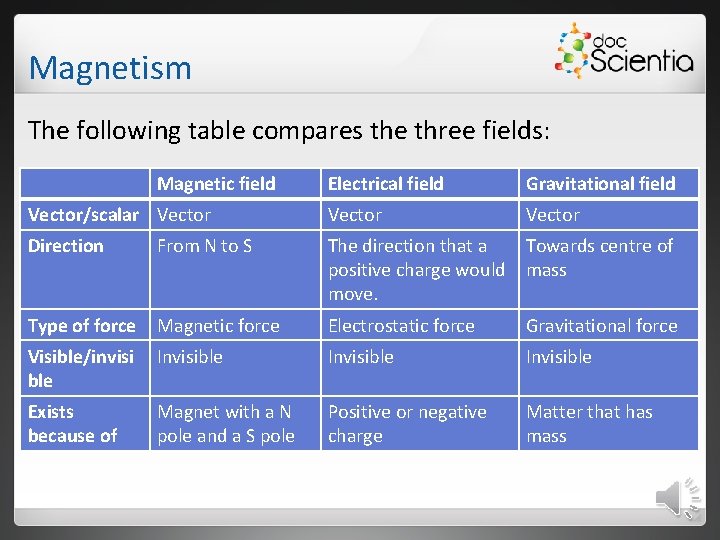
Magnetism The following table compares the three fields: Magnetic field Electrical field Gravitational field Vector/scalar Vector Direction From N to S The direction that a positive charge would move. Towards centre of mass Type of force Magnetic force Electrostatic force Gravitational force Visible/invisi ble Invisible Exists because of Magnet with a N pole and a S pole Positive or negative charge Matter that has mass
Magnetism 1. 4. 1 Direction of a magnetic field Magnetic field lines have the following properties: • Continuous • Have imaginary lines • Three dimensional • Run from the north pole (N) to the south pole (S). • Never cross or touch each other. • More concentrated where the field strength is greatest.