
GRADATIONAL PROCESSES Geological forces that wear down and

- Slides: 12
GRADATIONAL PROCESSES • Geological forces that wear down and erode parts of the lithosphere • The atmosphere and hydrosphere continue to change the earth’s surface (lithosphere)
GRADATIONAL PROCESSES INCLUDE 1. Weathering (wearing down): wearing and breaking down of the surface. Includes both mechanical and chemical weathering. 2. Transport (transporting): movement of weathered material from once place to another. 3. Deposition (depositing): where weathered material loses its energy to carry its load and is dropped off.
GRADATIONAL PROCESSES INCLUDE Erosion: weathering and the transporting of material. : agents of erosion are water, wind, ice, and gravity.
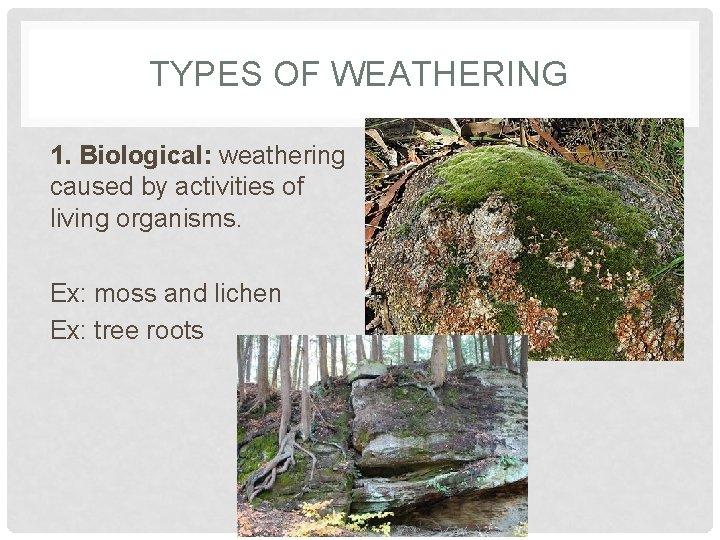
TYPES OF WEATHERING 1. Biological: weathering caused by activities of living organisms. Ex: moss and lichen Ex: tree roots
TYPES OF WEATHERING 2. Physical/Mechanical: breakup of rock into smaller particles w/o change in composition. 3. Chemical: involves the decay of rock where chemical composition is changed.
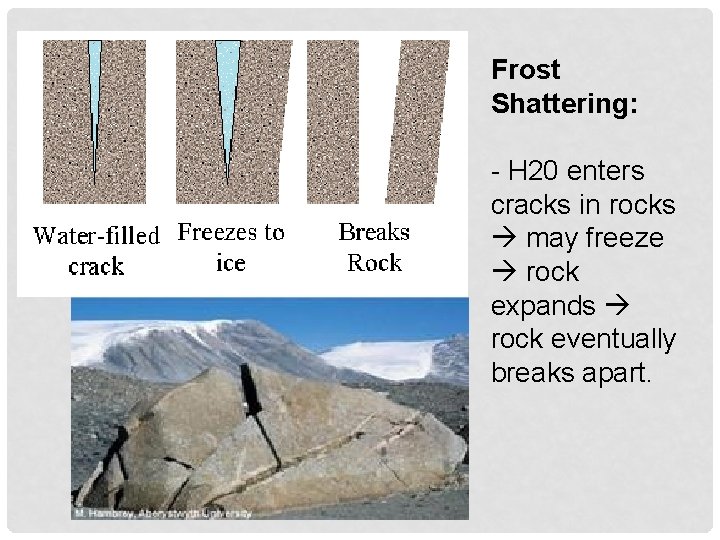
Frost Shattering: - H 20 enters cracks in rocks may freeze rock expands rock eventually breaks apart.
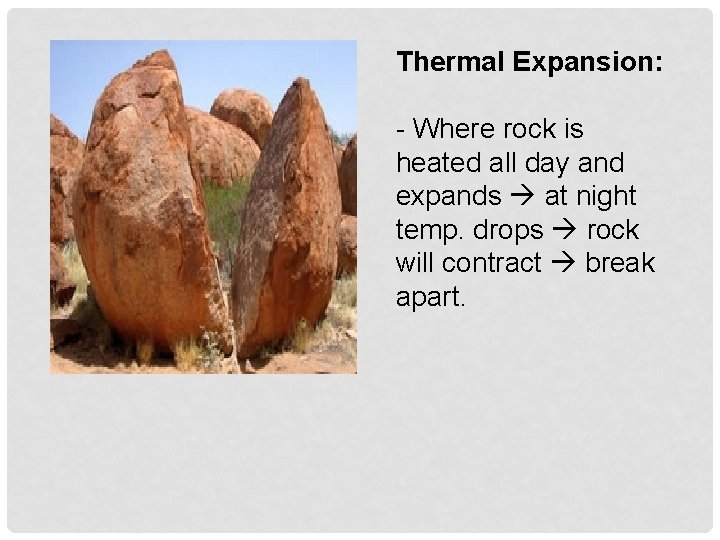
Thermal Expansion: - Where rock is heated all day and expands at night temp. drops rock will contract break apart.
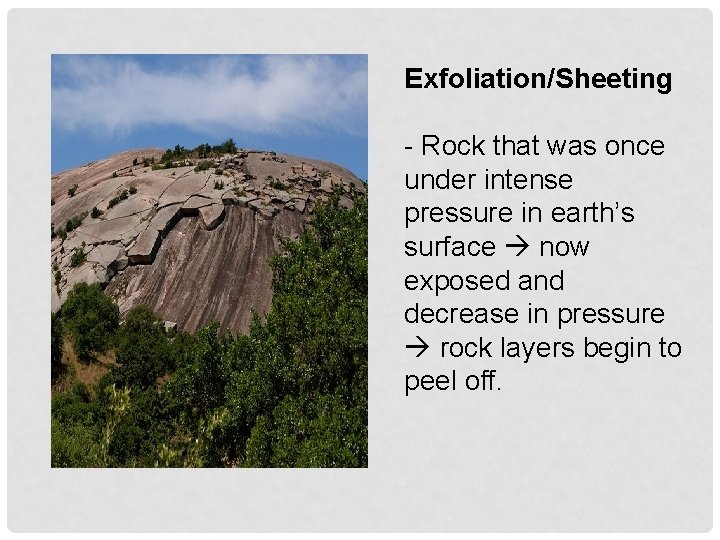
Exfoliation/Sheeting - Rock that was once under intense pressure in earth’s surface now exposed and decrease in pressure rock layers begin to peel off.
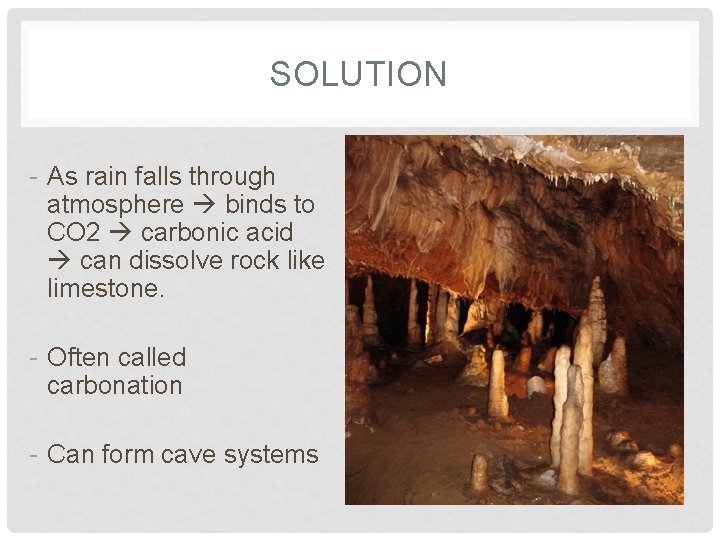
SOLUTION - As rain falls through atmosphere binds to CO 2 carbonic acid can dissolve rock like limestone. - Often called carbonation - Can form cave systems
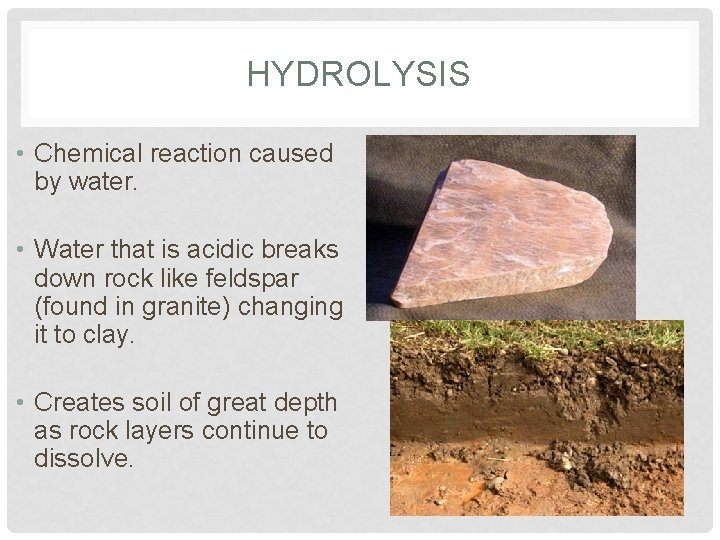
HYDROLYSIS • Chemical reaction caused by water. • Water that is acidic breaks down rock like feldspar (found in granite) changing it to clay. • Creates soil of great depth as rock layers continue to dissolve.
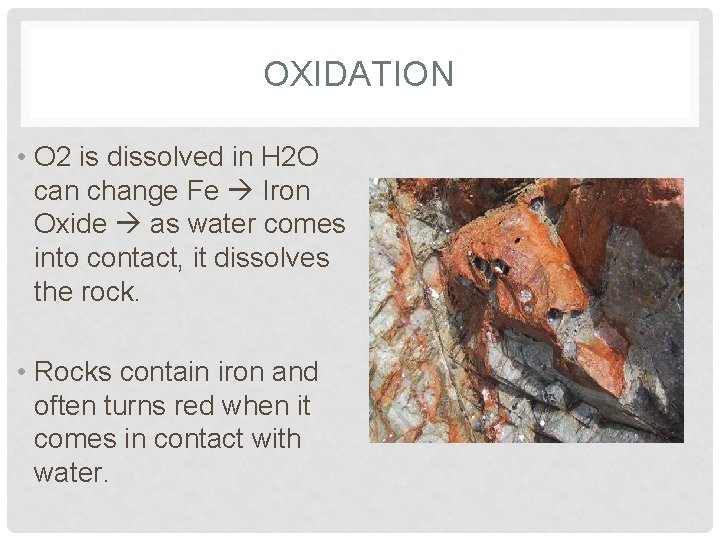
OXIDATION • O 2 is dissolved in H 2 O can change Fe Iron Oxide as water comes into contact, it dissolves the rock. • Rocks contain iron and often turns red when it comes in contact with water.
READ + QUESTIONS Pgs. 102 -108 in Earth Matters 1. Copy the diagram on pg. 103 + label and add definitions for weathering, transport, and deposition. 2. Identify and describe two features associated with frost shattering. 3. Identify and describe two features associated with transport and deposition. 4. What is the difference between chemical and mechanical weathering? 5. What is the difference between weathering and erosion?