
GPU Accelerated Vessel Segmentation Using Laplacian Eigenmaps Lin
![Laplacian eigenmap [1] Local info embedded in high dimensional space Project local info onto](https://slidetodoc.com/presentation_image_h2/75296eb46bbb00105dd008dc556efdd6/image-3.jpg "Laplacian eigenmap [1] Local info embedded in high dimensional space Project local info onto")
- Slides: 15
GPU Accelerated Vessel Segmentation Using Laplacian Eigenmaps Lin Cheng, Hyunsu Cho and Peter A. Yoon Trinity College
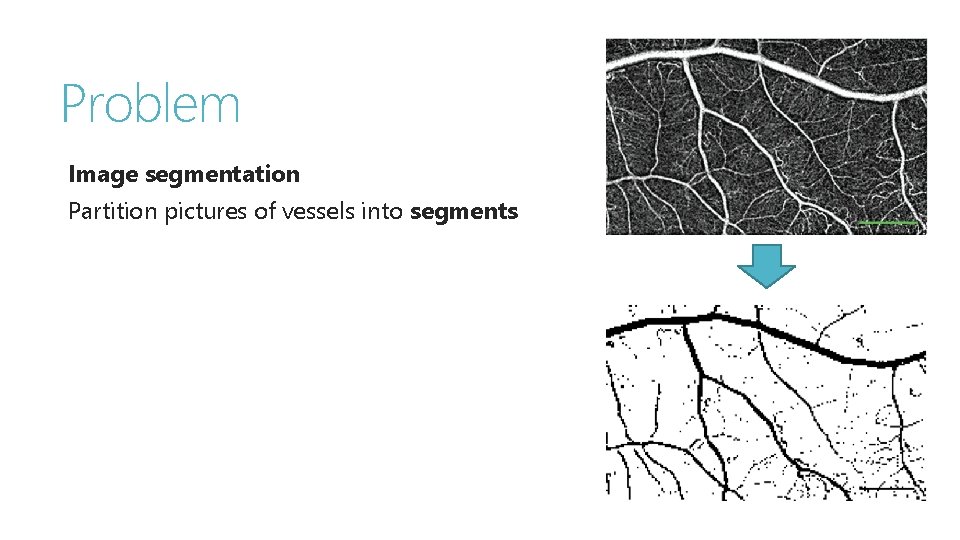
Problem Image segmentation Partition pictures of vessels into segments
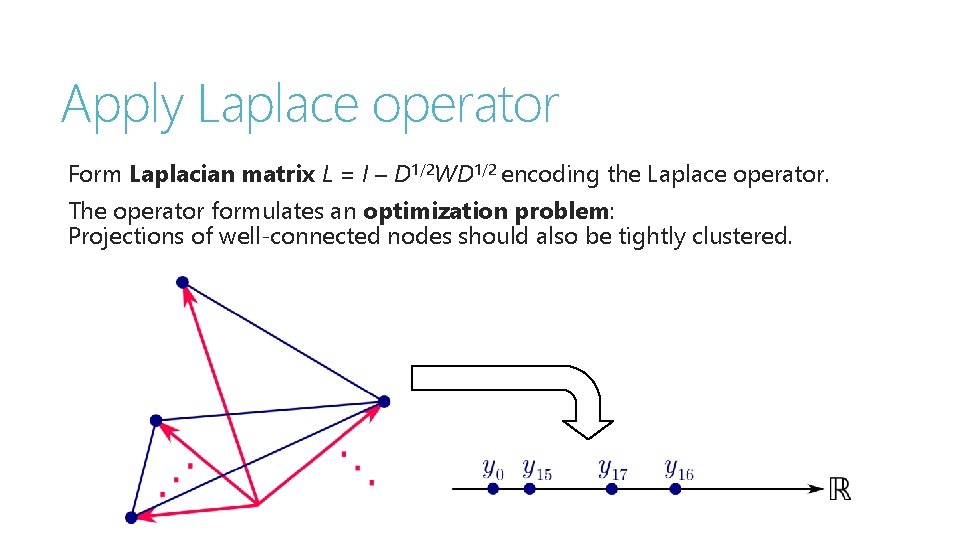
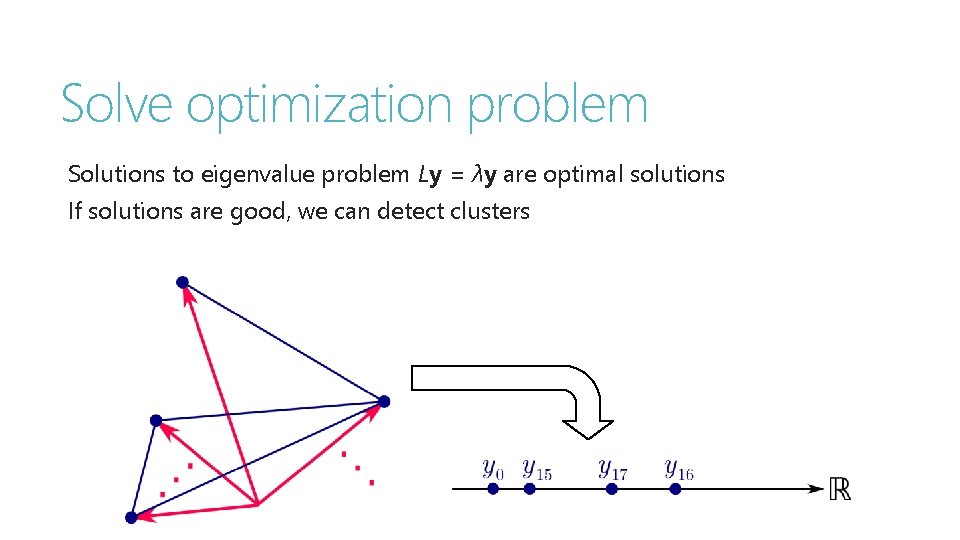
Laplacian eigenmap [1] Local info embedded in high dimensional space Project local info onto low-dimensional plane Optimize the projection to preserve essential characteristics Cluster the projected data points into segments [1] Tziakos, Laskaris, and Fotopoulos
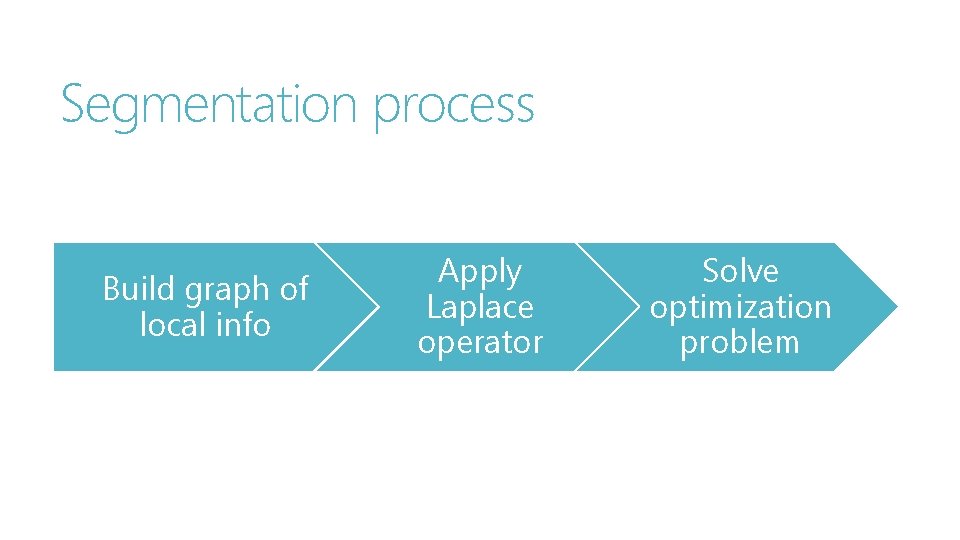
Segmentation process Build graph of local info Apply Laplace operator Solve optimization problem
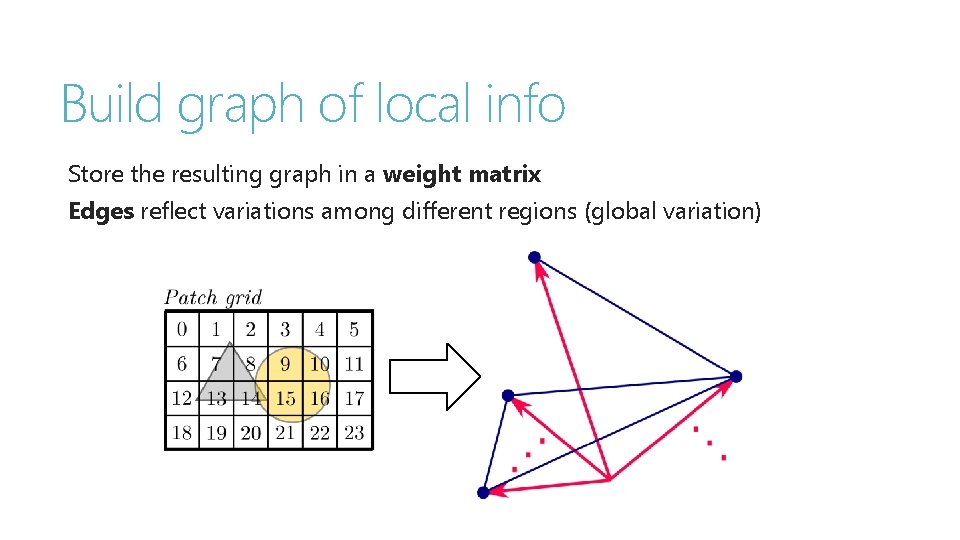
Build graph of local info Store the resulting graph in a weight matrix Edges reflect variations among different regions (global variation)
Apply Laplace operator Form Laplacian matrix L = I – D 1/2 WD 1/2 encoding the Laplace operator. The operator formulates an optimization problem: Projections of well-connected nodes should also be tightly clustered.
Solve optimization problem Solutions to eigenvalue problem Ly = λy are optimal solutions If solutions are good, we can detect clusters
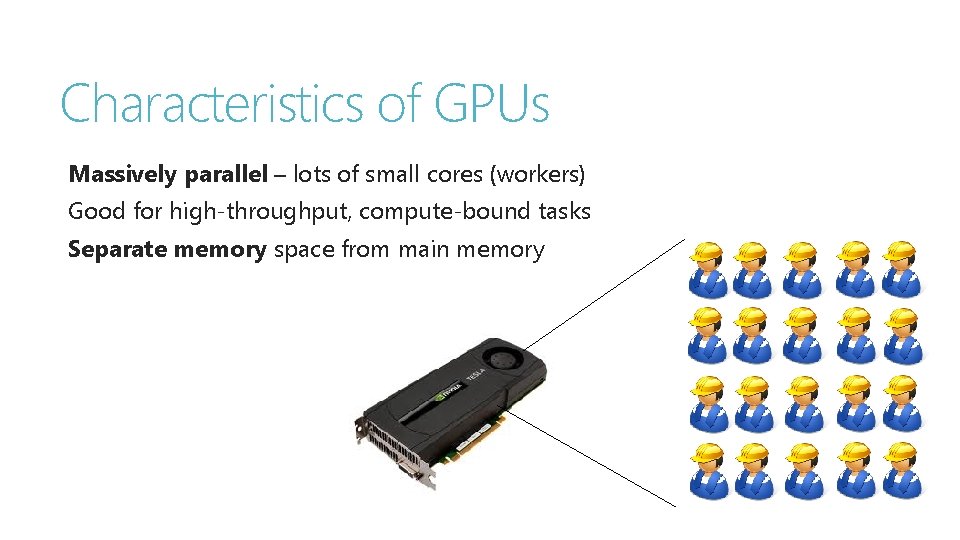
Characteristics of GPUs Massively parallel – lots of small cores (workers) Good for high-throughput, compute-bound tasks Separate memory space from main memory
Strategy: Reduce memory footprint On-GPU memory is limited Reduce memory usage and we can pack in more work into GPU
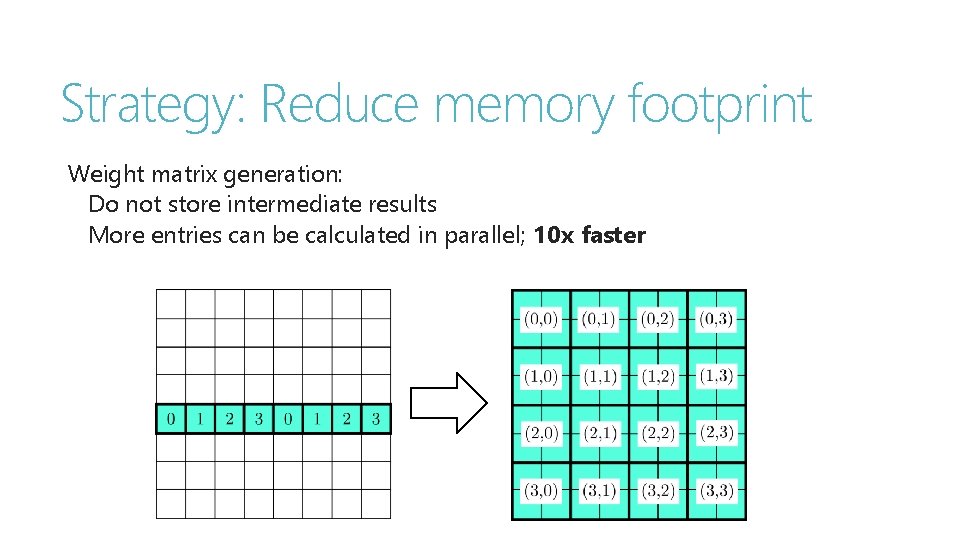
Strategy: Reduce memory footprint Weight matrix generation: Do not store intermediate results More entries can be calculated in parallel; 10 x faster
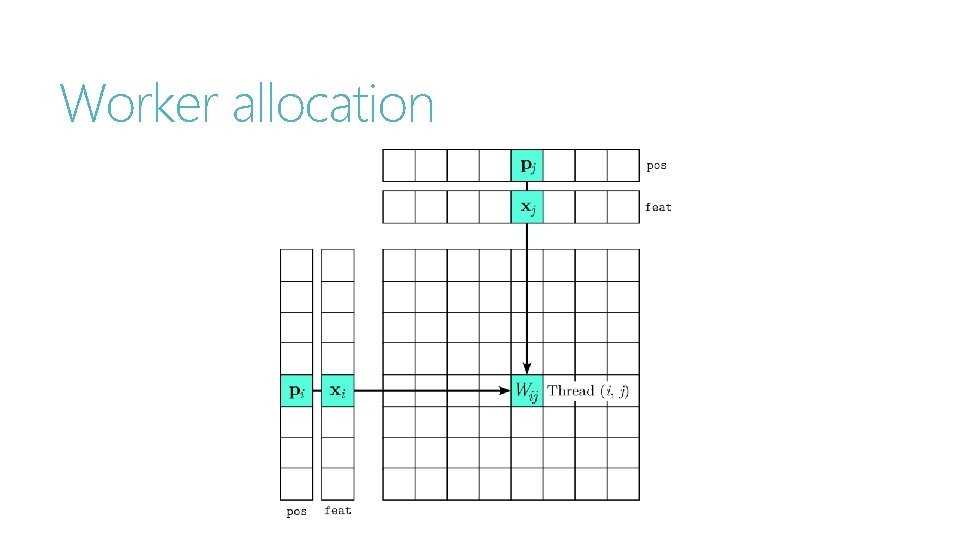
Worker allocation
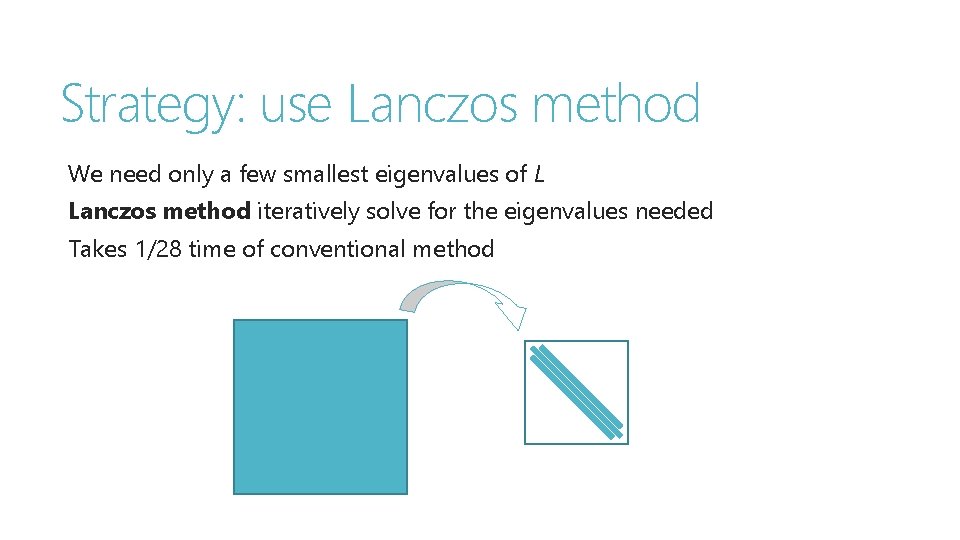
Strategy: use Lanczos method We need only a few smallest eigenvalues of L Lanczos method iteratively solve for the eigenvalues needed Takes 1/28 time of conventional method
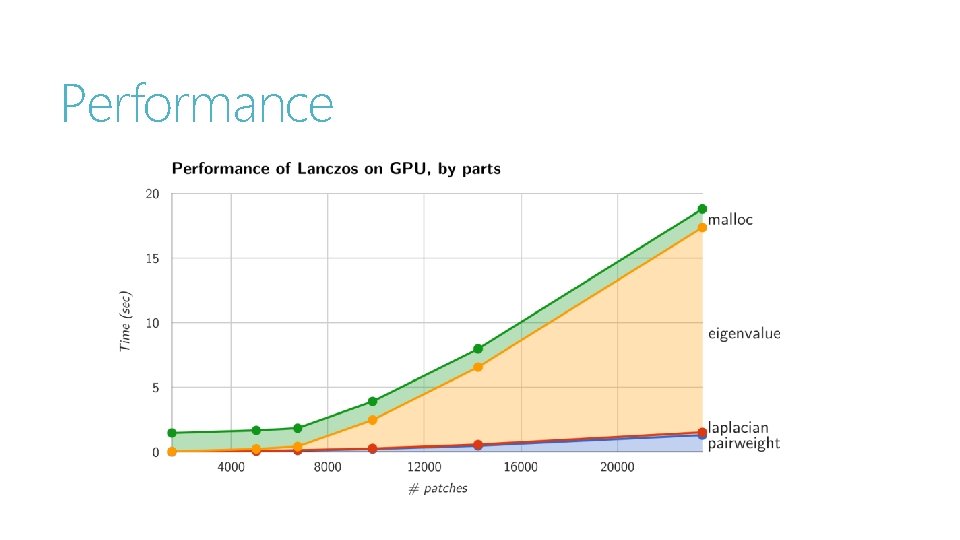
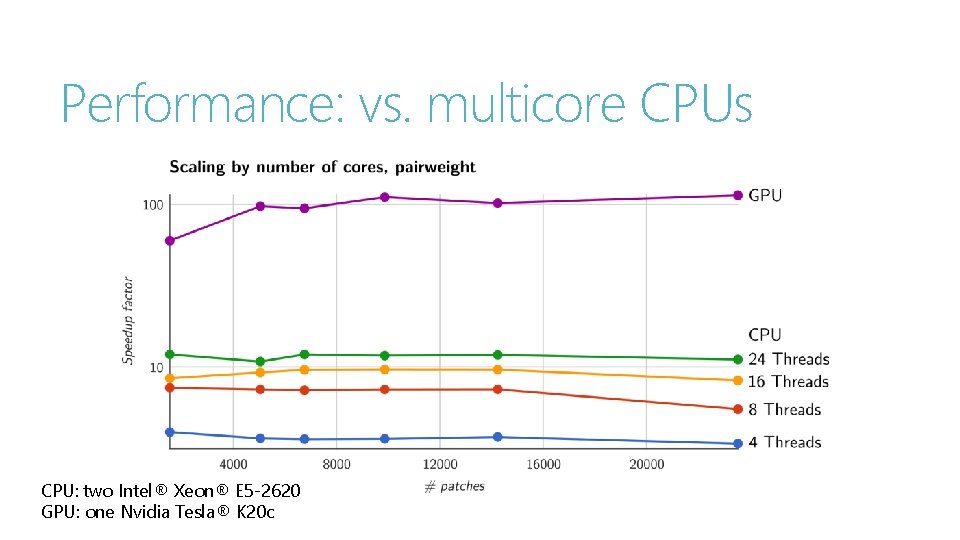
Performance
Performance: vs. multicore CPUs CPU: two Intel® Xeon® E 5 -2620 GPU: one Nvidia Tesla® K 20 c
Acknowledgement Trinity College, Student Research Program Nvidia Corporation, CUDA Teaching Center Program