
GPP Training toolkit 5 GPP and the Circular
- Slides: 18
GPP Training toolkit 5. GPP and the Circular Economy
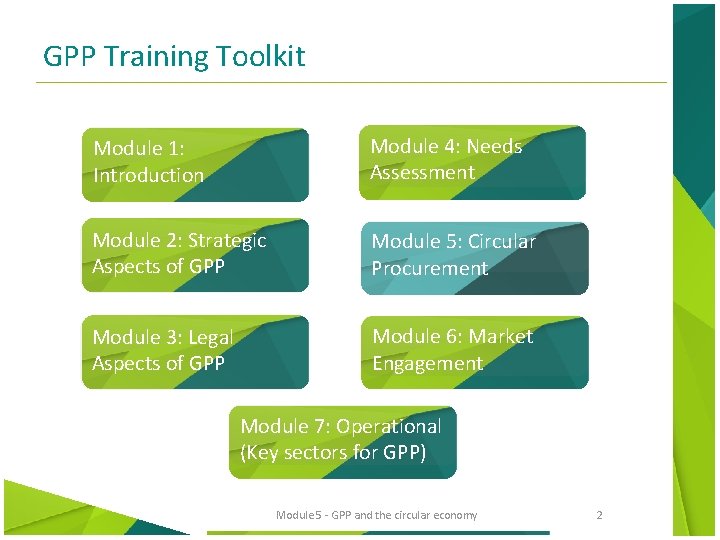
GPP Training Toolkit Module 1: Introduction Module 4: Needs Assessment Module 2: Strategic Aspects of GPP Module 5: Circular Procurement Module 3: Legal Aspects of GPP Module 6: Market Engagement Module 7: Operational (Key sectors for GPP) Module 5 - GPP and the circular economy 2
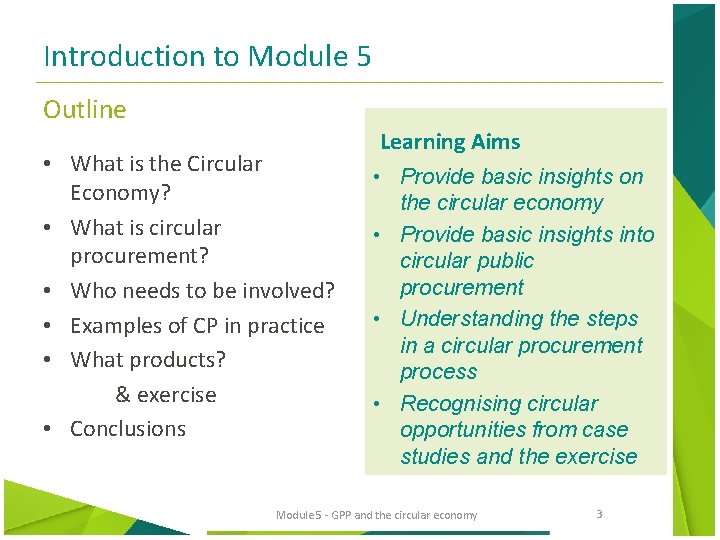
Introduction to Module 5 Outline • What is the Circular Economy? • What is circular procurement? • Who needs to be involved? • Examples of CP in practice • What products? & exercise • Conclusions Learning Aims • Provide basic insights on the circular economy • Provide basic insights into circular public procurement • Understanding the steps in a circular procurement process • Recognising circular opportunities from case studies and the exercise Module 5 - GPP and the circular economy 3
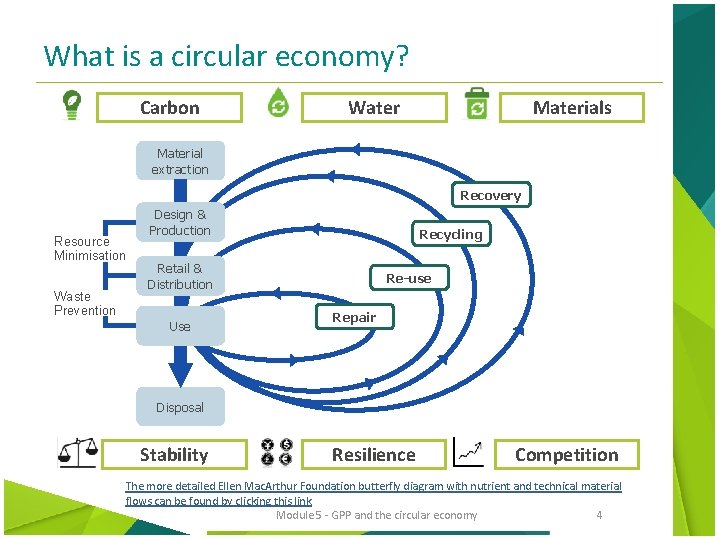
What is a circular economy? Carbon Water Materials Material extraction Recovery Resource Minimisation Waste Prevention Design & Production Recycling Retail & Distribution Use Re-use Repair Disposal Stability Resilience Competition The more detailed Ellen Mac. Arthur Foundation butterfly diagram with nutrient and technical material flows can be found by clicking this link Module 5 - GPP and the circular economy 4
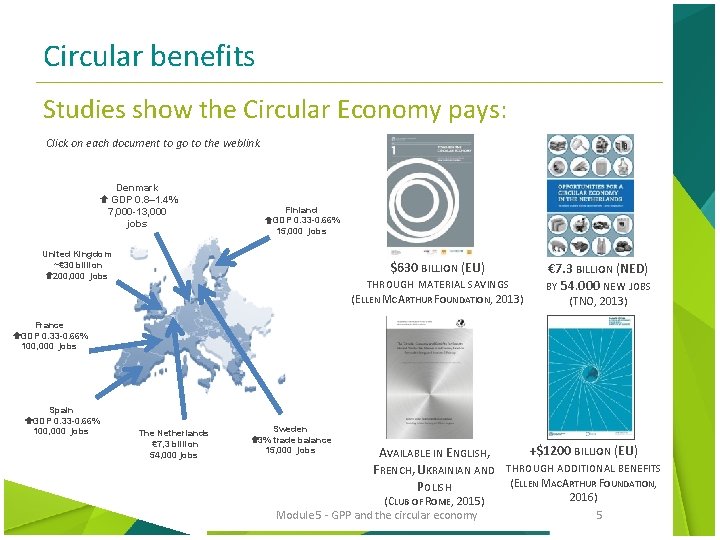
Circular benefits Studies show the Circular Economy pays: Click on each document to go to the weblink Denmark GDP 0. 8– 1. 4% 7, 000 -13, 000 jobs Finland GDP 0. 33 -0. 66% 15, 000 jobs United Kingdom ~€ 30 billion 200, 000 jobs $630 BILLION (EU) THROUGH MATERIAL SAVINGS (ELLEN MCARTHUR FOUNDATION, 2013) € 7. 3 BILLION (NED) BY 54. 000 NEW JOBS (TNO, 2013) France GDP 0. 33 -0. 66% 100, 000 jobs Spain GDP 0. 33 -0. 66% 100, 000 jobs The Netherlands € 7, 3 billion 54, 000 jobs Sweden 3% trade balance 15, 000 jobs +$1200 BILLION (EU) AVAILABLE IN ENGLISH, FRENCH, UKRAINIAN AND THROUGH ADDITIONAL BENEFITS (ELLEN MACARTHUR FOUNDATION, POLISH (CLUB OF ROME, 2015) Module 5 - GPP and the circular economy 2016) 5
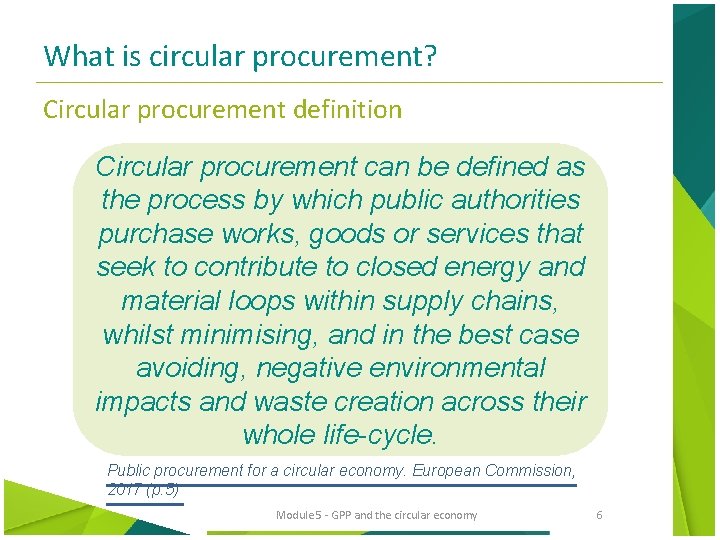
What is circular procurement? Circular procurement definition Circular procurement can be defined as the process by which public authorities purchase works, goods or services that seek to contribute to closed energy and material loops within supply chains, whilst minimising, and in the best case avoiding, negative environmental impacts and waste creation across their whole life-cycle. Public procurement for a circular economy. European Commission, 2017 (p. 5) Module 5 - GPP and the circular economy 6
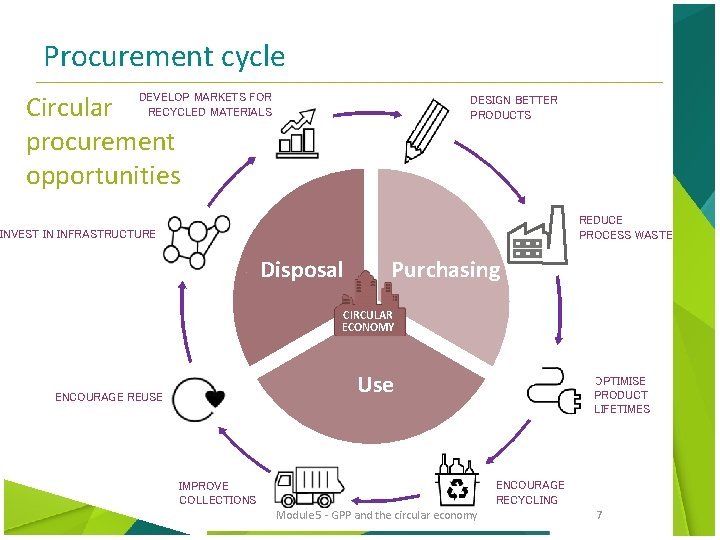
Procurement cycle Circular procurement opportunities DEVELOP MARKETS FOR RECYCLED MATERIALS DESIGN BETTER PRODUCTS REDUCE PROCESS WASTE INVEST IN INFRASTRUCTURE Disposal Purchasing CIRCULAR ECONOMY Use ENCOURAGE REUSE OPTIMISE PRODUCT LIFETIMES ENCOURAGE RECYCLING IMPROVE COLLECTIONS Module 5 - GPP and the circular economy 7
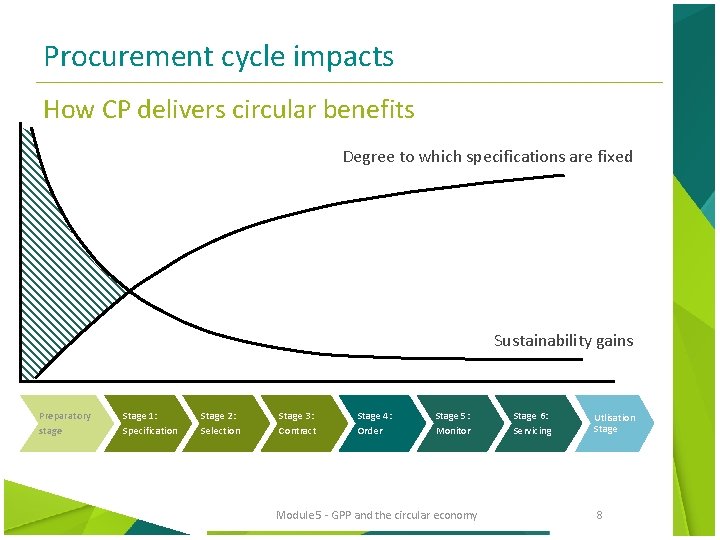
Procurement cycle impacts How CP delivers circular benefits Degree to which specifications are fixed Sustainability gains Preparatory stage Stage 1: Specification Stage 2: Selection Stage 3: Contract Stage 4: Order Stage 5: Monitor Module 5 - GPP and the circular economy Stage 6: Servicing Utlisation Stage 8
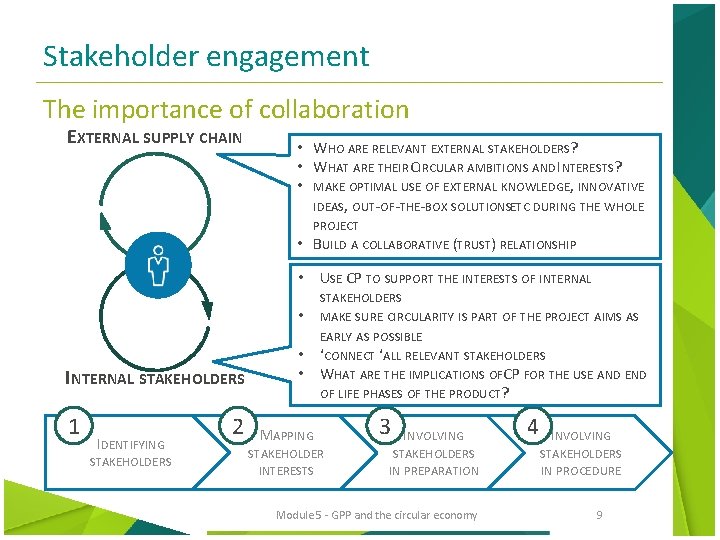
Stakeholder engagement The importance of collaboration EXTERNAL SUPPLY CHAIN • WHO ARE RELEVANT EXTERNAL STAKEHOLDERS? • WHAT ARE THEIR CIRCULAR AMBITIONS AND INTERESTS? • MAKE OPTIMAL USE OF EXTERNAL KNOWLEDGE, INNOVATIVE IDEAS, OUT-OF-THE-BOX SOLUTIONSETC DURING THE WHOLE • PROJECT BUILD A COLLABORATIVE (TRUST) RELATIONSHIP • • INTERNAL STAKEHOLDERS 1 IDENTIFYING STAKEHOLDERS 2 • • USE CP TO SUPPORT THE INTERESTS OF INTERNAL STAKEHOLDERS MAKE SURE CIRCULARITY IS PART OF THE PROJECT AIMS AS EARLY AS POSSIBLE ‘CONNECT ‘ALL RELEVANT STAKEHOLDERS WHAT ARE THE IMPLICATIONS OFCP FOR THE USE AND END OF LIFE PHASES OF THE PRODUCT? MAPPING STAKEHOLDER INTERESTS 3 INVOLVING STAKEHOLDERS IN PREPARATION Module 5 - GPP and the circular economy 4 INVOLVING STAKEHOLDERS IN PROCEDURE 9
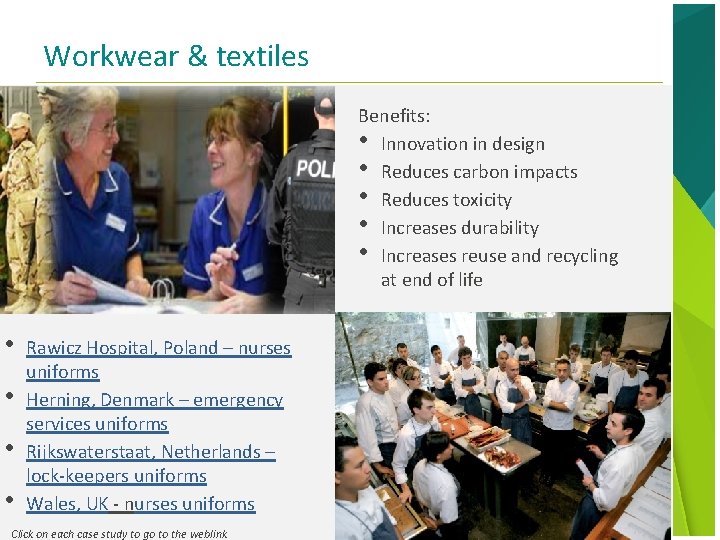
Workwear & textiles Benefits: • Innovation in design • Reduces carbon impacts • Reduces toxicity • Increases durability • Increases reuse and recycling at end of life • • Rawicz Hospital, Poland – nurses uniforms Herning, Denmark – emergency services uniforms Rijkswaterstaat, Netherlands – lock-keepers uniforms Wales, UK - nurses uniforms Module name + number Sustainable Resources Ltd Click on each case study to go to. Global the weblink 10
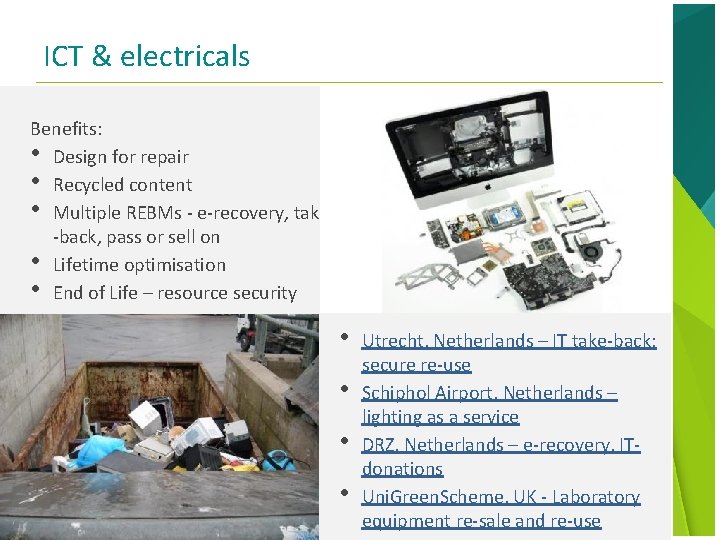
ICT & electricals Benefits: • Design for repair • Recycled content • Multiple REBMs - e-recovery, take -back, pass or sell on • Lifetime optimisation • End of Life – resource security • Utrecht, Netherlands – IT take-back; secure re-use • Schiphol Airport, Netherlands – lighting as a service • DRZ, Netherlands – e-recovery, ITdonations • Uni. Green. Scheme, UK - Laboratory Module name + number equipment re-sale and re-use 11 Sustainable Global Resources Ltd
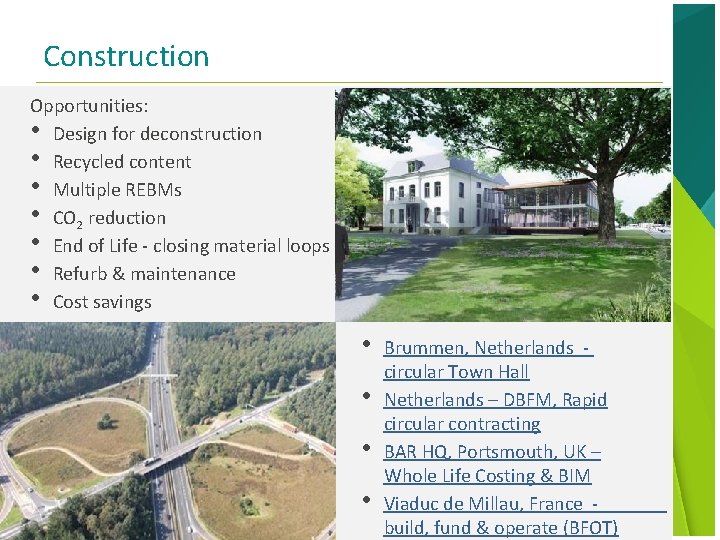
Construction Opportunities: • Design for deconstruction • Recycled content • Multiple REBMs • CO 2 reduction • End of Life - closing material loops • Refurb & maintenance • Cost savings • Brummen, Netherlands circular Town Hall • Netherlands – DBFM, Rapid circular contracting • BAR HQ, Portsmouth, UK – Whole Life Costing & BIM • Viaduc de Millau, France -12 Module name + number Sustainable Global Resources Ltd build, fund & operate (BFOT)
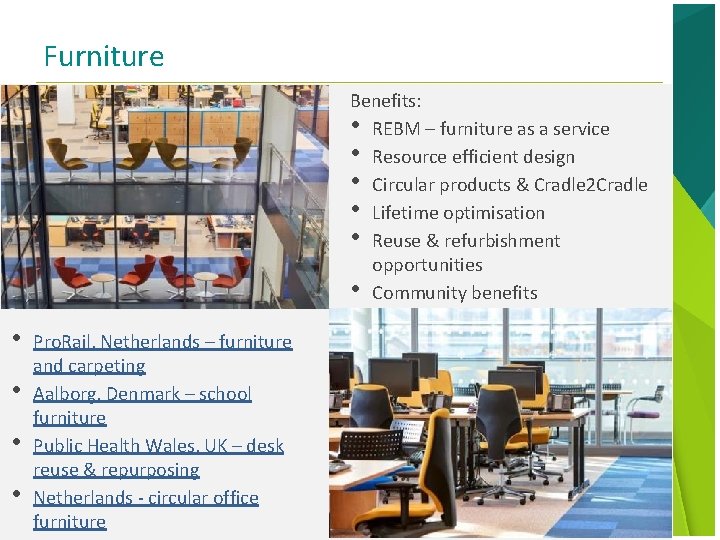
Furniture Benefits: • REBM – furniture as a service • Resource efficient design • Circular products & Cradle 2 Cradle • Lifetime optimisation • Reuse & refurbishment opportunities • Community benefits • • Pro. Rail, Netherlands – furniture and carpeting Aalborg, Denmark – school furniture Public Health Wales, UK – desk reuse & repurposing Netherlands - circular office Module name + number furniture Sustainable Global Resources Ltd 13
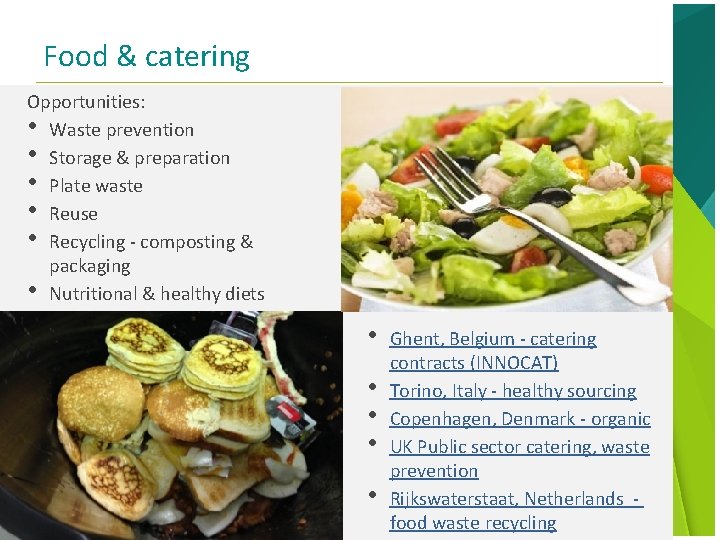
Food & catering Opportunities: • Waste prevention • Storage & preparation • Plate waste • Reuse • Recycling - composting & packaging • Nutritional & healthy diets • Ghent, Belgium - catering contracts (INNOCAT) • Torino, Italy - healthy sourcing • Copenhagen, Denmark - organic • UK Public sector catering, waste prevention • Rijkswaterstaat, Netherlands Module name + number 14 food waste recycling Sustainable Global Resources Ltd
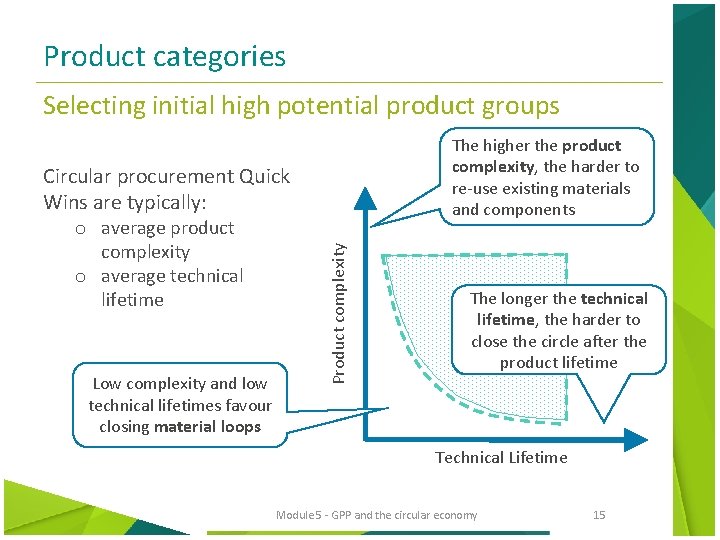
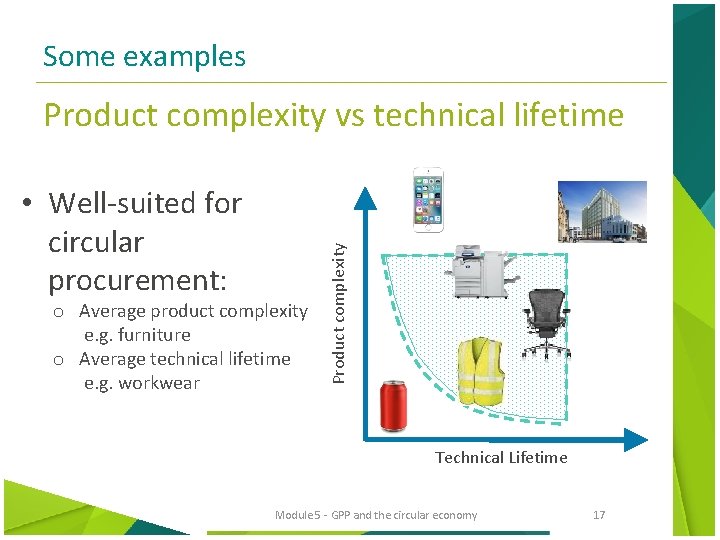
Product categories Selecting initial high potential product groups The higher the product complexity, the harder to re-use existing materials and components o average product complexity o average technical lifetime Low complexity and low technical lifetimes favour closing material loops Product complexity Circular procurement Quick Wins are typically: The longer the technical lifetime, the harder to close the circle after the product lifetime Technical Lifetime Module 5 - GPP and the circular economy 15
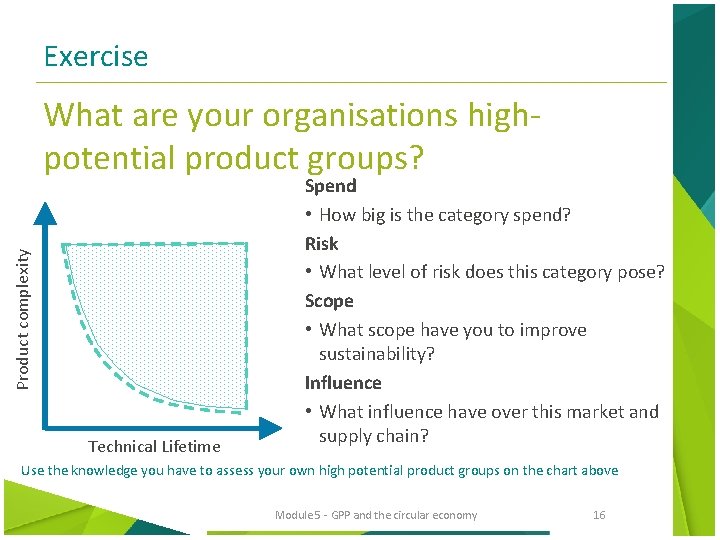
Exercise Product complexity What are your organisations highpotential product groups? Technical Lifetime Spend • How big is the category spend? Risk • What level of risk does this category pose? Scope • What scope have you to improve sustainability? Influence • What influence have over this market and supply chain? Use the knowledge you have to assess your own high potential product groups on the chart above Module 5 - GPP and the circular economy 16
Some examples • Well-suited for circular procurement: o Average product complexity e. g. furniture o Average technical lifetime e. g. workwear Product complexity vs technical lifetime Technical Lifetime Module 5 - GPP and the circular economy 17
Conclusions Three key points: • Process – challenge the need, consider circularity early and collaborate • Technical – market engagement to understand what is possible as well as what is available • Finance – circular business models help facilitate circular procurement GPP Helpdesk For further support on GPP, contact the EU’s free Helpdesk Toolkit developed for the European Commission by ICLEI - Local Governments for Sustainability Module Author: Sustainable Global Resources Owner, Editor: European Commission, DG Environment, 2019 Photos: courtesy of Pixabay. com under Creative Commons CCO Disclaimer: This toolkit is an indicative document of the Commission services and cannot be considered binding to this institution in any way. Neither the European Commission nor any person acting on behalf of the Commission is responsible for the use that might be made of the information in this document. Module 5 - GPP and the circular economy