
GPD Low Demand Program Fidelity Review Summary for
- Slides: 27
GPD Low Demand Program Fidelity Review Summary for 2019 M. Scott Young , Ph. D Research Assistant Professor University of South Florida Paul Smits, LCSW Senior Policy Analyst University of South Florida 1
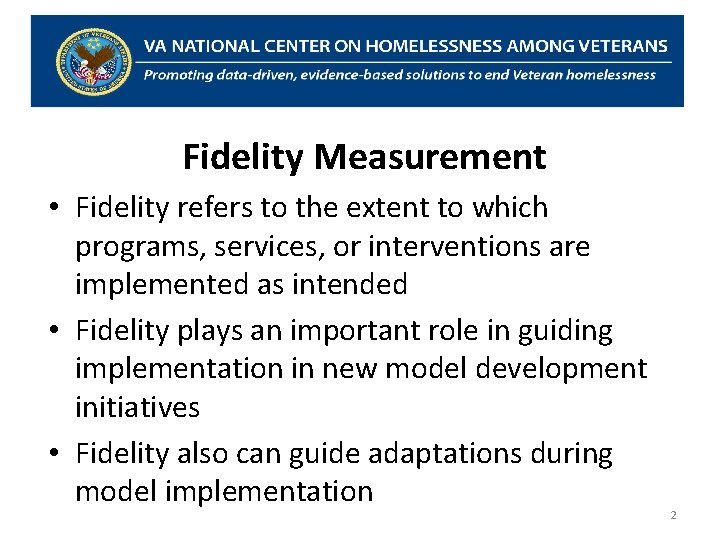
Fidelity Measurement • Fidelity refers to the extent to which programs, services, or interventions are implemented as intended • Fidelity plays an important role in guiding implementation in new model development initiatives • Fidelity also can guide adaptations during model implementation 2
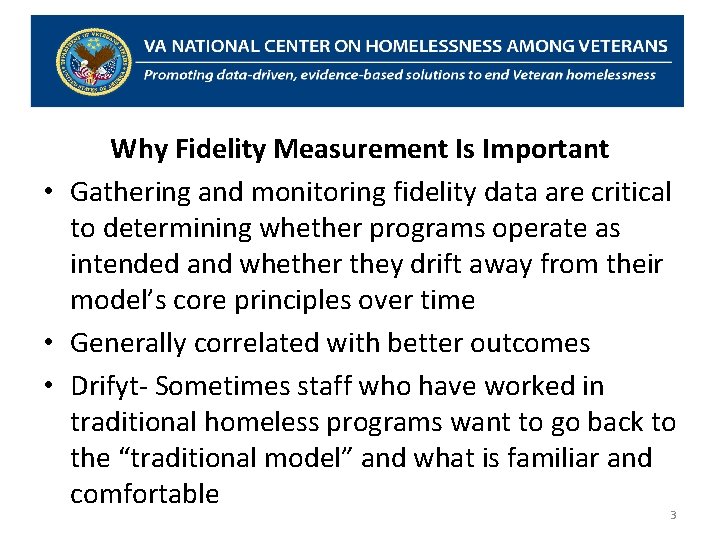
Why Fidelity Measurement Is Important • Gathering and monitoring fidelity data are critical to determining whether programs operate as intended and whether they drift away from their model’s core principles over time • Generally correlated with better outcomes • Drifyt- Sometimes staff who have worked in traditional homeless programs want to go back to the “traditional model” and what is familiar and comfortable 3
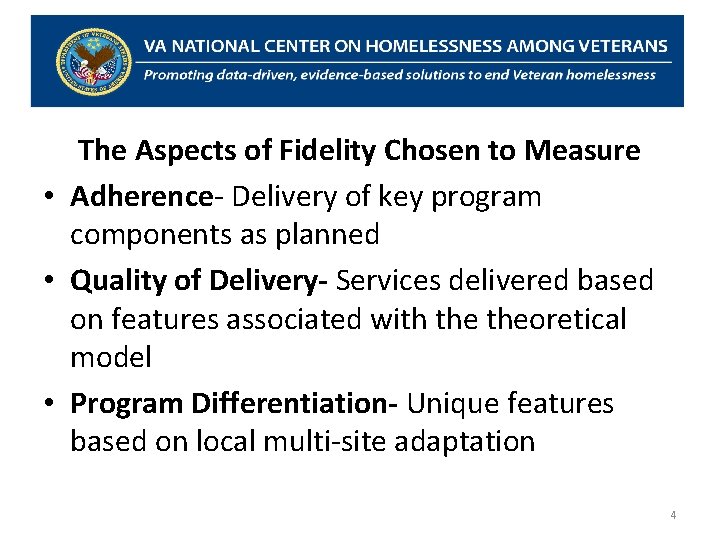
The Aspects of Fidelity Chosen to Measure • Adherence- Delivery of key program components as planned • Quality of Delivery- Services delivered based on features associated with theoretical model • Program Differentiation- Unique features based on local multi-site adaptation 4
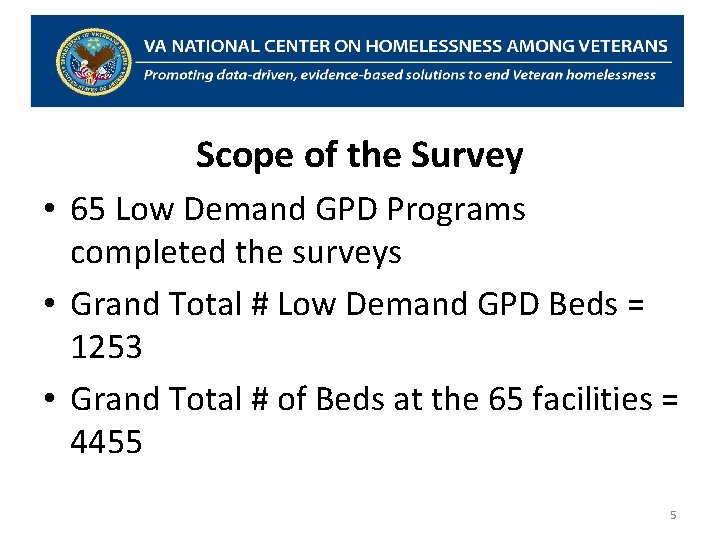
Scope of the Survey • 65 Low Demand GPD Programs completed the surveys • Grand Total # Low Demand GPD Beds = 1253 • Grand Total # of Beds at the 65 facilities = 4455 5
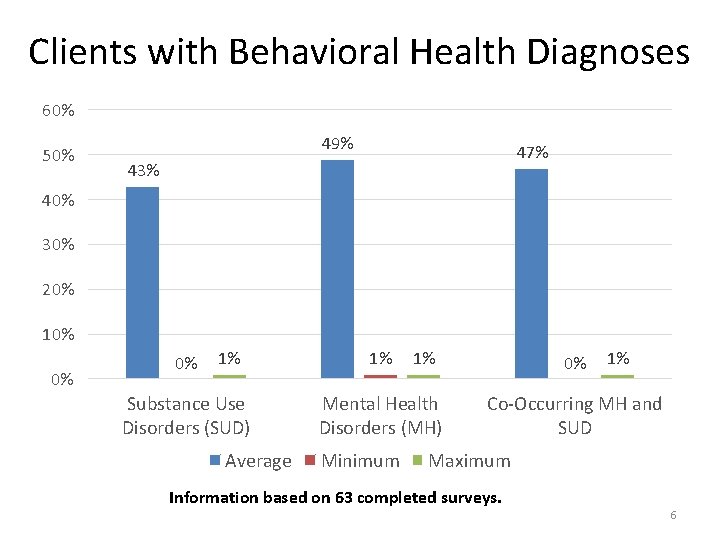
Clients with Behavioral Health Diagnoses 60% 50% 49% 47% 43% 40% 30% 20% 10% 0% 0% 1% Substance Use Disorders (SUD) Average 1% 1% Mental Health Disorders (MH) Minimum 0% 1% Co-Occurring MH and SUD Maximum Information based on 63 completed surveys. 6
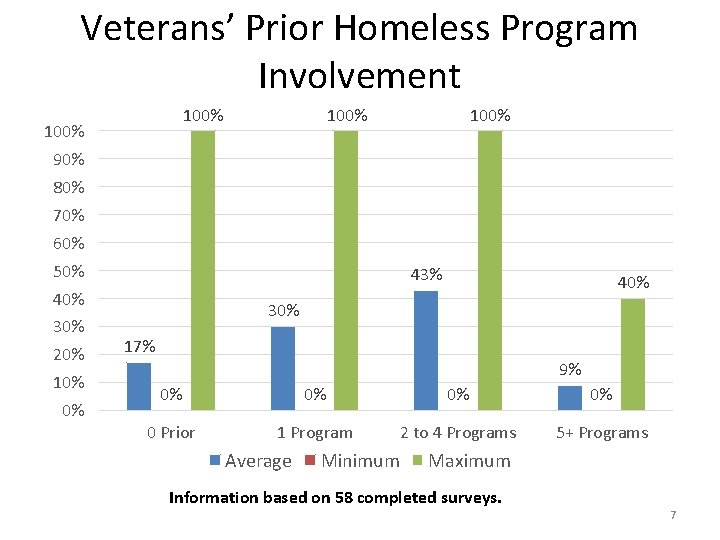
Veterans’ Prior Homeless Program Involvement 100% 90% 80% 70% 60% 50% 43% 40% 30% 20% 10% 0% 40% 30% 17% 9% 0% 0% 0 Prior 1 Program 2 to 4 Programs 5+ Programs Average Minimum Maximum Information based on 58 completed surveys. 7
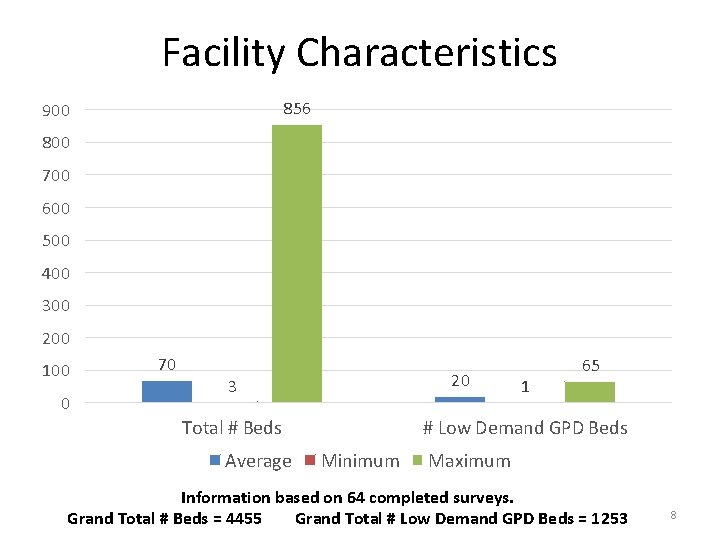
Facility Characteristics 856 900 800 700 600 500 400 300 200 100 0 70 20 3 Total # Beds Average 1 65 # Low Demand GPD Beds Minimum Maximum Information based on 64 completed surveys. Grand Total # Beds = 4455 Grand Total # Low Demand GPD Beds = 1253 8
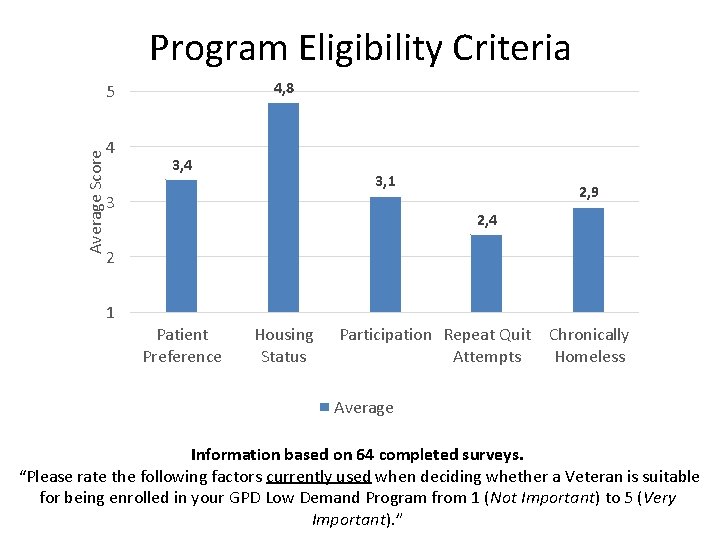
Program Eligibility Criteria 4, 8 Average Score 5 4 3, 1 3 2, 9 2, 4 2 1 Patient Preference Housing Status Participation Repeat Quit Chronically Attempts Homeless Average Information based on 64 completed surveys. “Please rate the following factors currently used when deciding whether a Veteran is suitable for being enrolled in your GPD Low Demand Program from 1 (Not Important) to 5 (Very Important). ”
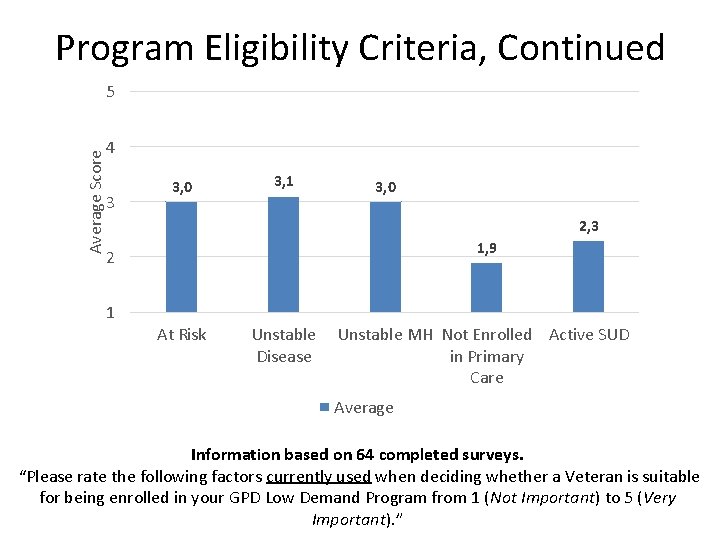
Program Eligibility Criteria, Continued Average Score 5 4 3 3, 0 3, 1 3, 0 2, 3 1, 9 2 1 At Risk Unstable Disease Unstable MH Not Enrolled Active SUD in Primary Care Average Information based on 64 completed surveys. “Please rate the following factors currently used when deciding whether a Veteran is suitable for being enrolled in your GPD Low Demand Program from 1 (Not Important) to 5 (Very Important). ”
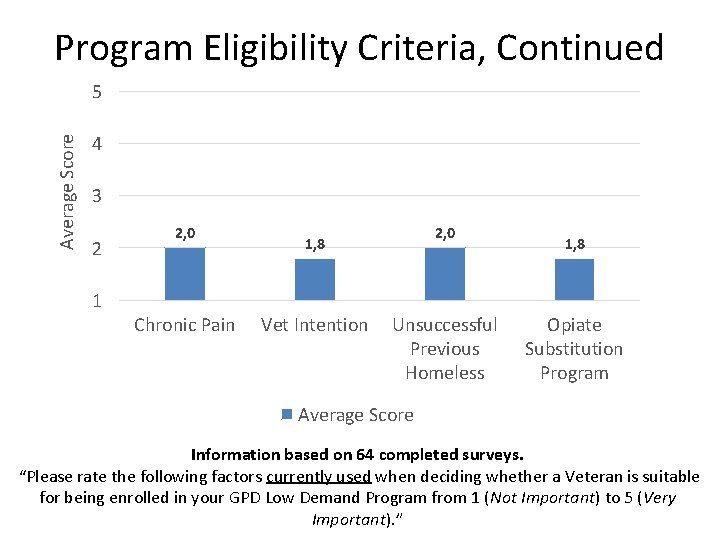
Program Eligibility Criteria, Continued Average Score 5 4 3 2 2, 0 1, 8 1 Chronic Pain Vet Intention Unsuccessful Previous Homeless Opiate Substitution Program Average Score Information based on 64 completed surveys. “Please rate the following factors currently used when deciding whether a Veteran is suitable for being enrolled in your GPD Low Demand Program from 1 (Not Important) to 5 (Very Important). ”
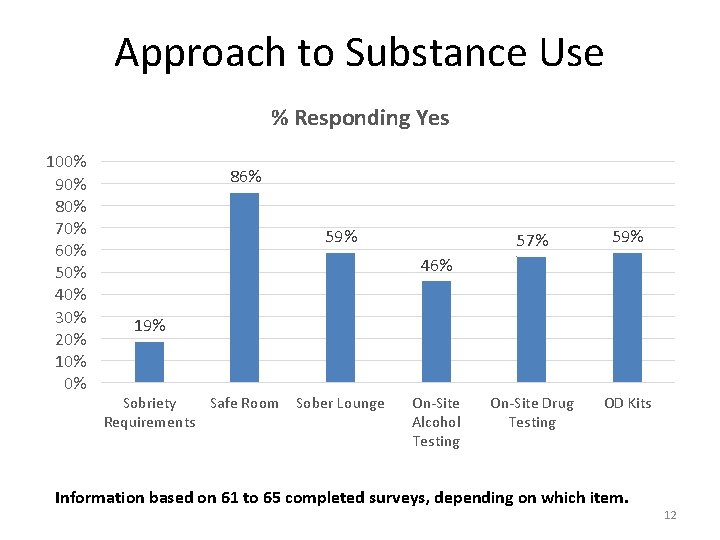
Approach to Substance Use % Responding Yes 100% 90% 80% 70% 60% 50% 40% 30% 20% 10% 0% 86% 59% 57% 59% On-Site Drug Testing OD Kits 46% 19% Sobriety Safe Room Requirements Sober Lounge On-Site Alcohol Testing Information based on 61 to 65 completed surveys, depending on which item. 12
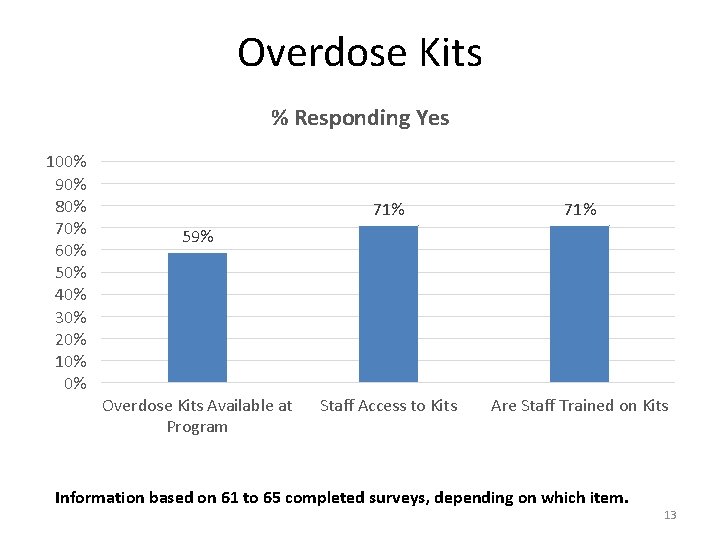
Overdose Kits % Responding Yes 100% 90% 80% 70% 60% 50% 40% 30% 20% 10% 0% 71% Staff Access to Kits Are Staff Trained on Kits 59% Overdose Kits Available at Program Information based on 61 to 65 completed surveys, depending on which item. 13
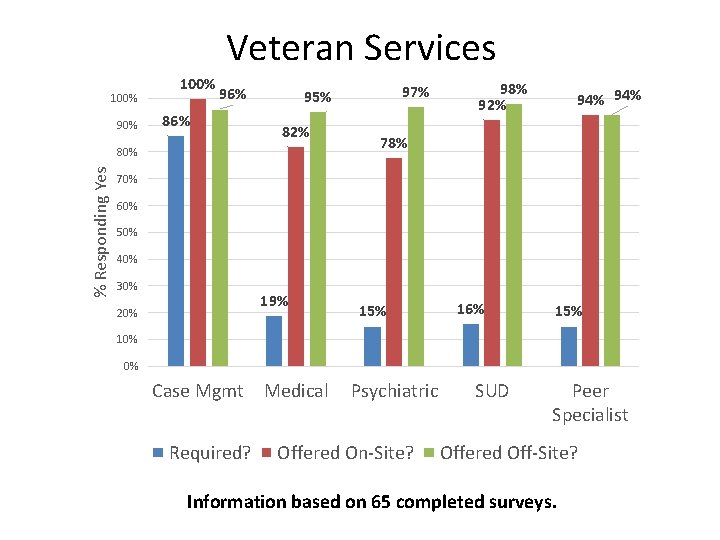
Veteran Services 100% 90% 100% 96% 82% 80% % Responding Yes 97% 95% 98% 92% 94% 78% 70% 60% 50% 40% 30% 19% 20% 15% 16% 15% 10% 0% Case Mgmt Medical Required? Psychiatric Offered On-Site? SUD Peer Specialist Offered Off-Site? Information based on 65 completed surveys.
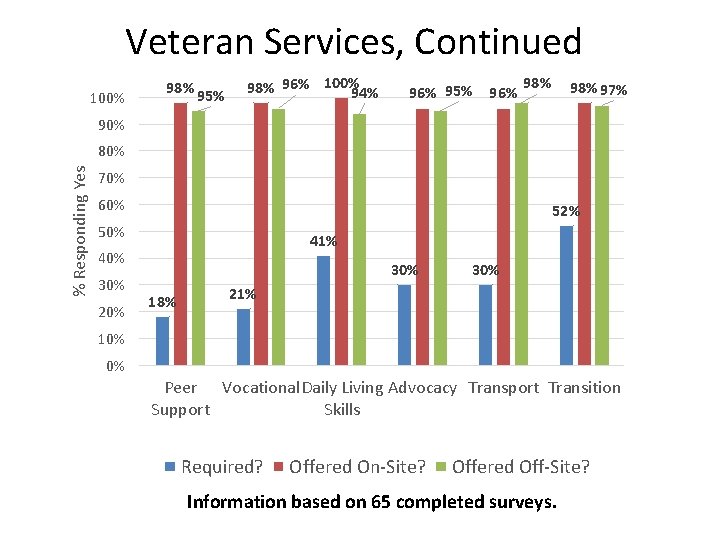
Veteran Services, Continued 100% 98% 95% 98% 96% 100% 94% 96% 95% 96% 98% 97% 90% % Responding Yes 80% 70% 60% 52% 50% 41% 40% 30% 20% 30% 18% 30% 21% 10% 0% Peer Vocational. Daily Living Advocacy Transport Transition Support Skills Required? Offered On-Site? Offered Off-Site? Information based on 65 completed surveys.
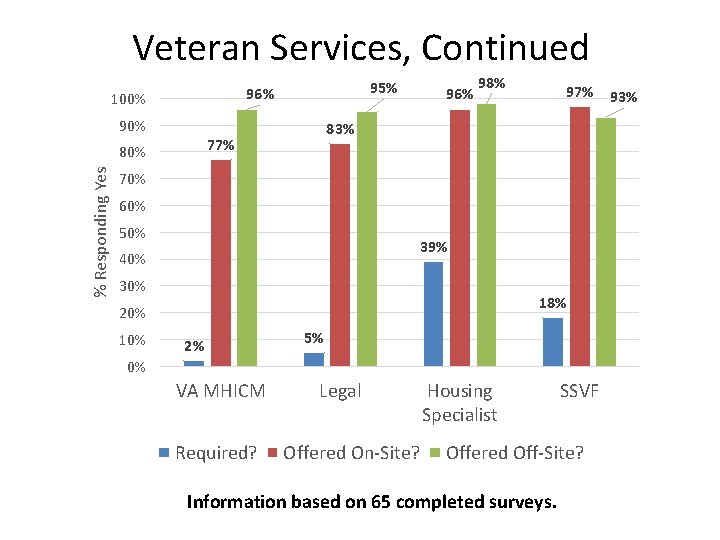
Veteran Services, Continued 95% 96% 100% 90% % Responding Yes 98% 97% 83% 77% 80% 96% 70% 60% 50% 39% 40% 30% 18% 20% 10% 2% 5% 0% VA MHICM Required? Legal Offered On-Site? Housing Specialist SSVF Offered Off-Site? Information based on 65 completed surveys. 93%
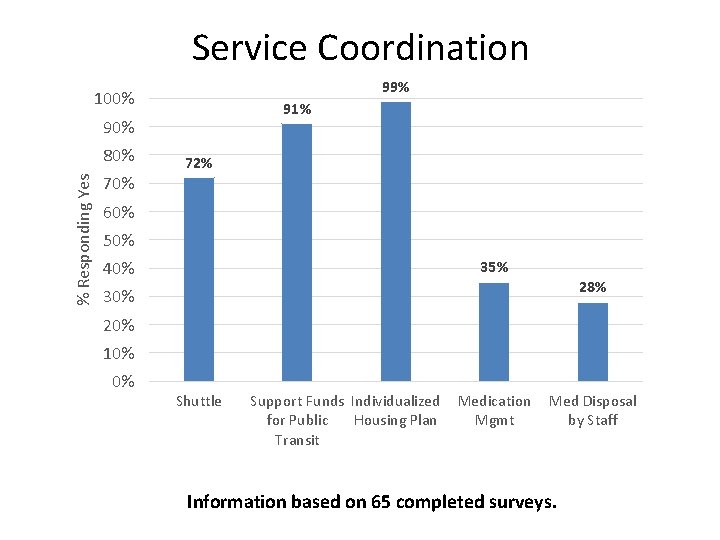
Service Coordination 99% 100% 91% 90% % Responding Yes 80% 72% 70% 60% 50% 40% 35% 28% 30% 20% 10% 0% Shuttle Support Funds Individualized for Public Housing Plan Transit Medication Mgmt Med Disposal by Staff Information based on 65 completed surveys.
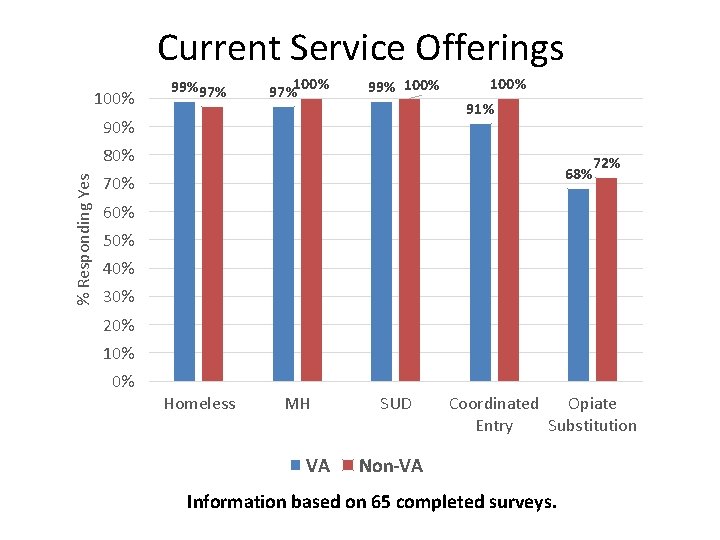
Current Service Offerings 100% 99%97% 100% 97% 99% 100% 91% 90% % Responding Yes 80% 68% 70% 72% 60% 50% 40% 30% 20% 10% 0% Homeless MH VA SUD Coordinated Opiate Entry Substitution Non-VA Information based on 65 completed surveys.
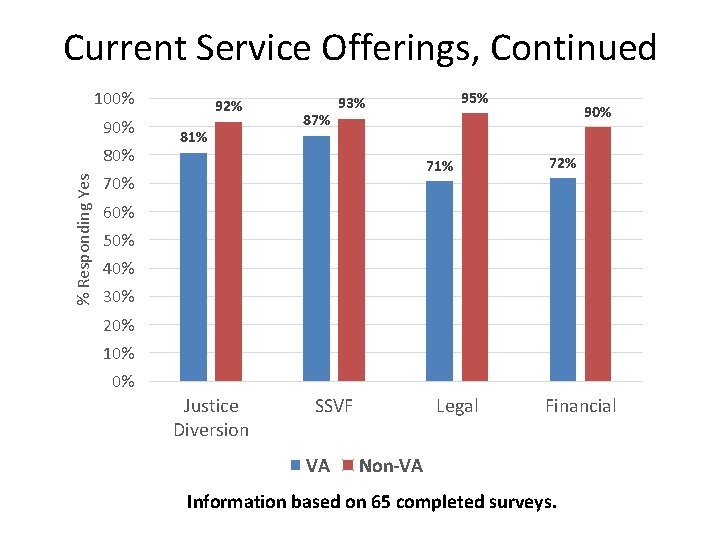
Current Service Offerings, Continued 100% 90% % Responding Yes 80% 92% 81% 87% 95% 93% 71% 70% 90% 72% 60% 50% 40% 30% 20% 10% 0% Justice Diversion SSVF VA Legal Financial Non-VA Information based on 65 completed surveys.
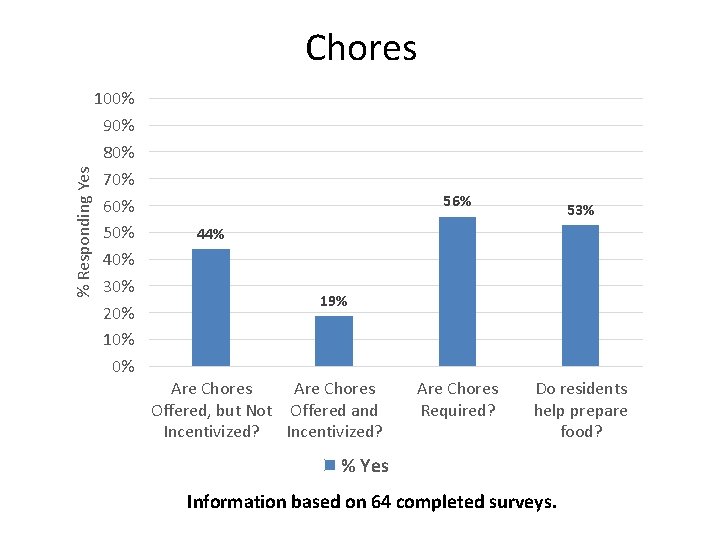
% Responding Yes Chores 100% 90% 80% 70% 60% 50% 40% 30% 20% 10% 0% 56% 53% 44% 19% Are Chores Offered, but Not Offered and Incentivized? Are Chores Required? Do residents help prepare food? % Yes Information based on 64 completed surveys.
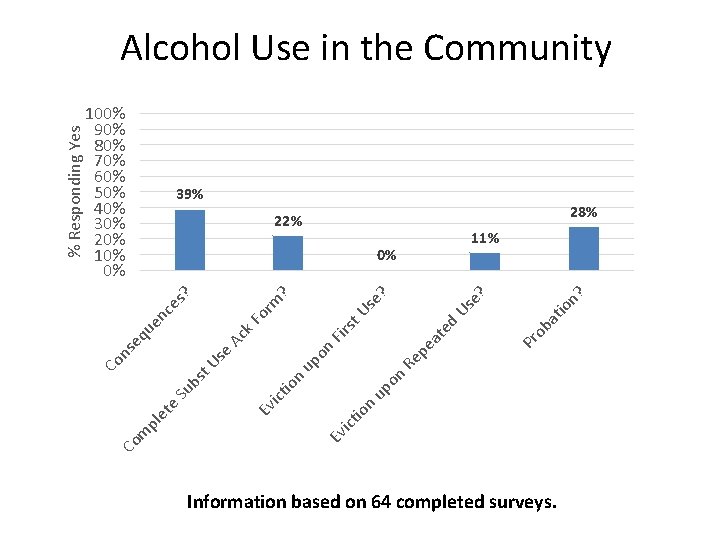
100% 90% 80% 70% 60% 50% 40% 30% 20% 10% 0% 39% 28% 22% ob Pr on n up io Ev ict io n ict Ev at io e? Us at ed pe Re on up se t. U bs Su et e pl m se ? Fir Ac k. F st U or m ? es ? nc ue eq ns Co n? 11% 0% Co % Responding Yes Alcohol Use in the Community Information based on 64 completed surveys.
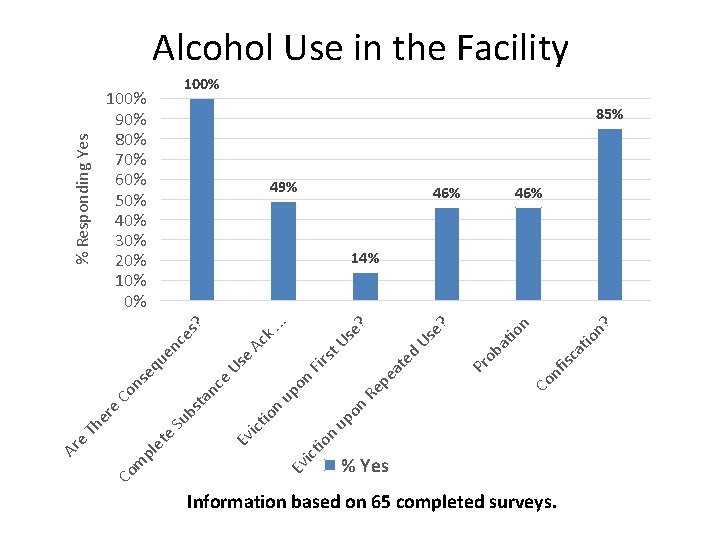
n io ict Ev on up n io ict nf n? io at isc 46% Co n io at ob e? Us 49% Pr at ed e? Us . . k. Ac st Fir e Us pe Re on up ce s? ce en se qu % Responding Yes 100% 90% 80% 70% 60% 50% 40% 30% 20% 10% 0% Ev Co n ta n bs e er Su Th e et Co m pl e Ar Alcohol Use in the Facility 100% 85% 46% 14% % Yes Information based on 65 completed surveys.
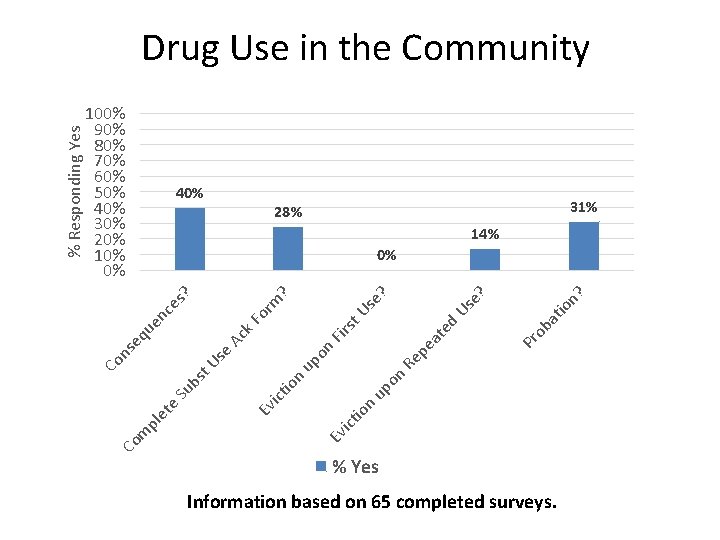
100% 90% 80% 70% 60% 50% 40% 30% 20% 10% 0% 40% 31% 28% 14% n? at io ob at ed pe Re Pr Us e? se ? st U Fir on on n up io ict io n ict Ev Ev Co m pl et e Su bs t. U up se ns eq ue Ac k. F nc or m ? es ? 0% Co % Responding Yes Drug Use in the Community % Yes Information based on 65 completed surveys.
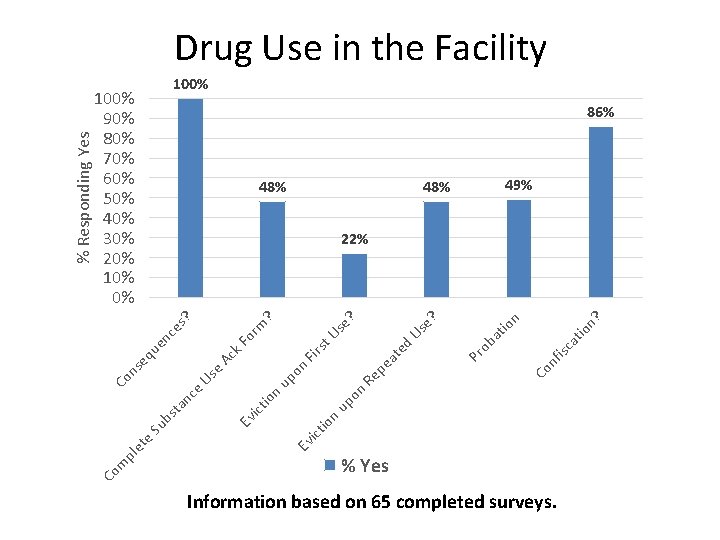
m Co io n ict on up io n ict Ev e Us ? io n at fis c 48% Co n n io at ob Us e? 48% Pr d at e pe Re ? se ? ? es or m st U Fir k. F ue nc Ac n up o ta nc e bs Su se q Co n 100% 90% 80% 70% 60% 50% 40% 30% 20% 10% 0% Ev e pl et % Responding Yes Drug Use in the Facility 100% 86% 49% 22% % Yes Information based on 65 completed surveys.
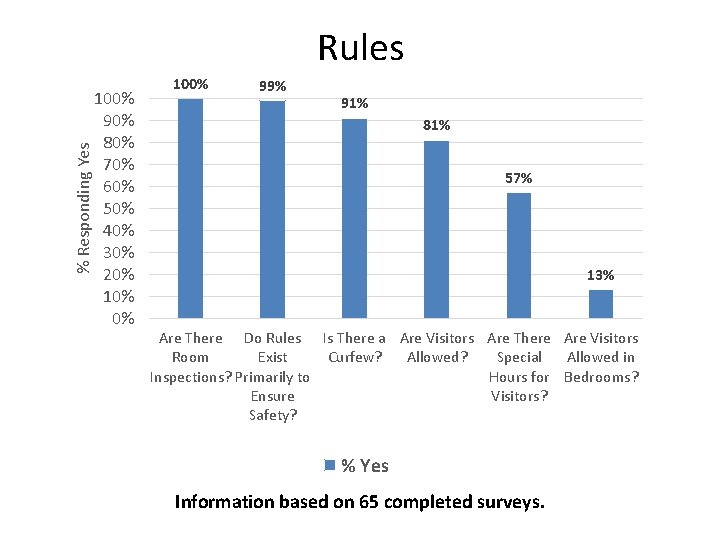
% Responding Yes Rules 100% 90% 80% 70% 60% 50% 40% 30% 20% 10% 0% 100% 99% 91% 81% 57% 13% Are There Do Rules Is There a Are Visitors Are There Are Visitors Room Exist Curfew? Allowed? Special Allowed in Inspections? Primarily to Hours for Bedrooms? Ensure Visitors? Safety? % Yes Information based on 65 completed surveys.
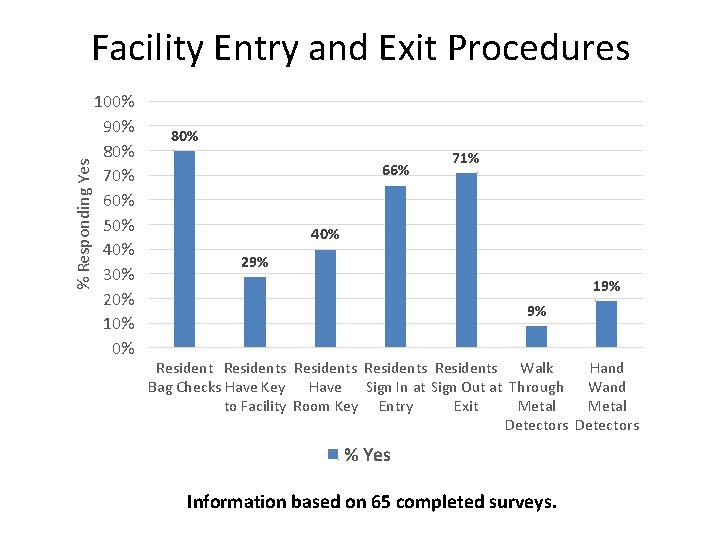
% Responding Yes Facility Entry and Exit Procedures 100% 90% 80% 70% 60% 50% 40% 30% 20% 10% 0% 80% 66% 71% 40% 29% 19% 9% Residents Residents Walk Hand Bag Checks Have Key Have Sign In at Sign Out at Through Wand to Facility Room Key Entry Exit Metal Detectors % Yes Information based on 65 completed surveys.
Questions? / Discussion 27