
GOVERNMENTS OF CUBA BRAZIL AND MEXICO CUBA Official
GOVERNMENTS OF CUBA, BRAZIL, AND MEXICO
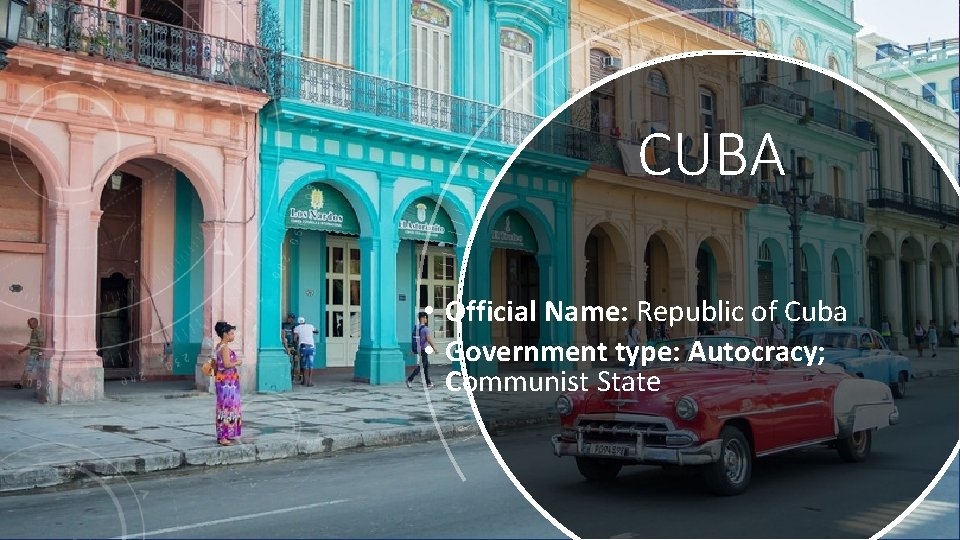
CUBA • Official Name: Republic of Cuba • Government type: Autocracy; Communist State :
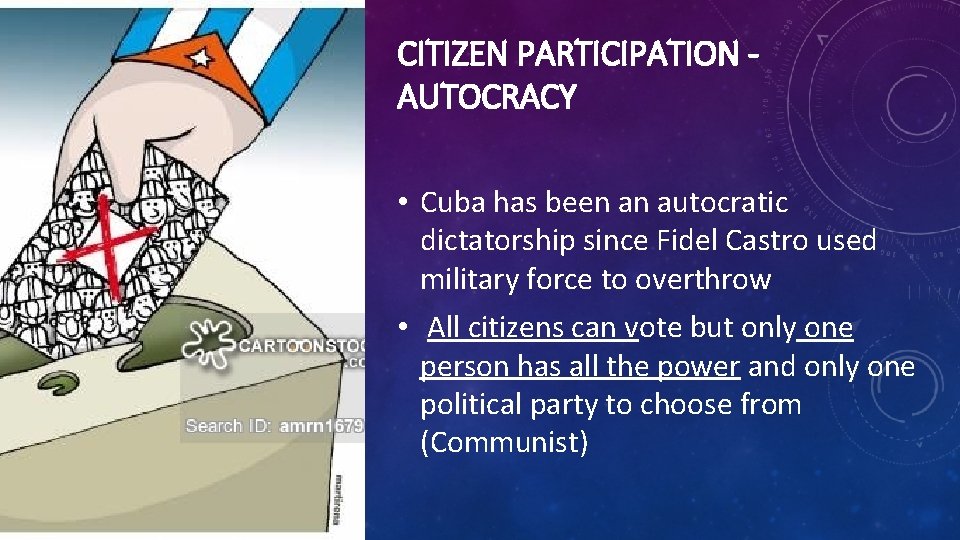
CITIZEN PARTICIPATION AUTOCRACY • Cuba has been an autocratic dictatorship since Fidel Castro used military force to overthrow • All citizens can vote but only one person has all the power and only one political party to choose from (Communist)
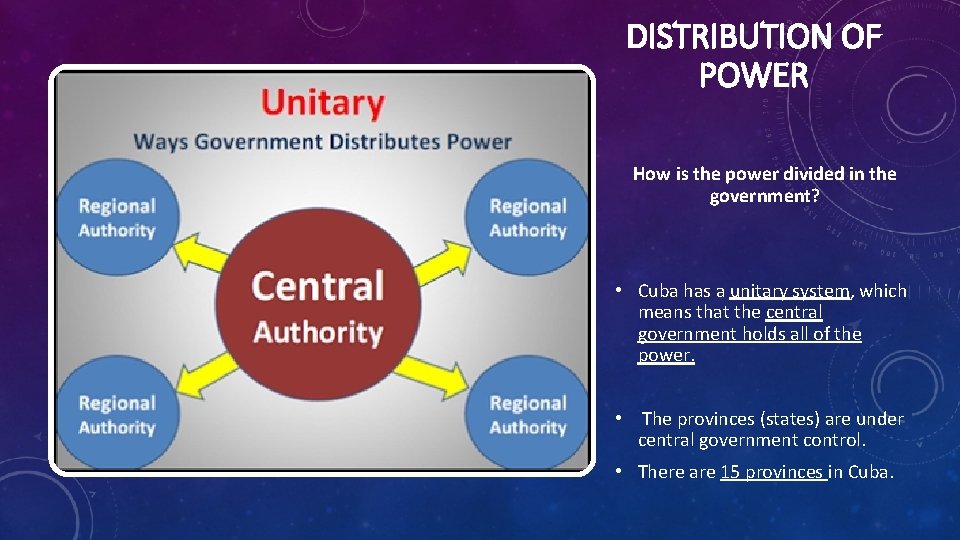
DISTRIBUTION OF POWER How is the power divided in the government? • Cuba has a unitary system, which means that the central government holds all of the power. • The provinces (states) are under central government control. • There are 15 provinces in Cuba.
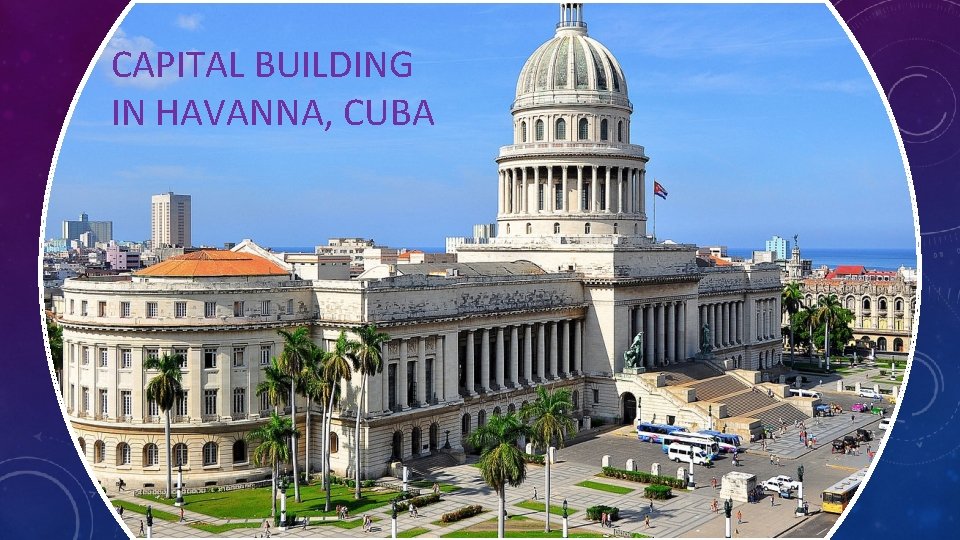
CAPITAL BUILDING IN HAVANNA, CUBA
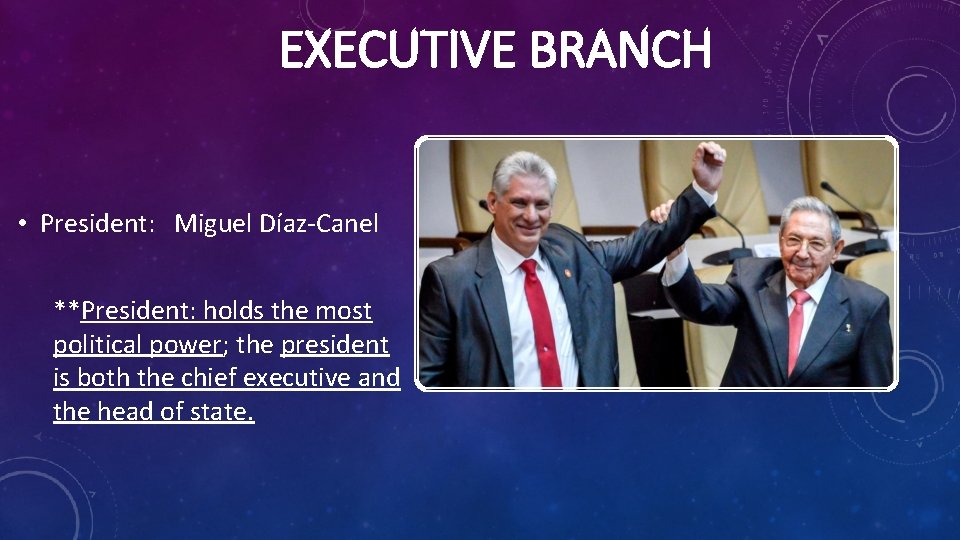
EXECUTIVE BRANCH • President: Miguel Díaz-Canel **President: holds the most political power; the president is both the chief executive and the head of state.
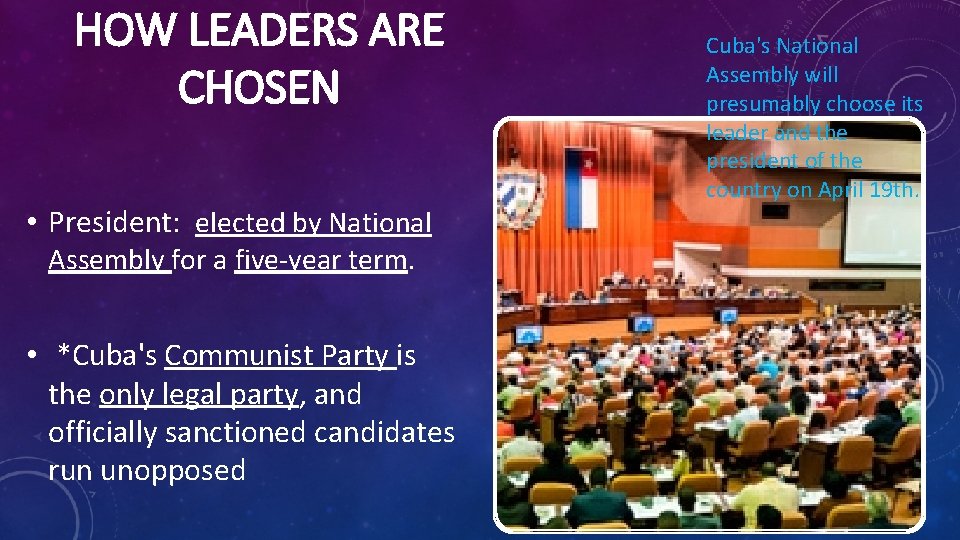
HOW LEADERS ARE CHOSEN • President: elected by National Assembly for a five-year term. • *Cuba's Communist Party is the only legal party, and officially sanctioned candidates run unopposed Cuba's National Assembly will presumably choose its leader and the president of the country on April 19 th.
LEGISLATIVE BRANCH • The National Assembly of People’s Power is the country’s unicameral legislature. • Candidates are selected and approved by the government before the people can vote for them. • Cuba's Communist Party is the only legal party, and officially sanctioned candidates run unopposed • Members serve five-year terms. members directly elected by absolute majority vote • • The number of seats is based on Cuba’s population. • As of the most recent election in February 2013, there were 614 seats. • elections: last held on 11 March 2018 (next to be held in early 2023)
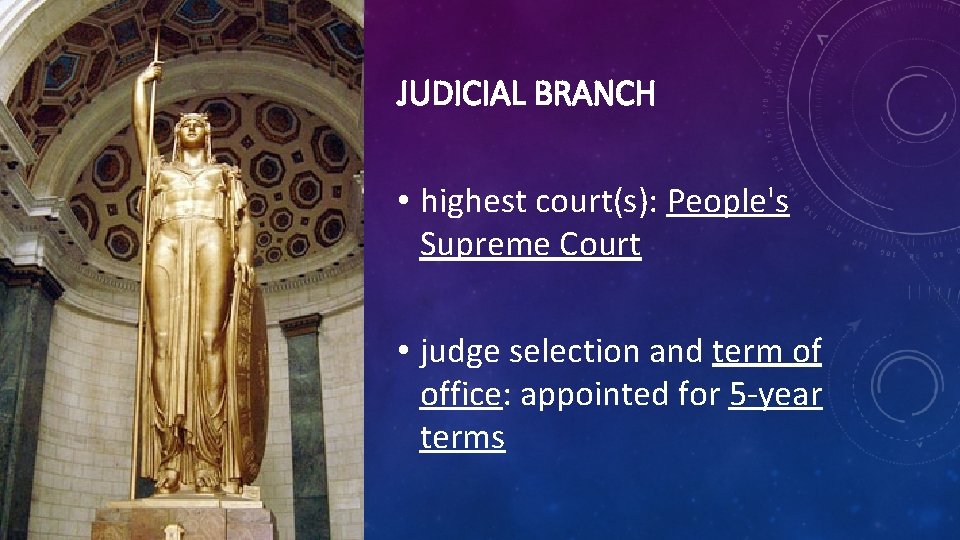
JUDICIAL BRANCH • highest court(s): People's Supreme Court • judge selection and term of office: appointed for 5 -year terms
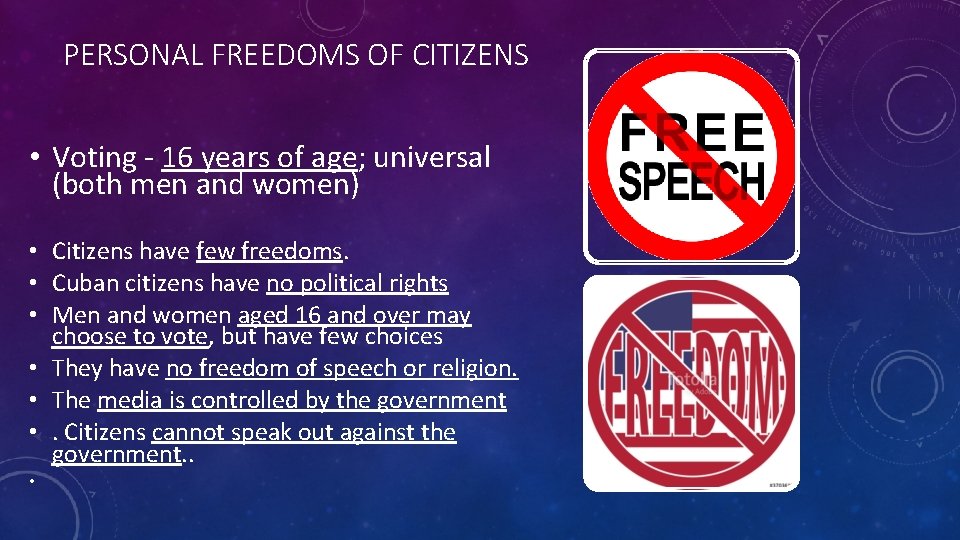
PERSONAL FREEDOMS OF CITIZENS • Voting - 16 years of age; universal (both men and women) • Citizens have few freedoms. • Cuban citizens have no political rights • Men and women aged 16 and over may choose to vote, but have few choices • They have no freedom of speech or religion. • The media is controlled by the government • . Citizens cannot speak out against the government. . •
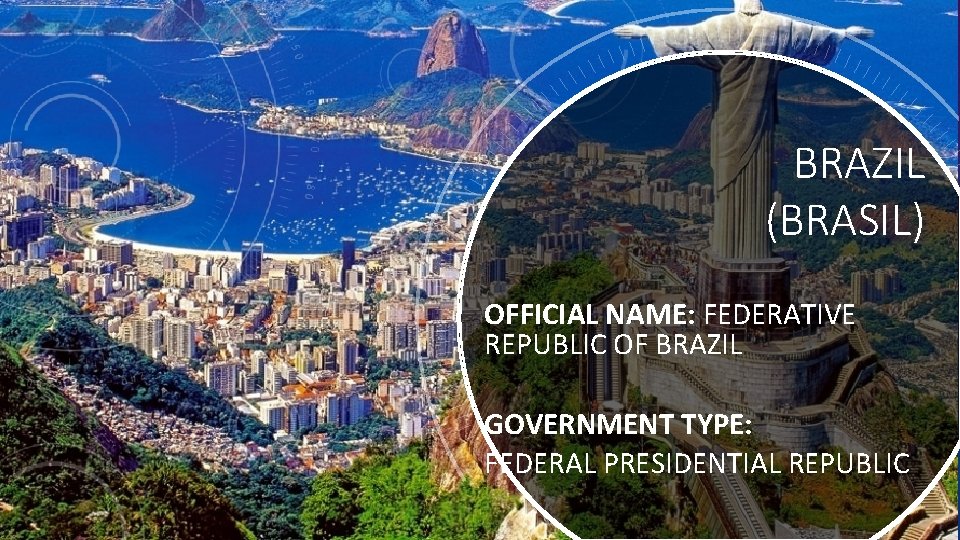
BRAZIL (BRASIL) OFFICIAL NAME: FEDERATIVE REPUBLIC OF BRAZIL GOVERNMENT TYPE: FEDERAL PRESIDENTIAL REPUBLIC
CITIZEN PARTICIPATION – PRESIDENTIAL DEMOCRACY • Many political parties and candidates to vote for and all citizens can vote
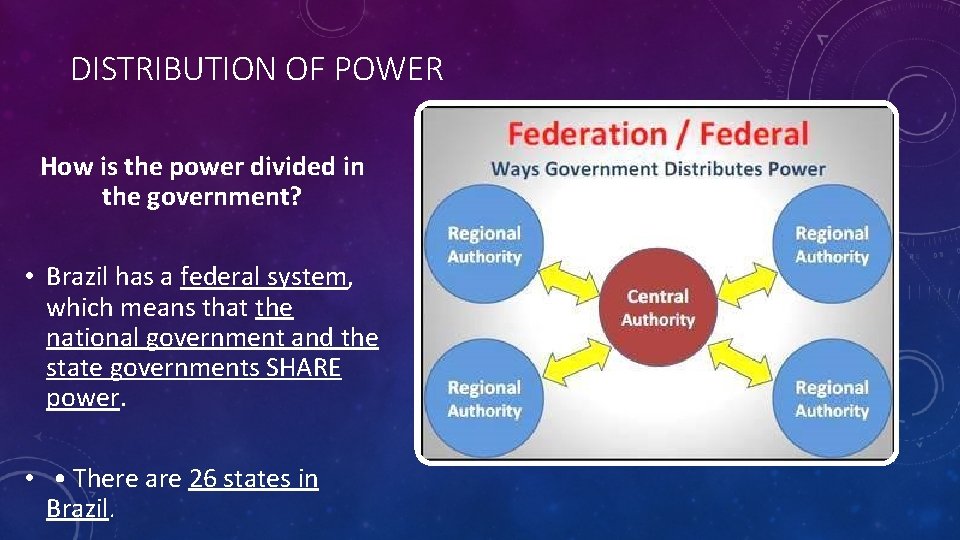
DISTRIBUTION OF POWER How is the power divided in the government? • Brazil has a federal system, which means that the national government and the state governments SHARE power. • • There are 26 states in Brazil.
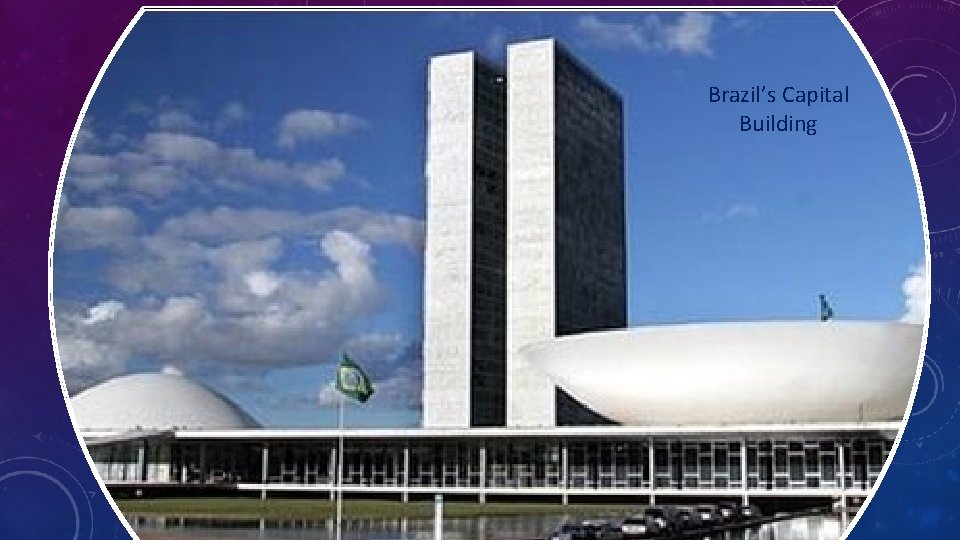
Brazil’s Capital Building
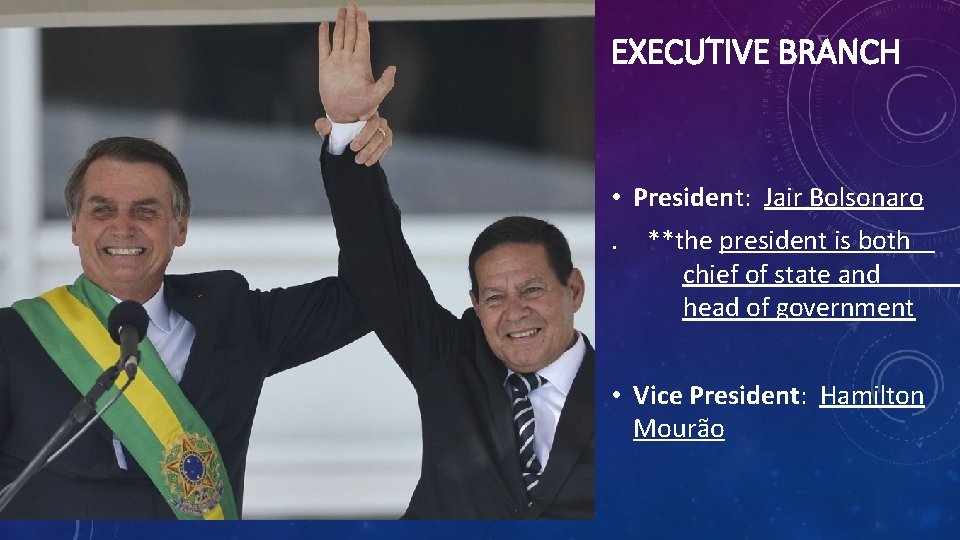
EXECUTIVE BRANCH • President: Jair Bolsonaro. **the president is both chief of state and head of government • Vice President: Hamilton Mourão
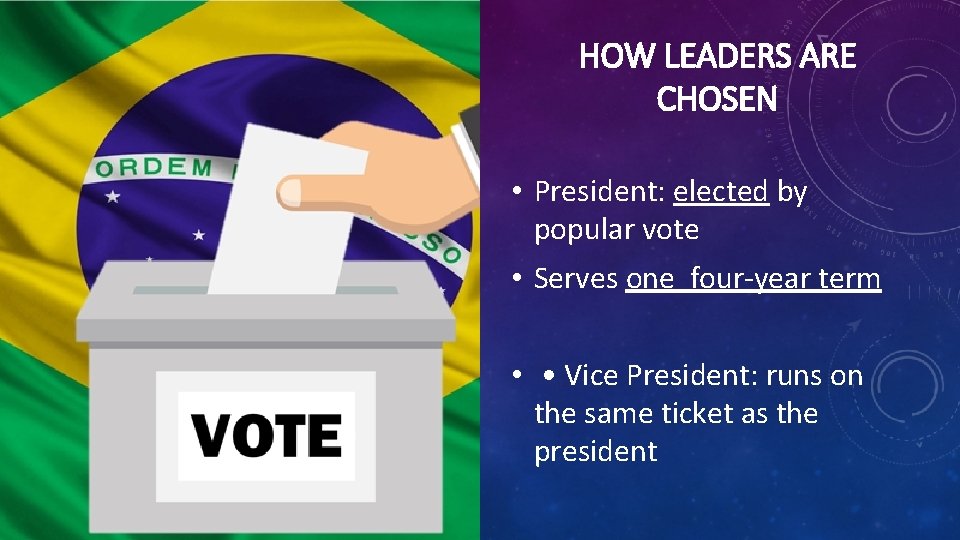
HOW LEADERS ARE CHOSEN • President: elected by popular vote • Serves one four-year term • • Vice President: runs on the same ticket as the president
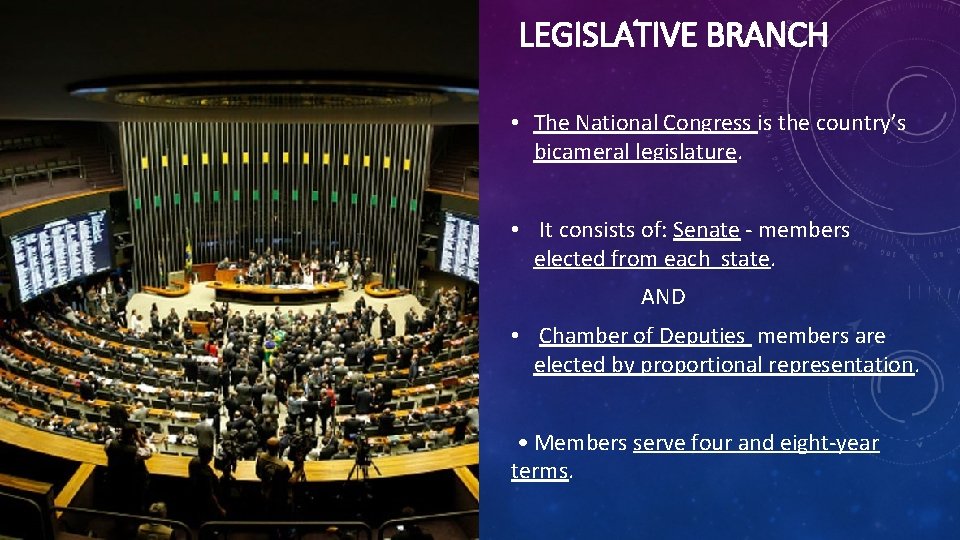
LEGISLATIVE BRANCH • The National Congress is the country’s bicameral legislature. • It consists of: Senate - members elected from each state. AND • Chamber of Deputies members are elected by proportional representation. • Members serve four and eight-year terms.
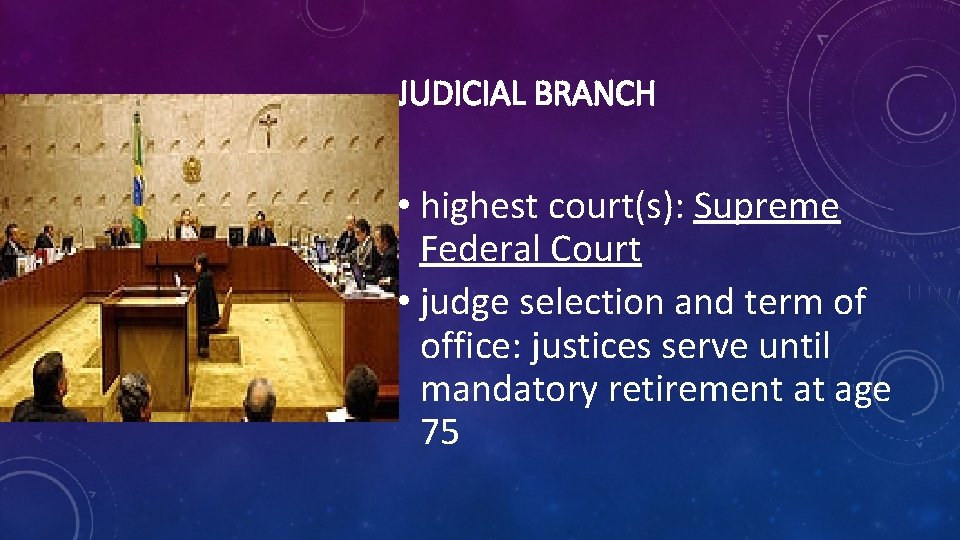
JUDICIAL BRANCH • highest court(s): Supreme Federal Court • judge selection and term of office: justices serve until mandatory retirement at age 75
PERSONAL FREEDOMS OF CITIZENS • Voting: *voluntary between 16 to 18 years of age; *Voting is mandatory for ages 18 -70 and if literate; voluntary after age 70 • freedom of speech and religion. • Citizens are allowed to criticize the government • the media is allowed to check on and report on the government.
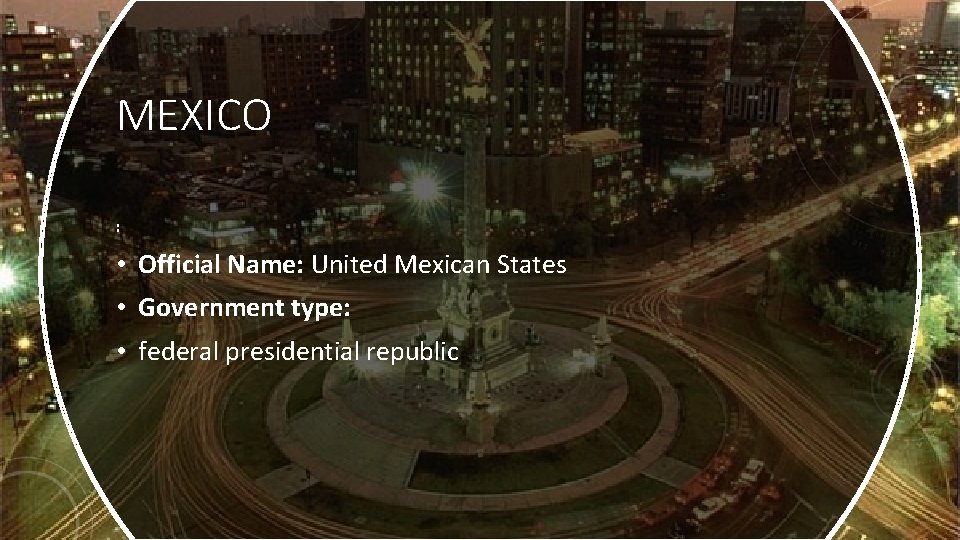
MEXICO : • Official Name: United Mexican States • Government type: • federal presidential republic
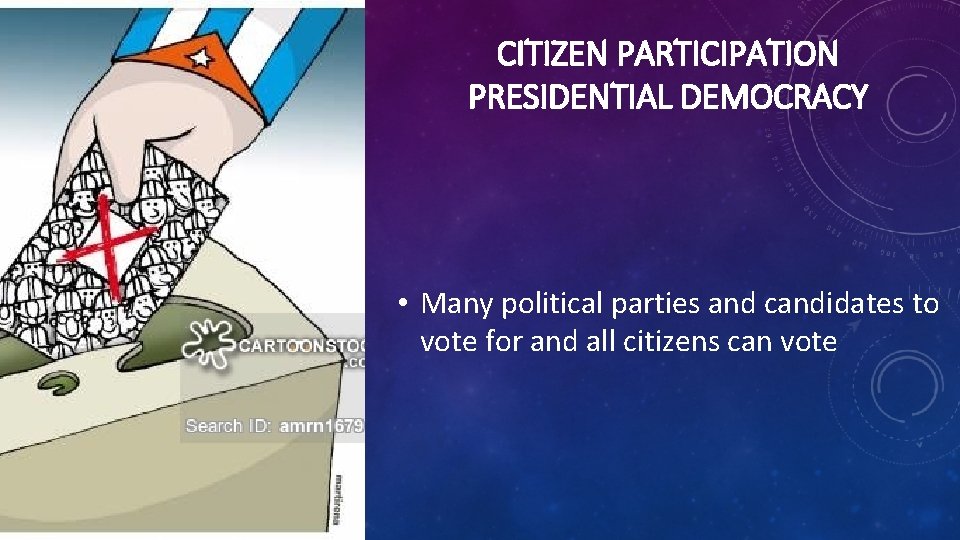
CITIZEN PARTICIPATION PRESIDENTIAL DEMOCRACY • Many political parties and candidates to vote for and all citizens can vote
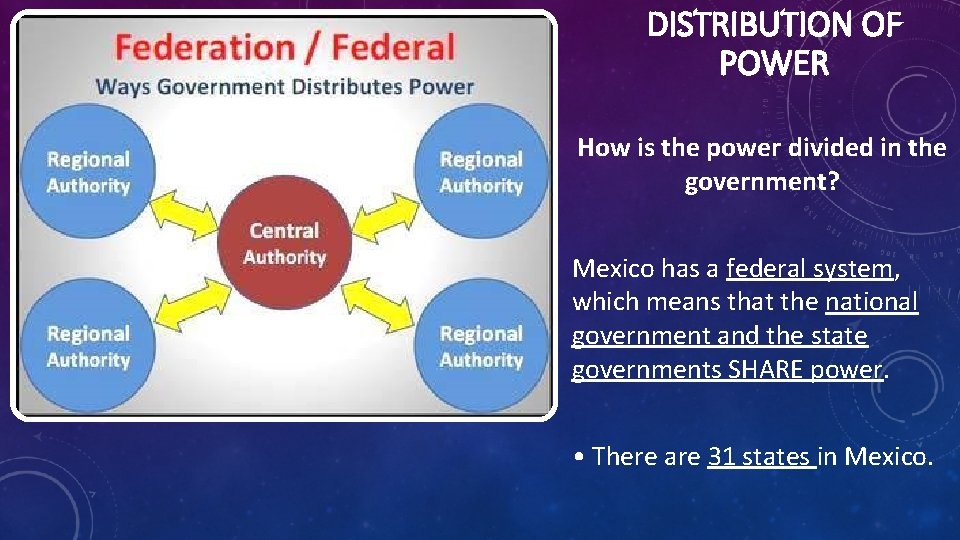
DISTRIBUTION OF POWER How is the power divided in the government? Mexico has a federal system, which means that the national government and the state governments SHARE power. • There are 31 states in Mexico.
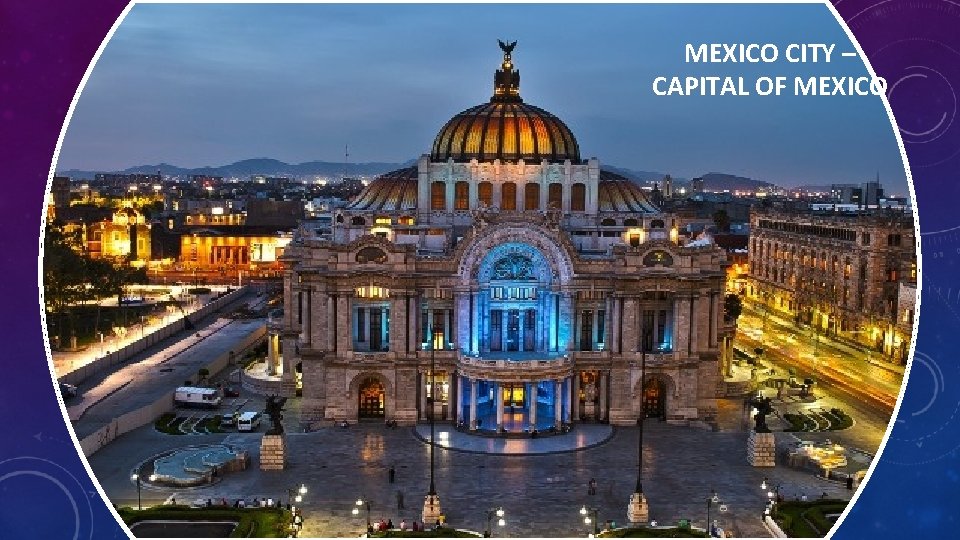
MEXICO CITY – CAPITAL OF MEXICO
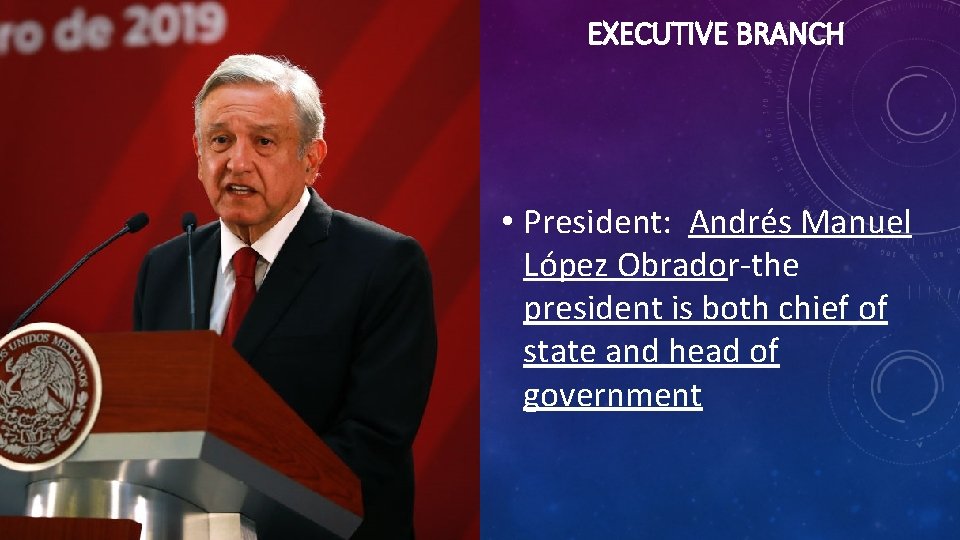
EXECUTIVE BRANCH • President: Andrés Manuel López Obrador-the president is both chief of state and head of government
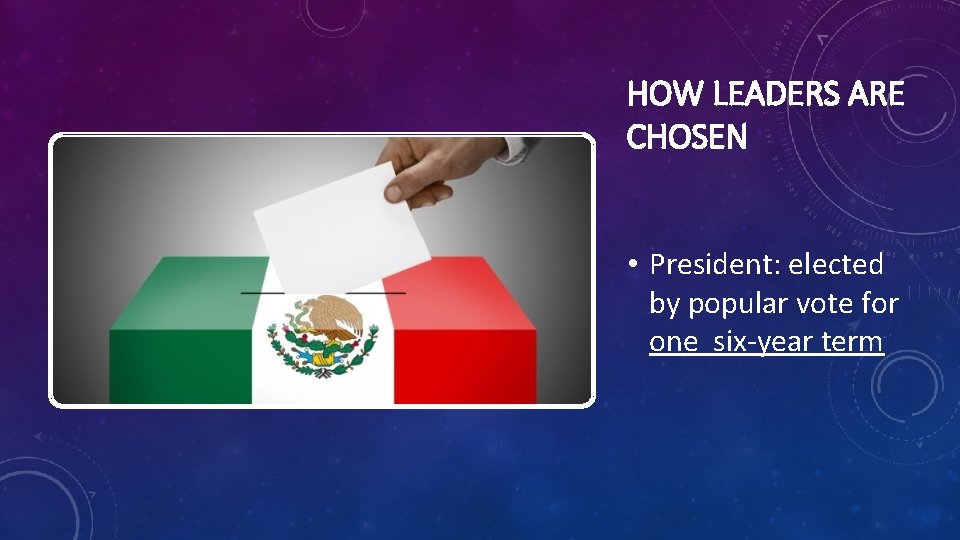
HOW LEADERS ARE CHOSEN • President: elected by popular vote for one six-year term
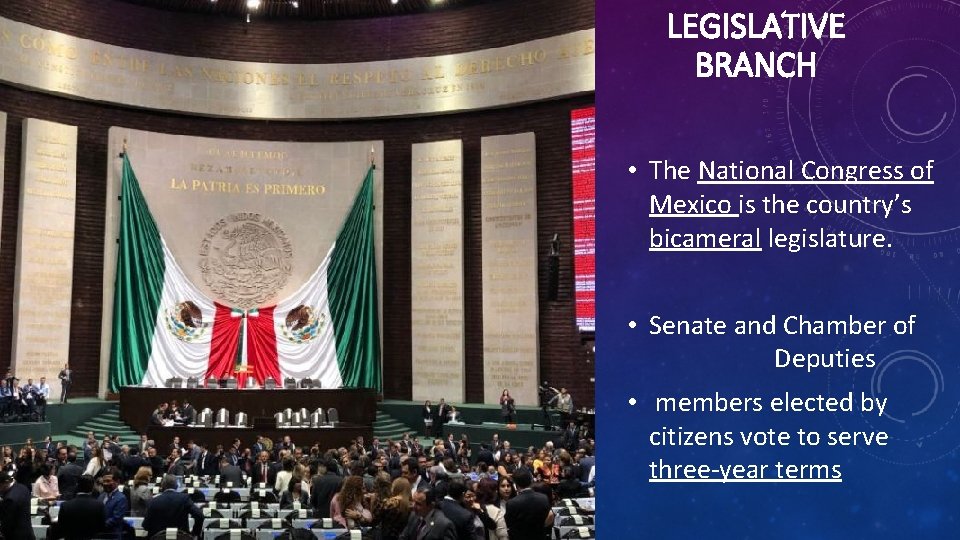
LEGISLATIVE BRANCH • The National Congress of Mexico is the country’s bicameral legislature. • Senate and Chamber of Deputies • members elected by citizens vote to serve three-year terms
JUDICIAL BRANCH • highest court(s): Supreme Court of Justice • judge term of office: Supreme Court-justices serve for life
PERSONAL FREEDOMS OF CITIZENS • VOTE: 18 years of age; compulsory (but not enforced) that citizens who are 18 or older vote in national elections • Mexican citizens have freedom of speech and religion. • Citizens are allowed to criticize the government and the media is allowed to check on and report on the government. • There are many political parties in Mexico
- Slides: 28