
GovernmentCivics Domain Democracy Rule of ALL A country


- Slides: 14
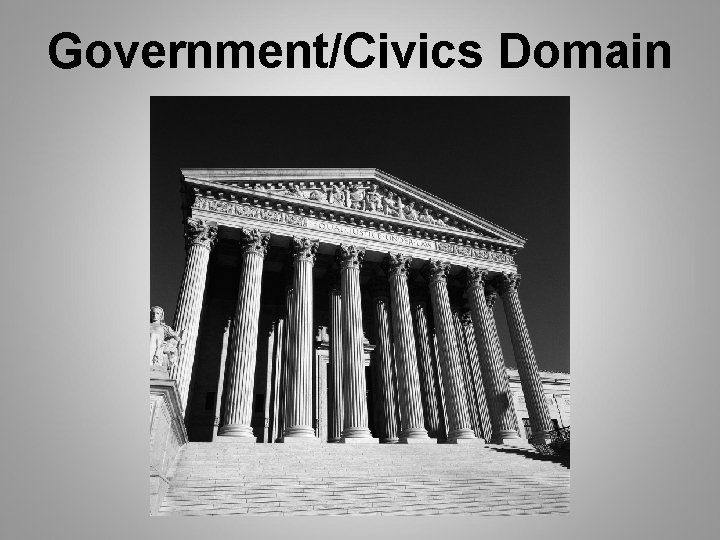
Government/Civics Domain
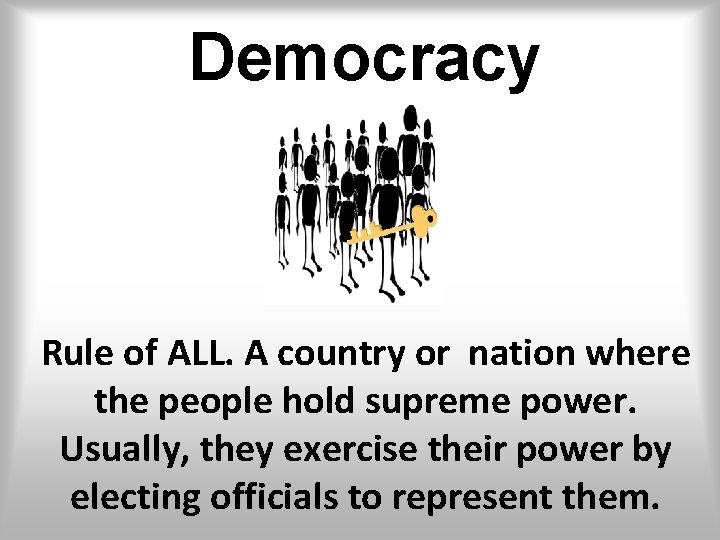
Democracy Rule of ALL. A country or nation where the people hold supreme power. Usually, they exercise their power by electing officials to represent them.
Democratic Governments • Democratic governments usually have three branches of government often called the Executive, Legislative, and Judicial. • Executive branch carries out and enforces laws • Legislative branch makes laws • Judicial branch interprets laws • The main difference between the two types of democracies is the relationship between the legislative and executive branches of government
Types of Democracy Activity
Essential Question: How do presidential and parliamentary governments differ?
Standards SS 7 CG 1 c, SS 7 CG 4 c, SS 7 CG 6 c Describe the two predominant forms of democratic governments: parliamentary and presidential
Use the Types of Democracy Notes Sheet with the remaining slides
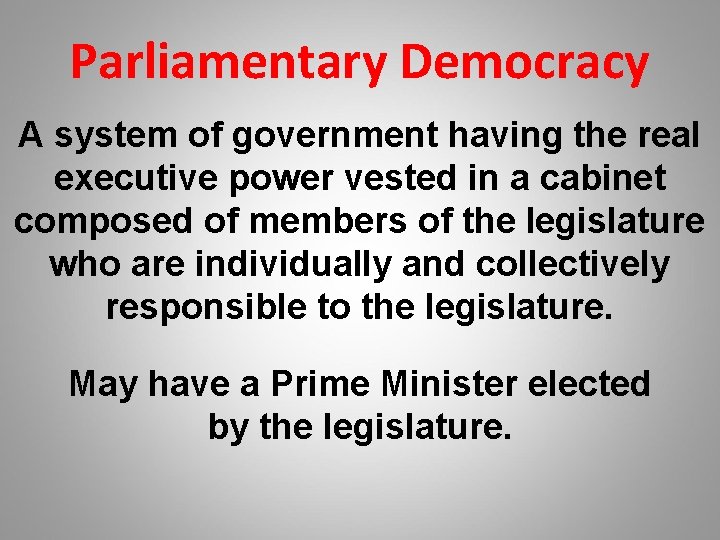
Parliamentary Democracy A system of government having the real executive power vested in a cabinet composed of members of the legislature who are individually and collectively responsible to the legislature. May have a Prime Minister elected by the legislature.
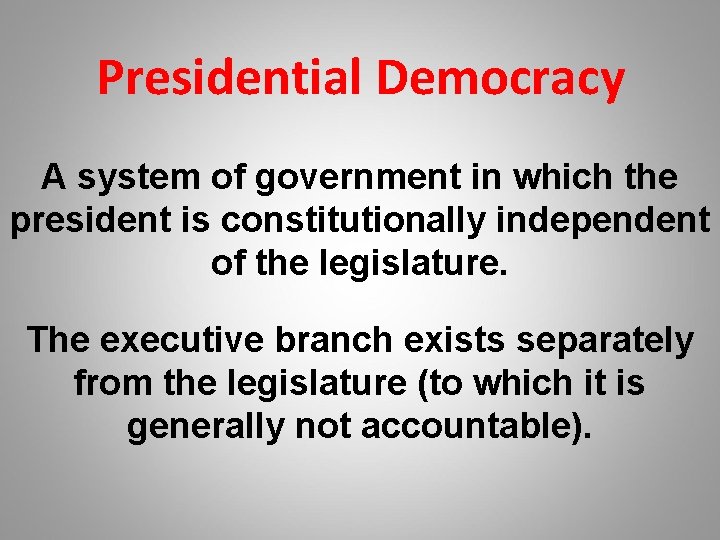
Presidential Democracy A system of government in which the president is constitutionally independent of the legislature. The executive branch exists separately from the legislature (to which it is generally not accountable).
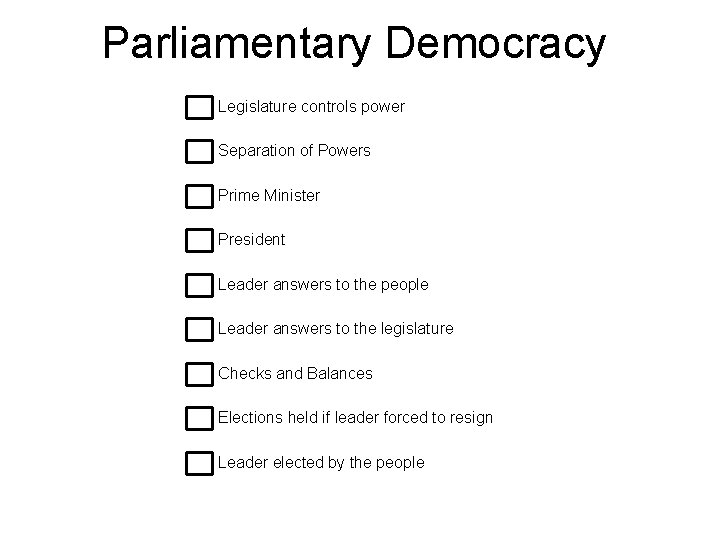
Parliamentary Democracy Legislature controls power Separation of Powers Prime Minister President Leader answers to the people Leader answers to the legislature Checks and Balances Elections held if leader forced to resign Leader elected by the people
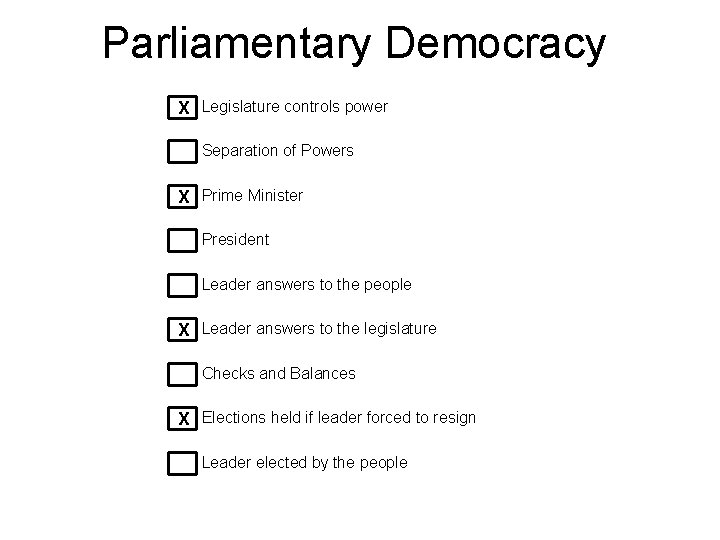
Parliamentary Democracy X Legislature controls power Separation of Powers X Prime Minister President Leader answers to the people X Leader answers to the legislature Checks and Balances X Elections held if leader forced to resign Leader elected by the people
Presidential Democracy Legislature controls power Separation of Powers Prime Minister President Leader answers to the people Leader answers to the legislature Checks and Balances Elections held if leader forced to resign Leader elected by the people
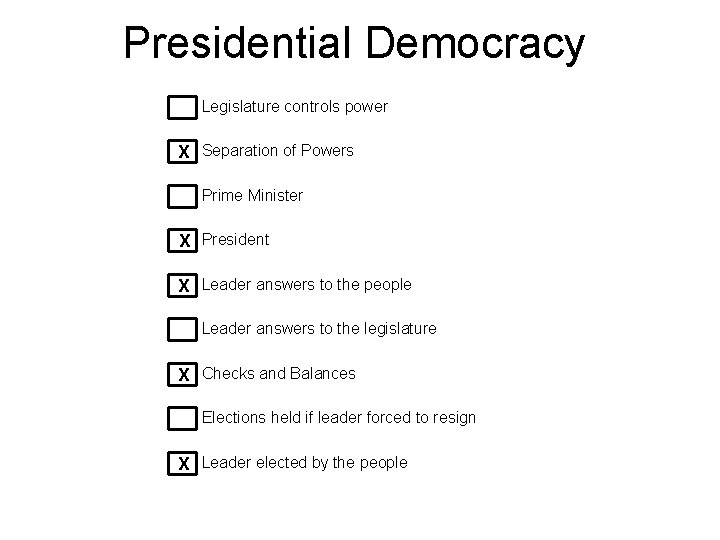
Presidential Democracy Legislature controls power X Separation of Powers Prime Minister X President X Leader answers to the people Leader answers to the legislature X Checks and Balances Elections held if leader forced to resign X Leader elected by the people
Summarizing Strategy: Move Over Emeril. . . List the Main Ingredients of a Parliamentary Democracy and the Main Ingredients of a Presidential Democracy