
Government What is it n Government To rule


- Slides: 71
Government
What is it? n Government – To rule, control, direct.
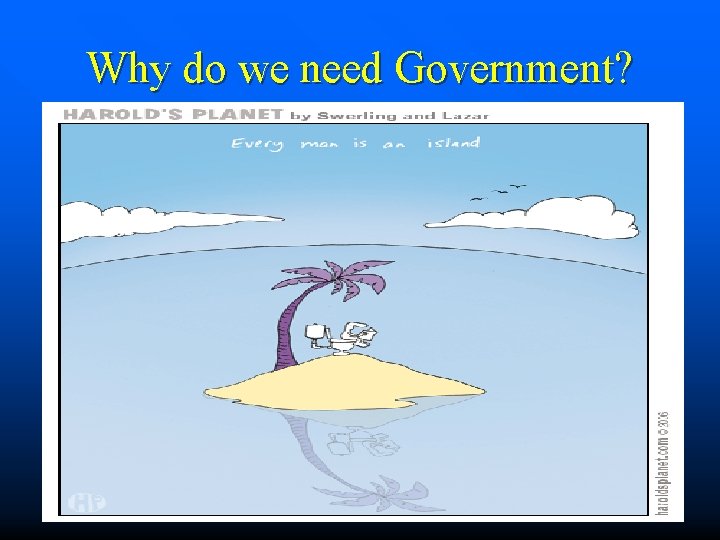
Why do we need Government?
? ? Potential Problems with Government? ? “ABSOLUTE POWER CORRUPTS ABSOLUTLEY. ” Favoritism Strongest rule Smartest rule Mistreat Minority or Tyranny of Majority
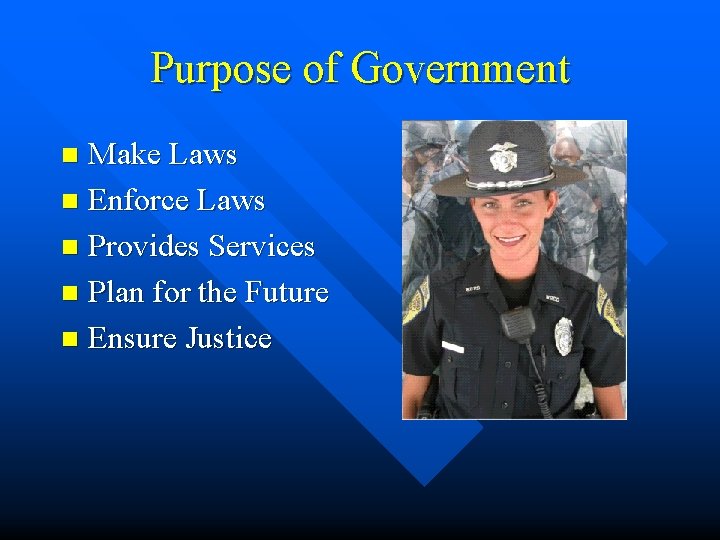
Purpose of Government Make Laws n Enforce Laws n Provides Services n Plan for the Future n Ensure Justice n
Making Laws n Laws should be – Fair – Make sense – Equal for all – Flexible – Written down n Law makers are called – Legislatures
Enforce Laws n Law enforcers should – Understand the law – Carry out or execute the law n Law enforcers are called – Executives
Provide Services – things people can’t provide for themselves by themselves n Services include: n – Roads – National Defense – Education – Post Office – Parks
Plan for the Future n Manage the Economy – Creating Budgets to collect and spend money Conduct foreign relations n Set Public Policy – a course of action to achieve goals n
Ensure Justice n Court system – Punish the guilty – Protect rights of all – Understand approve of the laws n Courts systems are called – Judicial
Types of Government n n n Dictatorships Totalitarian Regimes Monarchy Theocracy Democracy Republic
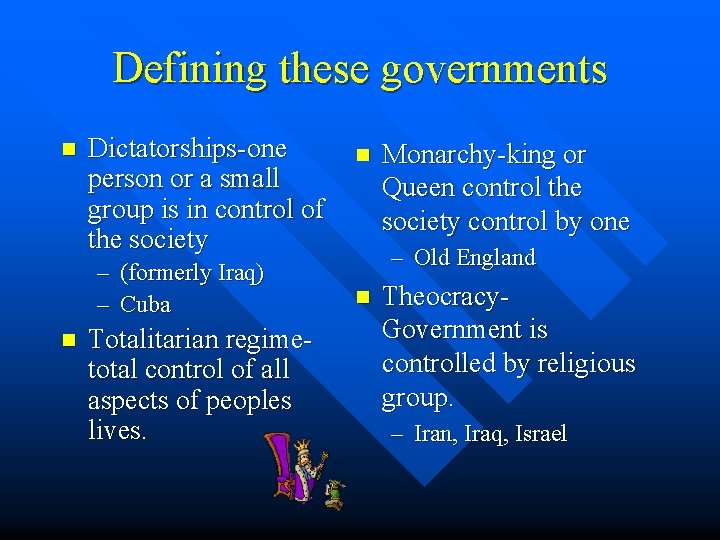
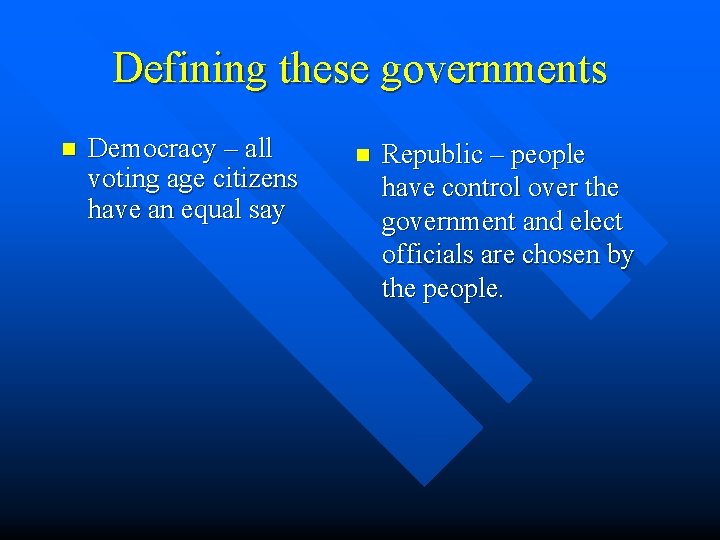
Defining these governments n Dictatorships-one person or a small group is in control of the society – (formerly Iraq) – Cuba n Totalitarian regimetotal control of all aspects of peoples lives. n Monarchy-king or Queen control the society control by one – Old England n Theocracy. Government is controlled by religious group. – Iran, Iraq, Israel
Defining these governments n Democracy – all voting age citizens have an equal say n Republic – people have control over the government and elect officials are chosen by the people.
Democracy n “Government of the people, by the people, for the people. ” (Abe Lincoln) – OF- comes from citizens – By-citizens run it – For-it has the peoples best interest in mind
Characteristics of Democracy n Freedom, Choice, Change, Tolerance » Best way to recognize a democracy is to see if they have free, fair and open elections. n Majority Rule – 51% decide
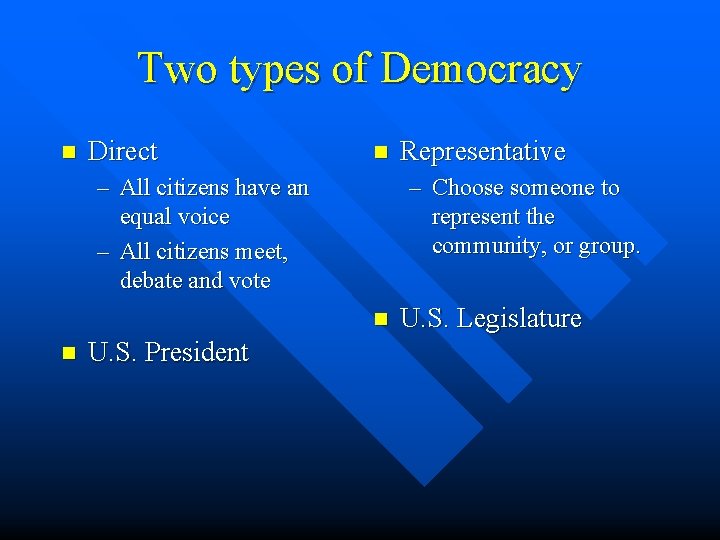
Two types of Democracy n Direct n – All citizens have an equal voice – All citizens meet, debate and vote – Choose someone to represent the community, or group. n n U. S. President Representative U. S. Legislature
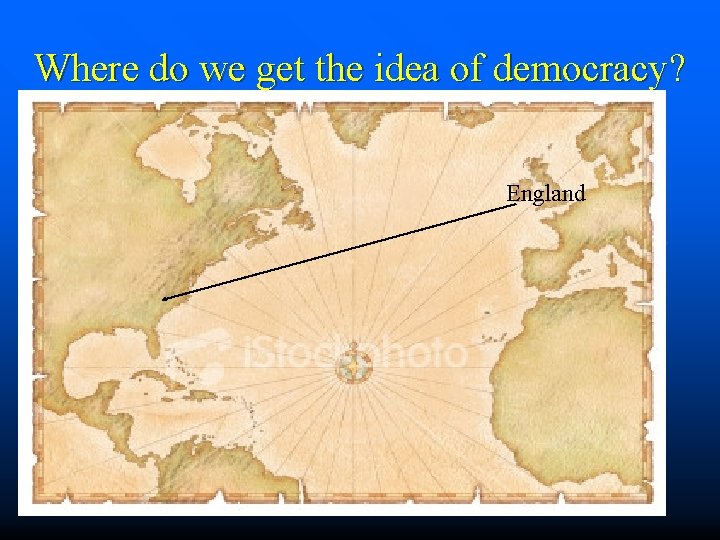
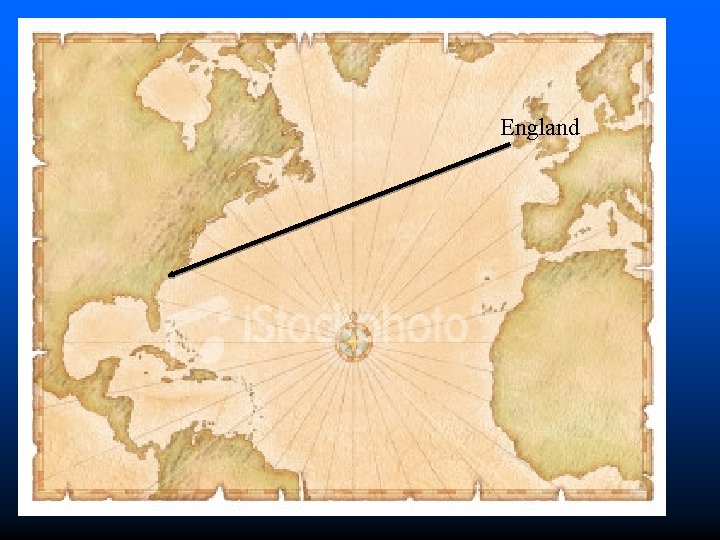
Where do we get the idea of democracy? England
Post-Lecture Discussion
Post lecture group discussion procedure n Raise hand to – respond to a question – ask a question – share relevant information n Make positive comments
Q&A
Questions In a democracy who should be able to vote? n Who should be able to rule or be in government? n How long should they be able to rule? n What services should the government provide? n Are their any problems with Majority Rule? n What could the minority do to get change? n
Early U. S. History Magna Carta – Revolution
Goals 1. 2 – Analyze the development of ideas about selfgovernment in British North America (13 colonies). 1. 3 – Examine the Causes of the American Revolution 1. 4 – Elaborate on the emergence of an American Identity.
World to US History n Greeks use democracy – Male non slave citizens voted » Declaring war » Ratifying treaties Romans take over and use Caesars n Rome makes Christianity official religion in 393 AD n – Christendom all over Europe
The Church and Kings Rule n Feudalism (Power to the King) – Magna Carta 1215 – Parliament 1300 n Popes rules the church rules the Kings (Power to the church)
Big Events Exploration 1400 n Reformation 1500 -1600 n – Martin Luther challenges the churches teaching and authority – Creates Protestantism n Enlightenment Philosophers 1600 -1700 – Challenge political systems
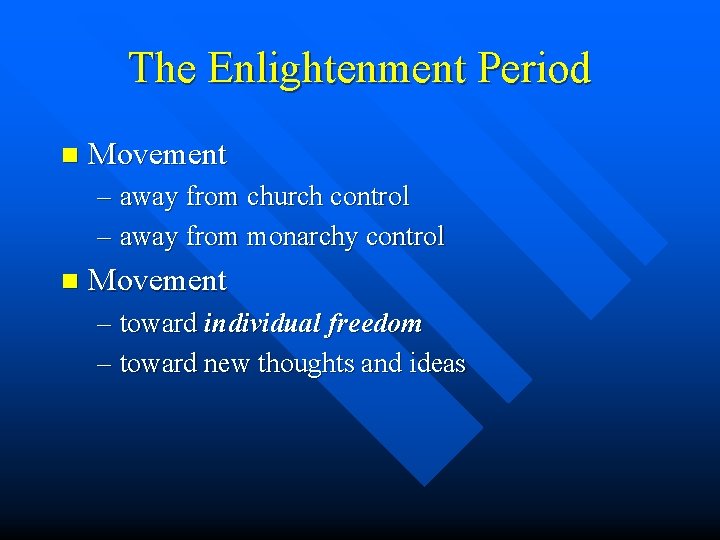
The Enlightenment Period n Movement – away from church control – away from monarchy control n Movement – toward individual freedom – toward new thoughts and ideas
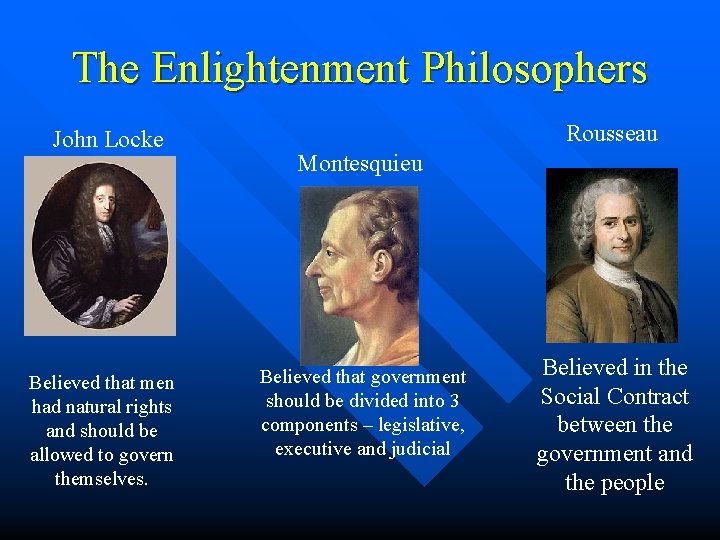
The Enlightenment Philosophers John Locke Believed that men had natural rights and should be allowed to govern themselves. Rousseau Montesquieu Believed that government should be divided into 3 components – legislative, executive and judicial Believed in the Social Contract between the government and the people
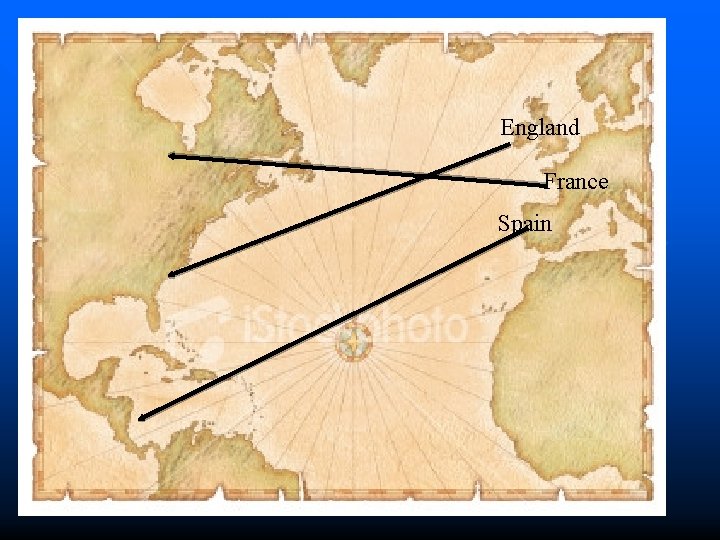
Bringing England to America n Exploration leads to Colonization
England France Spain
England
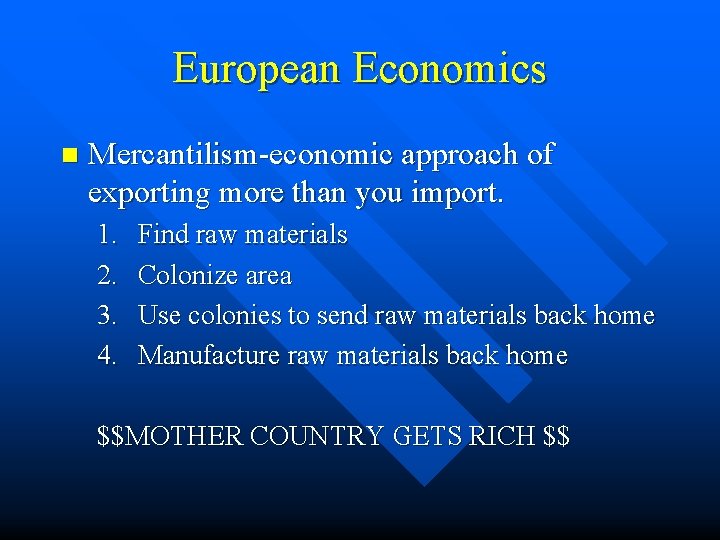
European Economics n Mercantilism-economic approach of exporting more than you import. 1. 2. 3. 4. Find raw materials Colonize area Use colonies to send raw materials back home Manufacture raw materials back home $$MOTHER COUNTRY GETS RICH $$
Assessment 1. 2. 3. 4. 5. 6. Predict the effects of Magna Carta, parliament, feudalism, the reformation, and the enlightenment on the shaping of American Government? Explain who should be able to rule or be in government and when do they loose this right? Discuss the problems with absolute power? List at least two services should the government provide for its people? List any problems with majority rule? How will your websites be useful to you?
Bringing England to America Colonization n Self - Government n – VA House of Burgesses – Mayflower Compact – Fundamental Orders of Connecticut
VA House of Burgesses Jamestown was 1 st permanent English settlement in North America (1607) n VA established on a Charter to the Virginia Company n Governor was leader and had 22 elected people “burgesses” from each county to advise the governor (1619) n
Mayflower Compact n n Plymouth, Mass (1620) “Pilgrims” – All signed a compact (Social Contract) – All would participate in the lawmaking decisions n Town meetings(Direct Democracy).
Fundamental Orders of Connecticut n First written Constitution – All land owning males to elect a legislature which in turn would choose a governor. n Government’s power came from the people (consent of the governed) – will of the majority.
Self-Government Colonist lived 3, 000 miles away from England n England allowed colonial governments to: n – Write Constitutions – Elected executives and legislatures – Established courts – Have their own militia (armies) n 1620 -1760’s = 140 years of freedom
Policy of Salutary Neglect n Benefits England to leave colonist alone 1. Cost money to pay for law enforcement 2. Cost money to pay for troops to protect 3. Who cares what they do as long as they send cheap raw materials 4. No restrictions and they will flourish
Causes of the American Revolution
Long-Term Causes Mercantilism n Habit of Self-Government n Salutary Neglect n
Short-Term Causes French and Indian War n Acts of Parliament and the King n – Stamp Act, Quartering Act, Declaratory Act, Townsend Act, Coercive Act Colonist Reactions to Acts n Boston Massacre n Boston Tea Party n Thomas Paine’s “Common Sense” n
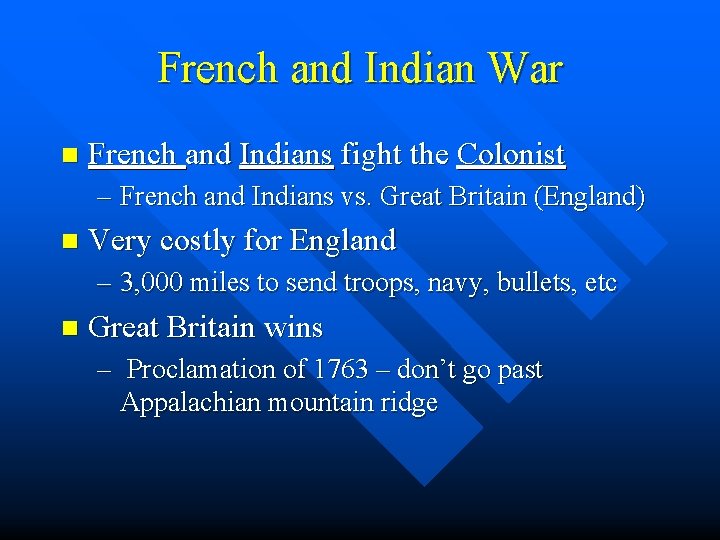
French and Indian War n French and Indians fight the Colonist – French and Indians vs. Great Britain (England) n Very costly for England – 3, 000 miles to send troops, navy, bullets, etc n Great Britain wins – Proclamation of 1763 – don’t go past Appalachian mountain ridge
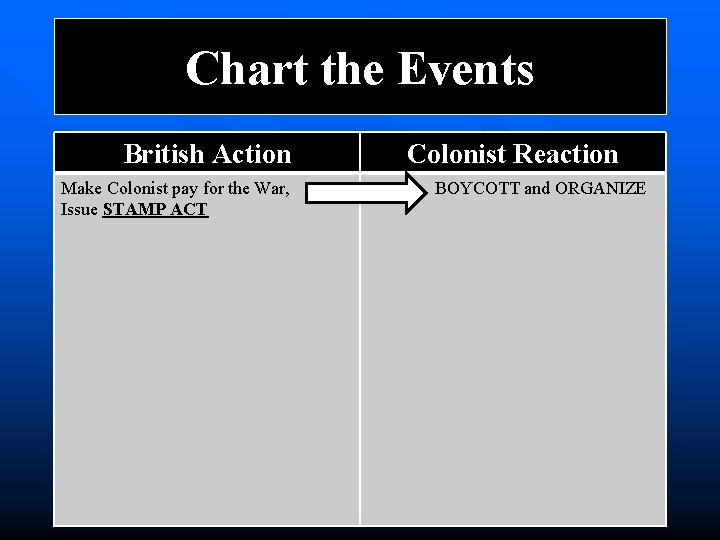
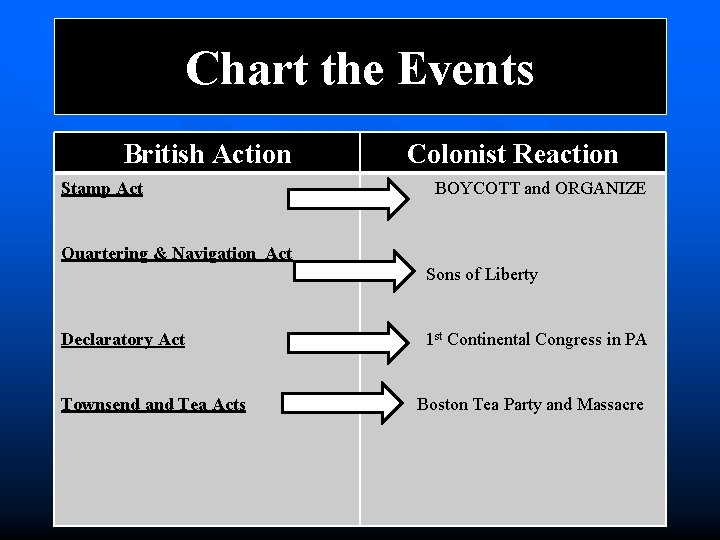
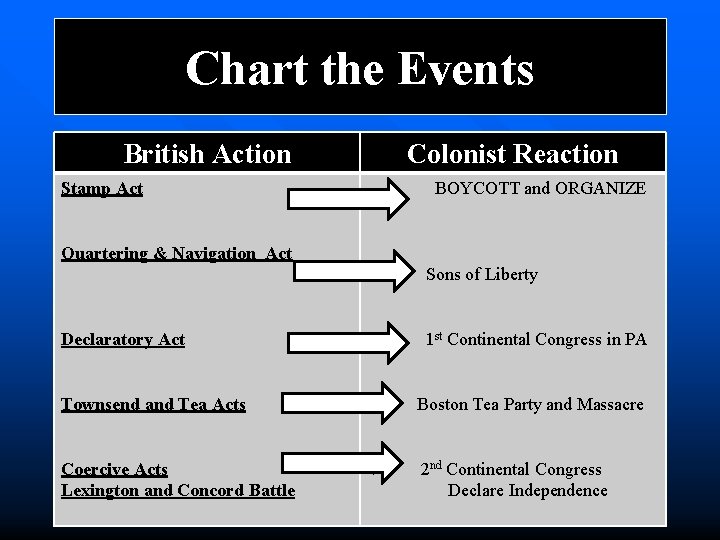
Chart the Events British Action Colonist Reaction
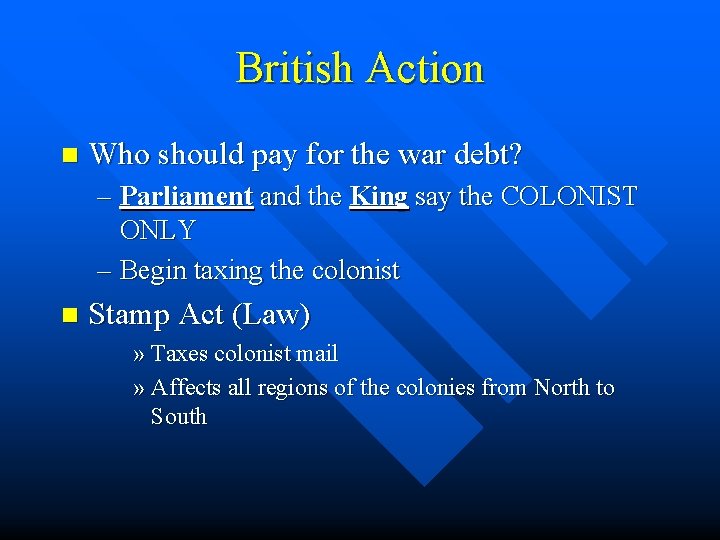
British Action n Who should pay for the war debt? – Parliament and the King say the COLONIST ONLY – Begin taxing the colonist n Stamp Act (Law) » Taxes colonist mail » Affects all regions of the colonies from North to South
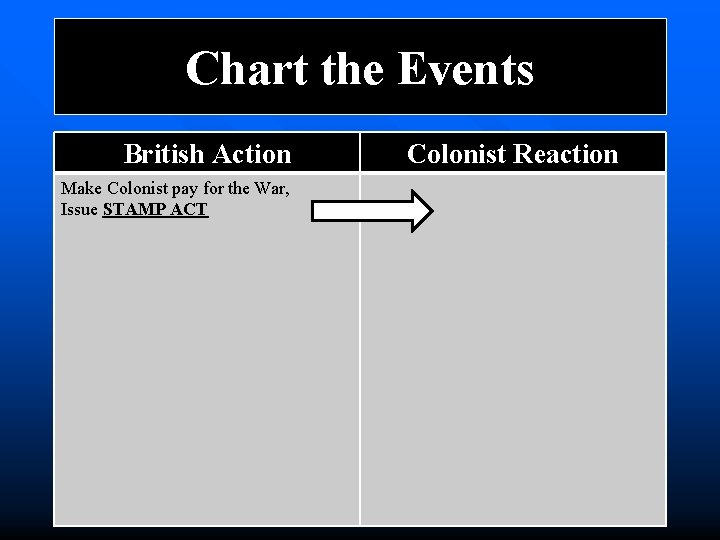
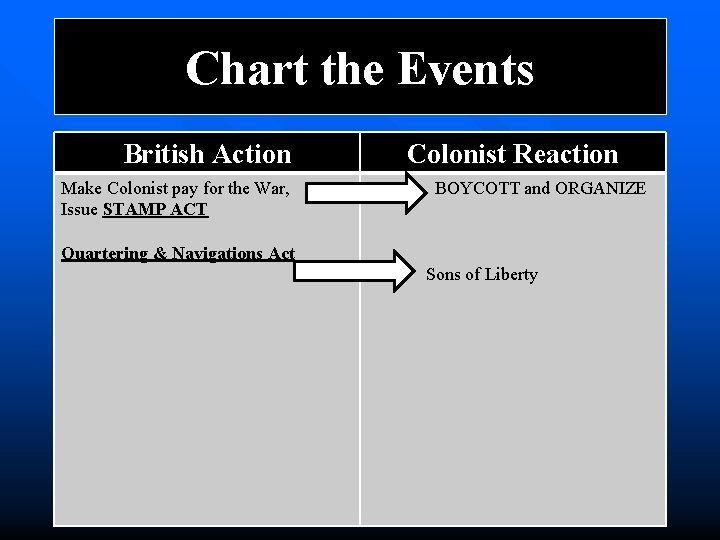
Chart the Events British Action Make Colonist pay for the War, Issue STAMP ACT Colonist Reaction
Colonist Reaction n Boycott – refuse to listen – “No taxation without representation” n Organize – Stamp Act Congress ( meeting)
Chart the Events British Action Make Colonist pay for the War, Issue STAMP ACT Colonist Reaction BOYCOTT and ORGANIZE
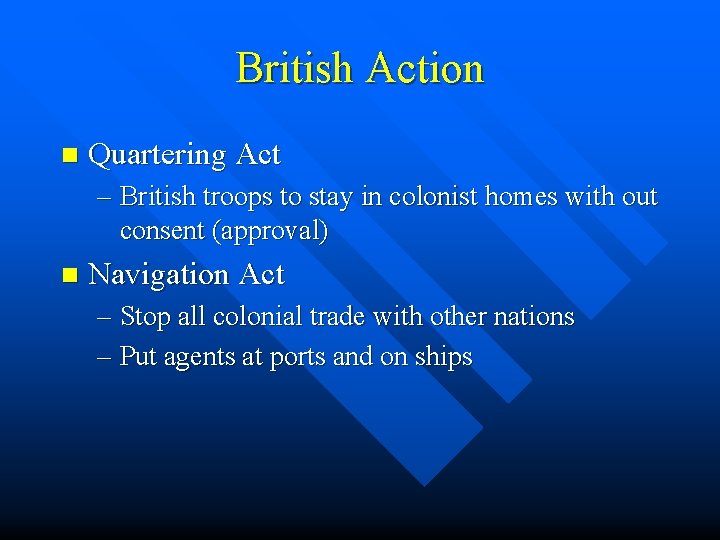
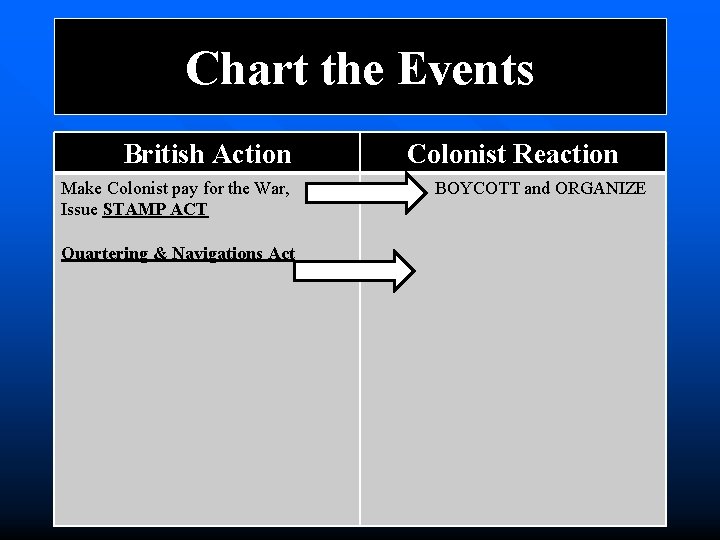
British Action n Quartering Act – British troops to stay in colonist homes with out consent (approval) n Navigation Act – Stop all colonial trade with other nations – Put agents at ports and on ships
Chart the Events British Action Make Colonist pay for the War, Issue STAMP ACT Quartering & Navigations Act Colonist Reaction BOYCOTT and ORGANIZE
Colonist Reaction n Organize – Sons of Liberty n Tarred and Feathered agents and threw them overboard
Chart the Events British Action Make Colonist pay for the War, Issue STAMP ACT Colonist Reaction BOYCOTT and ORGANIZE Quartering & Navigations Act Sons of Liberty
British Action n Declaratory Act – Parliament has the right to tax and make decisions for the colonies. n Writs of assistance – British officers could summon for help and search any home.
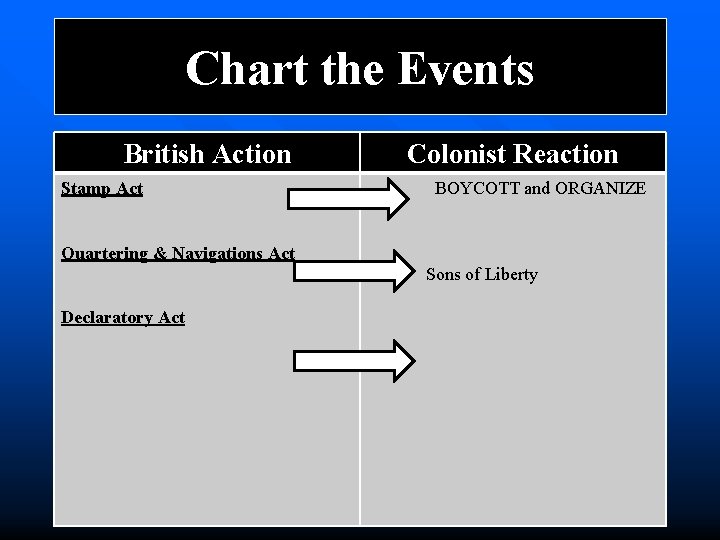
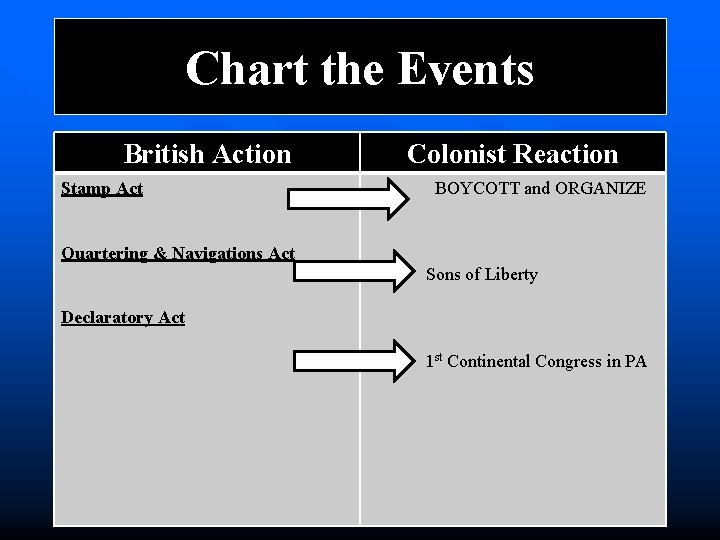
Chart the Events British Action Stamp Act Colonist Reaction BOYCOTT and ORGANIZE Quartering & Navigations Act Sons of Liberty Declaratory Act
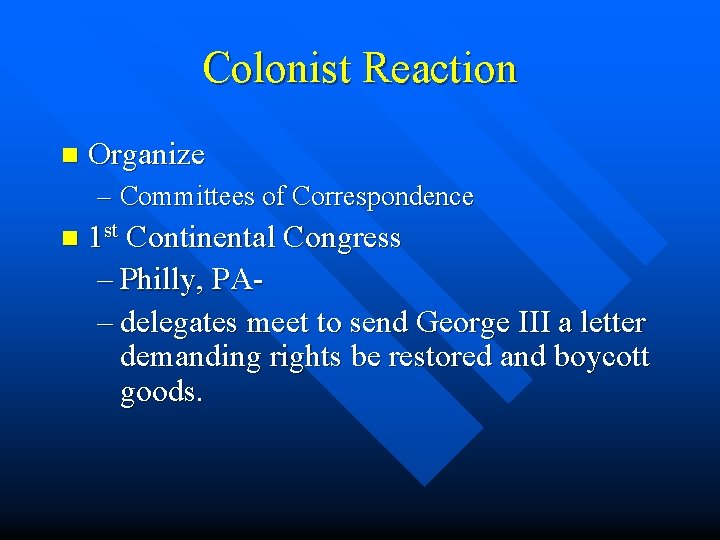
Colonist Reaction n Organize – Committees of Correspondence n 1 st Continental Congress – Philly, PA– delegates meet to send George III a letter demanding rights be restored and boycott goods.
Chart the Events British Action Stamp Act Colonist Reaction BOYCOTT and ORGANIZE Quartering & Navigations Act Sons of Liberty Declaratory Act 1 st Continental Congress in PA
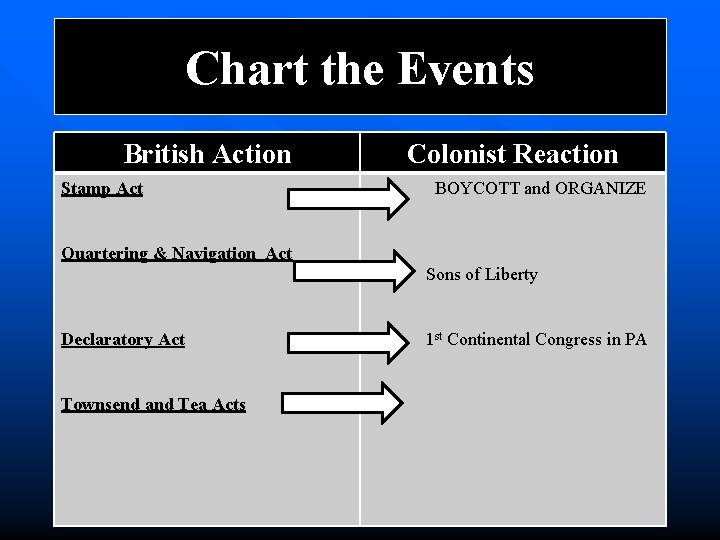
Chart the Events British Action Stamp Act Colonist Reaction BOYCOTT and ORGANIZE Quartering & Navigation Act Sons of Liberty Declaratory Act Townsend and Tea Acts 1 st Continental Congress in PA
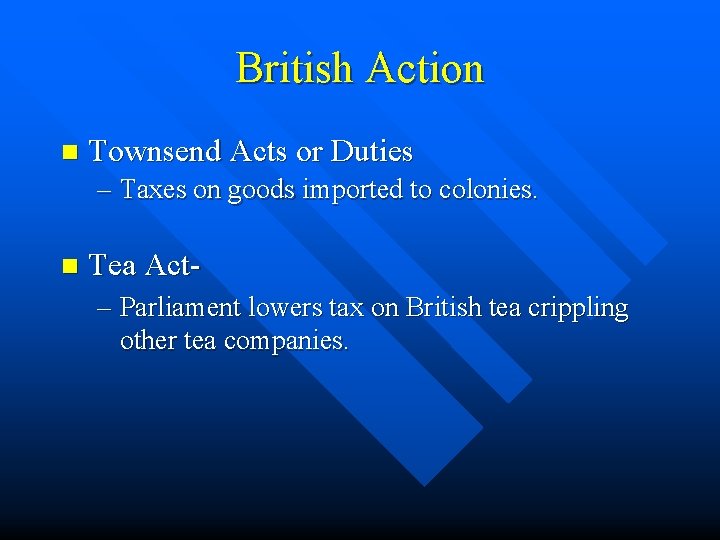
British Action n Townsend Acts or Duties – Taxes on goods imported to colonies. n Tea Act– Parliament lowers tax on British tea crippling other tea companies.
Chart the Events British Action Stamp Act Colonist Reaction BOYCOTT and ORGANIZE Quartering & Navigation Act Sons of Liberty Declaratory Act Townsend and Tea Acts 1 st Continental Congress in PA Boston Tea Party and Massacre
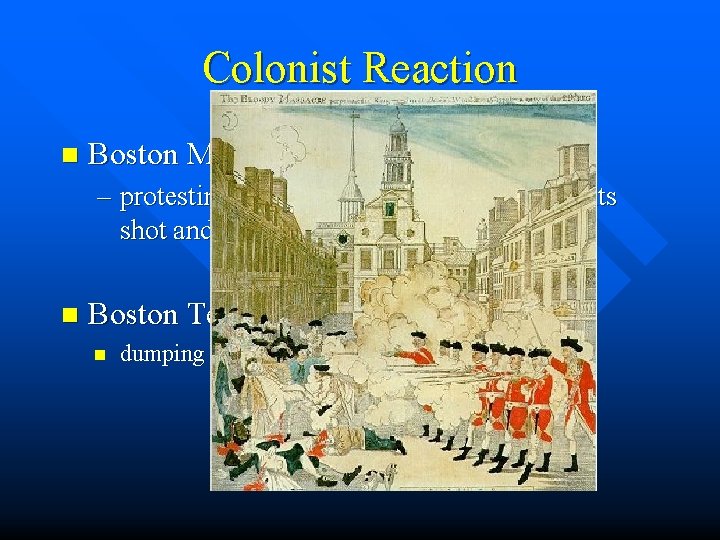
Colonist Reaction n Boston Massacre– protesting tax and harassing collectors. Brits shot and killed 5 n Boston Tea Partyn dumping of tea into Boston Harbor
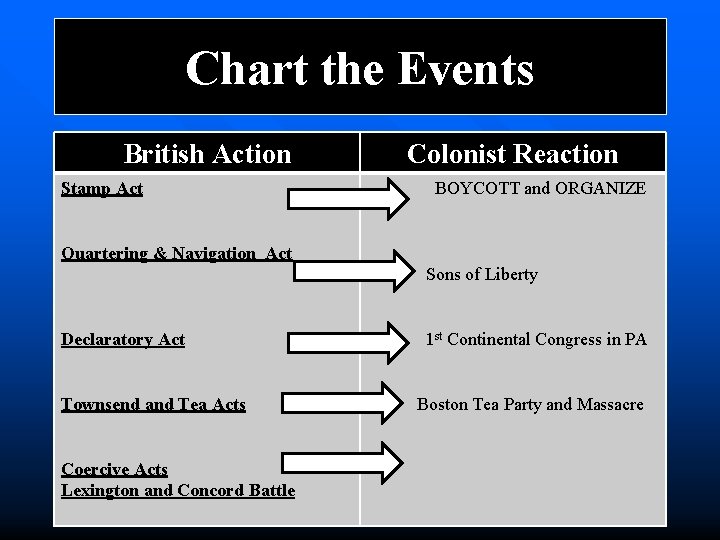
Chart the Events British Action Stamp Act Colonist Reaction BOYCOTT and ORGANIZE Quartering & Navigation Act Sons of Liberty Declaratory Act Townsend and Tea Acts Coercive Acts Lexington and Concord Battle 1 st Continental Congress in PA Boston Tea Party and Massacre
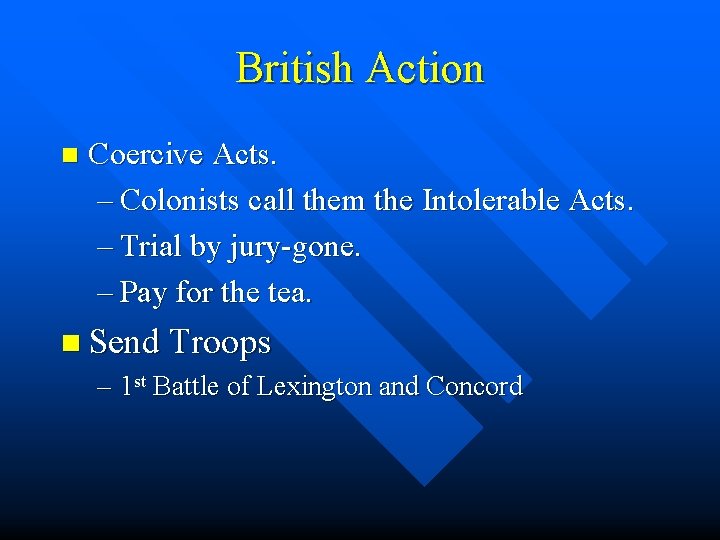
British Action n Coercive Acts. – Colonists call them the Intolerable Acts. – Trial by jury-gone. – Pay for the tea. n Send Troops – 1 st Battle of Lexington and Concord
Colonist Reaction n 2 nd Congress- – “should we declare independence? ” – formed a “confederation” to fight
Chart the Events British Action Colonist Reaction Stamp Act BOYCOTT and ORGANIZE Quartering & Navigation Act Sons of Liberty Declaratory Act 1 st Continental Congress in PA Townsend and Tea Acts Coercive Acts Lexington and Concord Battle Boston Tea Party and Massacre V 2 nd Continental Congress Declare Independence
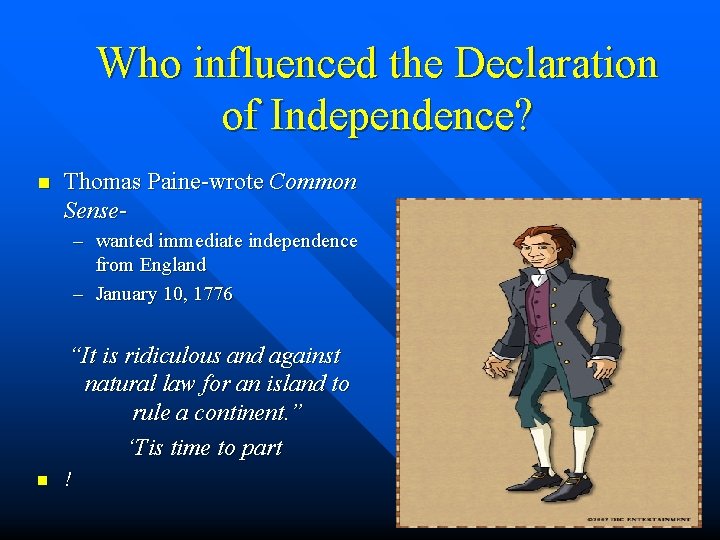
Who influenced the Declaration of Independence? n Thomas Paine-wrote Common Sense– wanted immediate independence from England – January 10, 1776 “It is ridiculous and against natural law for an island to rule a continent. ” ‘Tis time to part n !
Declaration of Independence n Reasons for the Declaration of Independence n Ideals in the Declaration of Independence n Writer and content
Reasons Gives people a reason to fight n Get help from other nations n “We are a new nation…rougher, simpler, less refined. We are a new race of people and we require a new nation. ” Ben Franklin
Ideals 1. “All men are created equal” 2. Governments get their power from the consent of the governed. 3. The government and the people enter into a social contract. 4. When governments become destructive, “the people can alter or abolish it, and institute a new government”
Writer n Declaration Committee – Thomas Jefferson – Main writer n July 4, 1776
M E R C A N T I L I S M HABIT OF SELF-GOVERNMENT SALUTARY NEGLECT
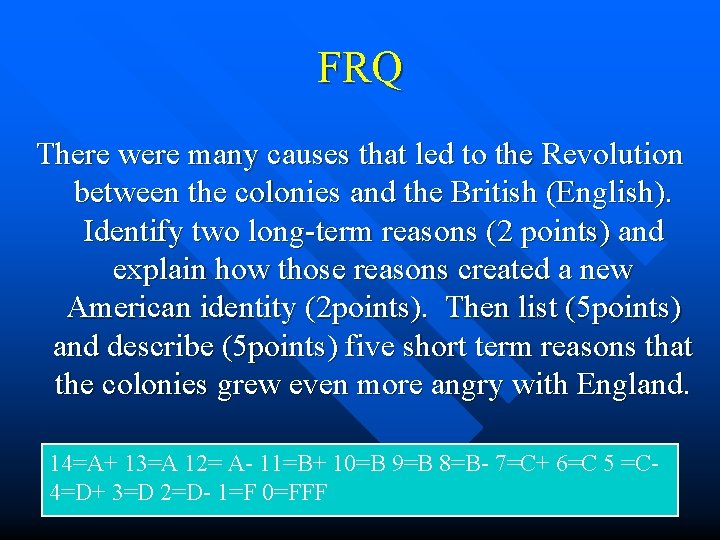
FRQ There were many causes that led to the Revolution between the colonies and the British (English). Identify two long-term reasons (2 points) and explain how those reasons created a new American identity (2 points). Then list (5 points) and describe (5 points) five short term reasons that the colonies grew even more angry with England. 14=A+ 13=A 12= A- 11=B+ 10=B 9=B 8=B- 7=C+ 6=C 5 =C 4=D+ 3=D 2=D- 1=F 0=FFF