
Government Taxation and Spending The Purpose of Taxes
- Slides: 8
Government Taxation and Spending
The Purpose of Taxes • Taxes are designed to provide revenue for government programs. • For example, California property taxes pay for schools. • The federal income taxes pay for our national military and social programs. • The Social Security Tax (FICA) pays for Social Security pensions in old age.
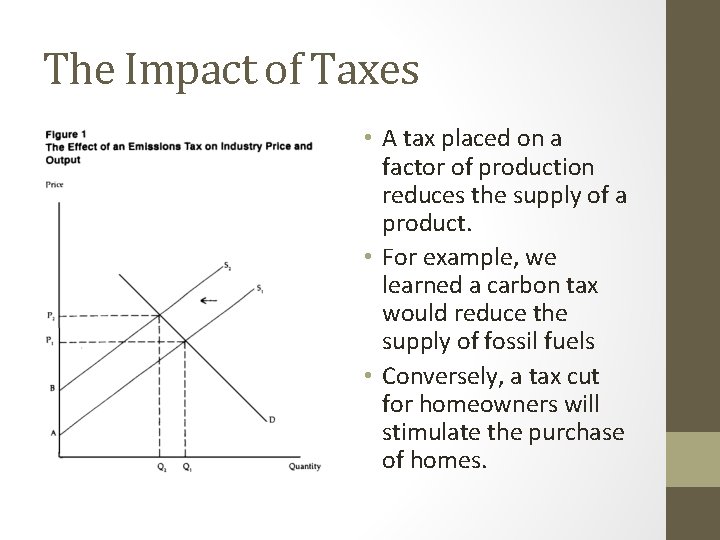
The Impact of Taxes • A tax placed on a factor of production reduces the supply of a product. • For example, we learned a carbon tax would reduce the supply of fossil fuels • Conversely, a tax cut for homeowners will stimulate the purchase of homes.
The Benefit Principle of Taxation • The Benefit principle of taxation is that people should pay a tax if they benefit from the government service • For example, gasoline tax is paid by drivers to provide revenue to pay for roads.
The Ability-to-pay Principle of Taxation • The ability-to-pay principle is based on the idea that people should be taxed based on their ability to pay, regardless of benefits they receive. • The federal income tax rate goes up, as people make more money.
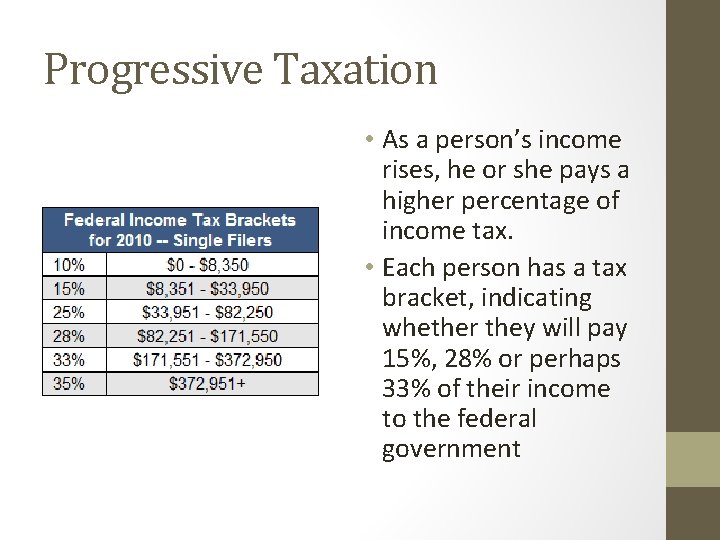
Progressive Taxation • As a person’s income rises, he or she pays a higher percentage of income tax. • Each person has a tax bracket, indicating whether they will pay 15%, 28% or perhaps 33% of their income to the federal government
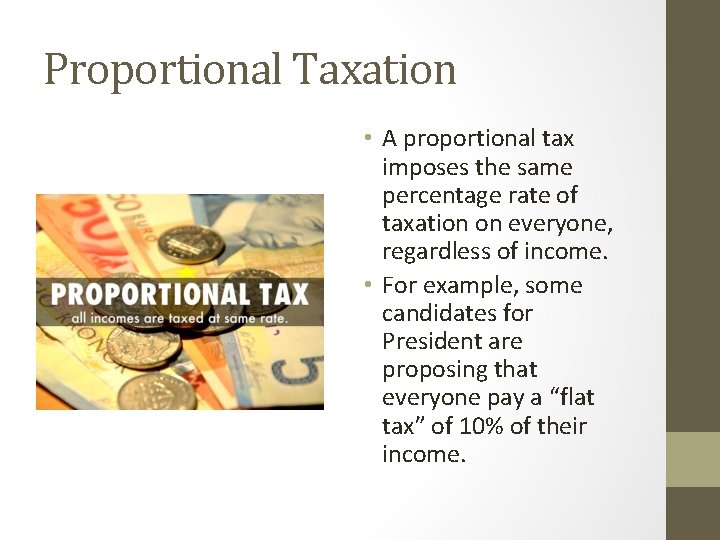
Proportional Taxation • A proportional tax imposes the same percentage rate of taxation on everyone, regardless of income. • For example, some candidates for President are proposing that everyone pay a “flat tax” of 10% of their income.
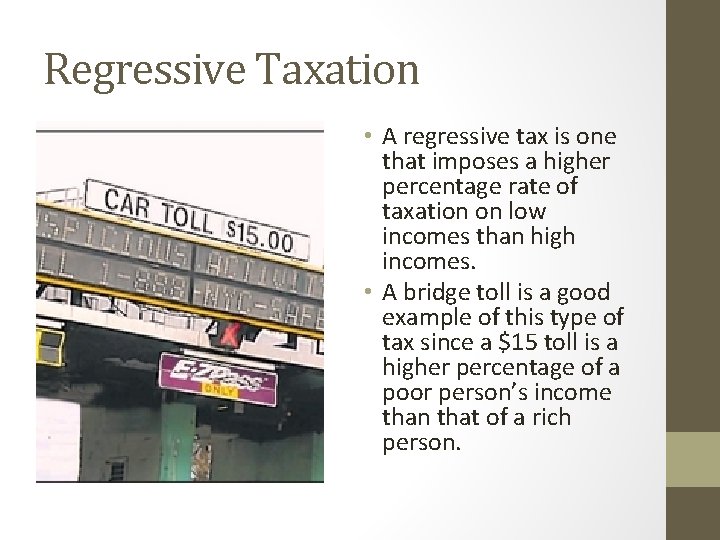
Regressive Taxation • A regressive tax is one that imposes a higher percentage rate of taxation on low incomes than high incomes. • A bridge toll is a good example of this type of tax since a $15 toll is a higher percentage of a poor person’s income than that of a rich person.