
Government Systems Distribution of Power and Citizen Participation

Government Systems: Distribution of Power and Citizen Participation
The Way Governments Distribute Power • Unitary • Confederation • Federal

Unitary • A form of government where the power is held by one central authority • Example: Parliament in the UK

Confederation • When independent countries agree to work together to secure a common purpose • They limit some of their freedoms to compromise and work together • Example: European Union • OPEC

Federal • A form of government where power is divided between one central and several regional authorities • Example: The U. S. A. is divided into the national government and the state governments

How Governments Determine Citizen Participation • Autocracy/autocratic • Oligarchy/oligarchic • Democracy/democratic

Autocratic Government: Citizen Participation? ? ? • One person possesses unlimited power • Citizen has little, if any, role in the government • Example: dictators • Saddam Hussein in Iraq • China • Many African countries • Cuba
Oligarchic Government Citizen Participation • Government run by ‘the few’ • Sometimes a government in which a small group exercises control, especially for corrupt and selfish purposes • Citizen has very limited role
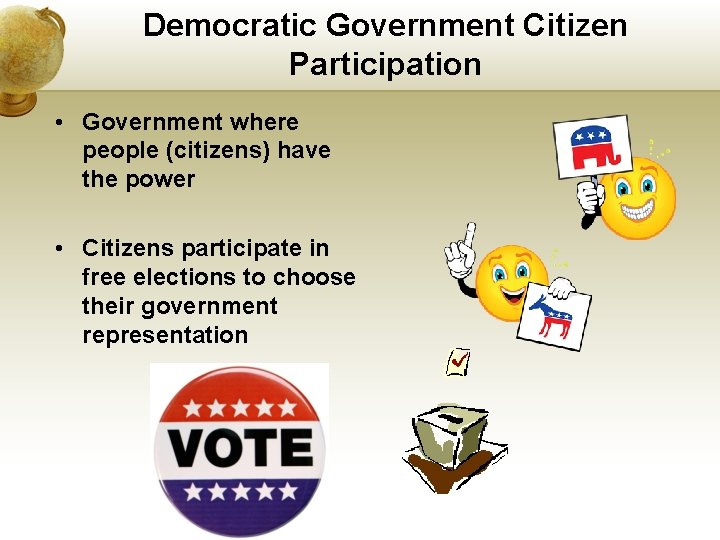
Democratic Government Citizen Participation • Government where people (citizens) have the power • Citizens participate in free elections to choose their government representation
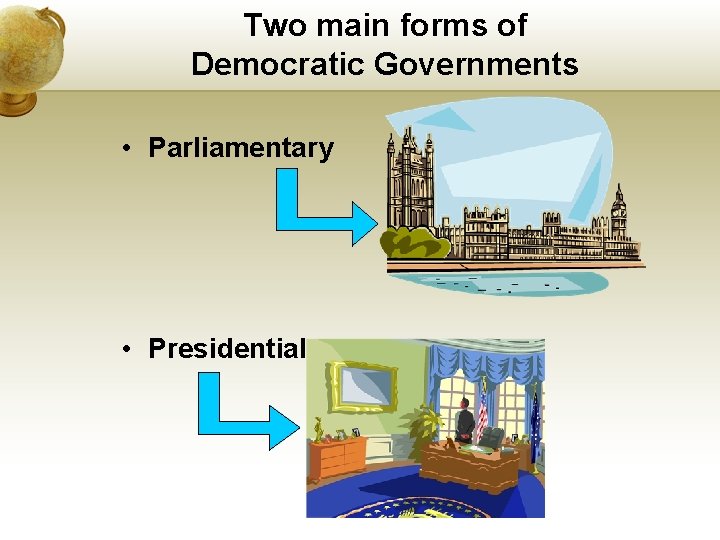
Two main forms of Democratic Governments • Parliamentary • Presidential
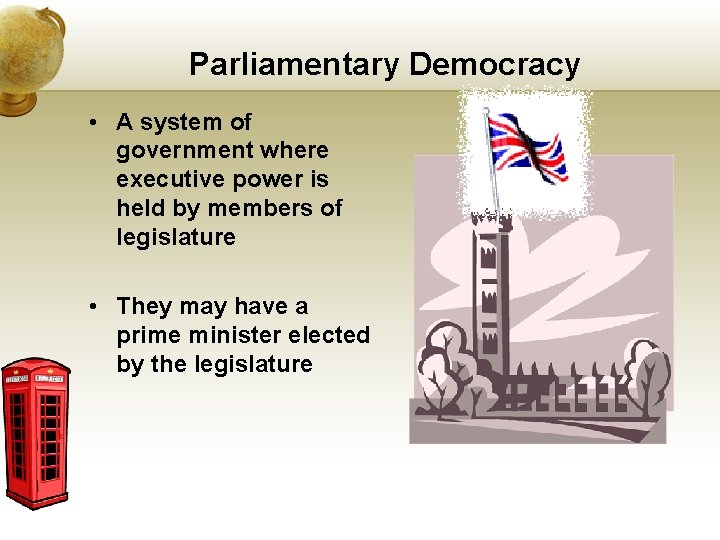
Parliamentary Democracy • A system of government where executive power is held by members of legislature • They may have a prime minister elected by the legislature
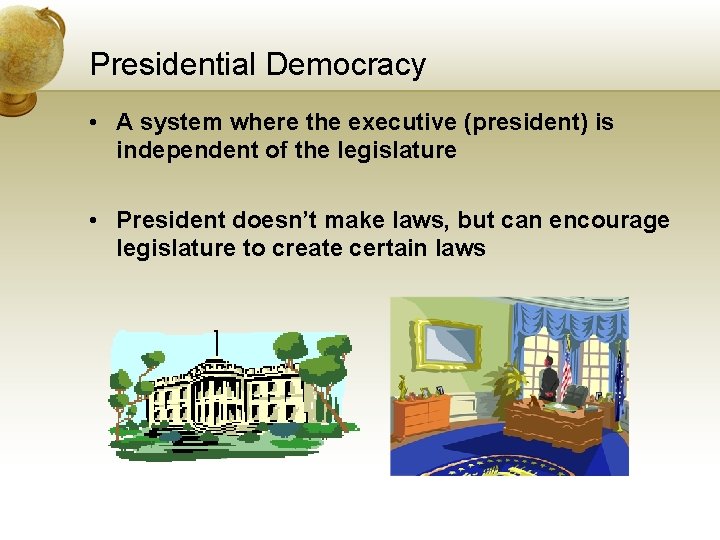
Presidential Democracy • A system where the executive (president) is independent of the legislature • President doesn’t make laws, but can encourage legislature to create certain laws
- Slides: 12