
Government Review Distribution of Power and Citizen Participation
Government Review Distribution of Power and Citizen Participation
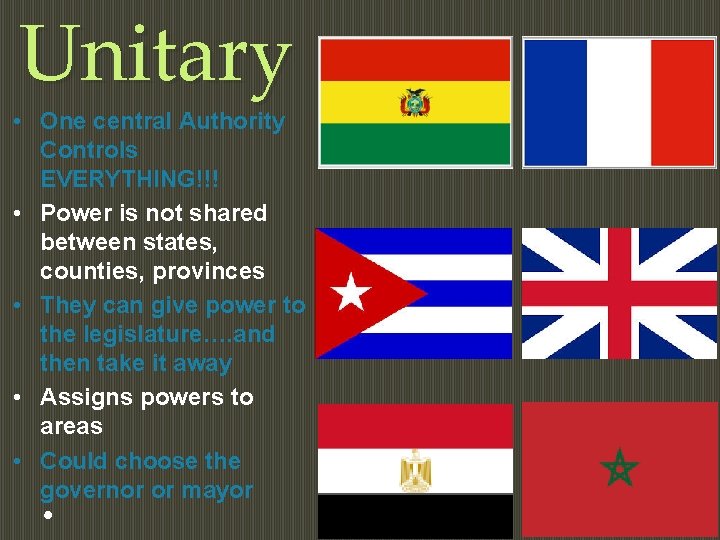
Unitary • One central Authority Controls EVERYTHING!!! • Power is not shared between states, counties, provinces • They can give power to the legislature…. and then take it away • Assigns powers to areas • Could choose the governor or mayor
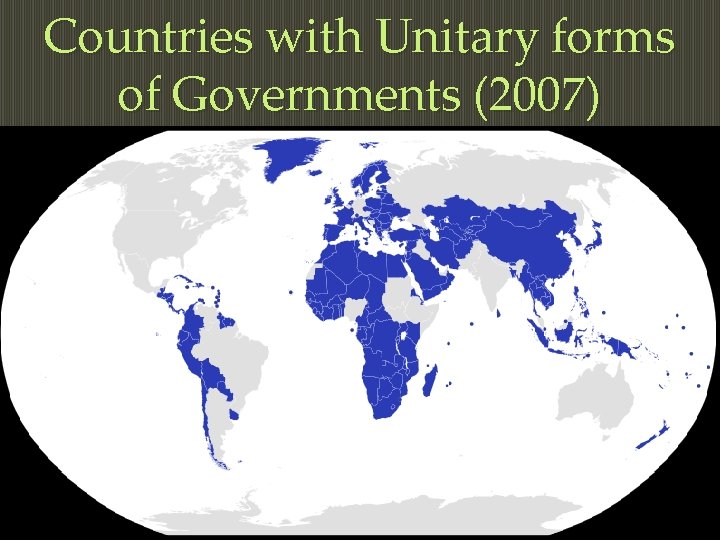
Countries with Unitary forms of Governments (2007)
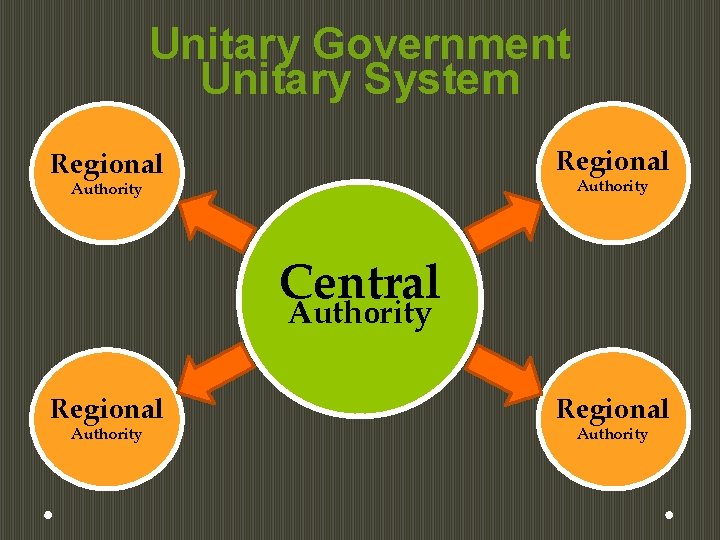
Unitary Government Unitary System Regional Authority Central Authority Regional Authority
Confederation • Voluntary by nature it has a weak central government. • Some Examples: • Very little power because o United States (1777 – members must agree on 1778 decisions that are made. o Iroquois League • Decisions made may not be o Switzerland actual laws, unless the o OPEC majority agree. o EU • They are not common in the 21 st century. • There’s no true way to enforce laws.
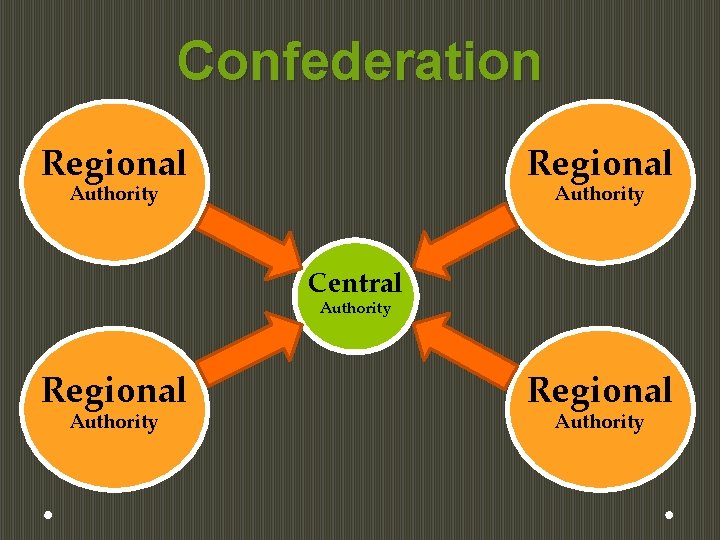
Confederation Regional Authority Central Authority Regional Authority
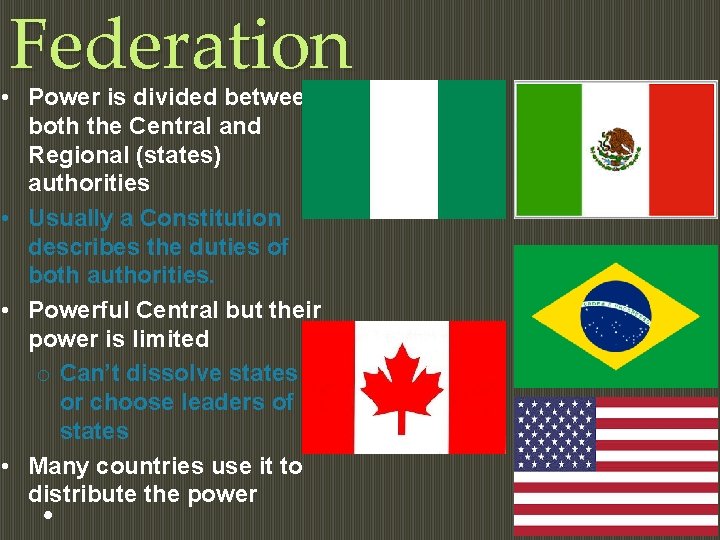
Federation • Power is divided between both the Central and Regional (states) authorities • Usually a Constitution describes the duties of both authorities. • Powerful Central but their power is limited o Can’t dissolve states or choose leaders of states • Many countries use it to distribute the power
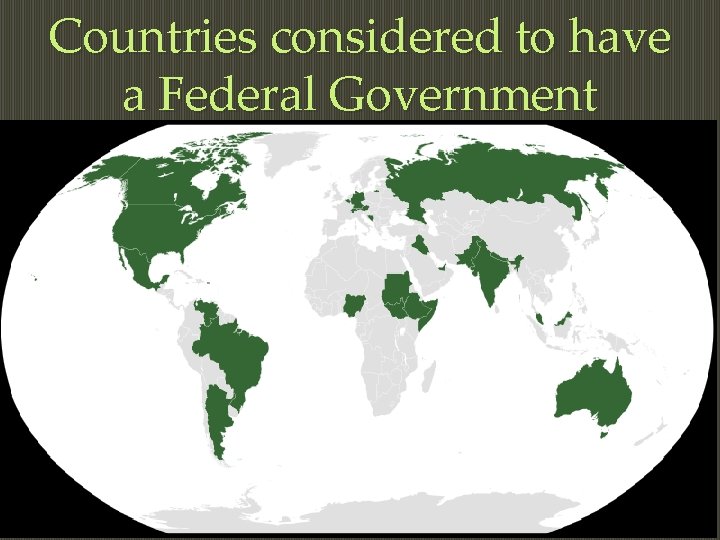
Countries considered to have a Federal Government
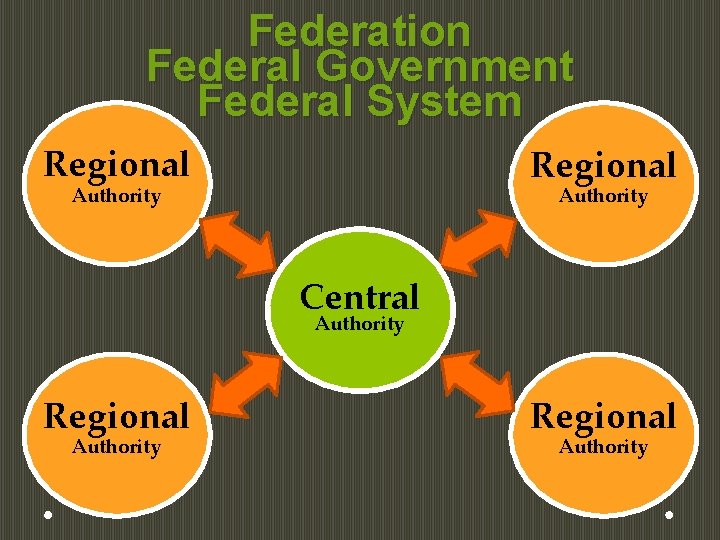
Federation Federal Government Federal System Regional Authority Central Authority Regional Authority

Oligarchy • “Ruled by a Few” • Country or nation controlled by a small group of people • Average person has little say or right in the government • Decisions can be made Examples: quickly • South Africa (during much • Poor/selfish decisions of the 20 th century) made by leaders can work against other citizens well • Communist China being
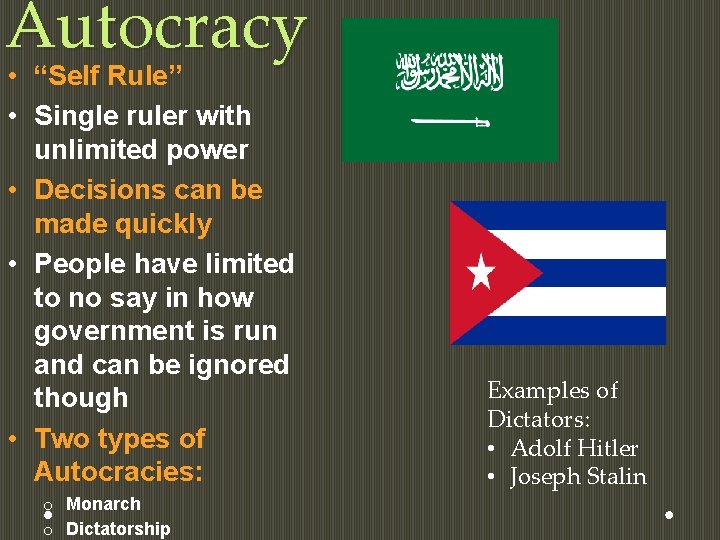
Autocracy • “Self Rule” • Single ruler with unlimited power • Decisions can be made quickly • People have limited to no say in how government is run and can be ignored though • Two types of Autocracies: o Monarch o Dictatorship Examples of Dictators: • Adolf Hitler • Joseph Stalin
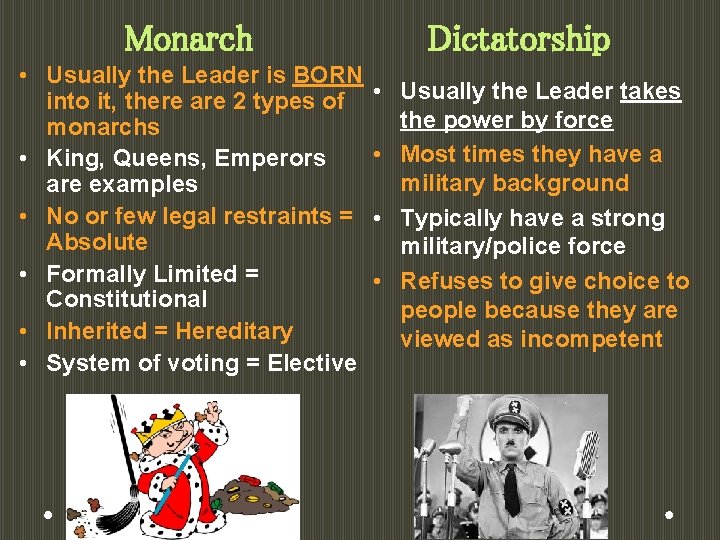
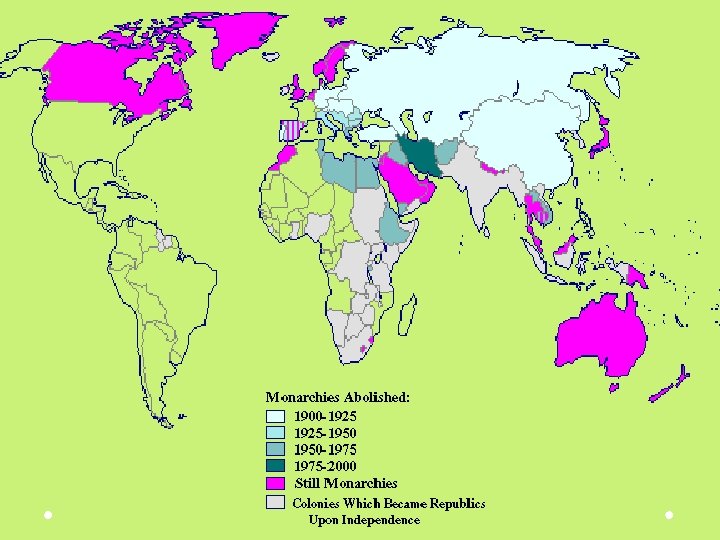
Monarch • Usually the Leader is BORN into it, there are 2 types of monarchs • King, Queens, Emperors are examples • No or few legal restraints = Absolute • Formally Limited = Constitutional • Inherited = Hereditary • System of voting = Elective Dictatorship • Usually the Leader takes the power by force • Most times they have a military background • Typically have a strong military/police force • Refuses to give choice to people because they are viewed as incompetent
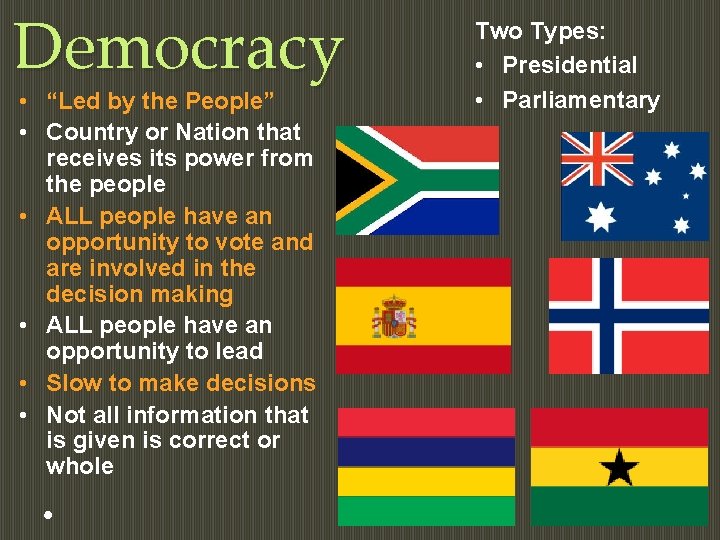
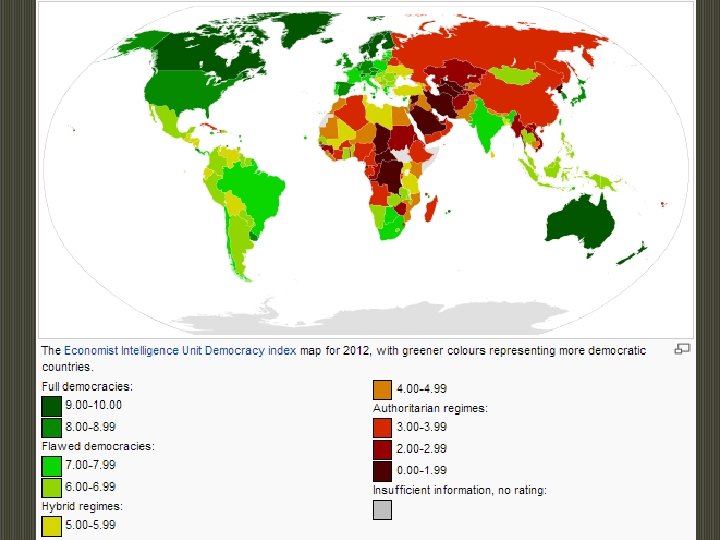
Democracy • “Led by the People” • Country or Nation that receives its power from the people • ALL people have an opportunity to vote and are involved in the decision making • ALL people have an opportunity to lead • Slow to make decisions • Not all information that is given is correct or whole Two Types: • Presidential • Parliamentary
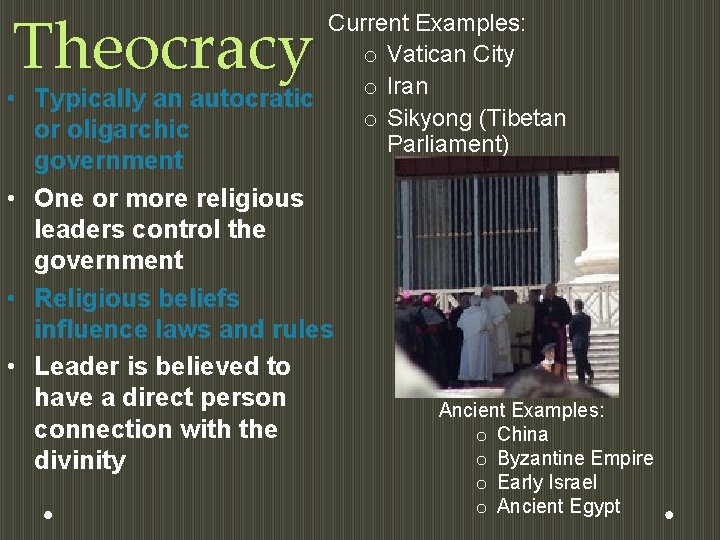
Theocracy Current Examples: o Vatican City o Iran • Typically an autocratic o Sikyong (Tibetan or oligarchic Parliament) government • One or more religious leaders control the government • Religious beliefs influence laws and rules • Leader is believed to have a direct person connection with the divinity Ancient Examples: o China o Byzantine Empire o Early Israel o Ancient Egypt
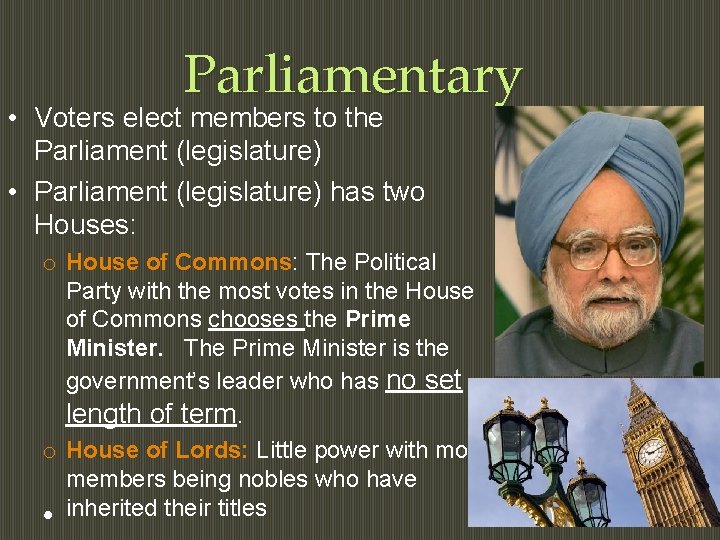
Parliamentary • Voters elect members to the Parliament (legislature) • Parliament (legislature) has two Houses: o House of Commons: The Political Party with the most votes in the House of Commons chooses the Prime Minister. The Prime Minister is the government’s leader who has no set length of term. o House of Lords: Little power with most members being nobles who have inherited their titles
Parliamentary vs. Presidential Democracy
• Prime minister (leader/chief of state), is elected by the legislature, NOT by the people • Executive power is held by members of the legislature; o executive + legislative = one branch of government • Head of state has a ceremonial role, • Chief of state usually has the power • Examples: Israel, Zimbabwe, Japan, and Great Britain
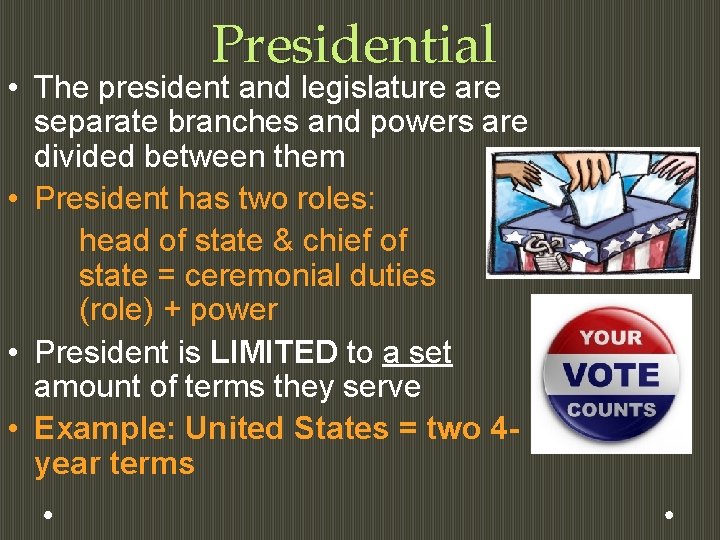
Presidential • The president and legislature are separate branches and powers are divided between them • President has two roles: head of state & chief of state = ceremonial duties (role) + power • President is LIMITED to a set amount of terms they serve • Example: United States = two 4 year terms
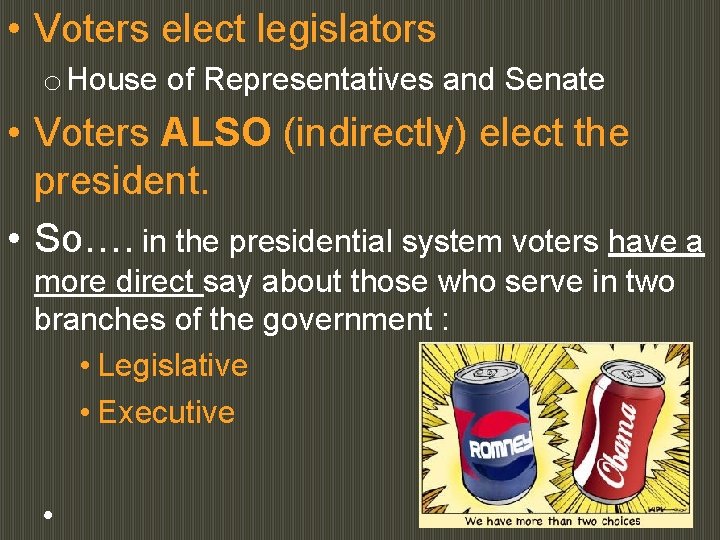
• Voters elect legislators o House of Representatives and Senate • Voters ALSO (indirectly) elect the president. • So…. in the presidential system voters have a more direct say about those who serve in two branches of the government : • Legislative • Executive
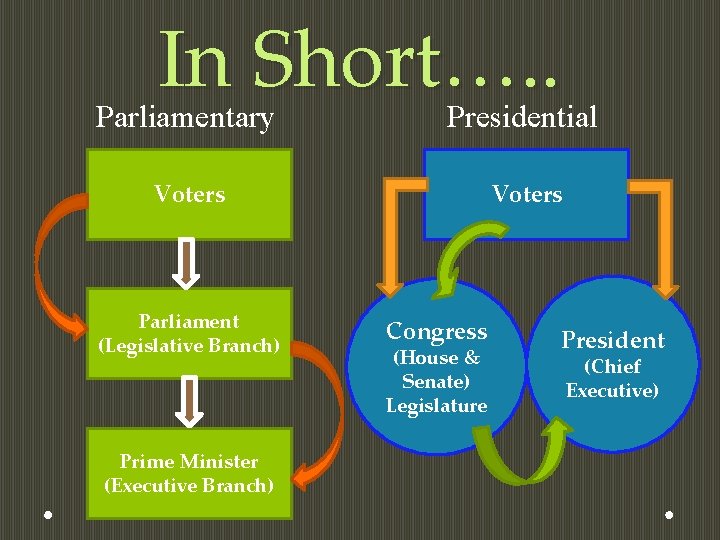
In Short…. . Parliamentary Presidential Voters Parliament (Legislative Branch) Prime Minister (Executive Branch) Congress (House & Senate) Legislature President (Chief Executive)
- Slides: 22