
Government in Ancient Greece Growth Polis Polis Greek
- Slides: 13
Government in Ancient Greece
Growth & Polis’ • Polis : Greek city-state – Had own government – Every inhabitant was expected to obey laws • • City was the center of the polis Placed in an ideal location Built on high rocky hills (acropolis) Each polis had an agora (marketplace)
Growth & Polis’ • Polis’ were self-sufficient • Government: first was run by an aristocracy (ruling class: nobles, warriors, landowners) • Tyrants began taking over – Tyrant: seize absolute control • Some area had oligarchy – Oligarchy: rule by a few superior citizens
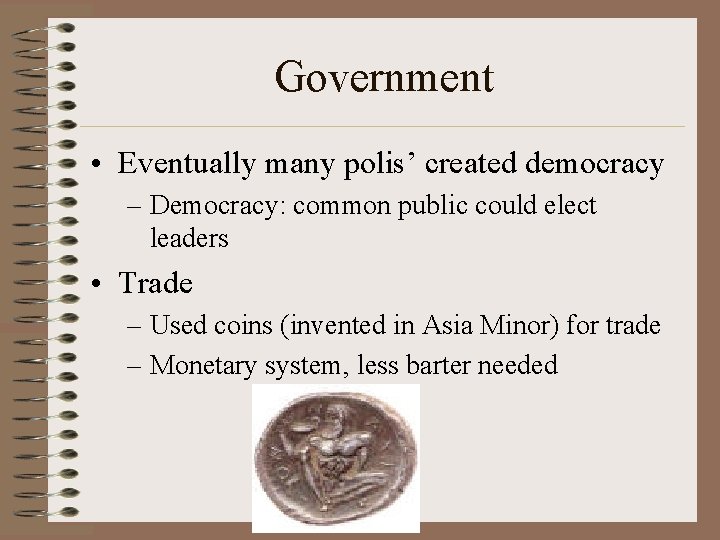
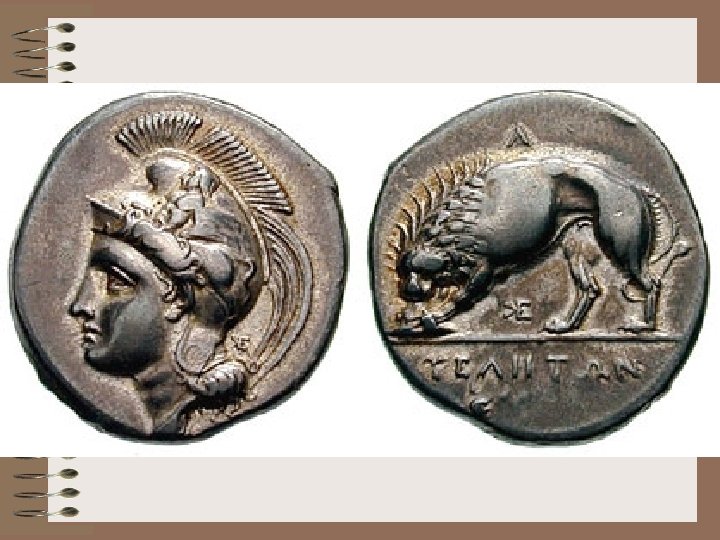
Government • Eventually many polis’ created democracy – Democracy: common public could elect leaders • Trade – Used coins (invented in Asia Minor) for trade – Monetary system, less barter needed
Sparta • • Located: valley of Peloponnesus Made up of three classes Spartans were the upper class Believed that contact w/ outside people would weaken them • 18 -60 yr. Olds were dedicated to be citizensoldiers
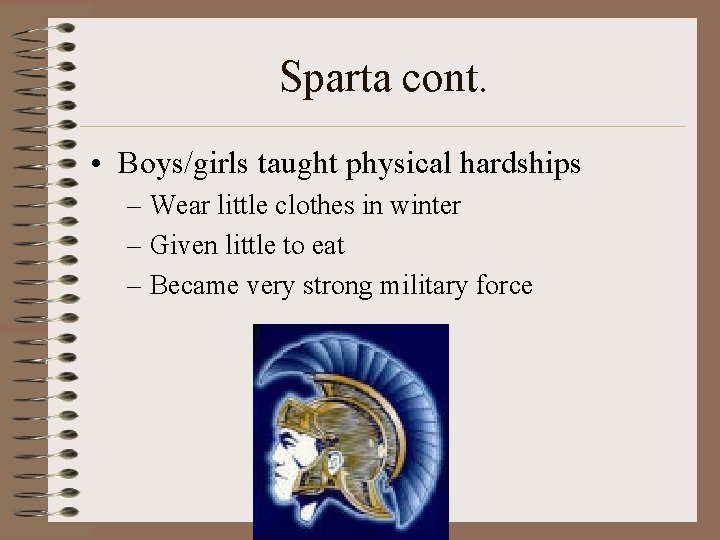
Sparta cont. • Boys/girls taught physical hardships – Wear little clothes in winter – Given little to eat – Became very strong military force
Athens • Different from Sparta • Trade, open meetings, discussions were important aspects • Democratic society – Rich and poor men participated – Wealth, instead of birth gave your social class – Ostracism was also practiced: voting to exile a leader for ten years (1 person each year)
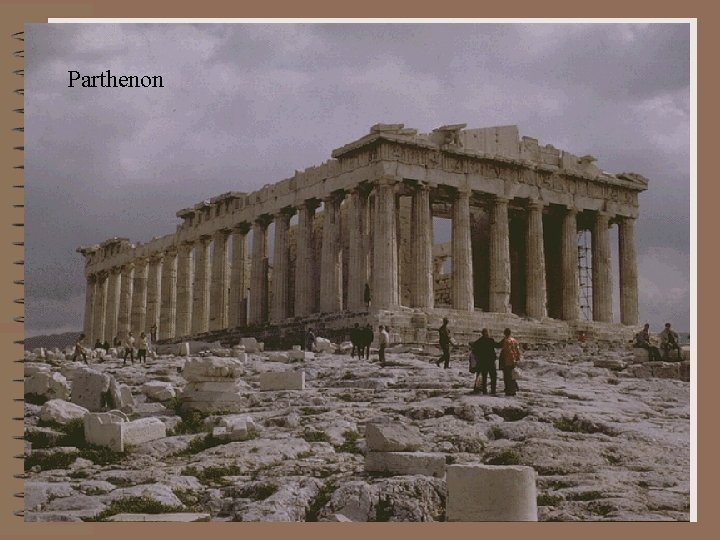
Parthenon
Influence of Ancient Greece (1: 30)
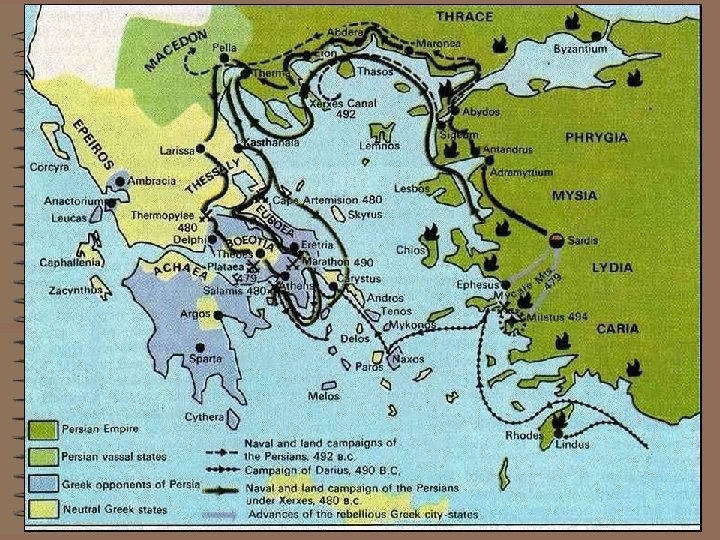
Persian Wars • Persians attacked Greece • Athenians defeated the Persians – Sent runner 26 miles from Marathon to Athens to tell of the victory • After the Persian Wars Greek city-states united together.
The End.