
Governance of a healthcare information infrastructure Case form
- Slides: 28
Governance of a healthcare information infrastructure Case form Norway IN 5430 10. 04. 2019 Kristoffer Fossum
Theme – Governing standards in complex organizations • Goals for the lecture • Present a case from the Norwegian healthcare sector (specifically the South East Health Region) about change from a top-down to a networked regime for e-health standards governance. • Show this change enables the region to handle complexity in standards governance better than before • Learning outcome: • Insight in standardization challenges in complex organizations • How one health region in Norway tries to deal with its complexity
Agenda • Introduction to the • • Norwegian healthcare sector The South East Health Region The complexity of hospitals The consequences of local autonomy in relation to complexity • Regional programs to improve IT portfolios • Top-down • New governance structures and processes • Networked
So, what is an e-health standard? • “Syntactic, semantic and functional standards, implemented in healthcare IT solutions. These allow healthcare personnel to capture, store, process and share information based on clinical practice needs. ” • or • Standards in IT systems that are directly related to clinical practice in healthcare service provision.
The Norwegian healthcare sector • Around 17 000 autonomous enterprises in the Norwegian healthcare sector • Each enterprise is responsible for quality and safety of care • Each enterprise has their own responsibility to establish their own patient journal systems according to Norwegian law (pasientjournallovens § 8). • Procurement of IT systems is the enterprise’s responsibility • Adoption of e-health standards is up to each enterprise • Each enterprise is responsible for information security
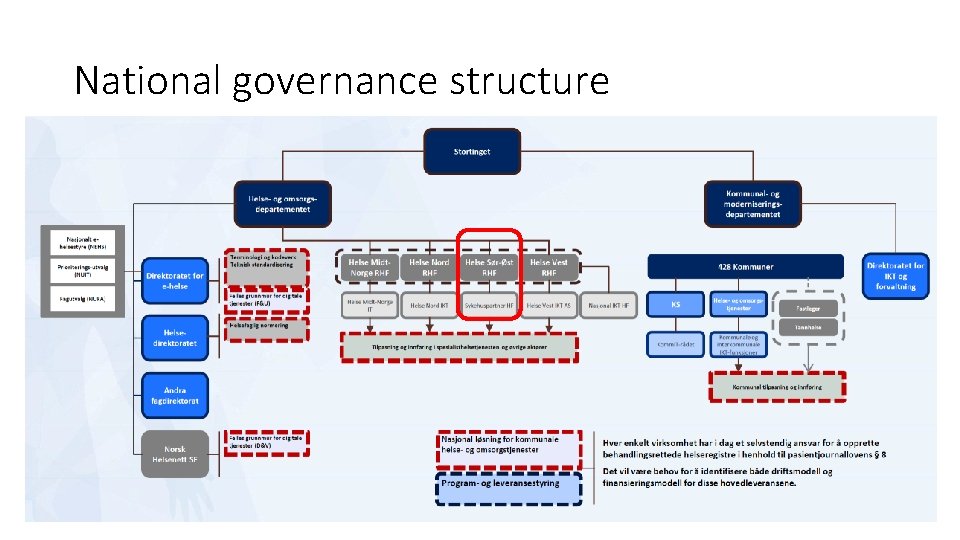
National governance structure
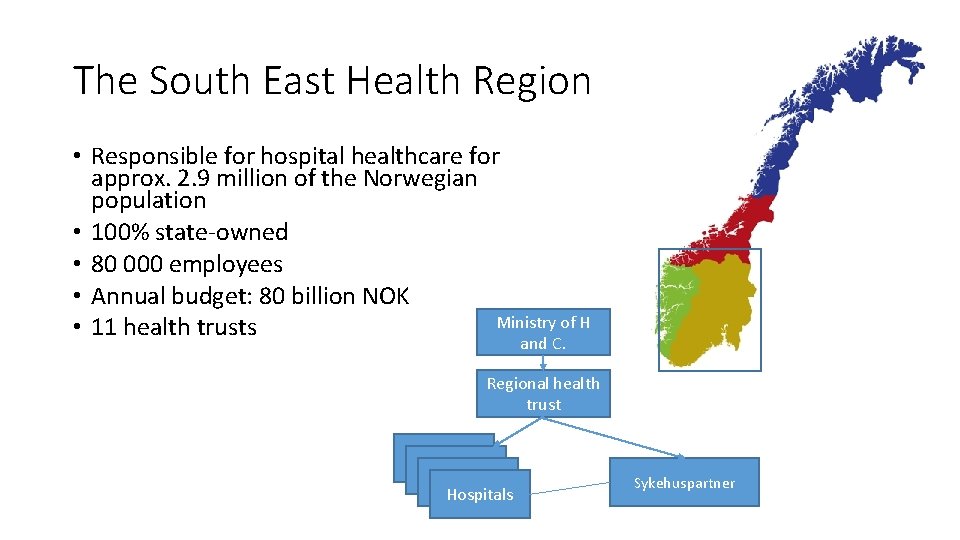
The South East Health Region • Responsible for hospital healthcare for approx. 2. 9 million of the Norwegian population • 100% state-owned • 80 000 employees • Annual budget: 80 billion NOK Ministry of H • 11 health trusts and C. Regional health trust Hospitals Sykehuspartner
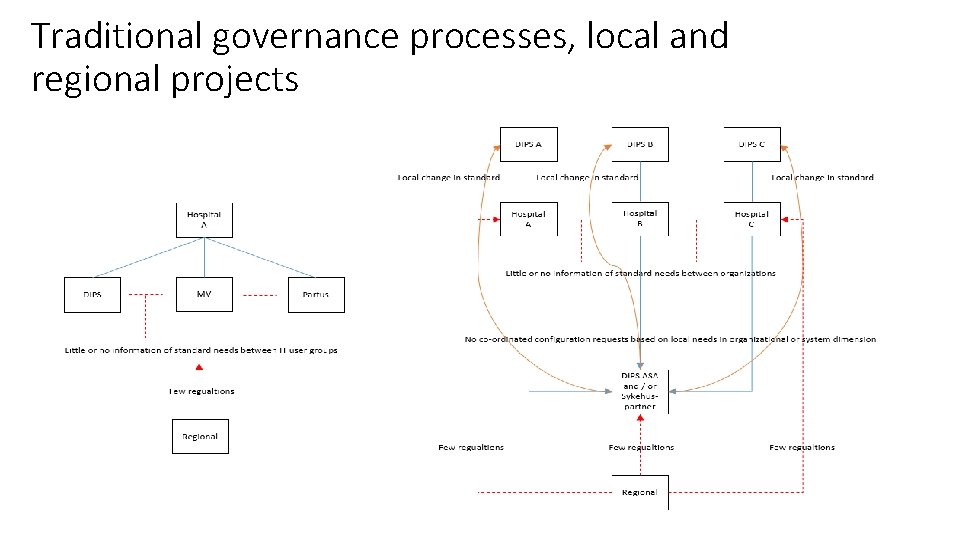
The South East Health Region • Each hospital trust is an autonomous enterprise • Information security • Quality and safety of care • Own patient journal systems -> Consensus-based agreements across enterprises • Decades of implementation of IT systems has led to a plethora of systems that are not well integrated with each other • High variation in e-health standards in the systems
Traditional governance processes, local and regional projects
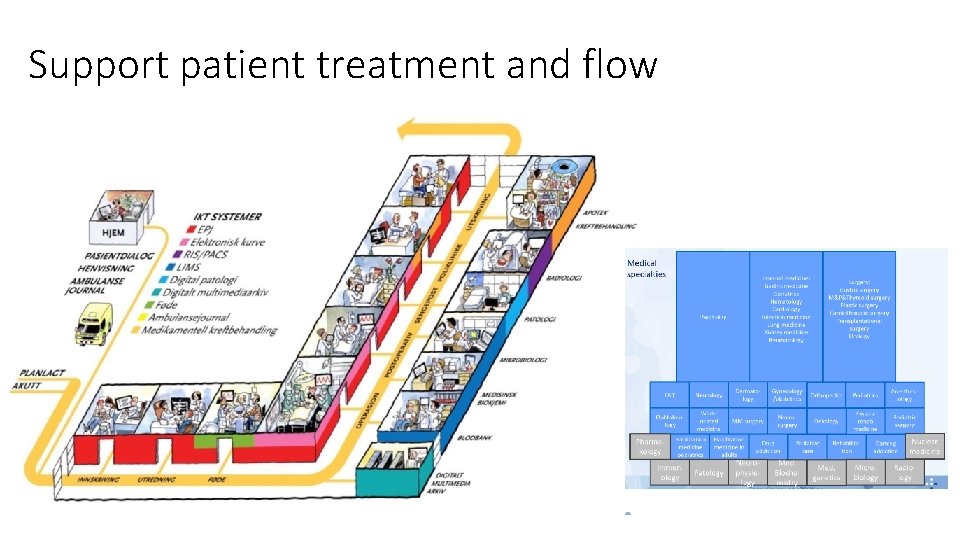
Support patient treatment and flow
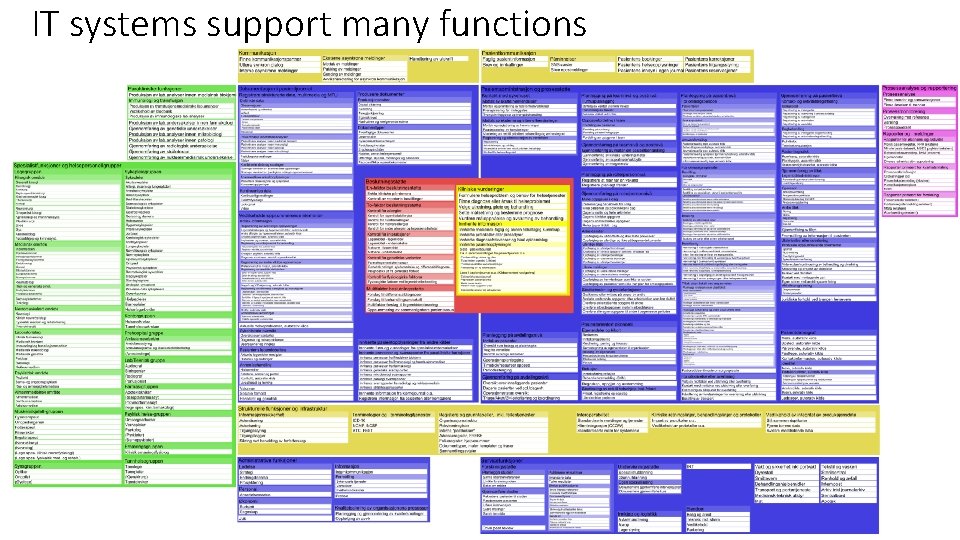
IT systems support many functions
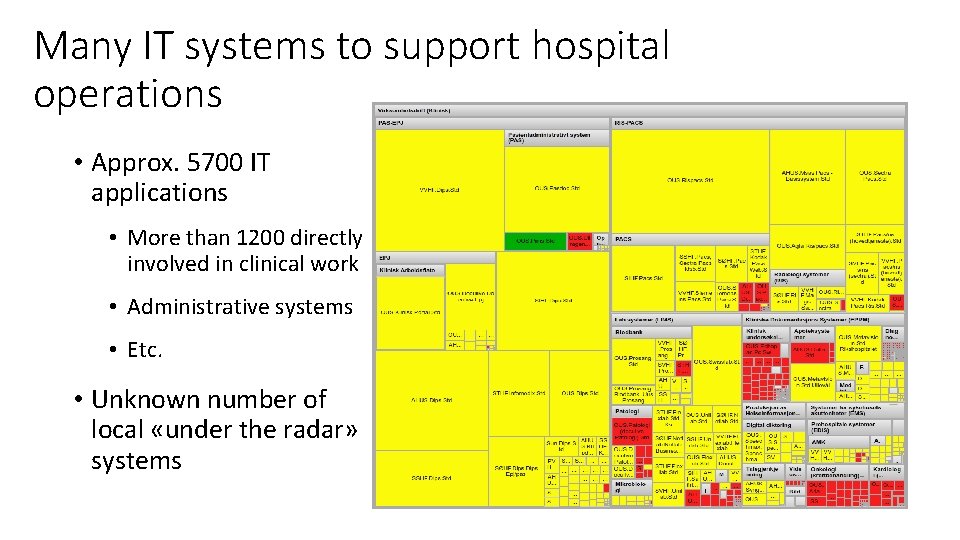
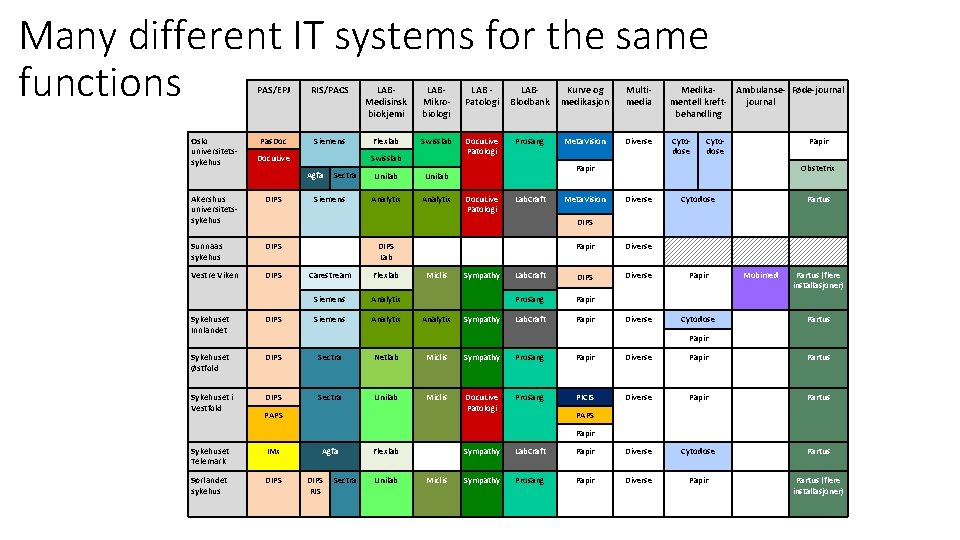
Many IT systems to support hospital operations • Approx. 5700 IT applications • More than 1200 directly involved in clinical work • Administrative systems • Etc. • Unknown number of local «under the radar» systems
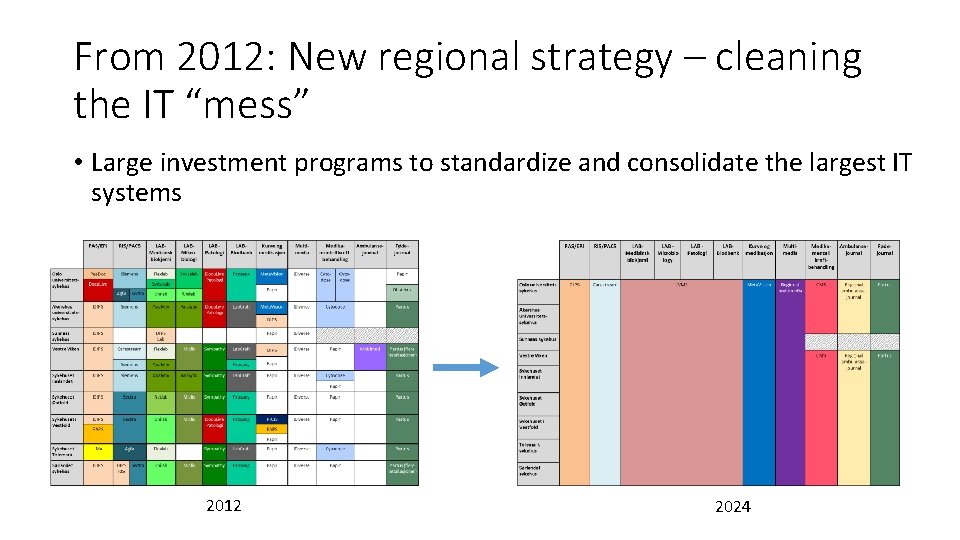
Many different IT systems for the same functions Oslo universitetssykehus PAS/EPJ RIS/PACS LABMedisinsk biokjemi LABMikrobiologi LAB Patologi LABBlodbank Kurve og medikasjon Multimedia Medika. Ambulanse- Føde-journal mentell kreftjournal behandling Pas. Doc Siemens Flexlab Swisslab Docu. Live Patologi Prosang Meta. Vision Diverse Cytodose Docu. Live Swisslab Agfa Akershus universitetssykehus DIPS Sunnaas sykehus DIPS Vestre Viken DIPS Sectra Siemens Unilab Analytix Cytodose Papir Docu. Live Patologi Lab. Craft Meta. Vision Obstetrix Diverse Cytodose Partus DIPS Lab Carestream Flexlab Siemens Analytix Miclis Analytix Sympathy Papir Diverse Lab. Craft DIPS Diverse Papir Prosang Papir Lab. Craft Papir Diverse Cytodose Mobimed Partus (flere installasjoner) Sykehuset Innlandet DIPS Partus Sykehuset Østfold DIPS Sectra Netlab Miclis Sympathy Prosang Papir Diverse Papir Partus Sykehuset i Vestfold DIPS Sectra Unilab Miclis Docu. Live Patologi Prosang PICIS Diverse Papir Partus Papir PAPS Papir Sykehuset Telemark IMx Sørlandet sykehus DIPS Agfa DIPS RIS Sectra Flexlab Unilab Miclis Sympathy Lab. Craft Papir Diverse Cytodose Partus Sympathy Prosang Papir Diverse Papir Partus (flere installasjoner)
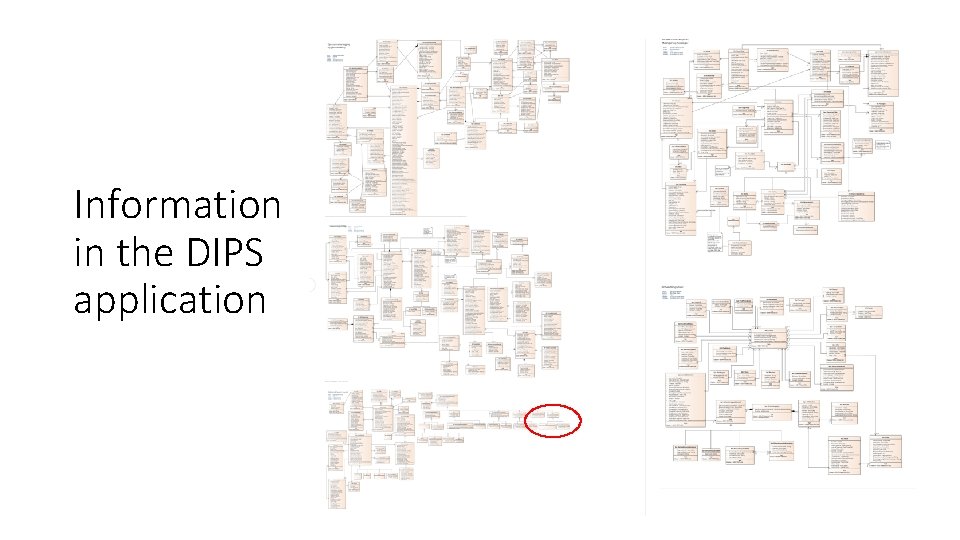
Information in the DIPS application
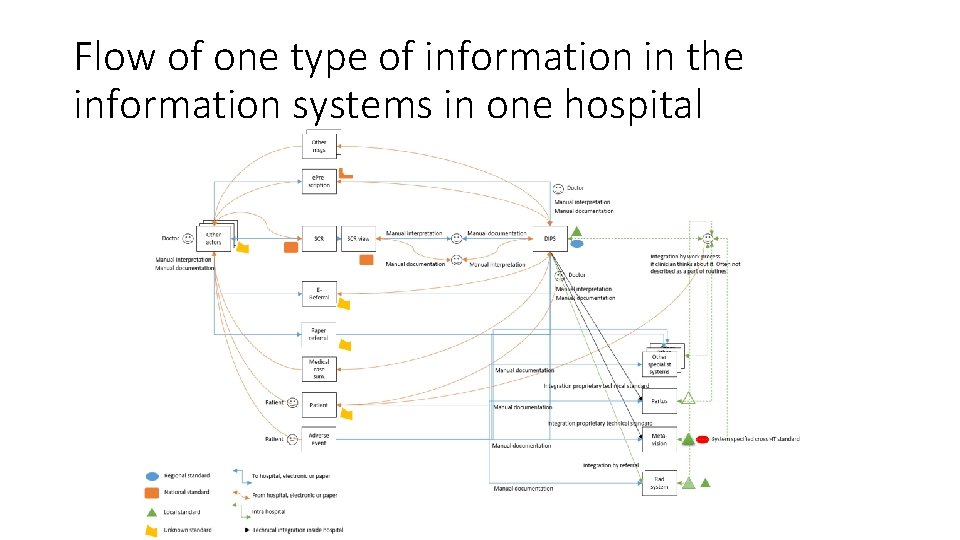
Flow of one type of information in the information systems in one hospital
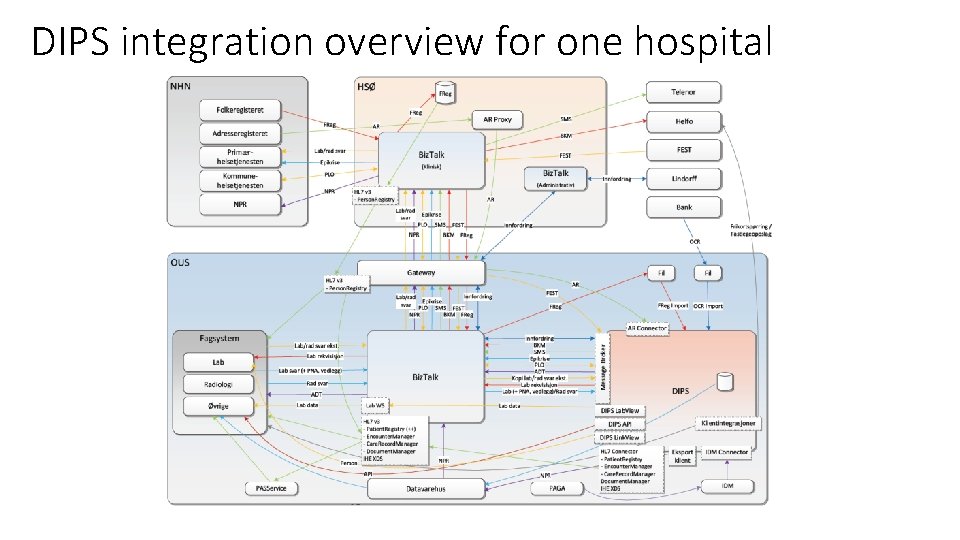
DIPS integration overview for one hospital
From 2012: New regional strategy – cleaning the IT “mess” • Large investment programs to standardize and consolidate the largest IT systems 2012 2024
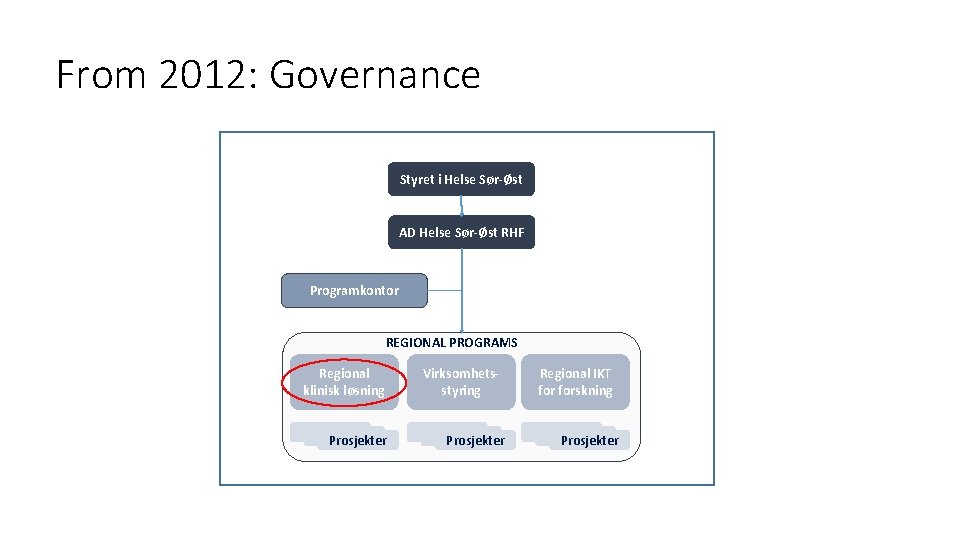
From 2012: Governance Styret i Helse Sør-Øst AD Helse Sør-Øst RHF Programkontor REGIONAL PROGRAMS Regional klinisk løsning Prosjekter Virksomhetsstyring Prosjekter Regional IKT forskning Prosjekter
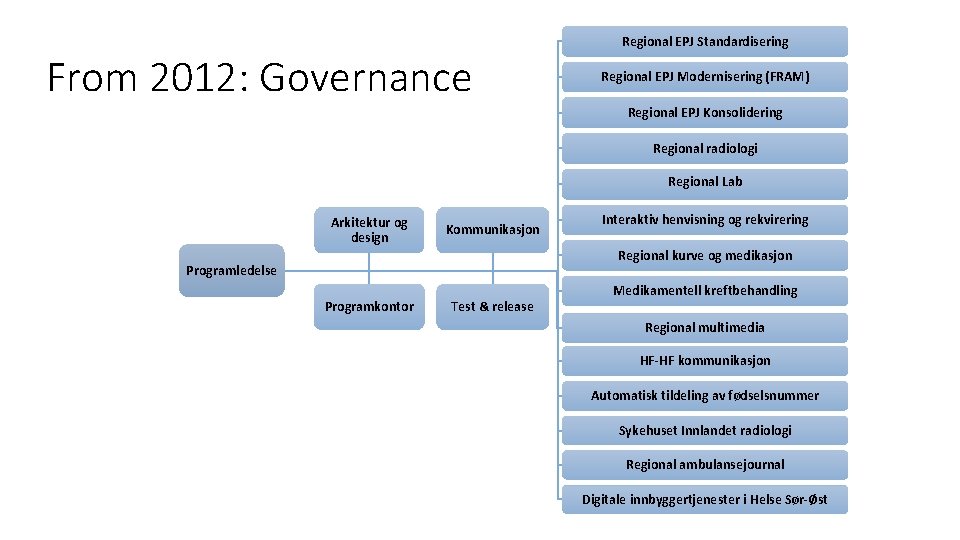
From 2012: Governance Regional EPJ Standardisering Regional EPJ Modernisering (FRAM) Regional EPJ Konsolidering Regional radiologi Regional Lab Arkitektur og design Kommunikasjon Interaktiv henvisning og rekvirering Regional kurve og medikasjon Programledelse Programkontor Test & release Medikamentell kreftbehandling Regional multimedia HF-HF kommunikasjon Automatisk tildeling av fødselsnummer Sykehuset Innlandet radiologi Regional ambulansejournal Digitale innbyggertjenester i Helse Sør-Øst
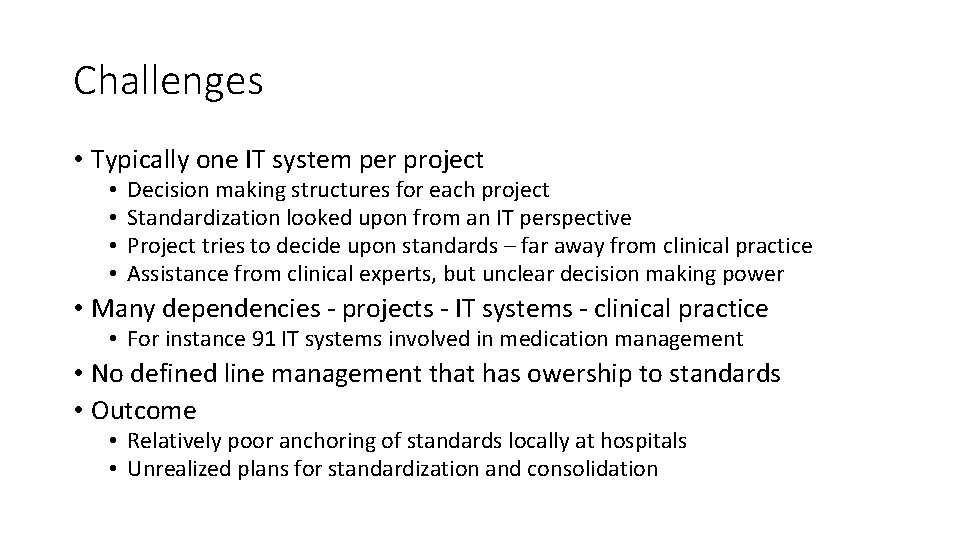
Challenges • Typically one IT system per project • • Decision making structures for each project Standardization looked upon from an IT perspective Project tries to decide upon standards – far away from clinical practice Assistance from clinical experts, but unclear decision making power • Many dependencies - projects - IT systems - clinical practice • For instance 91 IT systems involved in medication management • No defined line management that has owership to standards • Outcome • Relatively poor anchoring of standards locally at hospitals • Unrealized plans for standardization and consolidation
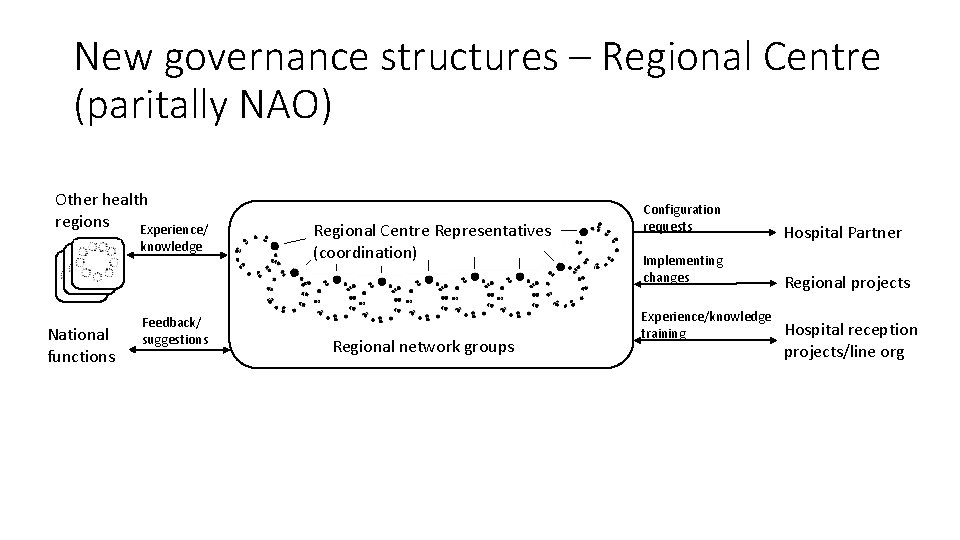
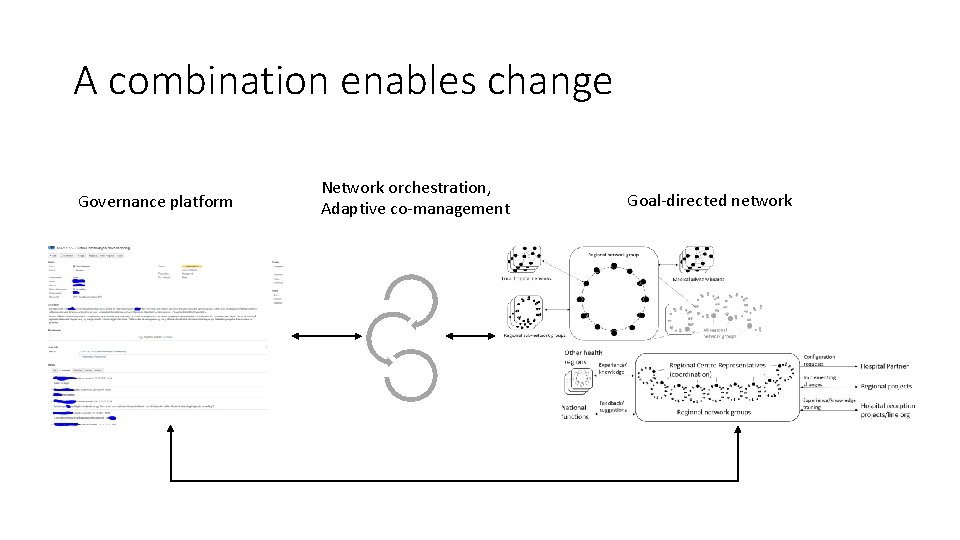
New governance structures – Regional Centre (paritally NAO) Other health regions Experience/ knowledge National functions Feedback/ suggestions Regional Centre Representatives (coordination) Regional network groups Configuration requests Implementing changes Experience/knowledge training Hospital Partner Regional projects Hospital reception projects/line org
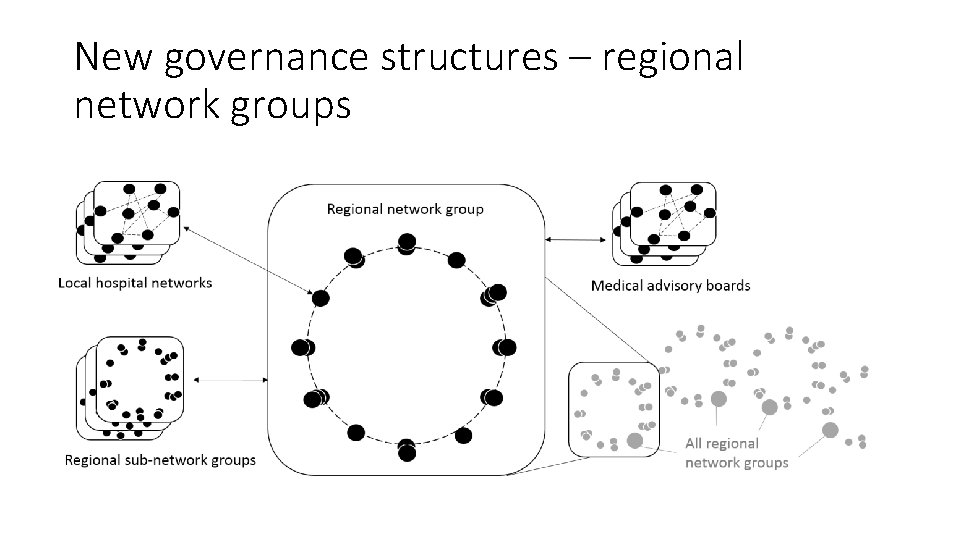
New governance structures – regional network groups
New governance processes • Three ways of initiating a process • Locally originated suggestions for change/improvement • Regional projects in need for standards assessment and development • Regional governance coordinators initiating on own initiative • Daily meetings in the regional centre • Weekly meetings locally in hospitals • Bi-weekly meetings in the regional network groups • Continuous access to information and participation in discussions via the governance platform
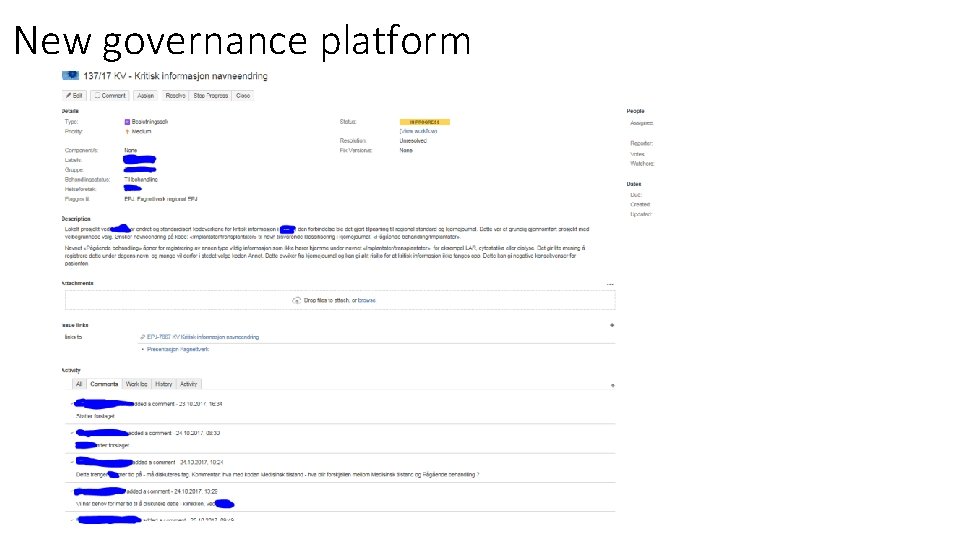
New governance platform • Web-based platform that all relevant actors across hospitals and projects may read, discuss, and follow up suggestions for change, and trace actual changes. • Creating transparency in • Information about the problems and issues • Processes before decisions • Made decisions
New governance platform
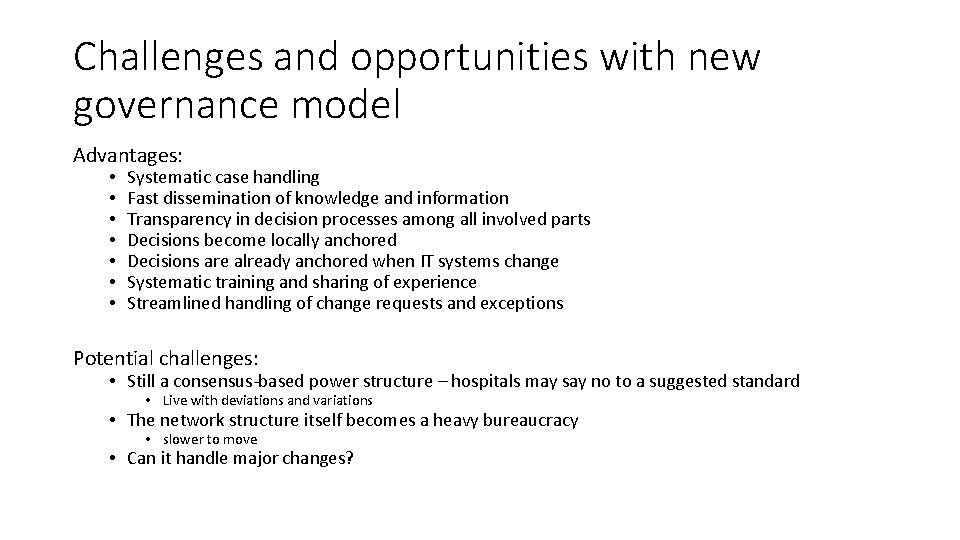
Challenges and opportunities with new governance model Advantages: • • Systematic case handling Fast dissemination of knowledge and information Transparency in decision processes among all involved parts Decisions become locally anchored Decisions are already anchored when IT systems change Systematic training and sharing of experience Streamlined handling of change requests and exceptions Potential challenges: • Still a consensus-based power structure – hospitals may say no to a suggested standard • Live with deviations and variations • The network structure itself becomes a heavy bureaucracy • slower to move • Can it handle major changes?
A combination enables change Governance platform Network orchestration, Adaptive co-management Goal-directed network
Contributions • The analytical lens contribute to understanding governance standards • Top-down vs bottom-up governance • Both at the same time, but in different parts of the governance network • Being explicit on governance of standards in complex information infrastructures