
Gothic Romanticism The Five Is of Romanticism n
- Slides: 13
Gothic Romanticism
The Five I’s of Romanticism n n n Intuition Imagination Innocence Inspiration from nature Inner experience *the “I” in each one should remind you that Romanticism was fundamentally an individualistic outlook on life***
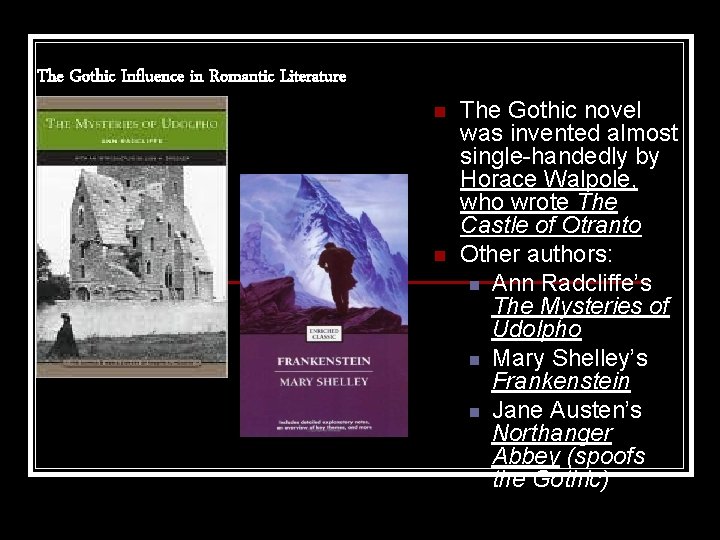
The Gothic Influence in Romantic Literature n n The Gothic novel was invented almost single-handedly by Horace Walpole, who wrote The Castle of Otranto Other authors: n Ann Radcliffe’s The Mysteries of Udolpho n Mary Shelley’s Frankenstein n Jane Austen’s Northanger Abbey (spoofs the Gothic)
The Gothic Influence in Romantic Literature (part two) n The strange thing is that it seemed unlikely to fit the new nation of America, where there weren’t any places old enough to have ghosts or to reek of the decay of ages Edgar Allan Poe was attracted to the exotic, otherworldly trappings of the Gothic n Particularly in America, the Gothic took a turn into the psychological exploration of the human mind n
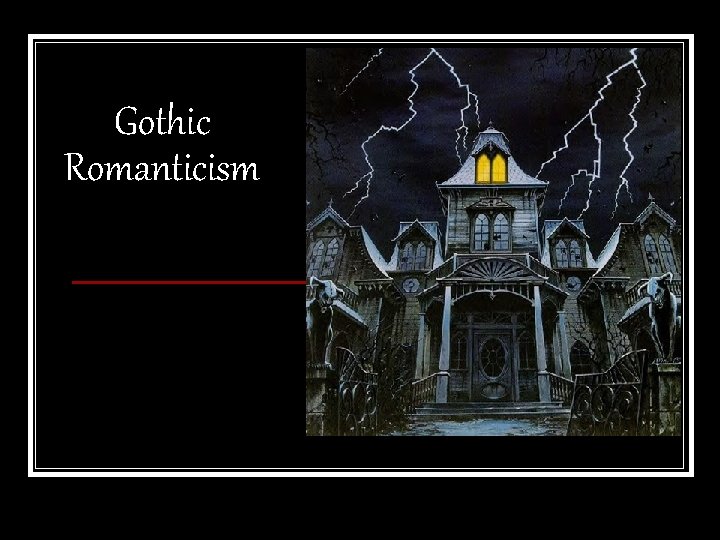
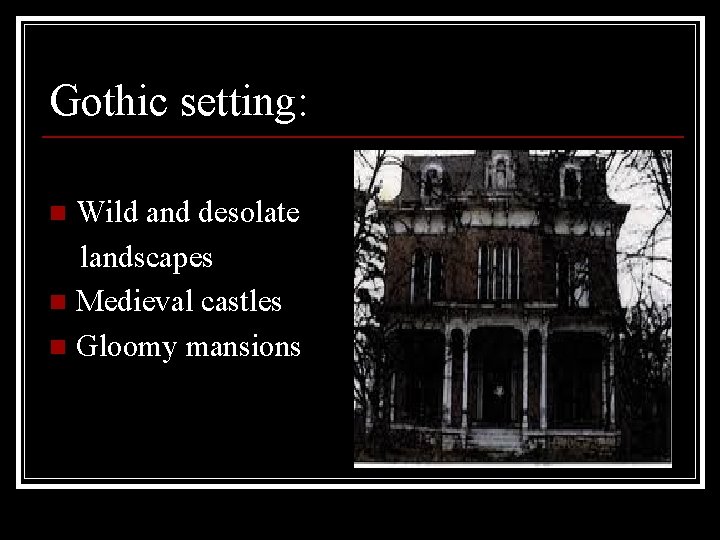
Gothic setting: Wild and desolate landscapes n Medieval castles n Gloomy mansions n
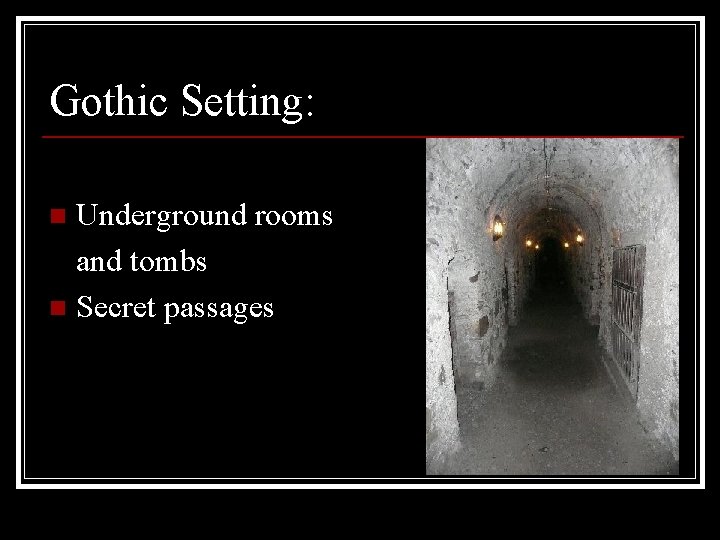
Gothic Setting: Underground rooms and tombs n Secret passages n
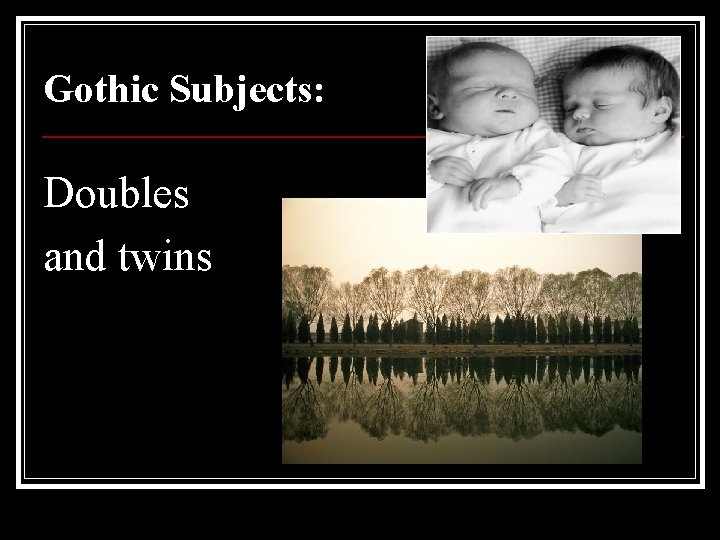
Gothic Subjects: Doubles and twins
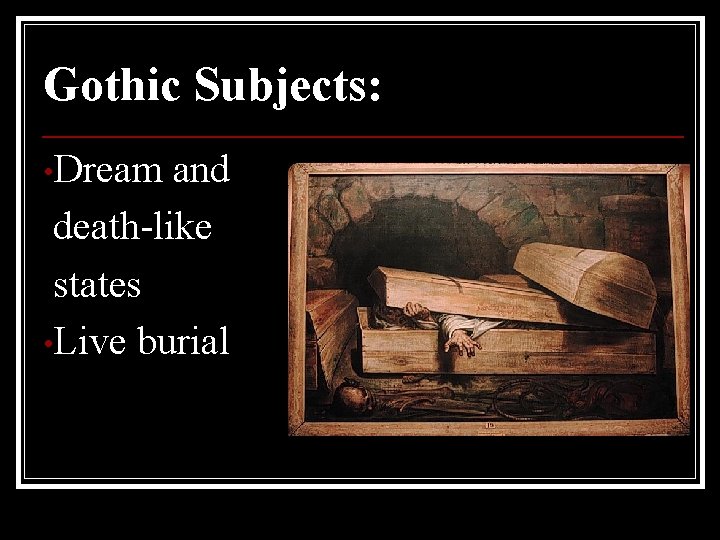
Gothic Subjects: • Dream and death-like states • Live burial
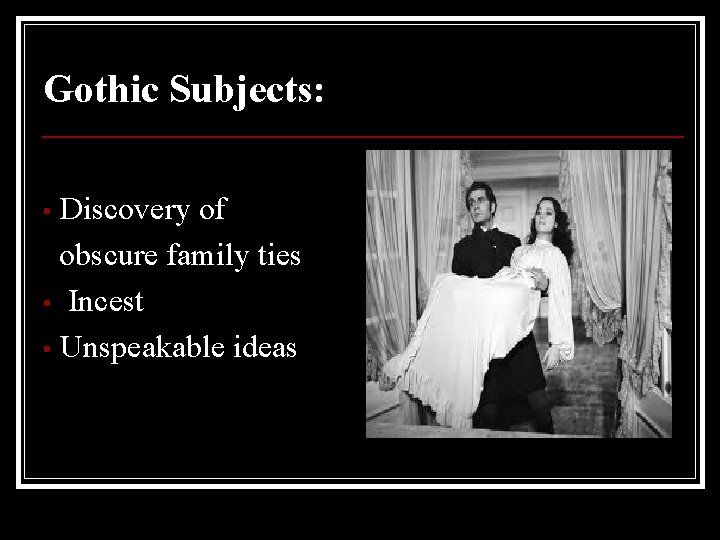
Gothic Subjects: Discovery of obscure family ties • Incest • Unspeakable ideas •
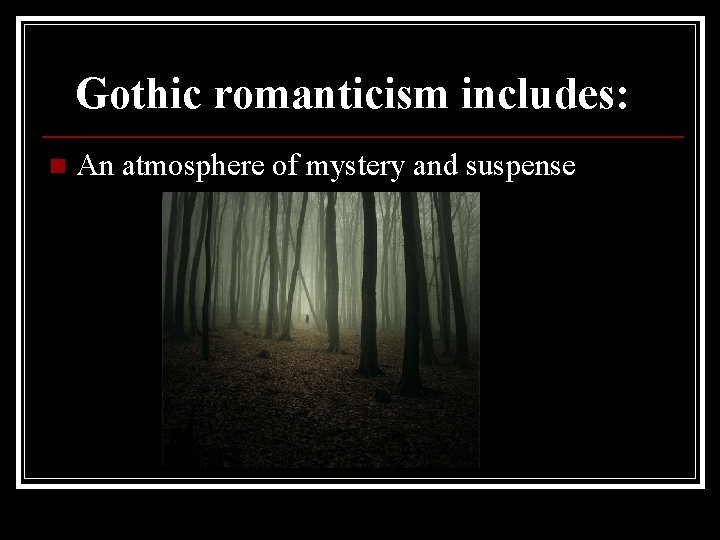
Gothic romanticism includes: n An atmosphere of mystery and suspense
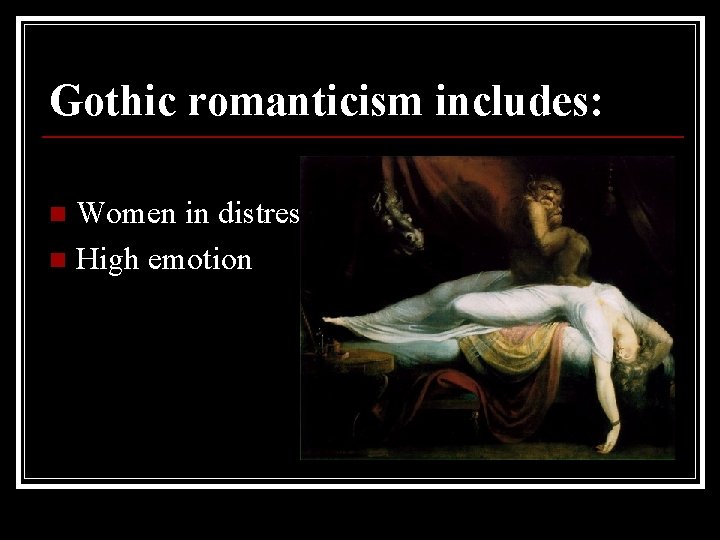
Gothic romanticism includes: Women in distress n High emotion n
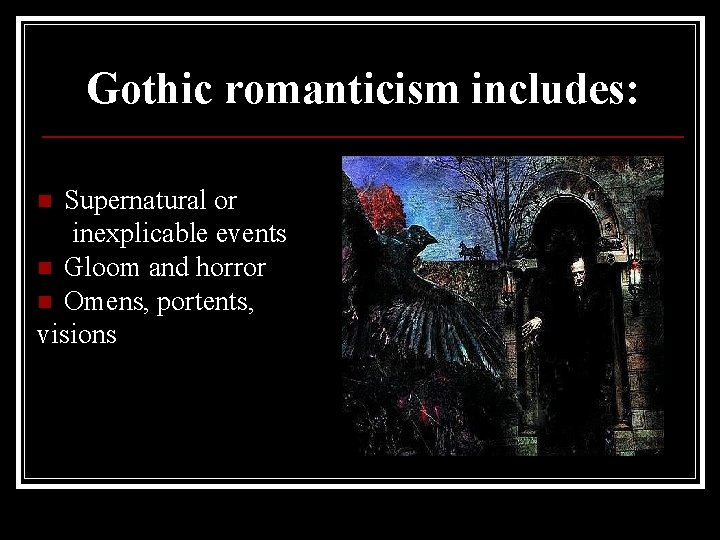
Gothic romanticism includes: Supernatural or inexplicable events n Gloom and horror n Omens, portents, visions n
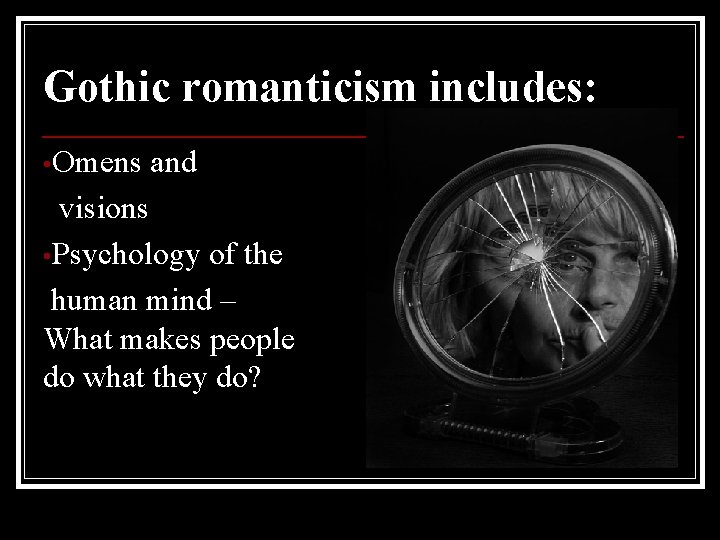
Gothic romanticism includes: • Omens and visions • Psychology of the human mind – What makes people do what they do?