
Goose Creek CISD Response to Intervention Training Part




- Slides: 38
Goose Creek CISD Response to Intervention Training Part I
THE BASICS OF RTI Andrea Ogonosky, Ph. D. , LSSP, NCSP Licensed Psychologist Educational Consultant
Rt. I Non-Negotiables • Foundations • Federal Law (NCLB, IDEA 2004) • State Rules and Regulations • Case Law • Format • District Problem Solving Philosophy (Tied to Mission Statement) • Campus Plans • Fidelity • Process implementation • Assessment Integrity
4 From NCLB: “…holding schools, local education agencies, and States accountable for improving the academic achievement of all students…” and “…promoting schoolwide reform and ensuring the access of all children to effective, scientifically-based instructional strategies…” [PL 107 -110 § 1001(4) and (9)] From IDEA: “…to improve the academic achievement and functional performance of children with disabilities including the use of scientifically based instructional practices, to the maximum extent possible. ” [20 U. S. C. 1400(c)(5)(E)]
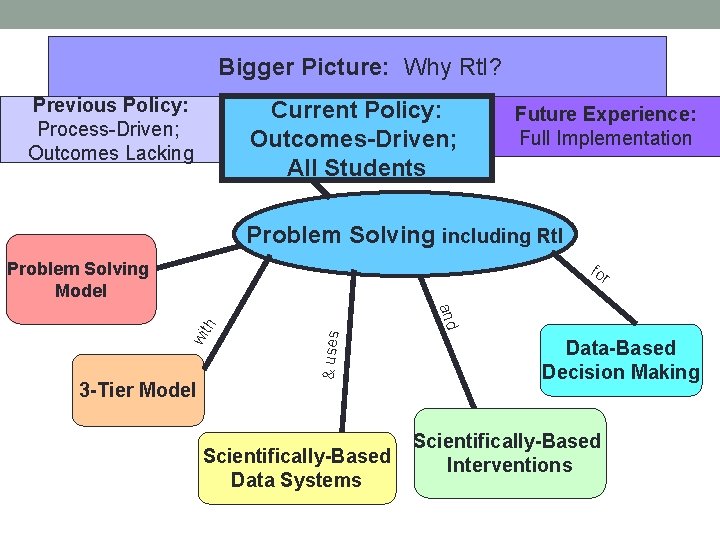
Bigger Picture: Why Rt. I? Previous Policy: Process-Driven; Outcomes Lacking Current Policy: Outcomes-Driven; All Students Future Experience: Full Implementation Problem Solving including Rt. I Problem Solving Model & uses wi 3 -Tier Model and th for Scientifically-Based Data Systems Data-Based Decision Making Scientifically-Based Interventions
Successful District Rt. I Plan • Led by General Education, Supported by Special Education • Infrastructure for a 3 -Tiered Model • Problem-Solving Model Implemented with Integrity • Effective Collection and Use of Data • Decision Rules for Intervention Evaluation and Eligibility Determination • Technology to Manage and Document Data. Based Decision Making • Improved Academic and Behavior Outcomes for All Students
7 RTI Key Practices • Using research-based, scientifically validated interventions/instruction • Monitoring student progress to inform instruction • Making decisions based on data • Using assessments for: (1) universal screening; (2) progress monitoring; and (3) diagnostics
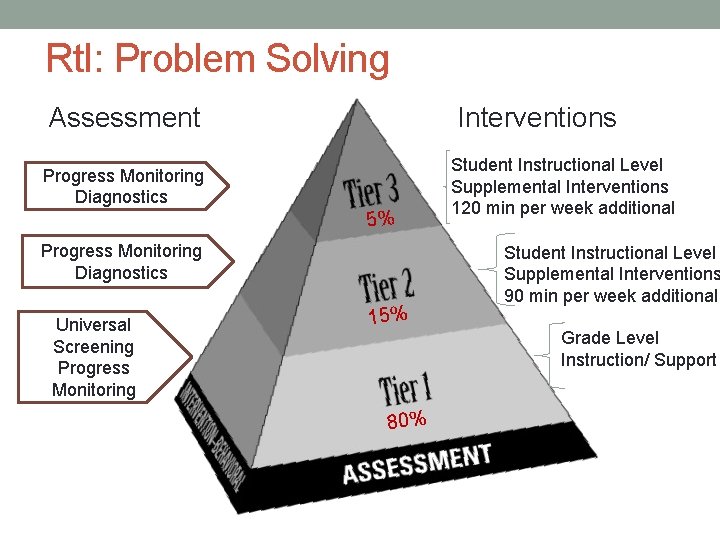
Rt. I: Problem Solving Assessment Interventions Progress Monitoring Diagnostics 5% Progress Monitoring Diagnostics Universal Screening Progress Monitoring 15% 80% Student Instructional Level Supplemental Interventions 120 min per week additional Student Instructional Level Supplemental Interventions 90 min per week additional Grade Level Instruction/ Support
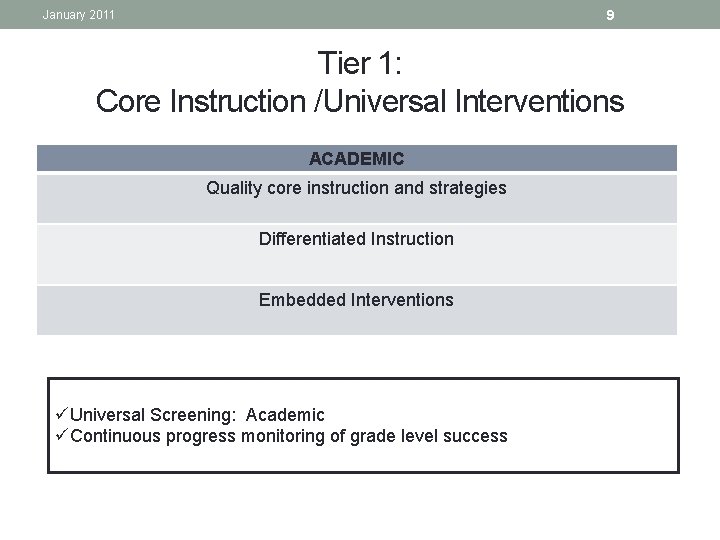
9 January 2011 Tier 1: Core Instruction /Universal Interventions ACADEMIC Quality core instruction and strategies Differentiated Instruction Embedded Interventions üUniversal Screening: Academic üContinuous progress monitoring of grade level success
Show Me the Data! Remember if it is not documented. . . Then IT DID NOT HAPPEN!
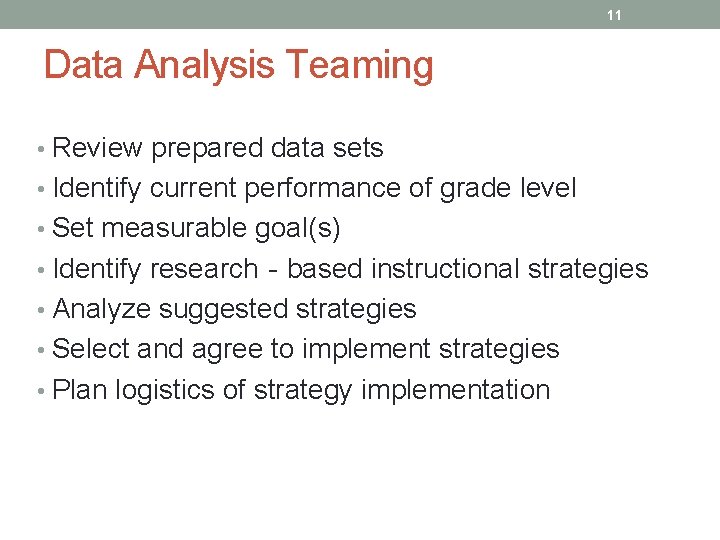
11 Data Analysis Teaming • Review prepared data sets • Identify current performance of grade level • Set measurable goal(s) • Identify research‐based instructional strategies • Analyze suggested strategies • Select and agree to implement strategies • Plan logistics of strategy implementation
12 January 2011 Tier 2: Targeted Interventions ACADEMIC Strategic and supplemental Standard protocol / evidence-based Small group (5: 1) ü Rubric for decision making: decision rules, aim-line /goals, guidelines for increasing /decreasing support or changing intervention. ü Focused continuous progress monitoring that increases with intensity of instruction and intervention
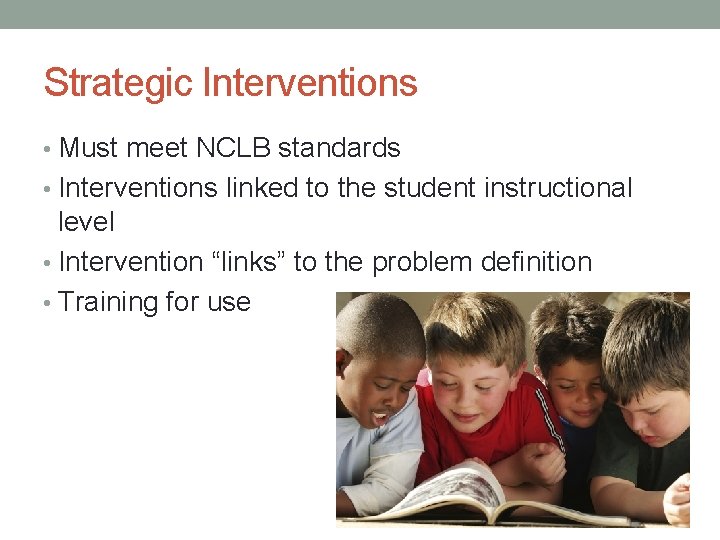
Strategic Interventions • Must meet NCLB standards • Interventions linked to the student instructional level • Intervention “links” to the problem definition • Training for use
Data Documentation: Tier 2 • Updated Tier 1 documentation • Baseline data (instructional level) • Aim Line or Goal • Intervention selected (research-based) • Progress monitoring data ( Slope of Improvement) • Comparison with evidenced based norms • Interventions/Fidelity • Observations
15 January 2011 Tier 3: Intensive Interventions ACADEMIC Increased strategic and supplemental Group size decreased (3: 1) ü Rubric for decision making: decision rules, aim-line /goals, guidelines for increasing /decreasing support or changing intervention. ü Focused continuous progress monitoring that increases with intensity of instruction and intervention üPattern of inadequate responses may lead to refer for Section 504 or Special Education
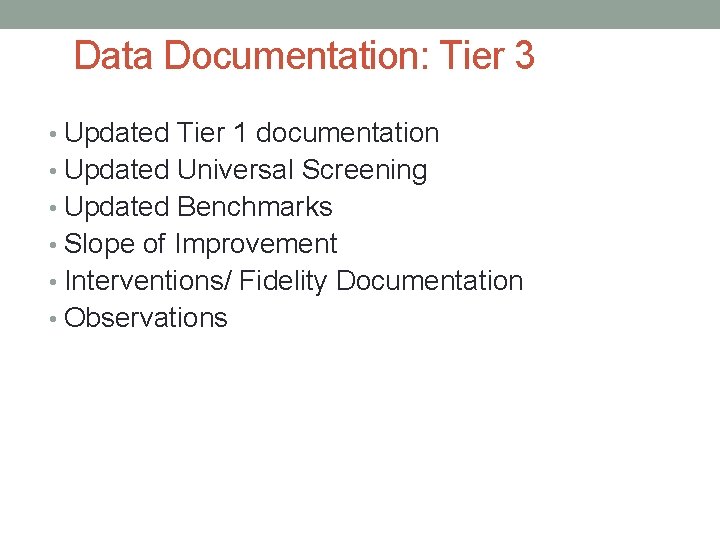
Data Documentation: Tier 3 • Updated Tier 1 documentation • Updated Universal Screening • Updated Benchmarks • Slope of Improvement • Interventions/ Fidelity Documentation • Observations
PROBLEM SOLVING PROCESS
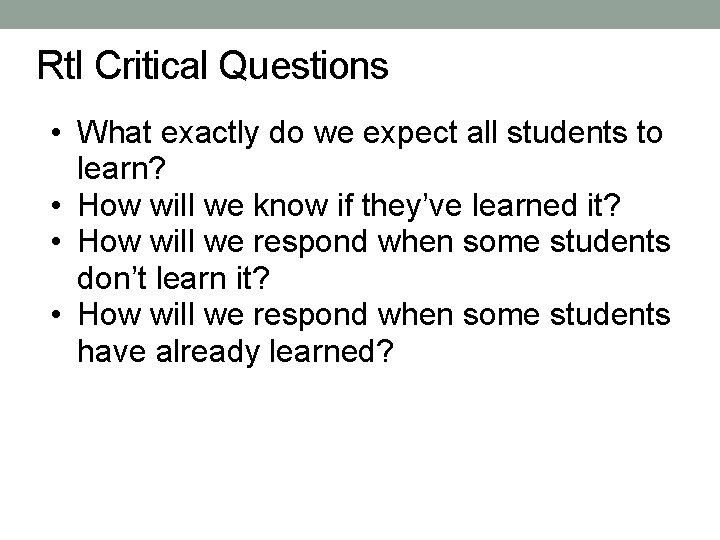
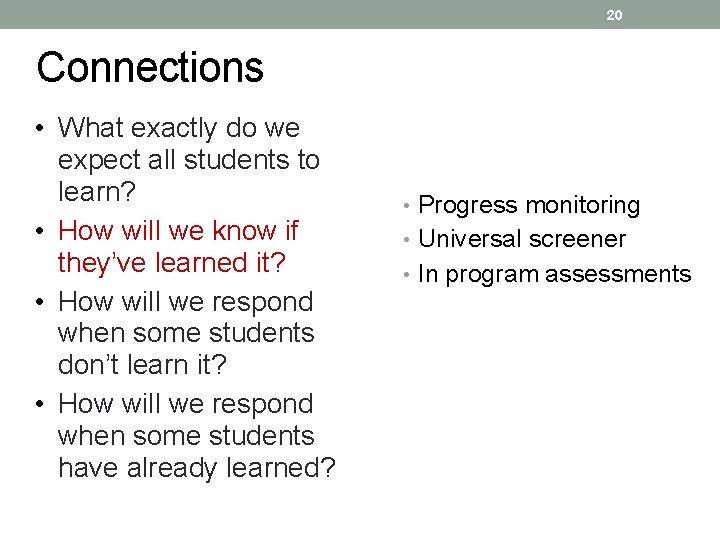
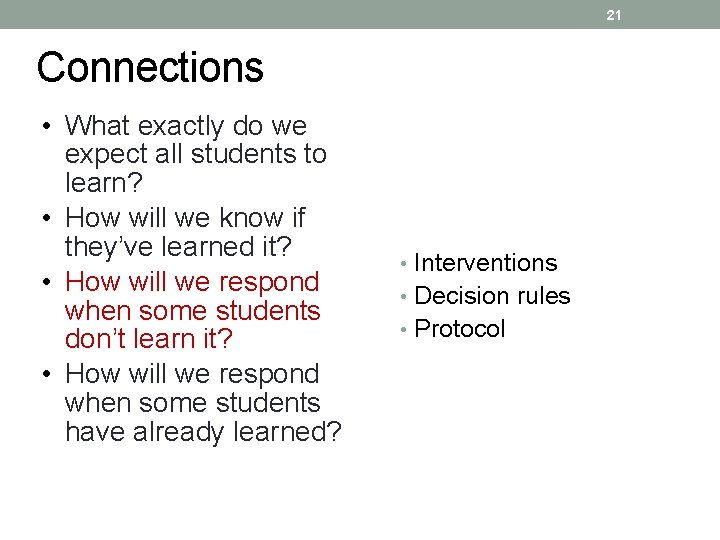
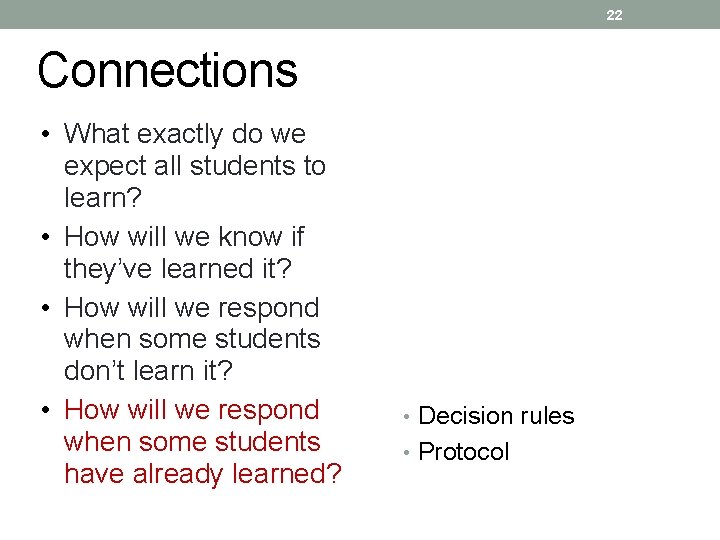
Rt. I Critical Questions • What exactly do we expect all students to learn? • How will we know if they’ve learned it? • How will we respond when some students don’t learn it? • How will we respond when some students have already learned?
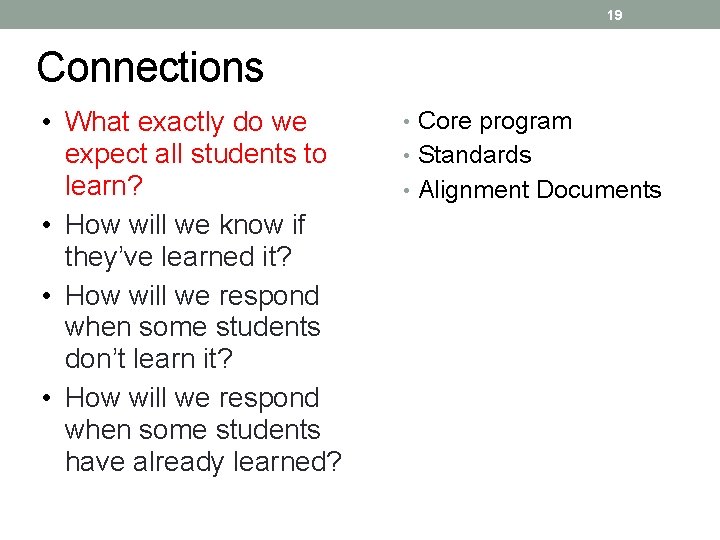
19 Connections • What exactly do we expect all students to learn? • How will we know if they’ve learned it? • How will we respond when some students don’t learn it? • How will we respond when some students have already learned? • Core program • Standards • Alignment Documents
20 Connections • What exactly do we expect all students to learn? • How will we know if they’ve learned it? • How will we respond when some students don’t learn it? • How will we respond when some students have already learned? • Progress monitoring • Universal screener • In program assessments
21 Connections • What exactly do we expect all students to learn? • How will we know if they’ve learned it? • How will we respond when some students don’t learn it? • How will we respond when some students have already learned? • Interventions • Decision rules • Protocol
22 Connections • What exactly do we expect all students to learn? • How will we know if they’ve learned it? • How will we respond when some students don’t learn it? • How will we respond when some students have already learned? • Decision rules • Protocol
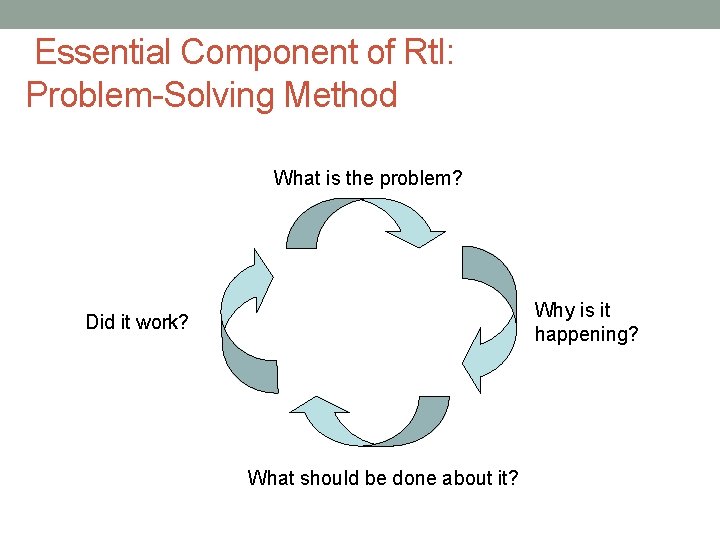
Essential Component of Rt. I: Problem-Solving Method What is the problem? Why is it happening? Did it work? What should be done about it?
Problem-Solving Process 1. Identify and analyze the problem (including collection of baseline data) 2. Generate a hypotheses and possible intervention strategies 3. Implement an intervention plan with data collection 4. Analyze the data and reviewing/ revising interventions as needed
Team Data Analysis • Review prepared data sets (Referral) Consultation / Case Facilitation • Scheduled meeting and attendance • Evidence of linking problem identification to intervention
26 Team Data Analysis • Evidence of analysis of data • current performance of grade level • baseline reference • measurable goal(s) • research based instructional strategies • analysis suggested strategies • logistics of strategy implementation (Who, What, When, Where)
Assessment of Learning Outcome Measurement • Provides data about what has been accomplished over a period of time • Provides broader information about programs and student learning Screening • Predicts which students are likely to experience difficulty • Identifies students who are at-risk and in need of further diagnostic assessment RIDE Pre. K-12 Literacy Policy December 2005
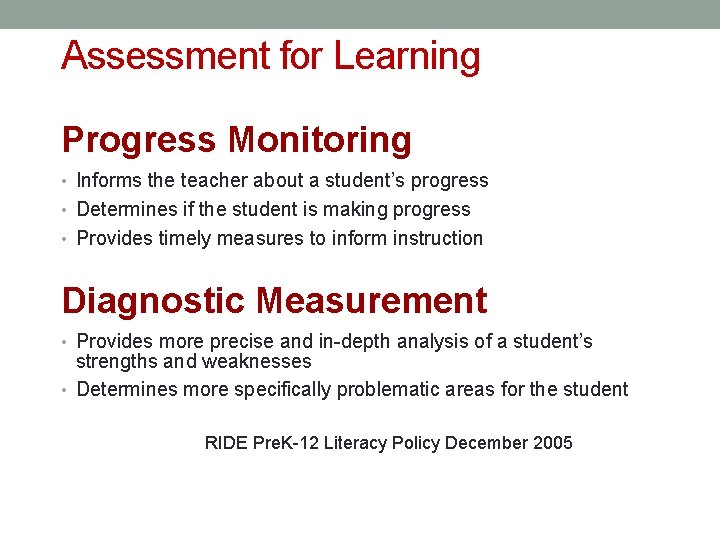
Assessment for Learning Progress Monitoring • Informs the teacher about a student’s progress • Determines if the student is making progress • Provides timely measures to inform instruction Diagnostic Measurement • Provides more precise and in-depth analysis of a student’s strengths and weaknesses • Determines more specifically problematic areas for the student RIDE Pre. K-12 Literacy Policy December 2005
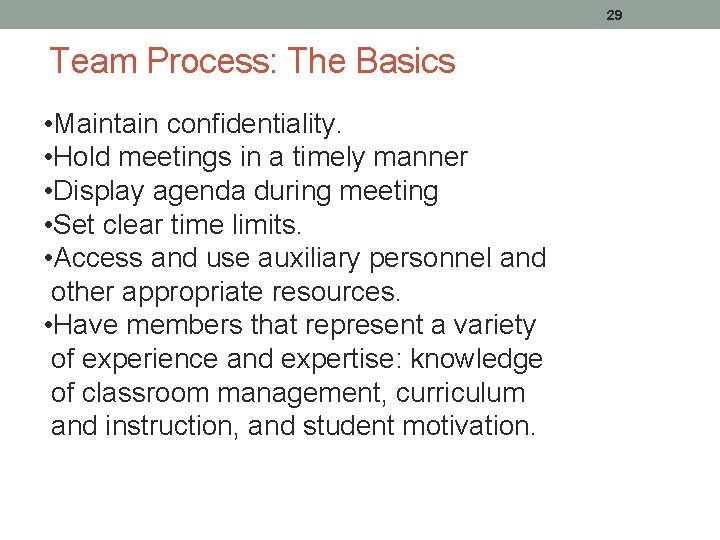
29 Team Process: The Basics • Maintain confidentiality. • Hold meetings in a timely manner • Display agenda during meeting • Set clear time limits. • Access and use auxiliary personnel and other appropriate resources. • Have members that represent a variety of experience and expertise: knowledge of classroom management, curriculum and instruction, and student motivation.
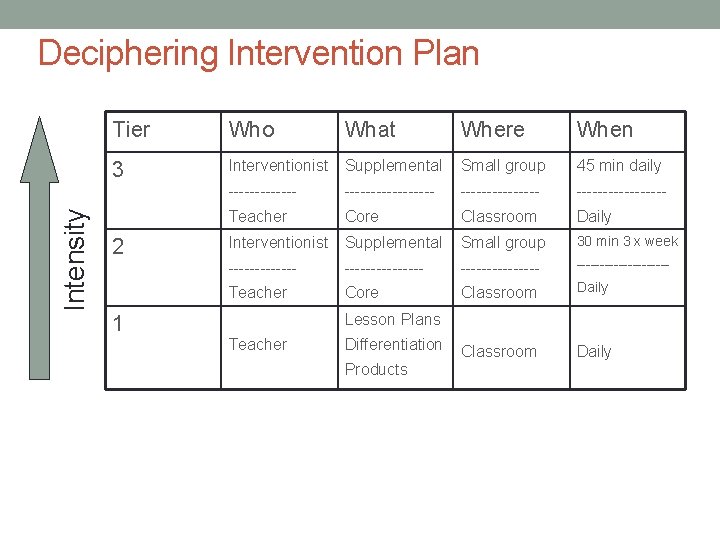
Intensity Deciphering Intervention Plan Tier Who What Where When 3 Interventionist Supplemental Small group 45 min daily ----------------- Teacher Core Classroom Daily Interventionist Supplemental Small group 30 min 3 x week -------------------- Teacher Core Classroom Daily 2 Lesson Plans 1 Teacher Differentiation Products
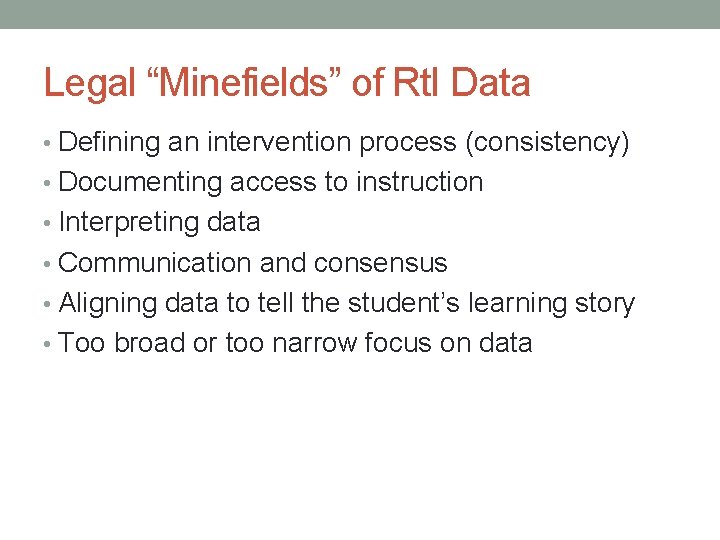
Legal “Minefields” of Rt. I Data • Defining an intervention process (consistency) • Documenting access to instruction • Interpreting data • Communication and consensus • Aligning data to tell the student’s learning story • Too broad or too narrow focus on data
TIP #1 KNOW YOUR DISTRICT’S RTI RUBRIC (EXPECTATIONS)
TIP # 2: KNOW YOUR ASSESSMENTS
TIP #3: KNOW YOUR INSTRUCTION
Lessons Learned Staff Awareness of confirmatory bias üConsistency in decision making üMost common Interpretation errors ü
What is Important to Educators? • A process that does not add to their current job expectations • Assessment and Documentation that is user-friendly and understandable • No Need for Additional Staff • Meets requirements of IDEA, NCLB, and OCR
Questions
Andrea Ogonosky • www. facebook. com/pages/Academic- Behavior. Interventions/184751798229934