
Google images 2011 Biochar Application to Subarctic Soils
Google images 2011 Biochar Application to Subarctic Soils: Effect of biochar on microbial activity after freezethaw cycles and plant response at different application rates. S. Castillo. , A. Soria. , C. Ping. , G. Michaelson. , M. Leigh University of Alaska Fairbanks
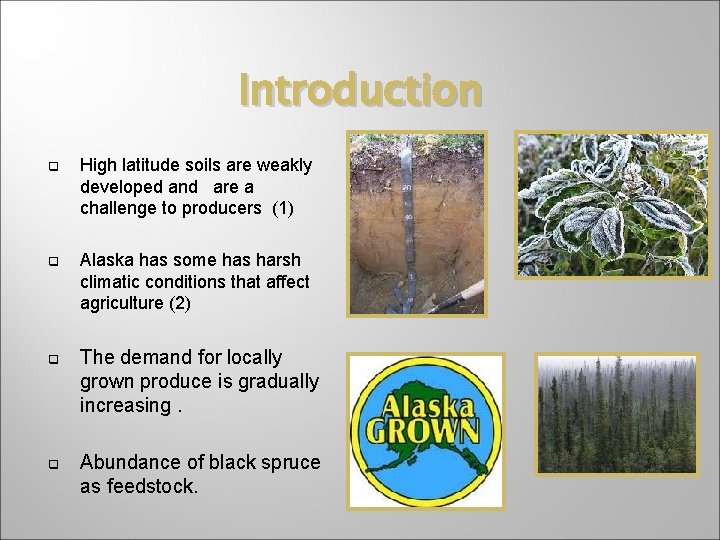
Introduction q High latitude soils are weakly developed and are a challenge to producers (1) q Alaska has some has harsh climatic conditions that affect agriculture (2) q The demand for locally grown produce is gradually increasing. q Abundance of black spruce as feedstock.
Research questions What are the differences among black spruce biochar created at different residence times? What is the influence on microbial activity of soils amended with different biochar types and amounts before and after freeze-thaw? What is the effect of black spruce biochar on plant yield and nutrient retention at different application rates?
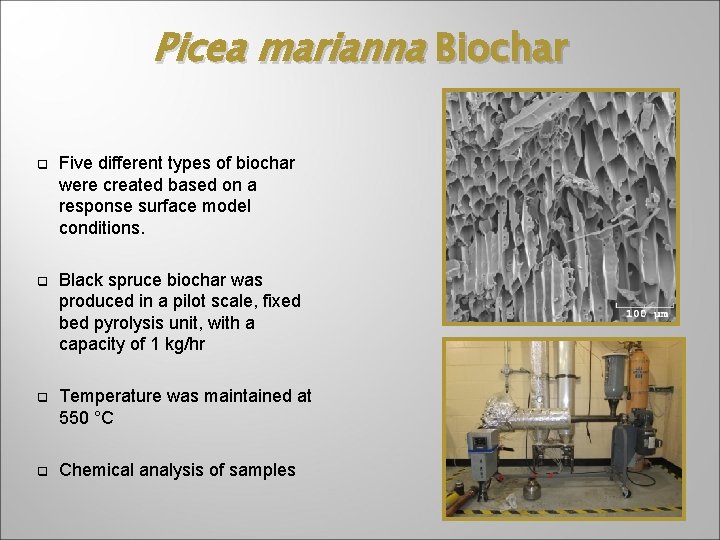
Picea marianna Biochar q Five different types of biochar were created based on a response surface model conditions. q Black spruce biochar was produced in a pilot scale, fixed bed pyrolysis unit, with a capacity of 1 kg/hr q Temperature was maintained at 550 °C q Chemical analysis of samples
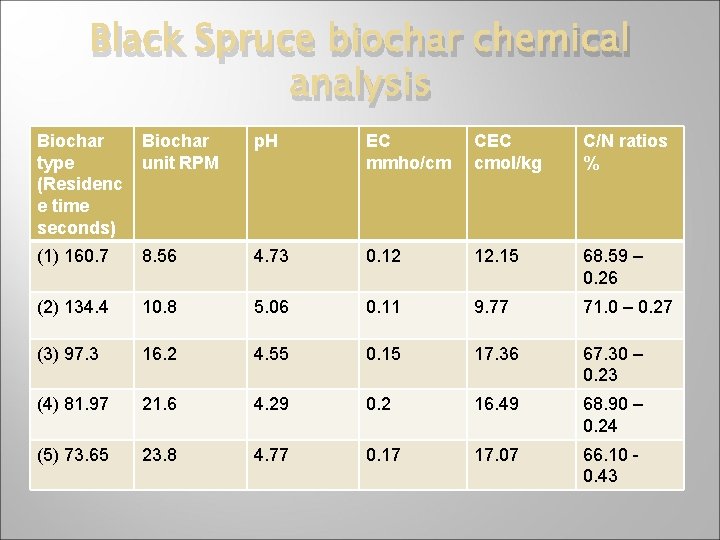
Black Spruce biochar chemical analysis Biochar type (Residenc e time seconds) Biochar unit RPM p. H EC mmho/cm CEC cmol/kg C/N ratios % (1) 160. 7 8. 56 4. 73 0. 12 12. 15 68. 59 – 0. 26 (2) 134. 4 10. 8 5. 06 0. 11 9. 77 71. 0 – 0. 27 (3) 97. 3 16. 2 4. 55 0. 15 17. 36 67. 30 – 0. 23 (4) 81. 97 21. 6 4. 29 0. 2 16. 49 68. 90 – 0. 24 (5) 73. 65 23. 8 4. 77 0. 17 17. 07 66. 10 0. 43
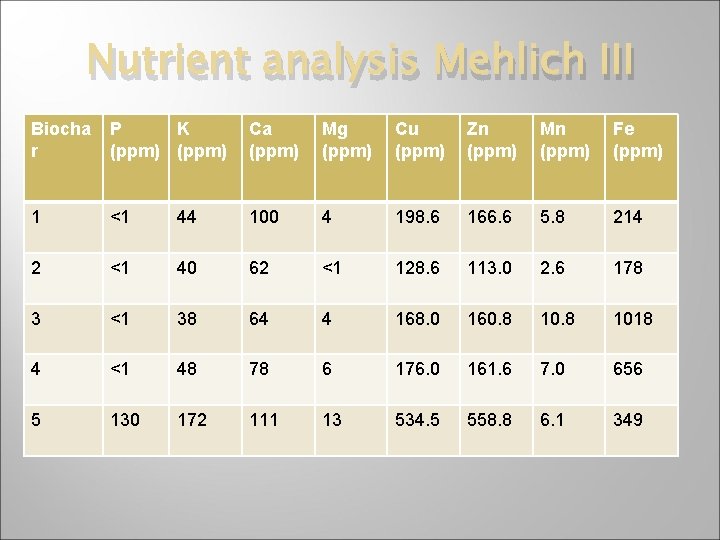
Nutrient analysis Mehlich III Biocha r P K (ppm) Ca (ppm) Mg (ppm) Cu (ppm) Zn (ppm) Mn (ppm) Fe (ppm) 1 <1 44 100 4 198. 6 166. 6 5. 8 214 2 <1 40 62 <1 128. 6 113. 0 2. 6 178 3 <1 38 64 4 168. 0 160. 8 1018 4 <1 48 78 6 176. 0 161. 6 7. 0 656 5 130 172 111 13 534. 5 558. 8 6. 1 349
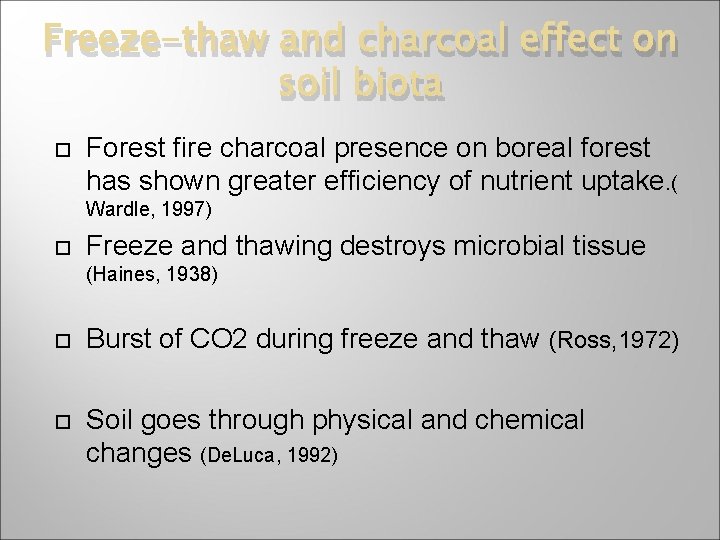
Freeze-thaw and charcoal effect on soil biota Forest fire charcoal presence on boreal forest has shown greater efficiency of nutrient uptake. ( Wardle, 1997) Freeze and thawing destroys microbial tissue (Haines, 1938) Burst of CO 2 during freeze and thaw (Ross, 1972) Soil goes through physical and chemical changes (De. Luca, 1992)
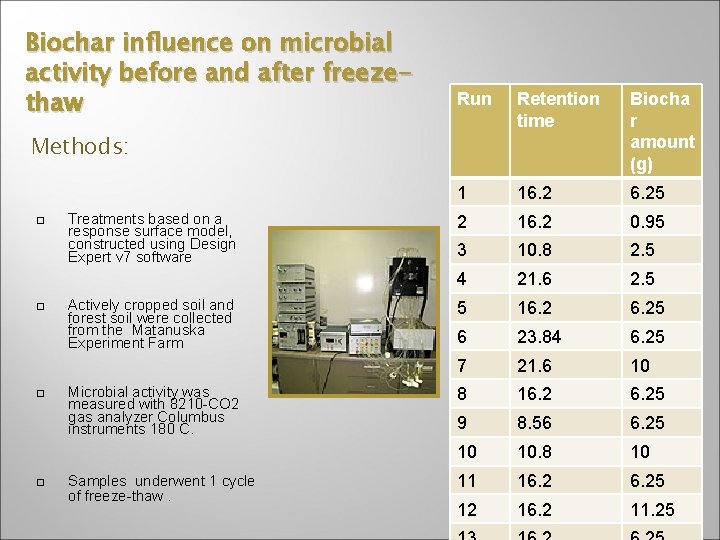
Biochar influence on microbial activity before and after freezethaw Run Retention time Biocha r amount (g) 1 16. 25 2 16. 2 0. 95 3 10. 8 2. 5 4 21. 6 2. 5 5 16. 25 6 23. 84 6. 25 7 21. 6 10 8 16. 25 9 8. 56 6. 25 10 10. 8 10 11 16. 25 12 16. 2 11. 25 Methods: Treatments based on a response surface model, constructed using Design Expert v 7 software Actively cropped soil and forest soil were collected from the Matanuska Experiment Farm Microbial activity was measured with 8210 -CO 2 gas analyzer Columbus instruments 180 C. Samples underwent 1 cycle of freeze-thaw.
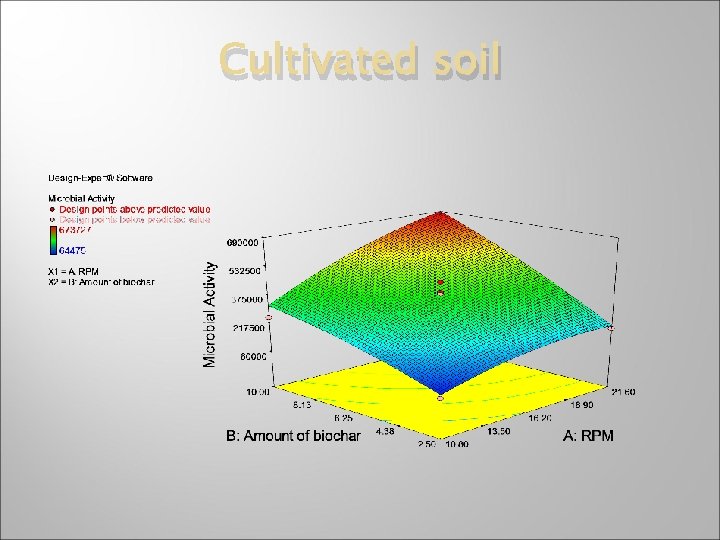
Cultivated soil
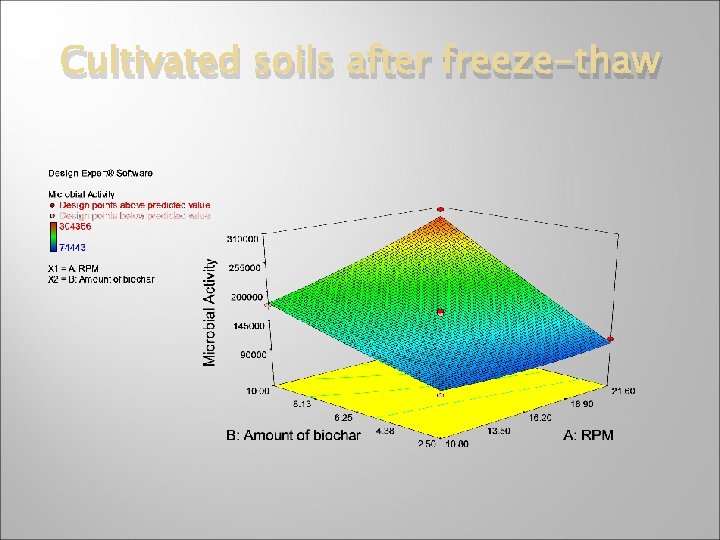
Cultivated soils after freeze-thaw
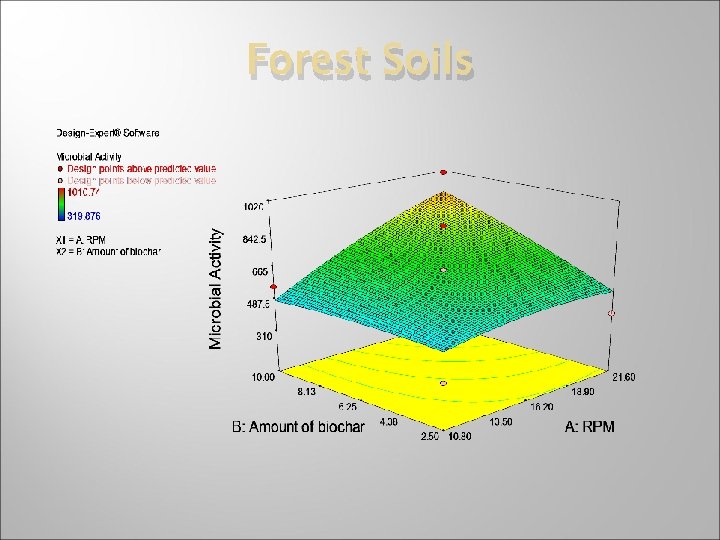
Forest Soils
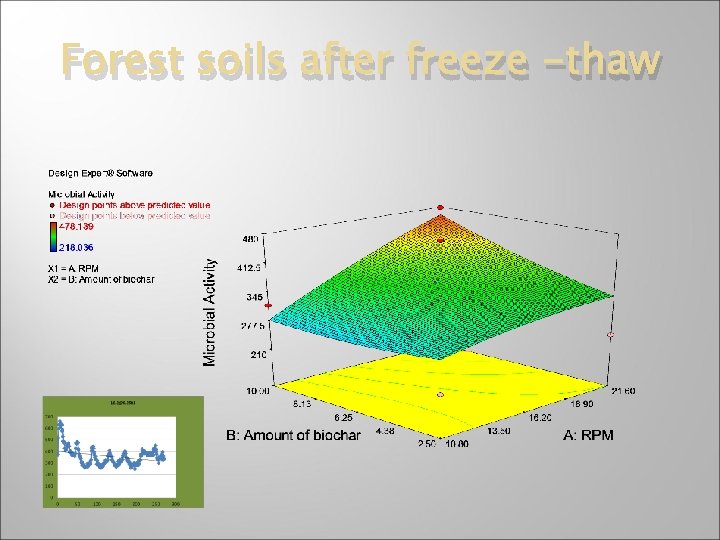
Forest soils after freeze -thaw
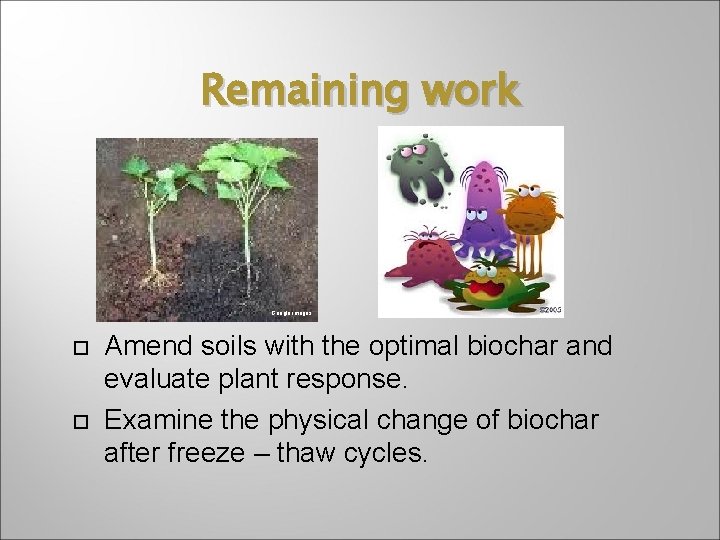
Remaining work Google images Amend soils with the optimal biochar and evaluate plant response. Examine the physical change of biochar after freeze – thaw cycles.
Summary Residence time influenced the chemical characteristics of black spruce biochar specially at the shortest residence time. Biochar treatments increased microbial activity especially on cultivated soils before and after freeze thaw. It stabilization after few days confirms that biochar can be a long term carbon storage on soils. The response surface model indicated significance in all models except forest soils before and after freeze -thaw.

Questions Thanks! smcastillo@alaska. edu
- Slides: 15