
GoodheartWillcox Co Inc Chapter 2 Families and Parents
- Slides: 56
© Goodheart-Willcox Co. , Inc.
Chapter 2 Families and Parents © Goodheart-Willcox Co. , Inc.
Key Terms • • family adoption adoptive families foster family guardians nuclear family single-parent family stepfamily © Goodheart-Willcox Co. , Inc. • • extended family functions values gender role family life cycle socioeconomic status lifestyle technology
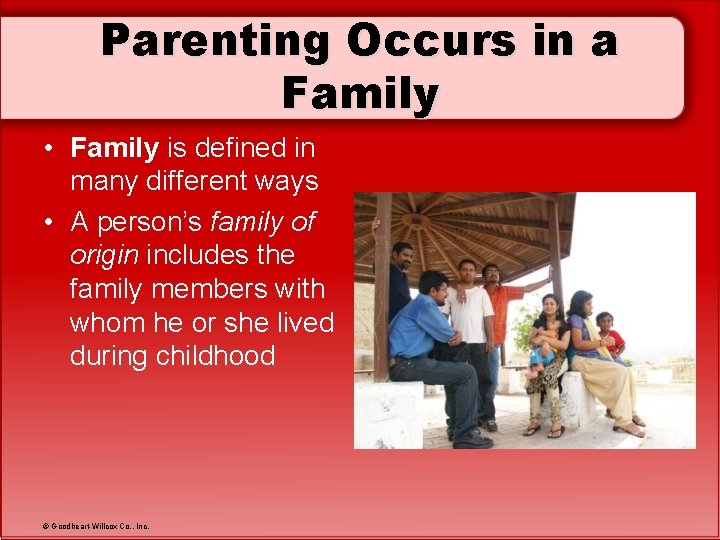
Parenting Occurs in a Family • Family is defined in many different ways • A person’s family of origin includes the family members with whom he or she lived during childhood © Goodheart-Willcox Co. , Inc.
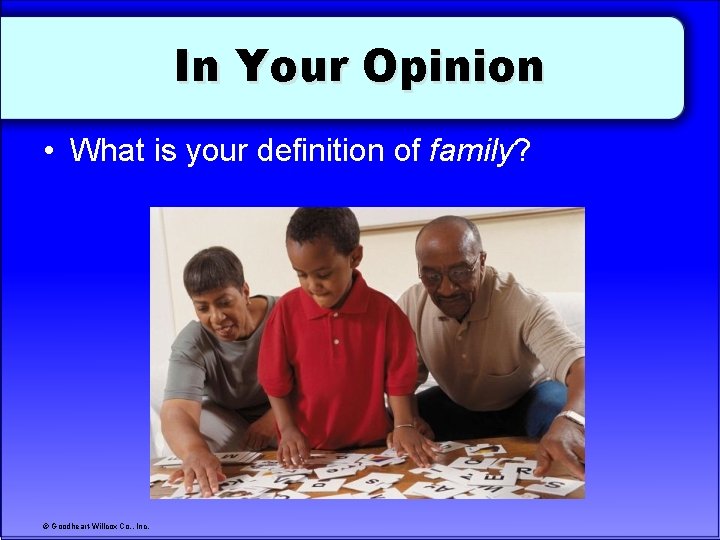
In Your Opinion • What is your definition of family? © Goodheart-Willcox Co. , Inc.
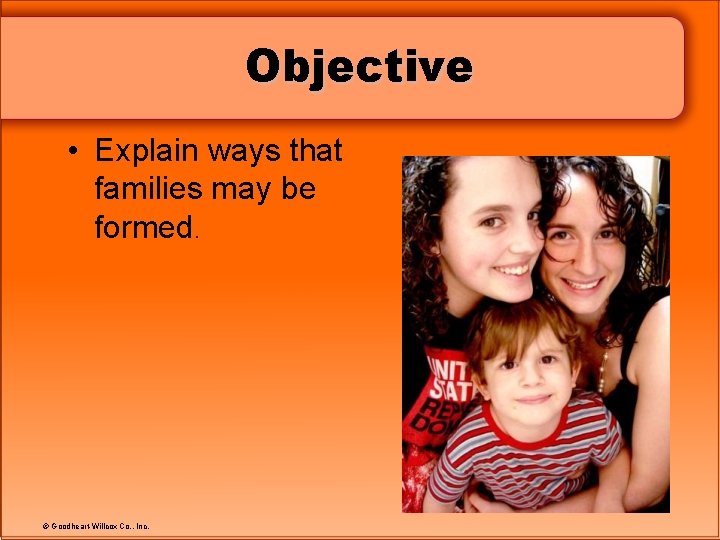
Objective • Explain ways that families may be formed. © Goodheart-Willcox Co. , Inc.
How Families Are Formed • Families are formed – by marriage – by birth – by adoption – through foster families – through families with guardians © Goodheart-Willcox Co. , Inc.
By Marriage • When a man and a woman marry, they create a new family • If one or both spouses have children from previous relationships, the family includes the couple and their children © Goodheart-Willcox Co. , Inc.
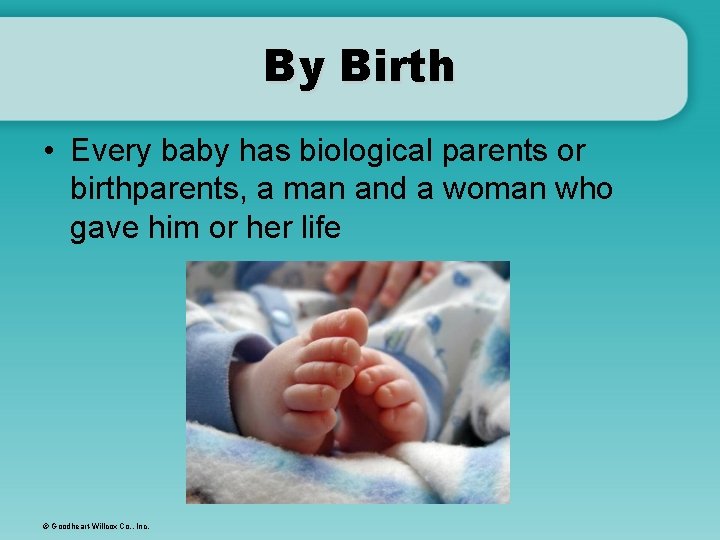
By Birth • Every baby has biological parents or birthparents, a man and a woman who gave him or her life © Goodheart-Willcox Co. , Inc.
By Adoption • People choose to adopt for various reasons: – If the couple is unable to have biological children – If one spouse has a hereditary condition that may affect the future of any biological children – To start an adoptive family and offer loving homes to children who need them © Goodheart-Willcox Co. , Inc.
Through Foster Families • Foster care is temporary care provided for a child • Foster parents are adults who volunteer and are trained to provide a temporary home for a child who needs one © Goodheart-Willcox Co. , Inc.
With Guardians • Unlike foster parents, guardians provide a permanent home for children • These arrangements are legally approved • While guardians have some custodial and parenting responsibilities, they have to follow the decisions made by birthparents as stated in court – For example, the use of monies © Goodheart-Willcox Co. , Inc.
In Your Opinion • All family members do not necessarily share a common genetic background. What do they share? © Goodheart-Willcox Co. , Inc.
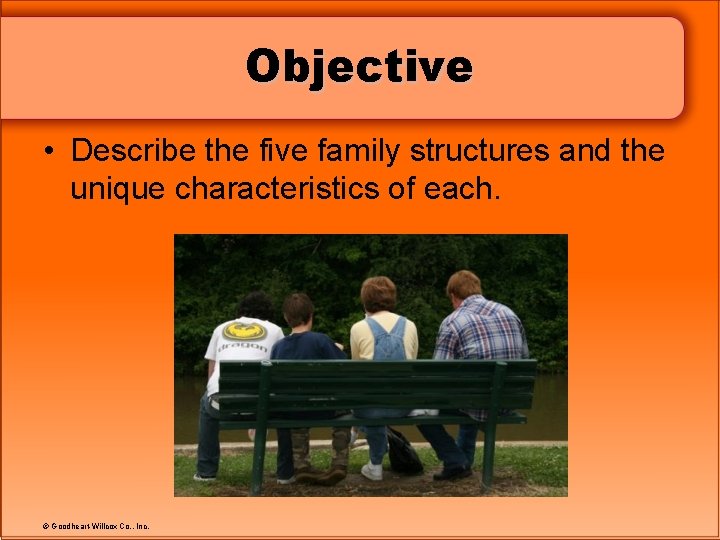
Objective • Describe the five family structures and the unique characteristics of each. © Goodheart-Willcox Co. , Inc.
How Families Are Structured • A family’s structure tells – how it is organized – how many people are in the household – how they are related © Goodheart-Willcox Co. , Inc. continued
How Families Are Structured • Five common family structures in the U. S. – Nuclear families – Single-parent families – Stepfamilies – Extended families – Couples without children © Goodheart-Willcox Co. , Inc.
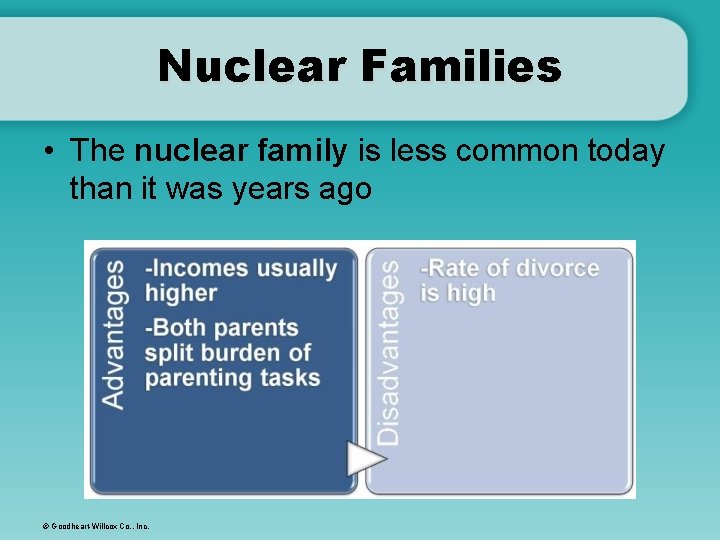
Nuclear Families • The nuclear family is less common today than it was years ago © Goodheart-Willcox Co. , Inc.
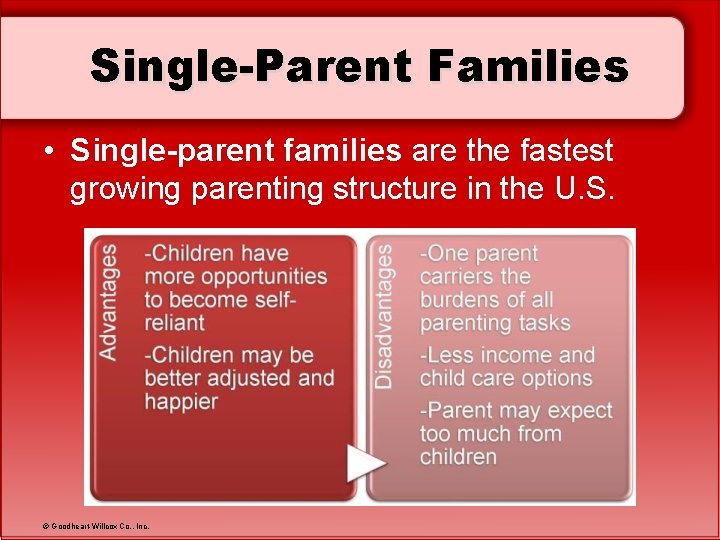
Single-Parent Families • Single-parent families are the fastest growing parenting structure in the U. S. © Goodheart-Willcox Co. , Inc.
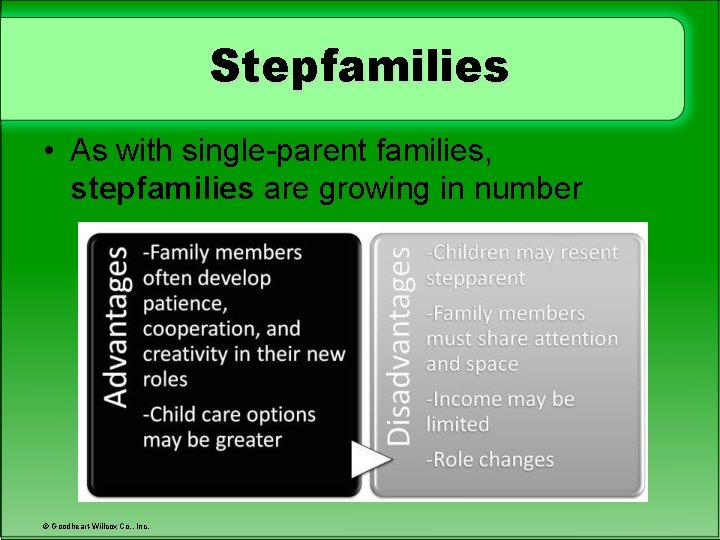
Stepfamilies • As with single-parent families, stepfamilies are growing in number © Goodheart-Willcox Co. , Inc.
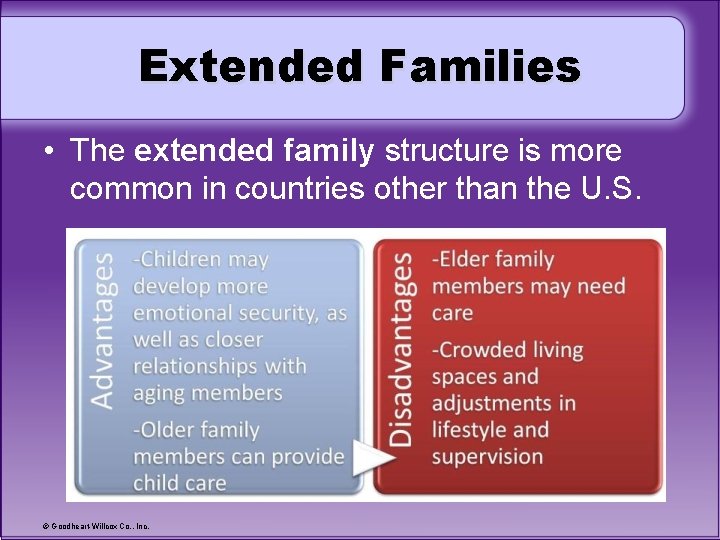
Extended Families • The extended family structure is more common in countries other than the U. S. © Goodheart-Willcox Co. , Inc.
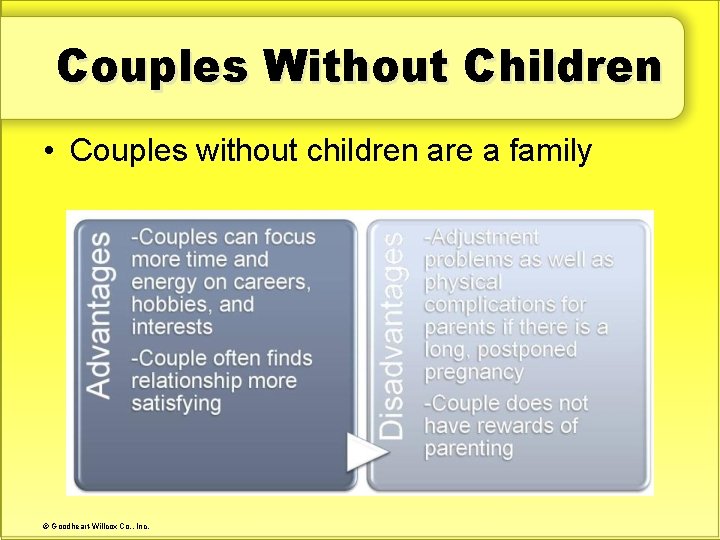
Couples Without Children • Couples without children are a family © Goodheart-Willcox Co. , Inc.
In Your Opinion • Is there a family structure that is ideal? Why is this your opinion? • The single-parent family is the fastest growing family structure in the U. S. Why do you think this is? © Goodheart-Willcox Co. , Inc.
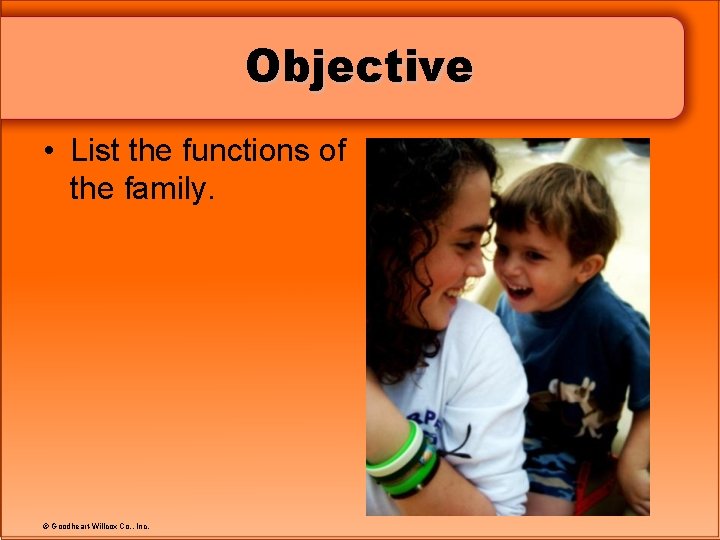
Objective • List the functions of the family. © Goodheart-Willcox Co. , Inc.
How Families Function • Although families may differ in the way they are formed and in their structure, they perform the same basic family functions – Procreation – Economic support – Emotional growth and well-being – Socialization/education – Assignment of social roles © Goodheart-Willcox Co. , Inc.
Similar, Yet Different • Parents and children may have different values and customs according to their ethnic or religious backgrounds • Children may develop social roles, such as their gender role, based on what they have been taught by their parents, guardians, and the society in which they live © Goodheart-Willcox Co. , Inc.
In Your Opinion • What are some skills or values you have learned from your family? – Are these different from those of families in previous generations? – How are they different from the skills and values of your friends’ families? © Goodheart-Willcox Co. , Inc.
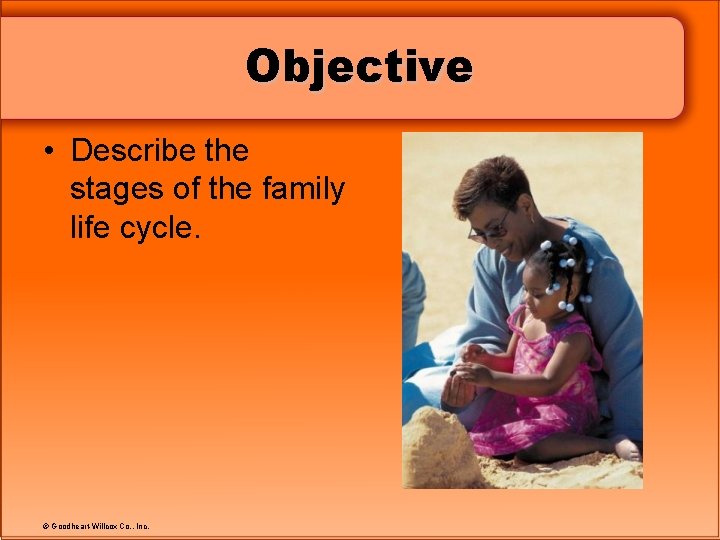
Objective • Describe the stages of the family life cycle. © Goodheart-Willcox Co. , Inc.
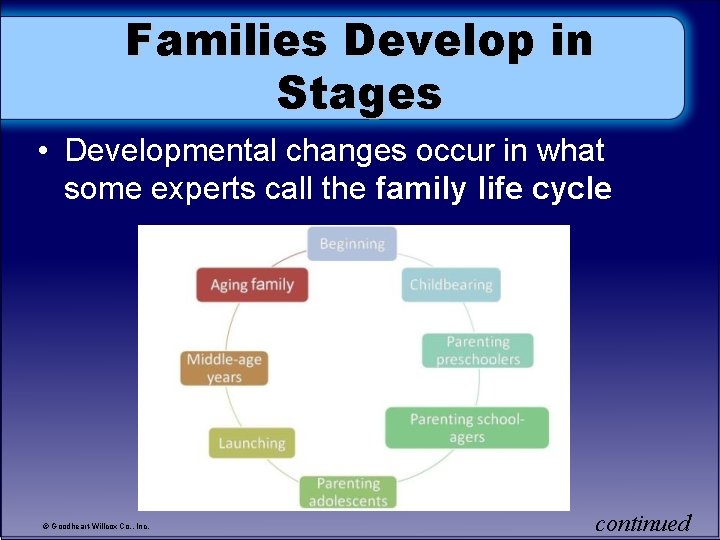
Families Develop in Stages • Developmental changes occur in what some experts call the family life cycle © Goodheart-Willcox Co. , Inc. continued
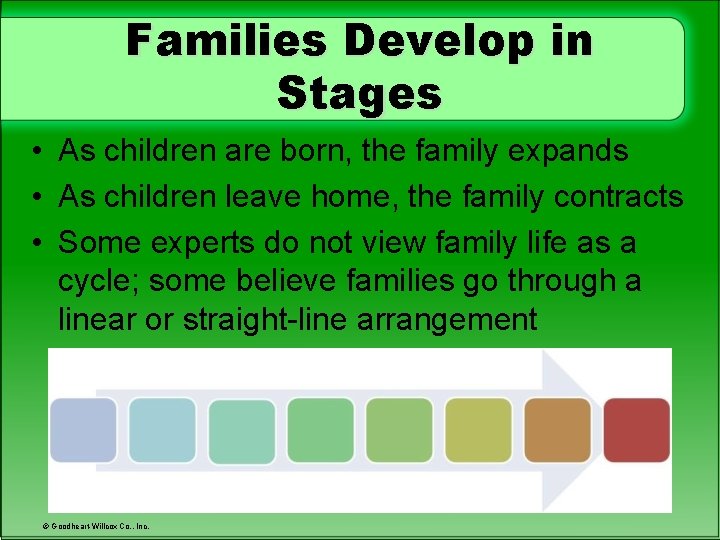
Families Develop in Stages • As children are born, the family expands • As children leave home, the family contracts • Some experts do not view family life as a cycle; some believe families go through a linear or straight-line arrangement © Goodheart-Willcox Co. , Inc.
Children Develop in Stages • Competent parents adapt their parenting to meet a child’s current stage of development • By using the “best fit” parenting goals and methods for each stage, parenting is made easier and more rewarding © Goodheart-Willcox Co. , Inc.
In Your Opinion • Which family structures might not fit the concept of the family life cycle? • Would the family life career, or linear, arrangement be a better fit for these families? – If so, why? – If not, how would you diagram the development and stages of family life? © Goodheart-Willcox Co. , Inc.
Objective • Identify six parenting stages. © Goodheart-Willcox Co. , Inc.
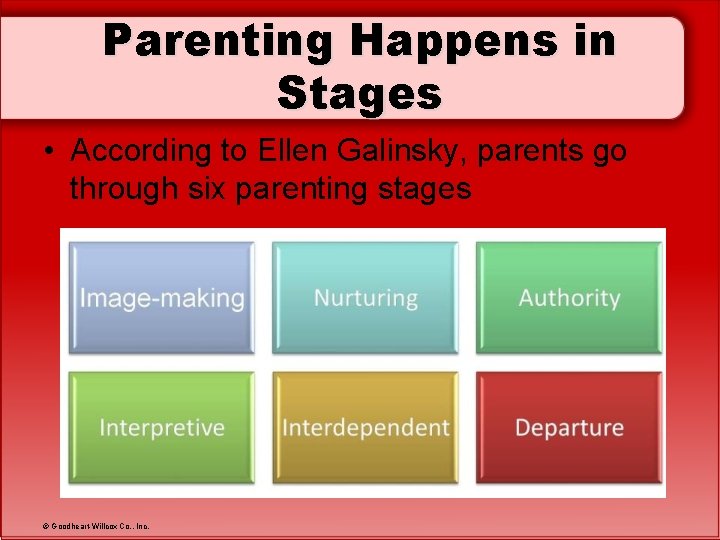
Parenting Happens in Stages • According to Ellen Galinsky, parents go through six parenting stages © Goodheart-Willcox Co. , Inc.
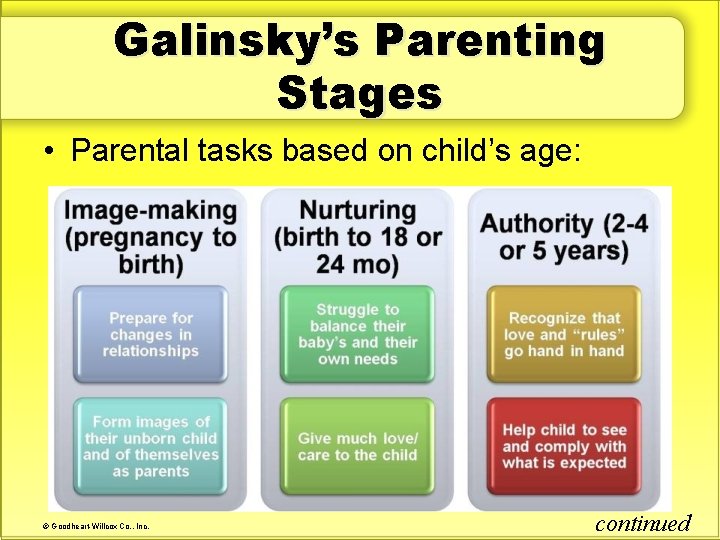
Galinsky’s Parenting Stages • Parental tasks based on child’s age: © Goodheart-Willcox Co. , Inc. continued
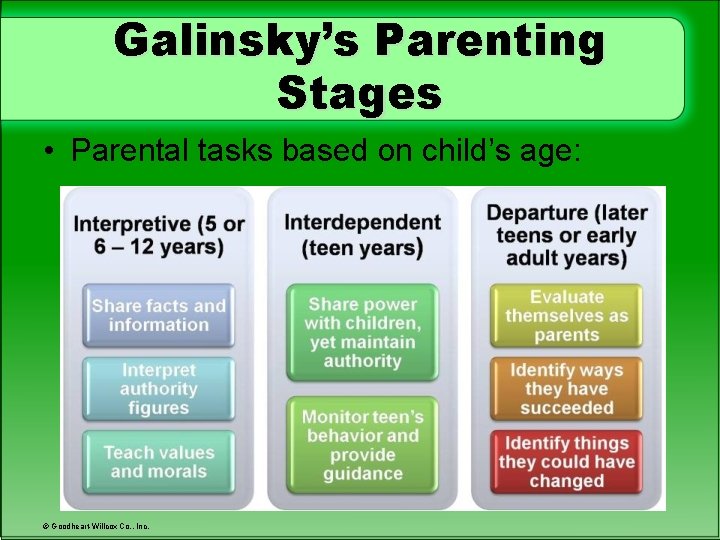
Galinsky’s Parenting Stages • Parental tasks based on child’s age: © Goodheart-Willcox Co. , Inc.
In Your Opinion • How do Galinsky’s stages of parenting correlate with each of the stages of the family life cycle? © Goodheart-Willcox Co. , Inc.
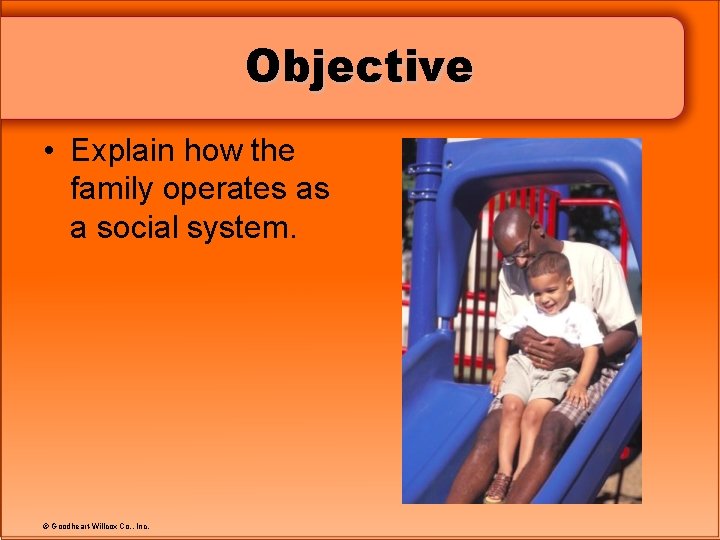
Objective • Explain how the family operates as a social system. © Goodheart-Willcox Co. , Inc.
Families Operate as a System • A system is an interacting group of parts that form a unified whole • Families are social systems that work together to make decisions and set and achieve family goals • In order to understand parenting, you must look beyond the parent-child relationship © Goodheart-Willcox Co. , Inc.
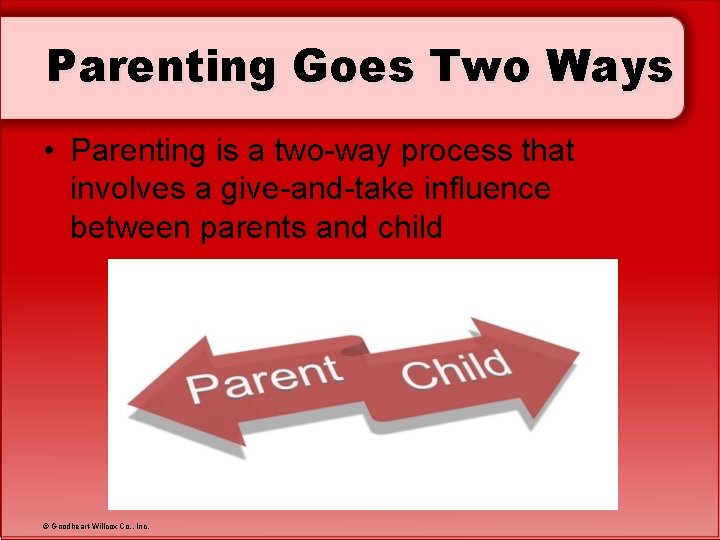
Parenting Goes Two Ways • Parenting is a two-way process that involves a give-and-take influence between parents and child © Goodheart-Willcox Co. , Inc.
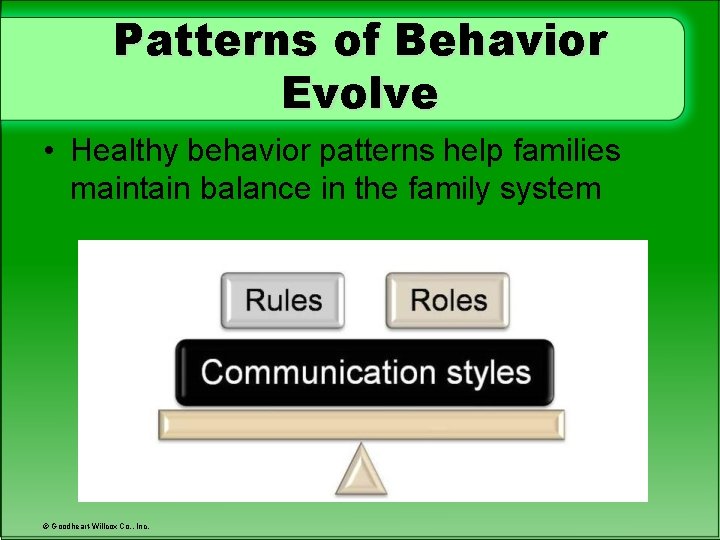
Patterns of Behavior Evolve • Healthy behavior patterns help families maintain balance in the family system © Goodheart-Willcox Co. , Inc.
Family Systems Have Boundaries • Family boundaries are limits that control the degree of closeness between members; families that have – closed boundaries value emotional closeness, togetherness, and a sense of belonging to the family – open boundaries value independence more than a sense of belonging © Goodheart-Willcox Co. , Inc.
Events Can Challenge Family Systems • Challenges within the family include severe illness, disability of a family member, or divorce of the parents • Challenges from outside the family include job loss or a natural disaster that threatens the family’s home and belongings • Flexible families can often work through the challenges and restore stability © Goodheart-Willcox Co. , Inc.
In Your Opinion • Behavior patterns in family systems are often difficult to change. Why do you think this is? • Think of one negative behavior pattern in your family system. What could you do to help change this to a positive one? © Goodheart-Willcox Co. , Inc.
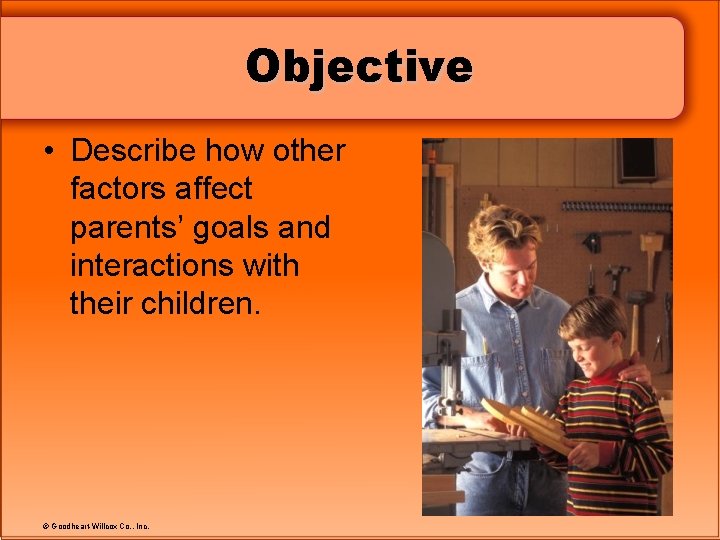
Objective • Describe how other factors affect parents’ goals and interactions with their children. © Goodheart-Willcox Co. , Inc.
Factors That Impact Parenting • • Cultural background Socioeconomic status Lifestyle Early relationships Community Media Technology © Goodheart-Willcox Co. , Inc.
Cultural Background • Cultural differences in parenting may be seen in – goals of parents – communication during childhood – parent discipline style – consequences of misbehavior – parents helping children as adults – adult child’s relationships with parents © Goodheart-Willcox Co. , Inc.
Socioeconomic Status • Social and economic factors that impact a family’s socioeconomic status include – occupation – education – level of income • A family’s socioeconomic status can influence their parenting practices © Goodheart-Willcox Co. , Inc.
Lifestyle • Families often deal with lifestyles factors, such as – location (where a family lives) – work life (parents’ jobs or careers) – leisure time (how a family spends time together) • Children’s lives, attitudes, beliefs, and values are shaped by the lifestyle of their family of origin © Goodheart-Willcox Co. , Inc.
Early Relationships • Childhood family experiences provide the mental blueprint for parenting the next generation – Parents who were close to their own parents tend to be emotionally supportive of their own children – Parents who carry conflict into their parenting role often think negatively about their children’s behavior © Goodheart-Willcox Co. , Inc.
Community • Community concerns and resources influence families • Each community differs in the amount of resources available to meet citizens’ needs • Each community passes regulations and laws that reflect the needs of its members • A family’s level of involvement with its community may also make a difference © Goodheart-Willcox Co. , Inc.
Media • The media can influence families in positive and negative ways • Families use the media for information, learning, and entertainment • Dangers exist when parents do not monitor their children’s exposure to media • Another danger is overexposure to media © Goodheart-Willcox Co. , Inc.
Technology • Examples of technologies that may benefit families include – home technology – computer technology – health technology • Drawbacks include cost and families becoming dependent on technology © Goodheart-Willcox Co. , Inc.
In Your Opinion • What are some of the positive and negative influences of the media and technology on families? • What can parents do to make the most of the positive influences and eliminate negative influences for their children? © Goodheart-Willcox Co. , Inc.
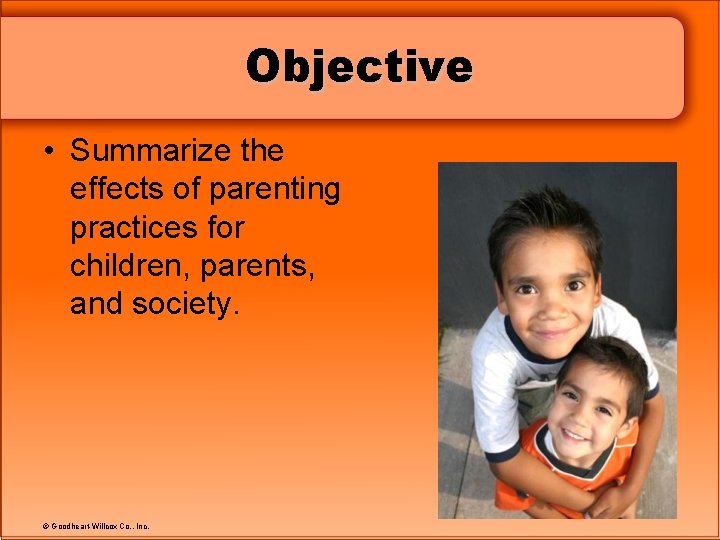
Objective • Summarize the effects of parenting practices for children, parents, and society. © Goodheart-Willcox Co. , Inc.
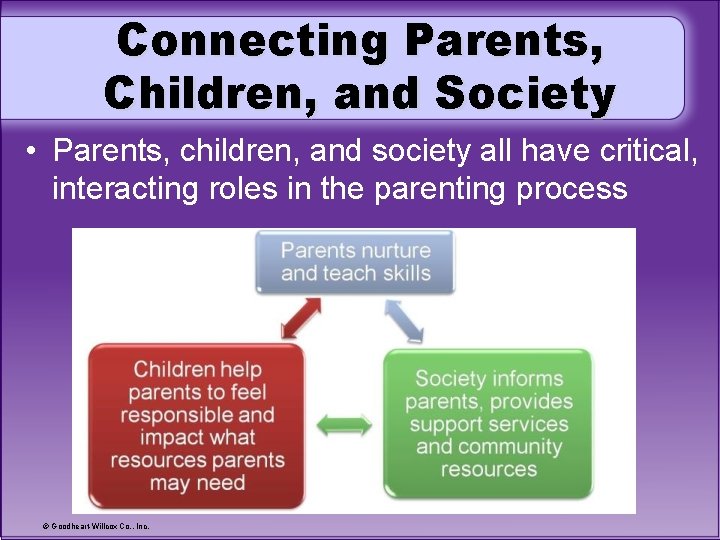
Connecting Parents, Children, and Society • Parents, children, and society all have critical, interacting roles in the parenting process © Goodheart-Willcox Co. , Inc.
Families, Parents, and Society Work Together to Raise Children • It takes a village to raise a child. ~ African Proverb © Goodheart-Willcox Co. , Inc.