
Good Practice in Cache Assessment and Internal Quality

- Slides: 28
Good Practice in Cache Assessment and Internal Quality Assurance Janet Scott
Assessment Practice
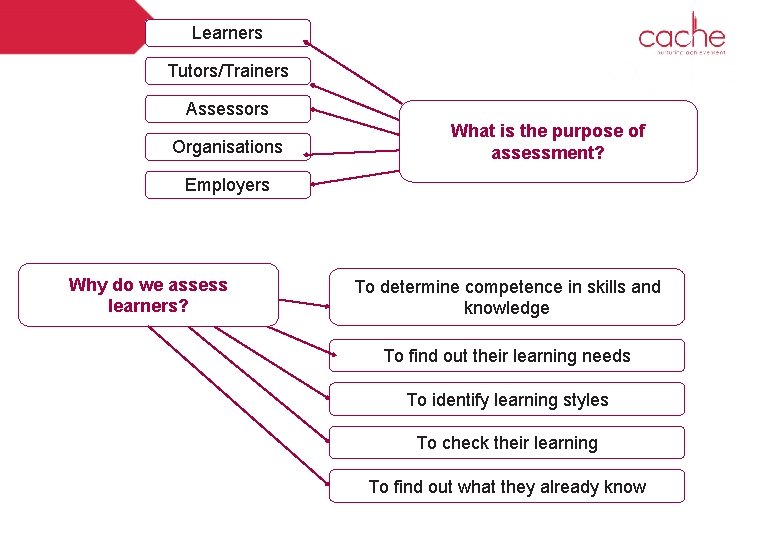
Learners Tutors/Trainers Assessors Organisations What is the purpose of assessment? Employers Why do we assess learners? To determine competence in skills and knowledge To find out their learning needs To identify learning styles To check their learning To find out what they already know
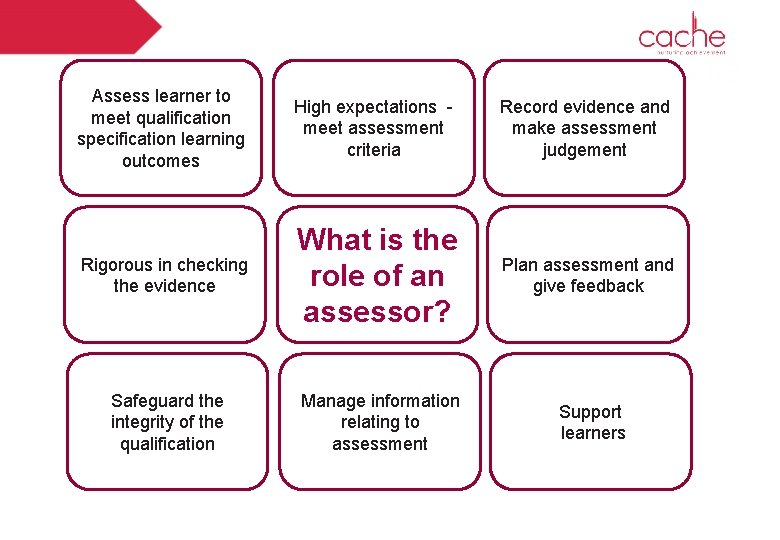
Assess learner to meet qualification specification learning outcomes High expectations meet assessment criteria Record evidence and make assessment judgement Rigorous in checking the evidence What is the role of an assessor? Plan assessment and give feedback Safeguard the integrity of the qualification Manage information relating to assessment Support learners
Activity 1 Assessment
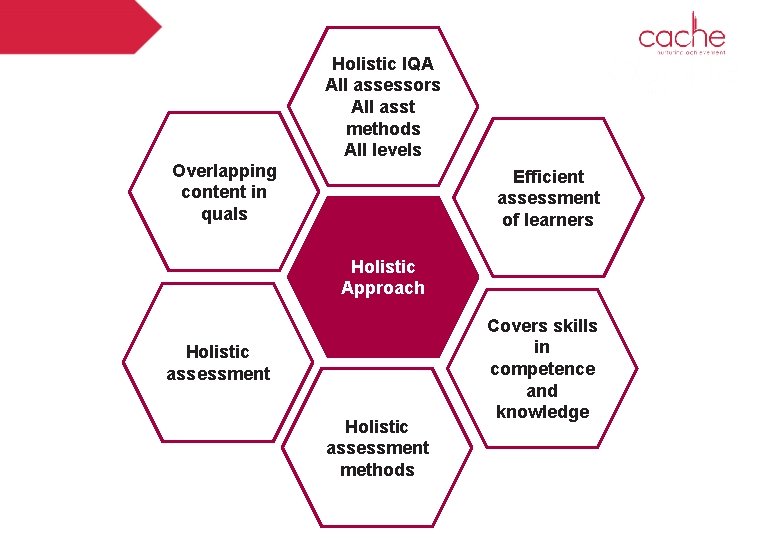
Holistic IQA All assessors All asst methods All levels Overlapping content in quals Efficient assessment of learners Holistic Approach Holistic assessment methods Covers skills in competence and knowledge
Theme Diamond Moments Theme
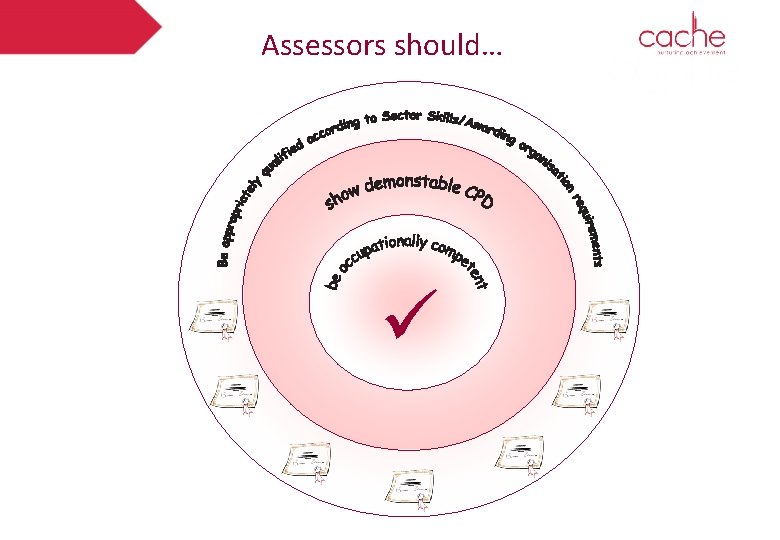
Assessors should…
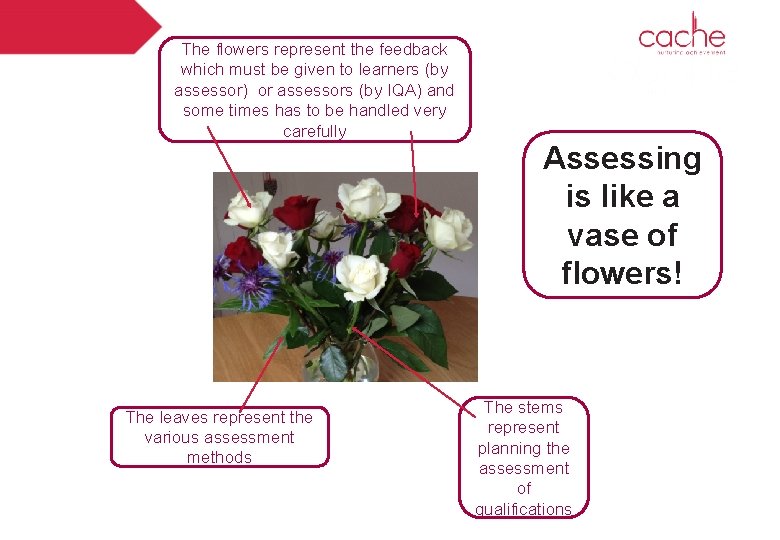
The flowers represent the feedback which must be given to learners (by assessor) or assessors (by IQA) and some times has to be handled very carefully The leaves represent the various assessment methods Assessing is like a vase of flowers! The stems represent planning the assessment of qualifications
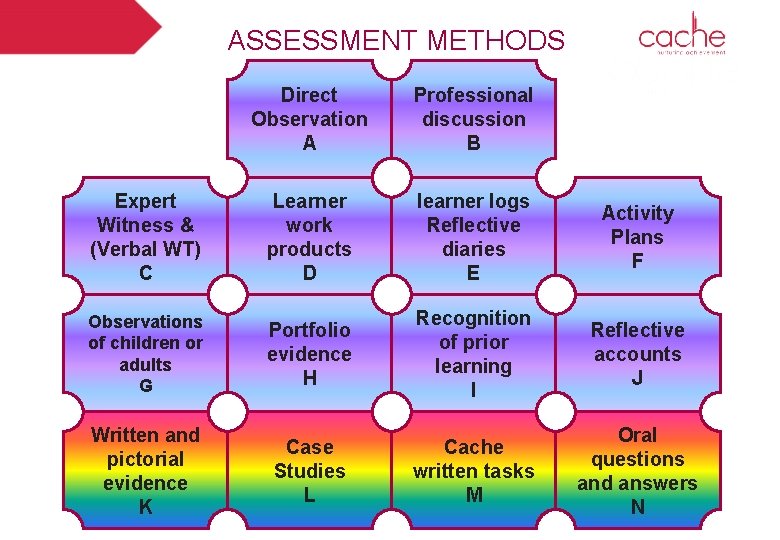
ASSESSMENT METHODS Direct Observation A Professional discussion B Expert Witness & (Verbal WT) C Learner work products D learner logs Reflective diaries E Activity Plans F Observations of children or adults G Portfolio evidence H Recognition of prior learning I Reflective accounts J Written and pictorial evidence K Case Studies L Cache written tasks M Oral questions and answers N
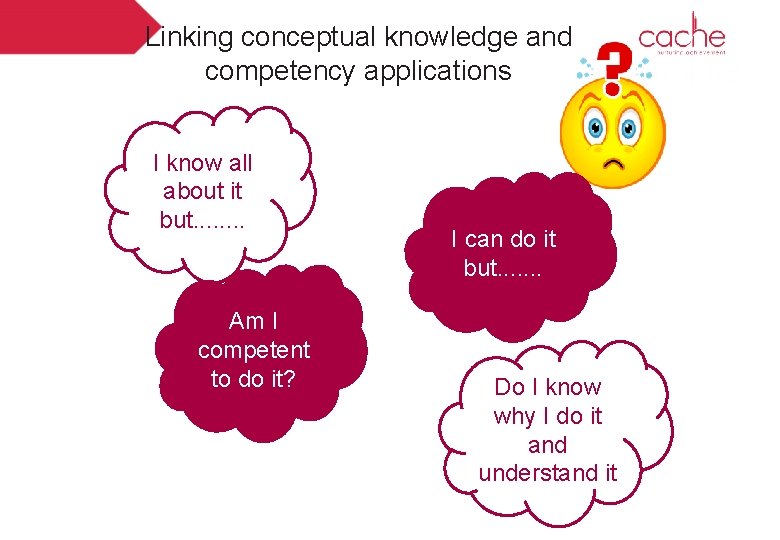
Linking conceptual knowledge and competency applications I know all about it but. . . . Am I competent to do it? I can do it but. . . . Do I know why I do it and understand it
Activity 2 Giving feedback
Quality Assurance
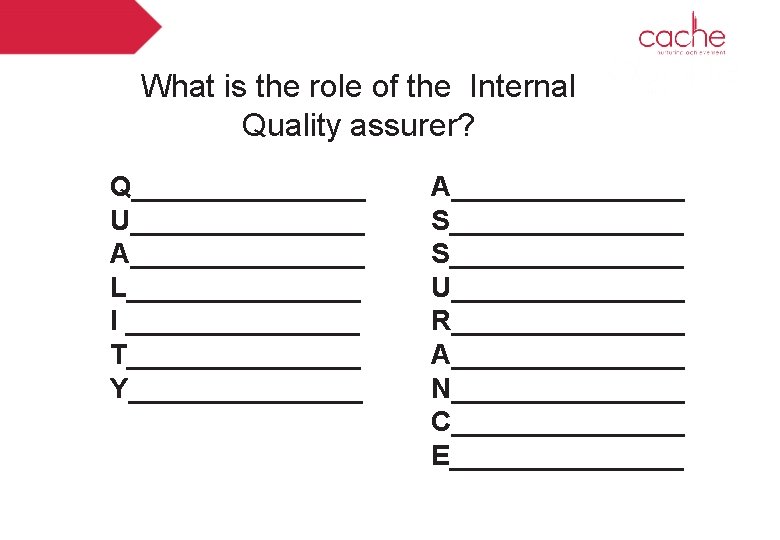
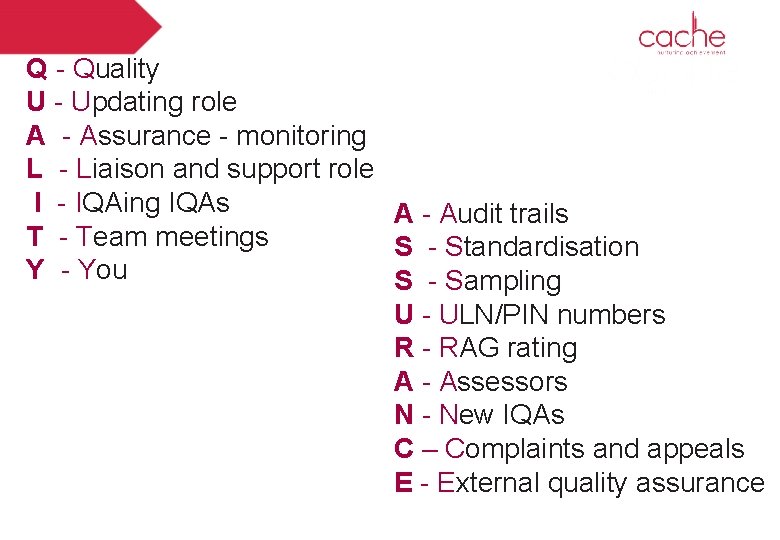
Q - Quality U - Updating role A - Assurance - monitoring L - Liaison and support role I - IQAing IQAs A - Audit trails T - Team meetings S - Standardisation Y - You S - Sampling U - ULN/PIN numbers R - RAG rating A - Assessors N - New IQAs C – Complaints and appeals E - External quality assurance
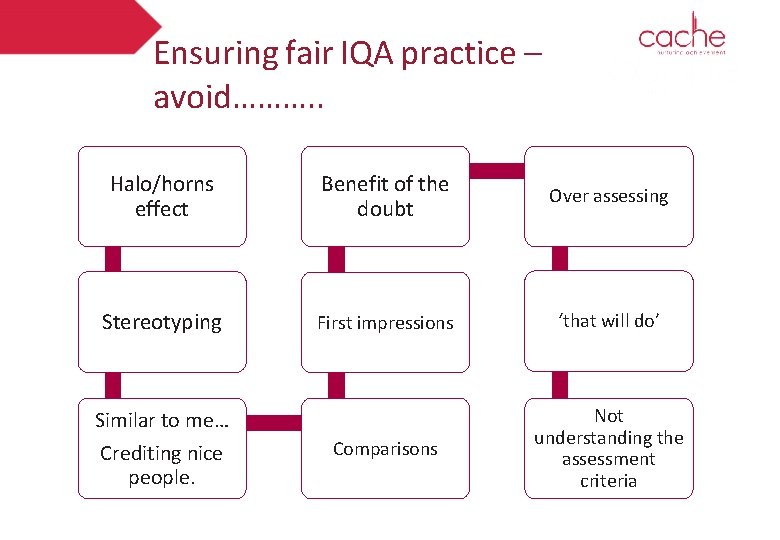
Ensuring fair IQA practice – avoid………. . – Ensuring fair IQA practice – avoid… Halo/horns effect Benefit of the doubt Over assessing Stereotyping First impressions ‘that will do’ Comparisons Not understanding the assessment criteria Similar to me… Crediting nice people.
Activity 3 Terminology and ensuring evidence is assessed at the correct level
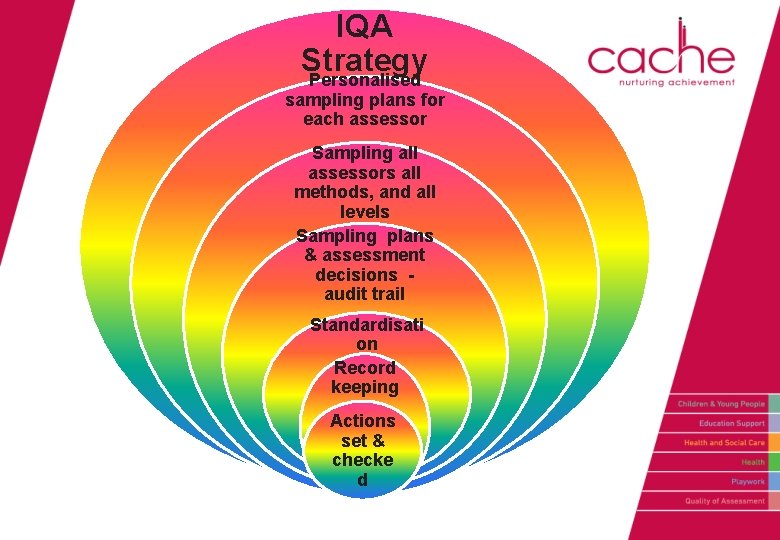
IQA Strategy Personalised sampling plans for each assessor Sampling all assessors all methods, and all levels Sampling plans & assessment decisions audit trail Standardisati on Record keeping Actions set & checke d
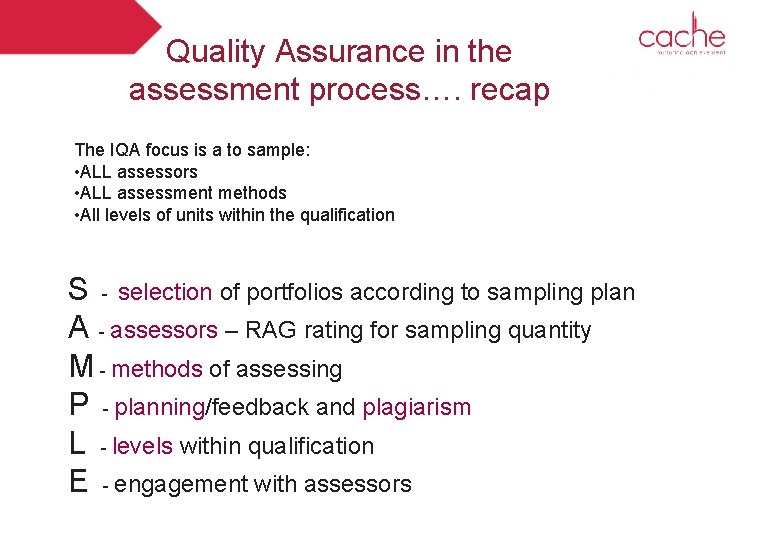
Quality Assurance in the assessment process…. recap The IQA focus is a to sample: • ALL assessors • ALL assessment methods • All levels of units within the qualification S - selection of portfolios according to sampling plan A - assessors – RAG rating for sampling quantity M - methods of assessing P - planning/feedback and plagiarism L - levels within qualification E - engagement with assessors
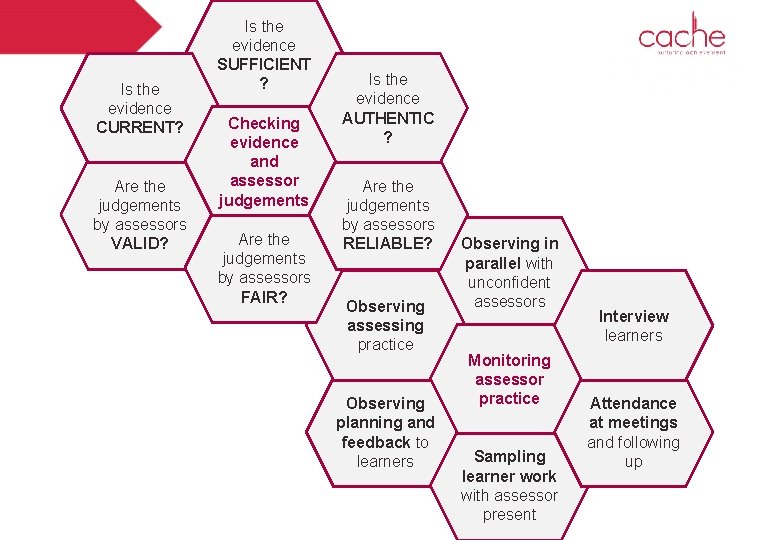
Is the evidence CURRENT? Are the judgements by assessors VALID? Is the evidence SUFFICIENT ? Checking evidence and assessor judgements Are the judgements by assessors FAIR? Is the evidence AUTHENTIC ? Are the judgements by assessors RELIABLE? Observing assessing practice Observing planning and feedback to learners Observing in parallel with unconfident assessors Monitoring assessor practice Sampling learner work with assessor present Interview learners Attendance at meetings and following up
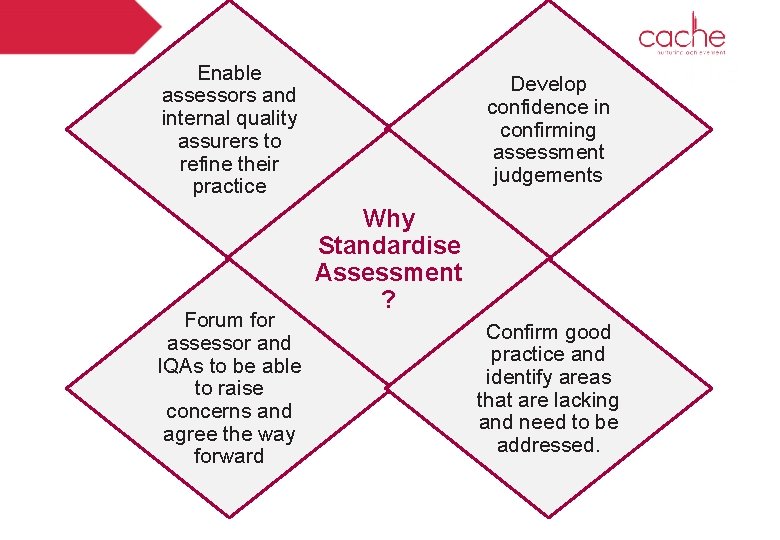
Enable assessors and internal quality assurers to refine their practice Forum for assessor and IQAs to be able to raise concerns and agree the way forward Develop confidence in confirming assessment judgements Why Standardise Assessment ? Confirm good practice and identify areas that are lacking and need to be addressed.
Activity 4 IQA
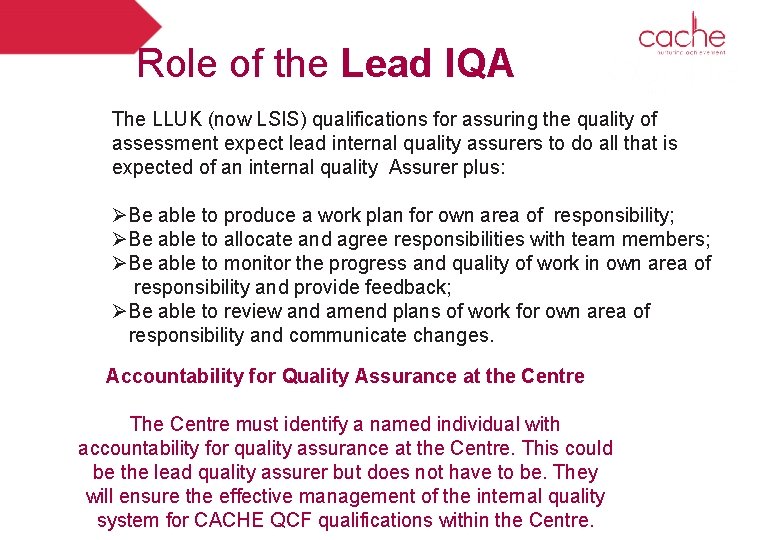
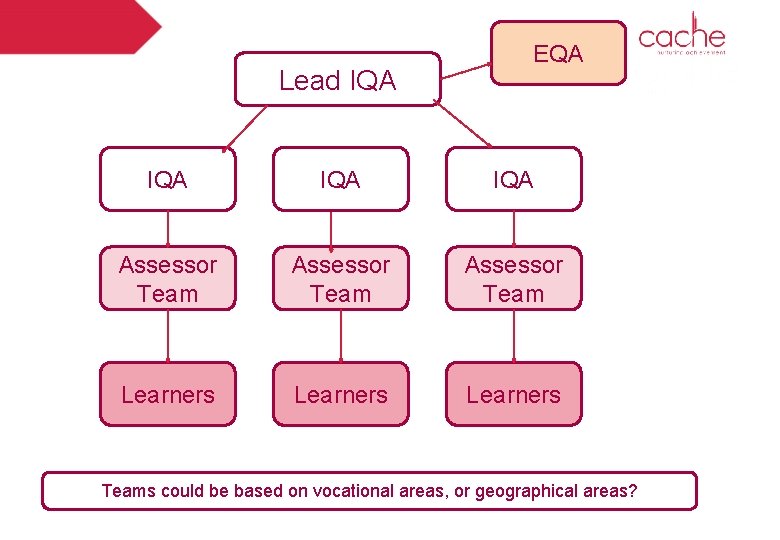
Role of the Lead IQA The LLUK (now LSIS) qualifications for assuring the quality of assessment expect lead internal quality assurers to do all that is expected of an internal quality Assurer plus: ØBe able to produce a work plan for own area of responsibility; ØBe able to allocate and agree responsibilities with team members; ØBe able to monitor the progress and quality of work in own area of responsibility and provide feedback; ØBe able to review and amend plans of work for own area of responsibility and communicate changes. Accountability for Quality Assurance at the Centre The Centre must identify a named individual with accountability for quality assurance at the Centre. This could be the lead quality assurer but does not have to be. They will ensure the effective management of the internal quality system for CACHE QCF qualifications within the Centre.
Lead IQA EQA IQA IQA Assessor Team Learners Teams could be based on vocational areas, or geographical areas?
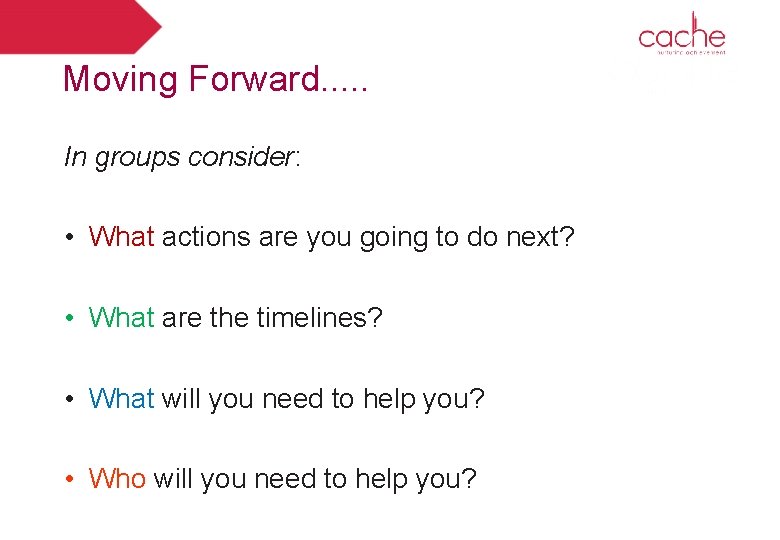
Moving Forward. . . In groups consider: • What actions are you going to do next? • What are the timelines? • What will you need to help you? • Who will you need to help you?
Evaluation………………