
GOOD MORNING TO ONE AND ALL OUR TEAM


- Slides: 17
GOOD MORNING TO ONE AND ALL
OUR TEAM VENKATESH THARUN SADIK FROM AVANTHI ENGG. COLLEGE
OUR TOPIC ØNETWORK-SECURITY ØCRYPTOGRAPHY
NETWORK-SECURITY • INTRODUCTION FOR SECURITY • WHAT IS MEANT BY NETWORKSECURITY ? • NEED FOR THE SECURITY ?
NEED FOR SECURITY • Protect valuable or sensitive organizational information while making it readily available. • System administrators need to understand the various aspects of security to develop measures and policies to protect assets and limit their vulnerabilities.
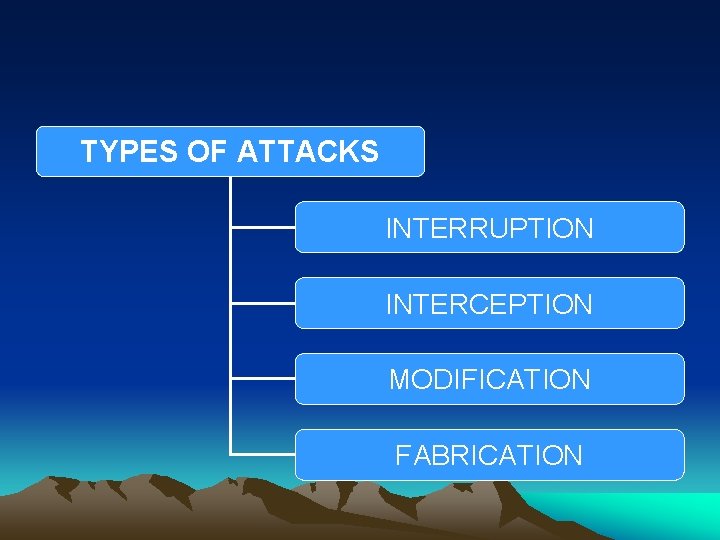
TYPES OF ATTACKS INTERRUPTION INTERCEPTION MODIFICATION FABRICATION
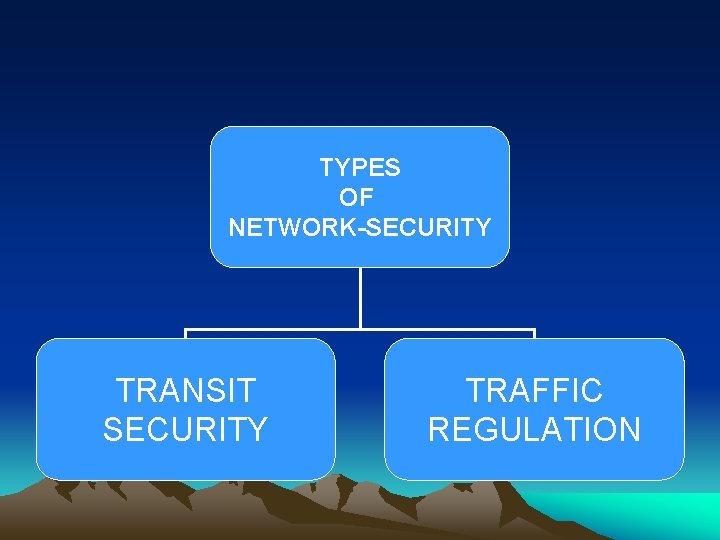
TYPES OF NETWORK-SECURITY TRANSIT SECURITY TRAFFIC REGULATION
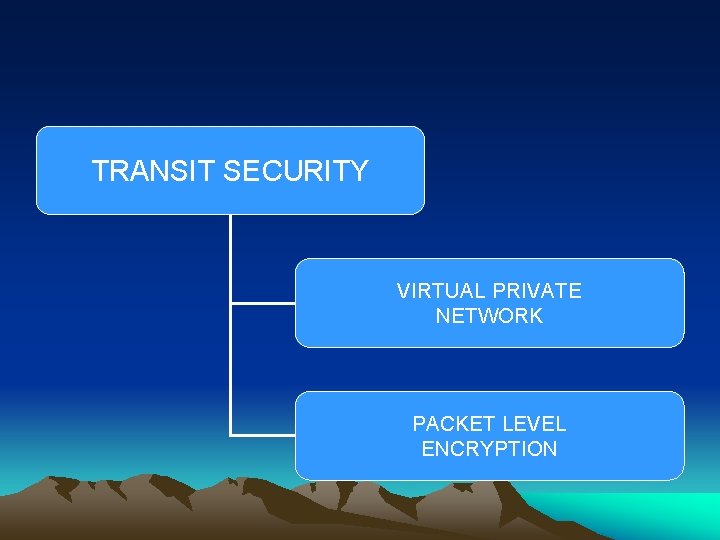
TRANSIT SECURITY VIRTUAL PRIVATE NETWORK PACKET LEVEL ENCRYPTION
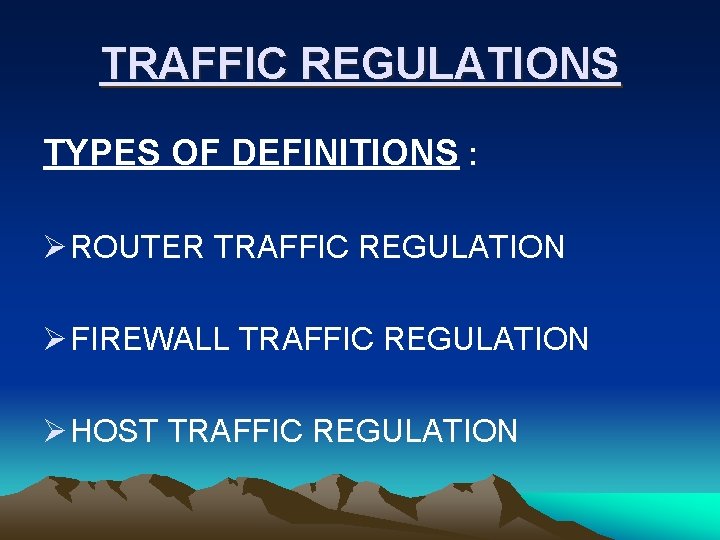
TRAFFIC REGULATIONS TYPES OF DEFINITIONS : Ø ROUTER TRAFFIC REGULATION Ø FIREWALL TRAFFIC REGULATION Ø HOST TRAFFIC REGULATION
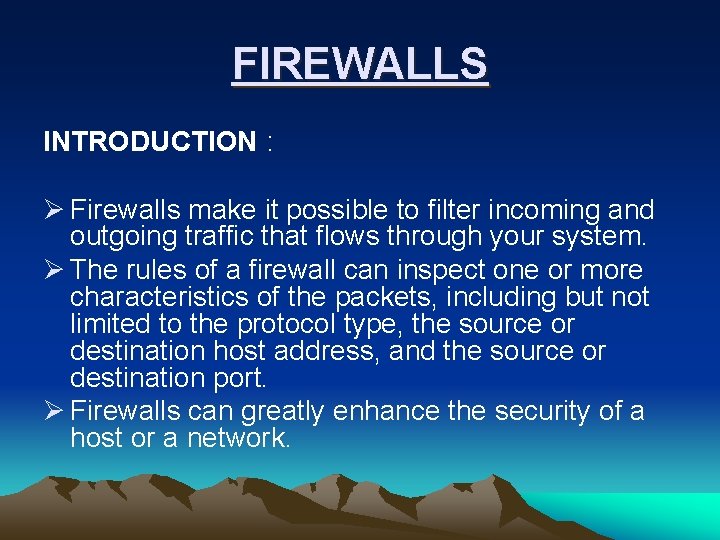
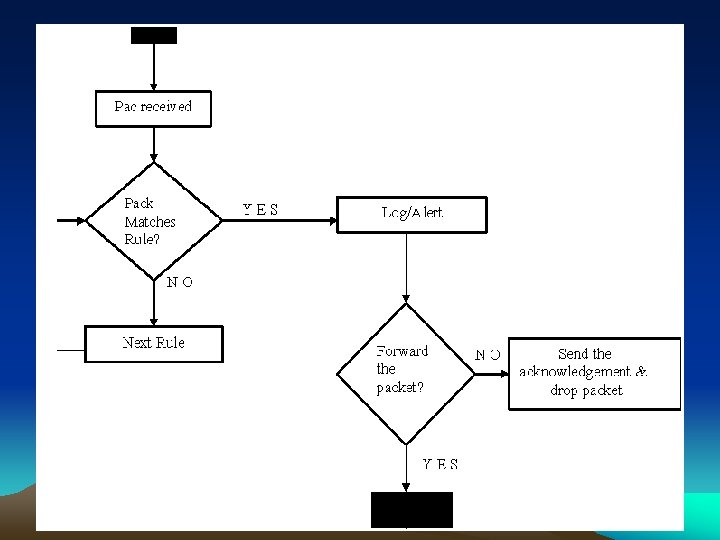
FIREWALLS INTRODUCTION : Ø Firewalls make it possible to filter incoming and outgoing traffic that flows through your system. Ø The rules of a firewall can inspect one or more characteristics of the packets, including but not limited to the protocol type, the source or destination host address, and the source or destination port. Ø Firewalls can greatly enhance the security of a host or a network.
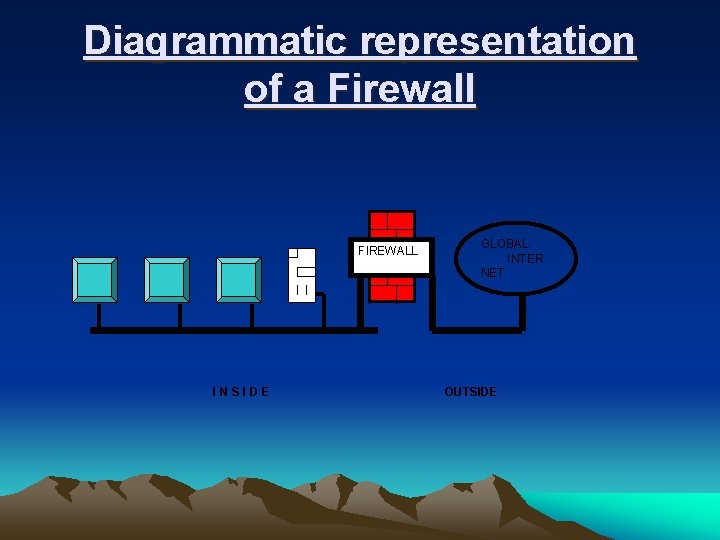
Diagrammatic representation of a Firewall FIREWALL INSIDE GLOBAL INTER NET OUTSIDE
USES OF FIREWALLS Ø To protect and insulate the applications and services of your internal network from unwanted traffic coming in from the public Internet. Ø To limit or disable access from hosts of the internal network to services of the public Internet. Ø To support network address translation (NAT), which allows your internal network to use private IP addresses and share a single connection to the public Internet
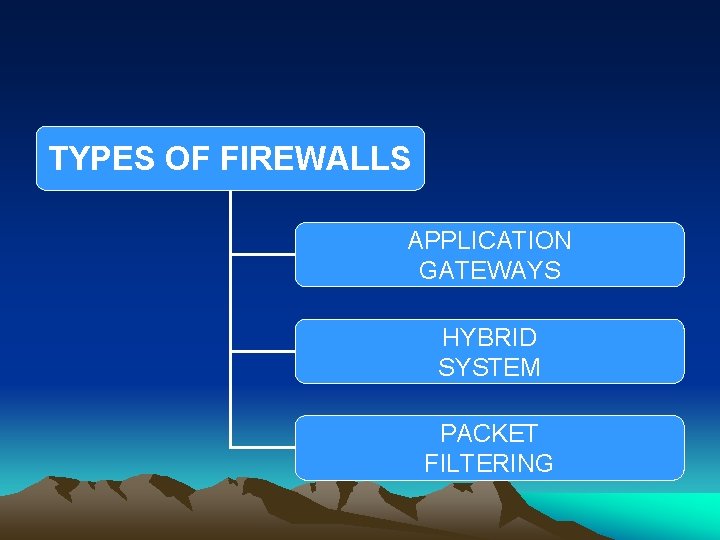
TYPES OF FIREWALLS APPLICATION GATEWAYS HYBRID SYSTEM PACKET FILTERING
DIFFERENT TYPES OF THREATS TO NETWORK Ø E-MAIL BOMBS Ø MACRO’S Ø VIRUSES Ø SPAM
CRYPTOGRAPHY Ø What is cryptography? Ø SERVICES • Decryption is the reverse of encryption, and Hash functions-it involves the use of zero keys. • Secret key functions-it involves the use of one key. • Public key functions-it involves the use of two keys.
TYPES OF CRYPTOGRAPHIC FUNCTIONS • Decryption is the reverse of encryption, and Hash functions-it involves the use of zero keys. • Secret key functions-it involves the use of one key. • Public key functions-it involves the use of two keys.