
GOOD MORNING Take the first ten minutes of
- Slides: 9
GOOD MORNING! Take the first ten minutes of class to finish the activity we started on Monday. Get back with your partner and finish analyzing your source for credibility and relevance.
Review ■ Three forms of persuasion – Ethos (credibility of the speaker/writer; make an ethical argument) – Logos (based on logic – facts, statistics, parallel examples) – Pathos (emotional appeal – how does the argument make you feel? ) ■ What two things do you need to check for when deciding whether or not to use a source? – Credibility – Relevance
Building your argument ■ Claim/Thesis – the point your essay is trying to prove – Must be arguable – can’t just state a fact ■ The claim is supported by three main points/reasons – Always make sure your three main points/reasons relate directly back to your claim ■ You must use evidence to support each main point/reason
Evidence ■ Your evidence needs to be credible and relevant in order to be effective. ■ We’re going to learn to identify three types of evidence – Empirical – Logical – Anecdotal
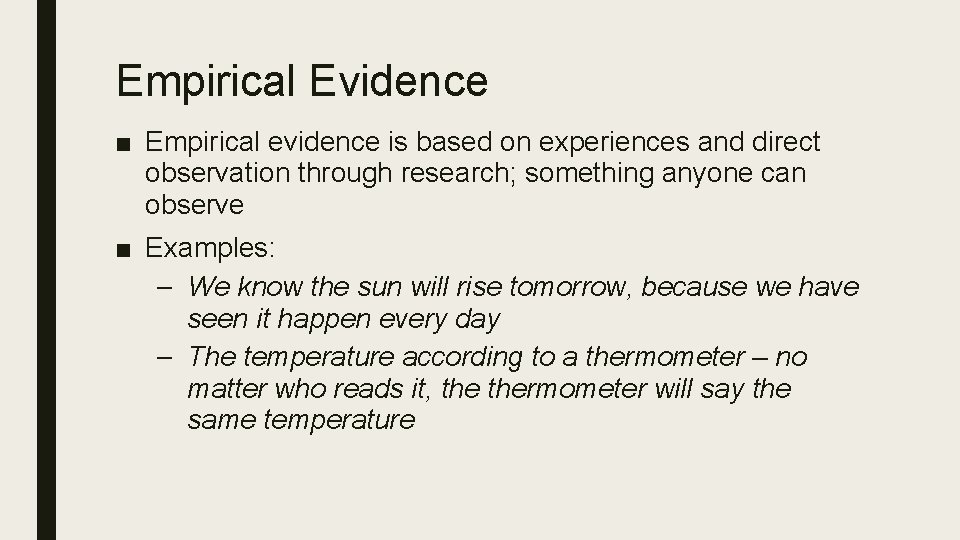
Empirical Evidence ■ Empirical evidence is based on experiences and direct observation through research; something anyone can observe ■ Examples: – We know the sun will rise tomorrow, because we have seen it happen every day – The temperature according to a thermometer – no matter who reads it, thermometer will say the same temperature
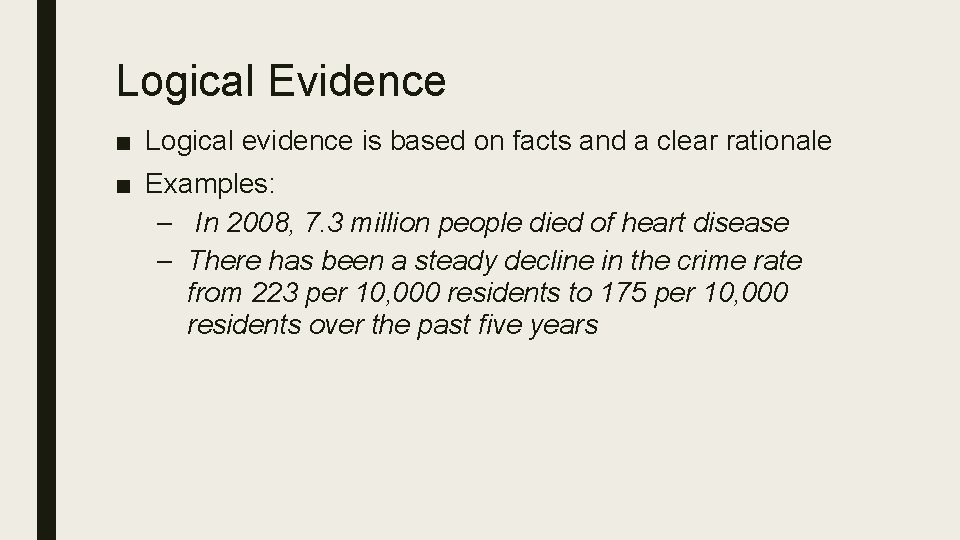
Logical Evidence ■ Logical evidence is based on facts and a clear rationale ■ Examples: – In 2008, 7. 3 million people died of heart disease – There has been a steady decline in the crime rate from 223 per 10, 000 residents to 175 per 10, 000 residents over the past five years
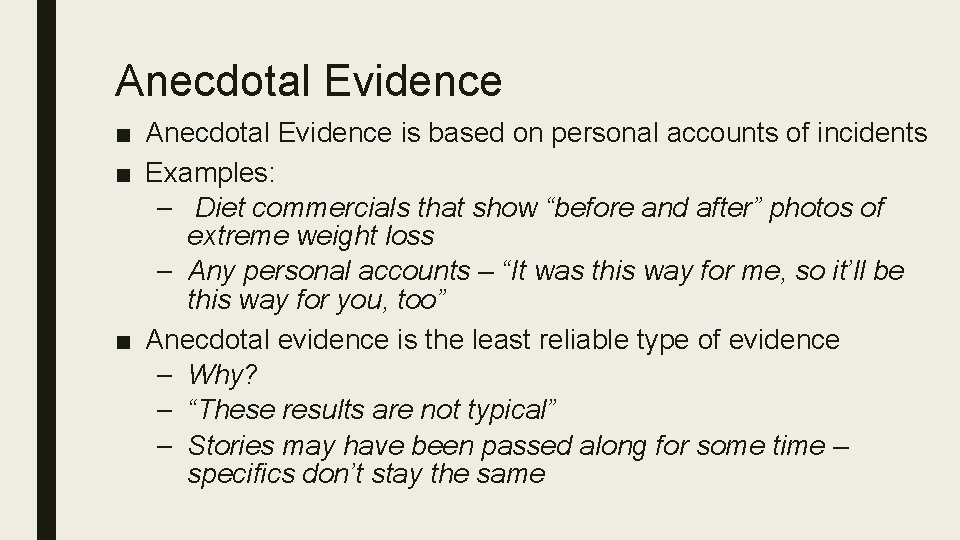
Anecdotal Evidence ■ Anecdotal Evidence is based on personal accounts of incidents ■ Examples: – Diet commercials that show “before and after” photos of extreme weight loss – Any personal accounts – “It was this way for me, so it’ll be this way for you, too” ■ Anecdotal evidence is the least reliable type of evidence – Why? – “These results are not typical” – Stories may have been passed along for some time – specifics don’t stay the same
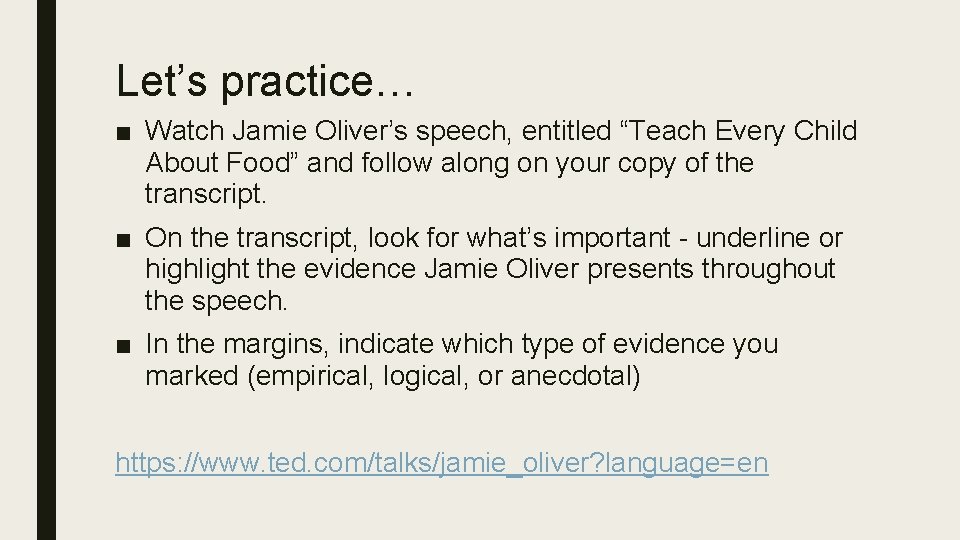
Let’s practice… ■ Watch Jamie Oliver’s speech, entitled “Teach Every Child About Food” and follow along on your copy of the transcript. ■ On the transcript, look for what’s important - underline or highlight the evidence Jamie Oliver presents throughout the speech. ■ In the margins, indicate which type of evidence you marked (empirical, logical, or anecdotal) https: //www. ted. com/talks/jamie_oliver? language=en
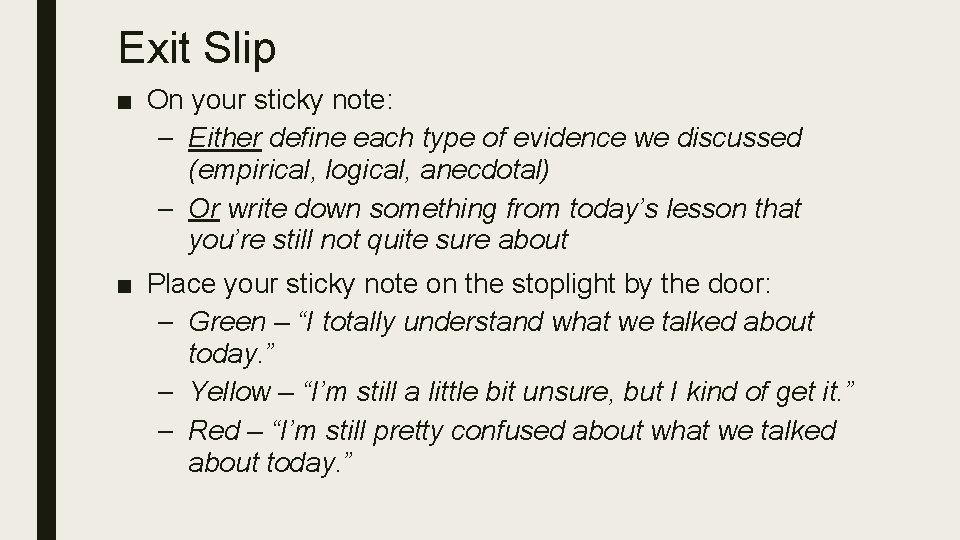
Exit Slip ■ On your sticky note: – Either define each type of evidence we discussed (empirical, logical, anecdotal) – Or write down something from today’s lesson that you’re still not quite sure about ■ Place your sticky note on the stoplight by the door: – Green – “I totally understand what we talked about today. ” – Yellow – “I’m still a little bit unsure, but I kind of get it. ” – Red – “I’m still pretty confused about what we talked about today. ”