
Good Morning Class Quotes of the Day First

- Slides: 45
Good Morning Class!!! Quotes of the Day: • First impressions are the most lasting. -PROVERBS • You never get a second chance to make a first impression. Andrew Grant • A good first impression can work wonders. -J. K. Rowling • A stunning first impression was not the same thing as love at first sight. But surely it was an invitation to consider the matter. -Lois Mc. Master Bujold • We don't know where our first impressions come from or precisely what they mean, so we don't always appreciate. 1
2
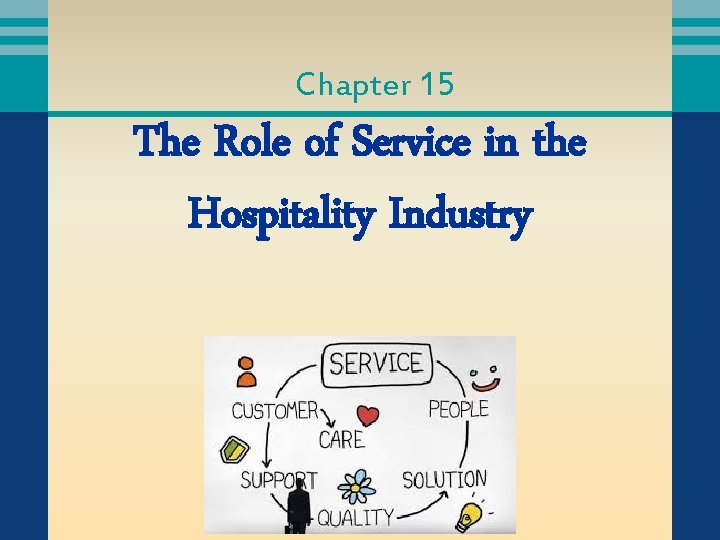
Chapter 15 The Role of Service in the Hospitality Industry Copyright © 2010 by John Wiley & Sons, Inc. All Rights Reserved
SERVICE • In an industry that is part of the larger service industry, the delivery of good service is vital • Word of mouth (good or bad) emanates from the service experience that a customer has • Service is a major point of differentiation
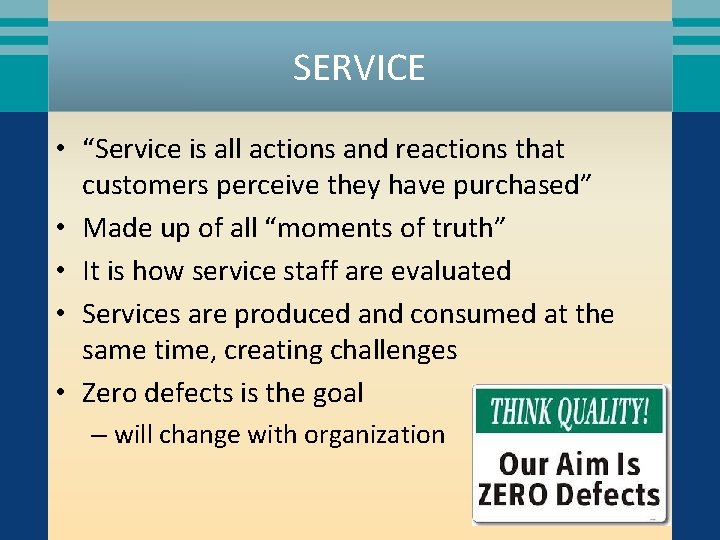
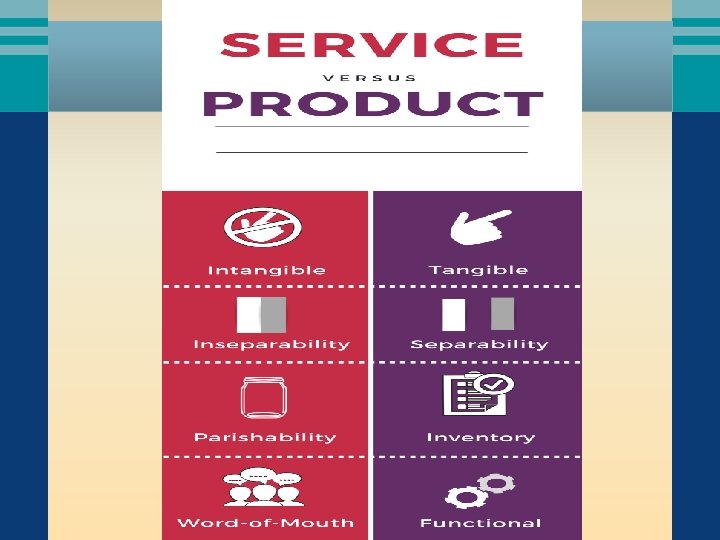
SERVICE • “Service is all actions and reactions that customers perceive they have purchased” • Made up of all “moments of truth” • It is how service staff are evaluated • Services are produced and consumed at the same time, creating challenges • Zero defects is the goal – will change with organization
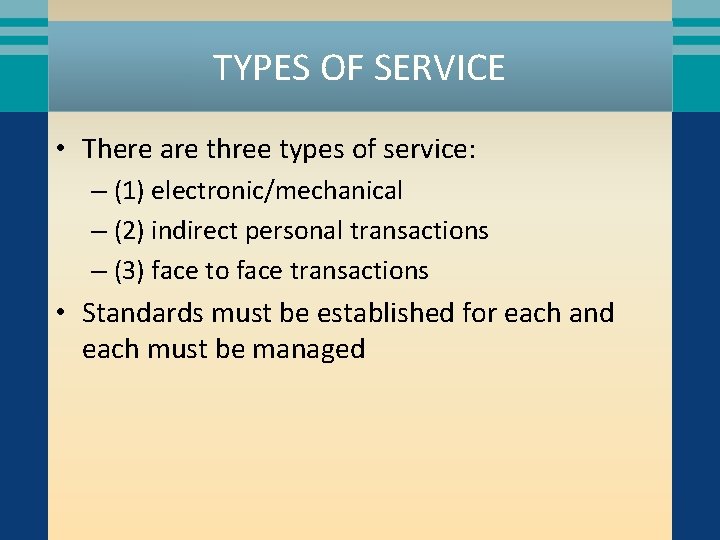
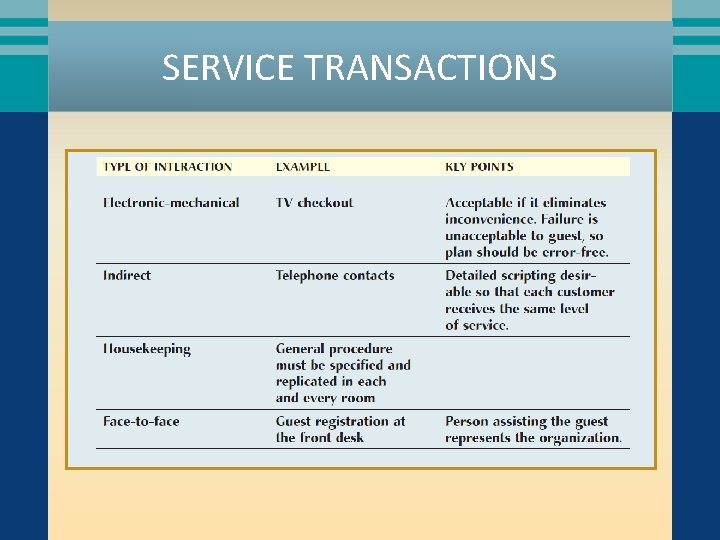
TYPES OF SERVICE • There are three types of service: – (1) electronic/mechanical – (2) indirect personal transactions – (3) face to face transactions • Standards must be established for each and each must be managed
SERVICE TRANSACTIONS
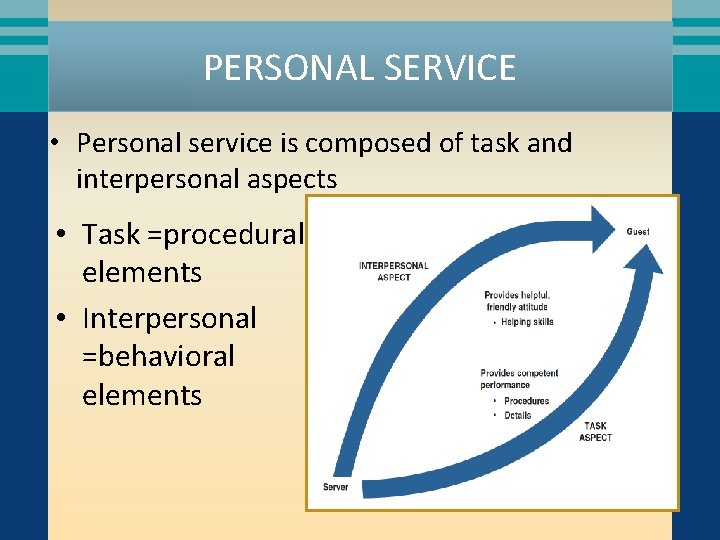
PERSONAL SERVICE • Personal service is composed of task and interpersonal aspects • Task =procedural elements • Interpersonal =behavioral elements
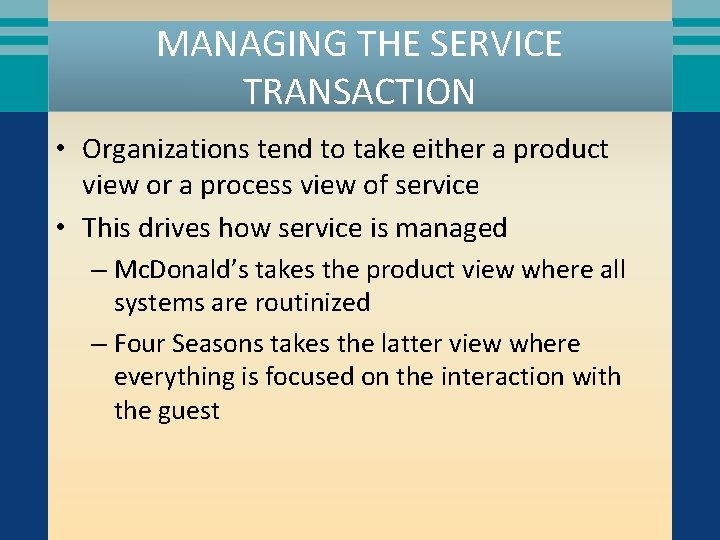
MANAGING THE SERVICE TRANSACTION • Organizations tend to take either a product view or a process view of service • This drives how service is managed – Mc. Donald’s takes the product view where all systems are routinized – Four Seasons takes the latter view where everything is focused on the interaction with the guest
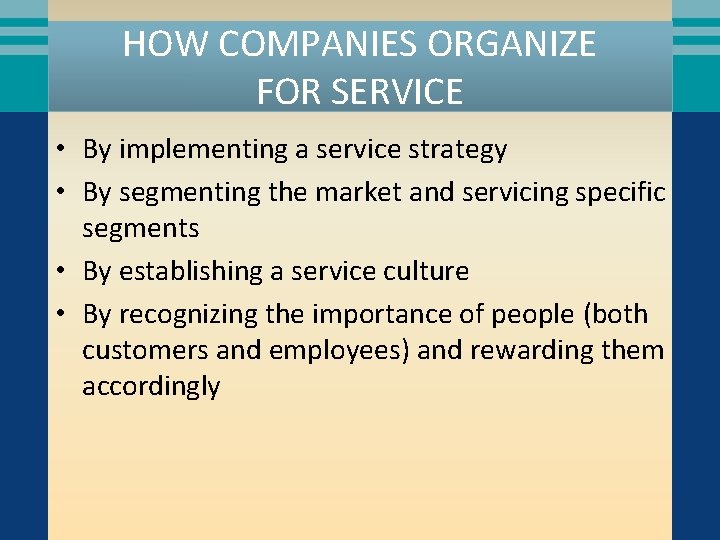
HOW COMPANIES ORGANIZE FOR SERVICE • By implementing a service strategy • By segmenting the market and servicing specific segments • By establishing a service culture • By recognizing the importance of people (both customers and employees) and rewarding them accordingly
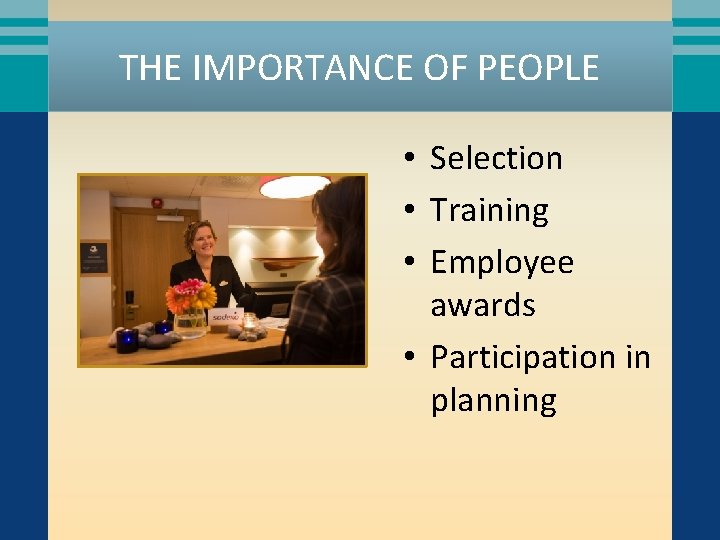
THE IMPORTANCE OF PEOPLE • Selection • Training • Employee awards • Participation in planning
SERVICE IS THE SUSTAINABLE COMPETITIVE ADVANTAGE • Hospitality products and services tend to be very similar with the exception of service • Providing exceptional service should be viewed as an opportunity • Much of a company’s reputation is based on individual service transactions
Chapter 1 The Hospitality Industry and You Copyright © 2010 by John Wiley & Sons, Inc. All Rights Reserved
What does hospitality mean to you? 15
WHAT IS HOSPITALITY? • Many peoples’ definition of hospitality extends only to restaurants and hotels • In reality, it goes far beyond this and includes any organization that provides food, shelter and other services to people away from home • When viewed in this light, the hospitality industry can be quite large and far reaching • Also, the numerous career opportunities become readily apparent
WHAT IS HOSPITALITY? • Students considering entering the field of hospitality should take into consideration all of the types of businesses that hospitality encompasses but also, the various career streams in functional areas across segments (such as accounting, finance, marketing, human resources, etc. ) • One of the common threads that binds all segments together is the service orientation that exists – one must possess this in order to be successful
WHAT IS HOSPITALITY? • An interesting note: Over the last 10 years, other types of businesses have begun to recognize the unique combination of skills that hospitality students possess – the combination of sound business and management along with a service orientation • As a result, other industries have begun to recruit hospitality graduates including health care and retail
WHAT IS HOSPITALITY? • This is a particularly exciting time to be associated with the industry given the ample career opportunities, the economy, new developments, emerging markets, internationalization of companies and concepts, etc. • The industry faces certain challenges, too, which will be discussed throughout the course
PRIMARY SECTORS So, what are some of the primary sectors within the hospitality industry? They include: • • Lodging (not just traditional hotels) Food and Beverage (not just restaurants) Travel Gaming operations Private clubs Theme parks Destination management companies
PRIMARY SECTORS (CONTINUED) • Meetings and conventions (planning and operations) • Managed park environments (natural) • Resorts • Senior living • Managed services • Consulting services
THE MANAGER’S ROLE The role of the manager is critical in creating the environment in which the following will occur: • Making the guest feel welcome • Making things work for the guest • Maintaining a profitable (or “fiscally responsible”) operation A degree in hospitality management is designed to allow students to be effective in these areas
HOW TO PREPARE FOR A CAREER IN THE HOSPITALITY INDUSTRY • Work your way up through an organization – No guarantee – Only learn one way • Earn a general degree or degree in the liberal arts – May not provide as quick, or direct, access to opportunities • Earn a general business or management degree – Provides the good sound business knowledge but may not be specific enough
WHY DO STUDENTS STUDY HOSPITALITY MANAGEMENT? Personal work experience Family background Contact with other students Enjoy people, food, travel, etc. Opportunities for employment and advancement • Desire to own their own business • Desire to be independent • • •
EMPLOYMENT OPPORTUNITIES • Most segments of the hospitality industry are projected for continued growth in the number of management positions • Opportunity to advance as companies grow • Some segments are greatly outpacing the average • New and emerging segments of the industry • Growth in franchise opportunities • Increasing interest in food and travel as population ages
COMBINING EDUCATION AND WORK EXPERIENCE • The prevailing philosophy in hospitality education is that the best way to the top is through a strategic combination of education and experience • The education component is self-explanatory – it is the result of past results and future expectations • The experience component is two-fold – Some of the opportunities will come from the department through internships, etc. – Other opportunities will come from your own initiatives looking for summer jobs and part time work—be strategic about how you choose your jobs and how you progress
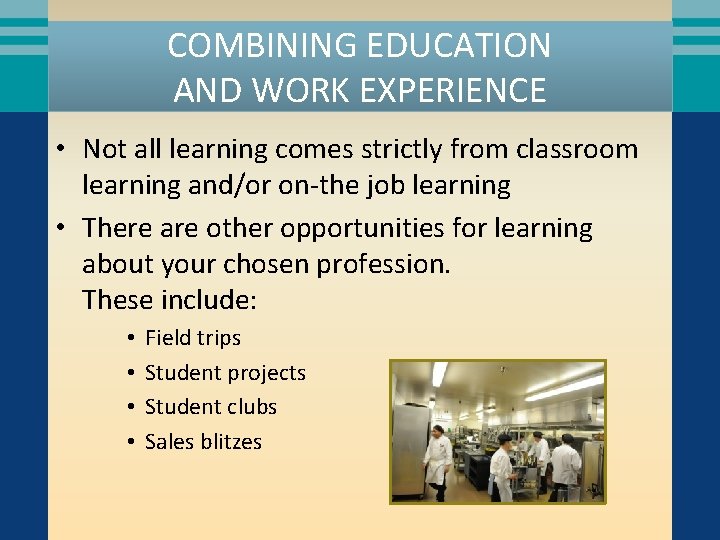
COMBINING EDUCATION AND WORK EXPERIENCE • Not all learning comes strictly from classroom learning and/or on-the job learning • There are other opportunities for learning about your chosen profession. These include: • • Field trips Student projects Student clubs Sales blitzes
STUDENT CLUBS • Eta Sigma Delta, International Hospitality Management Society – As a traditional honor society, it meets the standards of the Association of College Honor Societies; hospitality students in their junior year with a 3. 0 or better grade point average are eligible for membership • Others: Wine clubs, Restaurant associations, Club managers associations, Travel and Tourism Research Association, etc.
LEARNING STRATEGIES FOR THE WORKPLACE • Try to understand the organization – Formal organization – Informal organization • Try to understand the physical plant – Work flow – Guest flow • Try to understand the different functional areas – Back-of-the-house – Front-of-the-house – Try to work in each
GETTING A JOB • • Newspapers (not!) Web sources Friends Family University placement office Job postings Networking Cold calling
WHAT DO EMPLOYERS LOOK FOR? • • Dedication and commitment Desire to serve others Decision making skills Communication skills Experience Involvement Technical skills See An Employer’s View….
GOALS AND OBJECTIVES • • • Income Professional status Potential job satisfaction Skilled jobs v. unskilled jobs Others considerations: Hours, Level of responsibility, Work environment, Mentoring
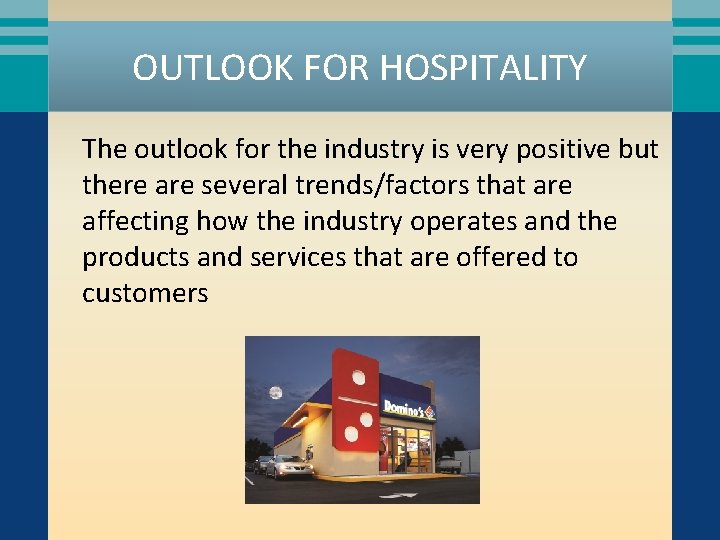
OUTLOOK FOR HOSPITALITY The outlook for the industry is very positive but there are several trends/factors that are affecting how the industry operates and the products and services that are offered to customers
OUTLOOK FOR HOSPITALITY The effects of September 11 th and other recent events have resulted in: • Travel restrictions • Safety and security issues • Cost of operations • Government regulations • Destinations that have been affected
OUTLOOK FOR HOSPITALITY Polarization • Limited Service versus Service Intensive organizations • Has led to growth in certain segments of the industry (luxury hotels, limited service restaurants) • Has generally been positive for the industry as a whole as well as for consumers
OUTLOOK FOR HOSPITALITY • • Accelerating Competition across segments has increased dramatically International competition has also increased Competition had led to more emphasis on creating specialized niches and better management practices Factors include: Cost of money and demand for specific services
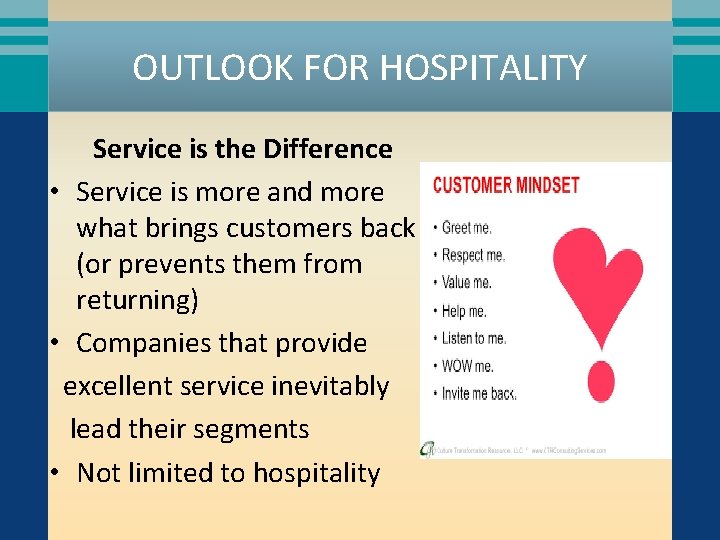
OUTLOOK FOR HOSPITALITY Service is the Difference • Service is more and more what brings customers back (or prevents them from returning) • Companies that provide excellent service inevitably lead their segments • Not limited to hospitality
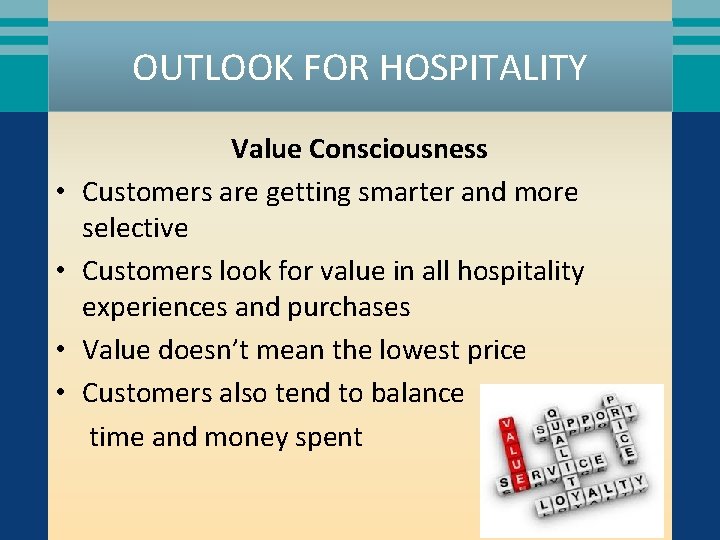
OUTLOOK FOR HOSPITALITY • • Value Consciousness Customers are getting smarter and more selective Customers look for value in all hospitality experiences and purchases Value doesn’t mean the lowest price Customers also tend to balance time and money spent
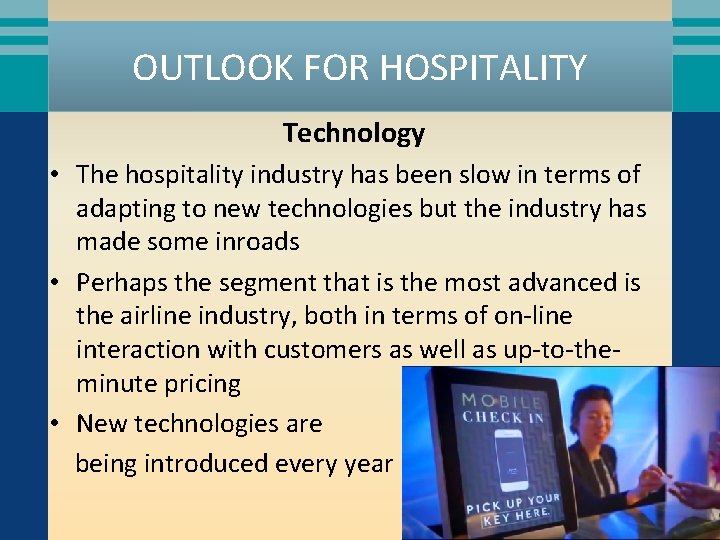
OUTLOOK FOR HOSPITALITY Technology • The hospitality industry has been slow in terms of adapting to new technologies but the industry has made some inroads • Perhaps the segment that is the most advanced is the airline industry, both in terms of on-line interaction with customers as well as up-to-theminute pricing • New technologies are being introduced every year
OUTLOOK FOR HOSPITALITY Empowerment • Empowerment provides additional levels of responsibility to both employees and managers • This has been the result of cost cutting efforts but also as a result of trying to improve customer satisfaction
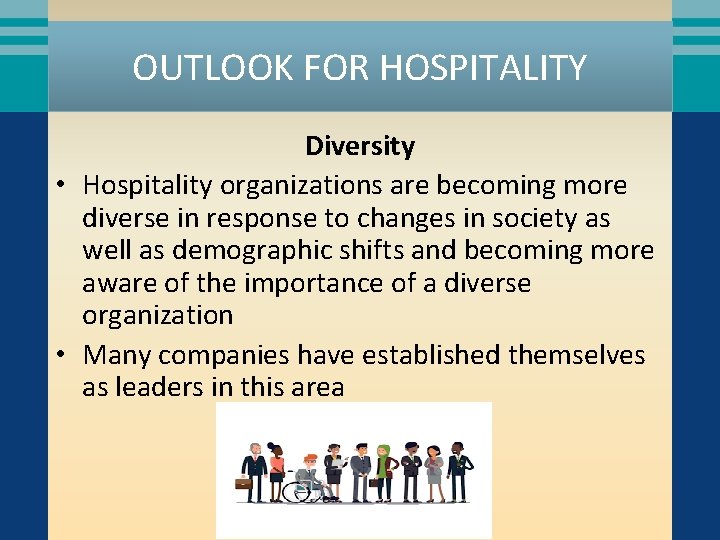
OUTLOOK FOR HOSPITALITY Diversity • Hospitality organizations are becoming more diverse in response to changes in society as well as demographic shifts and becoming more aware of the importance of a diverse organization • Many companies have established themselves as leaders in this area
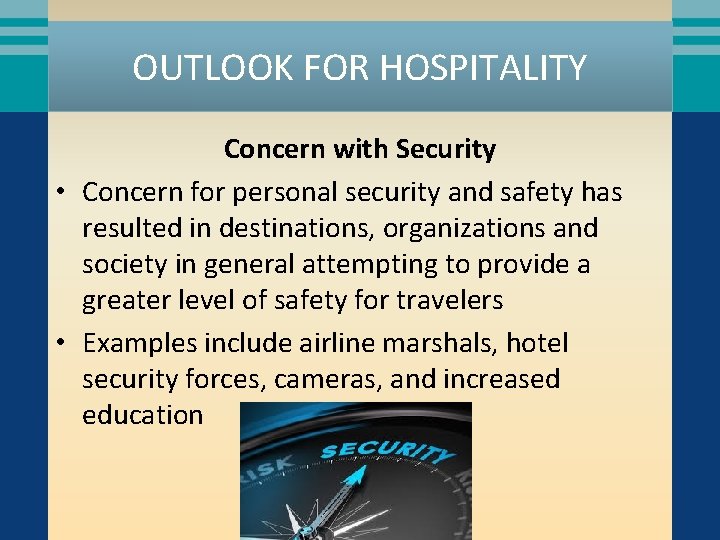
OUTLOOK FOR HOSPITALITY Concern with Security • Concern for personal security and safety has resulted in destinations, organizations and society in general attempting to provide a greater level of safety for travelers • Examples include airline marshals, hotel security forces, cameras, and increased education
OUTLOOK FOR HOSPITALITY Concern with Sanitation • Increases in food-borne illness has resulted in a raised concern on the part of consumers • More recent incidents have also raised questions about the quality of the food supply and even the water supply (e. g. , bottled water)
OUTLOOK FOR HOSPITALITY Sustainability • Going “green” is not new, but it reflects industry-wide focus on corporate responsibility • Most hotels encourage guests to reuse towels and many have embraced low-cost changes such as lighting • Guests prefer to support businesses that are concerned about the industry
OUTLOOK FOR HOSPITALITY Globalization (Last but not least) • Globalization is perhaps one of the greatest factors affecting the industry as it impacts every facet of operations including: – Competition – Work force – Travel patterns – Company alliances, etc.