
Good Dispensing Practices 1272020 1 Opening Remarks Welcome



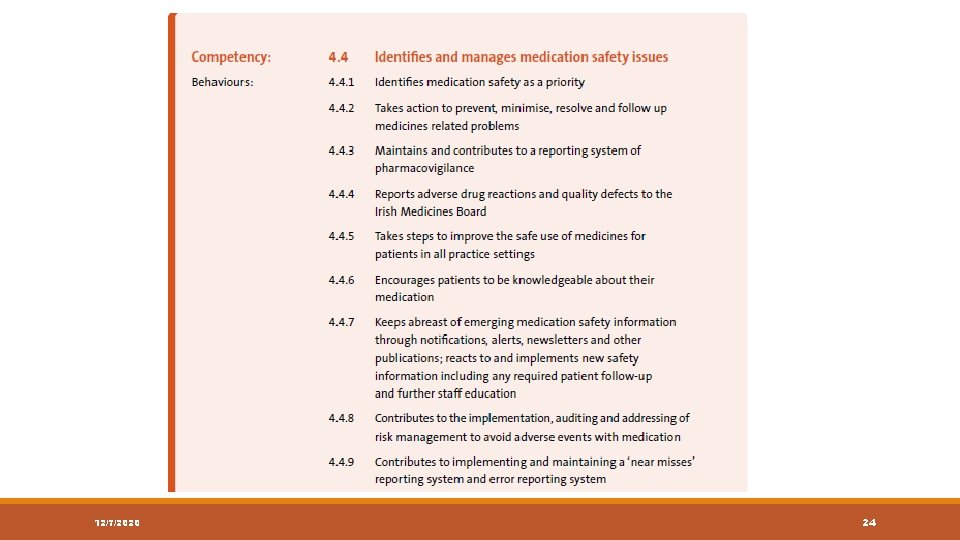
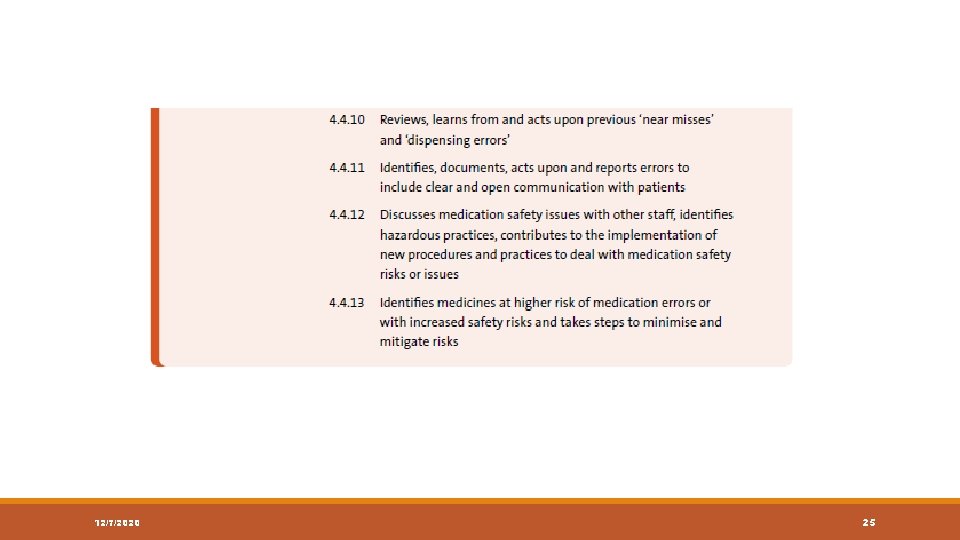
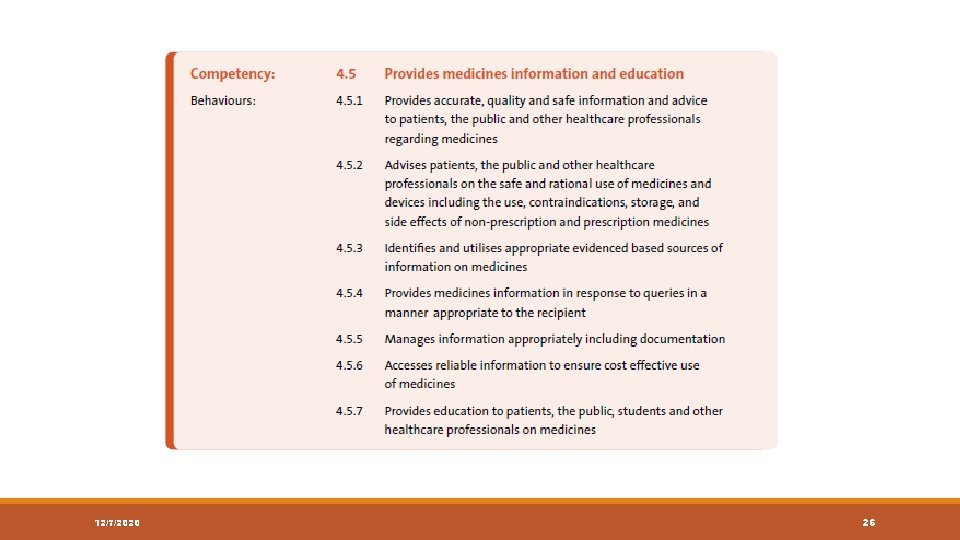


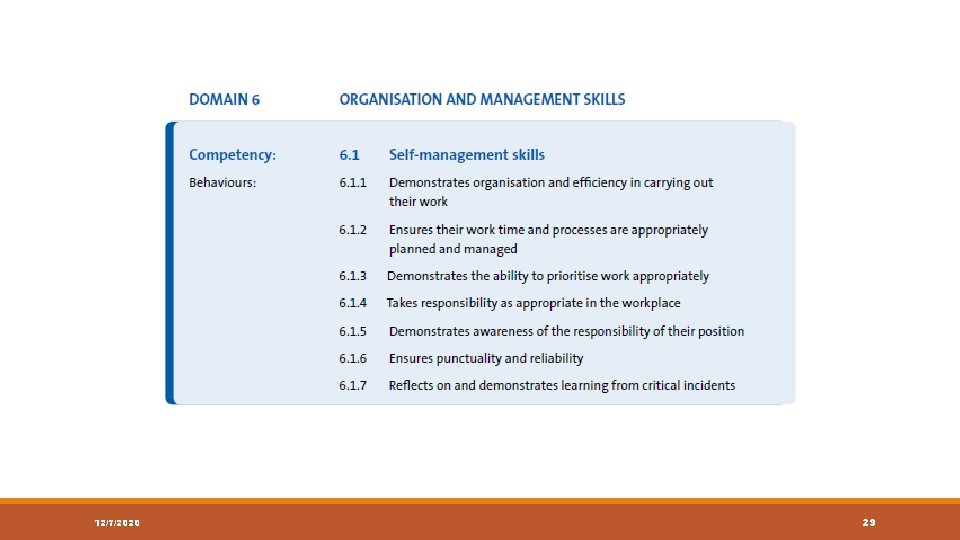

- Slides: 59
Good Dispensing Practices 12/7/2020 1
Opening Remarks ◦ Welcome and opening prayer ◦ Remarks by: ◦ 1. ◦ 2. ◦ 3. 12/7/2020 2
Facilitator and Participants introduction Prof Gustav Malangu is a public health, an International Health, pharmacy practice specialist with more than 15 years experience as a trainer, technical advisor and practising pharmacist Participant to introduce themselves and state their names, qualification, place of work, course expectations and favourite animal/plant and its three characteristics 12/7/2020 3
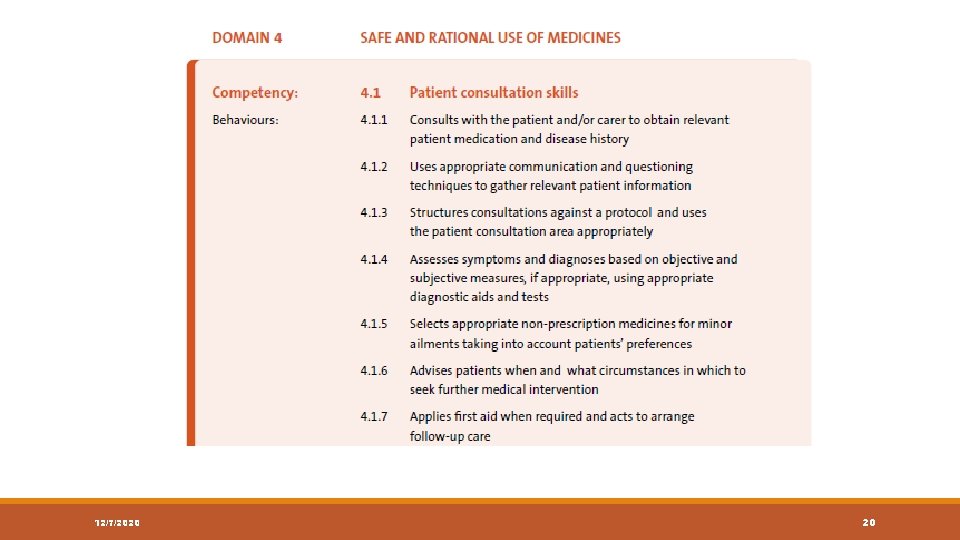
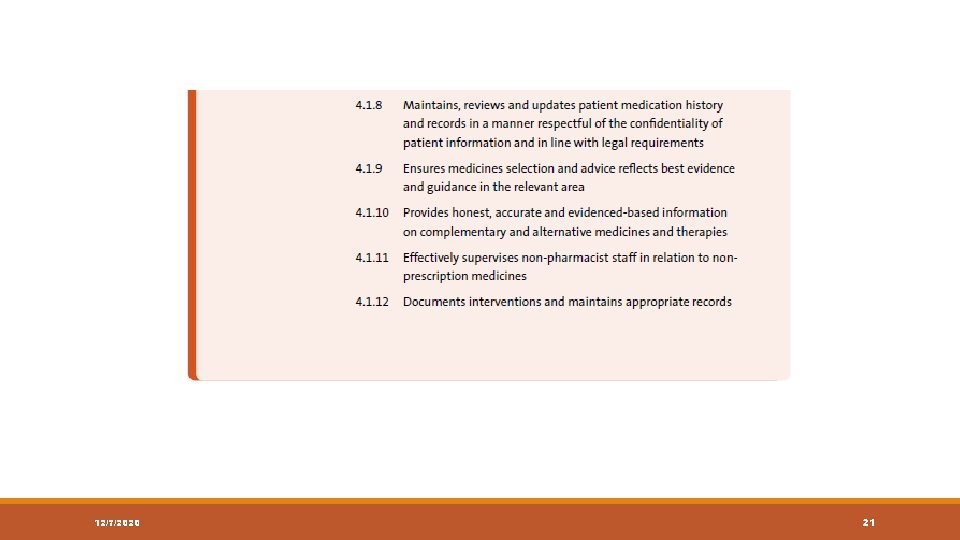
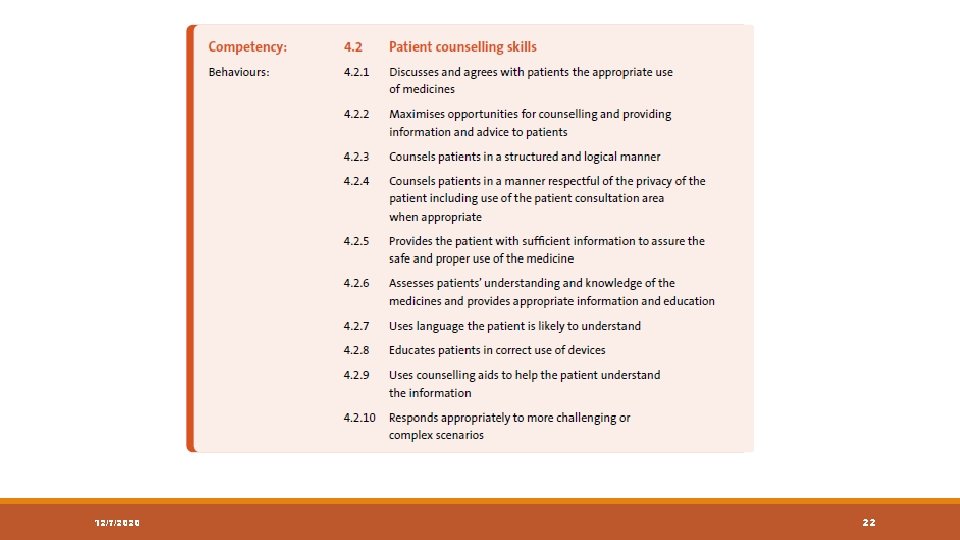
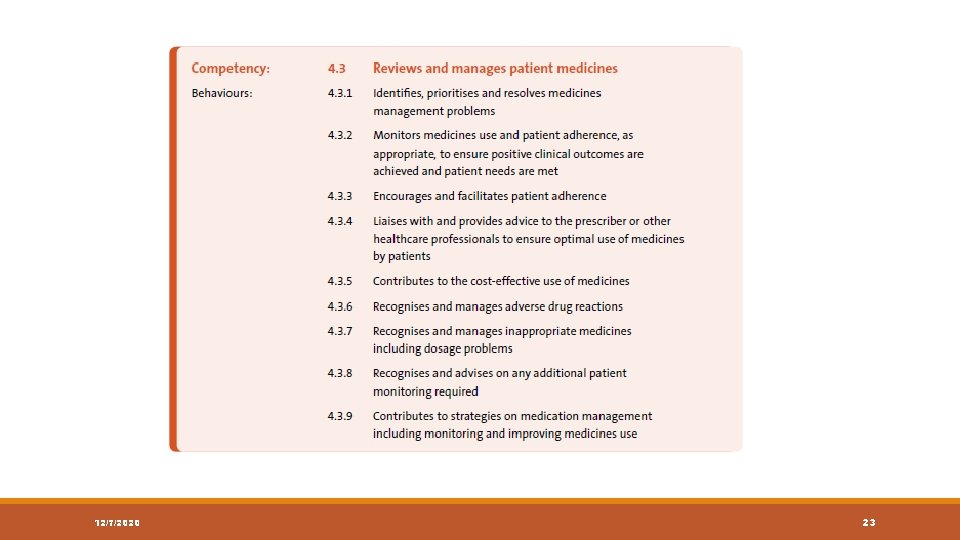
Course Objectives and Outputs Upon completion of this course, participants will be able to: ◦ Explain the current understanding of pharmacist’ competencies and professional responsibilities ◦ Describe components and aspects characterising Good Dispensing Practices ◦ Describe systems to put in place to ensure the implementation of GDPs ◦ Use tools for measuring performance, planning and improving dispensing practices ◦ As outputs, each participant will have produced: ◦ A situational analysis of their pharmacy ◦ An improvement plan for their pharmacy ◦ A personal growth plan 12/7/2020 4
Day 1: Introduction to Pharmacist Core Competencies 12/7/2020 5
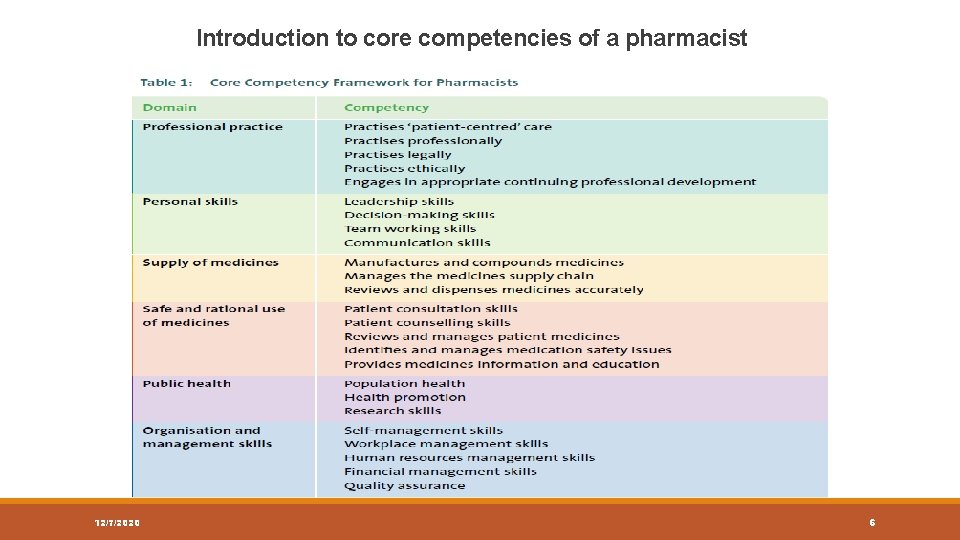
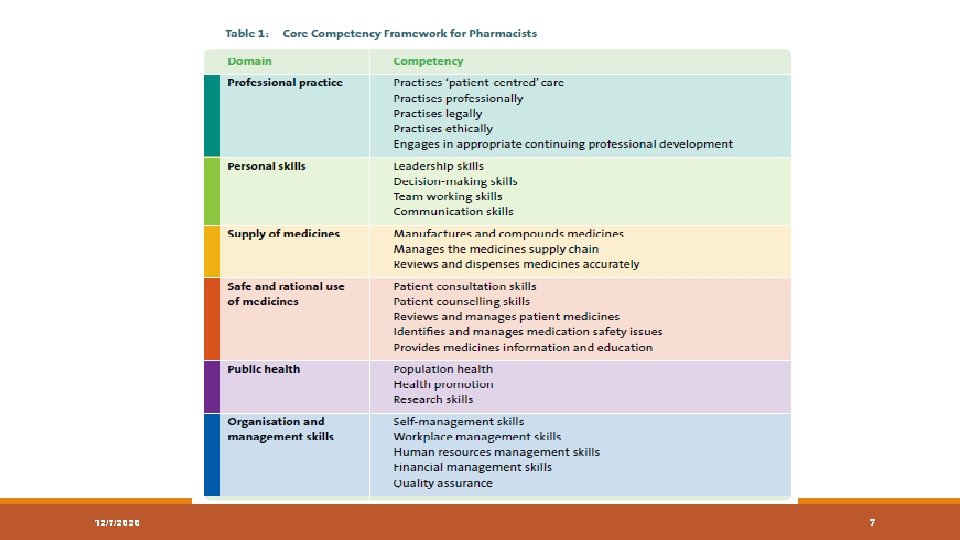
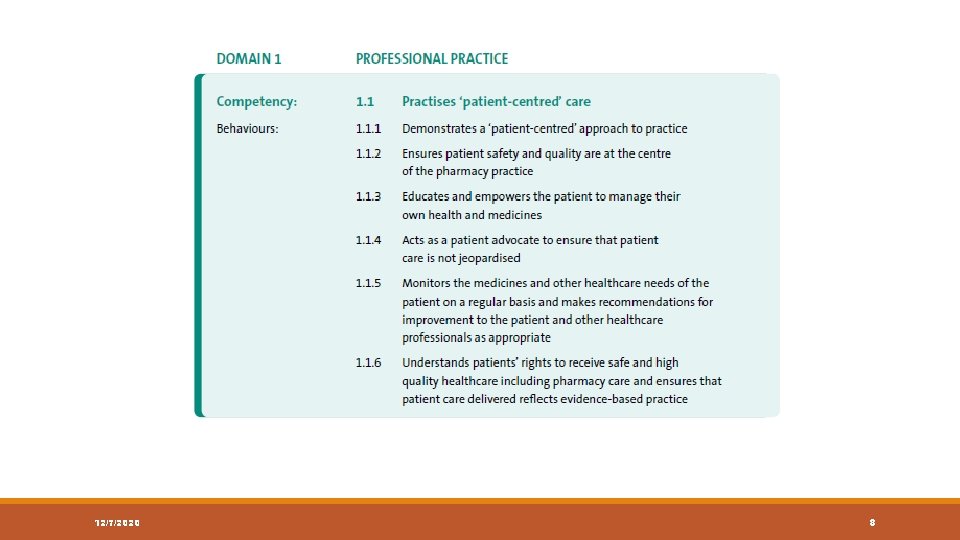
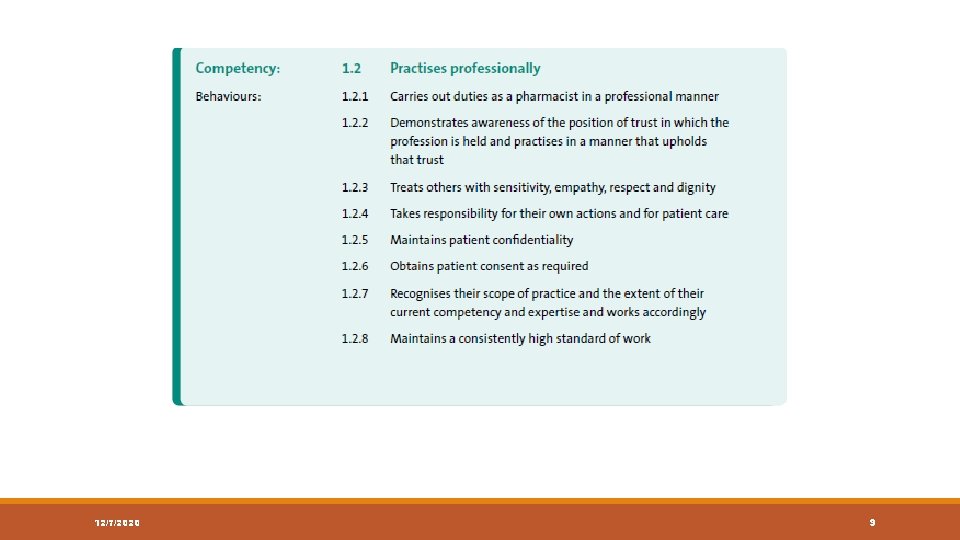
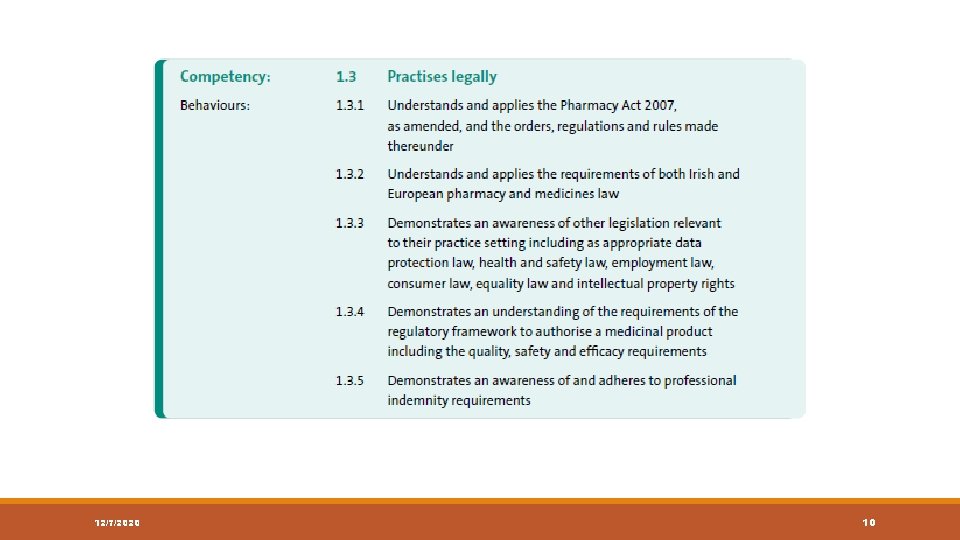
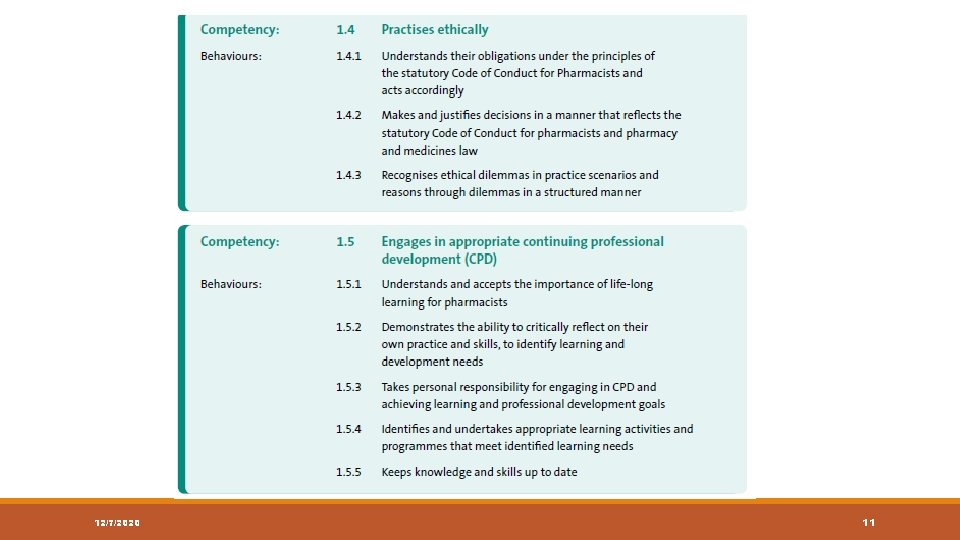
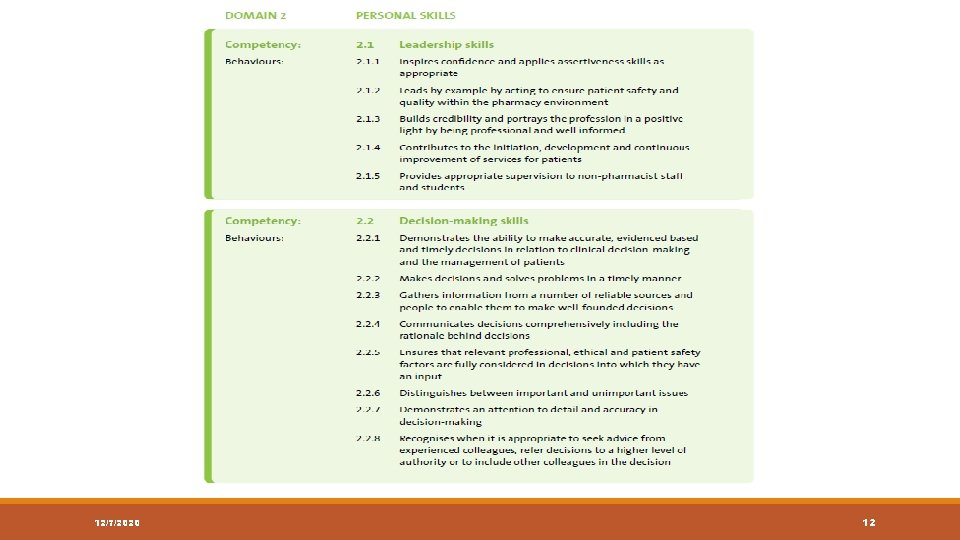
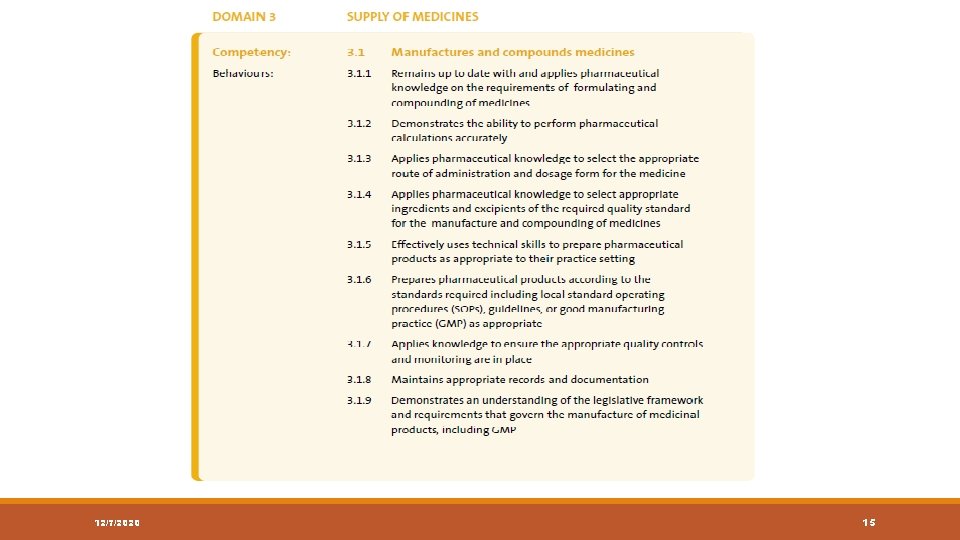
Introduction to core competencies of a pharmacist 12/7/2020 6
12/7/2020 7
12/7/2020 8
12/7/2020 9
12/7/2020 10
12/7/2020 11
12/7/2020 12
12/7/2020 13
12/7/2020 14
12/7/2020 15
12/7/2020 16
12/7/2020 17
12/7/2020 18
12/7/2020 19
12/7/2020 20
12/7/2020 21
12/7/2020 22
12/7/2020 23
12/7/2020 24
12/7/2020 25
12/7/2020 26
12/7/2020 27
12/7/2020 28
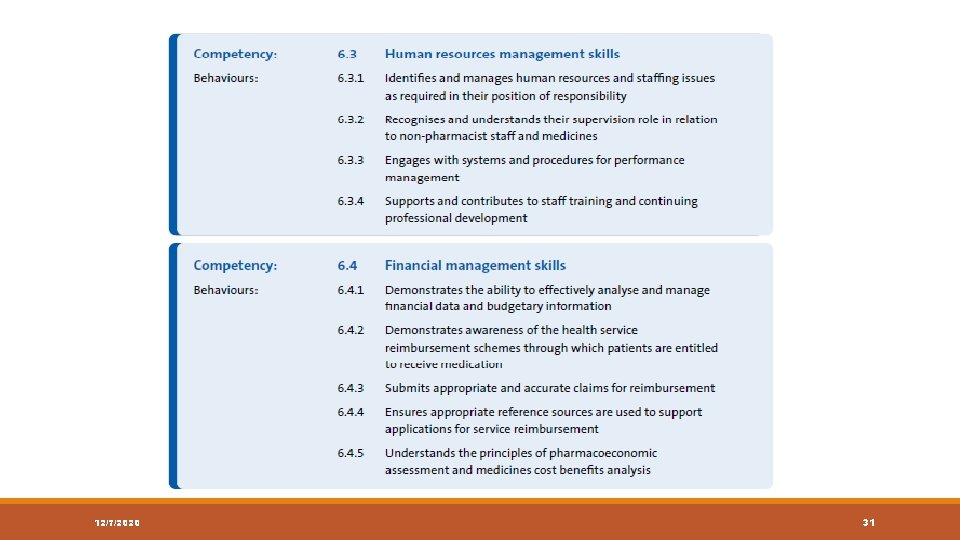
12/7/2020 29
12/7/2020 30
12/7/2020 31
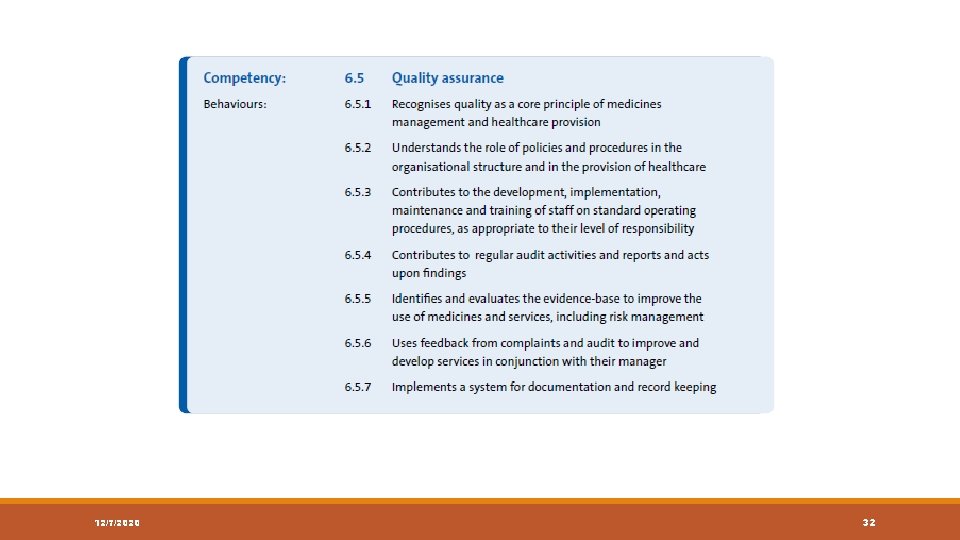
12/7/2020 32
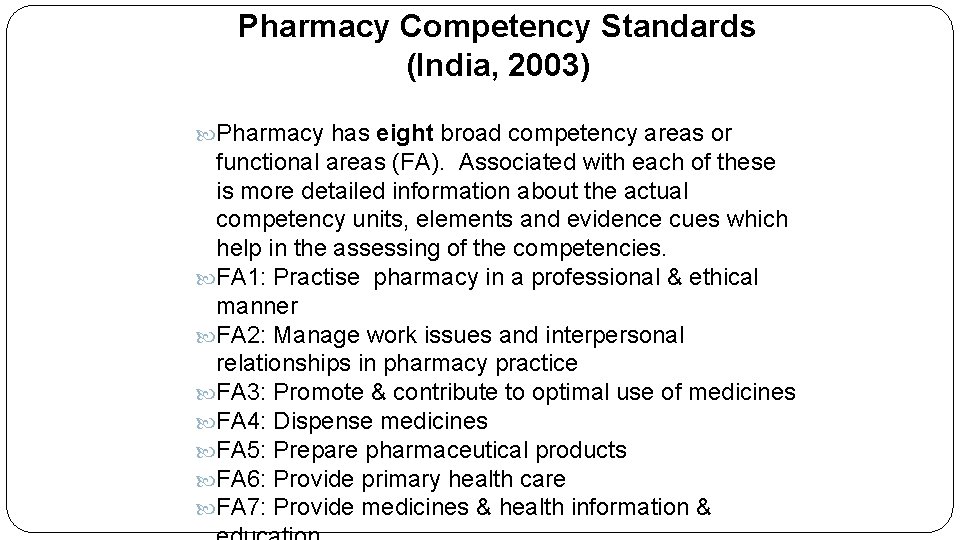
Pharmacy Competency Standards (India, 2003) Pharmacy has eight broad competency areas or functional areas (FA). Associated with each of these is more detailed information about the actual competency units, elements and evidence cues which help in the assessing of the competencies. FA 1: Practise pharmacy in a professional & ethical manner FA 2: Manage work issues and interpersonal relationships in pharmacy practice FA 3: Promote & contribute to optimal use of medicines FA 4: Dispense medicines FA 5: Prepare pharmaceutical products FA 6: Provide primary health care FA 7: Provide medicines & health information &
Dispensing process and overview on a prescription
Supervision Dr Galal M. Abd. Elghany By Yasser Ibrahim 12/7/2020 35
This medicine may interfere with your work, so be careful said the Pharmacist Which work? I am unemployed for the past 3 years! https: //www. youtube. com/watch? v =SFf. Pg. COn 82 I This medicine my lower your abilities to handle machineries, like a car, … 12/7/2020 I own no machinery; the only one may be my cell phone! 36
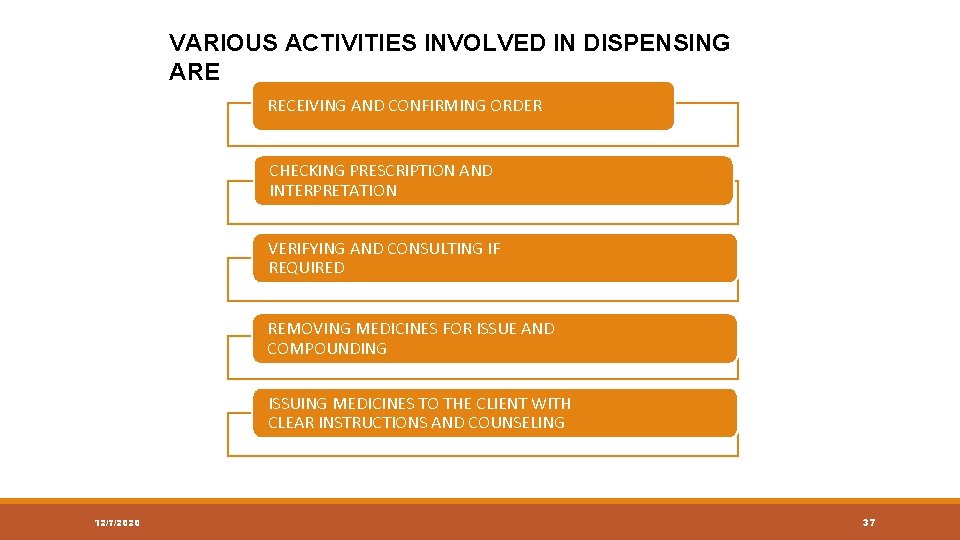
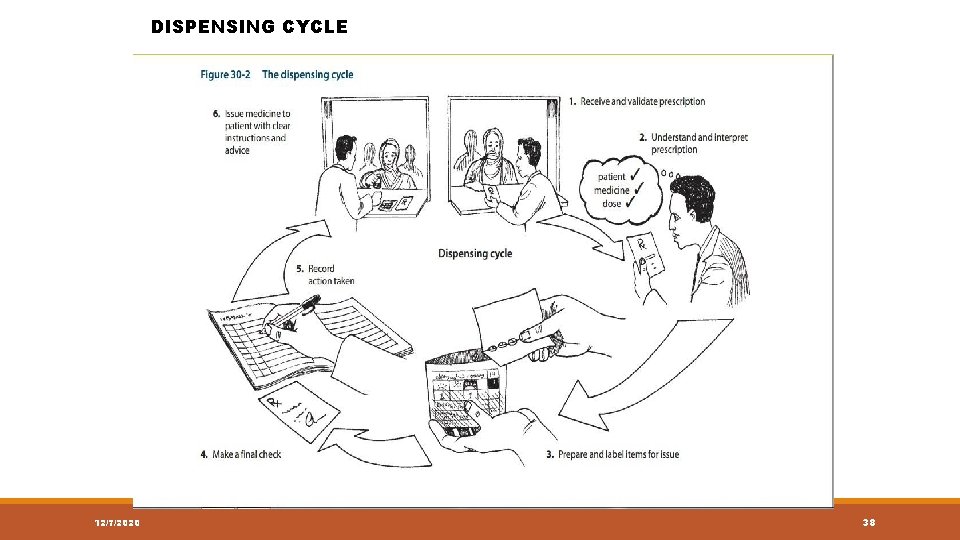
VARIOUS ACTIVITIES INVOLVED IN DISPENSING ARE RECEIVING AND CONFIRMING ORDER CHECKING PRESCRIPTION AND INTERPRETATION VERIFYING AND CONSULTING IF REQUIRED REMOVING MEDICINES FOR ISSUE AND COMPOUNDING ISSUING MEDICINES TO THE CLIENT WITH CLEAR INSTRUCTIONS AND COUNSELING 12/7/2020 37
DISPENSING CYCLE 12/7/2020 38
What is a prescription A written order by the doctor to a pharmacist specifying the medications to be dispensed to a specific patient and usually accompanied by directions for use and administration. "pre" - before "script" - written
New definition It is a request from…. . to a pharmacist to dispense if appropriate the medicines ordered for the named patient It is a request, it can be refused as opposed to an order If appropriate, because the pharmacist cannot dispense if it is not! Prescribers may be medical doctors, veterinarians, EMS personnel, optometrists, …. , even pharmacists depending on the context
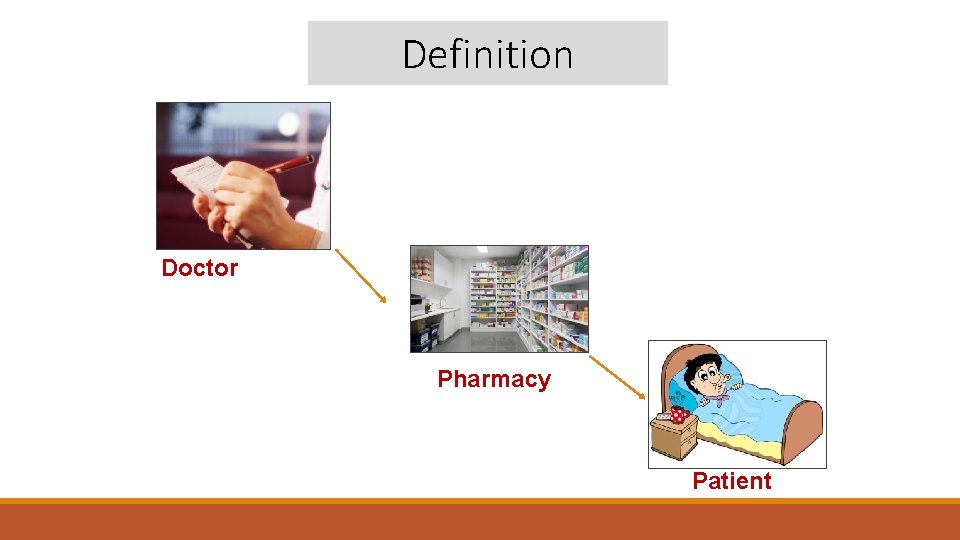
Definition Doctor Pharmacy Patient
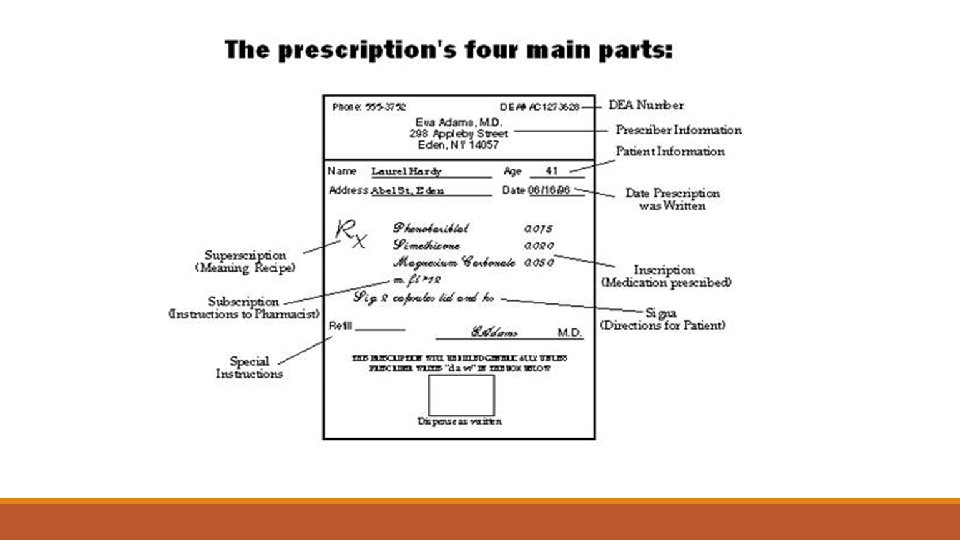
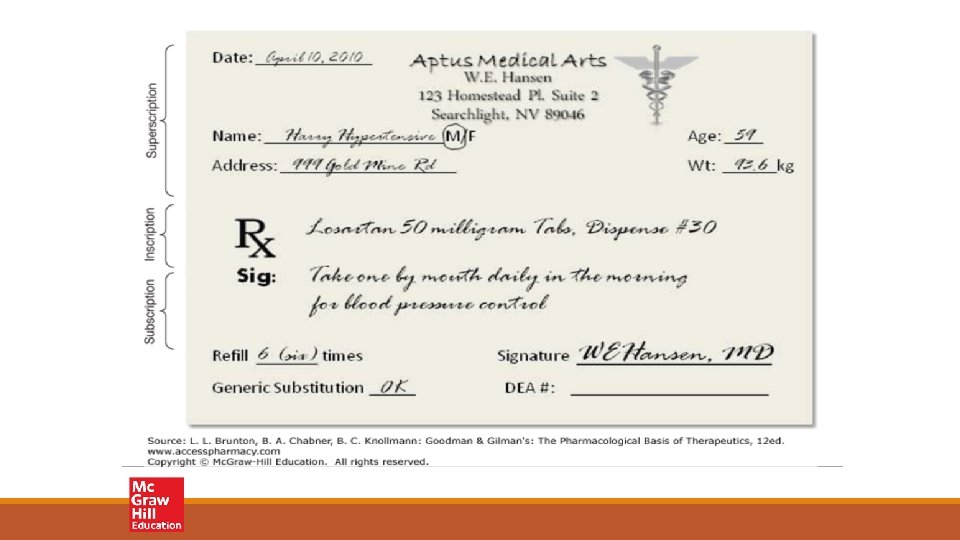
Parts of prescription 1. Date 2. Name, Age, Sex and Address of the patient. 3. Superscription (Rx) 4. Inscription 5. Subscription 6. Signature 7. Renewal Instructions 8. Name, Signature & Registration no. of registered physician
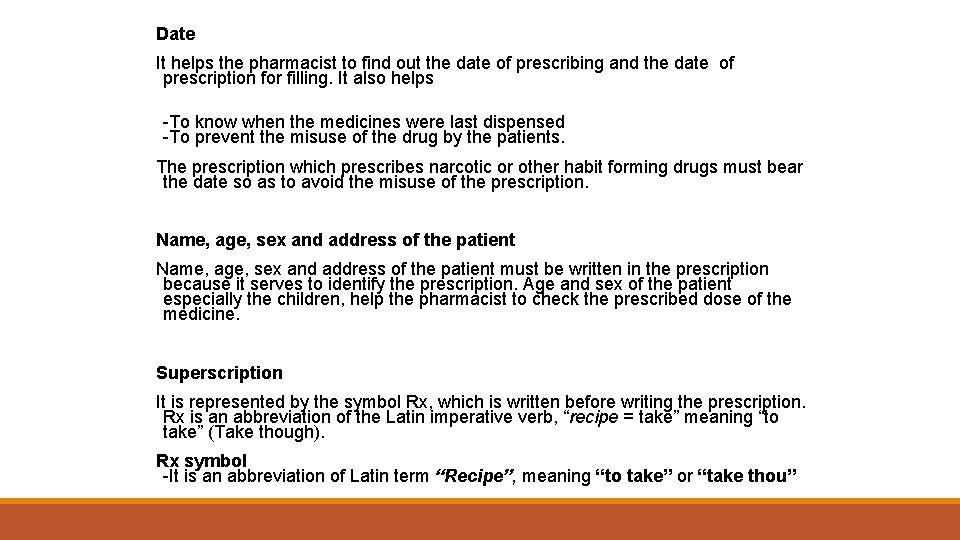
Date It helps the pharmacist to find out the date of prescribing and the date of prescription for filling. It also helps -To know when the medicines were last dispensed -To prevent the misuse of the drug by the patients. The prescription which prescribes narcotic or other habit forming drugs must bear the date so as to avoid the misuse of the prescription. Name, age, sex and address of the patient must be written in the prescription because it serves to identify the prescription. Age and sex of the patient especially the children, help the pharmacist to check the prescribed dose of the medicine. Superscription It is represented by the symbol Rx, which is written before writing the prescription. Rx is an abbreviation of the Latin imperative verb, “recipe = take” meaning “to take” (Take though). Rx symbol -It is an abbreviation of Latin term “Recipe”, meaning “to take” or “take thou”
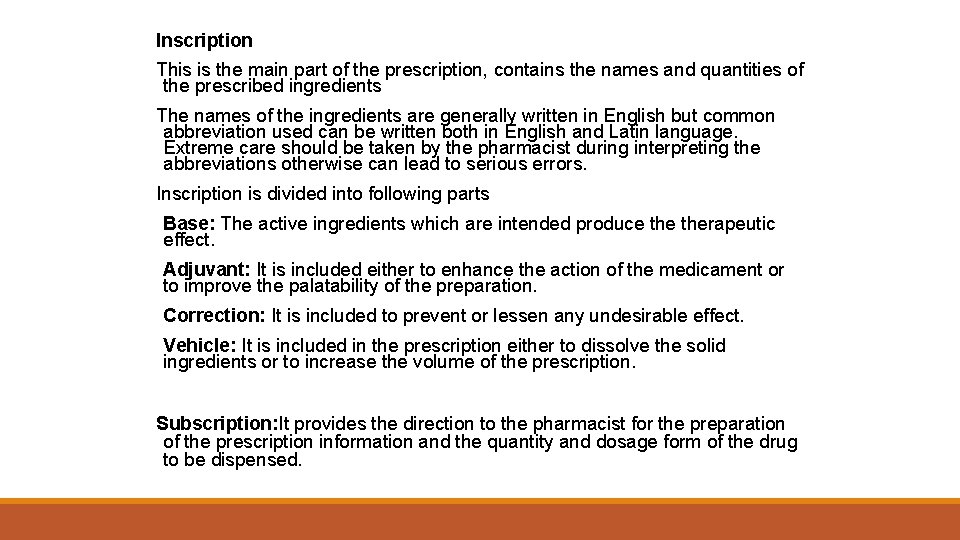
Inscription This is the main part of the prescription, contains the names and quantities of the prescribed ingredients The names of the ingredients are generally written in English but common abbreviation used can be written both in English and Latin language. Extreme care should be taken by the pharmacist during interpreting the abbreviations otherwise can lead to serious errors. Inscription is divided into following parts Base: The active ingredients which are intended produce therapeutic effect. Adjuvant: It is included either to enhance the action of the medicament or to improve the palatability of the preparation. Correction: It is included to prevent or lessen any undesirable effect. Vehicle: It is included in the prescription either to dissolve the solid ingredients or to increase the volume of the prescription. Subscription: It provides the direction to the pharmacist for the preparation of the prescription information and the quantity and dosage form of the drug to be dispensed.
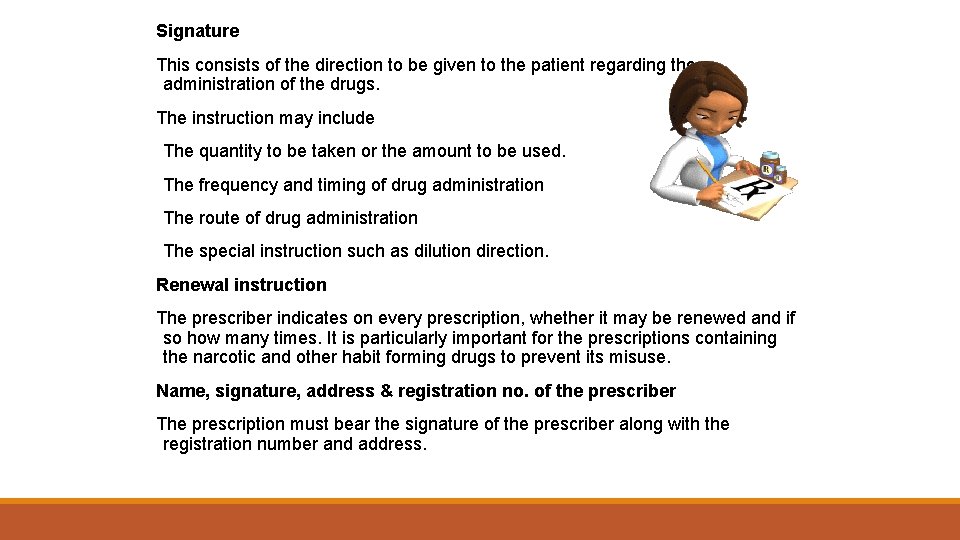
Signature This consists of the direction to be given to the patient regarding the administration of the drugs. The instruction may include The quantity to be taken or the amount to be used. The frequency and timing of drug administration The route of drug administration The special instruction such as dilution direction. Renewal instruction The prescriber indicates on every prescription, whether it may be renewed and if so how many times. It is particularly important for the prescriptions containing the narcotic and other habit forming drugs to prevent its misuse. Name, signature, address & registration no. of the prescriber The prescription must bear the signature of the prescriber along with the registration number and address.
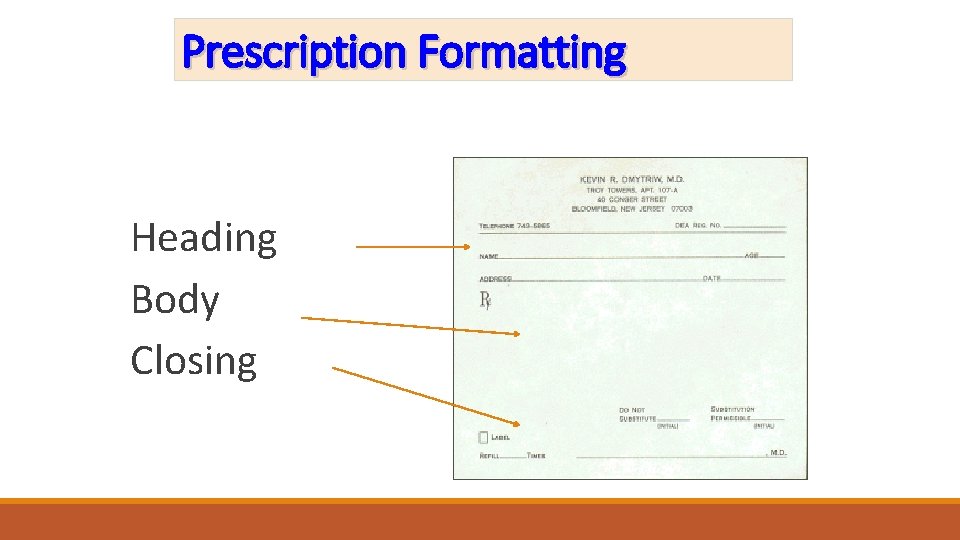
Prescription Formatting Heading Body Closing
Current Prescription Formatting Heading ◦ Name, address, and telephone number of the prescriber ◦ Name, sex and age of the patient ◦ Date of the prescription 3
Current Prescription Formatting Body ◦ ◦ ◦ The Rx symbol Name dose size or concentration (liquids) of the drug Amount to be dispensed Directions to the patient 4
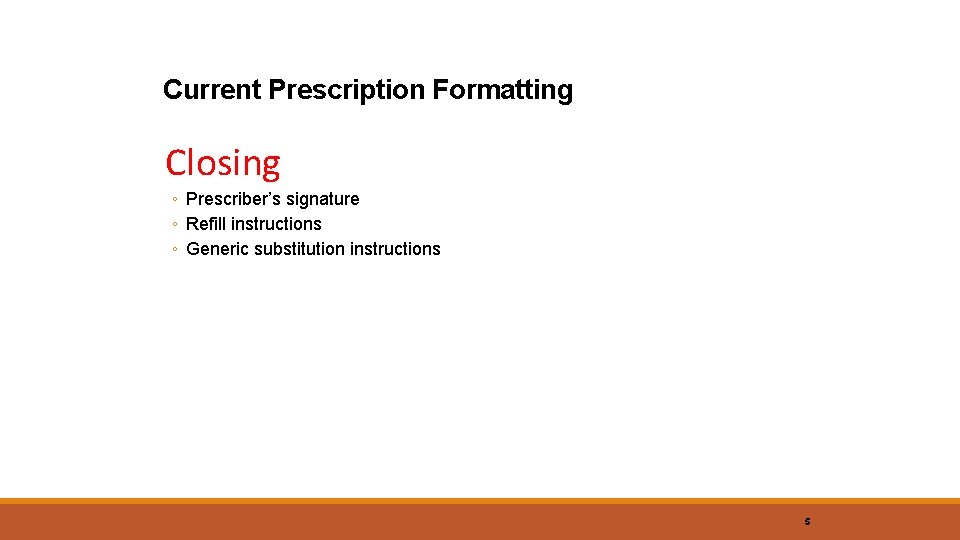
Current Prescription Formatting Closing ◦ Prescriber’s signature ◦ Refill instructions ◦ Generic substitution instructions 5
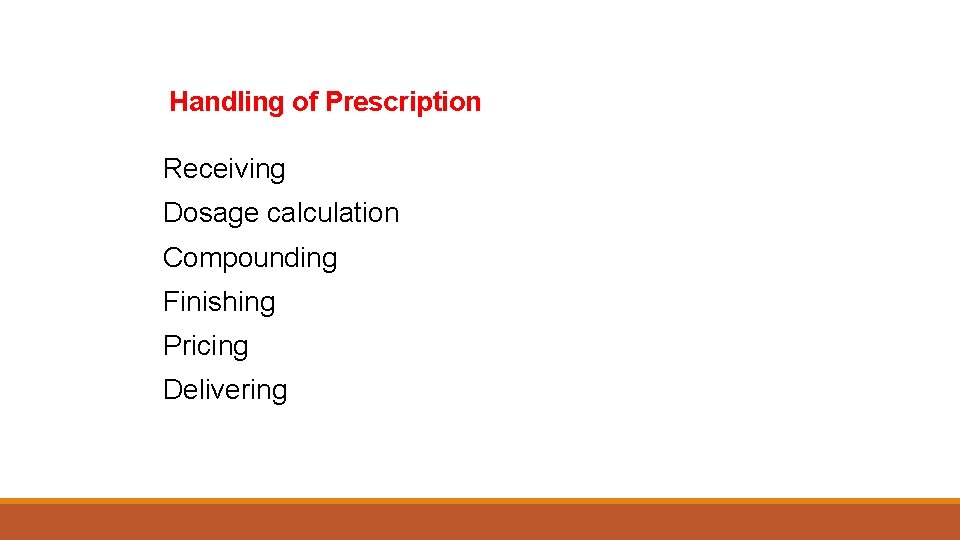
Handling of Prescription Receiving Dosage calculation Compounding Finishing Pricing Delivering
Receiving the Prescription: Pharmacist should himself receive the Prescription. It includes ØReading the prescription ØChecking the prescription
Reading the prescription: Prescription should be completely and carefully read from top to bottom. Checking of prescription: Prescription should be checked for any appropriateness with regard to several aspects
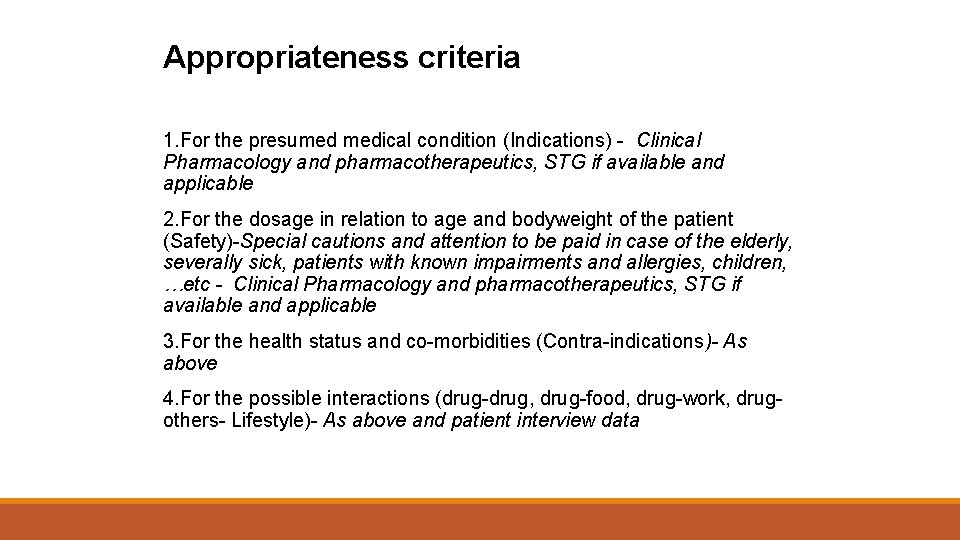
Appropriateness criteria 1. For the presumed medical condition (Indications) - Clinical Pharmacology and pharmacotherapeutics, STG if available and applicable 2. For the dosage in relation to age and bodyweight of the patient (Safety)-Special cautions and attention to be paid in case of the elderly, severally sick, patients with known impairments and allergies, children, …etc - Clinical Pharmacology and pharmacotherapeutics, STG if available and applicable 3. For the health status and co-morbidities (Contra-indications)- As above 4. For the possible interactions (drug-drug, drug-food, drug-work, drugothers- Lifestyle)- As above and patient interview data
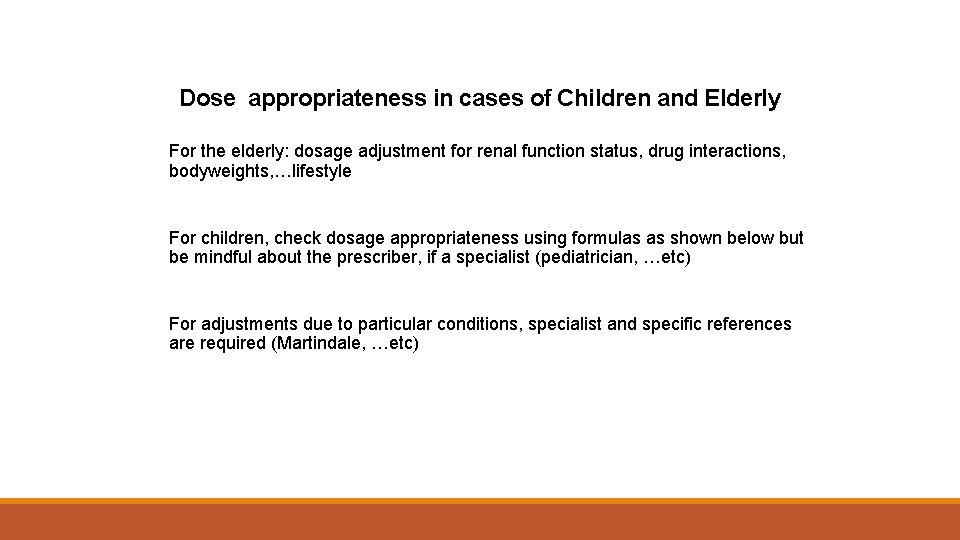
Dose appropriateness in cases of Children and Elderly For the elderly: dosage adjustment for renal function status, drug interactions, bodyweights, …lifestyle For children, check dosage appropriateness using formulas as shown below but be mindful about the prescriber, if a specialist (pediatrician, …etc) For adjustments due to particular conditions, specialist and specific references are required (Martindale, …etc)
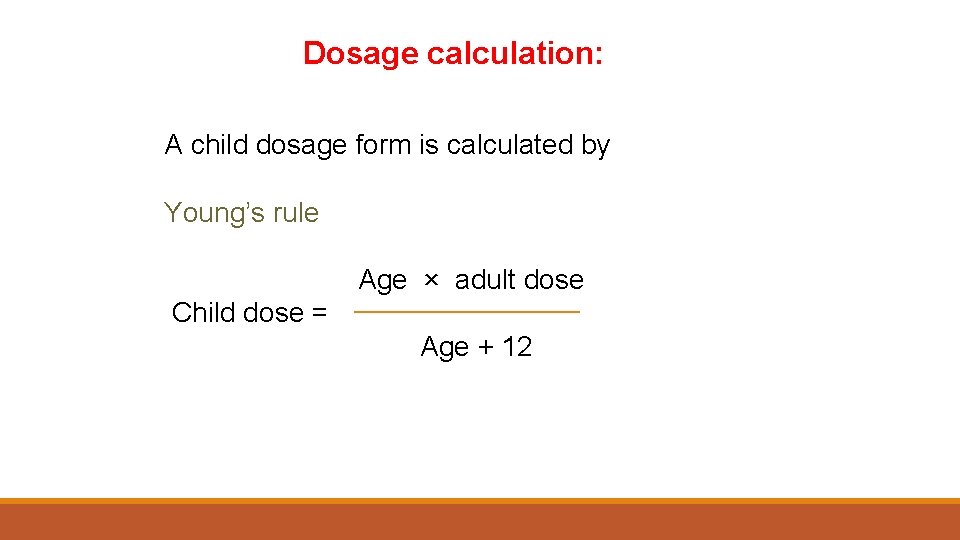
Dosage calculation: A child dosage form is calculated by Young’s rule Age × adult dose Child dose = Age + 12
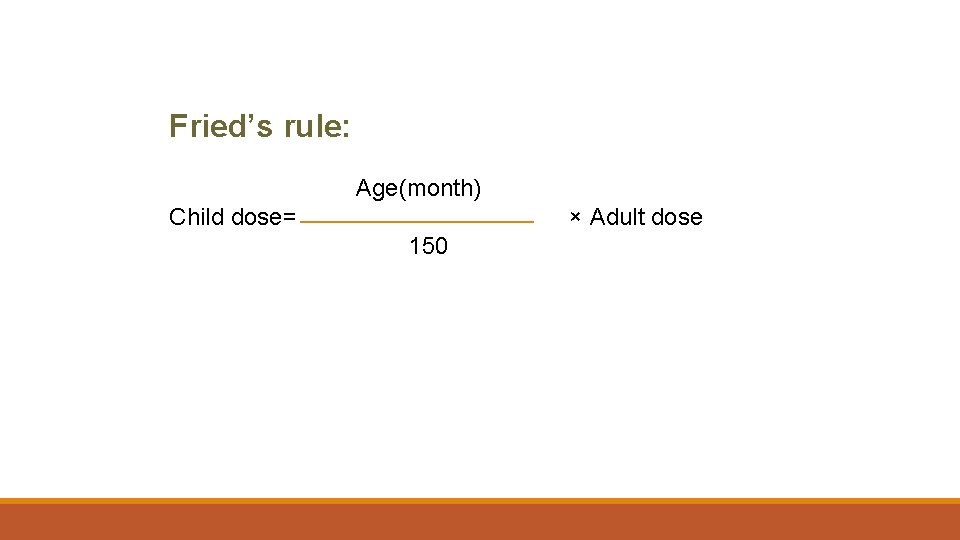
Fried’s rule: Age(month) Child dose= × Adult dose 150
Finishing the prescription: It includes v. Packaging v. Labeling v. Rechecking v. Filling