
GOOD AND BEST PRACTISES ON EMERGENCY SHELTER SOLUTION

GOOD AND BEST PRACTISES ON EMERGENCY SHELTER SOLUTION NE NIGERIA
COMMUNITY INVOLVEMENT/PARTICIPATION The affected community should be involved in the process beginning from the assessment phase, design phase, Planning and implementation phase. Training the community on how to take ownership of their shelters through training of local carpenters on construction and maintenance techniques.
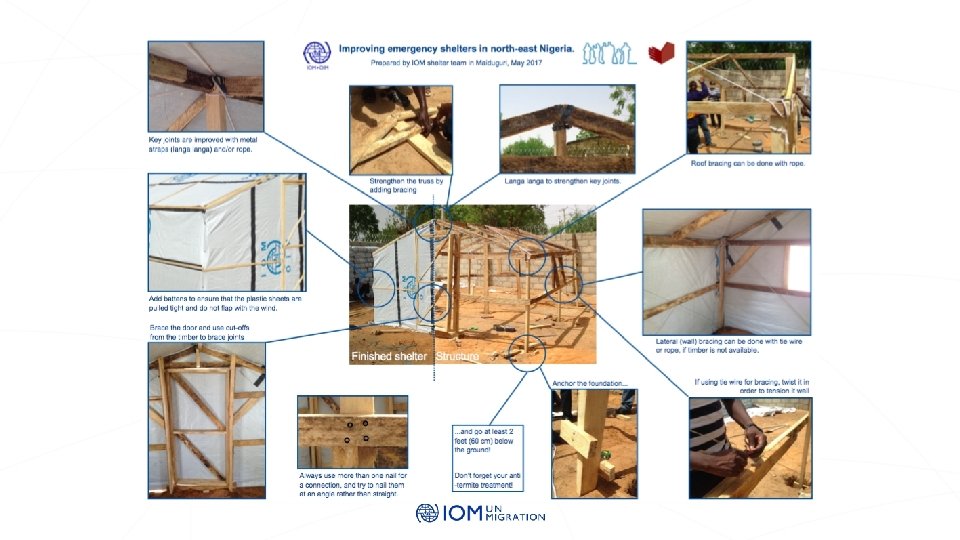
THE SHELTER SHOULD BE PROPERLY BRACED AND REINFORCED. Due to the affect of Heavy rains with strong wind, the is need for us to properly reinforced the shelters with additional timber bracing, ropes, tire wire, metal strap to be able to protect them from the wind. Also ensure the footings are up to 600 cm depth on the ground.
THE USE OF QUALITY AND STANDARD MATERIALS All materials used for construction of shelters should meet the minimum specifications on the designed. The used of substandard materials will only result in complete collapse of shelters.

CONSTANT SUPERVISION AND MONITORING During the construction phase the is always the need for constant supervision by a technical staff for proper monitoring and technical guidance.
DESIGN SHOULD MEET MINIMUM SPHERE STANDARD The emergency shelter should be designed to meet minimum sphere standards. it should provide more durability and sustainability against environmental conditions (Heavy Rain with storm, high temperature, strong wind etc. ). With an area of 3. 6 m 2 per individual.
NEED FOR DOOR LATCHES AND LOCKS They should be provisions of door latches and locks to carter for protection concerns.

THANK YOU!
- Slides: 9