
Gonorrhea and Chlamydia David H Martin MD LSU









- Slides: 59
Gonorrhea and Chlamydia David H. Martin, MD LSU Health Sciences Center Section of Infectious Diseases
Disclosure • I have no financial interests or other relationship with manufacturers of commercial products, suppliers of commercial services, or commercial supporters. My presentation will not include any discussion of the unlabeled use of a product or a product under investigational use.
An STD About to Happen!
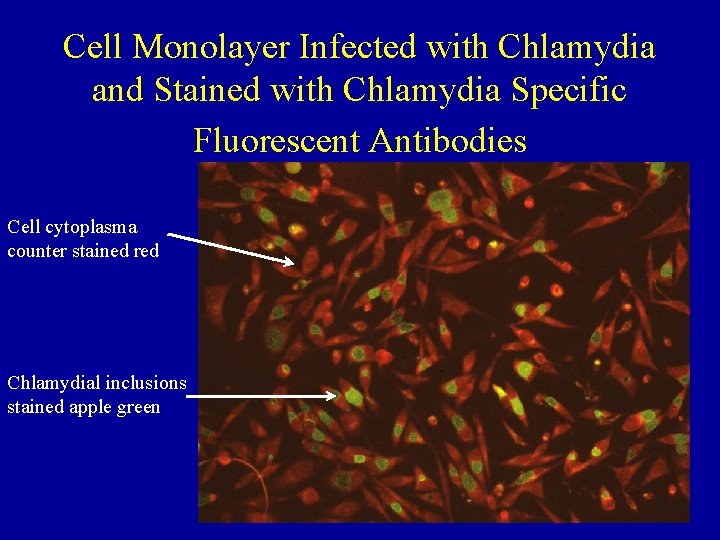
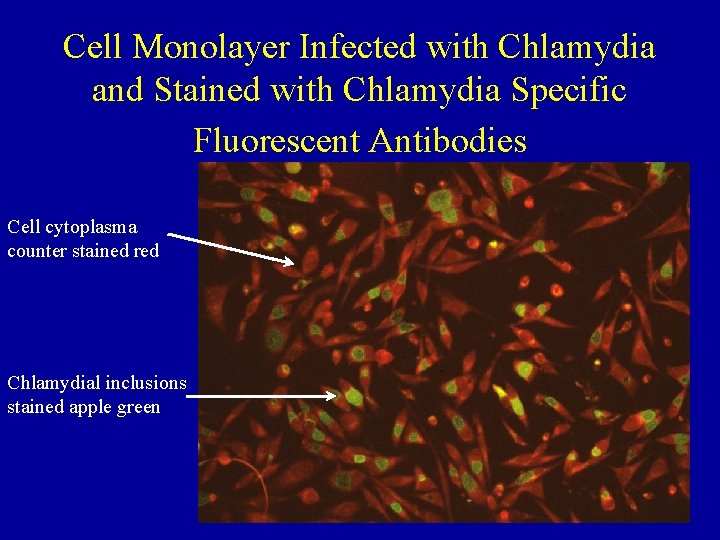
Cell Monolayer Infected with Chlamydia and Stained with Chlamydia Specific Fluorescent Antibodies Cell cytoplasma counter stained red Chlamydial inclusions stained apple green
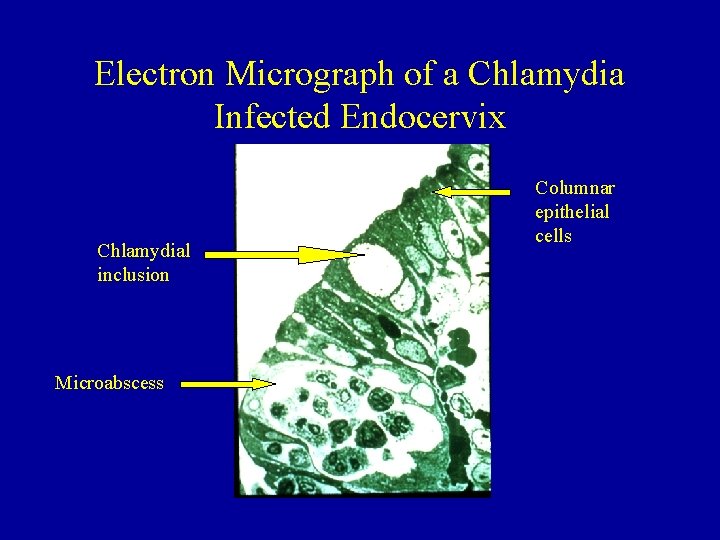
Electron Micrograph of a Chlamydia Infected Endocervix Chlamydial inclusion Microabscess Columnar epithelial cells
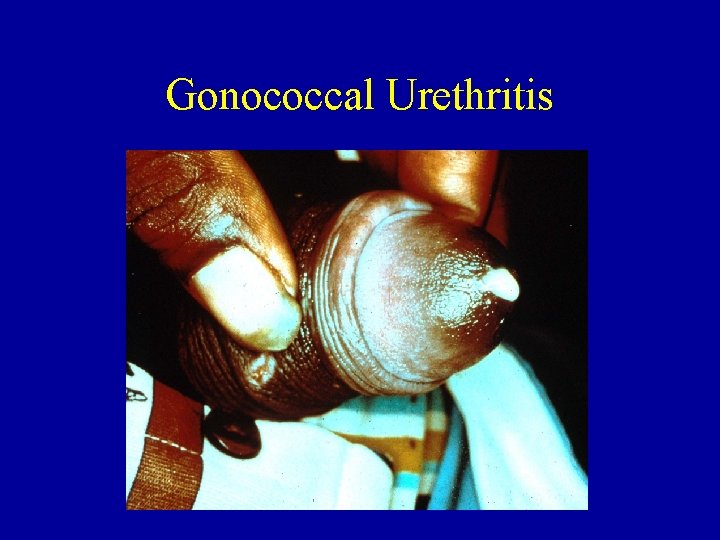
Gonococcal Urethritis
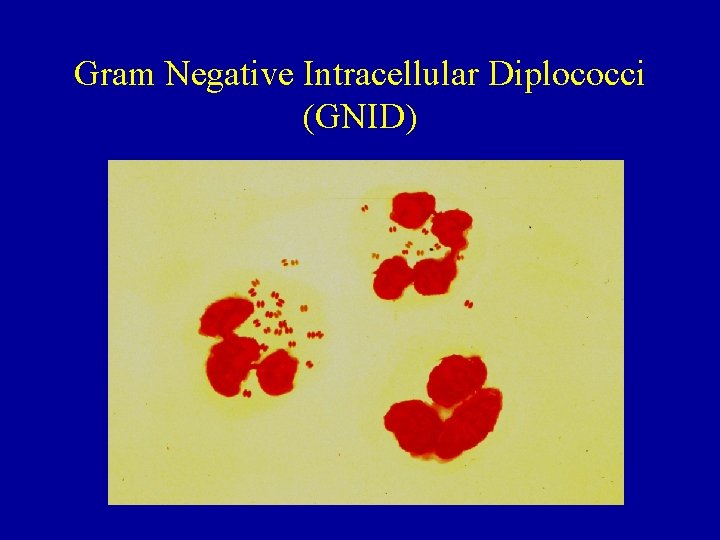
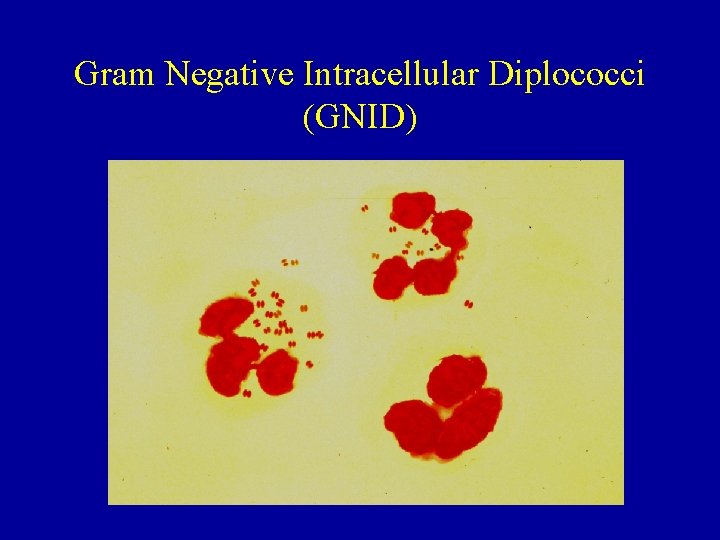
Gram Negative Intracellular Diplococci (GNID)
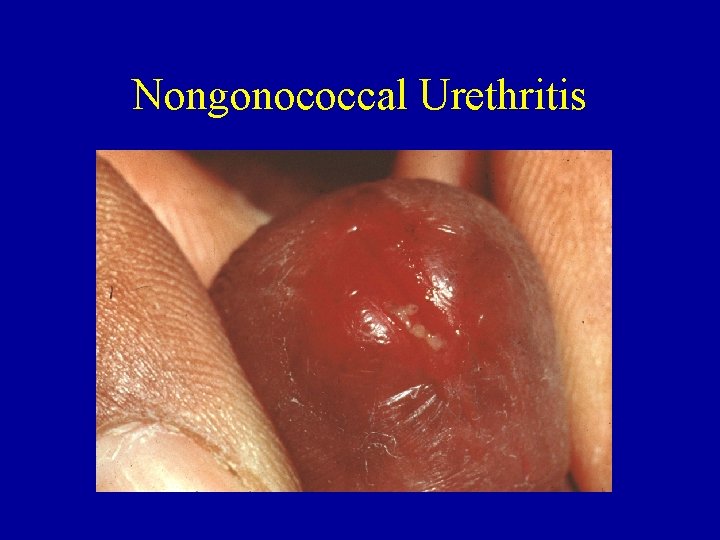
Nongonococcal Urethritis
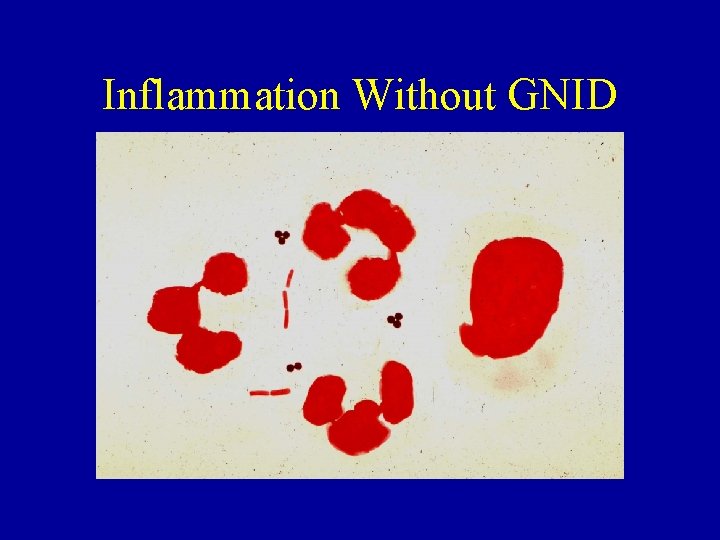
Inflammation Without GNID
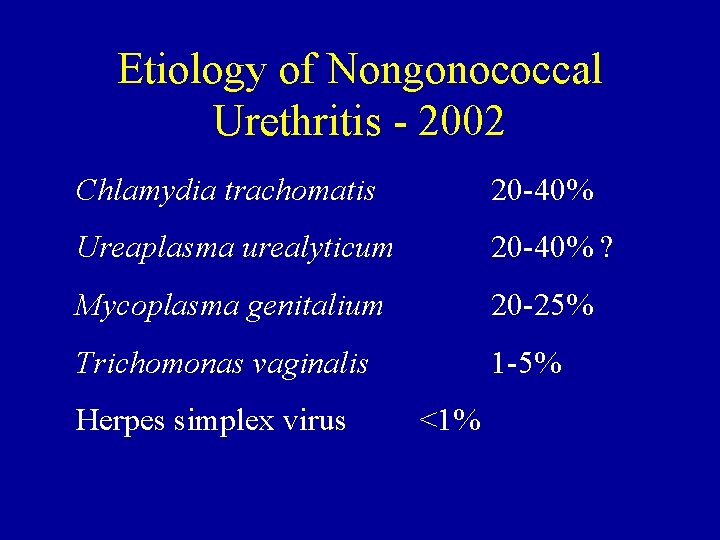
Etiology of Nongonococcal Urethritis - 2002 Chlamydia trachomatis 20 -40% Ureaplasma urealyticum 20 -40% ? Mycoplasma genitalium 20 -25% Trichomonas vaginalis 1 -5% Herpes simplex virus <1%
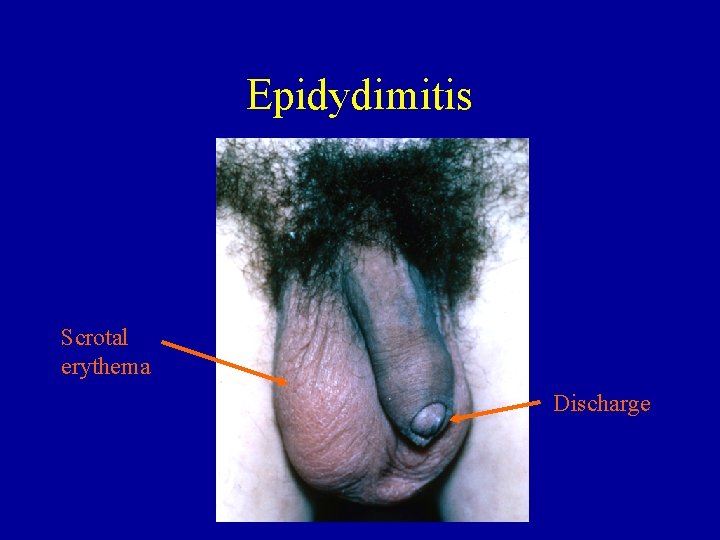
Epidydimitis Scrotal erythema Discharge
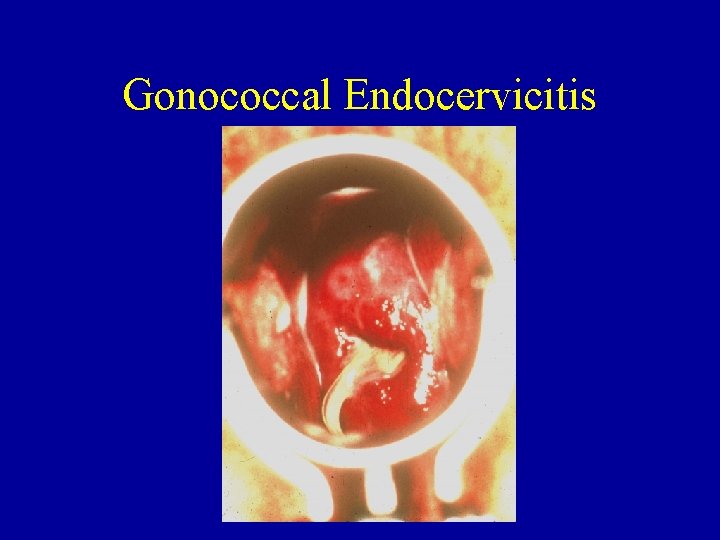
Gonococcal Endocervicitis
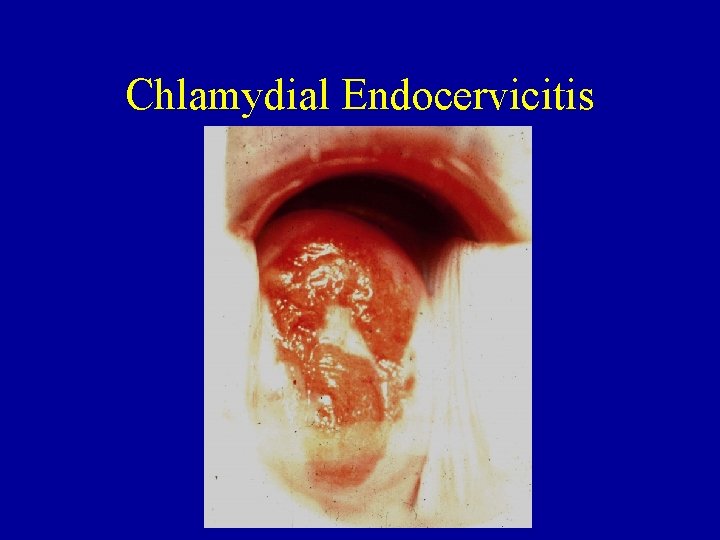
Chlamydial Endocervicitis
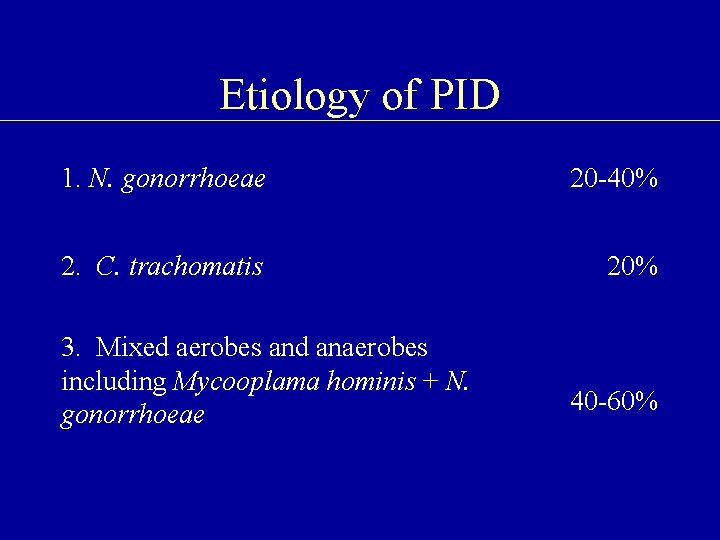
Etiology of PID 1. N. gonorrhoeae 20 -40% 2. C. trachomatis 20% 3. Mixed aerobes and anaerobes including Mycooplama hominis + N. gonorrhoeae 40 -60%
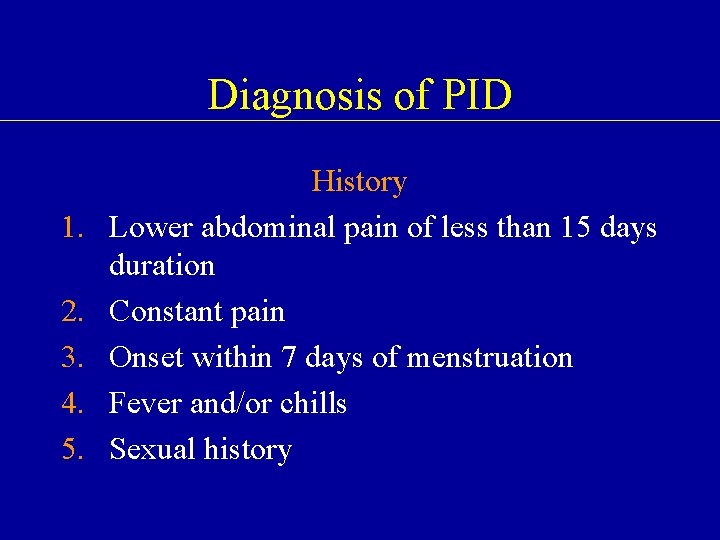
Diagnosis of PID 1. 2. 3. 4. 5. History Lower abdominal pain of less than 15 days duration Constant pain Onset within 7 days of menstruation Fever and/or chills Sexual history
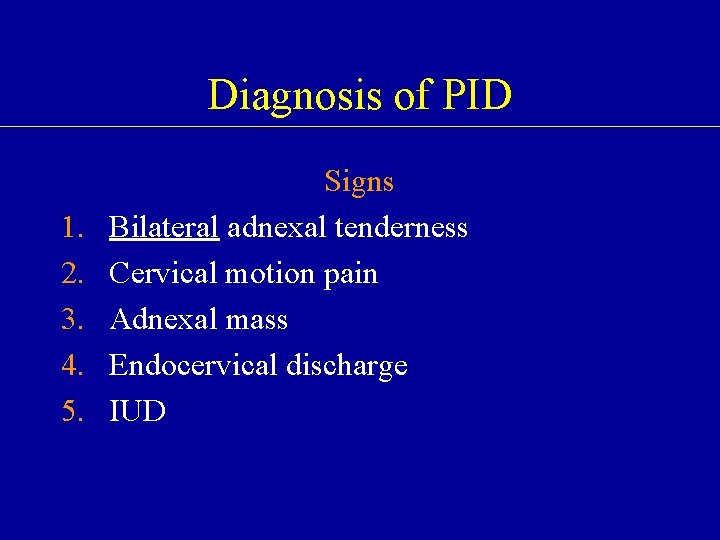
Diagnosis of PID 1. 2. 3. 4. 5. Signs Bilateral adnexal tenderness Cervical motion pain Adnexal mass Endocervical discharge IUD
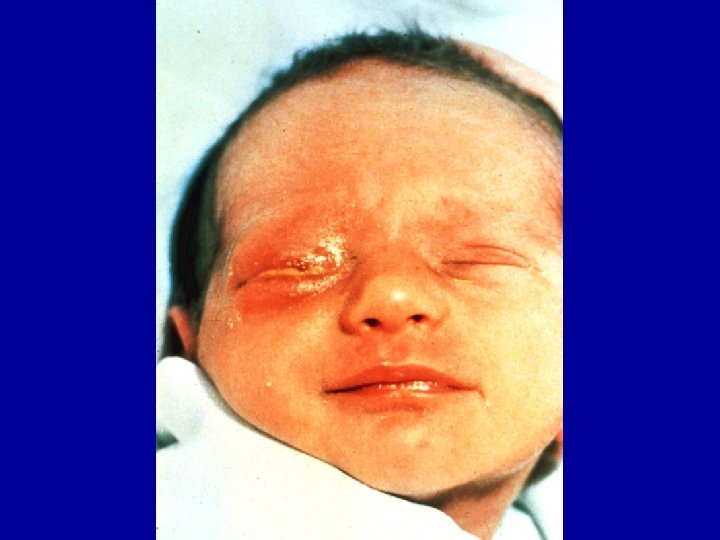
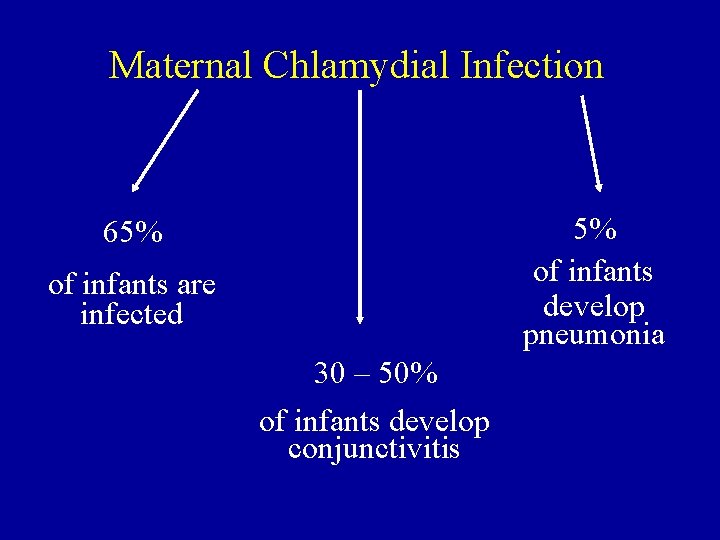
Maternal Chlamydial Infection 5% of infants develop pneumonia 65% of infants are infected 30 – 50% of infants develop conjunctivitis
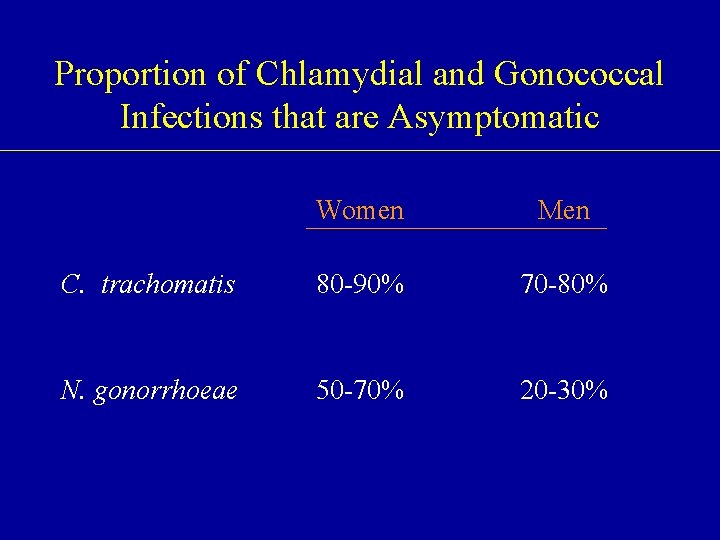
Proportion of Chlamydial and Gonococcal Infections that are Asymptomatic Women Men C. trachomatis 80 -90% 70 -80% N. gonorrhoeae 50 -70% 20 -30%
Epidemiology
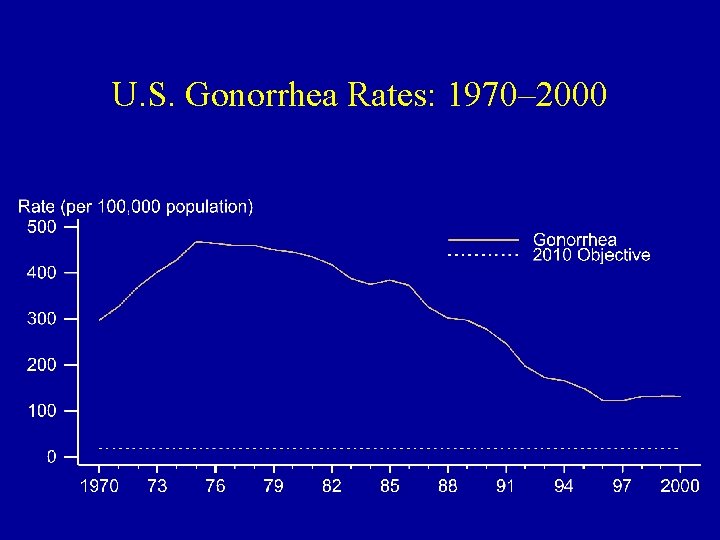
U. S. Gonorrhea Rates: 1970– 2000
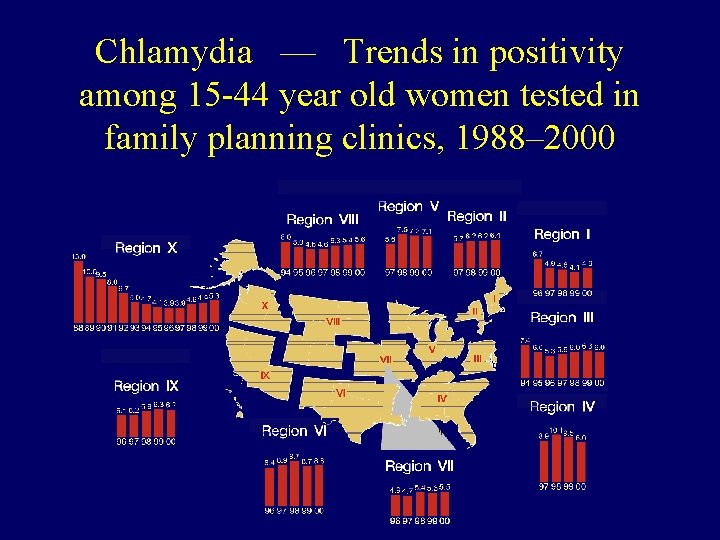
Chlamydia — Trends in positivity among 15 -44 year old women tested in family planning clinics, 1988– 2000
Diagnosis
Gram Negative Intracellular Diplococci (GNID)
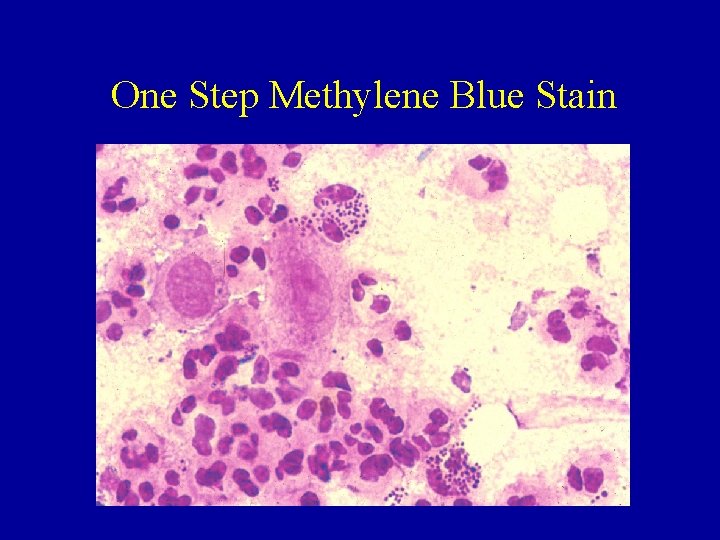
One Step Methylene Blue Stain
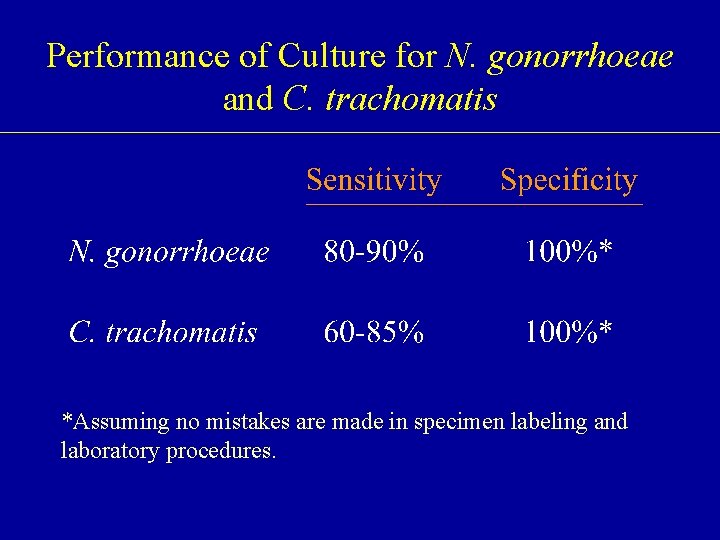
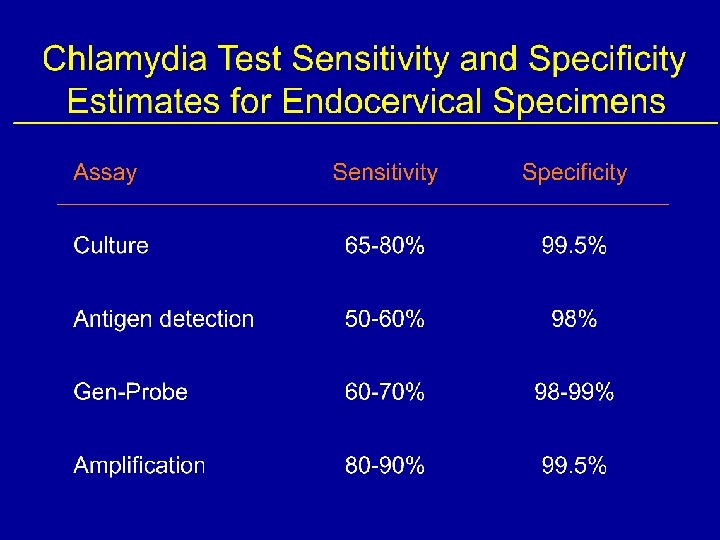
Performance of Culture for N. gonorrhoeae and C. trachomatis *Assuming no mistakes are made in specimen labeling and laboratory procedures.
Cell Monolayer Infected with Chlamydia and Stained with Chlamydia Specific Fluorescent Antibodies Cell cytoplasma counter stained red Chlamydial inclusions stained apple green
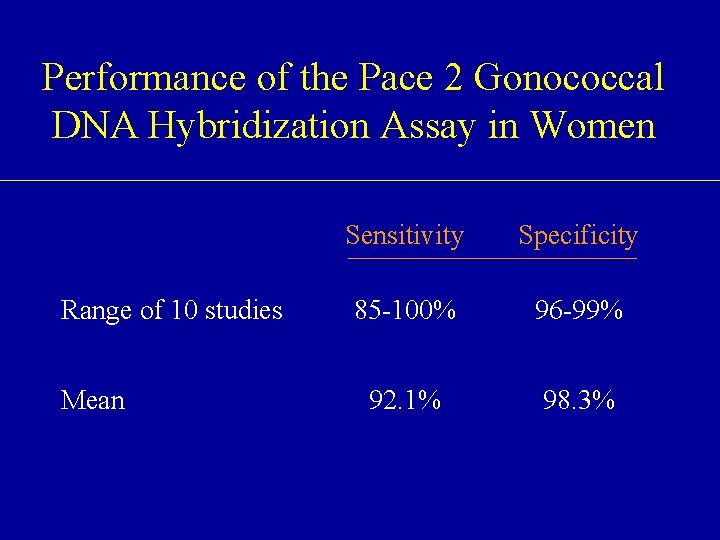
Performance of the Pace 2 Gonococcal DNA Hybridization Assay in Women Range of 10 studies Mean Sensitivity Specificity 85 -100% 96 -99% 92. 1% 98. 3%
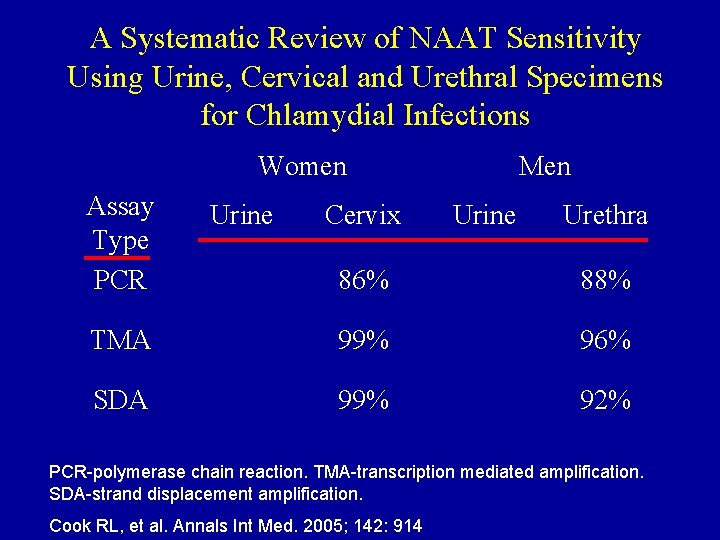
A Systematic Review of NAAT Sensitivity Using Urine, Cervical and Urethral Specimens for Chlamydial Infections Women Men Assay Type PCR Urine Cervix Urine Urethra 83% 86% 84% 88% TMA 92% 99% 88% 96% SDA 80% 99% 93% 92% PCR-polymerase chain reaction. TMA-transcription mediated amplification. SDA-strand displacement amplification. Cook RL, et al. Annals Int Med. 2005; 142: 914
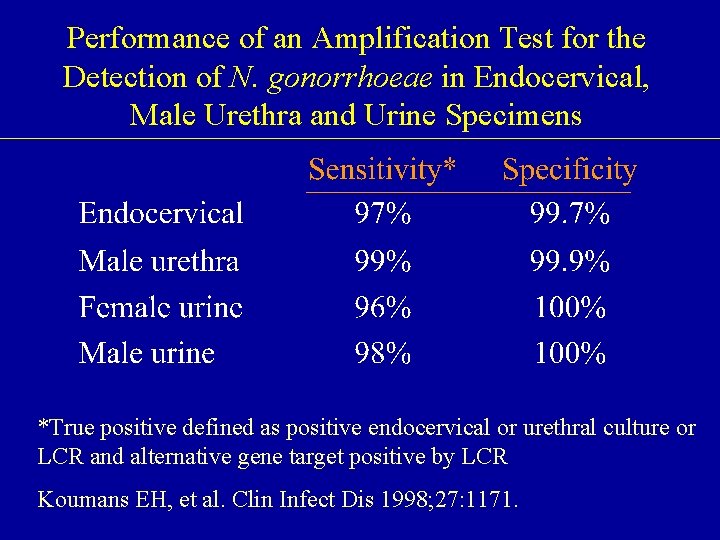
Performance of an Amplification Test for the Detection of N. gonorrhoeae in Endocervical, Male Urethra and Urine Specimens *True positive defined as positive endocervical or urethral culture or LCR and alternative gene target positive by LCR Koumans EH, et al. Clin Infect Dis 1998; 27: 1171.
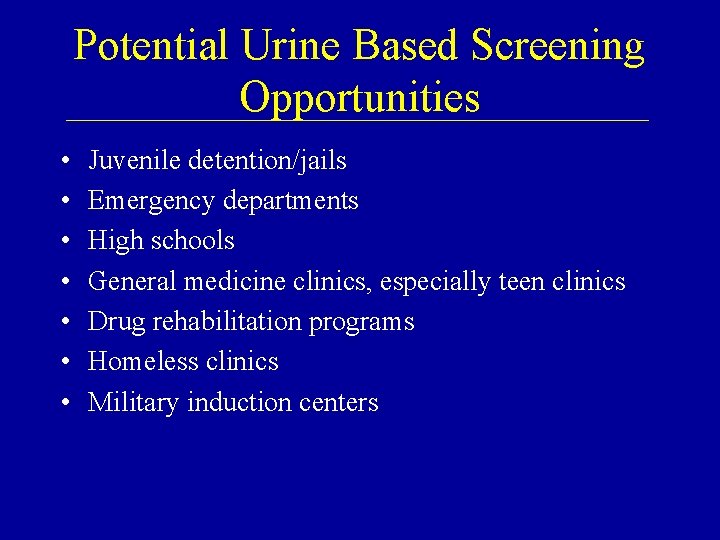
Potential Urine Based Screening Opportunities • • Juvenile detention/jails Emergency departments High schools General medicine clinics, especially teen clinics Drug rehabilitation programs Homeless clinics Military induction centers
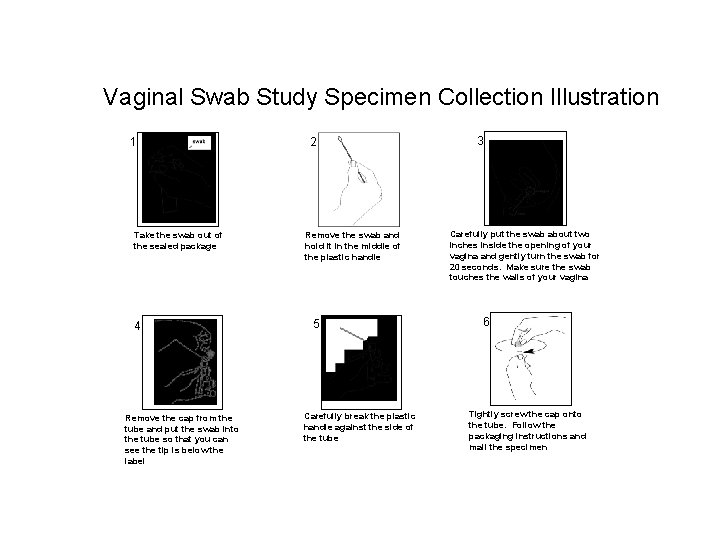
Vaginal Swab Study Specimen Collection Illustration 1 Take the swab out of the sealed package 4 Remove the cap from the tube and put the swab into the tube so that you can see the tip is below the label 2 Remove the swab and hold it in the middle of the plastic handle 5 Carefully break the plastic handle against the side of the tube 3 Carefully put the swab about two inches inside the opening of your vagina and gently turn the swab for 20 seconds. Make sure the swab touches the walls of your vagina 6 Tightly screw the cap onto the tube. Follow the packaging instructions and mail the specimen
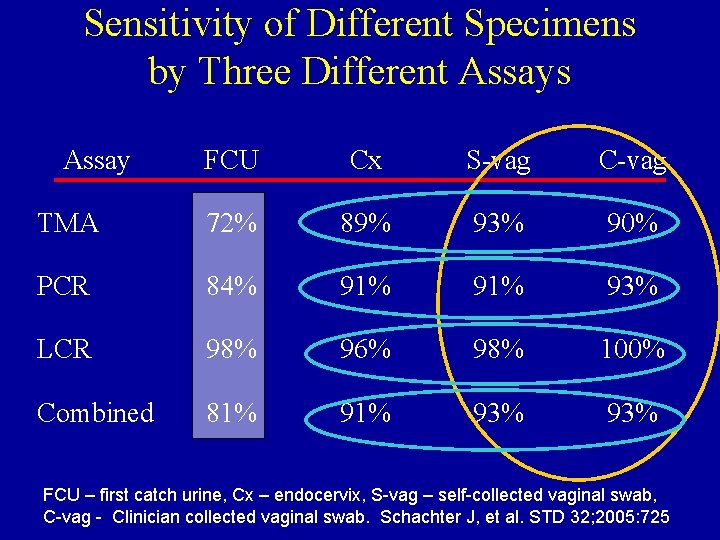
Sensitivity of Different Specimens by Three Different Assays Assay FCU Cx S-vag C-vag TMA 72% 89% 93% 90% PCR 84% 91% 93% LCR 98% 96% 98% 100% Combined 81% 93% 93% FCU – first catch urine, Cx – endocervix, S-vag – self-collected vaginal swab, C-vag - Clinician collected vaginal swab. Schachter J, et al. STD 32; 2005: 725
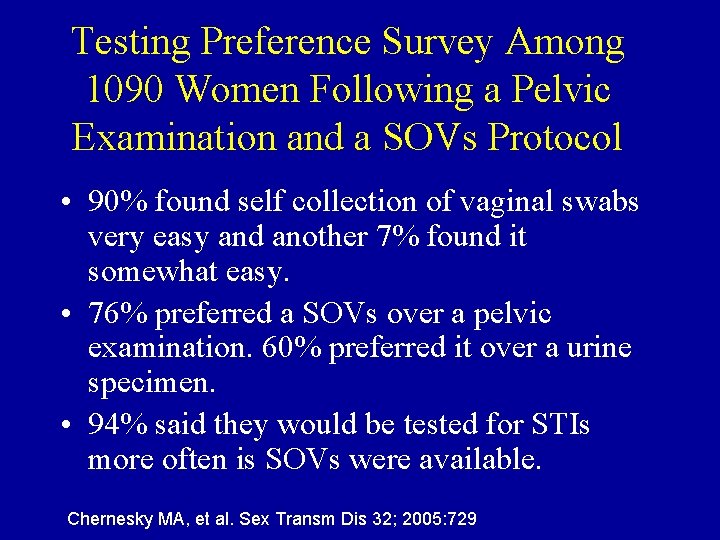
Testing Preference Survey Among 1090 Women Following a Pelvic Examination and a SOVs Protocol • 90% found self collection of vaginal swabs very easy and another 7% found it somewhat easy. • 76% preferred a SOVs over a pelvic examination. 60% preferred it over a urine specimen. • 94% said they would be tested for STIs more often is SOVs were available. Chernesky MA, et al. Sex Transm Dis 32; 2005: 729
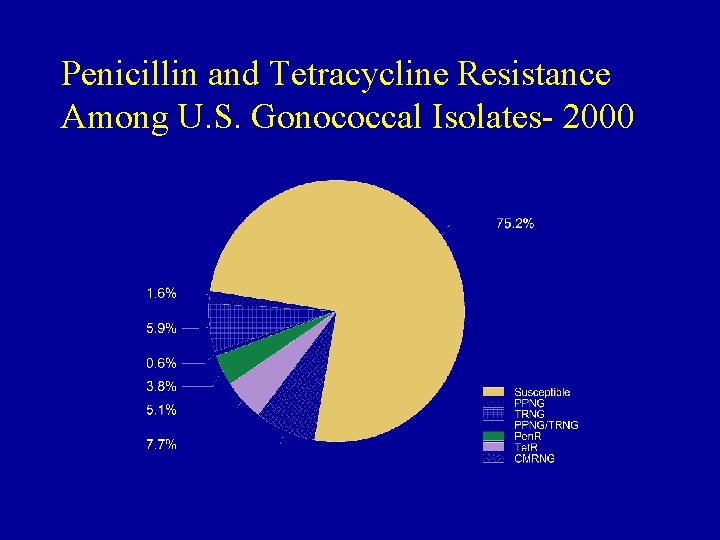
Penicillin and Tetracycline Resistance Among U. S. Gonococcal Isolates- 2000
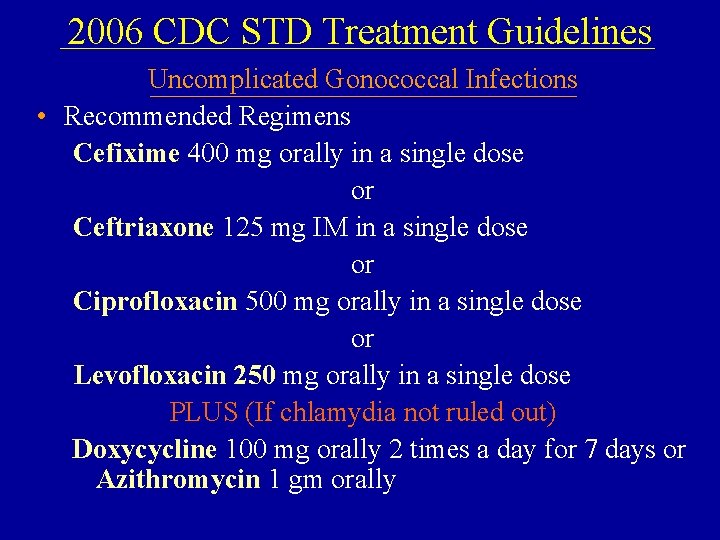
2006 CDC STD Treatment Guidelines Uncomplicated Gonococcal Infections • Recommended Regimens Cefixime 400 mg orally in a single dose or Ceftriaxone 125 mg IM in a single dose or Ciprofloxacin 500 mg orally in a single dose or Levofloxacin 250 mg orally in a single dose PLUS (If chlamydia not ruled out) Doxycycline 100 mg orally 2 times a day for 7 days or Azithromycin 1 gm orally
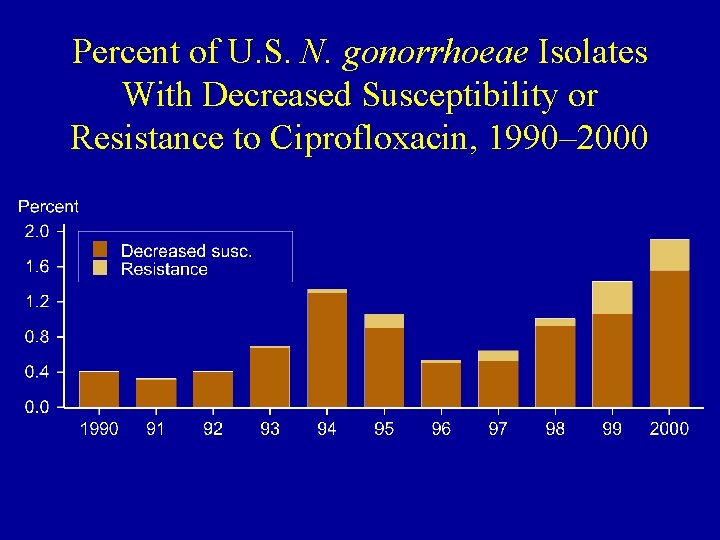
Percent of U. S. N. gonorrhoeae Isolates With Decreased Susceptibility or Resistance to Ciprofloxacin, 1990– 2000
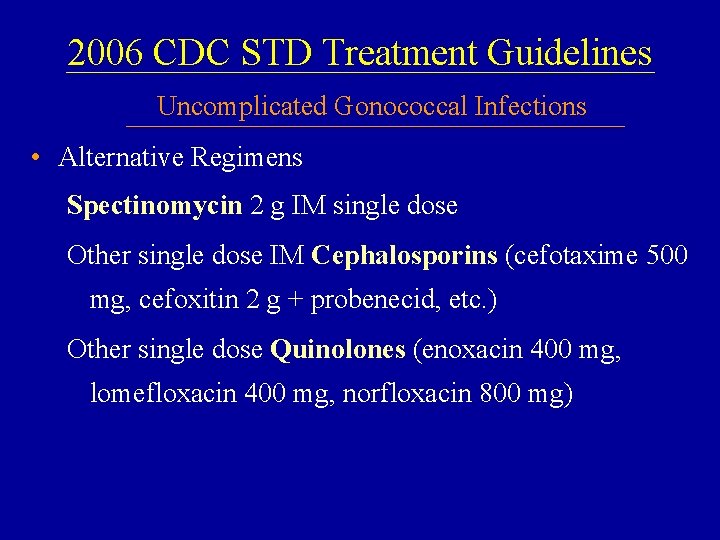
2006 CDC STD Treatment Guidelines Uncomplicated Gonococcal Infections • Alternative Regimens Spectinomycin 2 g IM single dose Other single dose IM Cephalosporins (cefotaxime 500 mg, cefoxitin 2 g + probenecid, etc. ) Other single dose Quinolones (enoxacin 400 mg, lomefloxacin 400 mg, norfloxacin 800 mg)
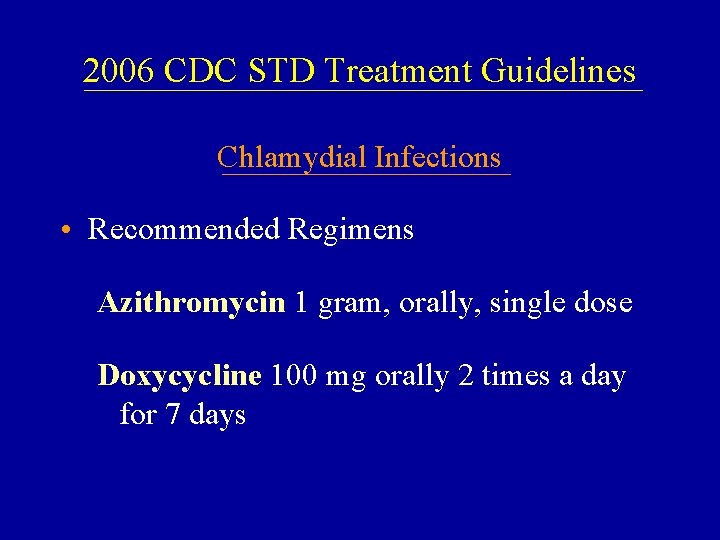
2006 CDC STD Treatment Guidelines Chlamydial Infections • Recommended Regimens Azithromycin 1 gram, orally, single dose Doxycycline 100 mg orally 2 times a day for 7 days
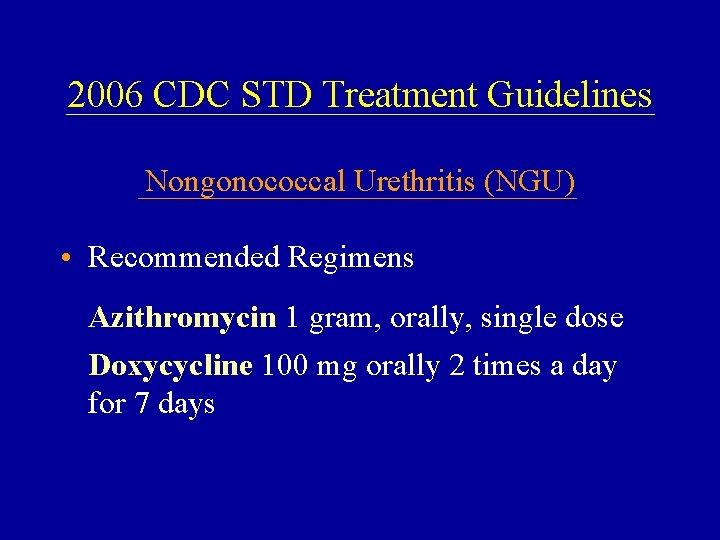
2006 CDC STD Treatment Guidelines Nongonococcal Urethritis (NGU) • Recommended Regimens Azithromycin 1 gram, orally, single dose Doxycycline 100 mg orally 2 times a day for 7 days
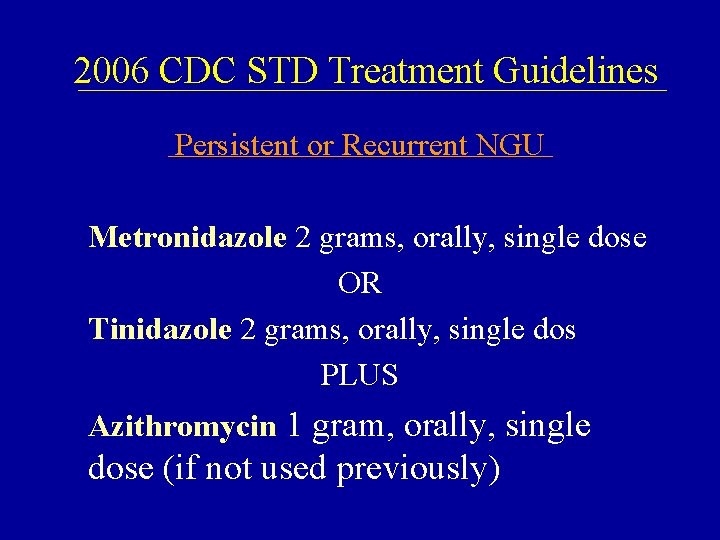
2006 CDC STD Treatment Guidelines Persistent or Recurrent NGU Metronidazole 2 grams, orally, single dose OR Tinidazole 2 grams, orally, single dos PLUS Azithromycin 1 gram, orally, single dose (if not used previously)
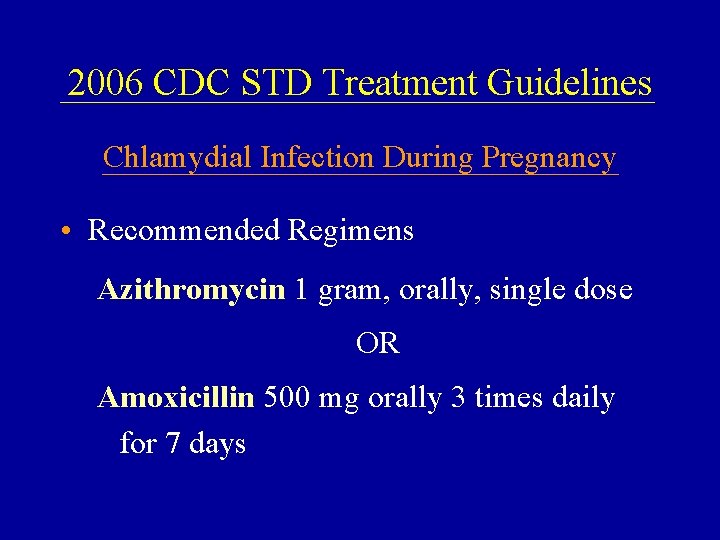
2006 CDC STD Treatment Guidelines Chlamydial Infection During Pregnancy • Recommended Regimens Azithromycin 1 gram, orally, single dose OR Amoxicillin 500 mg orally 3 times daily for 7 days
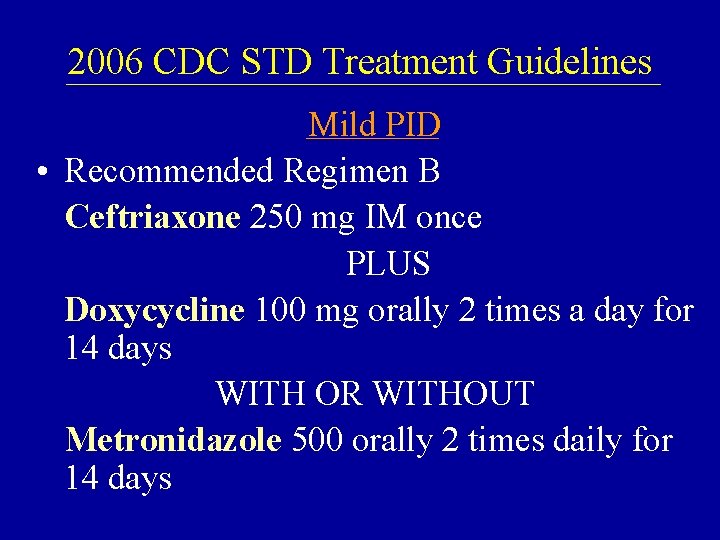
2006 CDC STD Treatment Guidelines Mild PID • Recommended Regimen B Ceftriaxone 250 mg IM once PLUS Doxycycline 100 mg orally 2 times a day for 14 days WITH OR WITHOUT Metronidazole 500 orally 2 times daily for 14 days
Just a little sunshine…
Just a little rain…
Just a little pleasure…
AND THEN….
Just a little PAIN!!