
Golgi Tendon Organ Polysynaptic Reflexes Objectives At the
Golgi Tendon Organ. & Polysynaptic Reflexes
Objectives • At the end of this lecture you must be able to describe: • Functions of Gamma Efferent System. Inverse Stretch Reflex • Types of Polysynaptic reflexes & their level of integration • Physiological Significance of these reflexes. • Differences between Muscle spindle & Golgi Tendon Organ
ll Functions a ec of gamma Efferents R • Stretch the muscle spindle for Muscle Tone. • Dynamic Efferent increase the sensitivity of muscle spindle to rate of change of stretch. • Static efferent increases the spindle sensitivity to steady maintained stretch. What Controls the Gamma Efferents ?
Control of Gamma Motor Neurons • Suprasegmental • Reticular Formation of Brain Stem: Reticulospinal Tracts – Facilitatory reticular formation (Pontine)Self Excitatory – Inhibitory (medullary) – is Driven by : 1. Cerebellum, 2. Basal Ganglia & 3. Corticospinal Tract ? DECEREBRATE RIGIDITY (spasticity)
Decerebrate Rigidity • Transection of the Brain stem at the level of Mid collicular region (Mid Brain) > > Blocks normal Inhibitory signals to the Pontine & vestibular Nuclei
Stretch reflexes 1. Passive stretch of muscle (e. g. Knee Jerk ) activates I-a afferents (Muscle spindles), which activate ά- motor neurons, causing contraction of stretched muscle: (monosynaptic stretch reflex) 2. Passive contraction of muscle (stimulation of alpha motor neurons directly) => Decreased activity of muscle spindles => Decreased activity of ά- motor neurons
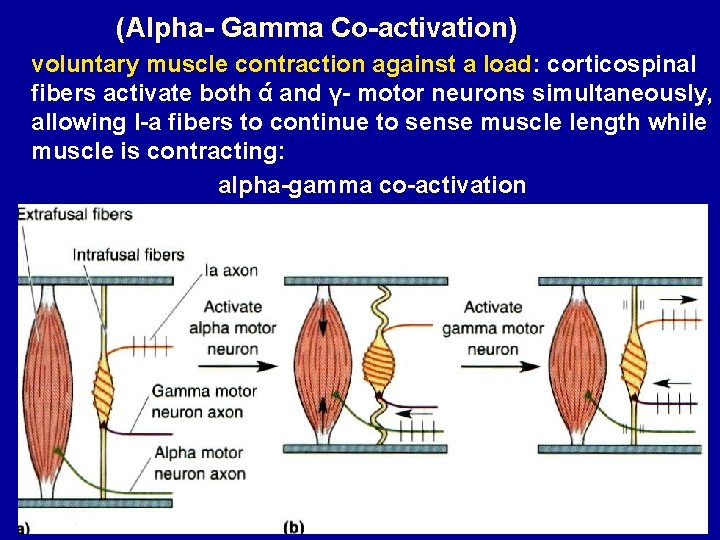
(Alpha- Gamma Co-activation) voluntary muscle contraction against a load: corticospinal fibers activate both ά and γ- motor neurons simultaneously, allowing I-a fibers to continue to sense muscle length while muscle is contracting: alpha-gamma co-activation
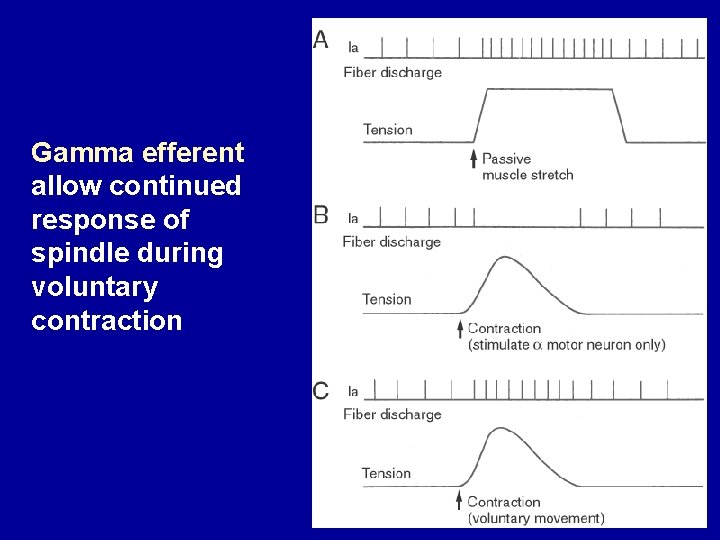
Gamma efferent allow continued response of spindle during voluntary contraction
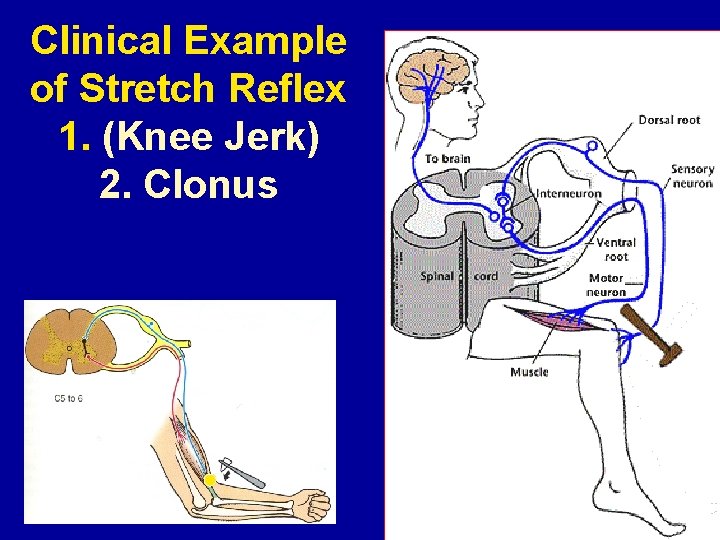
Clinical Example of Stretch Reflex 1. (Knee Jerk) 2. Clonus
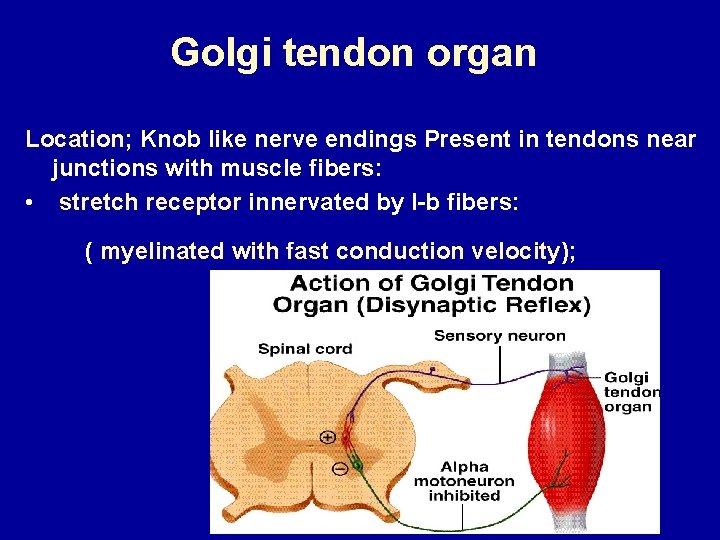
Golgi tendon organ Location; Knob like nerve endings Present in tendons near junctions with muscle fibers: • stretch receptor innervated by I-b fibers: ( myelinated with fast conduction velocity);
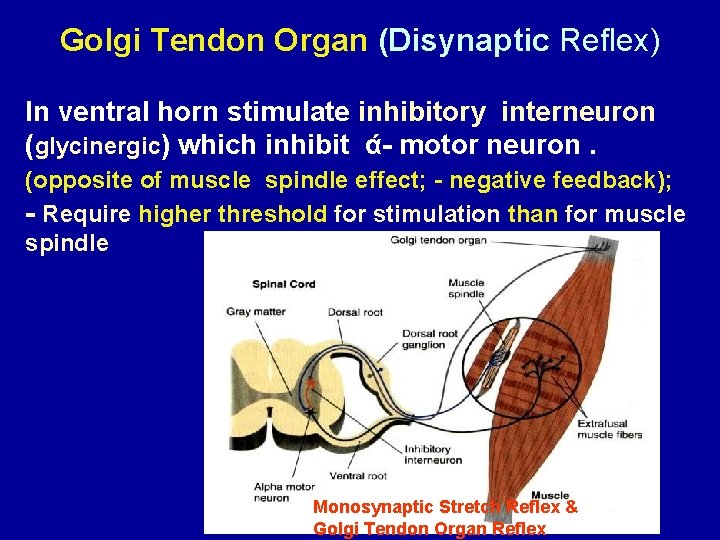
Golgi Tendon Organ (Disynaptic Reflex) In ventral horn stimulate inhibitory interneuron (glycinergic) which inhibit ά- motor neuron. (opposite of muscle spindle effect; - negative feedback); - Require higher threshold for stimulation than for muscle spindle Monosynaptic Stretch Reflex & Golgi Tendon Organ Reflex
Functions of Golgi Tendon Organ • Detects Tension & Rate of change of Tension in the Tendons • Protection from evulsions of tendons • Q. Describe Anatomical & Physiological Differences between Muscle Spindle & Golgi Tendon Organ
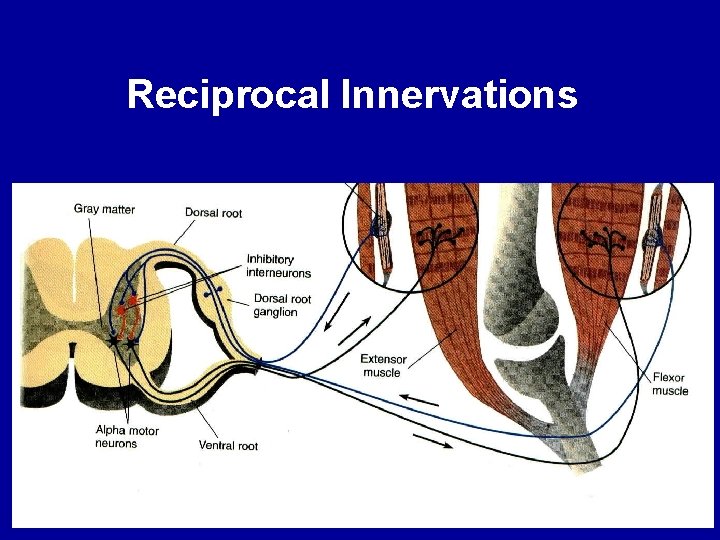
Reciprocal Innervations
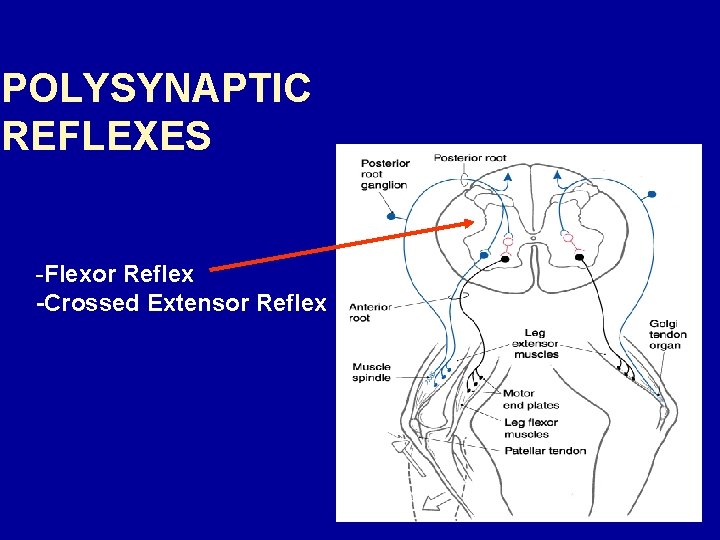
POLYSYNAPTIC REFLEXES -Flexor Reflex -Crossed Extensor Reflex
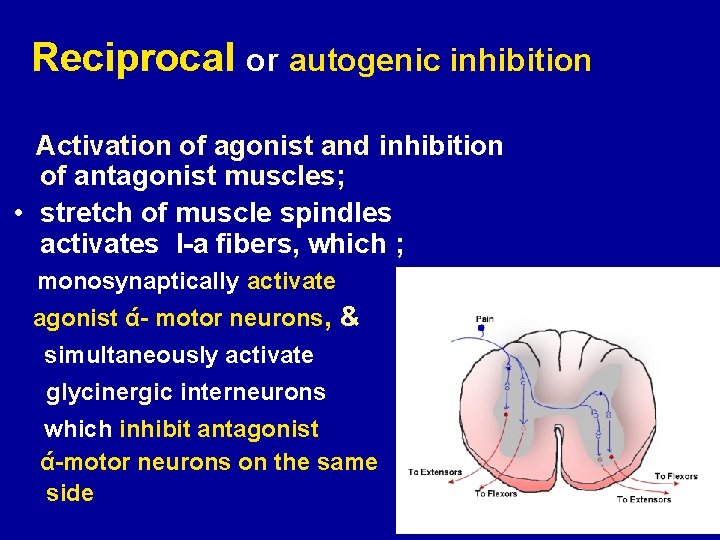
Reciprocal or autogenic inhibition Activation of agonist and inhibition of antagonist muscles; • stretch of muscle spindles activates I-a fibers, which ; monosynaptically activate agonist ά- motor neurons, & simultaneously activate glycinergic interneurons which inhibit antagonist ά-motor neurons on the same side
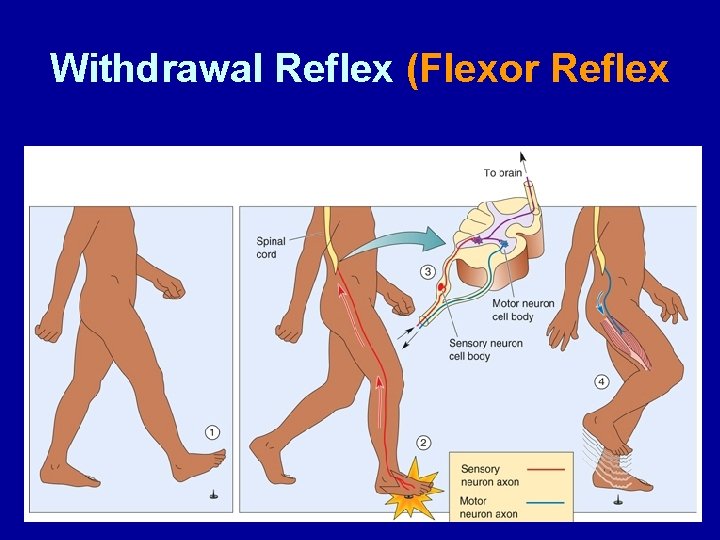
Withdrawal Reflex (Flexor Reflex
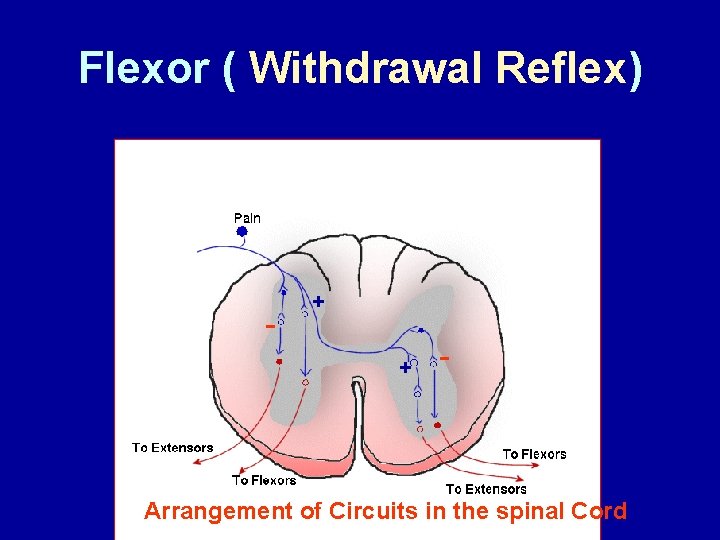
Flexor ( Withdrawal Reflex) - + + - Arrangement of Circuits in the spinal Cord
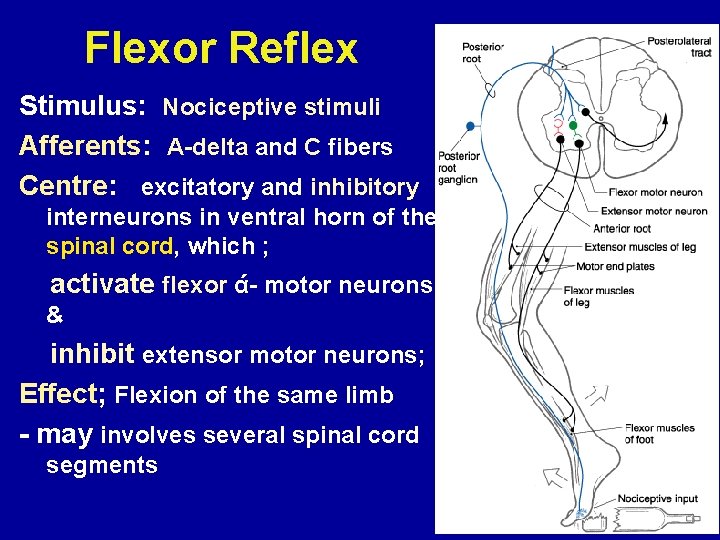
Flexor Reflex Stimulus: Nociceptive stimuli Afferents: A-delta and C fibers Centre: excitatory and inhibitory interneurons in ventral horn of the spinal cord, which ; activate flexor ά- motor neurons & inhibit extensor motor neurons; Effect; Flexion of the same limb - may involves several spinal cord segments
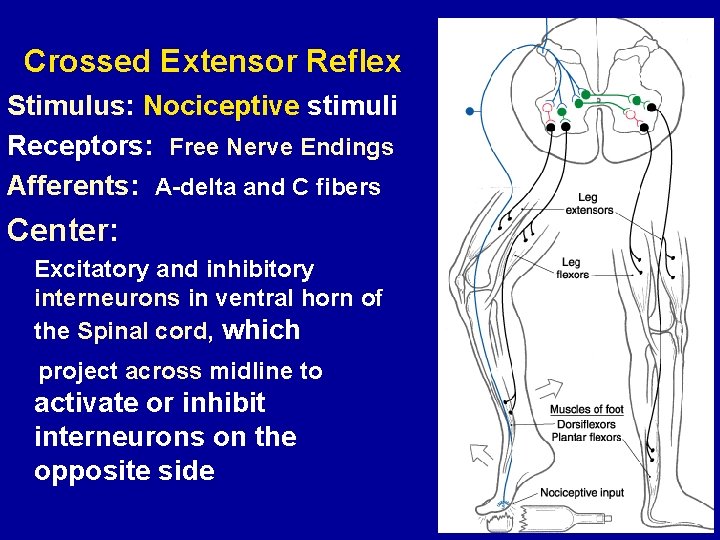
Crossed Extensor Reflex Stimulus: Nociceptive stimuli Receptors: Free Nerve Endings Afferents: A-delta and C fibers Center: Excitatory and inhibitory interneurons in ventral horn of the Spinal cord, which project across midline to activate or inhibit interneurons on the opposite side
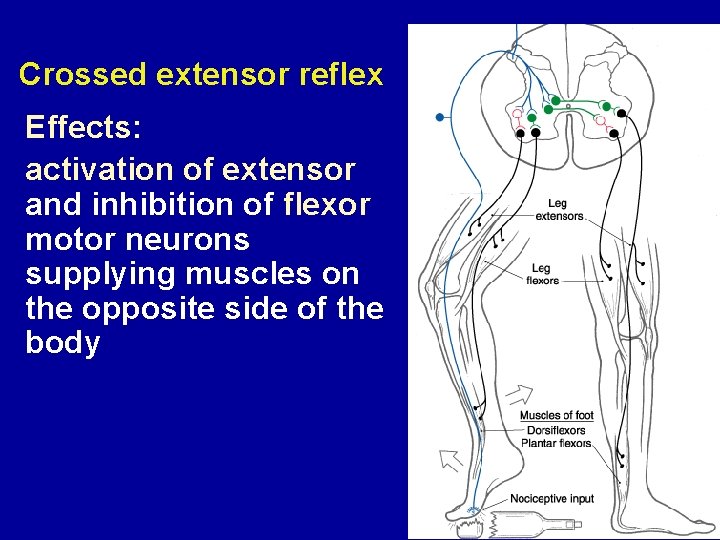
Crossed extensor reflex Effects: activation of extensor and inhibition of flexor motor neurons supplying muscles on the opposite side of the body
- Slides: 21