
Golden Rice Kameron Starr Ingo Potrykus Problem Many
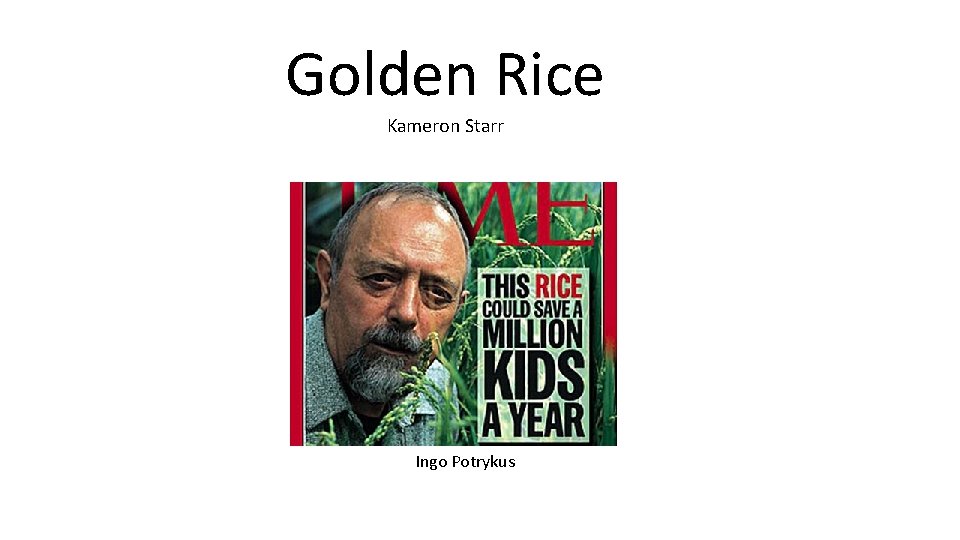
Golden Rice Kameron Starr Ingo Potrykus
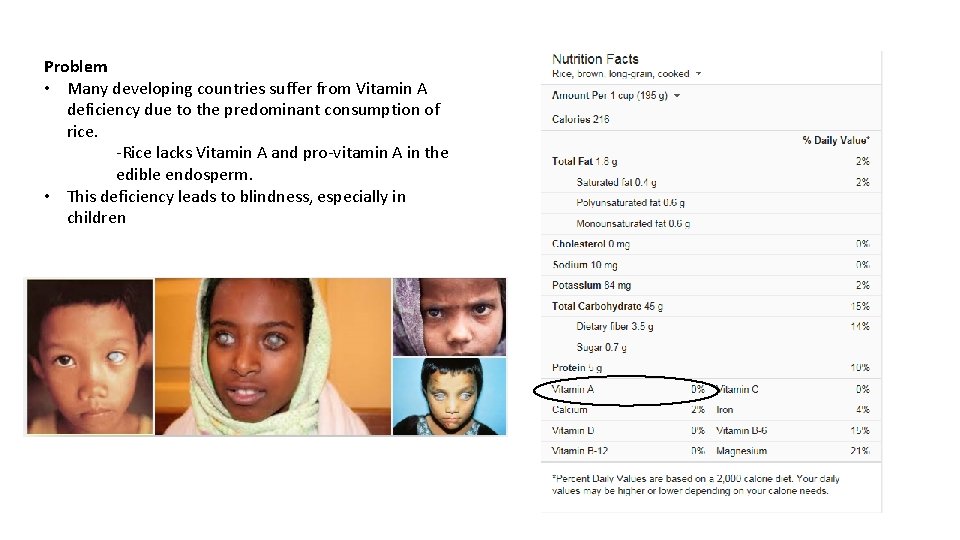
Problem • Many developing countries suffer from Vitamin A deficiency due to the predominant consumption of rice. -Rice lacks Vitamin A and pro-vitamin A in the edible endosperm. • This deficiency leads to blindness, especially in children
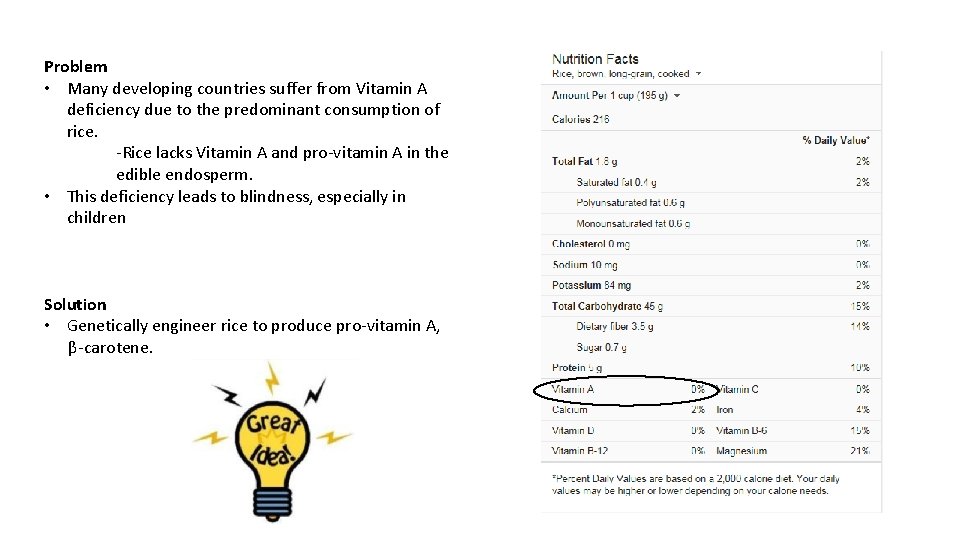
Problem • Many developing countries suffer from Vitamin A deficiency due to the predominant consumption of rice. -Rice lacks Vitamin A and pro-vitamin A in the edible endosperm. • This deficiency leads to blindness, especially in children Solution • Genetically engineer rice to produce pro-vitamin A, β-carotene.
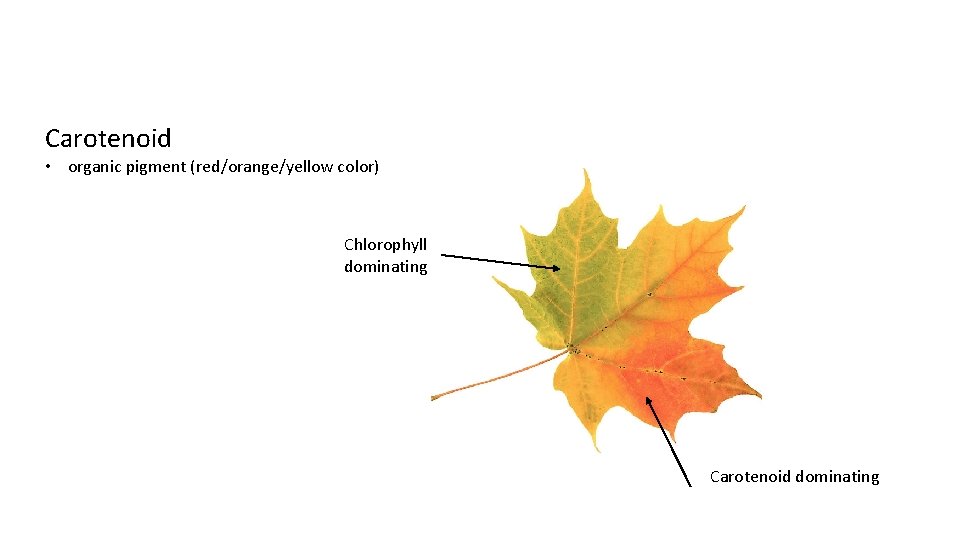
Carotenoid • organic pigment (red/orange/yellow color) Chlorophyll dominating Carotenoid dominating
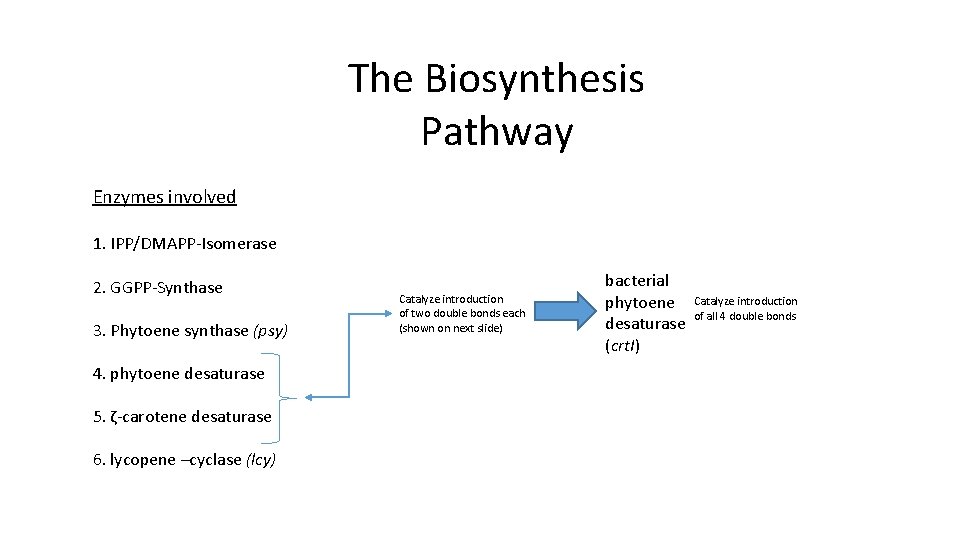
The Biosynthesis Pathway Enzymes involved 1. IPP/DMAPP-Isomerase 2. GGPP-Synthase 3. Phytoene synthase (psy) 4. phytoene desaturase 5. ζ-carotene desaturase 6. lycopene –cyclase (lcy) Catalyze introduction of two double bonds each (shown on next slide) bacterial phytoene desaturase (crt. I) Catalyze introduction of all 4 double bonds
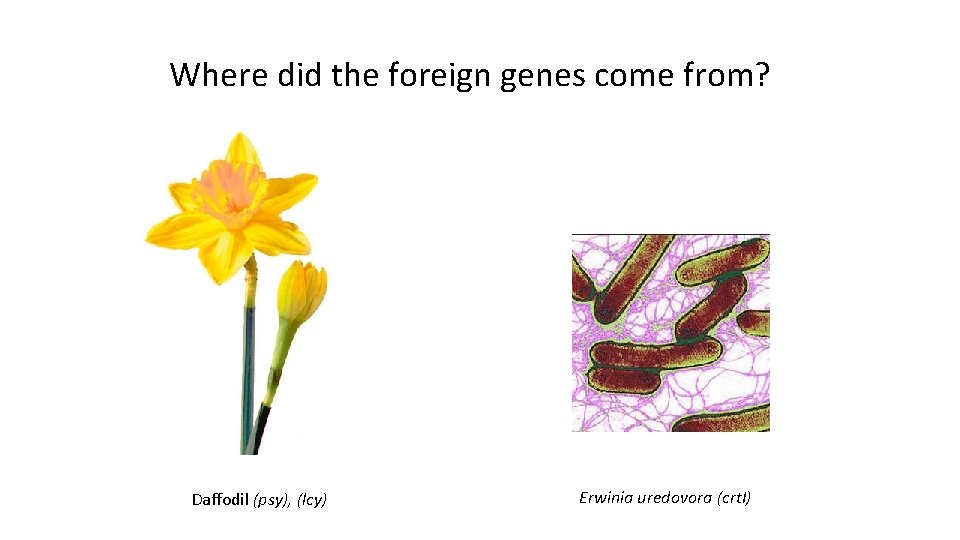
Where did the foreign genes come from? Daffodil (psy), (lcy) Erwinia uredovora (crt. I)
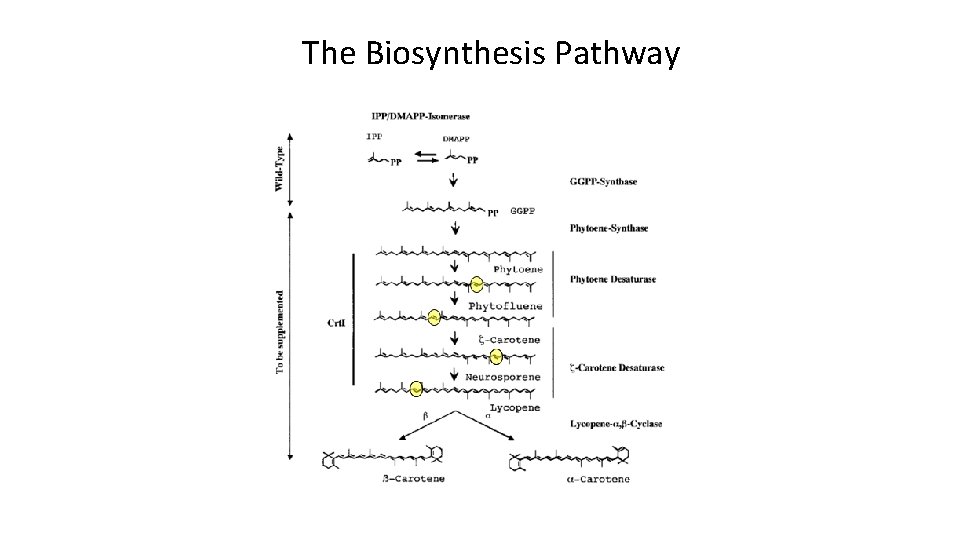
The Biosynthesis Pathway
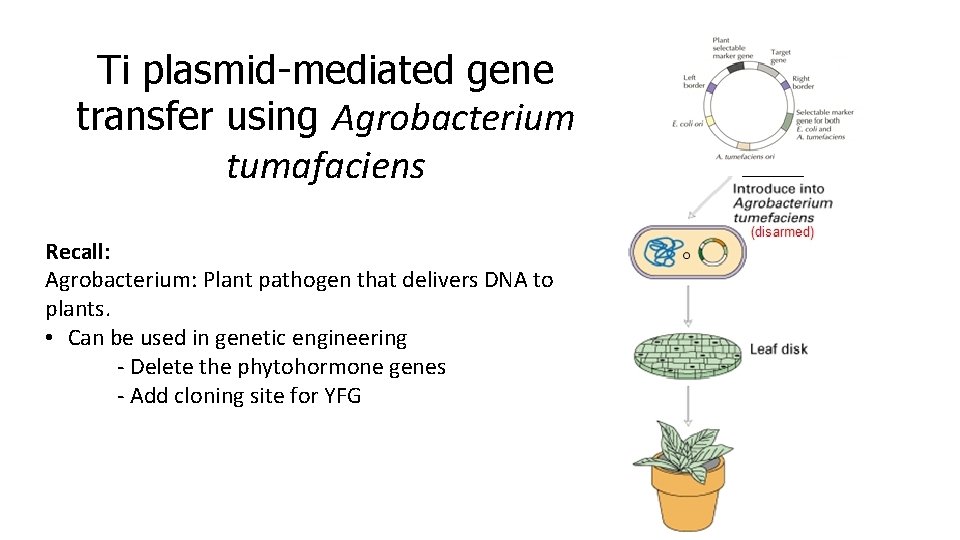
Ti plasmid-mediated gene transfer using Agrobacterium tumafaciens Recall: Agrobacterium: Plant pathogen that delivers DNA to plants. • Can be used in genetic engineering - Delete the phytohormone genes - Add cloning site for YFG
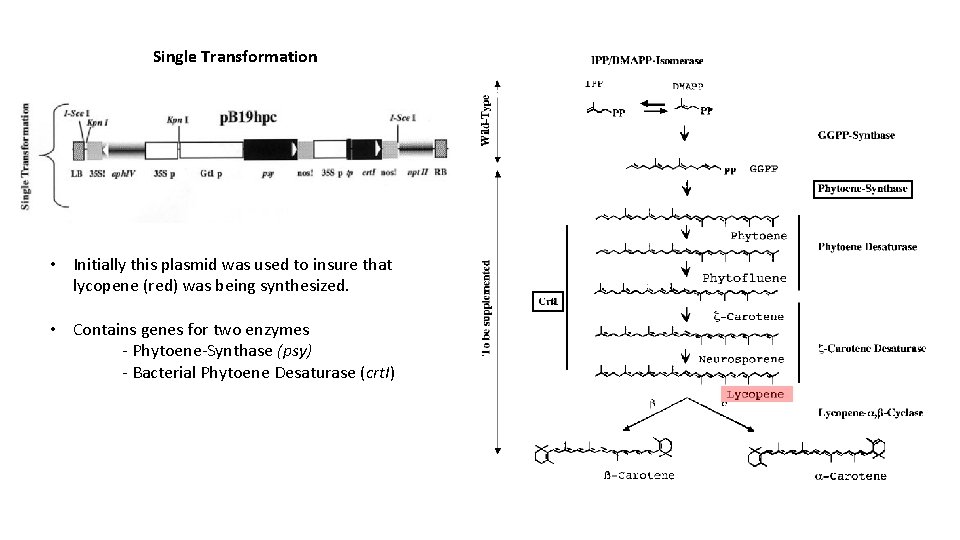
Single Transformation • Initially this plasmid was used to insure that lycopene (red) was being synthesized. • Contains genes for two enzymes - Phytoene-Synthase (psy) - Bacterial Phytoene Desaturase (crt. I)
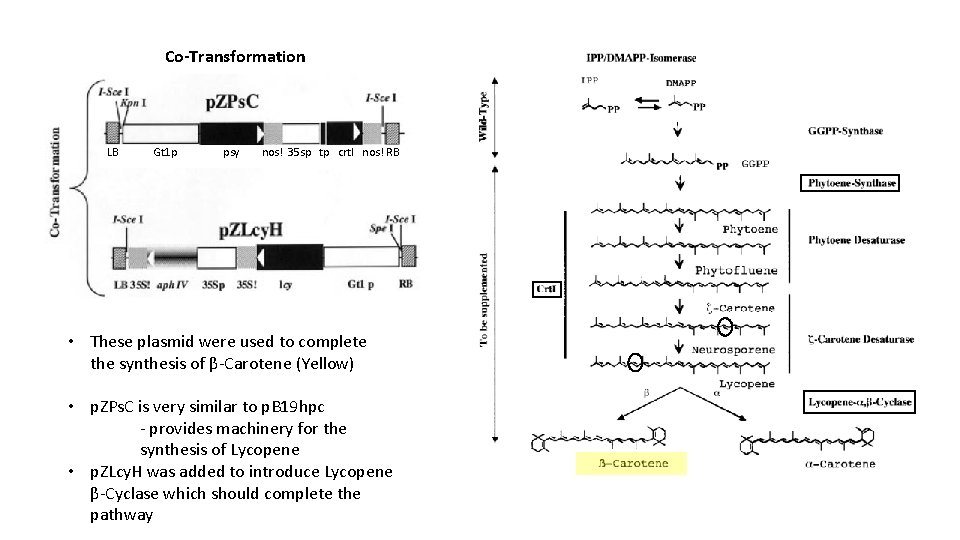
Co-Transformation LB Gt 1 p psy nos! 35 sp tp crt. I nos! RB • These plasmid were used to complete the synthesis of β-Carotene (Yellow) • p. ZPs. C is very similar to p. B 19 hpc - provides machinery for the synthesis of Lycopene • p. ZLcy. H was added to introduce Lycopene β-Cyclase which should complete the pathway
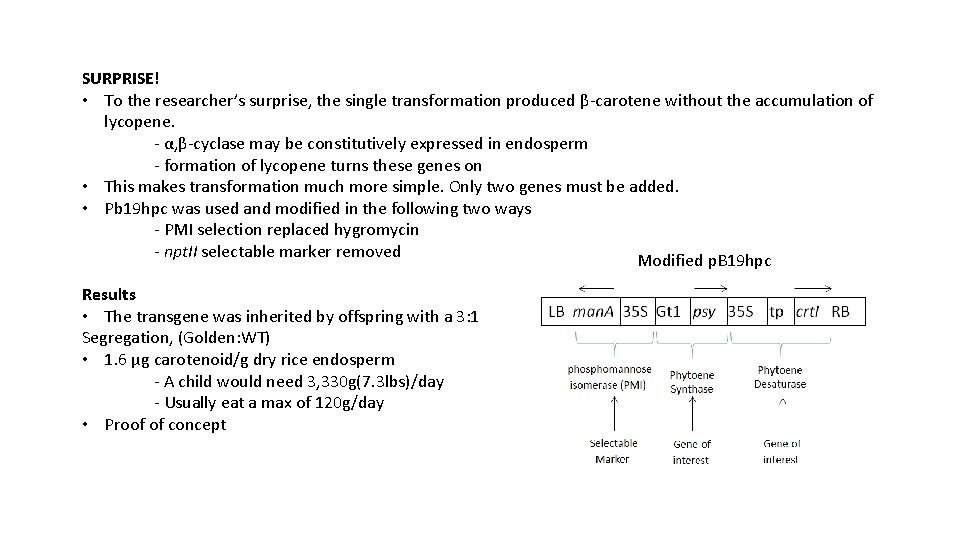
SURPRISE! • To the researcher’s surprise, the single transformation produced β-carotene without the accumulation of lycopene. - α, β-cyclase may be constitutively expressed in endosperm - formation of lycopene turns these genes on • This makes transformation much more simple. Only two genes must be added. • Pb 19 hpc was used and modified in the following two ways - PMI selection replaced hygromycin - npt. II selectable marker removed Modified p. B 19 hpc Results • The transgene was inherited by offspring with a 3: 1 Segregation, (Golden: WT) • 1. 6 μg carotenoid/g dry rice endosperm - A child would need 3, 330 g(7. 3 lbs)/day - Usually eat a max of 120 g/day • Proof of concept
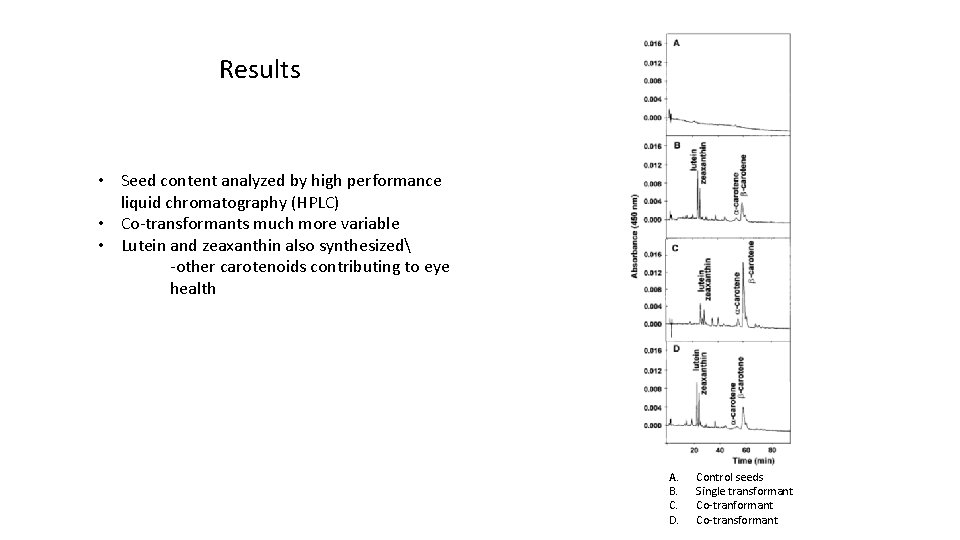
Results • Seed content analyzed by high performance liquid chromatography (HPLC) • Co-transformants much more variable • Lutein and zeaxanthin also synthesized -other carotenoids contributing to eye health A. B. C. D. Control seeds Single transformant Co-transformant
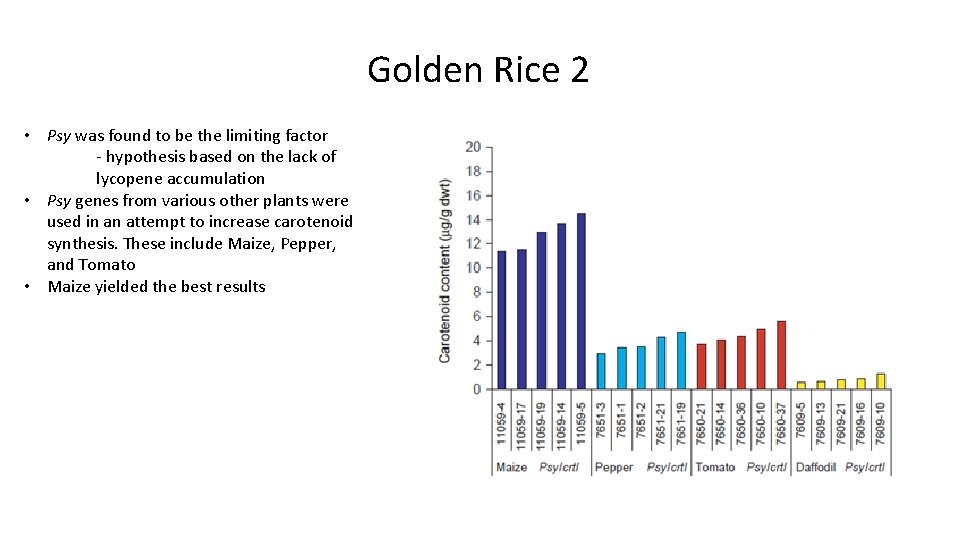
Golden Rice 2 • Psy was found to be the limiting factor - hypothesis based on the lack of lycopene accumulation • Psy genes from various other plants were used in an attempt to increase carotenoid synthesis. These include Maize, Pepper, and Tomato • Maize yielded the best results
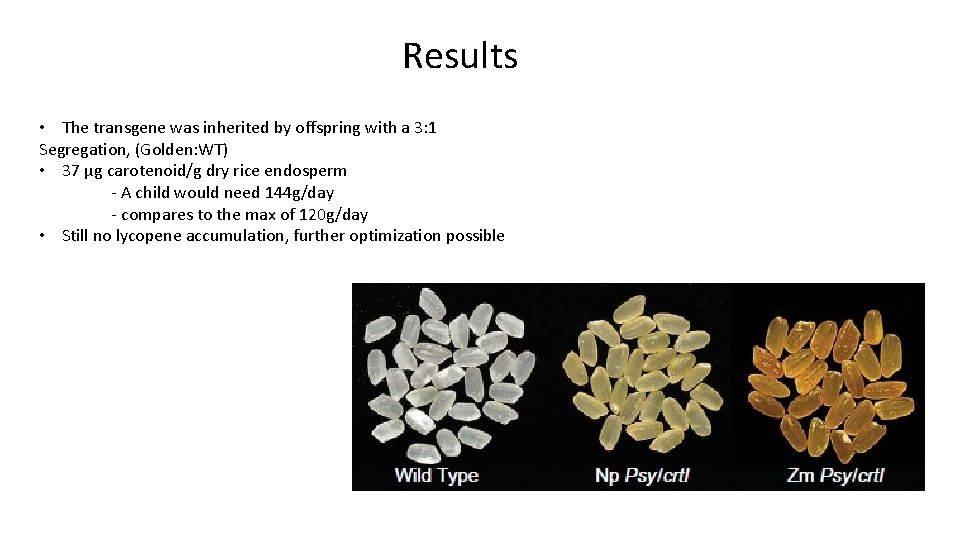
Results • The transgene was inherited by offspring with a 3: 1 Segregation, (Golden: WT) • 37 μg carotenoid/g dry rice endosperm - A child would need 144 g/day - compares to the max of 120 g/day • Still no lycopene accumulation, further optimization possible
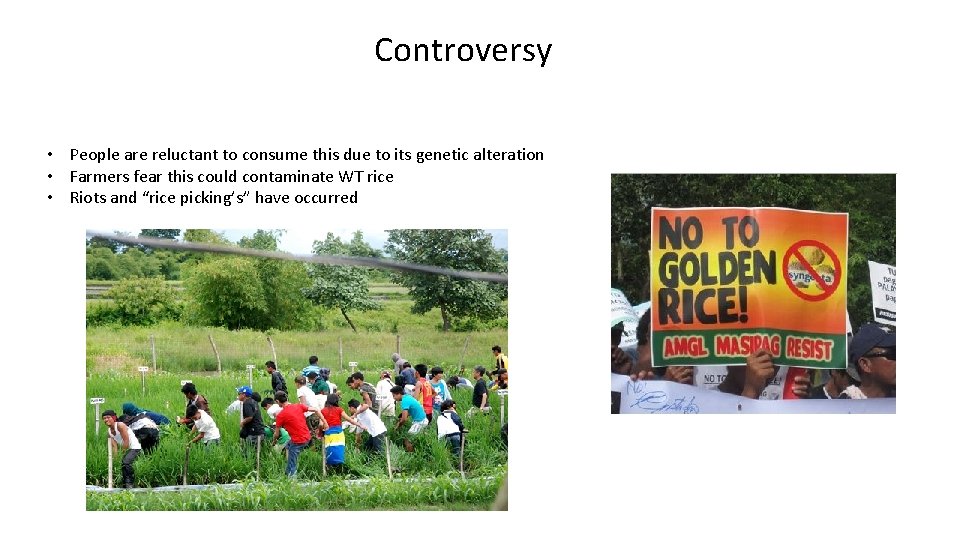
Controversy • People are reluctant to consume this due to its genetic alteration • Farmers fear this could contaminate WT rice • Riots and “rice picking’s” have occurred
- Slides: 15