
Golden Age of Silent Film 1920 1928 Film
- Slides: 13
Golden Age of Silent Film 1920 -1928
Film Music in the 1920 s • Before sound films, the movie theater was the largest employer of musicians in the world • Piano & Organ were the most common • New music was used in almost every major film
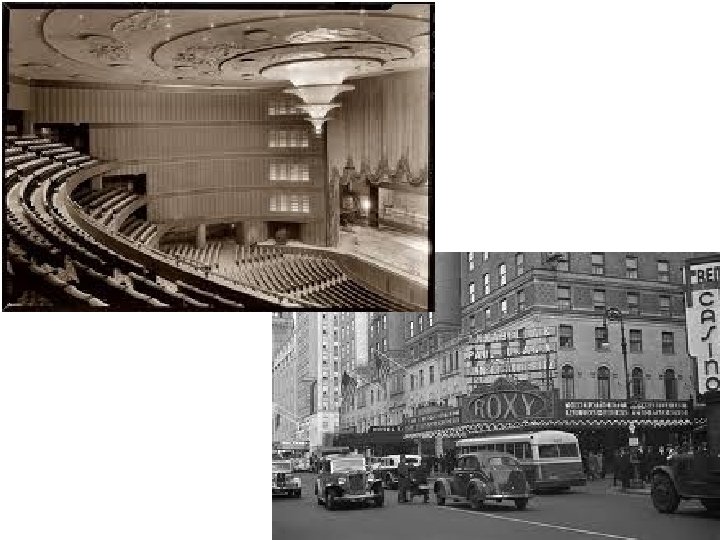
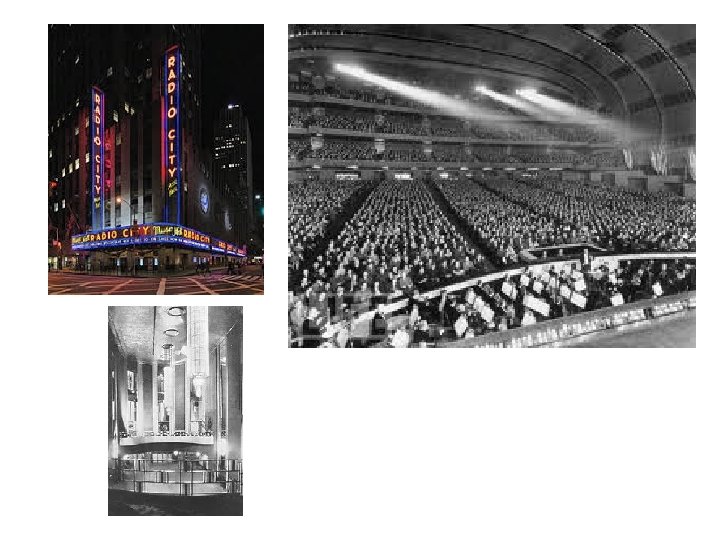
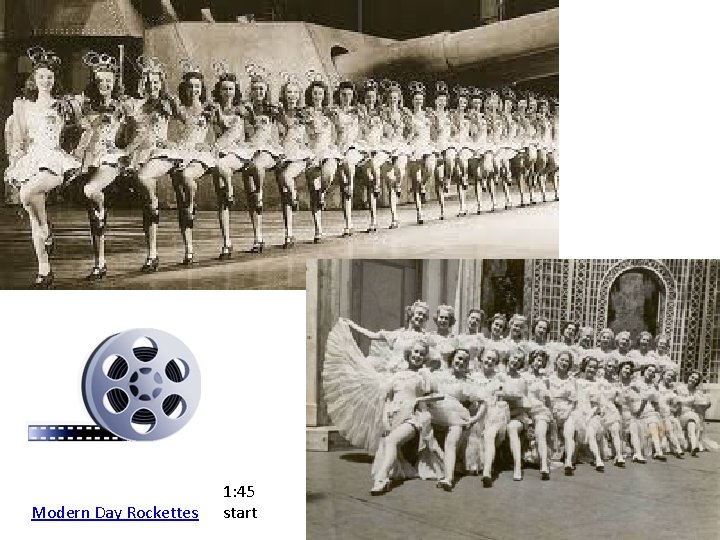
Movie Palaces – Huge, elaborate theaters greatest were in N. Y. – Housed full symphony orchestras, music libraries with 30, 000 -50, 000 scores, and featured singers and dancers before the feature film (Rockettes) – Included the Roxy, Radio City Music Hall, Capitol Theater, etc. • The Roxy could seat 6, 214 and included a waiting room for 2000, a kitchen, fully staffed nursery & hospital, radio broadcast booth and private apartments
Modern Day Rockettes 1: 45 start
The Transition to Sound (1926 -1928) • Vitaphone (1926): coordinated visual images shown by a projector with recorded music and sound effects played on a phonograph – Length of a reel of film matched one side of a record – Quality of sound wasn’t as good as a live orchestra, but was better than what most people had. – Short films were first had to stand close the microphone so acting was difficult • Mostly musical performances (early MTV)
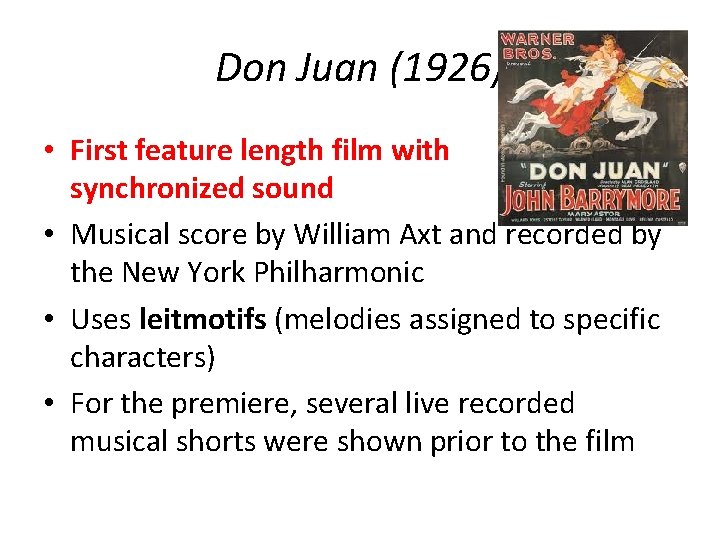
Don Juan (1926) • First feature length film with synchronized sound • Musical score by William Axt and recorded by the New York Philharmonic • Uses leitmotifs (melodies assigned to specific characters) • For the premiere, several live recorded musical shorts were shown prior to the film
The Jazz Singer (1927) • Used synchronized music and music recorded live • Most of the underscoring was borrowed – In 2 segments, Al Jolson improvised dialogue – First words heard in a narrative film “Wait a minute! You ain’t heard nothin’ yet”
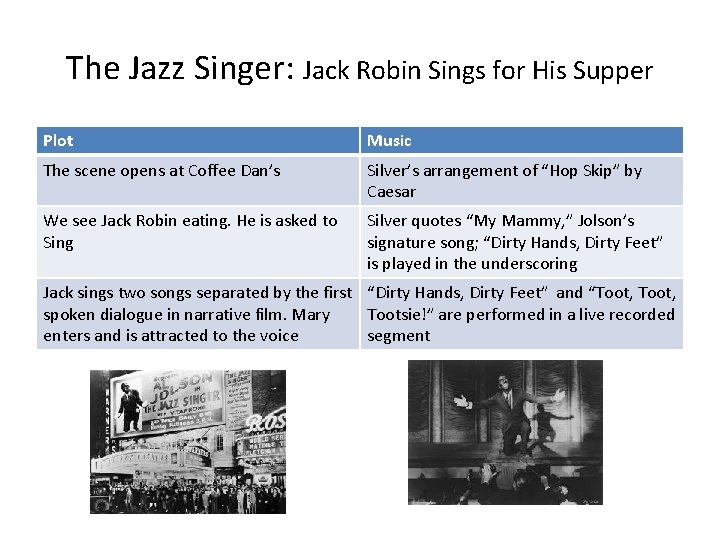
The Jazz Singer: Jack Robin Sings for His Supper Plot Music The scene opens at Coffee Dan’s Silver’s arrangement of “Hop Skip” by Caesar We see Jack Robin eating. He is asked to Sing Silver quotes “My Mammy, ” Jolson’s signature song; “Dirty Hands, Dirty Feet” is played in the underscoring Jack sings two songs separated by the first “Dirty Hands, Dirty Feet” and “Toot, spoken dialogue in narrative film. Mary Tootsie!” are performed in a live recorded enters and is attracted to the voice segment
Sound on Film • General Electric developed Movietone, which recorded sound directly onto the film itself, instead of a separate record – Had better sound quality – Coordination with visuals was better • Super important for dialogue • Movietone Newsreel Example
Sunrise (1928) • First full length film made with Movietone • Had two scores: one for live performance and a synchronized version • Used a layered effect of multiple melodies to show several things happening at once
City Lights (1931) • Considered one of the last great silent films • Charlie Chaplin produced, directed, acted and composed the music • Music is light and popular – Still used a synchronized soundtrack – City Lights