
Goats In General Breeds of Goats Goats were
Goats In General
Breeds of Goats • Goats were a common sight on early European sailing ships • They were desirable because of their relatively small size. • They are agile, friendly and capable of eating a much less desirable, and more available, diet than other sources of milk and meat. They like to eat brush and weeds, but not tin cans like the cartoons! • Goats have hair instead of wool like sheep
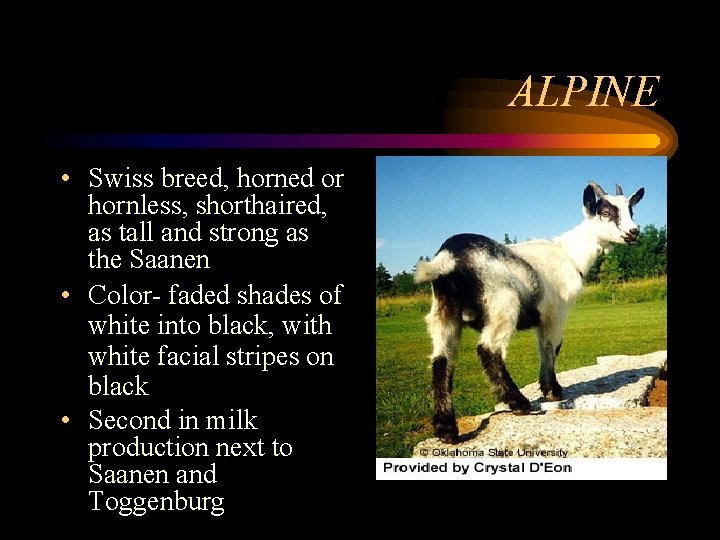
ALPINE • Swiss breed, horned or hornless, shorthaired, as tall and strong as the Saanen • Color- faded shades of white into black, with white facial stripes on black • Second in milk production next to Saanen and Toggenburg
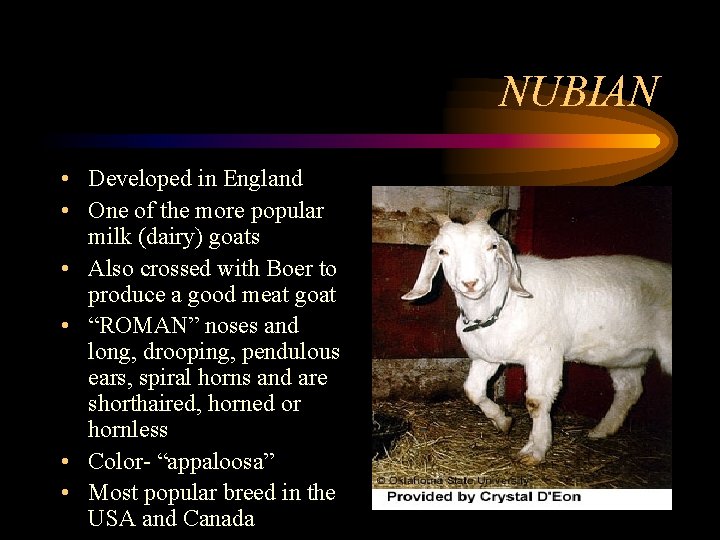
NUBIAN • Developed in England • One of the more popular milk (dairy) goats • Also crossed with Boer to produce a good meat goat • “ROMAN” noses and long, drooping, pendulous ears, spiral horns and are shorthaired, horned or hornless • Color- “appaloosa” • Most popular breed in the USA and Canada

ANGORA • Originated in Turkey • Straight or concave nose, thin, not very long; pendulous ears and twisted horns in both sexes • Known for their coat of Mohair used to produce fine fabrics • Produces 4 -6 lbs. Of hair when sheared twice per year
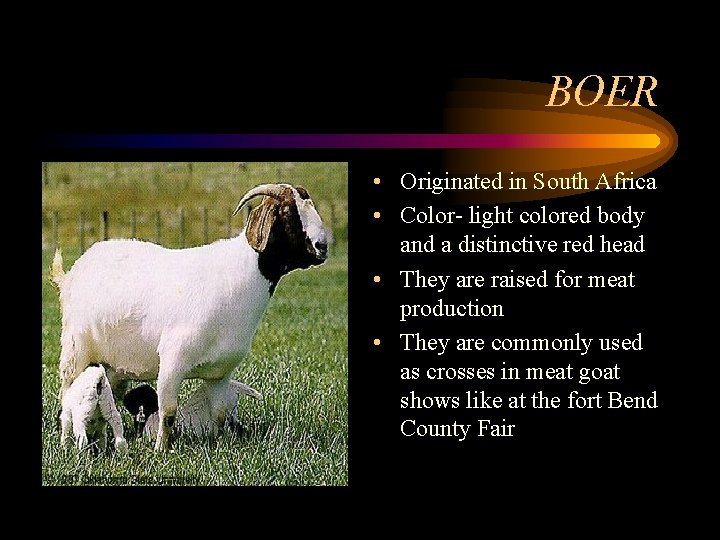
BOER • Originated in South Africa • Color- light colored body and a distinctive red head • They are raised for meat production • They are commonly used as crosses in meat goat shows like at the fort Bend County Fair
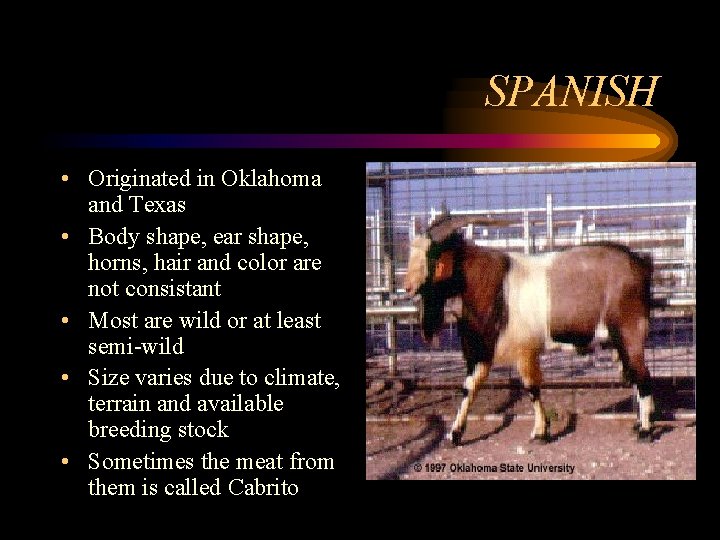
SPANISH • Originated in Oklahoma and Texas • Body shape, ear shape, horns, hair and color are not consistant • Most are wild or at least semi-wild • Size varies due to climate, terrain and available breeding stock • Sometimes the meat from them is called Cabrito
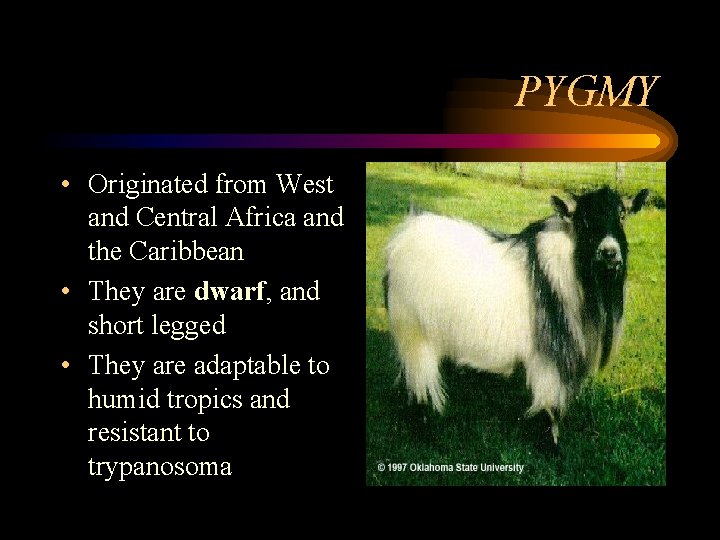
PYGMY • Originated from West and Central Africa and the Caribbean • They are dwarf, and short legged • They are adaptable to humid tropics and resistant to trypanosoma
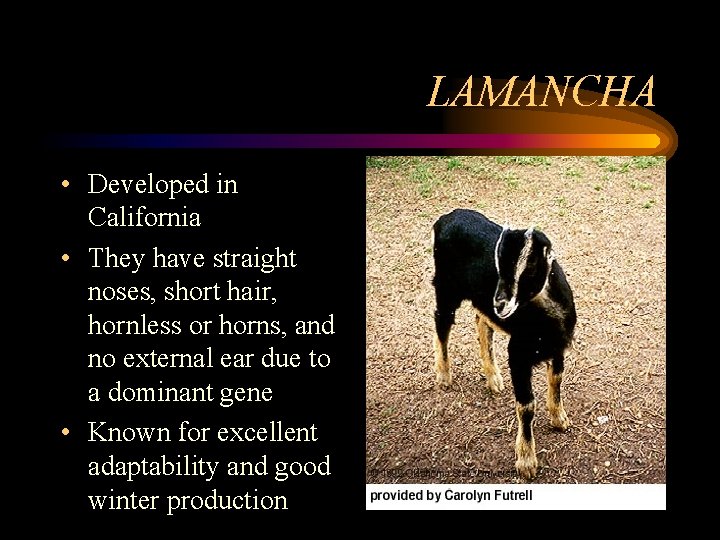
LAMANCHA • Developed in California • They have straight noses, short hair, hornless or horns, and no external ear due to a dominant gene • Known for excellent adaptability and good winter production
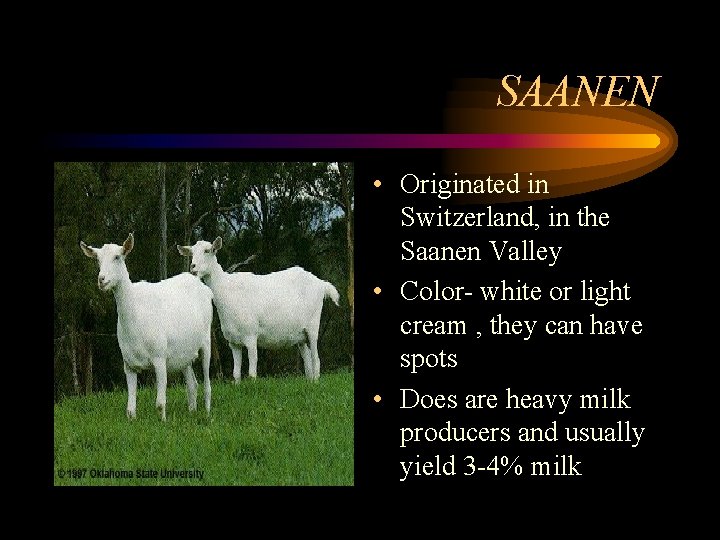
SAANEN • Originated in Switzerland, in the Saanen Valley • Color- white or light cream , they can have spots • Does are heavy milk producers and usually yield 3 -4% milk
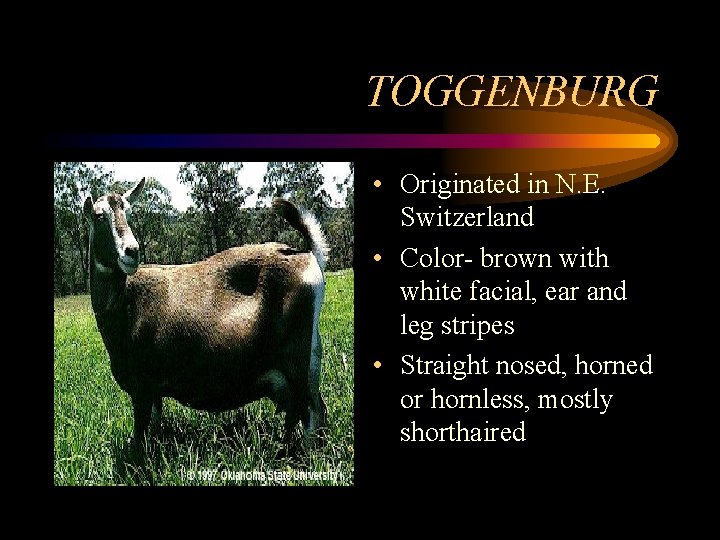
TOGGENBURG • Originated in N. E. Switzerland • Color- brown with white facial, ear and leg stripes • Straight nosed, horned or hornless, mostly shorthaired
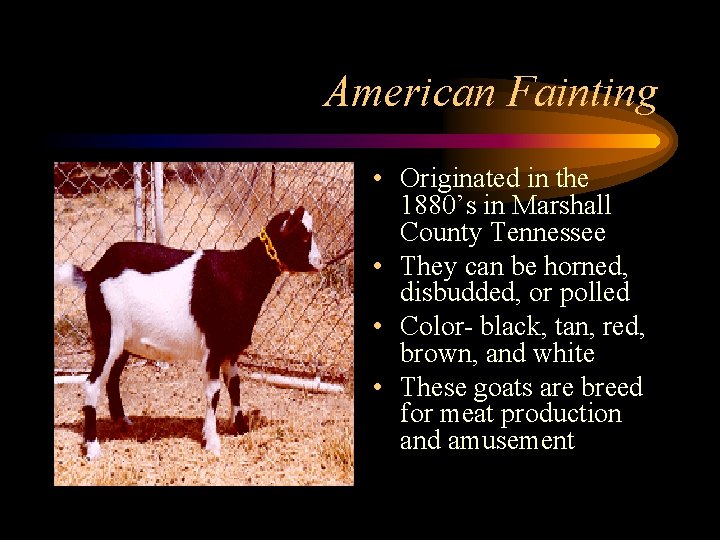
American Fainting • Originated in the 1880’s in Marshall County Tennessee • They can be horned, disbudded, or polled • Color- black, tan, red, brown, and white • These goats are breed for meat production and amusement
- Slides: 12