
Goals of Pedigree Analysis 1 Determine the mode
- Slides: 12
Goals of Pedigree Analysis • 1. Determine the mode of inheritance: dominant, recessive, partial dominance, sex-linked, autosomal, mitochondrial, maternal effect. • 2. Determine the probability of an affected offspring for a given cross.
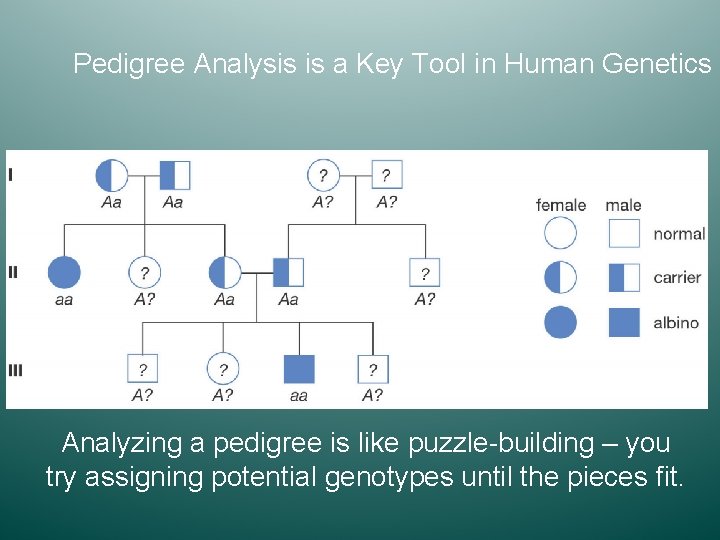
Pedigree Analysis is a Key Tool in Human Genetics Analyzing a pedigree is like puzzle-building – you try assigning potential genotypes until the pieces fit.
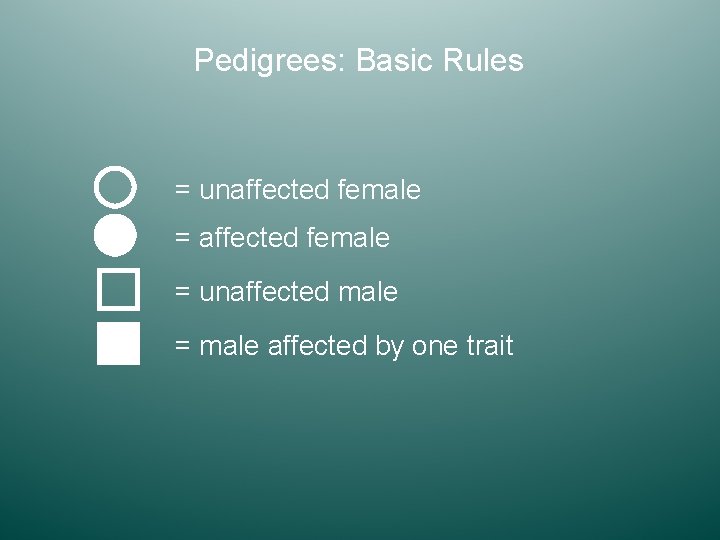
Pedigrees: Basic Rules = unaffected female = unaffected male = male affected by one trait
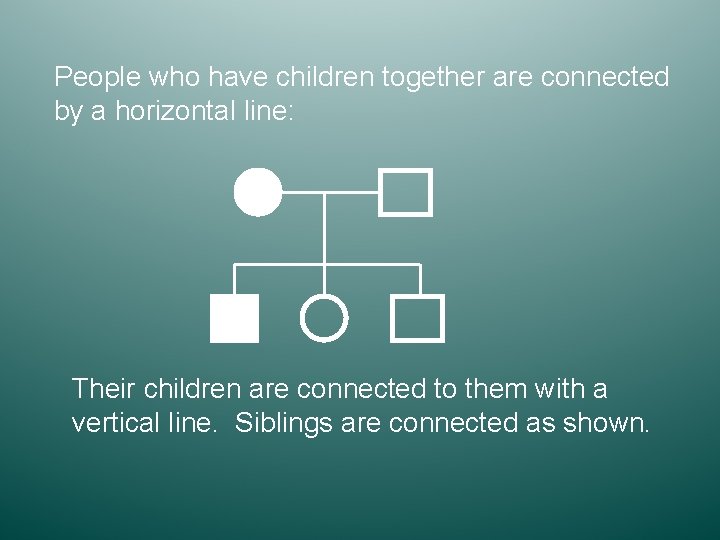
People who have children together are connected by a horizontal line: Their children are connected to them with a vertical line. Siblings are connected as shown.
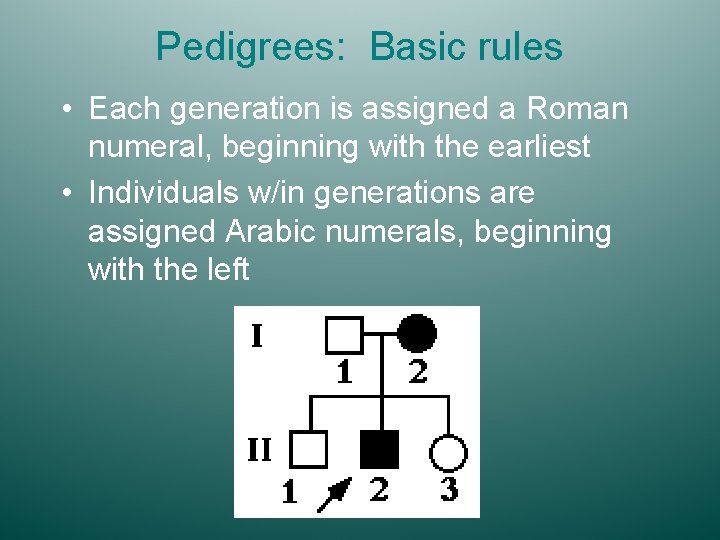
Pedigrees: Basic rules • Each generation is assigned a Roman numeral, beginning with the earliest • Individuals w/in generations are assigned Arabic numerals, beginning with the left
Patterns of dominant traits • trait tends to appear each generation • About equal ratio between affected males and affected females • at least one parent must be affected in order for children to be affected – Aa x aa • normal parents will always produce normal offspring – aa x aa ---> aa
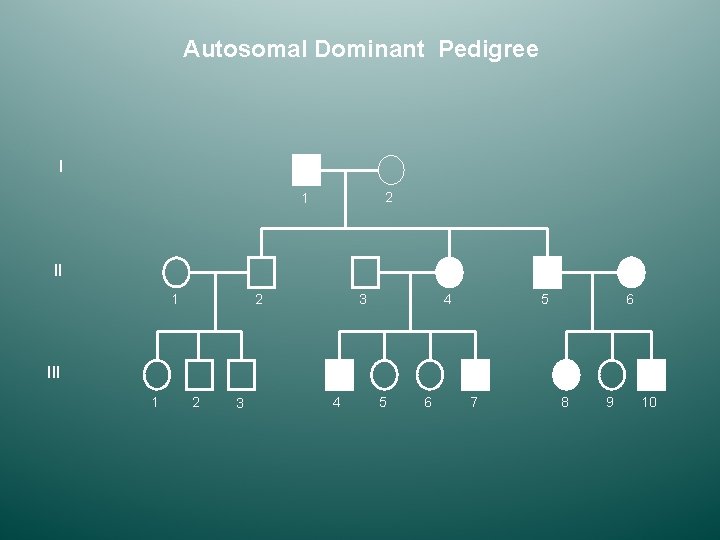
Autosomal Dominant Pedigree I 2 1 II 1 2 3 4 5 6 III 1 2 3 4 5 6 7 8 9 10
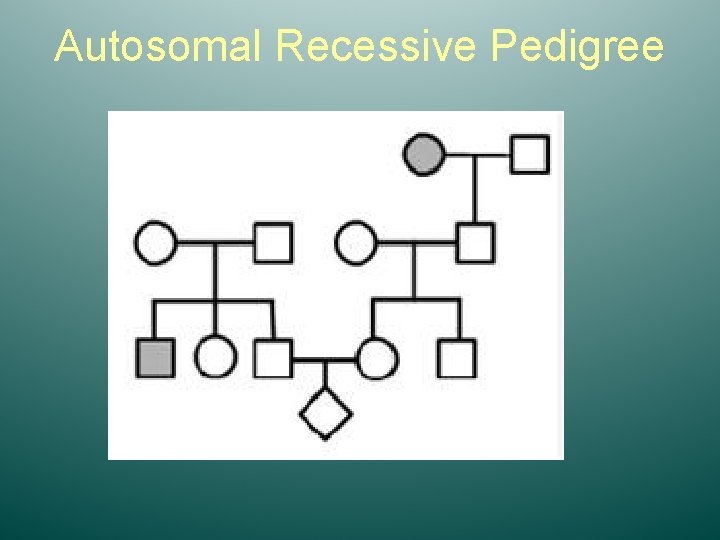
Patterns of recessive traits • may appear to “skip” generations • About equal ratio between affected males and affected females • All children of normal and affected parents are normal – AA x aa ---> Aa • all children of two affected parents will be affected – aa x aa ---> aa
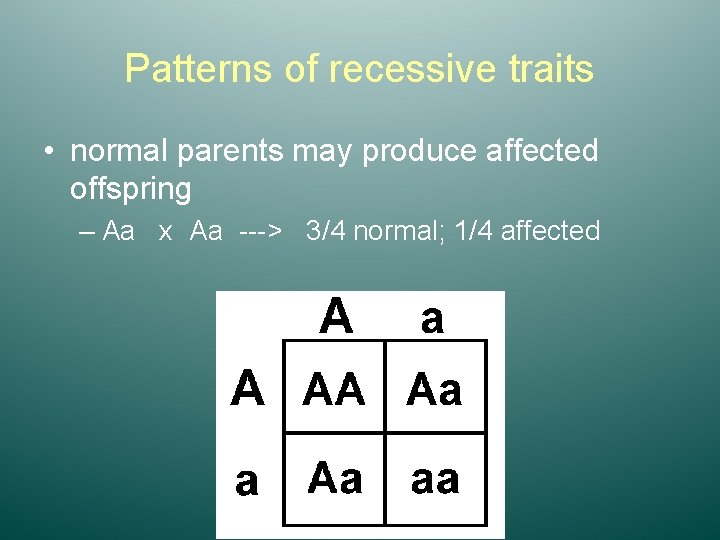
Patterns of recessive traits • normal parents may produce affected offspring – Aa x Aa ---> 3/4 normal; 1/4 affected
Autosomal Recessive Pedigree
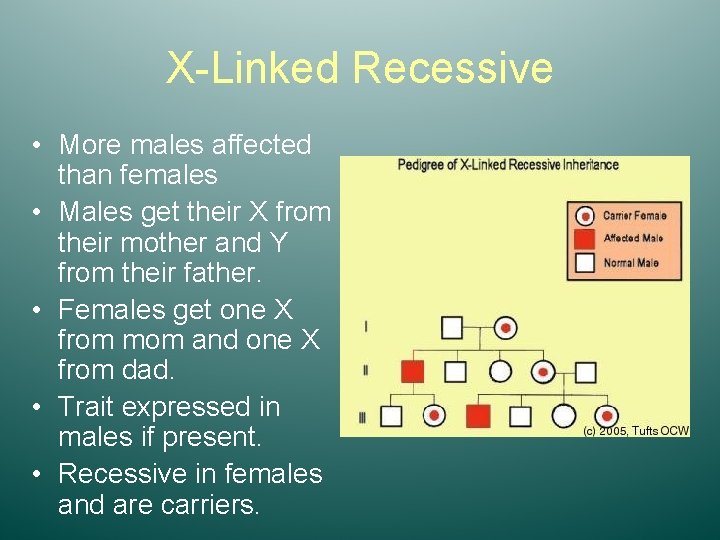
X-Linked Recessive • More males affected than females • Males get their X from their mother and Y from their father. • Females get one X from mom and one X from dad. • Trait expressed in males if present. • Recessive in females and are carriers.
Sum it up! • Autosomal Dominant – Males and Females – Every generation • Autosomal Recessive – Males and Females – Skips generations • X-linked Recessive – More males than females