
Goals of Care Conversations Part 2 Mapping the
- Slides: 30
Goals of Care Conversations – Part 2 Mapping the Future: Clarifying Priorities
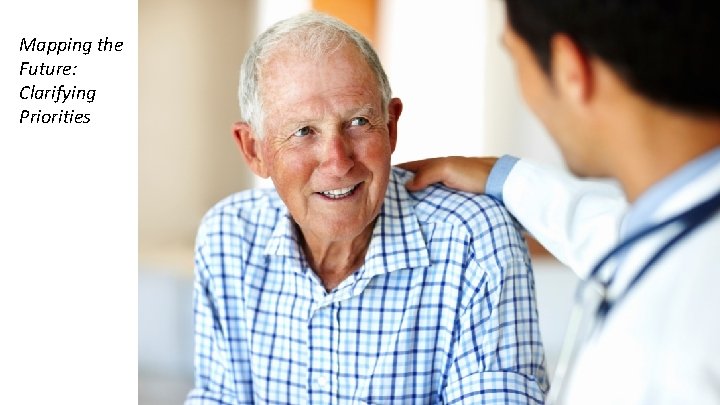
Mapping the Future: Clarifying Priorities
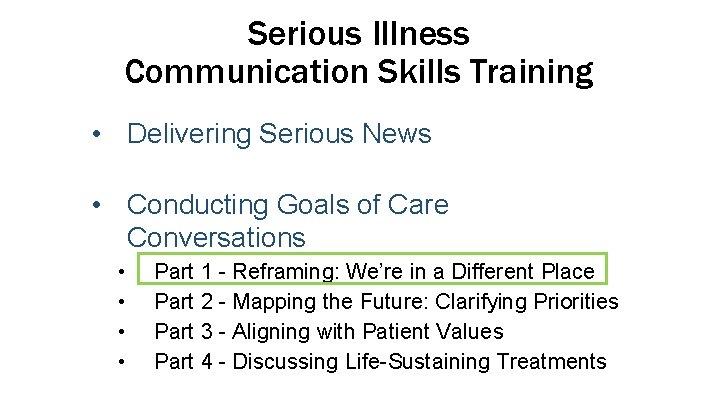
Serious Illness Communication Skills Training • Delivering Serious News • Conducting Goals of Care Conversations • • Part 1 - Reframing: We’re in a Different Place Part 2 - Mapping the Future: Clarifying Priorities Part 3 - Aligning with Patient Values Part 4 - Discussing Life-Sustaining Treatments
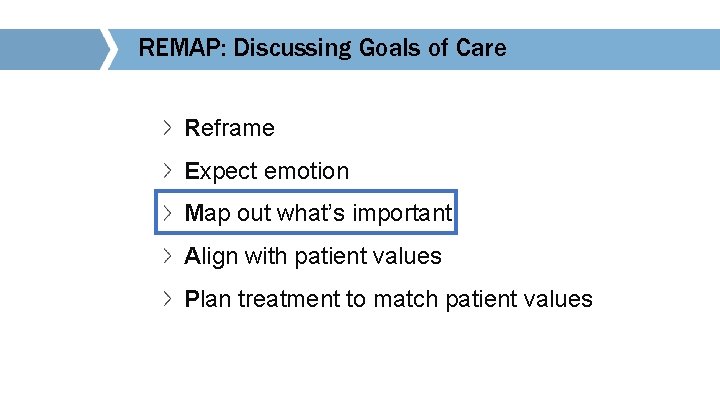
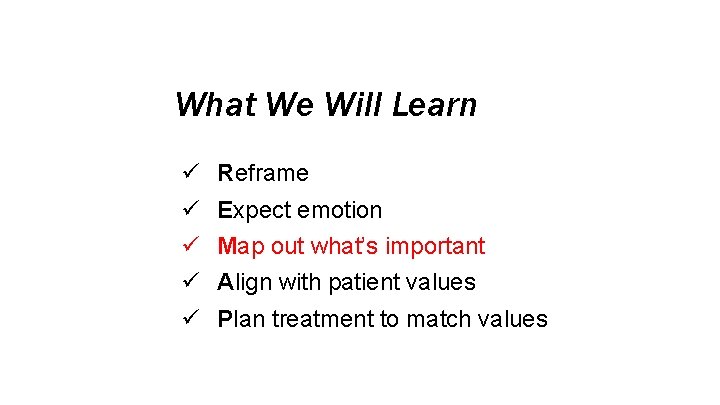
REMAP: Discussing Goals of Care Reframe Expect emotion Map out what’s important Align with patient values Plan treatment to match patient values
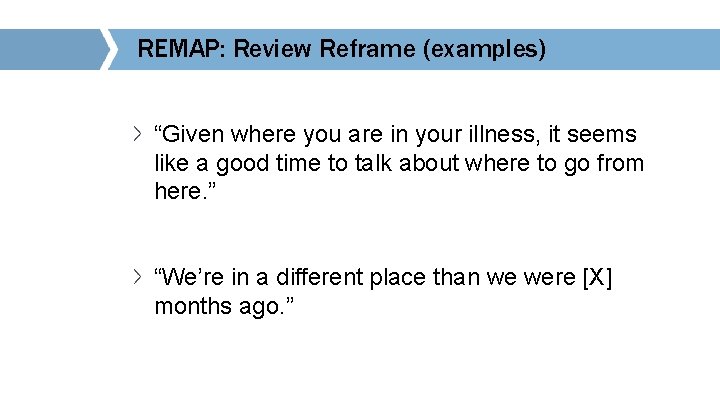
REMAP: Review Reframe (examples) “Given where you are in your illness, it seems like a good time to talk about where to go from here. ” “We’re in a different place than we were [X] months ago. ”
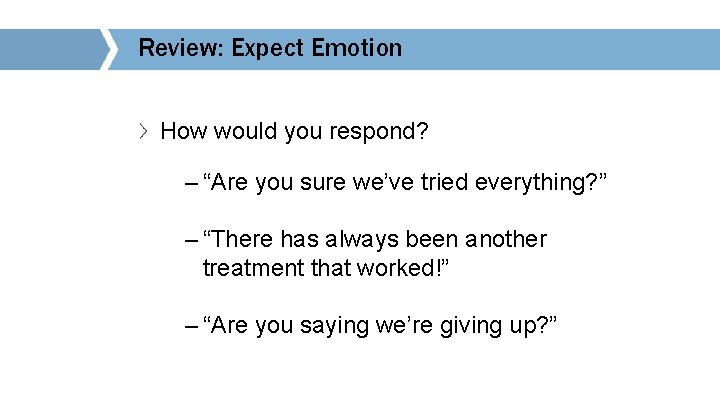
Review: Expect Emotion How would you respond? – “Are you sure we’ve tried everything? ” – “There has always been another treatment that worked!” – “Are you saying we’re giving up? ”
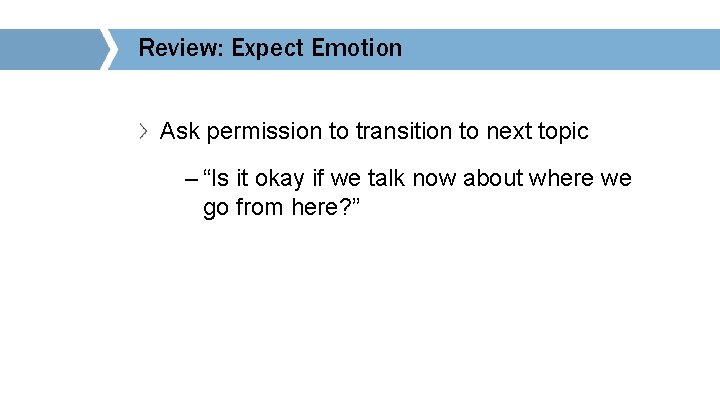
Review: Expect Emotion Ask permission to transition to next topic – “Is it okay if we talk now about where we go from here? ”
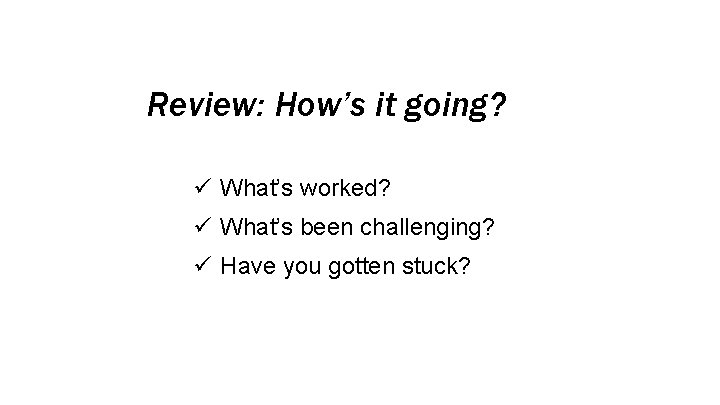
Review: How’s it going? ü What’s worked? ü What’s been challenging? ü Have you gotten stuck?
What We Will Learn ü ü ü Reframe Expect emotion Map out what’s important Align with patient values Plan treatment to match values
How We Will Learn ü Define skills (lecture) ü Observe skills in action (videos) ü Practice (drills)
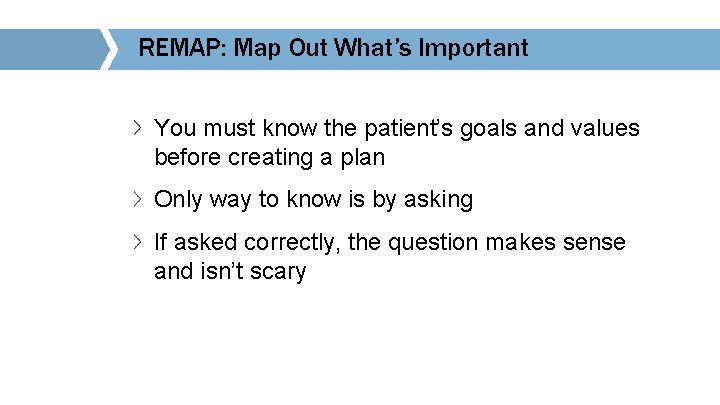
REMAP: Map Out What’s Important You must know the patient’s goals and values before creating a plan Only way to know is by asking If asked correctly, the question makes sense and isn’t scary
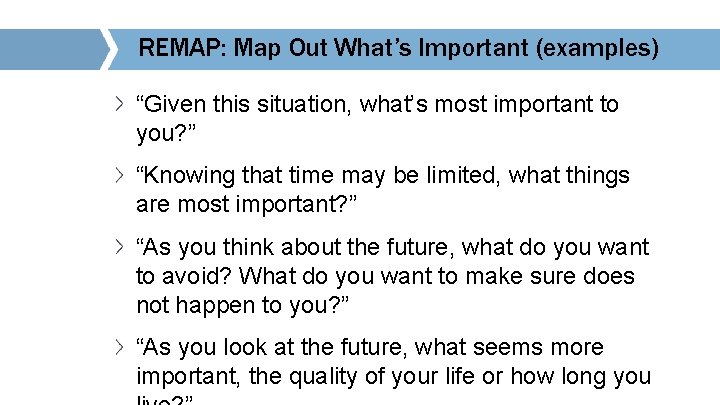
REMAP: Map Out What’s Important (examples) “Given this situation, what’s most important to you? ” “Knowing that time may be limited, what things are most important? ” “As you think about the future, what do you want to avoid? What do you want to make sure does not happen to you? ” “As you look at the future, what seems more important, the quality of your life or how long you
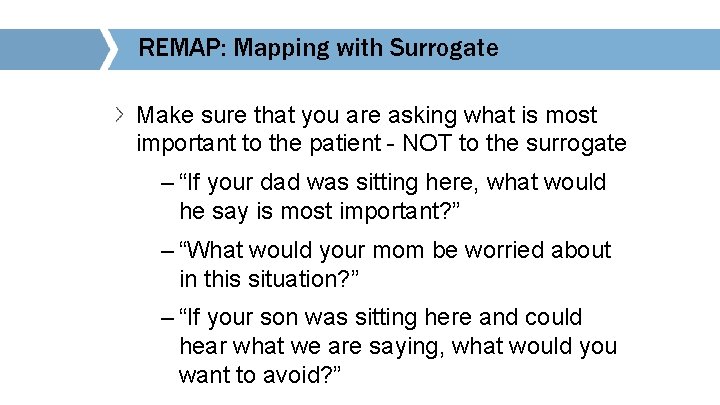
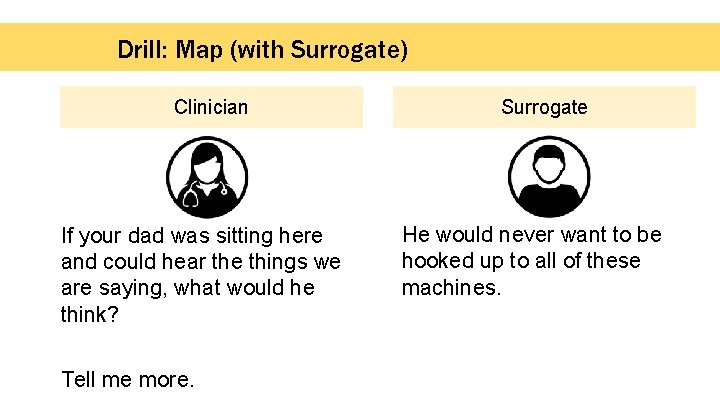
REMAP: Mapping with Surrogate Make sure that you are asking what is most important to the patient - NOT to the surrogate – “If your dad was sitting here, what would he say is most important? ” – “What would your mom be worried about in this situation? ” – “If your son was sitting here and could hear what we are saying, what would you want to avoid? ”
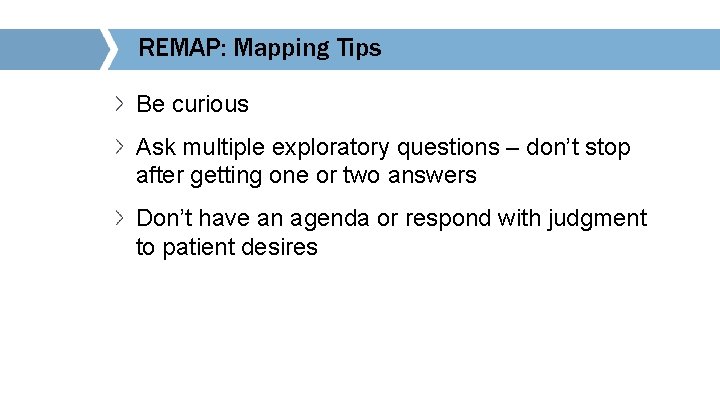
REMAP: Mapping Tips Be curious Ask multiple exploratory questions – don’t stop after getting one or two answers Don’t have an agenda or respond with judgment to patient desires
REMAP: Map Out The Future
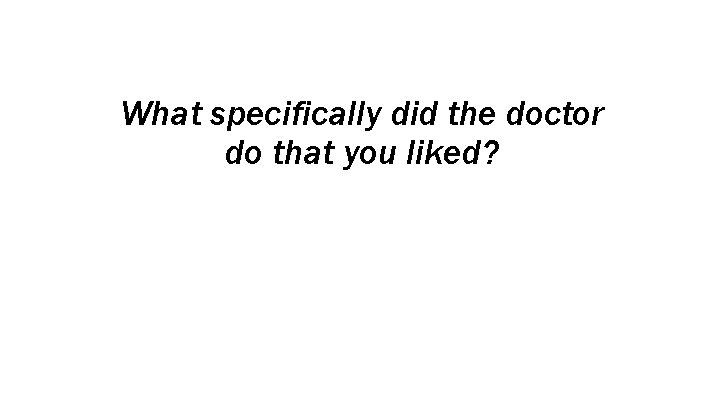
What specifically did the doctor do that you liked?
Time to Practice!!
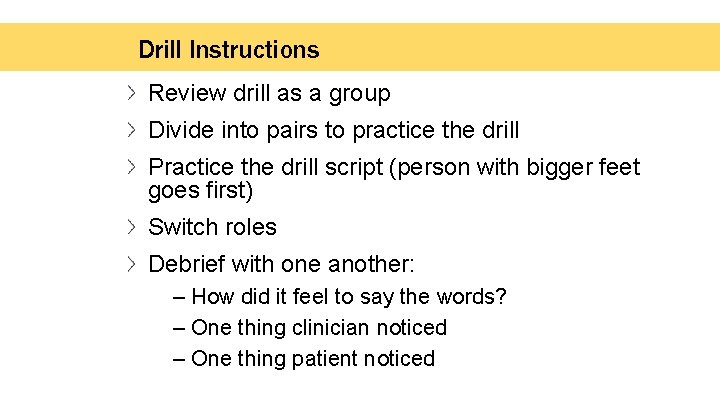
Drill Instructions Review drill as a group Divide into pairs to practice the drill Practice the drill script (person with bigger feet goes first) Switch roles Debrief with one another: – How did it feel to say the words? – One thing clinician noticed – One thing patient noticed
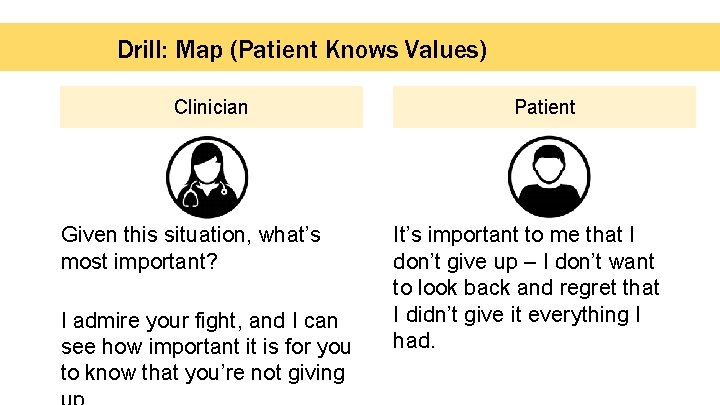
Drill: Map (Patient Knows Values) Clinician Given this situation, what’s most important? I admire your fight, and I can see how important it is for you to know that you’re not giving Patient It’s important to me that I don’t give up – I don’t want to look back and regret that I didn’t give it everything I had.
Drill: Map (with Surrogate) Clinician If your dad was sitting here and could hear the things we are saying, what would he think? Tell me more. Surrogate He would never want to be hooked up to all of these machines.
Drill: Instructions: Drill REMAP (Patient Swap Knows Roles. Values) Clinician Patient
Drill: Debrief How did it feel to say the words? One thing clinician noticed One thing patient noticed
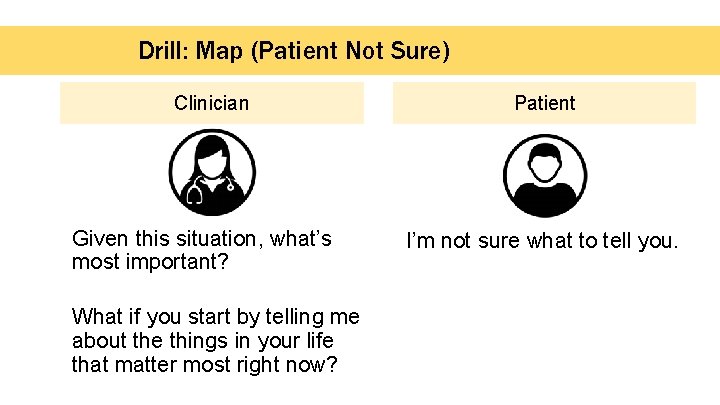
Drill: Map (Patient Not Sure) Clinician Given this situation, what’s most important? What if you start by telling me about the things in your life that matter most right now? Patient I’m not sure what to tell you.
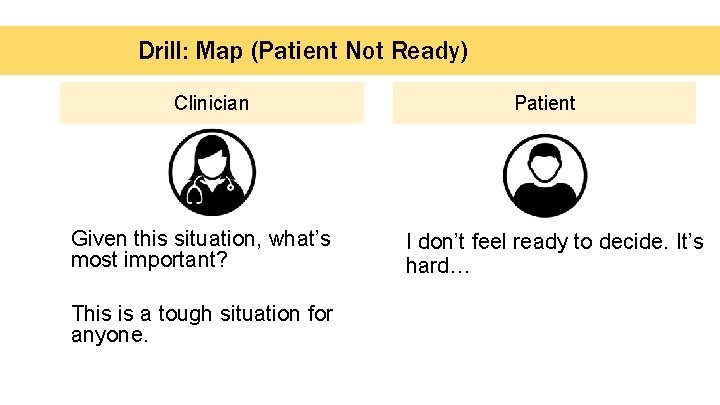
Drill: Map (Patient Not Ready) Clinician Given this situation, what’s most important? This is a tough situation for anyone. Patient I don’t feel ready to decide. It’s hard…
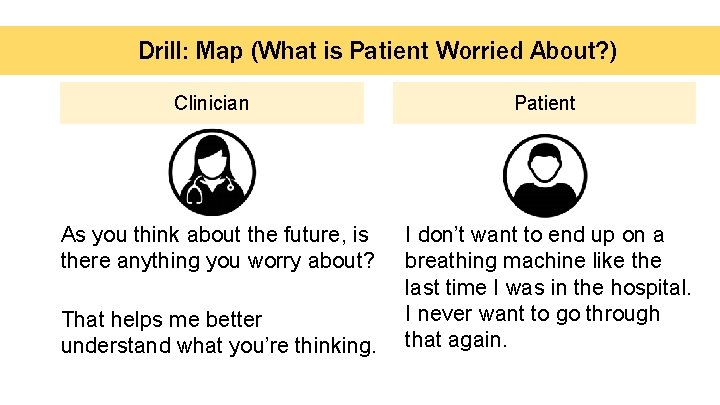
Drill: Map (What is Patient Worried About? ) Clinician Patient As you think about the future, is there anything you worry about? I don’t want to end up on a breathing machine like the last time I was in the hospital. I never want to go through that again. That helps me better understand what you’re thinking.
Drill Instructions: Swap Roles Clinician Patient
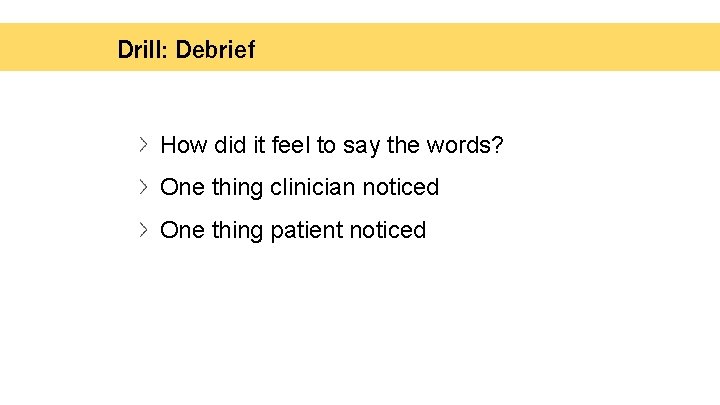
Drill: Debrief How did it feel to say the words? One thing clinician noticed One thing patient noticed
What surprised you? What do you want to take forward? Anywhere you might get stuck?
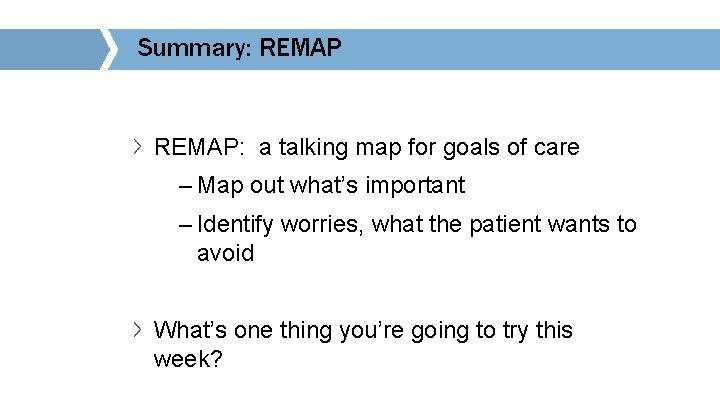
Summary: REMAP: a talking map for goals of care – Map out what’s important – Identify worries, what the patient wants to avoid What’s one thing you’re going to try this week?
Goals of Care Conversations training materials were developed and made available for public use through U. S. Department of Veterans Affairs contracts with Vital. Talk [Orders VA 777 -14 -P-0400 and VA 777 -16 -C-0015]. Materials are available for download from VA National Center for Ethics in Health Care at www. ethics. va. gov/goalsofcaretraining. asp. first published Feb. 2015/Updated Jan. 2017