
Goal Setting This project is sponsored by a
Goal Setting This project is sponsored by a $15. 9 million grant from the U. S. Department of Labor, Employment and Training Administration. The AMMQC program is an Equal Opportunity program. Adaptive equipment is available upon request for individuals with disabilities. This workforce product was funded by a grant awarded by the U. S. Department of Labor’s Employment and Training Administration. The product was created by the grantee and does not necessarily reflect the official position of the U. S. Department of Labor. The U. S. Department of Labor makes no guarantees, warranties, or assurances of any kind, express or implied, with respect to such information, including any information on linked sites and including, but not limited to, accuracy of the information or its completeness, timeliness, usefulness, adequacy, continued availability, or ownership. This work is licensed under a Creative Commons Attribution 3. 0 Unported License [http: //creativecommons. org/licenses/by/3. 0]
Thinking about Goals • Why do/don’t you set goals for yourself? • What are some goals you have set for yourself? • How often do you review your goals? • How do you reward yourself for meeting your goals?

Choosing Your Values
Reflecting on your personal vision statement • How do you live your life according to your core values? • How are your goals based on your values? • How do your friends and co-workers share similar values? • How do your family and friends know what your values are?
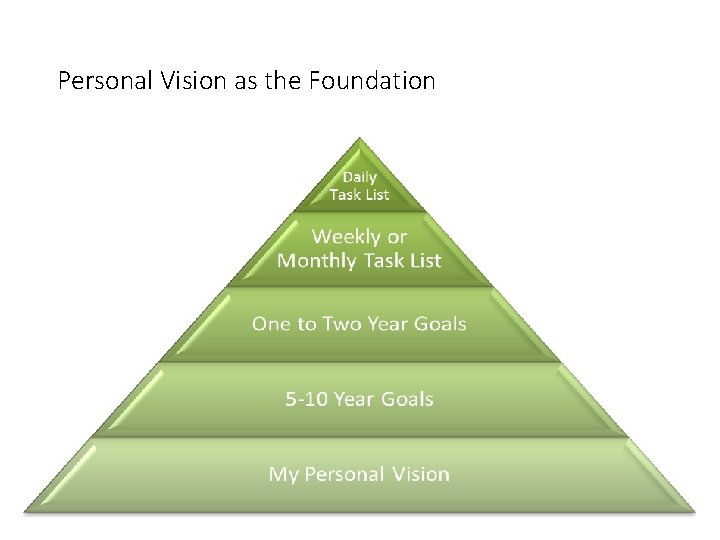
Personal Vision as the Foundation
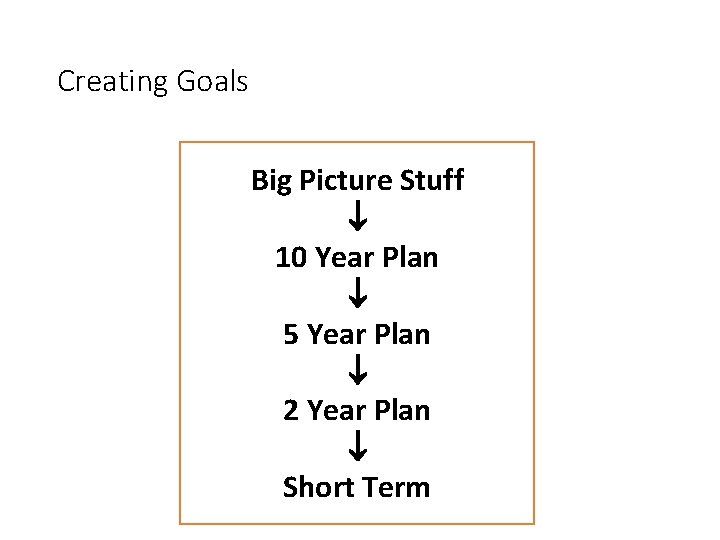
Creating Goals Big Picture Stuff 10 Year Plan 5 Year Plan 2 Year Plan Short Term
Creating Goals #2 • Take risks! • Select goals that motivate you and make you stretch out of your comfort zone. • Easy goals might not excite or motivate you. • You can use more attainable goals to build upon success.
Writing About Goals • What areas of your life do you want to set goals in? • Do these tie in with your vision statement and your core values? • Do they really reflect who you are?
Setting SMART Goals • Specific • Measureable • Attainable • Relevant • Timely Mind Tools: http: //www. youtube. com/watch? feature=player_embedded&v=NUslk 3 jioo. U
SMART Example Jed would like to lose weight. His doctor told him that he is 30 pounds overweight and that losing weight would help to increase his energy level and decrease his asthma. He is willing to make changes, but hates to run on a treadmill. How would Jed create a SMART goal?
SMART Example #2 Martha wants to work in manufacturing. She has had a job for 5 years as a retail assistant at a sporting goods store, but is ready for a change. She likes to work with her hands and is a quick learner. How would Martha create a SMART goal?
Creating your own goal • Specific • Measureable • Attainable • Relevant • Timely
Implementing Goals • Attitude and beliefs. • Start small. • Daily habits. • New routines and systems. • Build upon successes. • Visualize. • Focus on the feeling and benefits.
Dealing with Setbacks Coping Strategies • Everyone has setbacks. • Don’t allow them to permanently derail success. • Failure is a prelude to success. • Evaluate your actions and adjust as needed.
Rewarding Accomplishments • Motivate yourself and positively promote your goal. • Pick a reward ahead of time. • Immediately reward yourself. • Small rewards. • Don’t use a reward that goes against your goal/values.
- Slides: 15