
Goal Setting Smart Goals Specific Measurable Attainable Realistic
Goal Setting
Smart Goals • Specific • Measurable • Attainable • Realistic • Timely

• Specific- What particular component are you working? • Measurable- How will you track your progress?

• Attainable- Is this a goal that can be achieved? • Realistic- Is this a goal that can be achieved by you? • Timely- When will this goal be met?
Cardiovascular Fitness Goal
The first fitness assessment is a PRE TEST and is used to identify your strengths and weaknesses and provide you with a basis for setting REALISTIC GOALS. An assessment done at the conclusion of your fitness program to help determine the progress made toward your goals and assist you in setting new goals is called a POST TEST.
My long term goal is that I want to improve my Cardiovascular fitness level this term.
I will measure my improvement by increasing my PACER test score from ____ laps to ____ laps. (pre test) (post test)
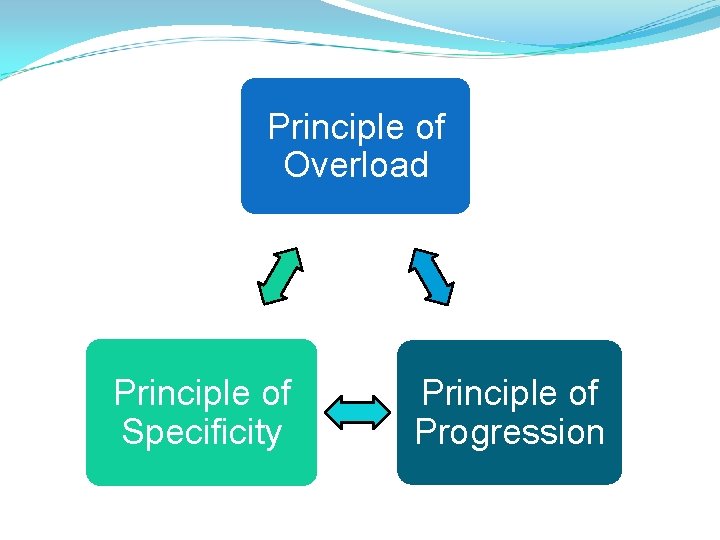
Principle of Overload Principle of Specificity Principle of Progression
Principle of Overload I will work my heart and respiratory systems more than they are used to.
Short Term Goal to Reach Action steps Cardiovascular Goal

c i b o Aer y t i v i Act Jog and other aerobic activities (give examples)
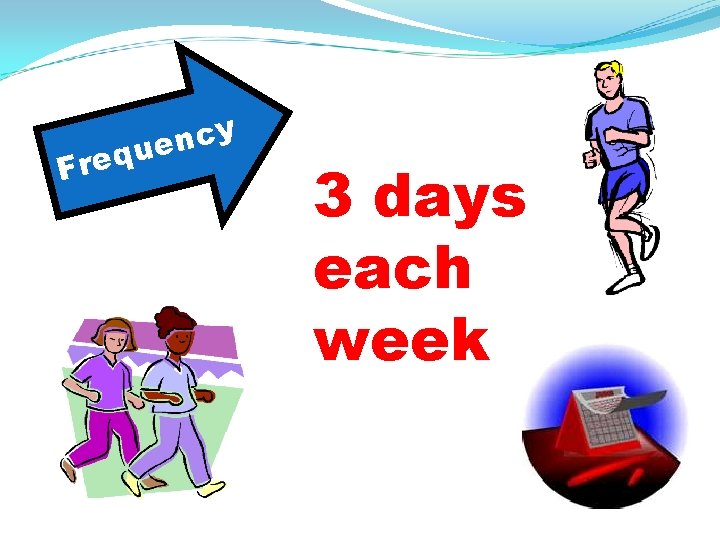
Fre y c n que 3 days each week
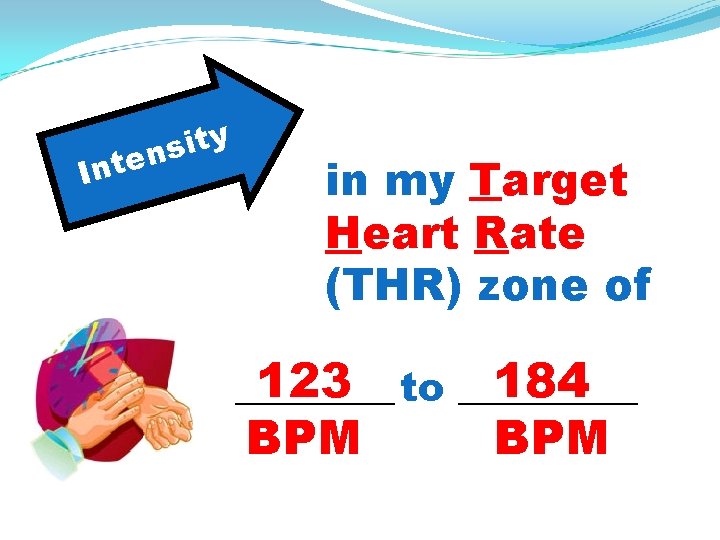
In y t i s ten in my Target Heart Rate (THR) zone of 123 to BPM ________ 184 BPM _________
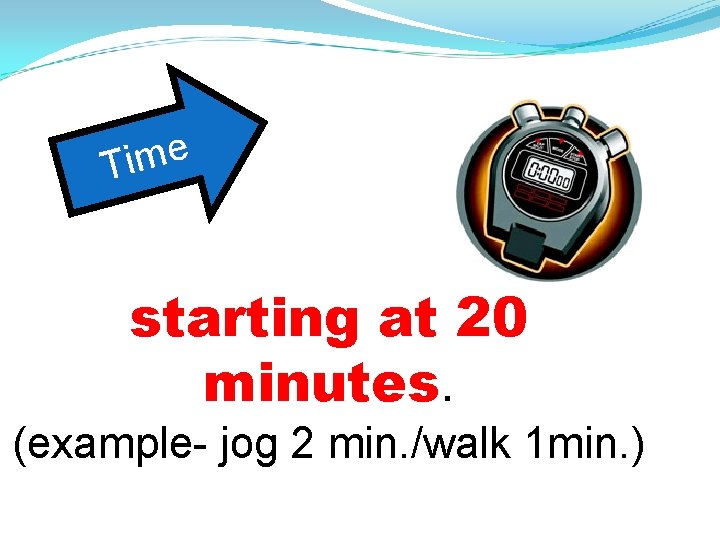
e m i T starting at 20 minutes. (example- jog 2 min. /walk 1 min. )
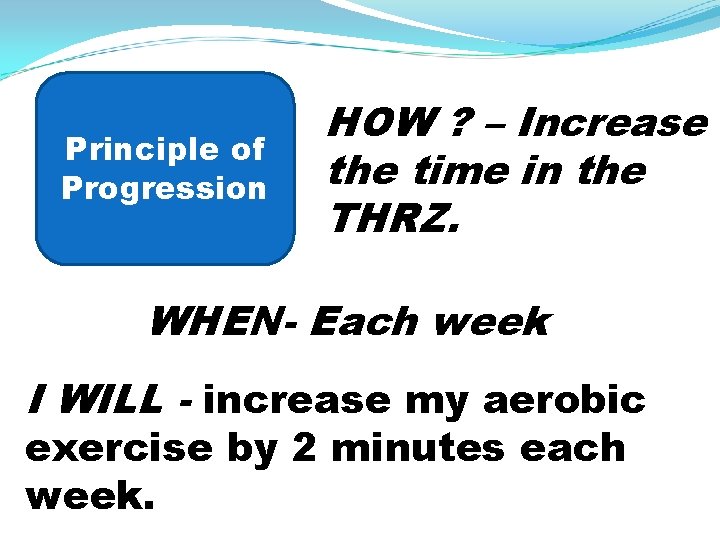
Principle of Progression HOW – WHEN- HOW ? – Increase the time in the THRZ. WHEN- Each week I WILL - increase my aerobic exercise by 2 minutes each week.

Principle of Specificity I chose jogging and other aerobic activities because they work and strengthen my heart and lungs.
My short term cardiovascular fitness goal is: I will…. (write your goal using the information above)

GO FOR IT!
- Slides: 19