
Goal setting Motivation Adherence in sport Lesson objective
Goal setting Motivation Adherence in sport
Lesson objective To be able to describe what the SMARTER principle is in goal setting To understand the different types of motivation in sport To be able to explain why individuals sustain in physical activity.
Goal setting It is important for a performer to have targets/goals to aim for either in training or a competitive situation. These goals keep the performer working hard and focused on the task giving a better chance to improve fitness and skills. Reaching goals indicates the progress of training and what the performer can achieve.
When a performer is deciding what their goals are going to be, they use a principle called; SMARTER
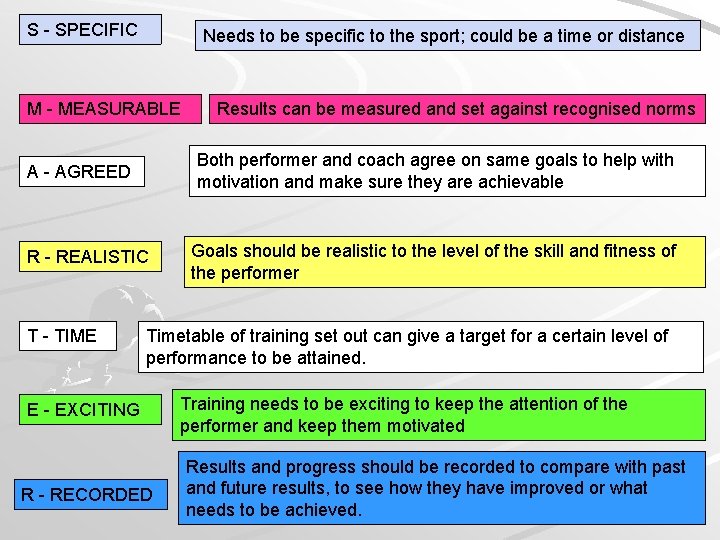
S - SPECIFIC Needs to be specific to the sport; could be a time or distance M - MEASURABLE Both performer and coach agree on same goals to help with motivation and make sure they are achievable A - AGREED R - REALISTIC T - TIME Results can be measured and set against recognised norms Goals should be realistic to the level of the skill and fitness of the performer Timetable of training set out can give a target for a certain level of performance to be attained. E - EXCITING R - RECORDED Training needs to be exciting to keep the attention of the performer and keep them motivated Results and progress should be recorded to compare with past and future results, to see how they have improved or what needs to be achieved.
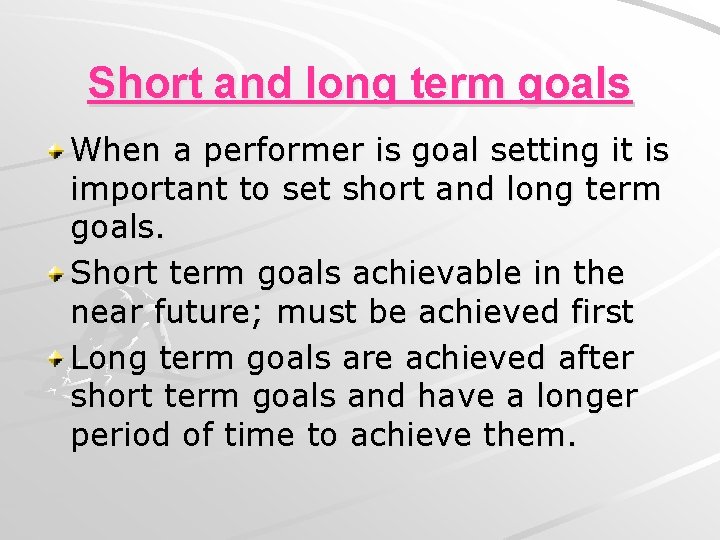
Short and long term goals When a performer is goal setting it is important to set short and long term goals. Short term goals achievable in the near future; must be achieved first Long term goals are achieved after short term goals and have a longer period of time to achieve them.
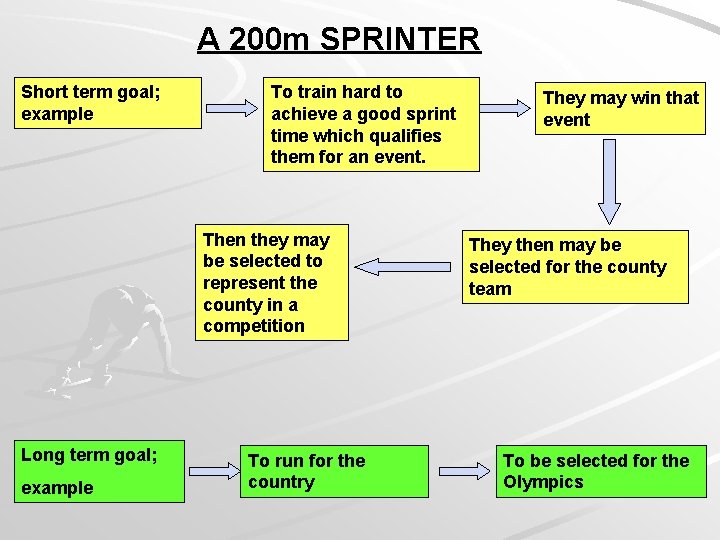
A 200 m SPRINTER Short term goal; example To train hard to achieve a good sprint time which qualifies them for an event. Then they may be selected to represent the county in a competition Long term goal; example To run for the country They may win that event They then may be selected for the county team To be selected for the Olympics
TASK Choose a sport of your choice; using the SMARTER principle; describe in sentences how each point would apply to your chosen sport.
Motivation What do you understand by the term ‘motivation’?
MOTIVATION Motivation can be defined as; ‘amount of enthusiasm and determination a person has for a given sporting performance or activity’ There are two types of motivation; INTRINSIC and EXTRINSIC
. Separate the words into two columns Self-motivated Money Enjoyment Sense of satisfaction Interested Outside Drive Prizes Trophies Desire Incentive Inside Reward
Explanation Can you explain why you have grouped those words together? Can you compare the two lists of words, how are they similar and different?
INTRINSIC motivation This is all about ‘self’ and how a person can inspire oneself into doing well. The internal drive of a person is enough to enthuse them to participate, train and compete. People who are self motivated take part for sheer enjoyment.
EXTRINSIC motivation Extrinsic motivation comes from a person needing and receiving praise, rewards and incentive to do well. A person motivated in this way needs more than enjoyment in order to participate; Certificates Trophies Money Team success Receiving praise
Task Write a short paragraph about intrinsic or extrinsic motivation. You can do either but you MUST use the words in the colour you are given in your paragraph.
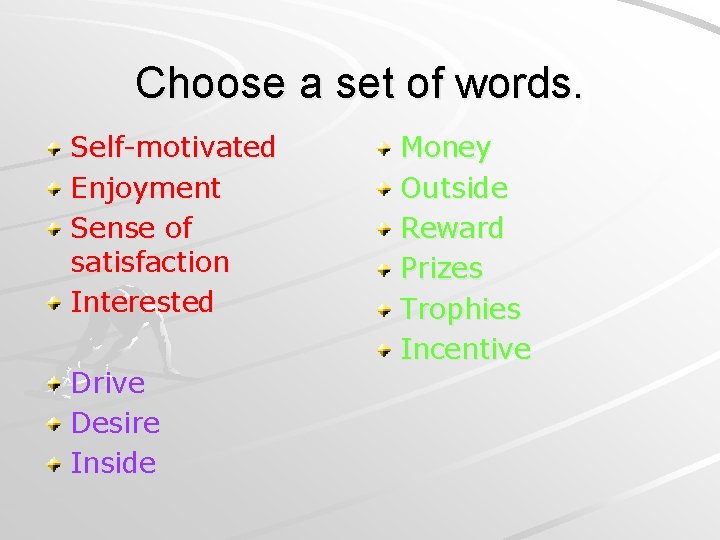
Choose a set of words. Self-motivated Enjoyment Sense of satisfaction Interested Drive Desire Inside Money Outside Reward Prizes Trophies Incentive
Just a minute… Try to talk for one minute about motivation in sport without pausing or saying “erm. ” You have the next two minutes to prepare what you are going to say. There is a mystery prize for anyone who can complete the task!!
Exam question Describe the differences between intrinsic and extrinsic motivation (3 marks)
ADHERENCE in sport Adherence in sport is sticking with physical activity in the long term. It looks at a variety of reasons as to why you would participate in physical activity.
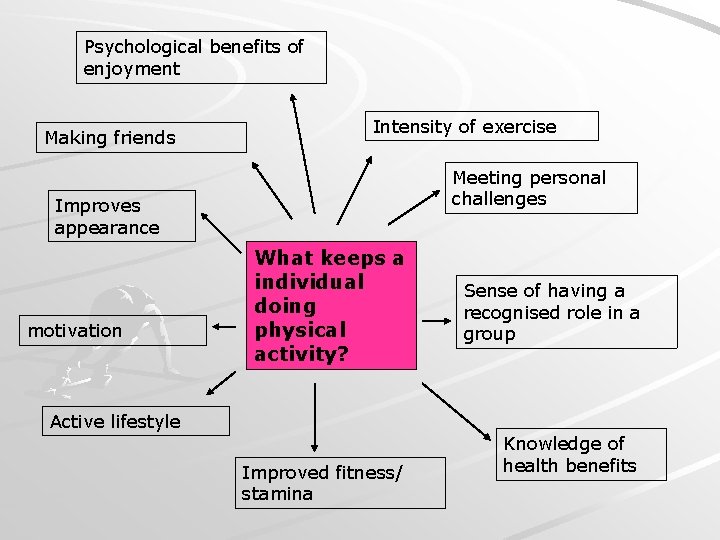
Psychological benefits of enjoyment Making friends Intensity of exercise Meeting personal challenges Improves appearance motivation What keeps a individual doing physical activity? Sense of having a recognised role in a group Active lifestyle Improved fitness/ stamina Knowledge of health benefits
Task; answer the questions 1. Why is it important for a performer to set goals in their training? 2. Describe what the differences are between intrinsic and extrinsic motivation. 3. Describe four factors that keeps an individual in physical activity and explain why.
- Slides: 21