
Goal Orientation Theory EDU 330 Educational Psychology Daniel


- Slides: 17
Goal Orientation Theory EDU 330: Educational Psychology Daniel Moos, Ph. D
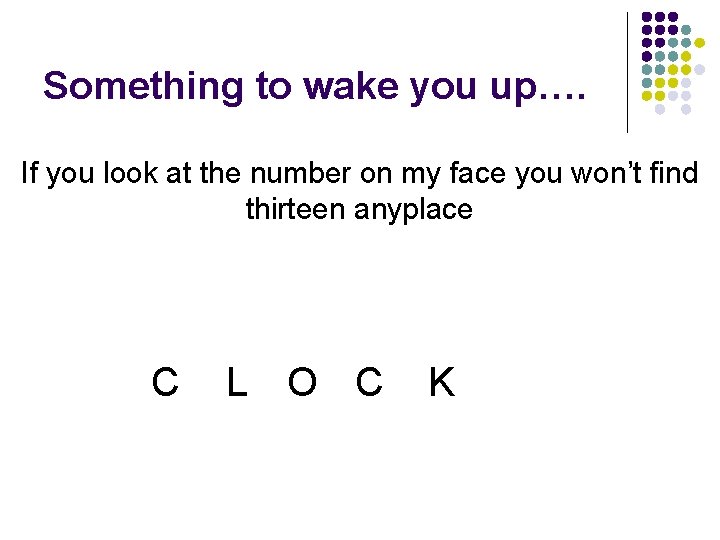
Something to wake you up…. If you look at the number on my face you won’t find thirteen anyplace C L O C K
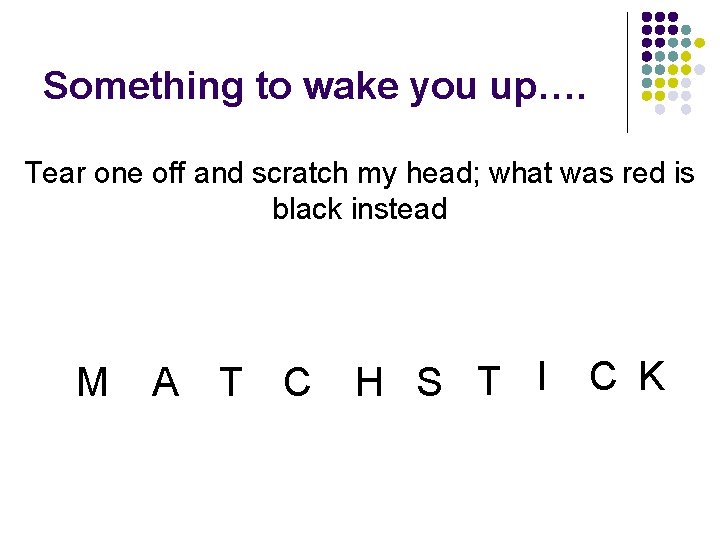
Something to wake you up…. Tear one off and scratch my head; what was red is black instead M A T C H S T I C K
Something to wake you up…. What is always coming but never arrives? T O M O R R O W
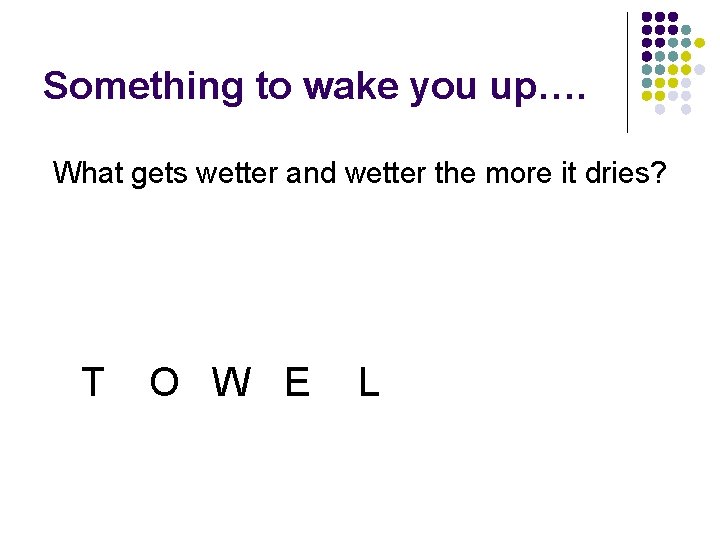
Something to wake you up…. What gets wetter and wetter the more it dries? T O W E L
Something to wake you up…. What can travel around the world while staying in the corner? S T A M P
Goal Orientation Theory EDU 330: Educational Psychology Daniel Moos, Ph. D
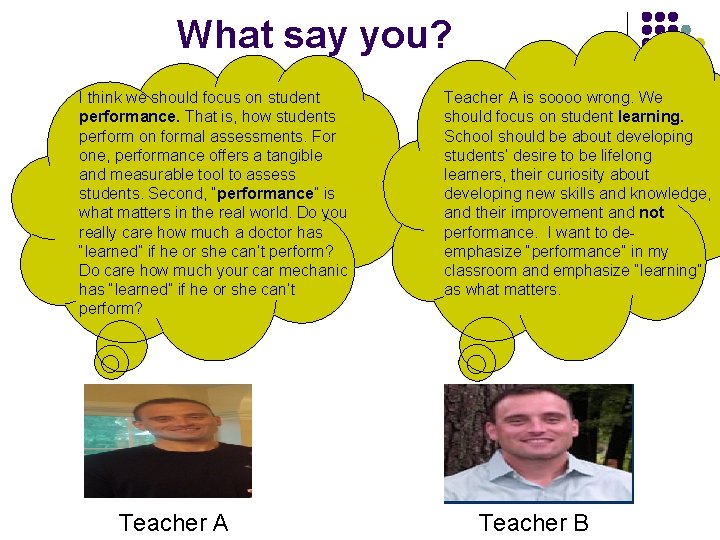
What say you? I think we should focus on student performance. That is, how students perform on formal assessments. For one, performance offers a tangible and measurable tool to assess students. Second, “performance” is what matters in the real world. Do you really care how much a doctor has “learned” if he or she can’t perform? Do care how much your car mechanic has “learned” if he or she can’t perform? Teacher A is soooo wrong. We should focus on student learning. School should be about developing students’ desire to be lifelong learners, their curiosity about developing new skills and knowledge, and their improvement and not performance. I want to deemphasize “performance” in my classroom and emphasize “learning” as what matters. Teacher B
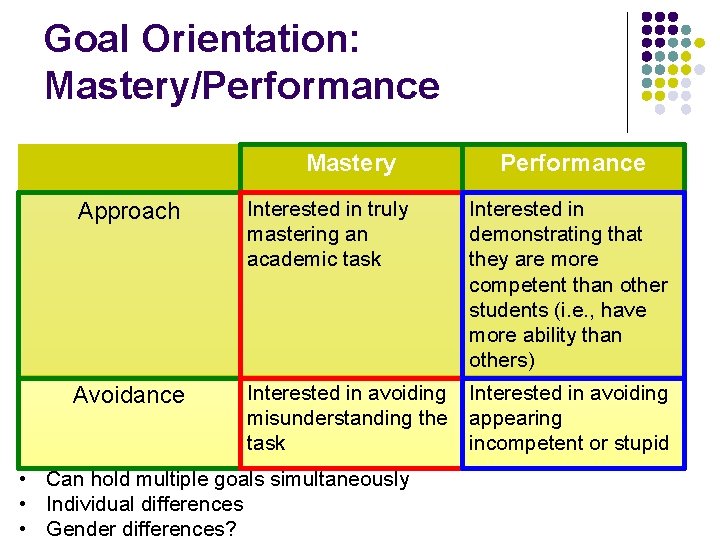
Goal Orientation: Mastery: Goal is to truly understand or master the task at hand; students who are mastery-oriented are: 1. Interested in self-improvement 2. Tend to compare their current level of achievement to their own prior achievement l Approach: Interested in truly mastering an academic task l Avoidance: Interested in avoiding misunderstanding the task
Goal Orientation: Performance: Goal is to demonstrate their ability compared to others. Students who are performance-oriented: 1. Are interested in competition 2. Are interested in demonstrating their competence, and outperforming others 3. Tend to use other students as points of comparison, rather than themselves. l Approach: Interested in demonstrating that they are more competent than other students (i. e. , have more ability than others l Avoidance: Interested in avoiding appearing incompetent or stupid
Goal Orientation: Mastery/Performance Mastery Performance Approach Interested in truly mastering an academic task Interested in demonstrating that they are more competent than other students (i. e. , have more ability than others) Avoidance Interested in avoiding misunderstanding the task Interested in avoiding appearing incompetent or stupid • Can hold multiple goals simultaneously • Individual differences • Gender differences?
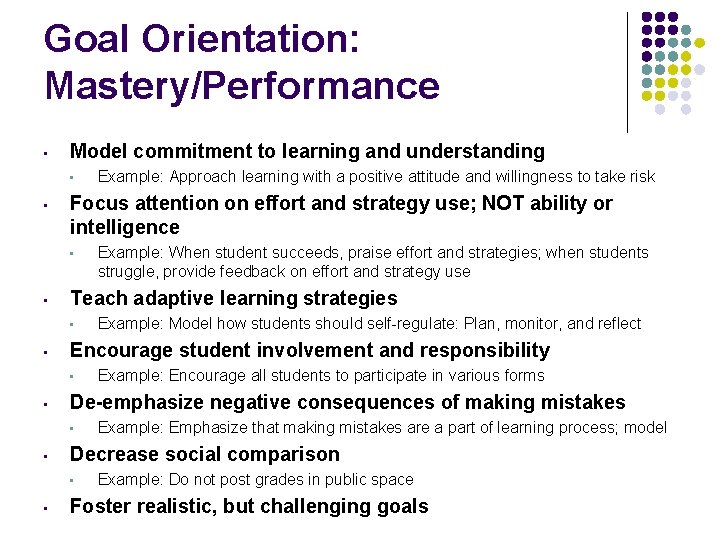
Goal Orientation: Mastery/Performance • Model commitment to learning and understanding • • Focus attention on effort and strategy use; NOT ability or intelligence • • Example: Emphasize that making mistakes are a part of learning process; model Decrease social comparison • • Example: Encourage all students to participate in various forms De-emphasize negative consequences of making mistakes • • Example: Model how students should self-regulate: Plan, monitor, and reflect Encourage student involvement and responsibility • • Example: When student succeeds, praise effort and strategies; when students struggle, provide feedback on effort and strategy use Teach adaptive learning strategies • • Example: Approach learning with a positive attitude and willingness to take risk Example: Do not post grades in public space Foster realistic, but challenging goals
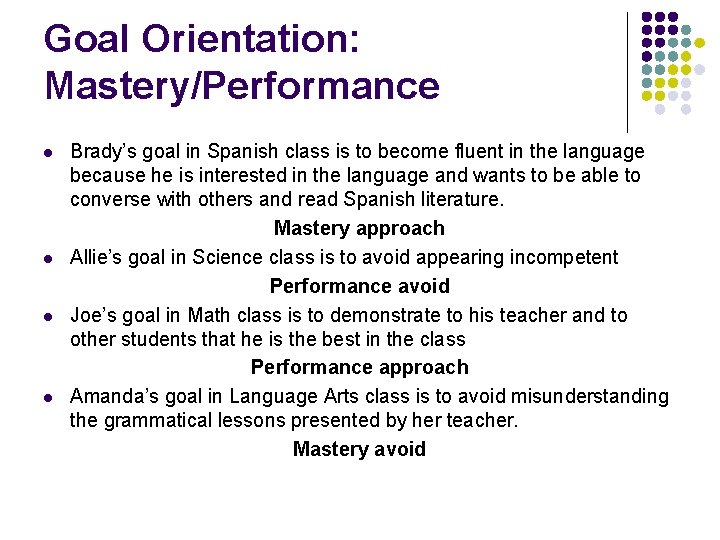
Goal Orientation: Mastery/Performance l l Brady’s goal in Spanish class is to become fluent in the language because he is interested in the language and wants to be able to converse with others and read Spanish literature. Mastery approach Allie’s goal in Science class is to avoid appearing incompetent Performance avoid Joe’s goal in Math class is to demonstrate to his teacher and to other students that he is the best in the class Performance approach Amanda’s goal in Language Arts class is to avoid misunderstanding the grammatical lessons presented by her teacher. Mastery avoid
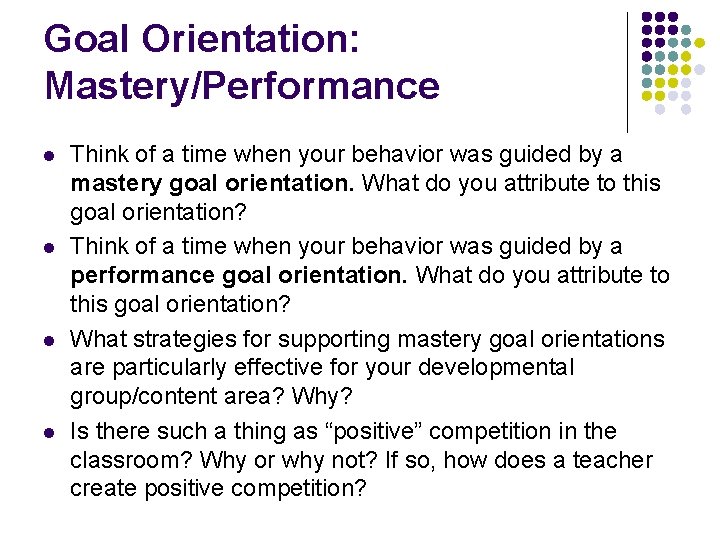
Goal Orientation: Mastery/Performance l l Think of a time when your behavior was guided by a mastery goal orientation. What do you attribute to this goal orientation? Think of a time when your behavior was guided by a performance goal orientation. What do you attribute to this goal orientation? What strategies for supporting mastery goal orientations are particularly effective for your developmental group/content area? Why? Is there such a thing as “positive” competition in the classroom? Why or why not? If so, how does a teacher create positive competition?
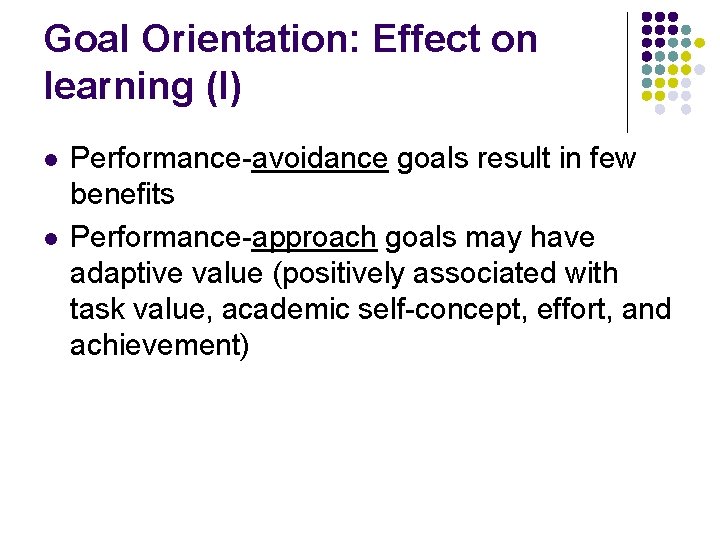
Goal Orientation: Effect on learning (I) l l Performance-avoidance goals result in few benefits Performance-approach goals may have adaptive value (positively associated with task value, academic self-concept, effort, and achievement)
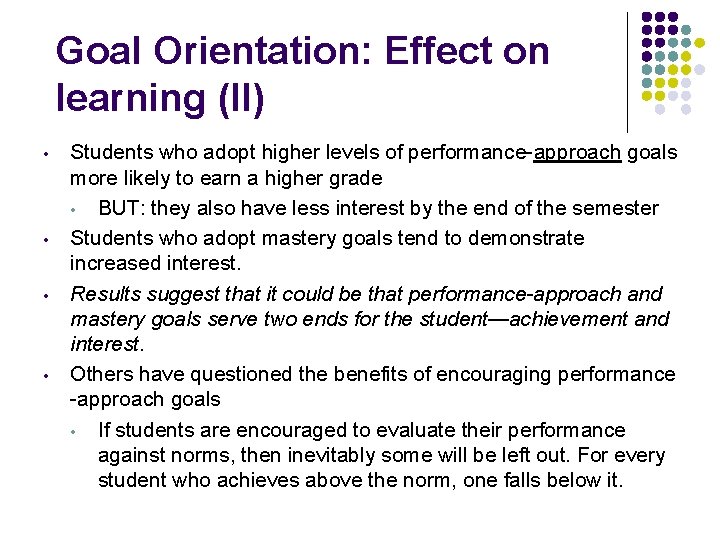
Goal Orientation: Effect on learning (II) • • Students who adopt higher levels of performance-approach goals more likely to earn a higher grade • BUT: they also have less interest by the end of the semester Students who adopt mastery goals tend to demonstrate increased interest. Results suggest that it could be that performance-approach and mastery goals serve two ends for the student—achievement and interest. Others have questioned the benefits of encouraging performance -approach goals • If students are encouraged to evaluate their performance against norms, then inevitably some will be left out. For every student who achieves above the norm, one falls below it.
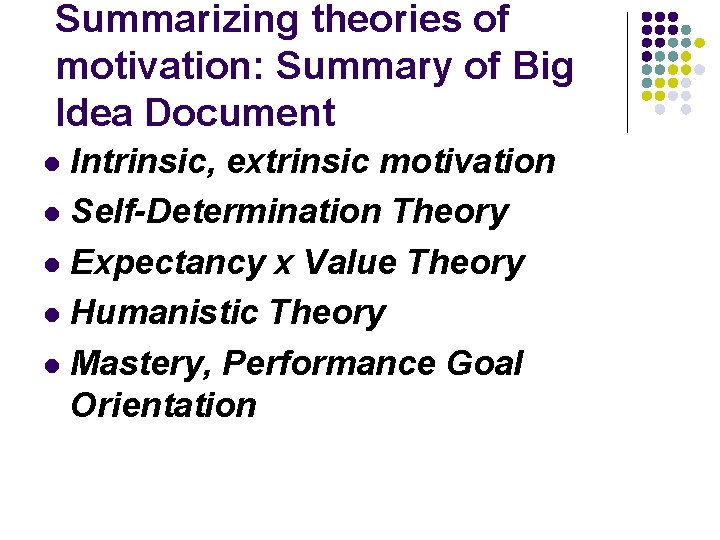
Summarizing theories of motivation: Summary of Big Idea Document Intrinsic, extrinsic motivation l Self-Determination Theory l Expectancy x Value Theory l Humanistic Theory l Mastery, Performance Goal Orientation l