
Goal 5 Ecology Why Study Ecology Ecology is

- Slides: 33
Goal 5: Ecology
Why Study Ecology • Ecology is the study of interactions between organisms and their environments • Ecologist ask questions such as: • “What does a coyote eat” • “How does temperature affect the growth of plants” • “How does day length affect bird migration”
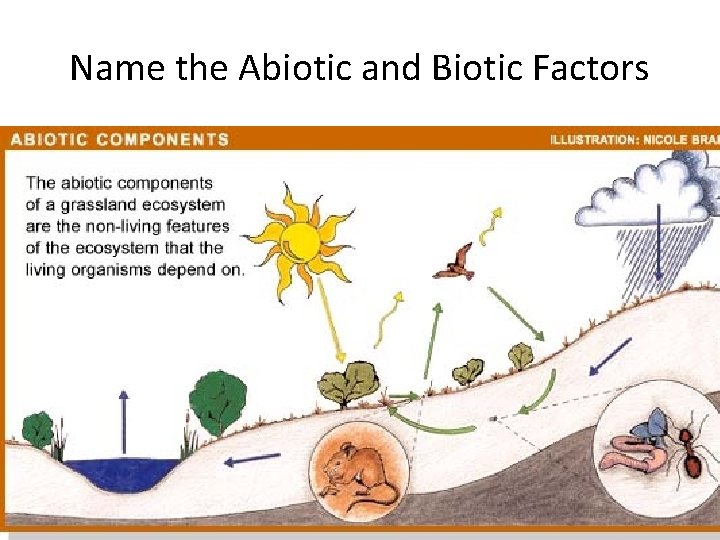
• Bio= life • The sphere of life consists of living and nonliving factors. It supports all life. • Biotic= living • Abiotic=non-living
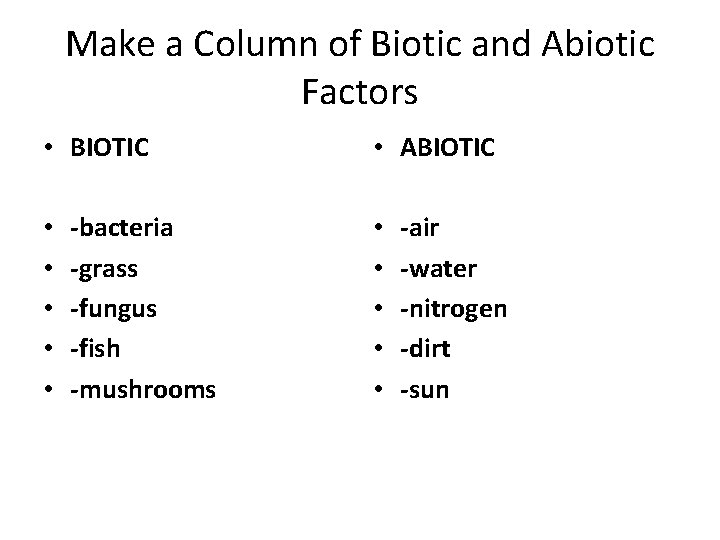
Make a Column of Biotic and Abiotic Factors • BIOTIC • • • -bacteria -grass -fungus -fish -mushrooms • ABIOTIC • • • -air -water -nitrogen -dirt -sun
Name the Abiotic and Biotic Factors
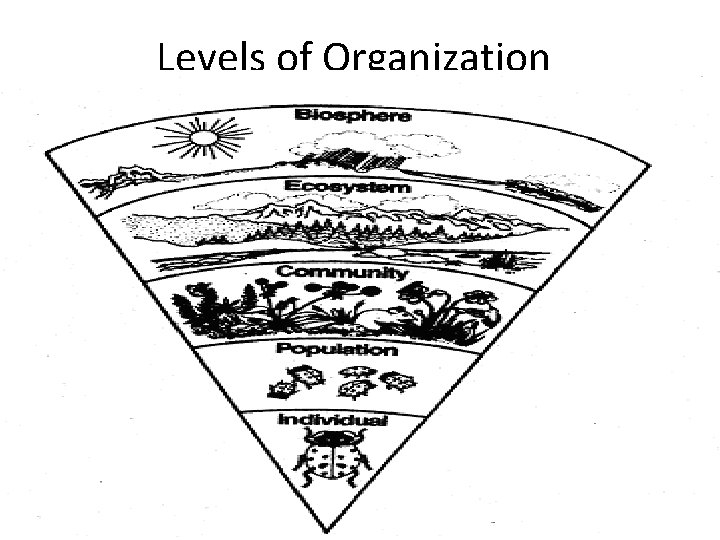
Levels of Organization
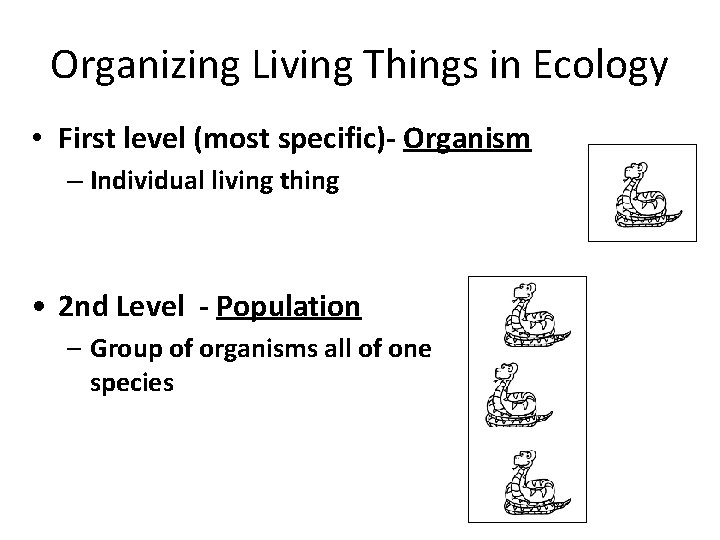
Organizing Living Things in Ecology • First level (most specific)- Organism – Individual living thing • 2 nd Level - Population – Group of organisms all of one species
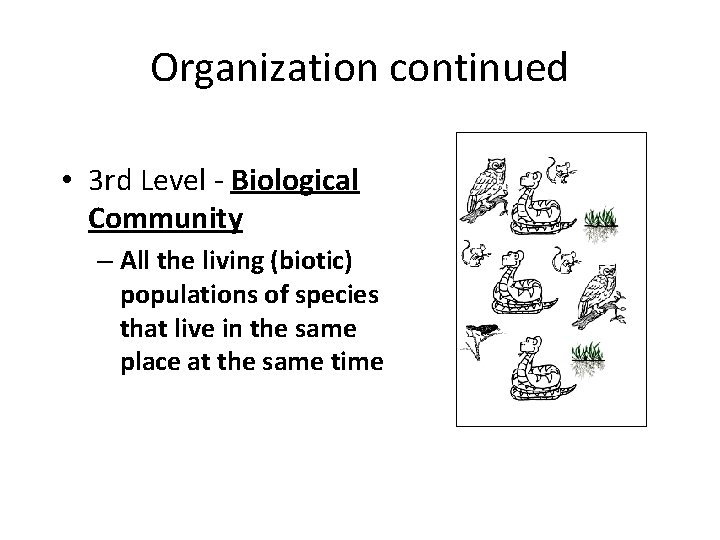
Organization continued • 3 rd Level - Biological Community – All the living (biotic) populations of species that live in the same place at the same time
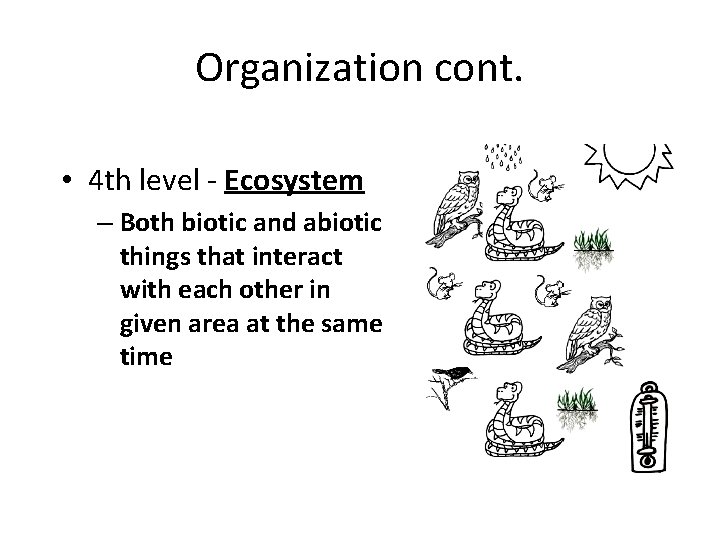
Organization cont. • 4 th level - Ecosystem – Both biotic and abiotic things that interact with each other in given area at the same time
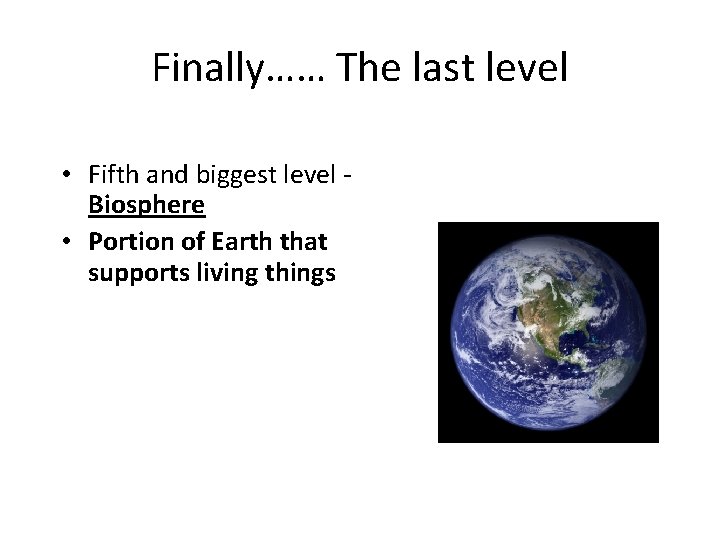
Finally…… The last level • Fifth and biggest level Biosphere • Portion of Earth that supports living things
Organisms in Ecosystems Habitat vs. Niche • Habitat = the place where an organism lives out it’s life – Where you live – One habitat can have many niches • Niche = strategies and adaptations a species uses in its environment – Organism’s role in the habitat – More than one species can not occupy the same niche in a location.
Bellringer • Relate each one of the characteristics of life to the human body. • Example: Genetic Code: My genetic information is contained in DNA and RNA
5. 01 a Identify and describe symbiotic relationships • Symbiosis = "intimate living together" between different species. • Refers to the different relationships that can exist between organisms 1. Mutualism (+, +) 2. Commensalism (+, 0) 3. Parasitism (+, -) 4. Predator-Prey cycle
Mutualism
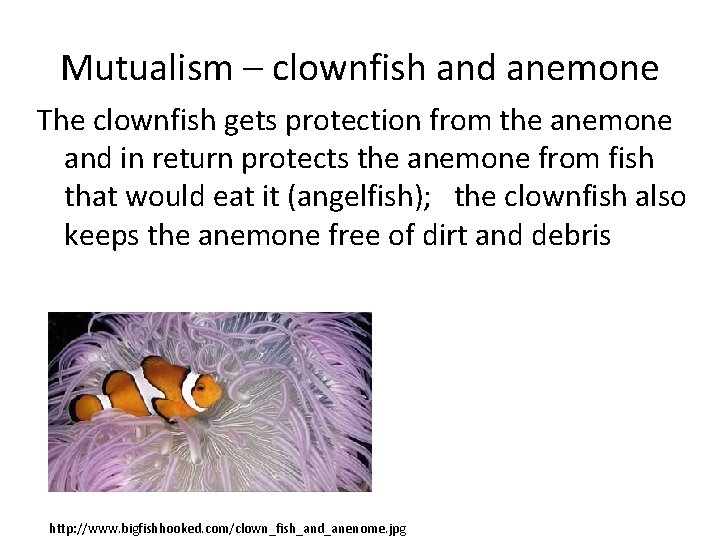
Mutualism – clownfish and anemone The clownfish gets protection from the anemone and in return protects the anemone from fish that would eat it (angelfish); the clownfish also keeps the anemone free of dirt and debris http: //www. bigfishhooked. com/clown_fish_and_anenome. jpg
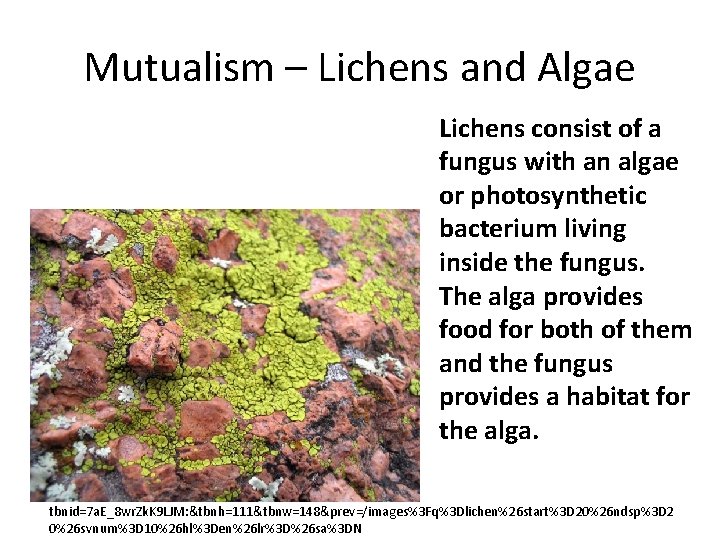
Mutualism – Lichens and Algae Lichens consist of a fungus with an algae or photosynthetic bacterium living inside the fungus. The alga provides food for both of them and the fungus provides a habitat for the alga. tbnid=7 a. E_8 wr. Zk. K 9 LJM: &tbnh=111&tbnw=148&prev=/images%3 Fq%3 Dlichen%26 start%3 D 20%26 ndsp%3 D 2 0%26 svnum%3 D 10%26 hl%3 Den%26 lr%3 D%26 sa%3 DN
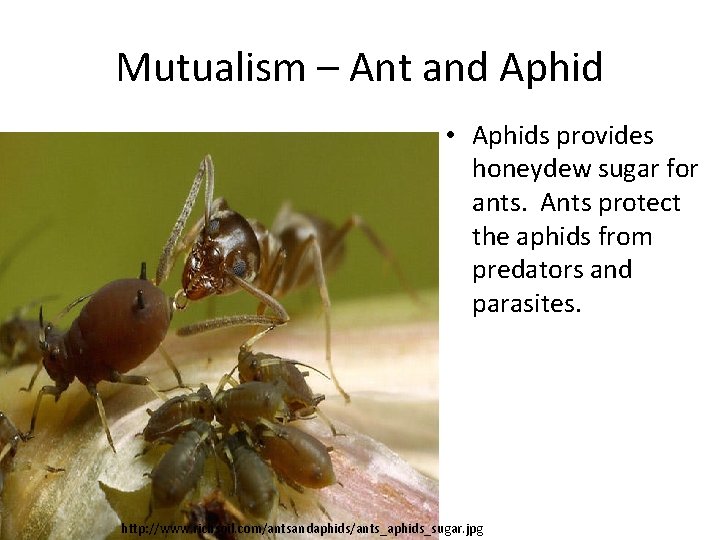
Mutualism – Ant and Aphid • Aphids provides honeydew sugar for ants. Ants protect the aphids from predators and parasites. http: //www. richsoil. com/antsandaphids/ants_aphids_sugar. jpg
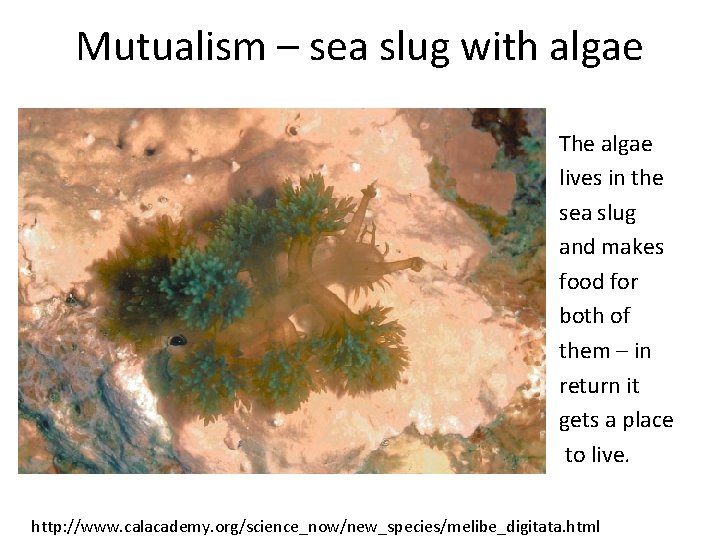
Mutualism – sea slug with algae The algae lives in the sea slug and makes food for both of them – in return it gets a place to live. http: //www. calacademy. org/science_now/new_species/melibe_digitata. html
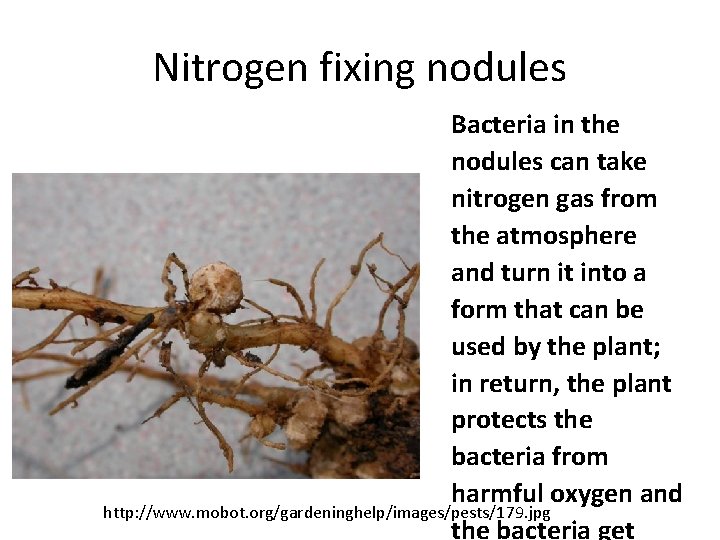
Nitrogen fixing nodules Bacteria in the nodules can take nitrogen gas from the atmosphere and turn it into a form that can be used by the plant; in return, the plant protects the bacteria from harmful oxygen and http: //www. mobot. org/gardeninghelp/images/pests/179. jpg the bacteria get
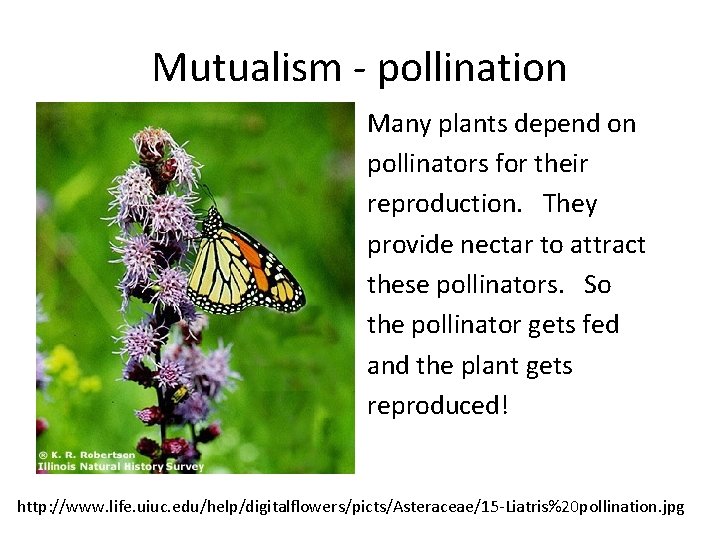
Mutualism - pollination Many plants depend on pollinators for their reproduction. They provide nectar to attract these pollinators. So the pollinator gets fed and the plant gets reproduced! http: //www. life. uiuc. edu/help/digitalflowers/picts/Asteraceae/15 -Liatris%20 pollination. jpg
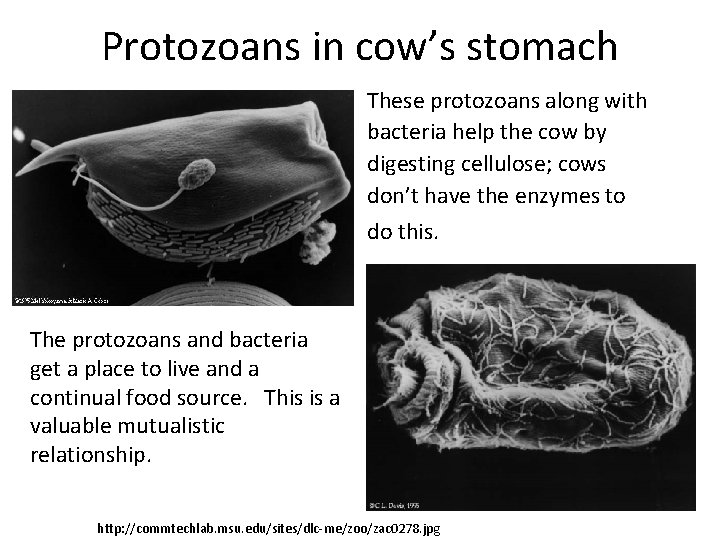
Protozoans in cow’s stomach These protozoans along with bacteria help the cow by digesting cellulose; cows don’t have the enzymes to do this. The protozoans and bacteria get a place to live and a continual food source. This is a valuable mutualistic relationship. http: //commtechlab. msu. edu/sites/dlc-me/zoo/zac 0278. jpg
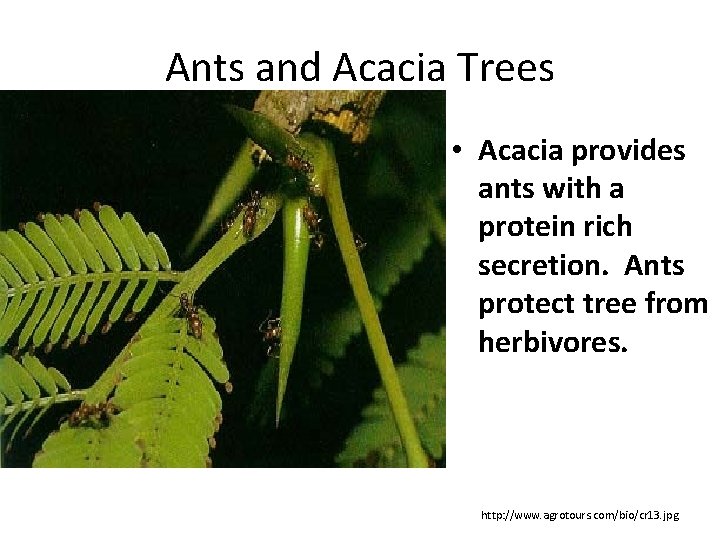
Ants and Acacia Trees • Acacia provides ants with a protein rich secretion. Ants protect tree from herbivores. http: //www. agrotours. com/bio/cr 13. jpg
Commensalism
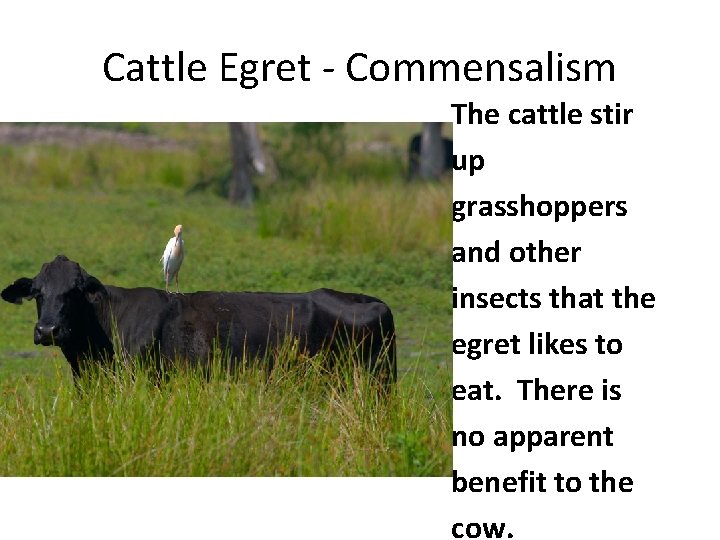
Cattle Egret - Commensalism The cattle stir up grasshoppers and other insects that the egret likes to eat. There is no apparent benefit to the cow.
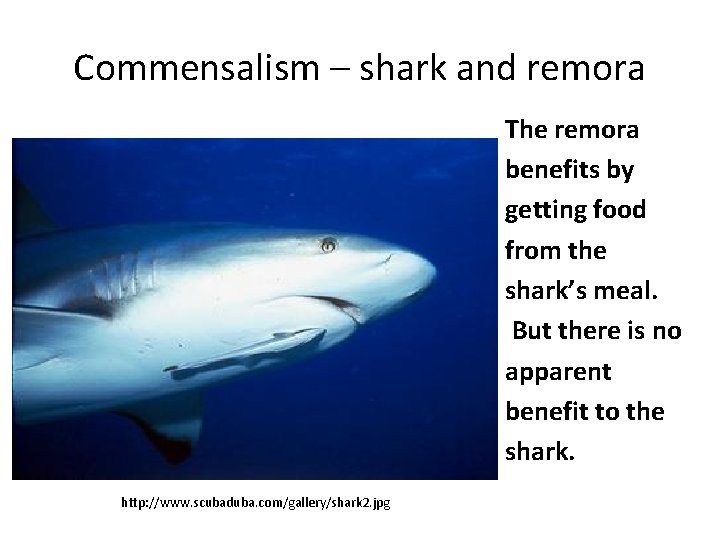
Commensalism – shark and remora The remora benefits by getting food from the shark’s meal. But there is no apparent benefit to the shark. http: //www. scubaduba. com/gallery/shark 2. jpg
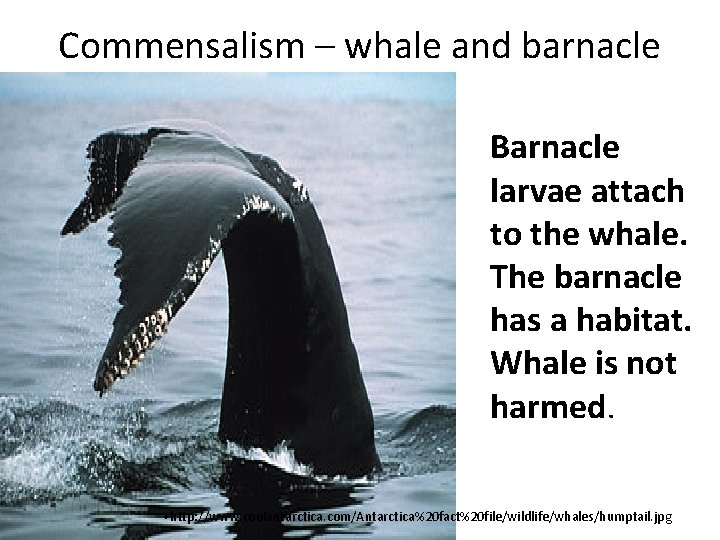
Commensalism – whale and barnacle Barnacle larvae attach to the whale. The barnacle has a habitat. Whale is not harmed. • http: //www. coolantarctica. com/Antarctica%20 fact%20 file/wildlife/whales/humptail. jpg
Parasitism
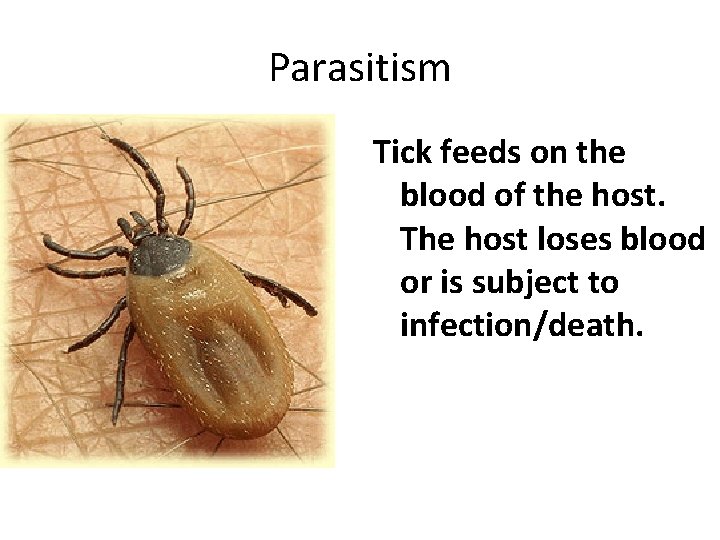
Parasitism Tick feeds on the blood of the host. The host loses blood or is subject to infection/death.
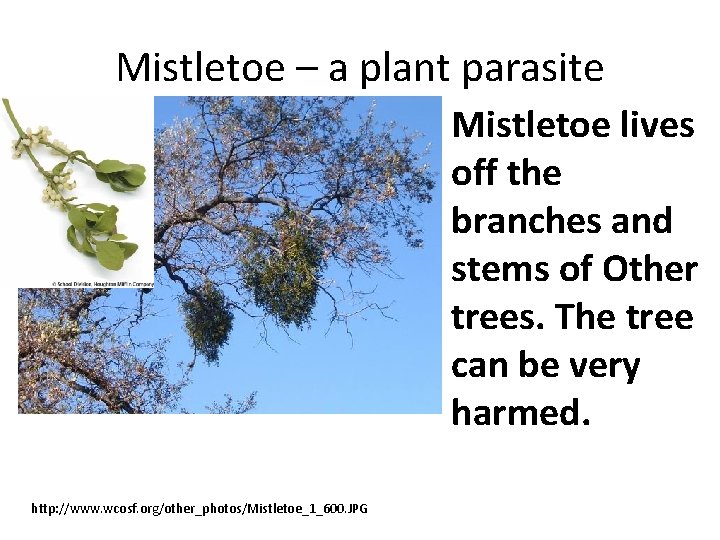
Mistletoe – a plant parasite Mistletoe lives off the branches and stems of Other trees. The tree can be very harmed. http: //www. wcosf. org/other_photos/Mistletoe_1_600. JPG
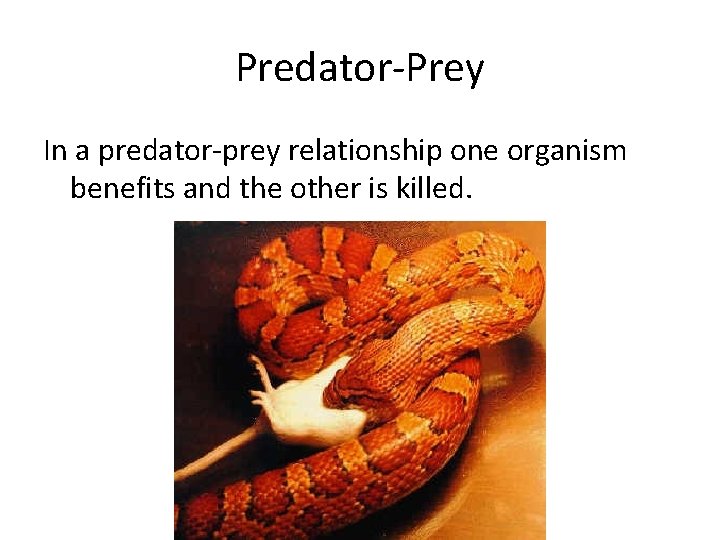
Predator-Prey In a predator-prey relationship one organism benefits and the other is killed.
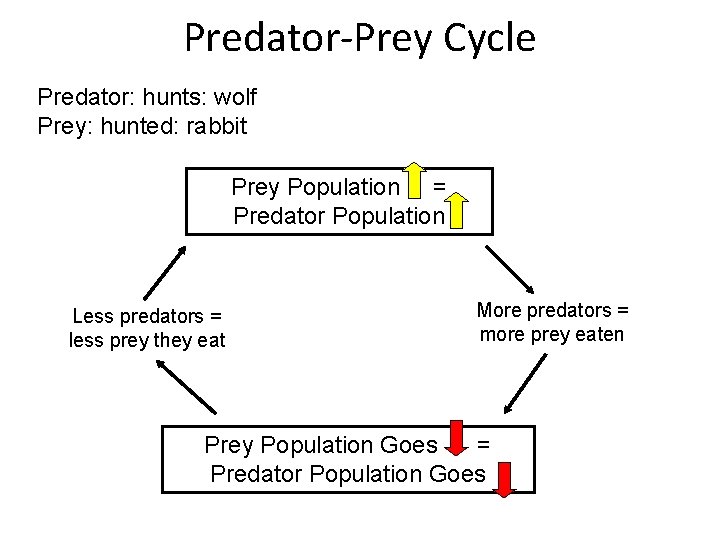
Predator-Prey Cycle Predator: hunts: wolf Prey: hunted: rabbit Prey Population = Predator Population Less predators = less prey they eat More predators = more prey eaten Prey Population Goes = Predator Population Goes
Bubble Map • • Symbiotic Relationships Benefit Harmed No effect Mutualistic Commensalism Parasitism ** Examples of Each
• We will be planting Great Northern Beans to grow plants. In your group, you must decide on an experiment that you want to perform. • Brainstorm Ideas. Choose one. • What do you want to find out? Can you develop an experiment to answer your question? Does your question make sense? Is it confusing? • Step 2: Hypothesis • What do you think will happen? BE SPECIFIC! Use complete sentences. • Step 3: Start developing a procedure