
Goal 5 ECOLOGY Ecosystem HABITAT n n n
Goal 5 ECOLOGY
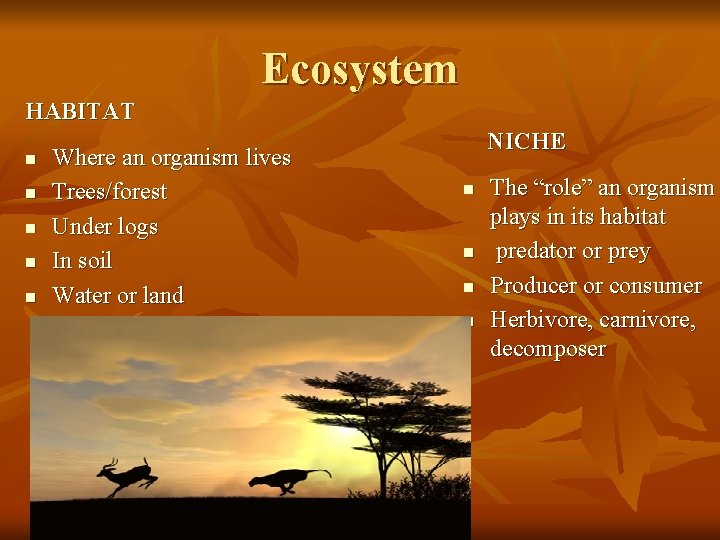
Ecosystem HABITAT n n n Where an organism lives Trees/forest Under logs In soil Water or land NICHE n n The “role” an organism plays in its habitat predator or prey Producer or consumer Herbivore, carnivore, decomposer
5. 01 Interrelationships Symbiosis – relationship between two organisms Mutualism commensalism parasitism Predator- Prey Relationships
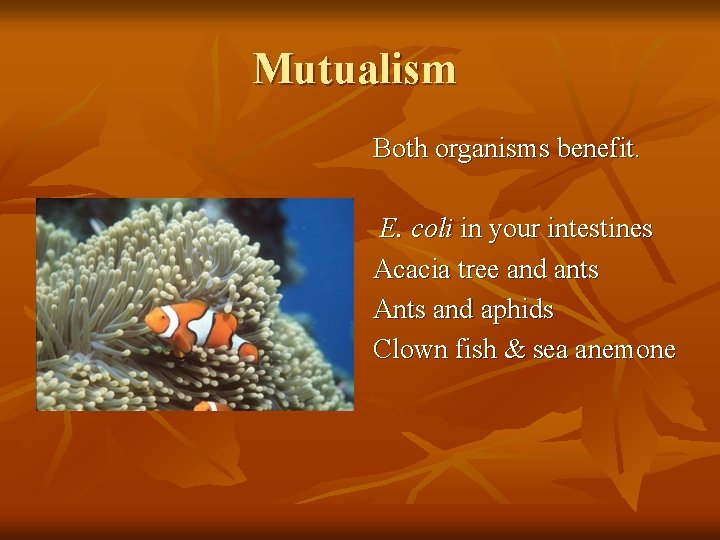
Mutualism Both organisms benefit. E. coli in your intestines Acacia tree and ants Ants and aphids Clown fish & sea anemone
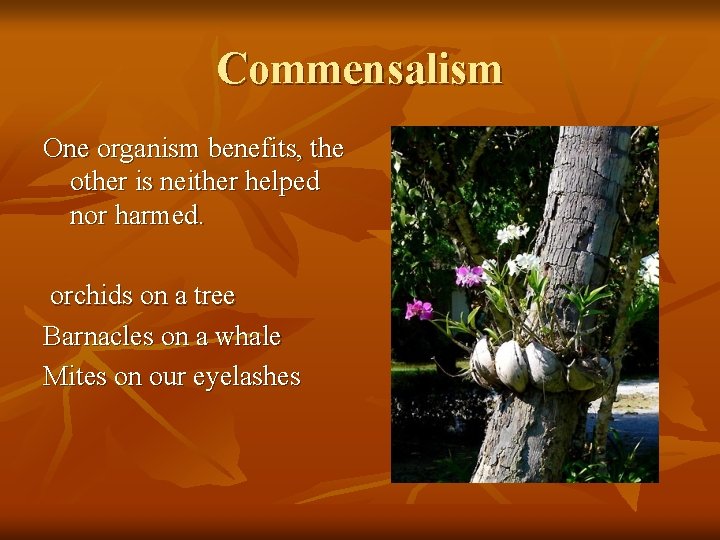
Commensalism One organism benefits, the other is neither helped nor harmed. orchids on a tree Barnacles on a whale Mites on our eyelashes
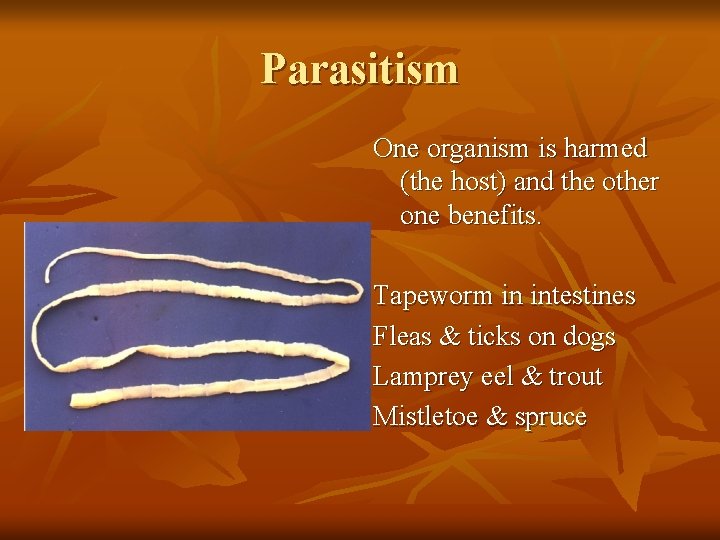
Parasitism One organism is harmed (the host) and the other one benefits. Tapeworm in intestines Fleas & ticks on dogs Lamprey eel & trout Mistletoe & spruce
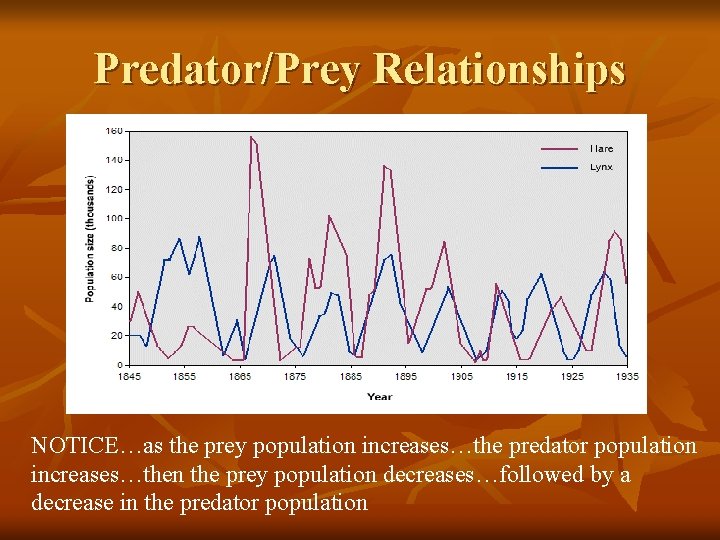
Predator/Prey Relationships NOTICE…as the prey population increases…the predator population increases…then the prey population decreases…followed by a decrease in the predator population
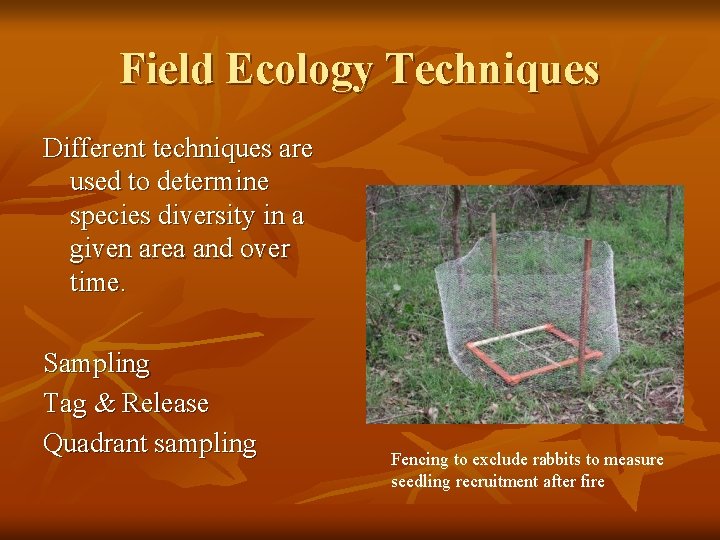
Field Ecology Techniques Different techniques are used to determine species diversity in a given area and over time. Sampling Tag & Release Quadrant sampling Fencing to exclude rabbits to measure seedling recruitment after fire
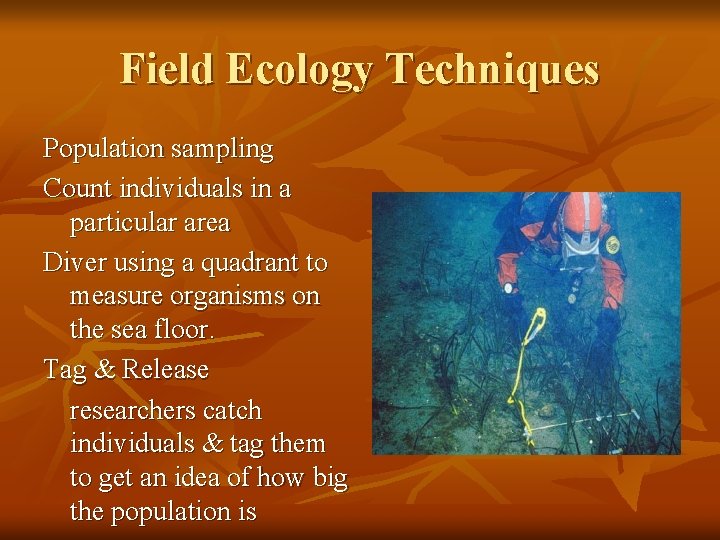
Field Ecology Techniques Population sampling Count individuals in a particular area Diver using a quadrant to measure organisms on the sea floor. Tag & Release researchers catch individuals & tag them to get an idea of how big the population is
Biotic and Abiotic Factors n n n Biotic Factors – Living or once living components of an ecosystem. (plants and animals) Abiotic Factors- Nonliving things which influence an ecosystem(water, rocks, soil, sunlight, air, salt, wind) The type of living things (biotic) in an ecosystem are determined by the nonliving (abiotic) factors such as soil, availability of sunlight, presence of water
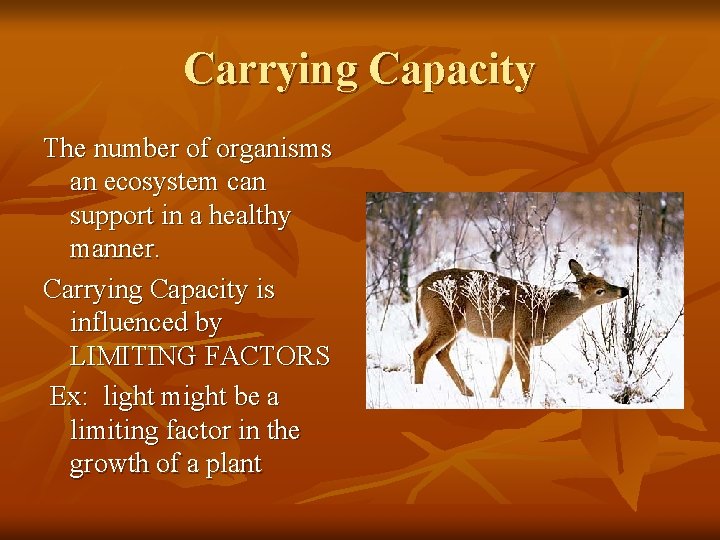
Carrying Capacity The number of organisms an ecosystem can support in a healthy manner. Carrying Capacity is influenced by LIMITING FACTORS Ex: light might be a limiting factor in the growth of a plant
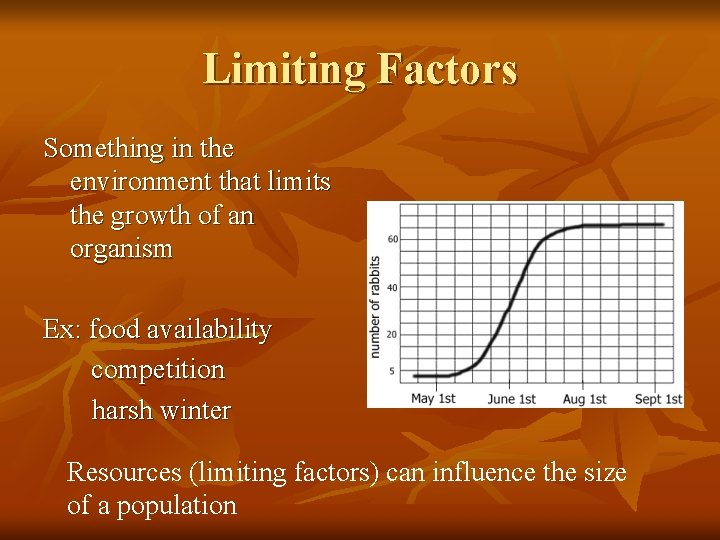
Limiting Factors Something in the environment that limits the growth of an organism Ex: food availability competition harsh winter Resources (limiting factors) can influence the size of a population
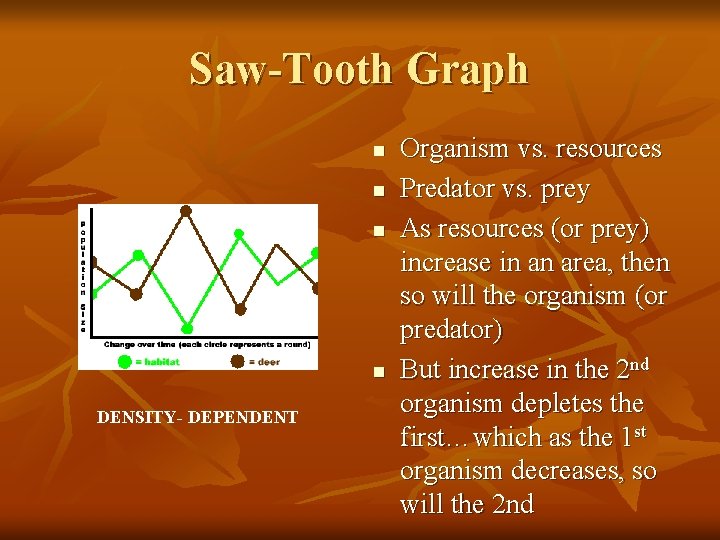
Saw-Tooth Graph n n DENSITY- DEPENDENT Organism vs. resources Predator vs. prey As resources (or prey) increase in an area, then so will the organism (or predator) But increase in the 2 nd organism depletes the first…which as the 1 st organism decreases, so will the 2 nd
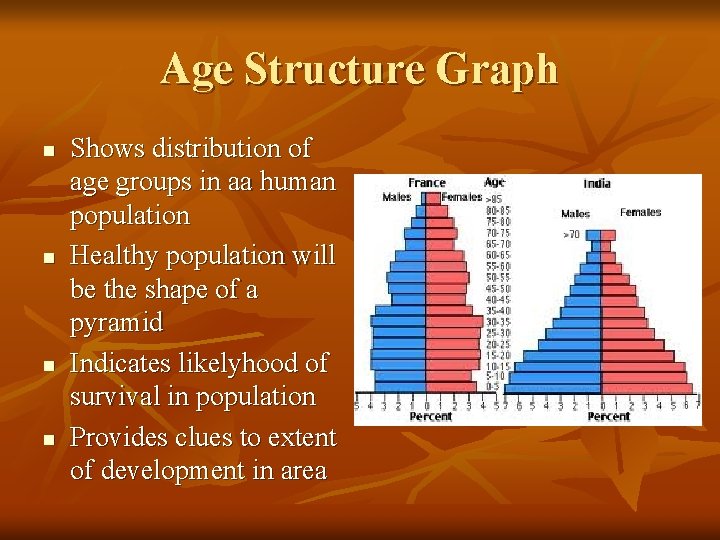
Age Structure Graph n n Shows distribution of age groups in aa human population Healthy population will be the shape of a pyramid Indicates likelyhood of survival in population Provides clues to extent of development in area

S-shaped Graph or logistic growth n n LAG phase (slow growth) EXPONENTIAL growth phase (rapid growth) STEADY STATE (leveling off; population has reached carrying capacity) DEATH phase (decrease in population)
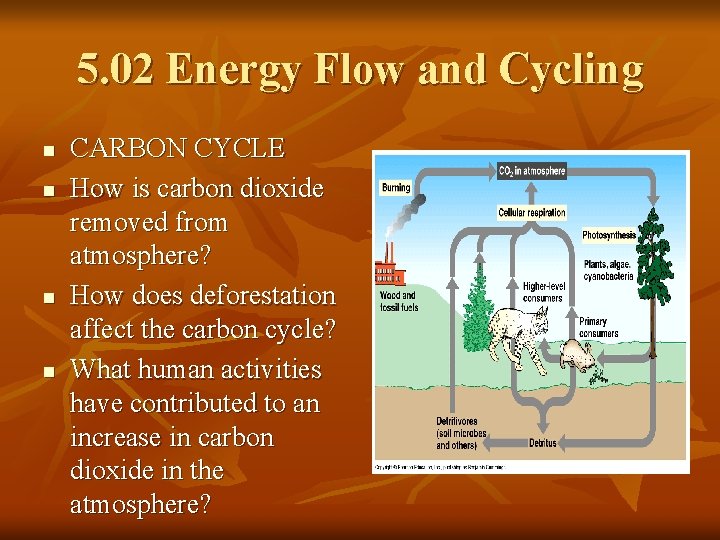
5. 02 Energy Flow and Cycling n n CARBON CYCLE How is carbon dioxide removed from atmosphere? How does deforestation affect the carbon cycle? What human activities have contributed to an increase in carbon dioxide in the atmosphere?
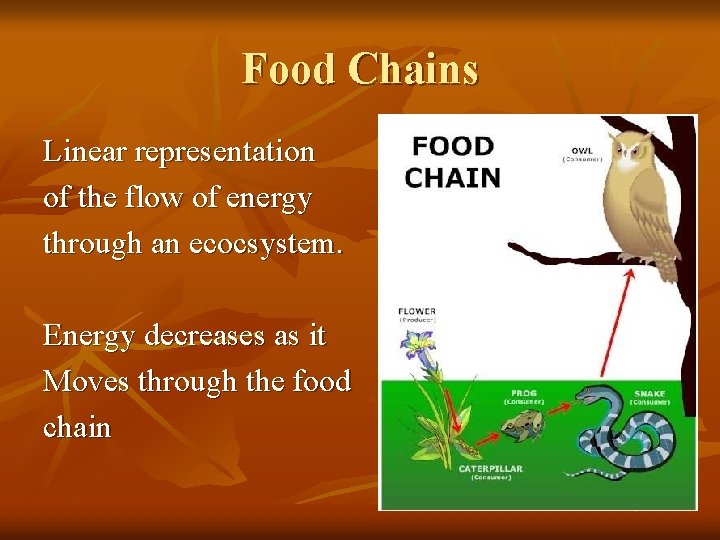
Food Chains Linear representation of the flow of energy through an ecocsystem. Energy decreases as it Moves through the food chain
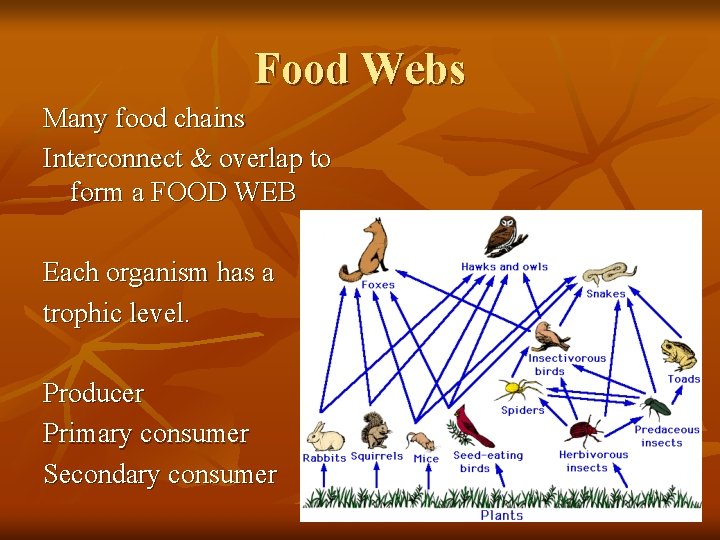
Food Webs Many food chains Interconnect & overlap to form a FOOD WEB Each organism has a trophic level. Producer Primary consumer Secondary consumer
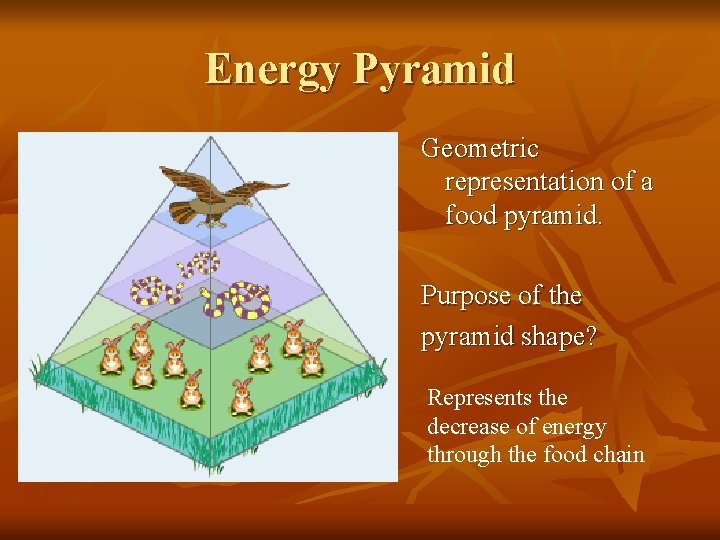
Energy Pyramid n n n Geometric representation of a food pyramid. Purpose of the pyramid shape? Represents the decrease of energy through the food chain
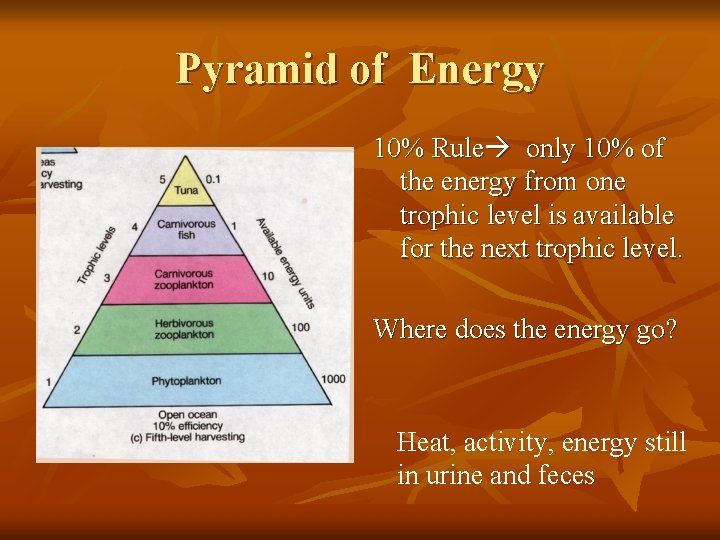
Pyramid of Energy 10% Rule only 10% of the energy from one trophic level is available for the next trophic level. Where does the energy go? Heat, activity, energy still in urine and feces
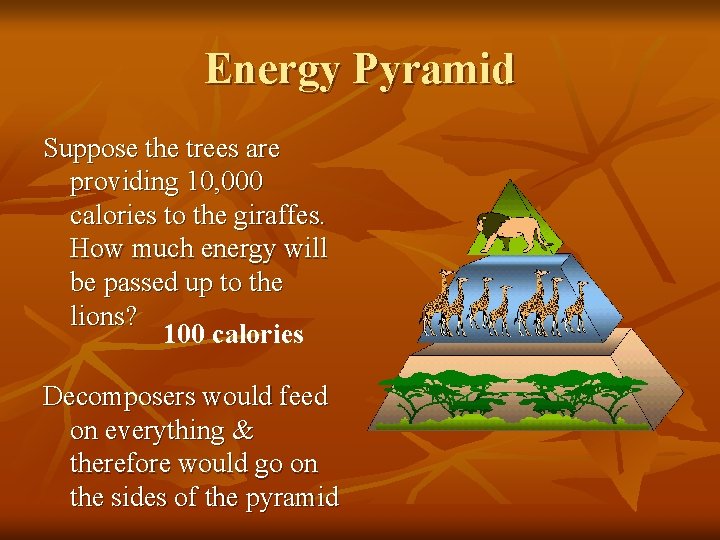
Energy Pyramid Suppose the trees are providing 10, 000 calories to the giraffes. How much energy will be passed up to the lions? 100 calories Decomposers would feed on everything & therefore would go on the sides of the pyramid
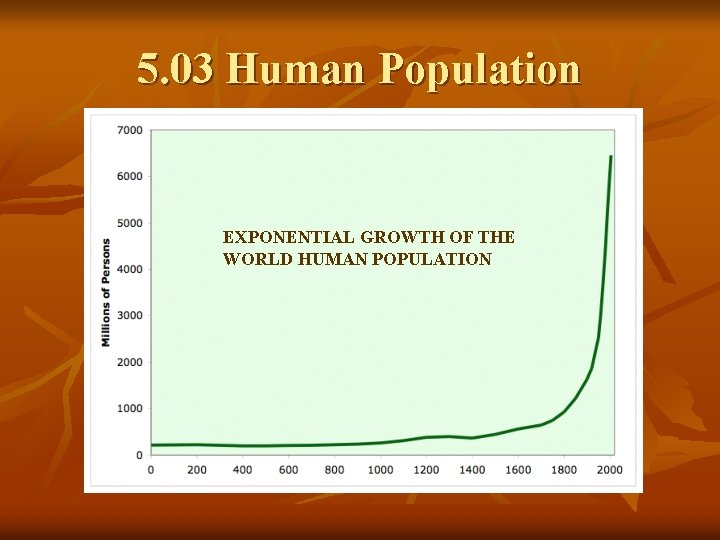
5. 03 Human Population EXPONENTIAL GROWTH OF THE WORLD HUMAN POPULATION
Human Population n n EXPONENTIAL GROWTH: growth of a population increases by multiples of preceding generations; rapid growth that results from unlimited resources What factors have influenced human birth rates and death rates over time? Better sanitation…abundant food supply…technological advances…medical advances
Population SIZE vs. Population DENSITY n n Population Size is the number of individuals in a population EX: The student population at KHS is 1600 students. n n Population Density is the number of individuals of a population per area EX: there are 30 students per math classroom compared to 25 students per science classroom
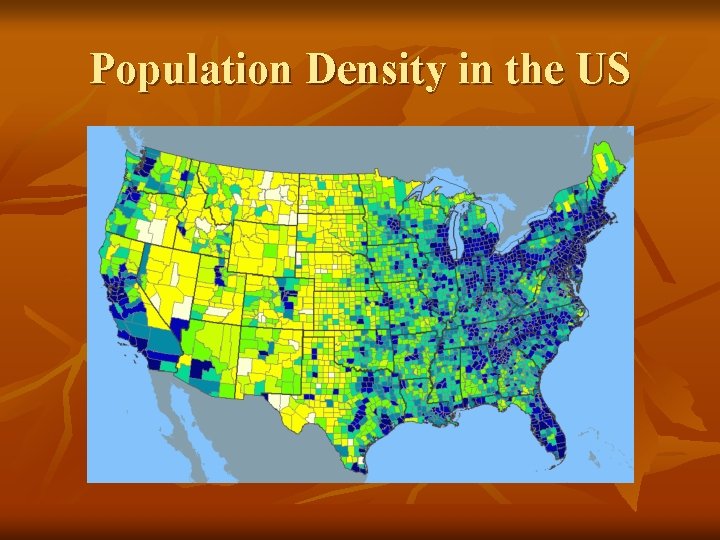
Population Density in the US
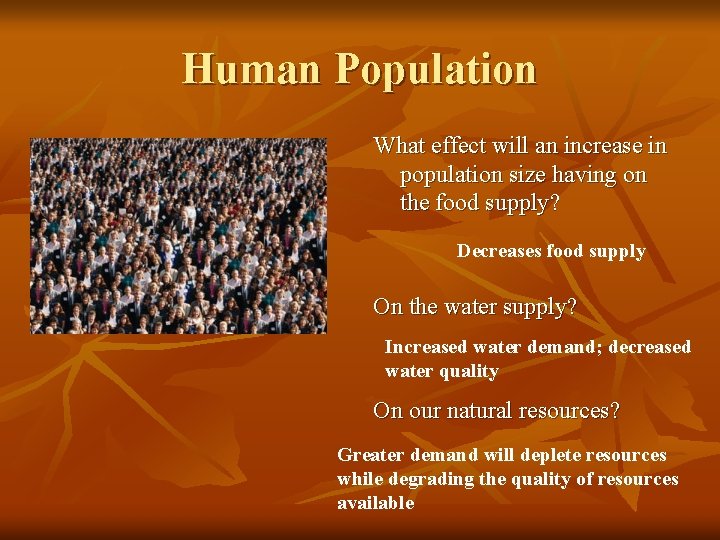
Human Population What effect will an increase in population size having on the food supply? Decreases food supply On the water supply? Increased water demand; decreased water quality On our natural resources? Greater demand will deplete resources while degrading the quality of resources available
What adverse effect is increase in human population growth having on our environment? n n n Acid Precipitation Global Warming Habitat Destruction Extinction of species Air & Water Pollution Ozone Depletion Ground water contamination
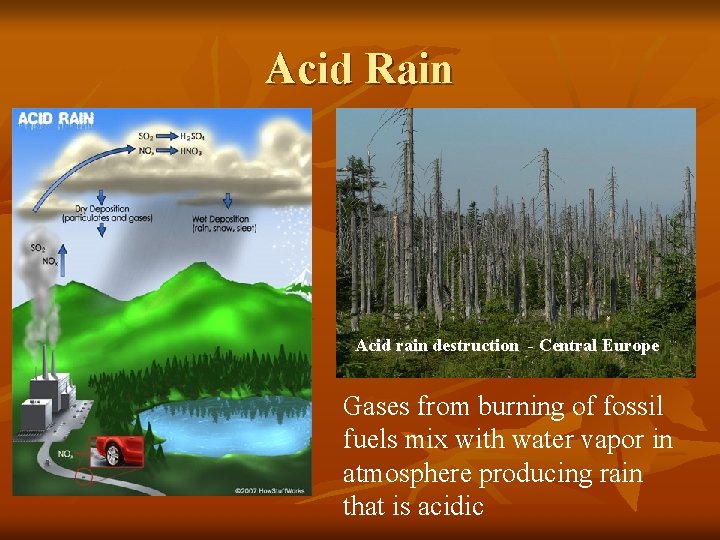
Acid Rain Acid rain destruction - Central Europe Gases from burning of fossil fuels mix with water vapor in atmosphere producing rain that is acidic
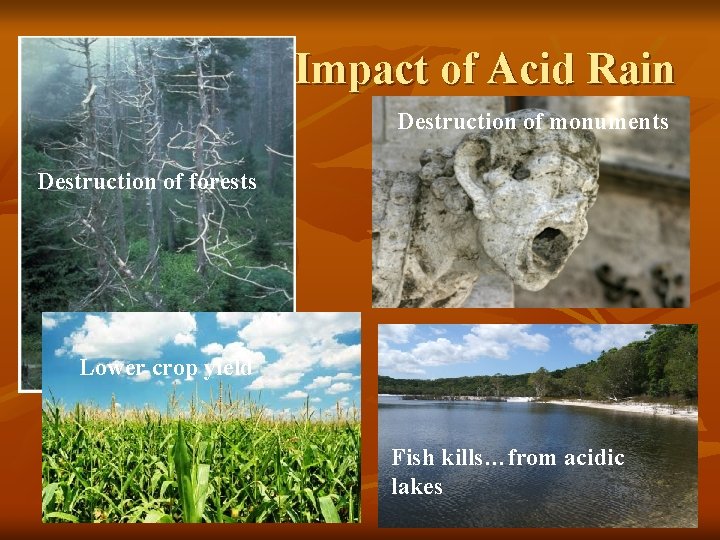
Impact of Acid Rain Destruction of monuments Destruction of forests Lower crop yield Fish kills…from acidic lakes
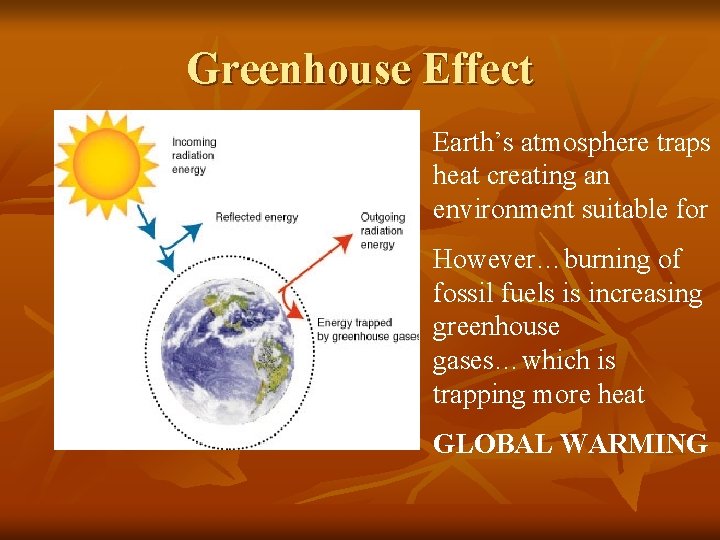
Greenhouse Effect Earth’s atmosphere traps heat creating an environment suitable for However…burning of fossil fuels is increasing greenhouse gases…which is trapping more heat GLOBAL WARMING
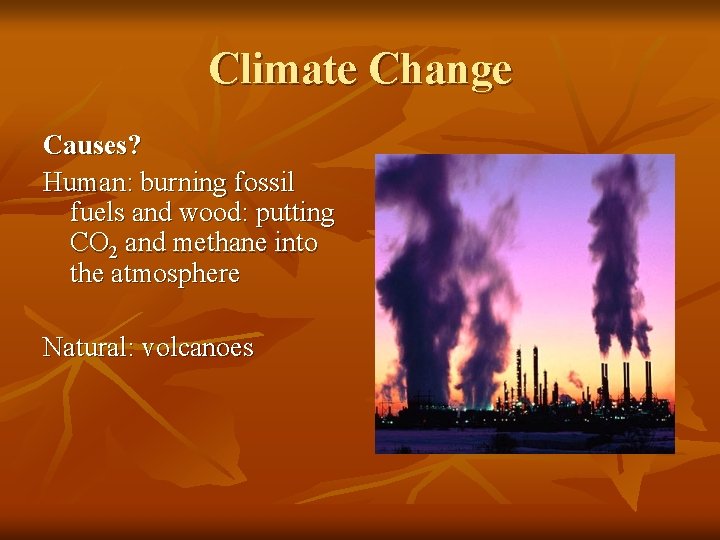
Climate Change Causes? Human: burning fossil fuels and wood: putting CO 2 and methane into the atmosphere Natural: volcanoes
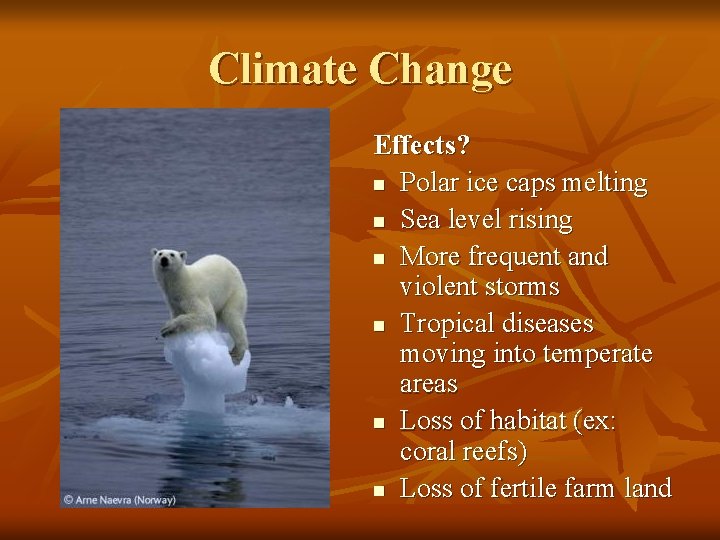
Climate Change Effects? n Polar ice caps melting n Sea level rising n More frequent and violent storms n Tropical diseases moving into temperate areas n Loss of habitat (ex: coral reefs) n Loss of fertile farm land
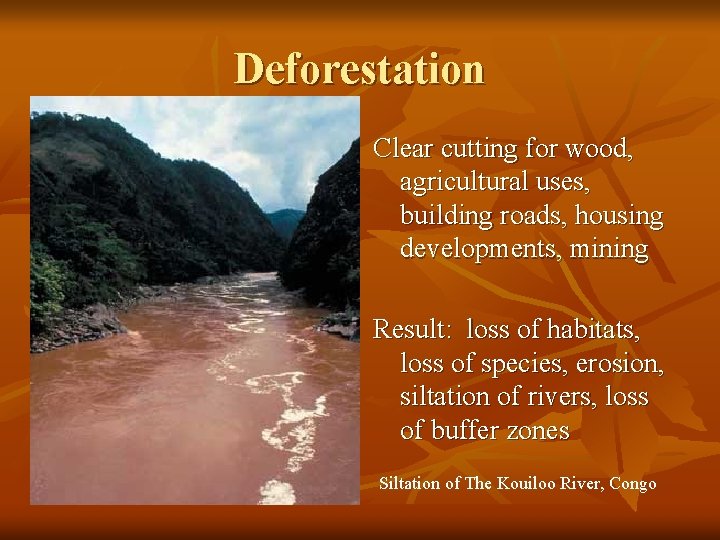
Deforestation Clear cutting for wood, agricultural uses, building roads, housing developments, mining Result: loss of habitats, loss of species, erosion, siltation of rivers, loss of buffer zones Siltation of The Kouiloo River, Congo
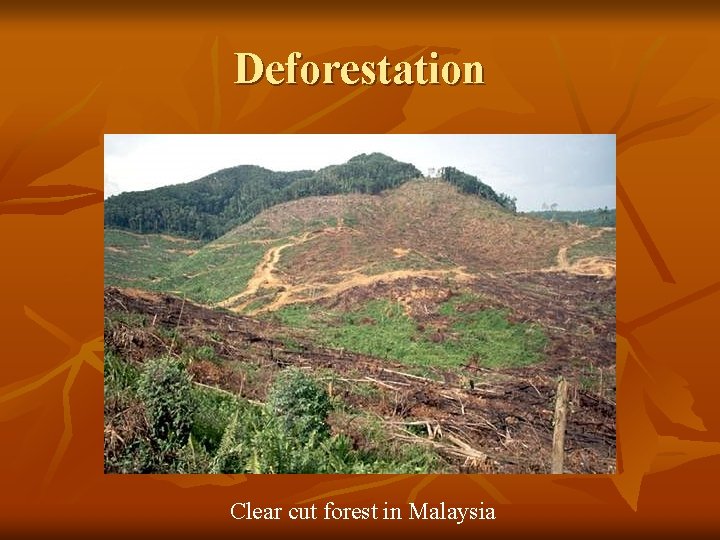
Deforestation Clear cut forest in Malaysia
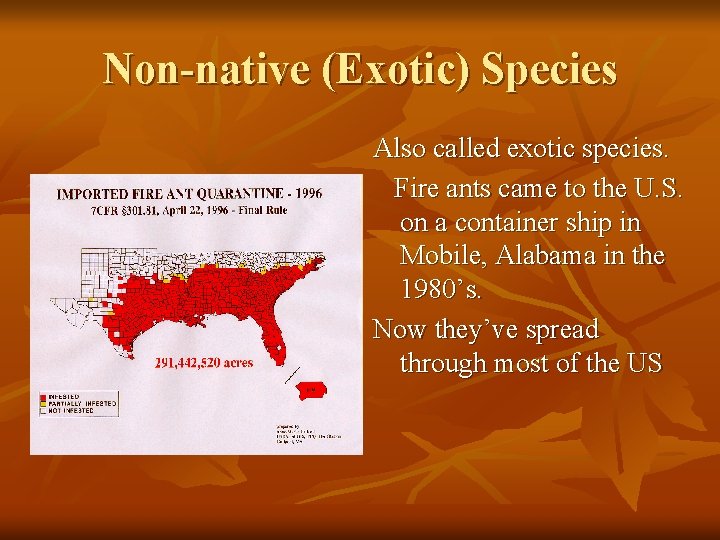
Non-native (Exotic) Species Also called exotic species. Fire ants came to the U. S. on a container ship in Mobile, Alabama in the 1980’s. Now they’ve spread through most of the US
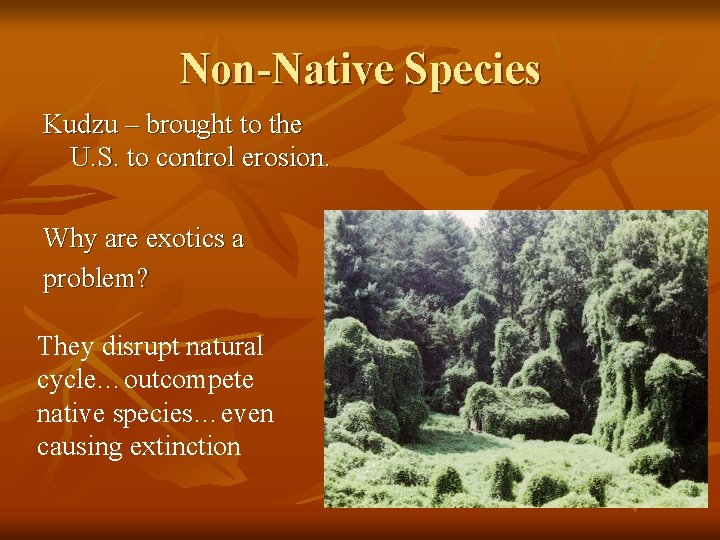
Non-Native Species Kudzu – brought to the U. S. to control erosion. Why are exotics a problem? They disrupt natural cycle…outcompete native species…even causing extinction
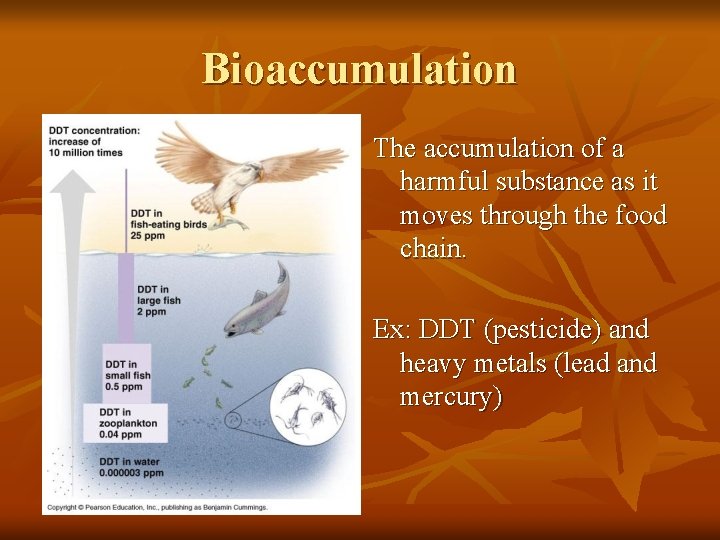
Bioaccumulation The accumulation of a harmful substance as it moves through the food chain. Ex: DDT (pesticide) and heavy metals (lead and mercury)
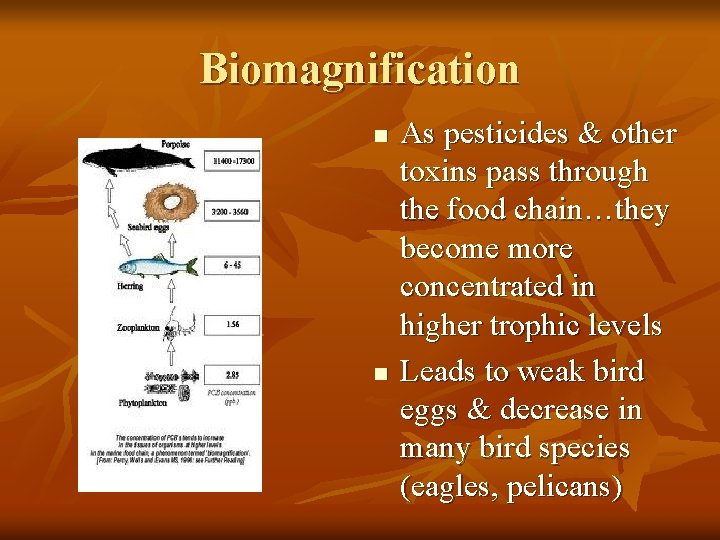
Biomagnification n n As pesticides & other toxins pass through the food chain…they become more concentrated in higher trophic levels Leads to weak bird eggs & decrease in many bird species (eagles, pelicans)
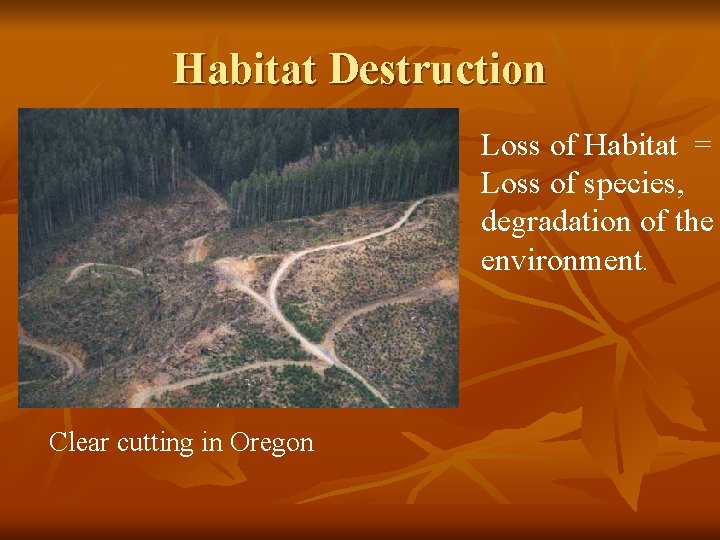
Habitat Destruction Loss of Habitat = Loss of species, degradation of the environment. Clear cutting in Oregon
To take care of the earth in a healthy way. EXAMPLE: finding alternatives to pesticide use: Reduce use of pesticides Crop rotation Mechanical traps Companion plants (to attract pests away from crop plant ) “Green” alternatives Stewardship
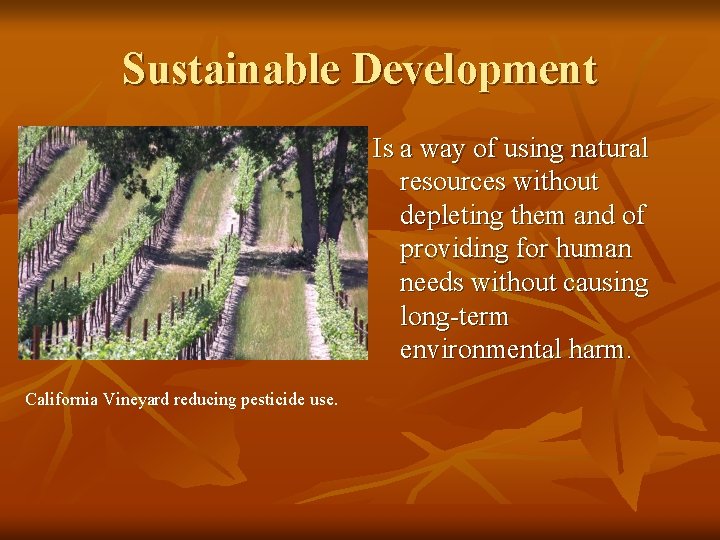
Sustainable Development Is a way of using natural resources without depleting them and of providing for human needs without causing long-term environmental harm. California Vineyard reducing pesticide use.
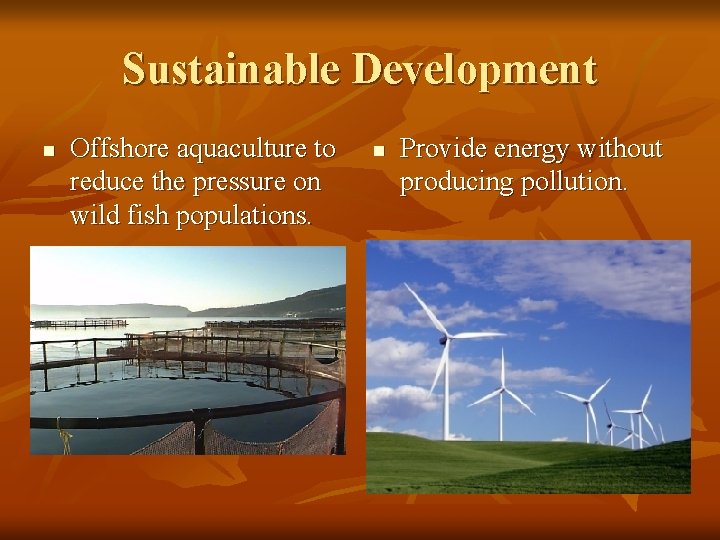
Sustainable Development n Offshore aquaculture to reduce the pressure on wild fish populations. n Provide energy without producing pollution.
- Slides: 42