
GO verbs Why are some verbs called go

“GO” verbs
Why are some verbs called “go” verbs? In the present tense, some verbs have unique conjugations. The verbs that are called “go” verbs follow a unique pattern in the YO form only. In most cases, the rest of the forms
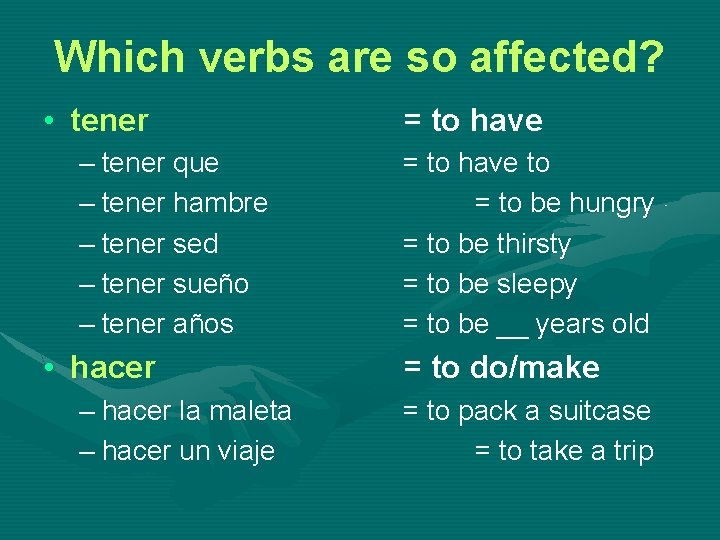
Which verbs are so affected? • tener – tener que – tener hambre – tener sed – tener sueño – tener años • hacer – hacer la maleta – hacer un viaje = to have to = to be hungry = to be thirsty = to be sleepy = to be __ years old = to do/make = to pack a suitcase = to take a trip
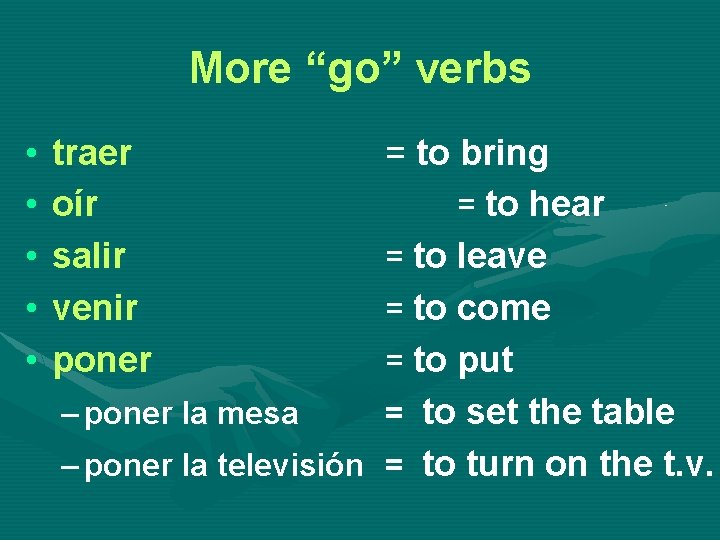
More “go” verbs • • • traer oír salir venir poner = to bring = to hear = to leave = to come = to put – poner la mesa = to set the table – poner la televisión = to turn on the t. v.
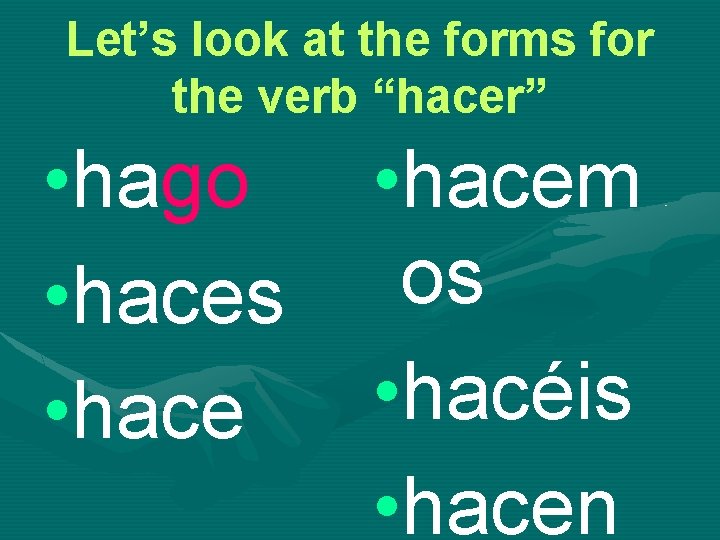
Let’s look at the forms for the verb “hacer” • hago • haces • hacem os • hacéis • hacen

Careful with “traer” • traigo • traes • traemo s • traéis • traen
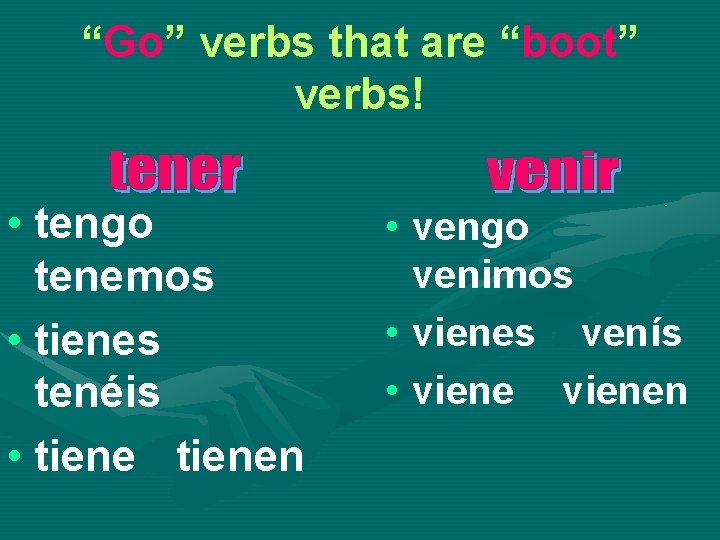
“Go” verbs that are “boot” verbs! • tengo tenemos • tienes tenéis • tienen • vengo venimos • vienes venís • vienen
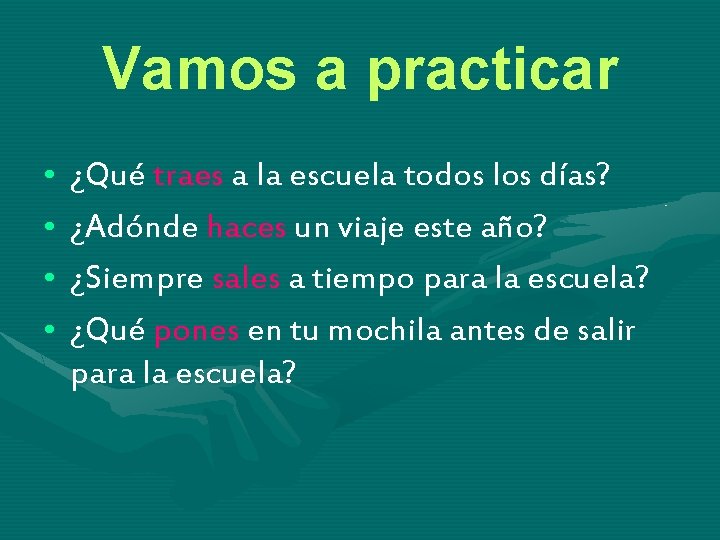
Vamos a practicar • • ¿Qué traes a la escuela todos los días? ¿Adónde haces un viaje este año? ¿Siempre sales a tiempo para la escuela? ¿Qué pones en tu mochila antes de salir para la escuela?
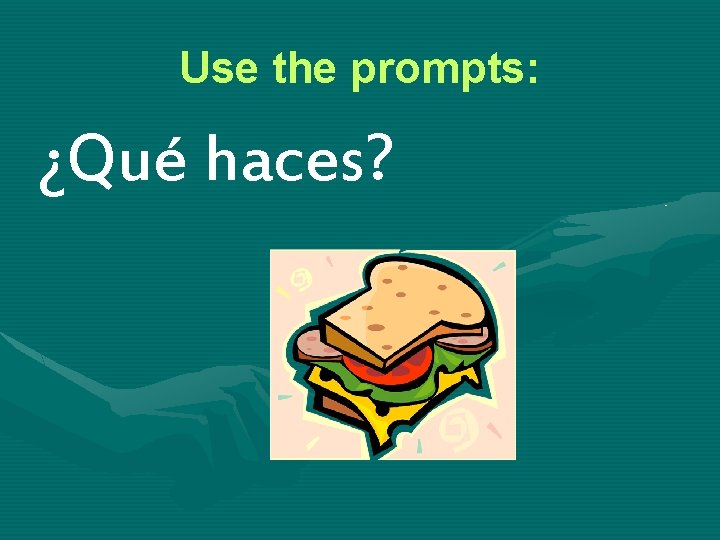
Use the prompts: ¿Qué haces?
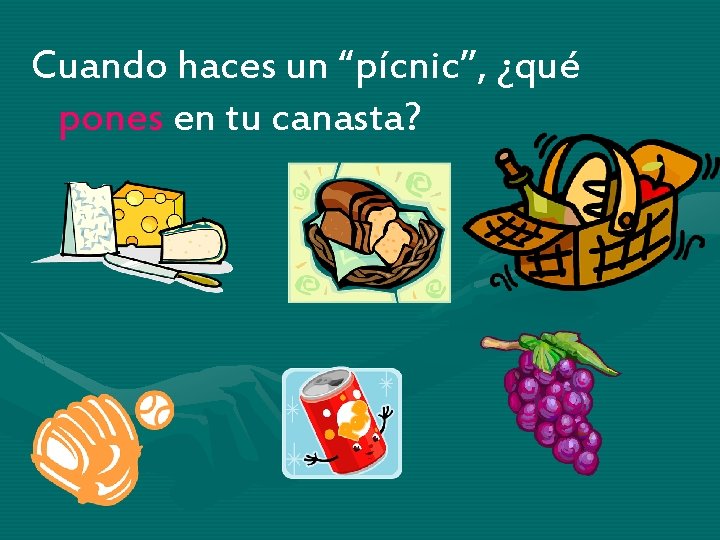
Cuando haces un “pícnic”, ¿qué pones en tu canasta?
- Slides: 10