
Go Recycle Yourself Facts about organ eye and
Go Recycle Yourself Facts about organ, eye and tissue donation
Registers donors & educates the public about donation. We work with… Organ, eye and tissue procurement professionals Transplant Centers
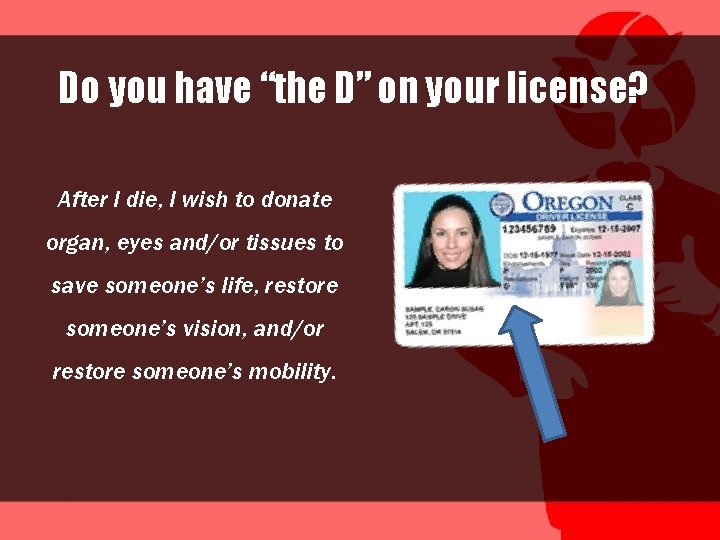
Do you have “the D” on your license? After I die, I wish to donate organ, eyes and/or tissues to save someone’s life, restore someone’s vision, and/or restore someone’s mobility.
“I registered. Isn’t that enough? ” Why talk about organ, eye and tissue donation with family and friends?
Did You Know? • Hollywood and TV distort reality • Your decision doesn’t interfere with your medical care • You don’t have to wait to go to DMV to register • All major religions support the decision to donate
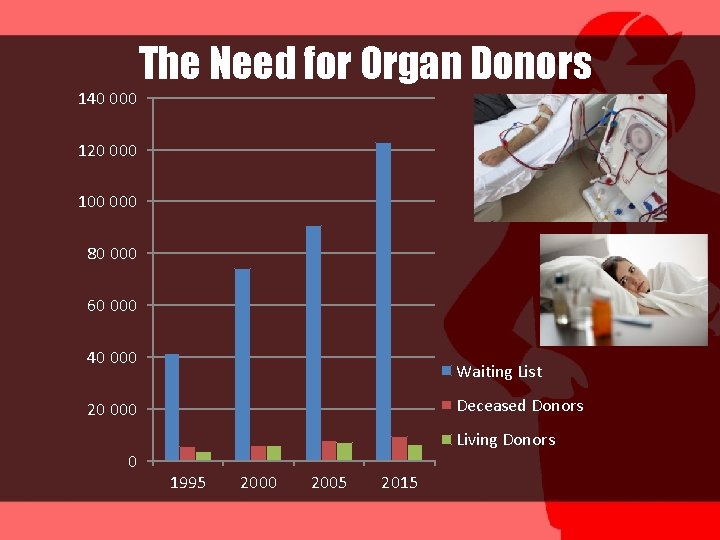
140 000 The Need for Organ Donors 120 000 100 000 80 000 60 000 40 000 Waiting List Deceased Donors 20 000 0 Living Donors 1995 2000 2005 2015
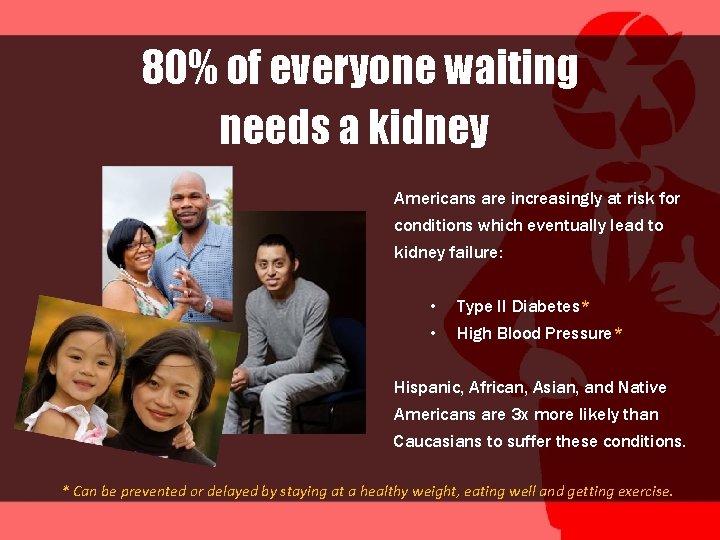
80% of everyone waiting needs a kidney Americans are increasingly at risk for conditions which eventually lead to kidney failure: • • Type II Diabetes* High Blood Pressure* Hispanic, African, Asian, and Native Americans are 3 x more likely than Caucasians to suffer these conditions. * Can be prevented or delayed by staying at a healthy weight, eating well and getting exercise.
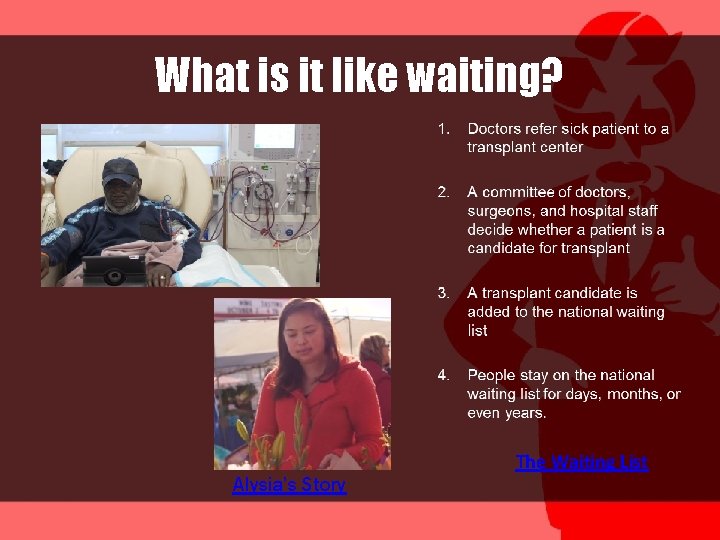
What is it like waiting? Alysia’s Story The Waiting List
# of Local Heroes Every Year 2. 5 million Oregonians are registered donors ≈ 36, 500 Oregonians died in 2017 1, 603 cornea donors = 1, 545 cornea transplants 490 tissue donors = 78, 153 tissue transplants 86 organ donors = 270 organ transplants
True or False: Organ donation is very rare. True. Not everyone who dies can donate organs, because they must pass away under very specific circumstances.
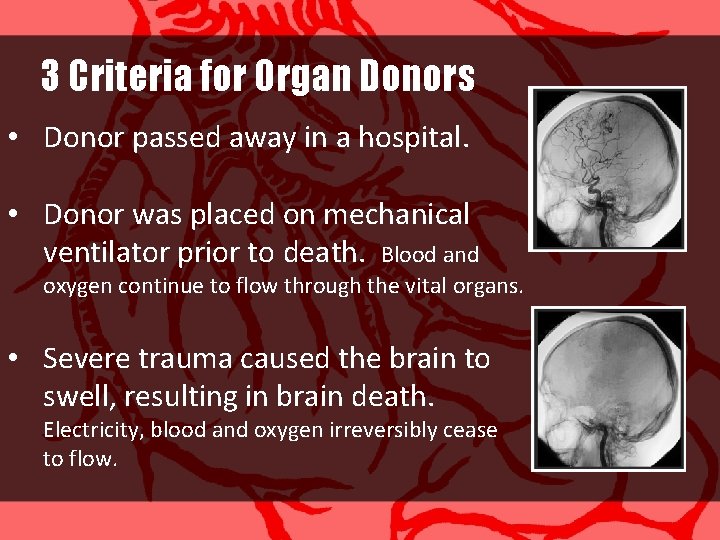
3 Criteria for Organ Donors • Donor passed away in a hospital. • Donor was placed on mechanical ventilator prior to death. Blood and oxygen continue to flow through the vital organs. • Severe trauma caused the brain to swell, resulting in brain death. Electricity, blood and oxygen irreversibly cease to flow.
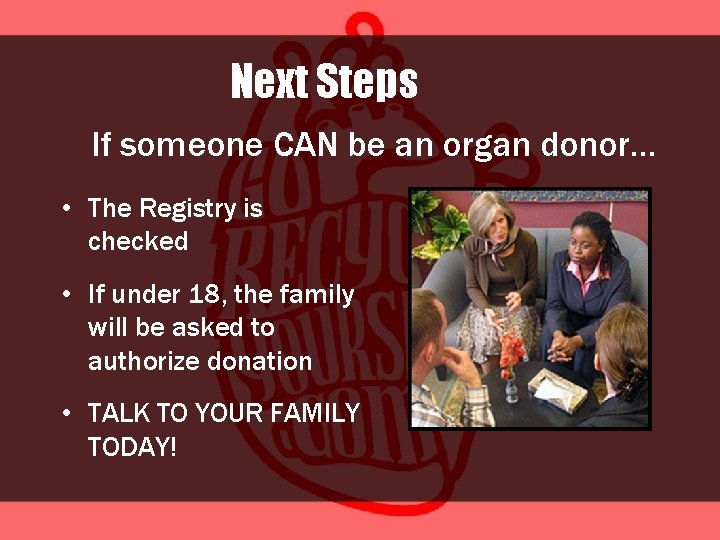
Next Steps If someone CAN be an organ donor… • The Registry is checked • If under 18, the family will be asked to authorize donation • TALK TO YOUR FAMILY TODAY!
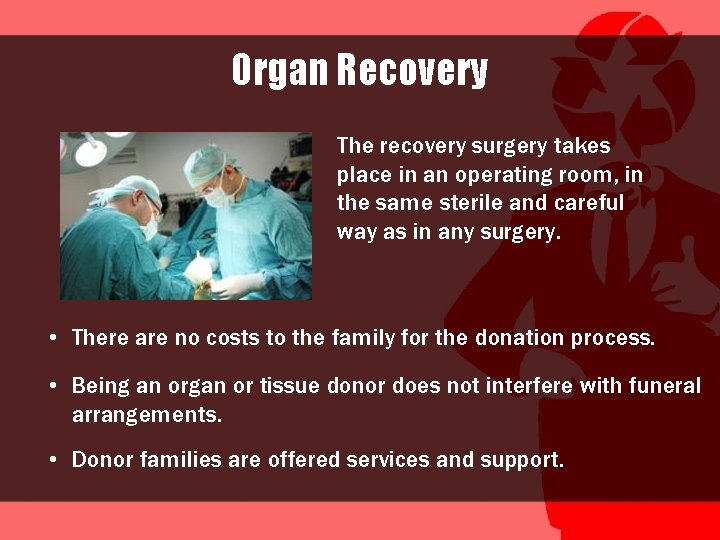
Organ Recovery The recovery surgery takes place in an operating room, in the same sterile and careful way as in any surgery. • There are no costs to the family for the donation process. • Being an organ or tissue donor does not interfere with funeral arrangements. • Donor families are offered services and support.
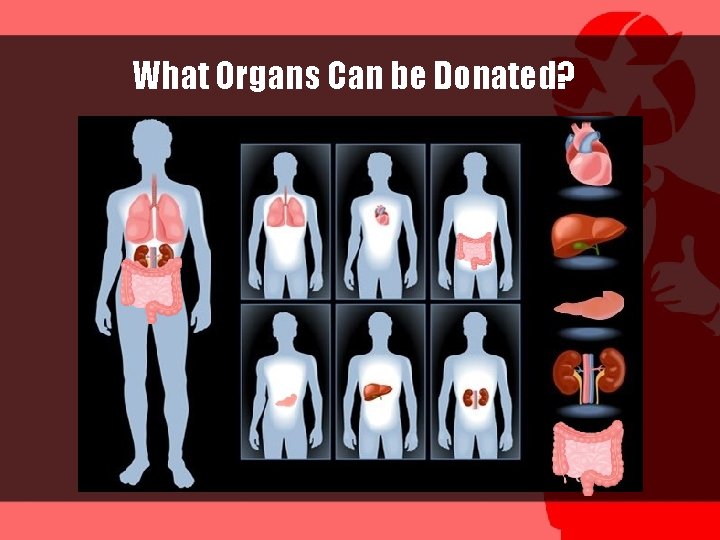
What Organs Can be Donated?
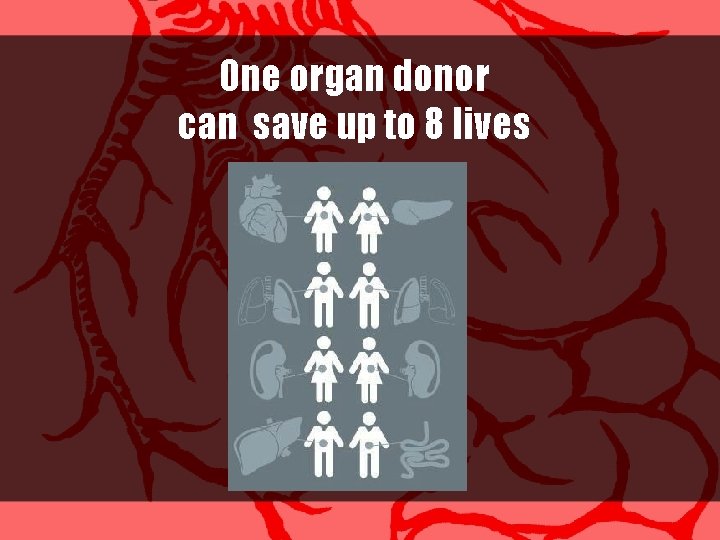
One organ donor can save up to 8 lives
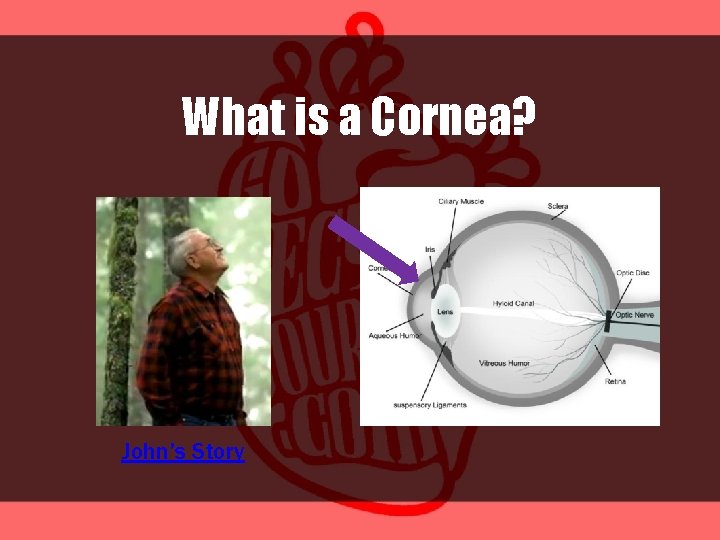
What is a Cornea? John’s Story
True or False: Donated corneas can restore sight to the blind. True. When the cornea is damaged due to injury, disease, infection or a hereditary condition, corneal transplant surgery may be an option.
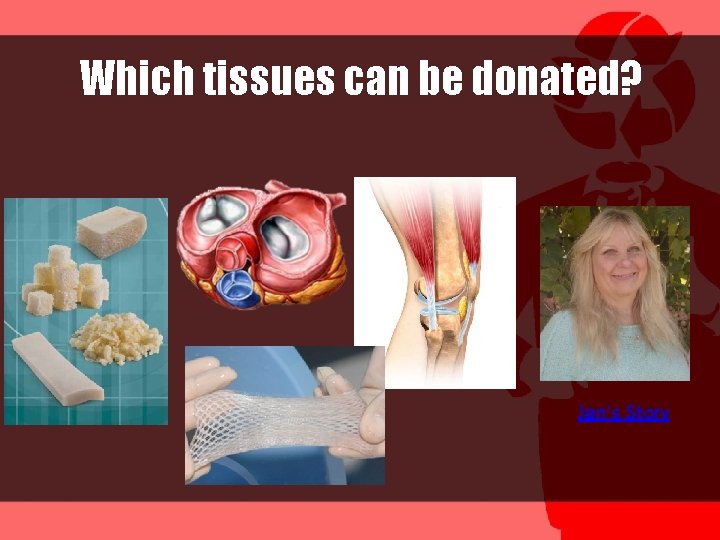
Which tissues can be donated? Jan’s Story
One tissue & eye donor can save or enhance over 50 lives
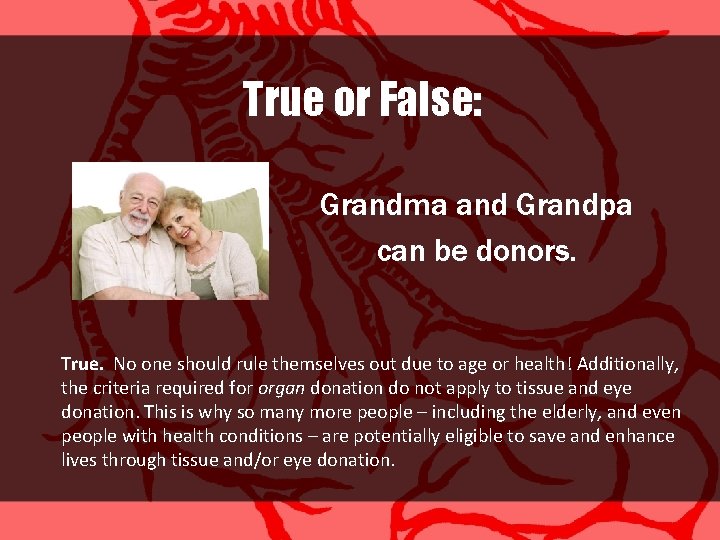
True or False: Grandma and Grandpa can be donors. True. No one should rule themselves out due to age or health! Additionally, the criteria required for organ donation do not apply to tissue and eye donation. This is why so many more people – including the elderly, and even people with health conditions – are potentially eligible to save and enhance lives through tissue and/or eye donation.
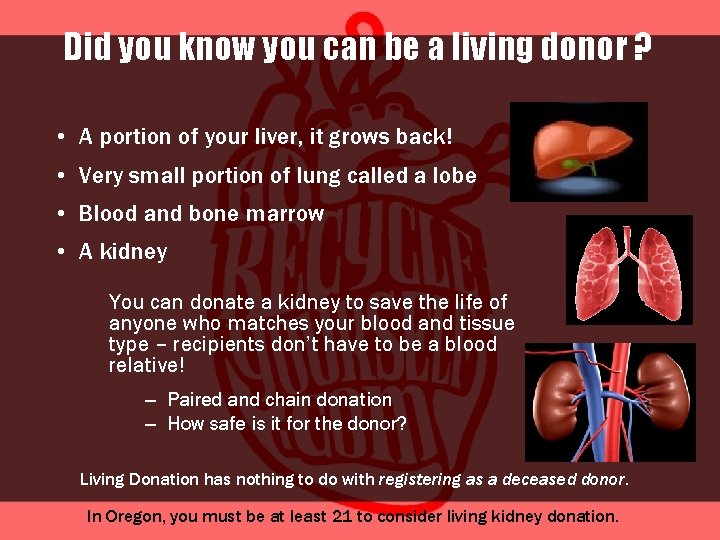
Did you know you can be a living donor ? • A portion of your liver, it grows back! • Very small portion of lung called a lobe • Blood and bone marrow • A kidney You can donate a kidney to save the life of anyone who matches your blood and tissue type – recipients don’t have to be a blood relative! – Paired and chain donation – How safe is it for the donor? Living Donation has nothing to do with registering as a deceased donor. In Oregon, you must be at least 21 to consider living kidney donation.
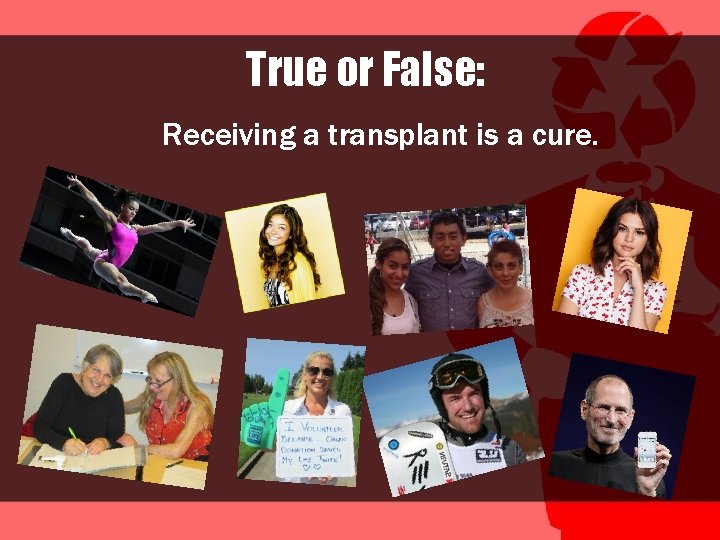
True or False: Receiving a transplant is a cure.
Pop Quiz 1) How many people’s lives can be saved or enhanced by tissue and/or cornea donation? 2) Do you know if your family members are registered donors? 3) What is one thing new you learned today?
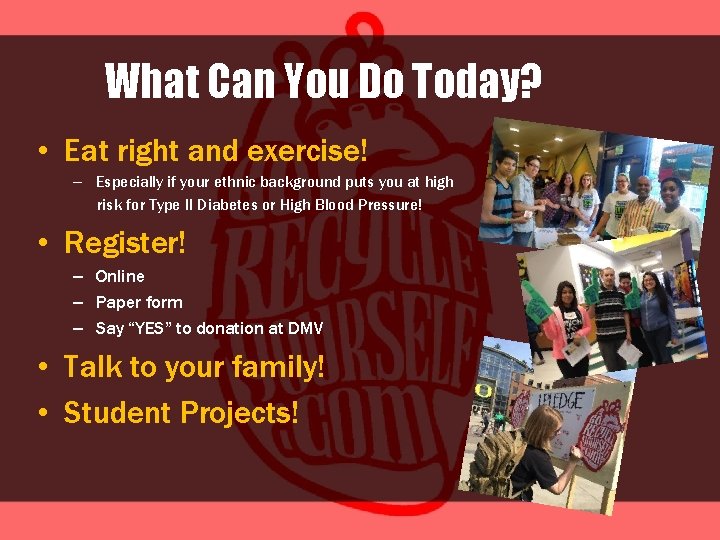
What Can You Do Today? • Eat right and exercise! – Especially if your ethnic background puts you at high risk for Type II Diabetes or High Blood Pressure! • Register! – Online – Paper form – Say “YES” to donation at DMV • Talk to your family! • Student Projects!
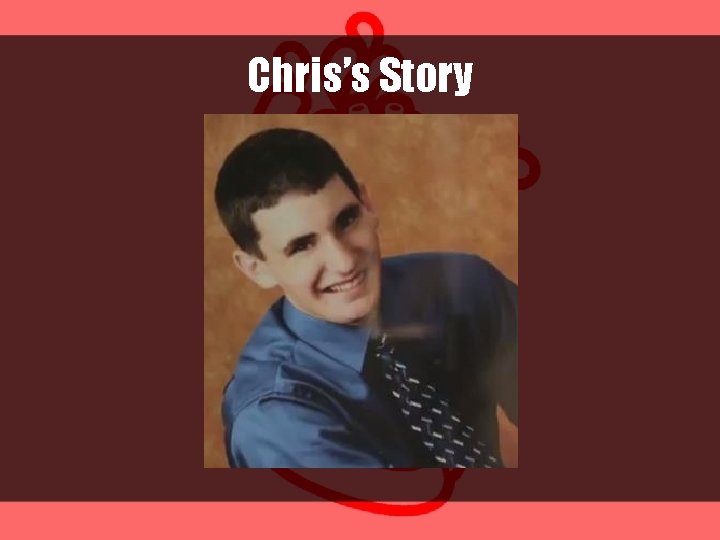
Chris’s Story
Learn more and register… www. Donate. Life. NW. org www. donevidanw. org (en español)
- Slides: 27