
GNT BLOCK Pathology 2019 Gastrointestinal Diseases 8 LECTURES
GNT BLOCK Pathology, 2019 Gastrointestinal Diseases 8 LECTURES GIT + 5 LECTURES LIVER, PANCREAS, GB Dr. Maha Arafah
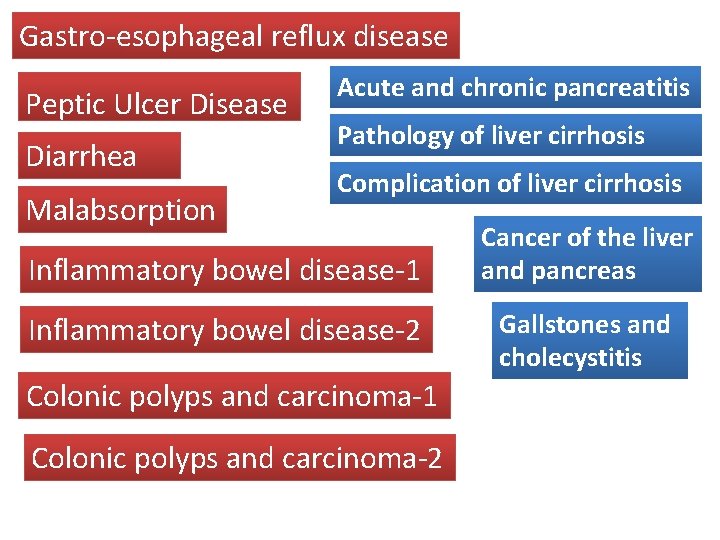
Gastro-esophageal reflux disease Peptic Ulcer Disease Acute and chronic pancreatitis Pathology of liver cirrhosis Diarrhea Complication of liver cirrhosis Malabsorption Inflammatory bowel disease-1 Inflammatory bowel disease-2 Colonic polyps and carcinoma-1 Colonic polyps and carcinoma-2 Cancer of the liver and pancreas Gallstones and cholecystitis

• Page 593 -597
Gastro-esophageal reflux disease OBJECTIVES • Describe the following aspects of reflux esophagitis: 1) 2) 3) 4) 5) Definition Pathogenesis Clinical features Pathology (gross and microscopic features) Complications • Describe the following aspects of Barrett esophagus: 1) Definition 2) Main cause 3) Pathology (gross and microscopic features) 4) Complications (dysplasia and adenocarcinoma)
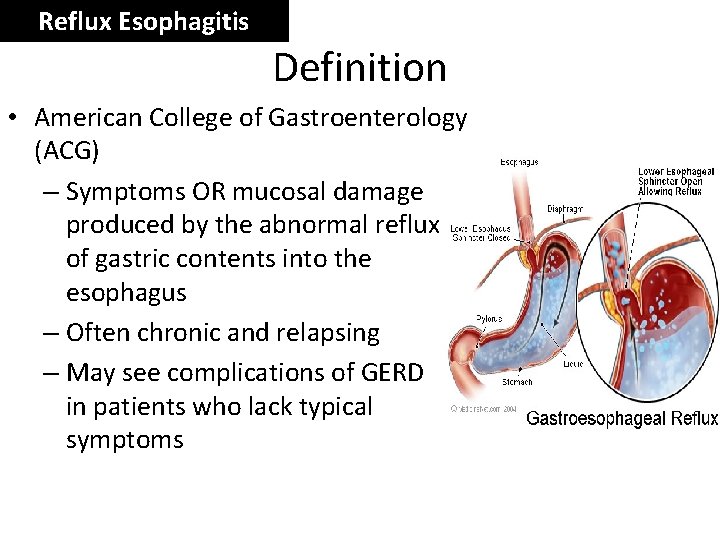
Reflux Esophagitis Definition • American College of Gastroenterology (ACG) – Symptoms OR mucosal damage produced by the abnormal reflux of gastric contents into the esophagus – Often chronic and relapsing – May see complications of GERD in patients who lack typical symptoms
Reflux Esophagitis Gastroesophageal Reflux Disease (GERD) • Gastroesophageal reflux is a normal physiologic phenomenon experienced intermittently by most people, particularly after a meal. • Gastroesophageal reflux disease (GERD) occurs when the amount of gastric juice that refluxes into the esophagus exceeds the normal limit, causing symptoms with or without associated esophageal mucosal injury.
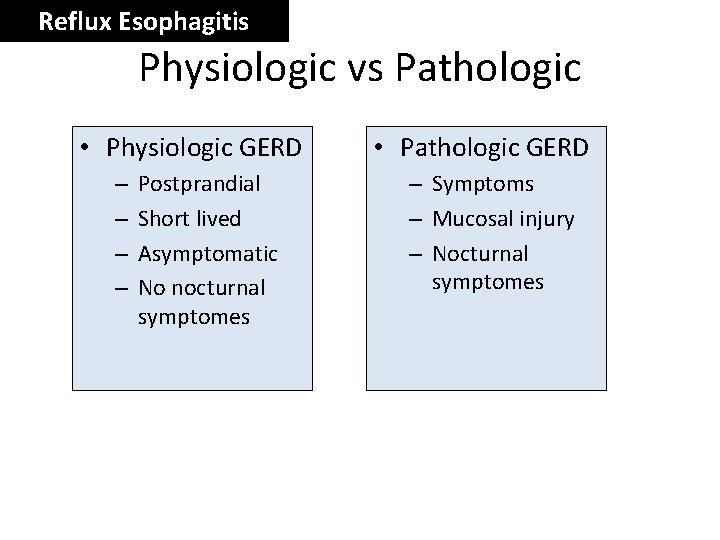
Reflux Esophagitis Physiologic vs Pathologic • Physiologic GERD – – Postprandial Short lived Asymptomatic No nocturnal symptomes • Pathologic GERD – Symptoms – Mucosal injury – Nocturnal symptomes
Reflux Esophagitis • Esophagitis is rarely caused by agents other than reflux • Acute esophagitis may be caused by: Infective agents: • Bacterial infection is very rare, but fungal infection (mainly by Candida albicans) is common • Viral infections of the esophagus (particularly by herpes simplex and cytomegalovirus) are seen in AIDS patient or Physical agents: irradiation and by ingestion of caustic agent
Reflux Esophagitis Epidemiology of GERD • About 44% of the US adult population have heartburn at least once a month • 14% of Americans have symptoms weekly • 7% have symptoms daily
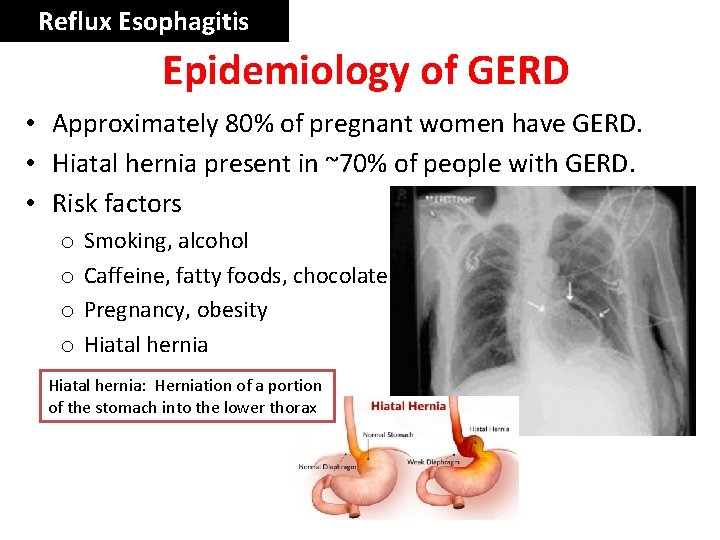
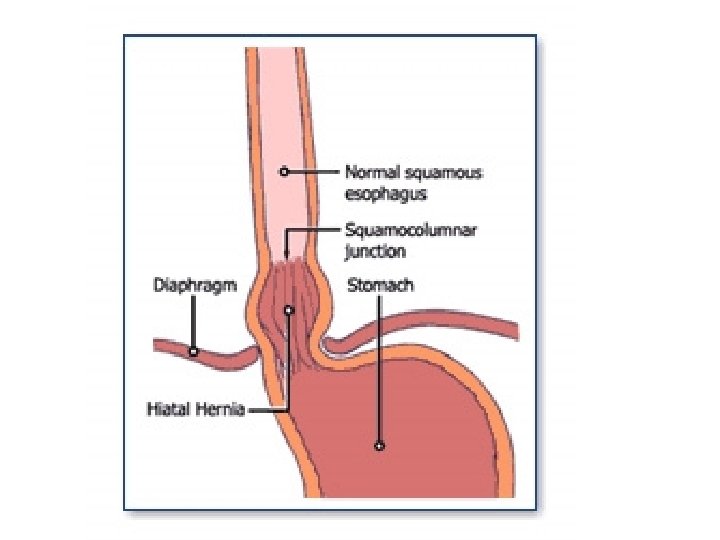
Reflux Esophagitis Epidemiology of GERD • Approximately 80% of pregnant women have GERD. • Hiatal hernia present in ~70% of people with GERD. • Risk factors o o Smoking, alcohol Caffeine, fatty foods, chocolate Pregnancy, obesity Hiatal hernia: Herniation of a portion of the stomach into the lower thorax
Reflux Esophagitis GERD Pathophysiology • Abnormal lower esophageal sphincter • or • Increase abdominal pressure
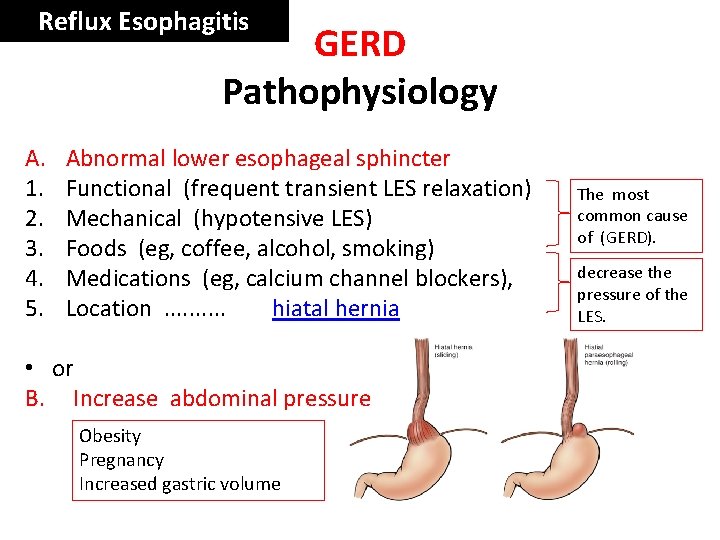
Reflux Esophagitis GERD Pathophysiology A. 1. 2. 3. 4. 5. Abnormal lower esophageal sphincter Functional (frequent transient LES relaxation) Mechanical (hypotensive LES) Foods (eg, coffee, alcohol, smoking) Medications (eg, calcium channel blockers), Location . . hiatal hernia • or B. Increase abdominal pressure Obesity Pregnancy Increased gastric volume The most common cause of (GERD). decrease the pressure of the LES.
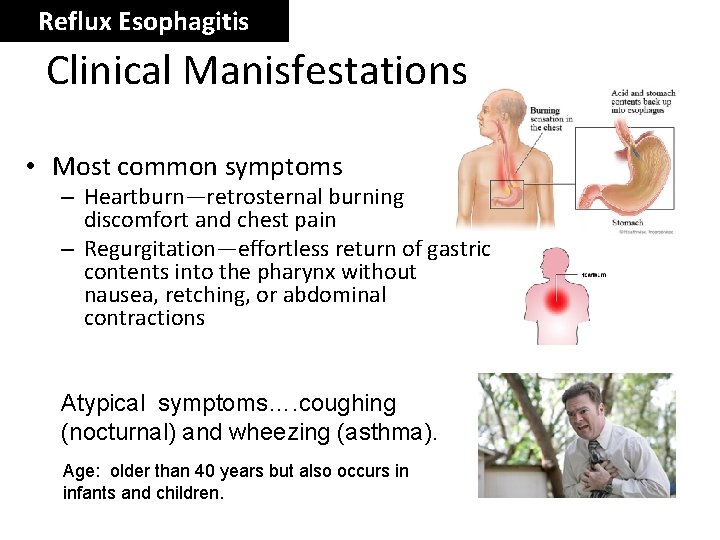
Reflux Esophagitis Clinical Manisfestations • Most common symptoms – Heartburn—retrosternal burning discomfort and chest pain – Regurgitation—effortless return of gastric contents into the pharynx without nausea, retching, or abdominal contractions Atypical symptoms…. coughing (nocturnal) and wheezing (asthma). Age: older than 40 years but also occurs in infants and children.
Reflux Esophagitis Diagnostic Evaluation – If classic symptoms of heartburn and regurgitation exist, the diagnosis of GERD can be made clinically and treatment can be initiated
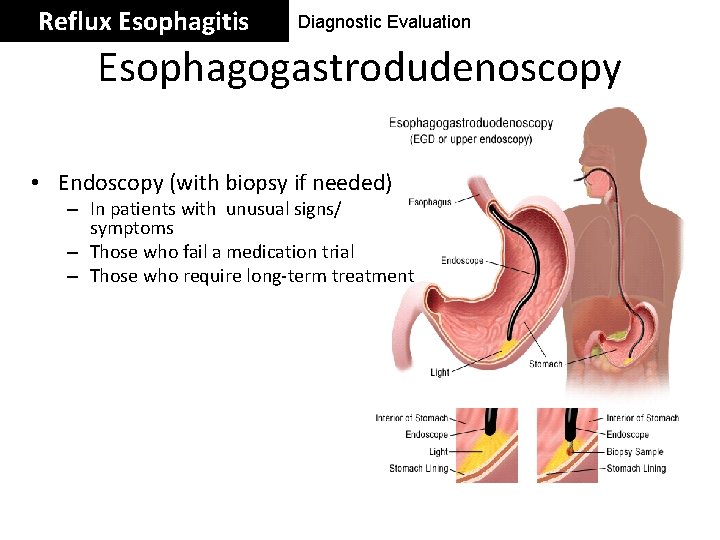
Reflux Esophagitis Diagnostic Evaluation Esophagogastrodudenoscopy • Endoscopy (with biopsy if needed) – In patients with unusual signs/ symptoms – Those who fail a medication trial – Those who require long-term treatment
Reflux Esophagitis Diagnostic Evaluation p. H • 24 -hour p. H monitoring – Accepted standard for establishing or excluding presence of GERD for those patients who do not have mucosal changes – Trans-nasal catheter or a wireless capsule shaped device
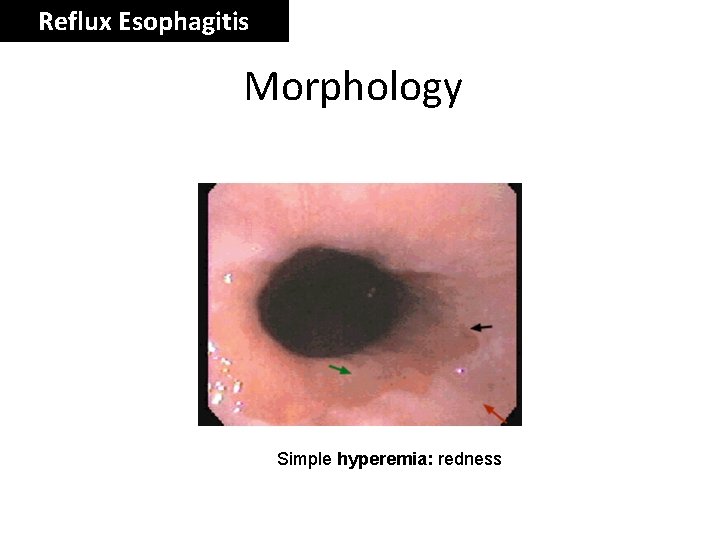
Reflux Esophagitis Morphology Simple hyperemia: redness
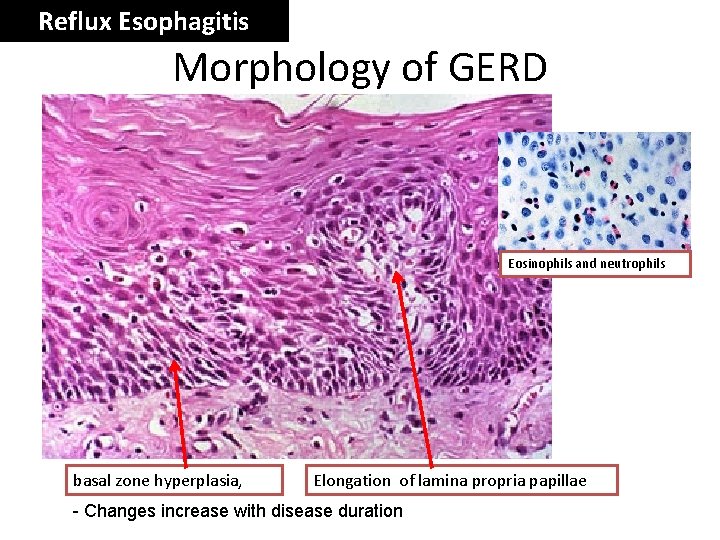
Reflux Esophagitis Morphology of GERD Eosinophils and neutrophils basal zone hyperplasia, Elongation of lamina propria papillae - Changes increase with disease duration
Reflux Esophagitis Treatment • H 2 receptor Blockers • Proton pump inhibitors Antireflux surgery
Reflux Esophagitis Complications • • • Erosive esophagitis and ulceration Hematemesis Melena Stricture Barrett’s esophagus
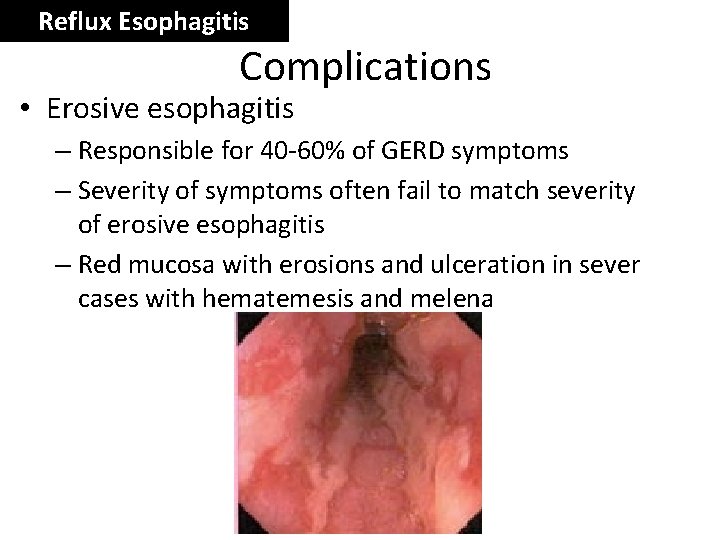
Reflux Esophagitis Complications • Erosive esophagitis – Responsible for 40 -60% of GERD symptoms – Severity of symptoms often fail to match severity of erosive esophagitis – Red mucosa with erosions and ulceration in sever cases with hematemesis and melena
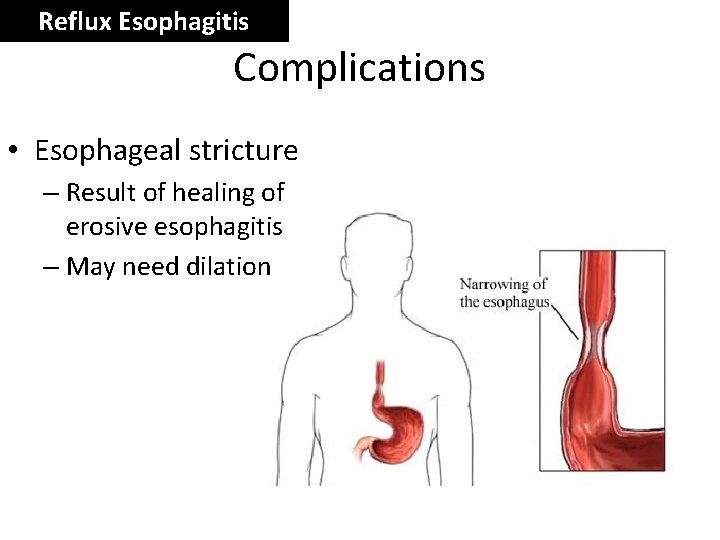
Reflux Esophagitis Complications • Esophageal stricture – Result of healing of erosive esophagitis – May need dilation
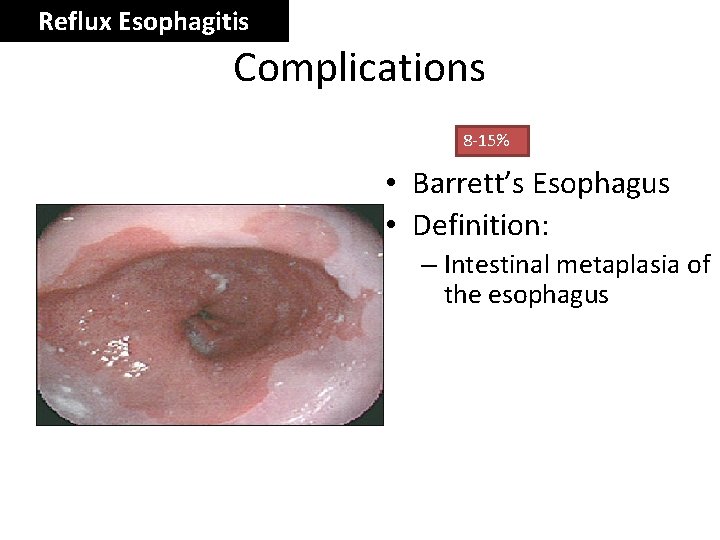
Reflux Esophagitis Complications 8 -15% • Barrett’s Esophagus • Definition: – Intestinal metaplasia of the esophagus

Barrett esophagus is a complication of chronic GERD that is characterized by intestinal metaplasia within the esophageal squamous mucosa
Barrett esophagus • The incidence of Barrett esophagus is rising • Occur in 10% of individuals with symptomatic GERD • Most common in white males and typically presents between 40 and 60 years • Barrett esophagus can only be identified thorough endoscopy and biopsy, due to GERD symptoms
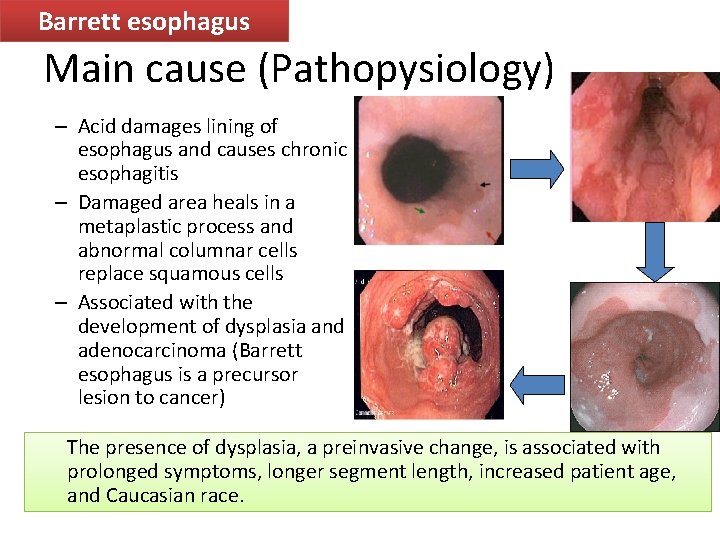
Barrett esophagus Main cause (Pathopysiology) – Acid damages lining of esophagus and causes chronic esophagitis – Damaged area heals in a metaplastic process and abnormal columnar cells replace squamous cells – Associated with the development of dysplasia and adenocarcinoma (Barrett esophagus is a precursor lesion to cancer) The presence of dysplasia, a preinvasive change, is associated with prolonged symptoms, longer segment length, increased patient age, and Caucasian race.
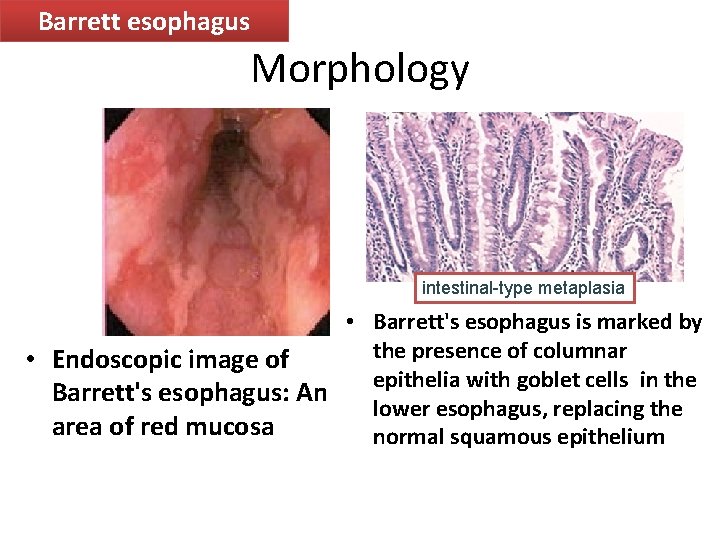
Barrett esophagus Morphology intestinal-type metaplasia • Barrett's esophagus is marked by the presence of columnar • Endoscopic image of epithelia with goblet cells in the Barrett's esophagus: An lower esophagus, replacing the area of red mucosa normal squamous epithelium
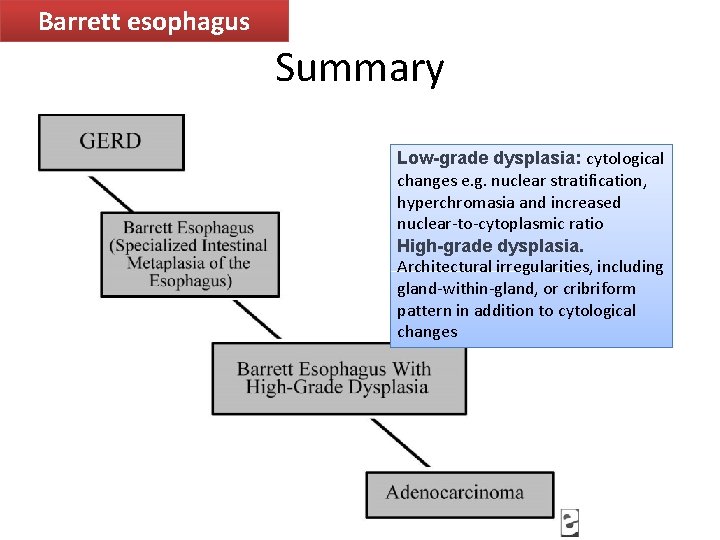
Barrett esophagus Summary Low-grade dysplasia: cytological changes e. g. nuclear stratification, hyperchromasia and increased nuclear-to-cytoplasmic ratio High-grade dysplasia. Architectural irregularities, including gland-within-gland, or cribriform pattern in addition to cytological changes
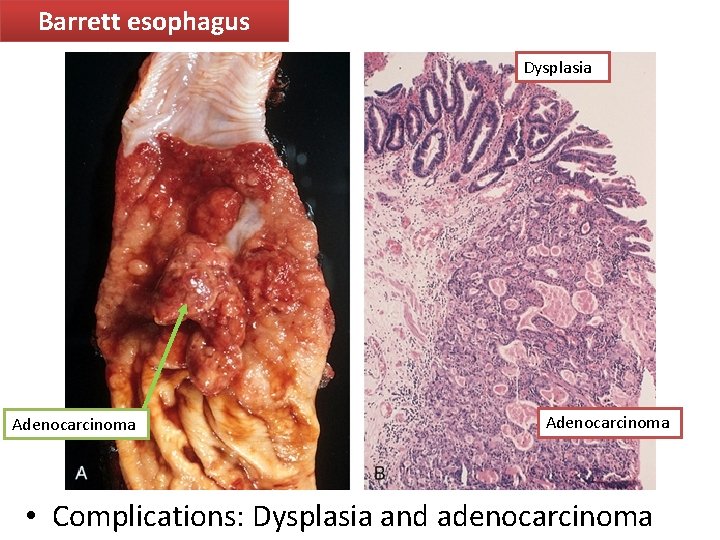
Barrett esophagus Dysplasia Adenocarcinoma • Complications: Dysplasia and adenocarcinoma
• The most common malignant tumors of the esophagus are squamous carcinomas and adenocarcinomas • The prognosis for both types of carcinoma is poor
Adenocarcinoma • Most esophageal adenocarcinomas arise from Barrett esophagus • Other risk factors: tobacco use and exposure to radiation. • The risk is reduced by diets rich in fresh fruits and vegetables • Morphology: Occurs in the distal third of the esophagus and may invade the adjacent gastric cardia • Microscopically: well to poorly differentiated adenocarcinoma • Present with pain or difficulty in swallowing, progressive weight loss, hematemesis, chest pain, or vomiting • Prognosis depends on the stage
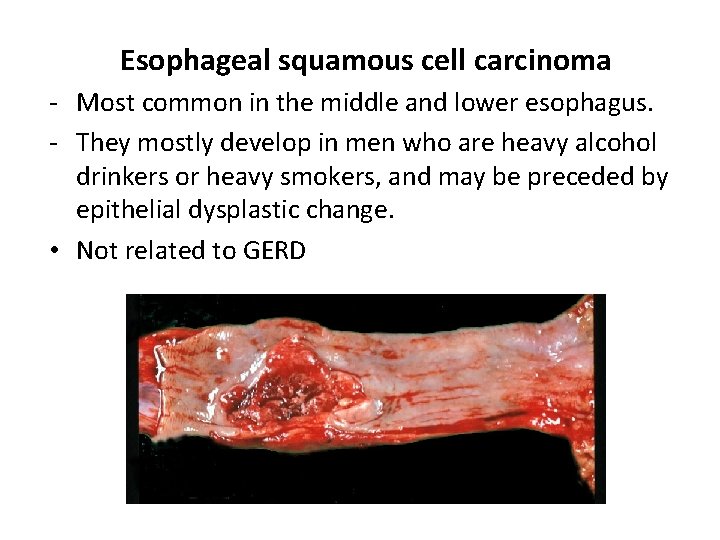
Esophageal squamous cell carcinoma - Most common in the middle and lower esophagus. - They mostly develop in men who are heavy alcohol drinkers or heavy smokers, and may be preceded by epithelial dysplastic change. • Not related to GERD

Case scenario: A man with retrosternal pain • A 57 -year-old presents with a history of a retrosternal burning sensation, particularly after large meals, and often on retiring to bed at night. Treatment with antacids had little effect and he has been referred by his GP for endoscopy. • Upper gastrointestinal tract endoscopy reveals reddening of the lower esophageal mucosa from the level of the gastroesophageal junction to a point 32 cm from the incisors. There is no evidence of a hiatus hernia. The proximal border of the reddened area is irregular, and this area is biopsied. The biopsy shows gastric and intestinal-type glandular mucosa.
1. What is the likely cause of the symptoms? • The symptoms of ‘heartburn’ are suggestive of gastroesophageal reflux disease (GERD), with or without the presence of a hiatus hernia. • Other important causes of retrosternal pain should not be overlooked, including cardiovascular causes, especially myocardial ischaemia, as well as other rarer causes including pneumothorax and musculoskeletal pain.
2. What is the final diagnosis? • The endoscopic and biopsy appearances confirm a Barrett’s oesophagus. This is a metaplastic process which develops as a result of persistent reflux of gastric contents into the esophagus, the normal squamous mucosa being replaced by glandular mucosa of gastric or intestinal type
3. What further information do you require from the biopsy report? It is important to look for dysplastic change in the biopsy which may herald the development of adenocarcinoma.
4. What are the major causes of reflux esophagitis? • Reflux of gastric contents is the major cause of reflux esophagitis. Many factors play a role: (a) the presence of a sliding hiatal hernia is the most common (b) heavy alcohol use (c) heavy tobacco use (d) increased gastric volume (e) decreased efficacy of LES (f) pregnancy (g) CNS depressants (h) hypothyroidism
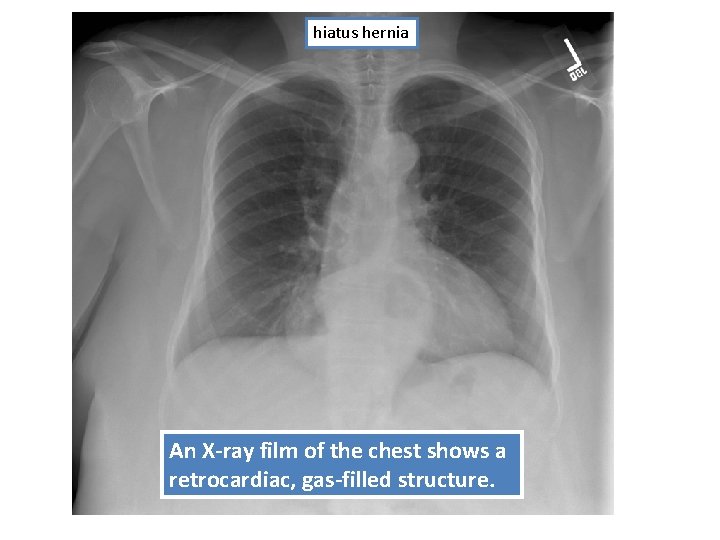
hiatus hernia An X-ray film of the chest shows a retrocardiac, gas-filled structure.
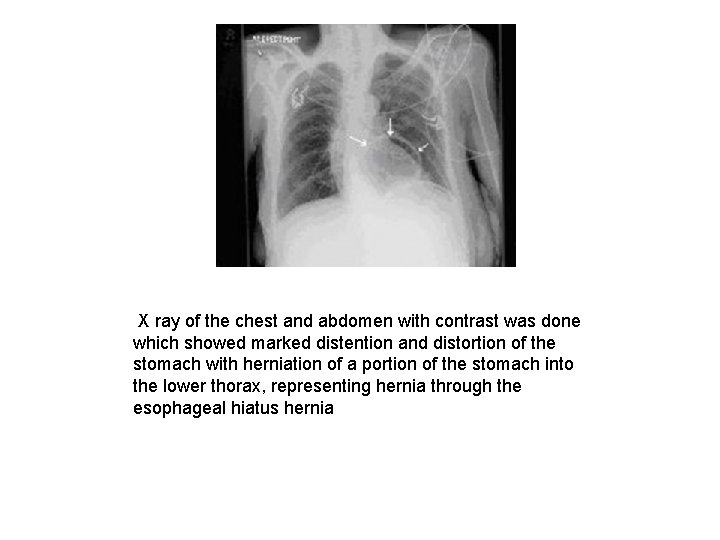
X ray of the chest and abdomen with contrast was done which showed marked distention and distortion of the stomach with herniation of a portion of the stomach into the lower thorax, representing hernia through the esophageal hiatus hernia
5. What are other causes of esophagitis? Ingestion of irritants (eg, alcohol, corrosive acids); infections in immunosuppressed hosts by fungi (eg, Candida) or viruses (eg, CMV, herpes); uremia; radiation therapy; graftversus-host disease; and cytotoxic anticancer therapy.
6. What are the gross and microscopic features of reflux esophagitis?
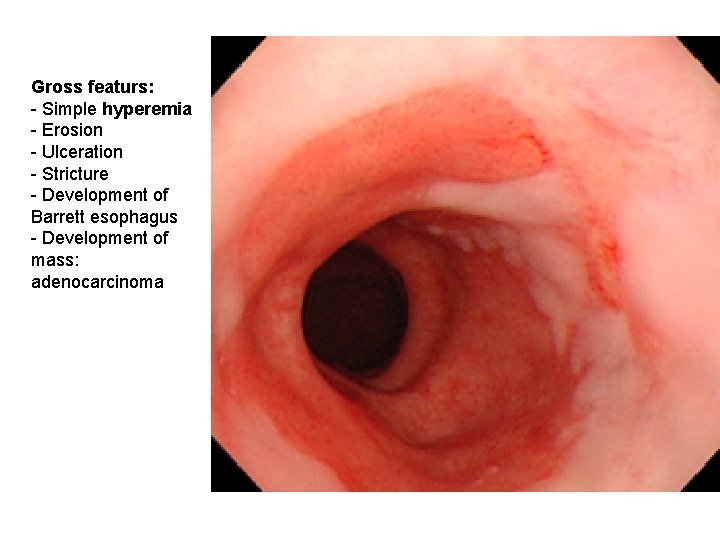
Gross featurs: - Simple hyperemia - Erosion - Ulceration - Stricture - Development of Barrett esophagus - Development of mass: adenocarcinoma
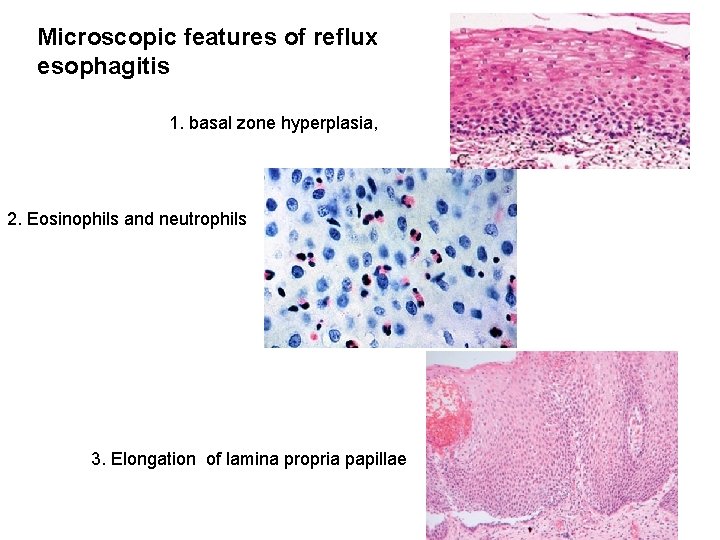
Microscopic features of reflux esophagitis 1. basal zone hyperplasia, 2. Eosinophils and neutrophils 3. Elongation of lamina propria papillae
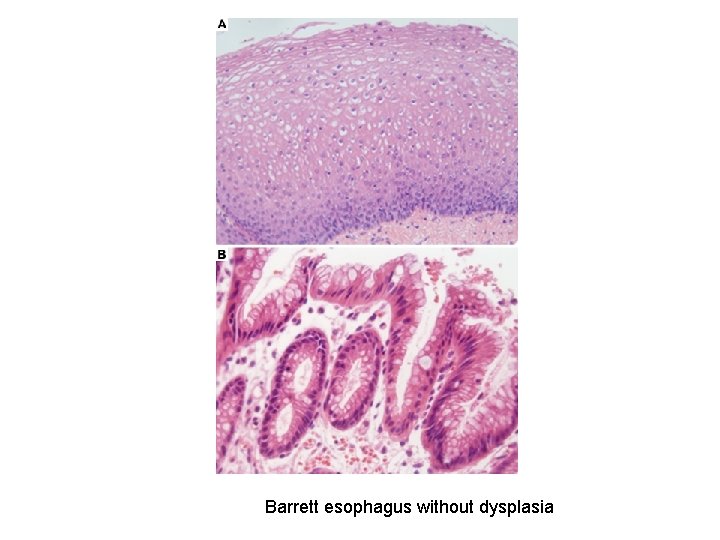
Barrett esophagus without dysplasia
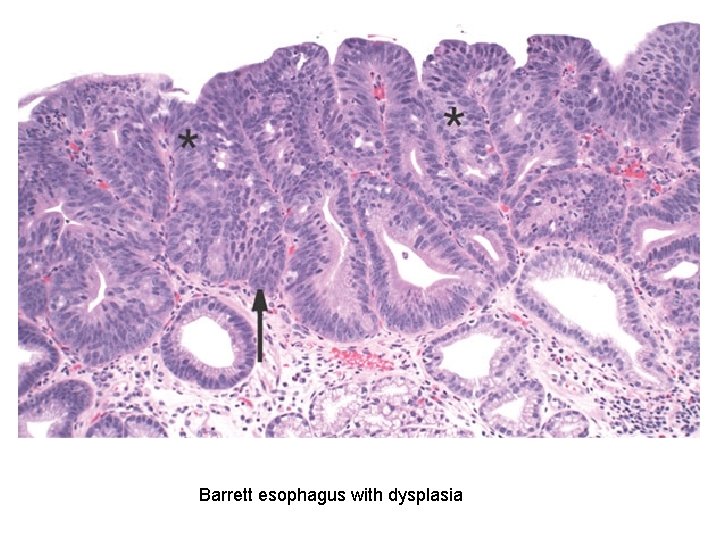
Barrett esophagus with dysplasia
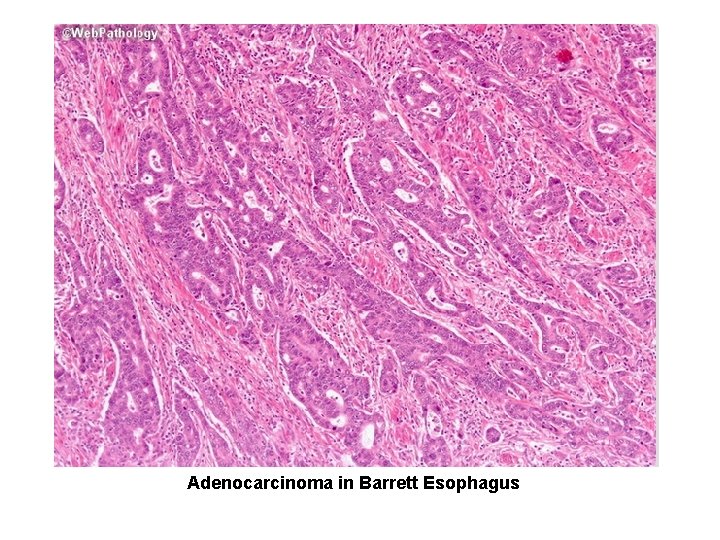
Adenocarcinoma in Barrett Esophagus
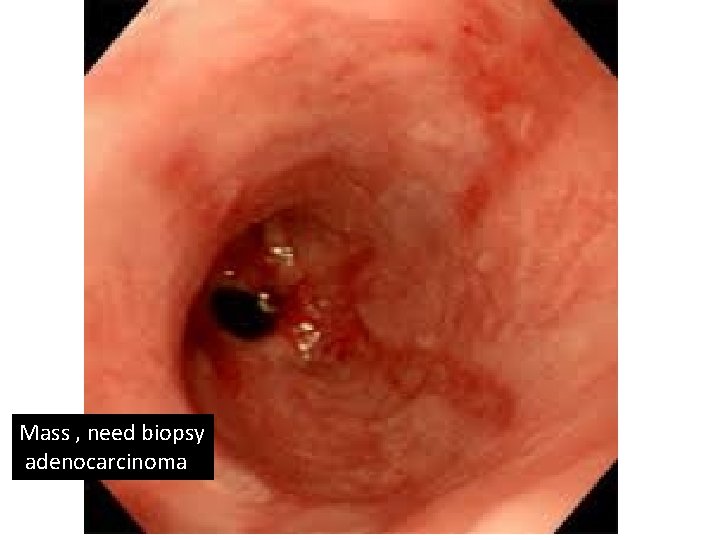
Mass , need biopsy adenocarcinoma
7. What are the major complications of reflux esophagitis? The potential complications of severe reflux esophagitis are (a) ulcer; (b) bleeding; (c) development of stricture; (d) development of Barrett esophagus and adenocarcinoma.
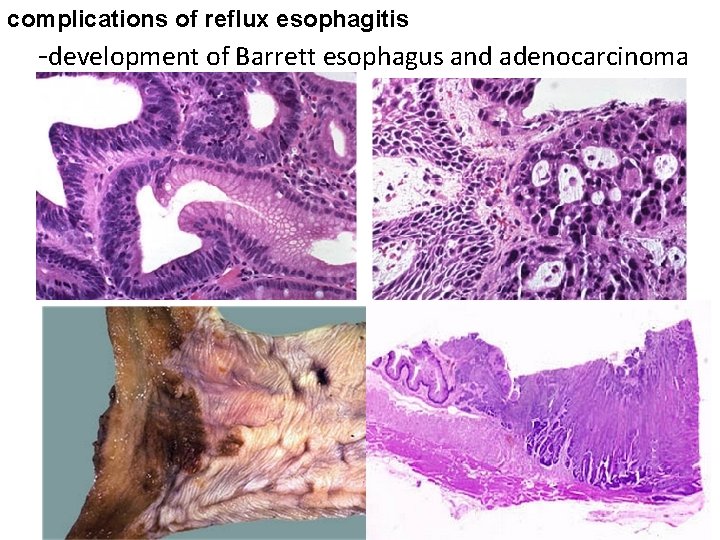
complications of reflux esophagitis -development of Barrett esophagus and adenocarcinoma
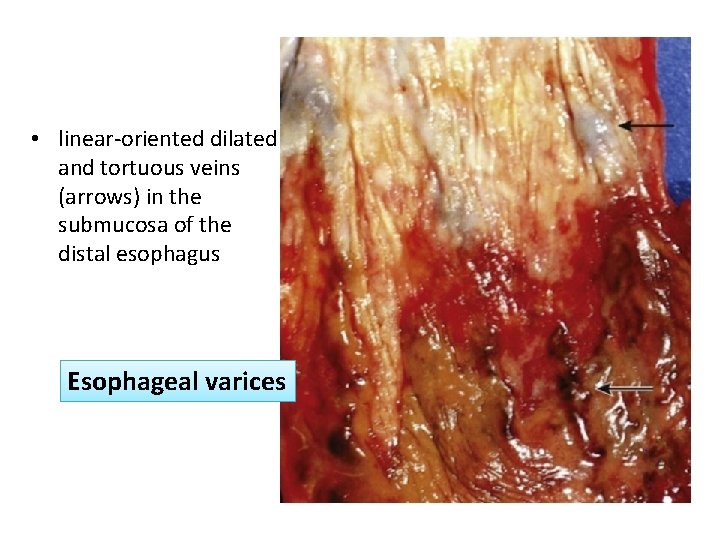
• linear-oriented dilated and tortuous veins (arrows) in the submucosa of the distal esophagus Esophageal varices
- Slides: 53