
GNSS RFI Source Localization using Flight Track Data
- Slides: 25
GNSS RFI Source Localization using Flight Track Data Gerhard BERZ Focal Point Navigation Infrastructure ATM Directorate, Research & SESAR Division, NAV & CNS Unit gerhard. berz@eurocontrol. int ICAO EUR FMG / WRC-19 Workshop Paris, 12 September 2017 The European Organisation for the Safety of Air Navigation
Overview • ICAO GNSS RFI Mitigation Plan (Doc 9849) • Published April 2017 • Detecting GNSS Outages • From passive threat monitoring to active intervention in case of relevant events • Determination of Probable Cause • Elimination of Non-RFI Causes • Localization and Elimination of RFI Source • Supporting the chain of detection (Operator / ANSP) to confirmation, characterization and localization (radio regulator) to elimination (law enforcement) 2
Moving from Vulnerability to Mitigation • Objective of RFI Mitigation Plan • Define set of activities for States to ensure that risks to aviation from GNSS RFI are sufficiently mitigated • Checklists of set of activities to be considered • Much is already in place, State to decide depending on local environment • Not intended to impose a significant workload or investment • To enable reliance on GNSS and associated aviation benefits • Focused on States • Spectrum a sovereign responsibility • Regulation and enforcement part of national oversight • Framework to encourage coordination and exchange of best practices • Supported by regional and global mechanisms due to system nature 3
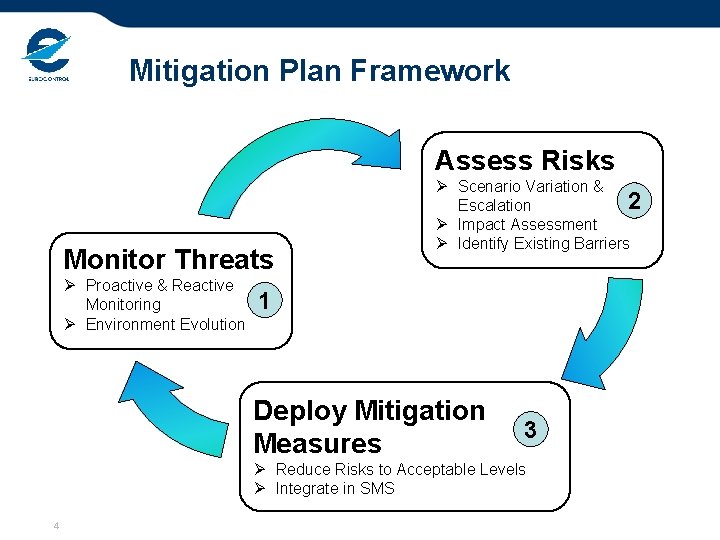
Mitigation Plan Framework Assess Risks Monitor Threats Ø Proactive & Reactive Monitoring Ø Environment Evolution Ø Scenario Variation & 2 Escalation Ø Impact Assessment Ø Identify Existing Barriers 1 Deploy Mitigation Measures 3 Ø Reduce Risks to Acceptable Levels Ø Integrate in SMS 4
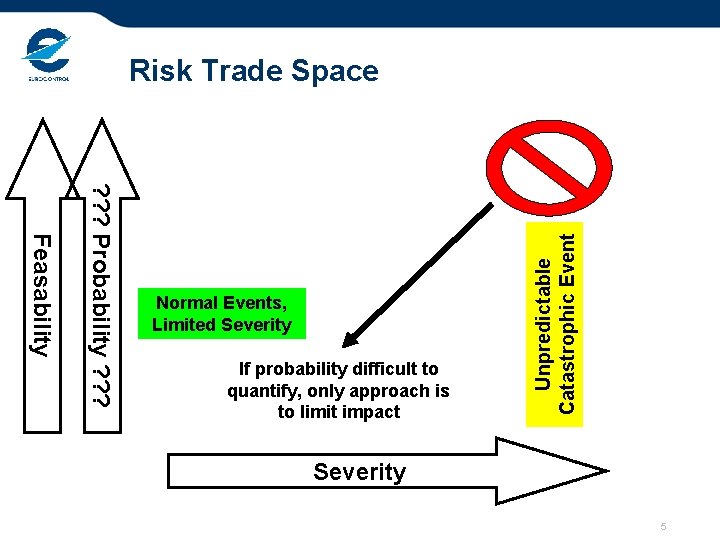
? ? ? Probability ? ? ? Feasability Normal Events, Limited Severity If probability difficult to quantify, only approach is to limit impact Unpredictable Catastrophic Event Risk Trade Space Severity 5
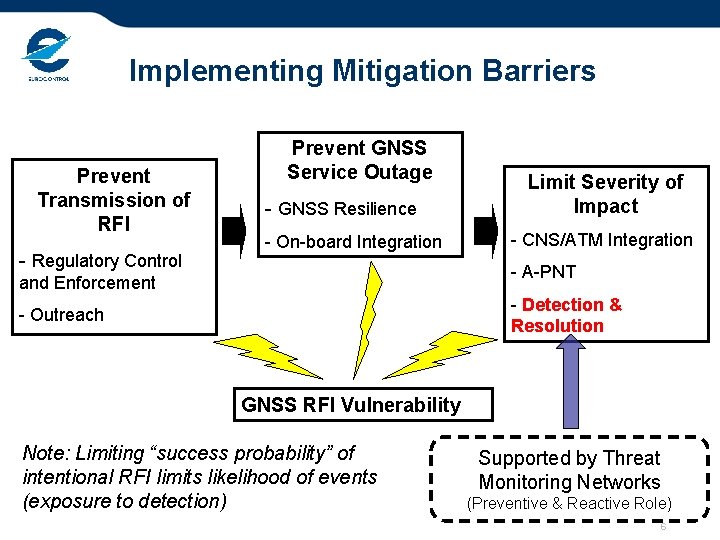
Implementing Mitigation Barriers Prevent Transmission of RFI - Regulatory Control Prevent GNSS Service Outage - GNSS Resilience - On-board Integration Limit Severity of Impact - CNS/ATM Integration - A-PNT and Enforcement - Detection & Resolution - Outreach GNSS RFI Vulnerability Note: Limiting “success probability” of intentional RFI limits likelihood of events (exposure to detection) Supported by Threat Monitoring Networks (Preventive & Reactive Role) 6
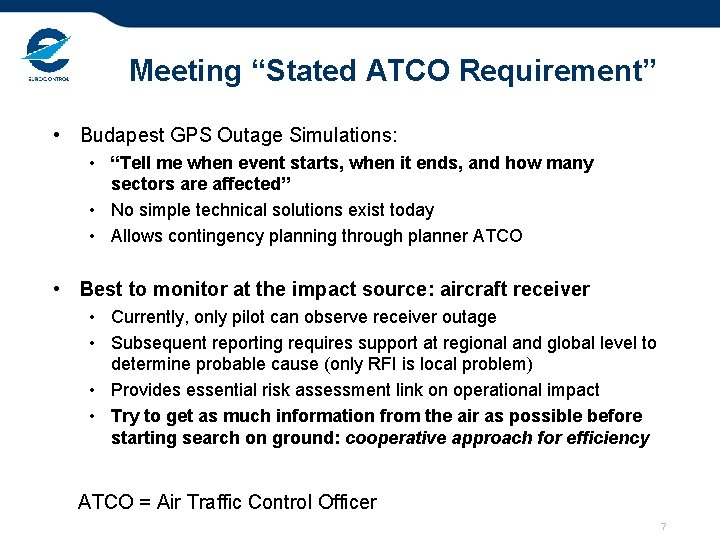
Meeting “Stated ATCO Requirement” • Budapest GPS Outage Simulations: • “Tell me when event starts, when it ends, and how many sectors are affected” • No simple technical solutions exist today • Allows contingency planning through planner ATCO • Best to monitor at the impact source: aircraft receiver • Currently, only pilot can observe receiver outage • Subsequent reporting requires support at regional and global level to determine probable cause (only RFI is local problem) • Provides essential risk assessment link on operational impact • Try to get as much information from the air as possible before starting search on ground: cooperative approach for efficiency ATCO = Air Traffic Control Officer 7
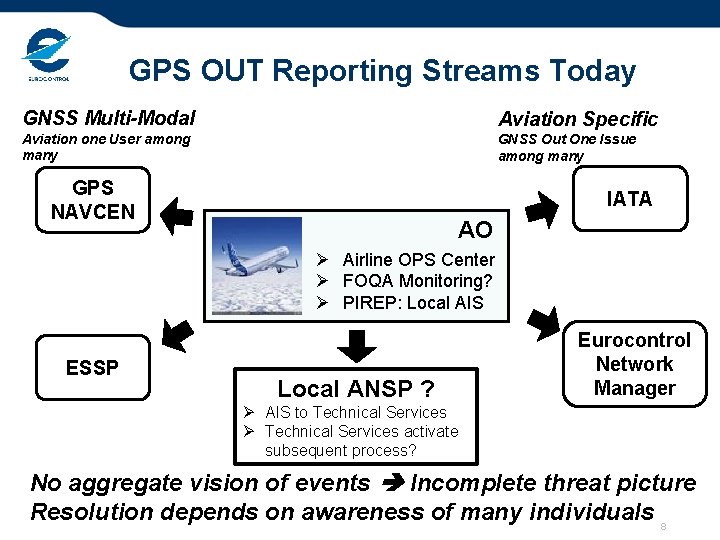
GPS OUT Reporting Streams Today GNSS Multi-Modal Aviation Specific Aviation one User among many GNSS Out One Issue among many GPS NAVCEN IATA AO Ø Airline OPS Center Ø FOQA Monitoring? Ø PIREP: Local AIS ESSP Local ANSP ? Eurocontrol Network Manager Ø AIS to Technical Services Ø Technical Services activate subsequent process? No aggregate vision of events Incomplete threat picture Resolution depends on awareness of many individuals 8
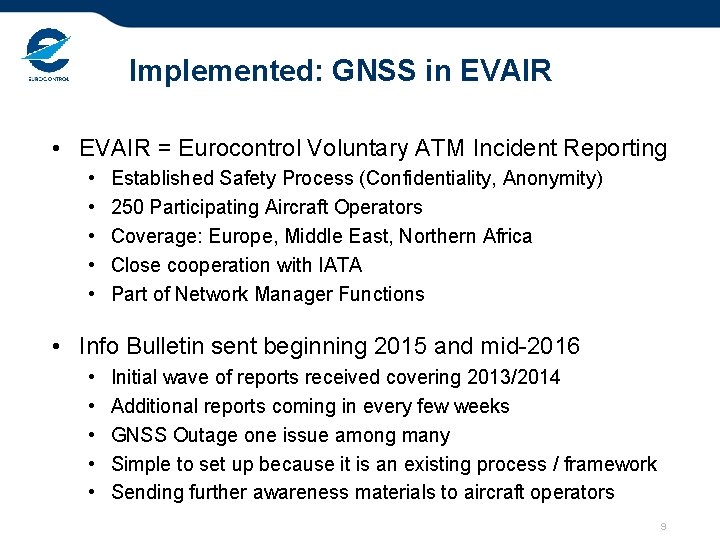
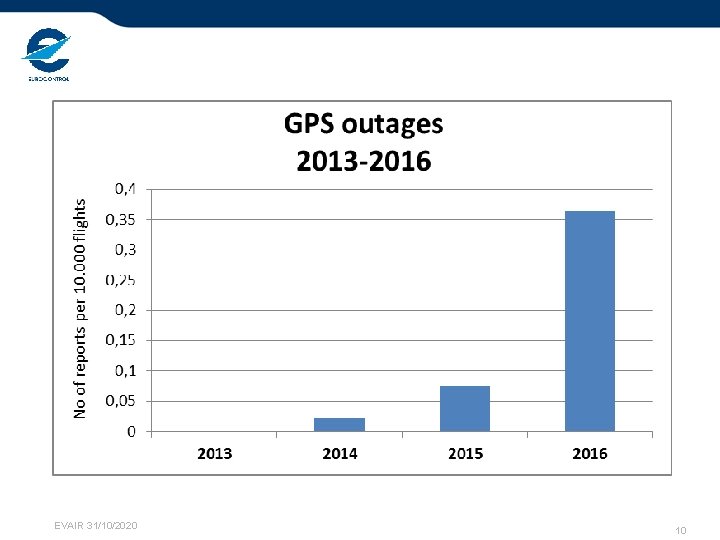
Implemented: GNSS in EVAIR • EVAIR = Eurocontrol Voluntary ATM Incident Reporting • • • Established Safety Process (Confidentiality, Anonymity) 250 Participating Aircraft Operators Coverage: Europe, Middle East, Northern Africa Close cooperation with IATA Part of Network Manager Functions • Info Bulletin sent beginning 2015 and mid-2016 • • • Initial wave of reports received covering 2013/2014 Additional reports coming in every few weeks GNSS Outage one issue among many Simple to set up because it is an existing process / framework Sending further awareness materials to aircraft operators 9
EVAIR 31/10/2020 10
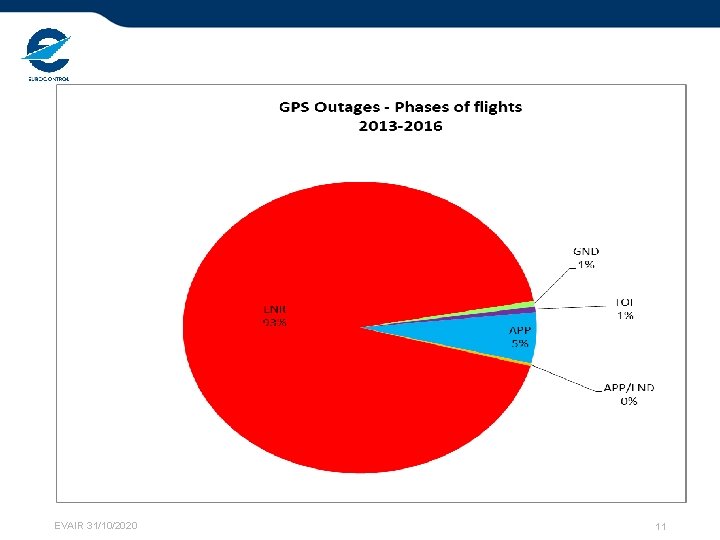
EVAIR 31/10/2020 11
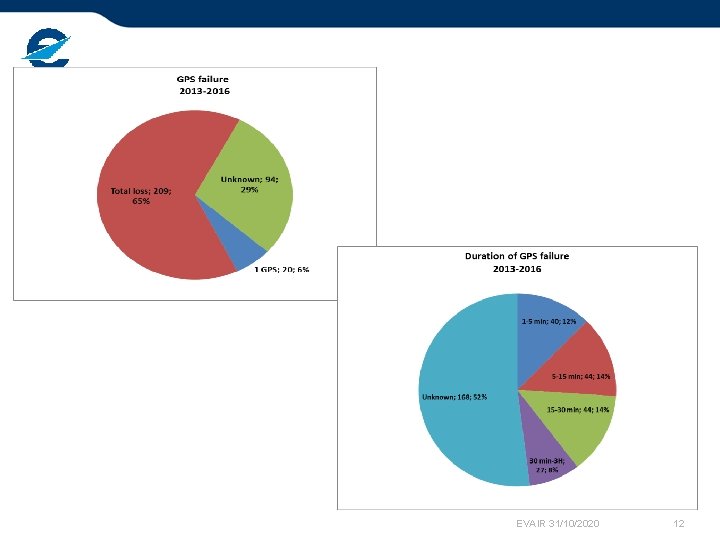
EVAIR 31/10/2020 12
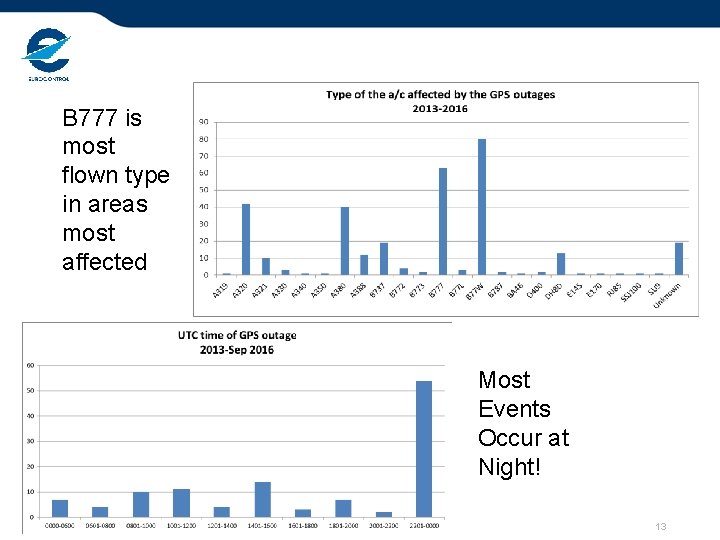
B 777 is most flown type in areas most affected Most Events Occur at Night! EVAIR 31/10/2020 13
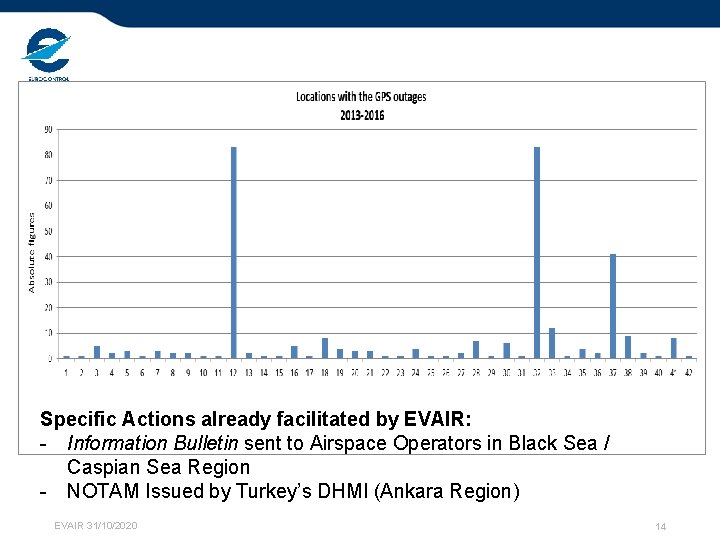
Specific Actions already facilitated by EVAIR: - Information Bulletin sent to Airspace Operators in Black Sea / Caspian Sea Region - NOTAM Issued by Turkey’s DHMI (Ankara Region) EVAIR 31/10/2020 14
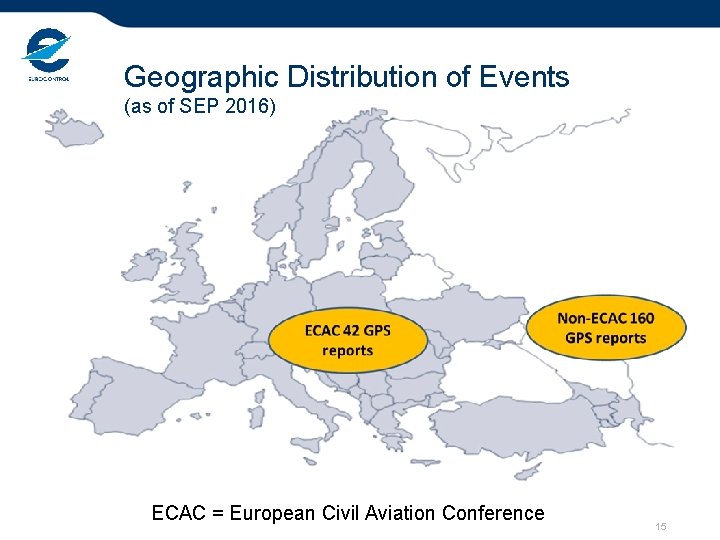
Geographic Distribution of Events (as of SEP 2016) ECAC = European Civil Aviation Conference 15
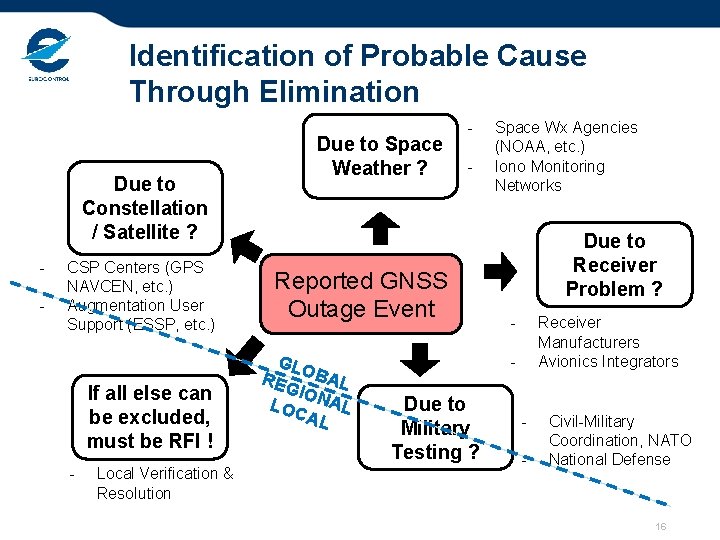
Identification of Probable Cause Through Elimination Due to Constellation / Satellite ? - CSP Centers (GPS NAVCEN, etc. ) Augmentation User Support (ESSP, etc. ) If all else can be excluded, must be RFI ! - Local Verification & Resolution Due to Space Weather ? - Reported GNSS Outage Event GLO REG BAL IO LOC NAL AL Space Wx Agencies (NOAA, etc. ) Iono Monitoring Networks Due to Receiver Problem ? - Receiver Manufacturers Avionics Integrators - Due to Military Testing ? - Civil-Military Coordination, NATO National Defense 16
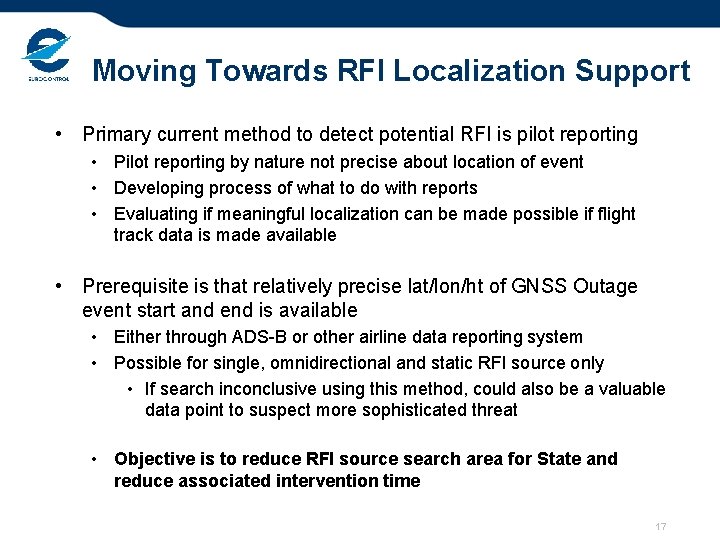
Moving Towards RFI Localization Support • Primary current method to detect potential RFI is pilot reporting • Pilot reporting by nature not precise about location of event • Developing process of what to do with reports • Evaluating if meaningful localization can be made possible if flight track data is made available • Prerequisite is that relatively precise lat/lon/ht of GNSS Outage event start and end is available • Either through ADS-B or other airline data reporting system • Possible for single, omnidirectional and static RFI source only • If search inconclusive using this method, could also be a valuable data point to suspect more sophisticated threat • Objective is to reduce RFI source search area for State and reduce associated intervention time 17
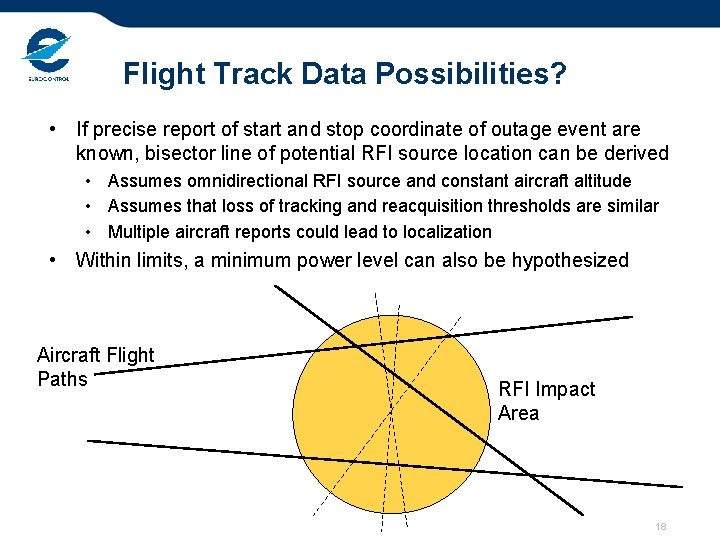
Flight Track Data Possibilities? • If precise report of start and stop coordinate of outage event are known, bisector line of potential RFI source location can be derived • Assumes omnidirectional RFI source and constant aircraft altitude • Assumes that loss of tracking and reacquisition thresholds are similar • Multiple aircraft reports could lead to localization • Within limits, a minimum power level can also be hypothesized Aircraft Flight Paths RFI Impact Area 18
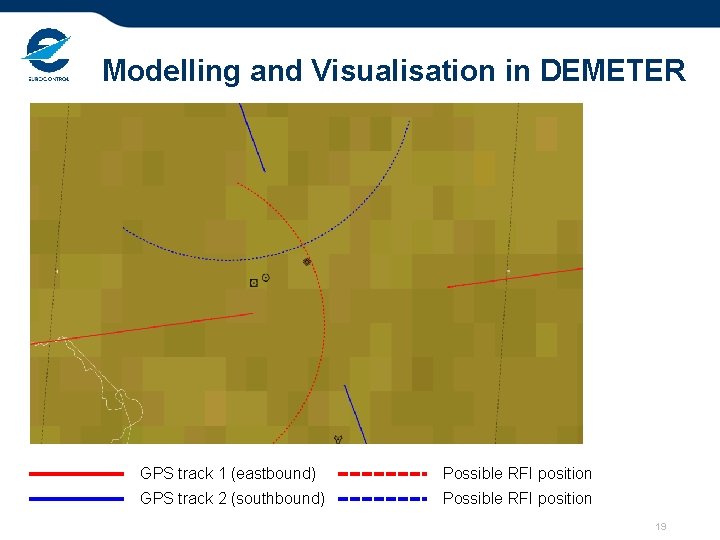
Modelling and Visualisation in DEMETER GPS track 1 (eastbound) Possible RFI position GPS track 2 (southbound) Possible RFI position 19
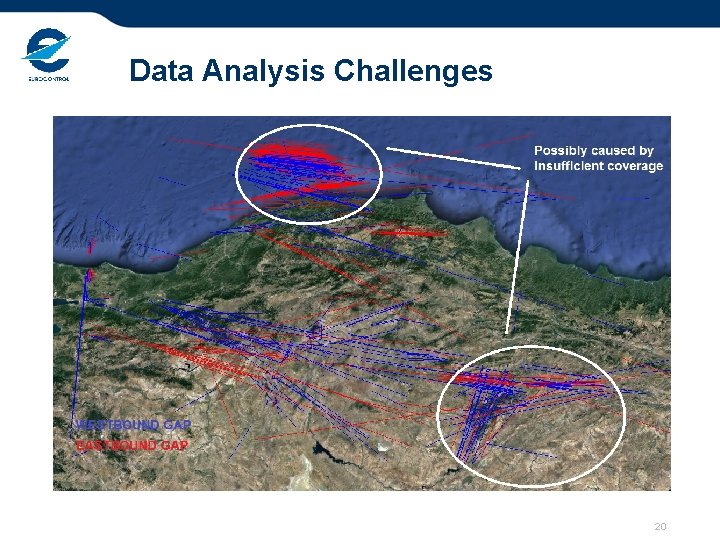
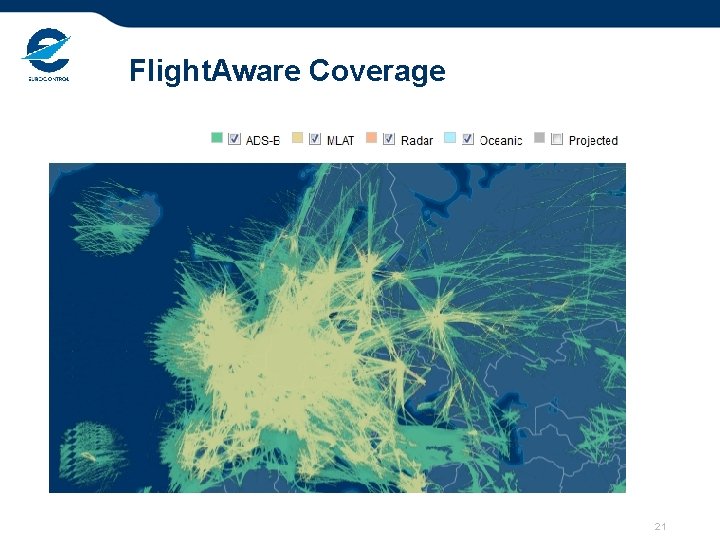
Data Analysis Challenges 20
Flight. Aware Coverage 21
22
RFI Localization Process • EVAIR Reports serve as a trigger for further investigation • First check to eliminate non-RFI causes as much as possible • Then need to rely on public domain ADS-B sources • • Manage coverage and data quality issues Limitations on data history Limitations on track distribution (due to route network) Recall earlier findings (CNS Team, Avionics White List) • Options to be investigated: • Framework agreement with ADS-B data providers? • Publication on Network Manager Operations Portal Nconnect • Further investigation of aircraft installed GNSS Rx tracking and acquisition thresholds as a function of ground based RFI type and main airframe type? • Future Alternatives: GNSS RX Data, Global Flight Tracking? 23
Summary • GNSS RFI Mitigation continues to be an exercise in setting up interfaces • Current effort on ADS-B track data providers • Other venues to be developed: GNSS providers, multi-modal projects (EC), Aircraft OEM’s, Airline FOQA Systems, NATO? • Developing “GNSS Information Concept” to know what to make available to aircrews and how (NOTAM or alternate channels) • Happy to consider any data source incl. ground monitors! • Focus on short-term implementable options that approach stated ATCO requirement (“tell me which sectors are affected”) • AOB: Related IFIS and ION Paper: RFI Localization using CRPA • Published in GPS World Magazine http: //gpsworld. com/tracking-rfi-interference-localization-using-a-crpa/ 24
Requests to ICAO FMG / WRC 19 Workshop • Support further development of GNSS RFI Detection and Localization Methods • Through ADS-B or other Sources, Air & Ground • Provide data on actual cases to relevant groups (ARIA) and Eurocontrol (Network Manager Project) • Next Steps: Improve ICAO guidance on RFI Measurement • Database of RFI Device Signatures (STRIKE 3 Project? ) • Methodologies: Generic RF Test Equipment or GNSS Receivers • To be included in Testing Manual (Doc 8071 Vol 2) • Provide Feedback on Implementation of GNSS RFI Mitigation Plan 25