
GNNViz Immersive and collaborative visualization for landscapes Matt
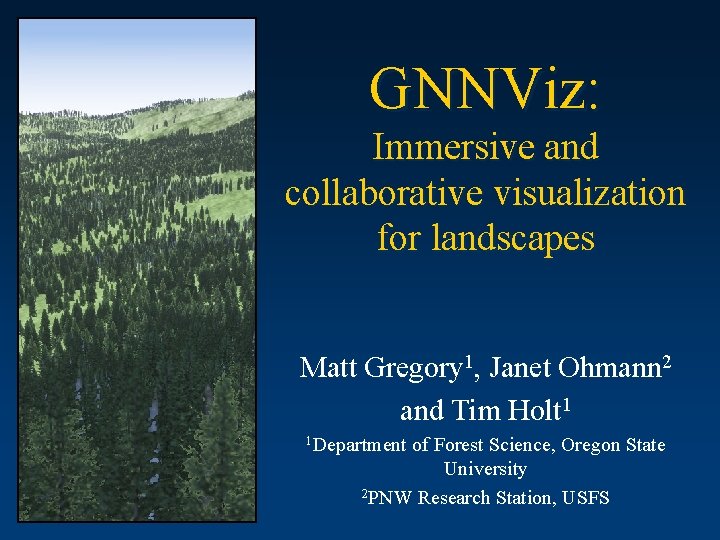
GNNViz: Immersive and collaborative visualization for landscapes Matt Gregory 1, Janet Ohmann 2 and Tim Holt 1 1 Department of Forest Science, Oregon State University 2 PNW Research Station, USFS
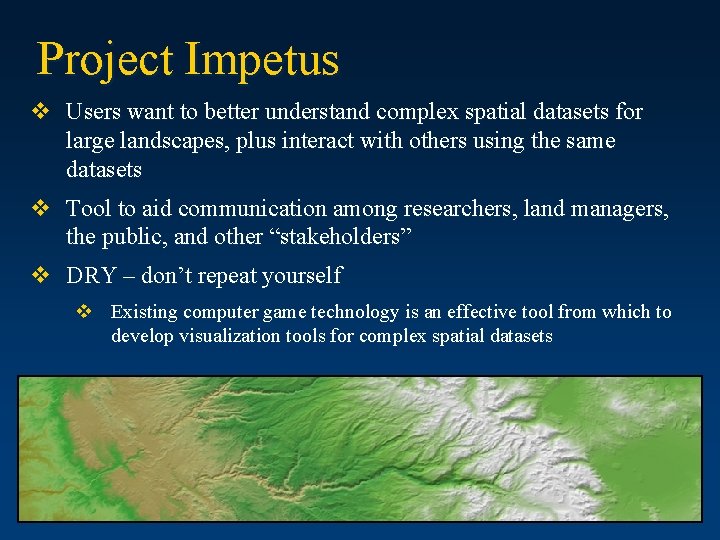
Project Impetus v Users want to better understand complex spatial datasets for large landscapes, plus interact with others using the same datasets v Tool to aid communication among researchers, land managers, the public, and other “stakeholders” v DRY – don’t repeat yourself v Existing computer game technology is an effective tool from which to develop visualization tools for complex spatial datasets
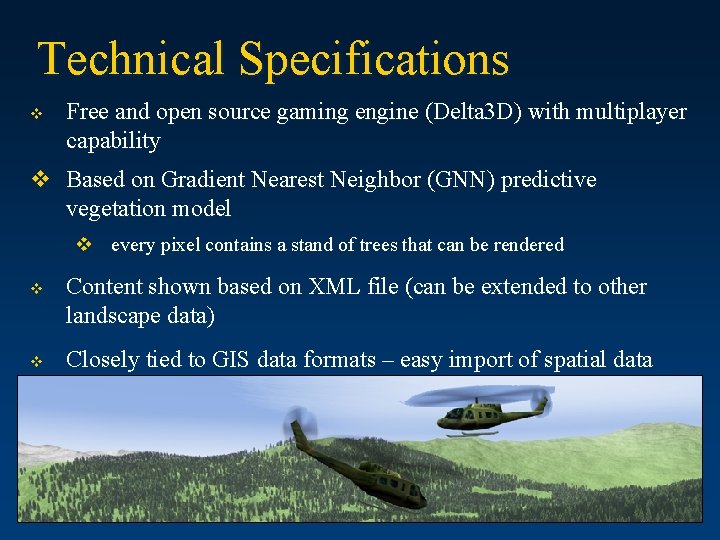
Technical Specifications v Free and open source gaming engine (Delta 3 D) with multiplayer capability v Based on Gradient Nearest Neighbor (GNN) predictive vegetation model v every pixel contains a stand of trees that can be rendered v v Content shown based on XML file (can be extended to other landscape data) Closely tied to GIS data formats – easy import of spatial data
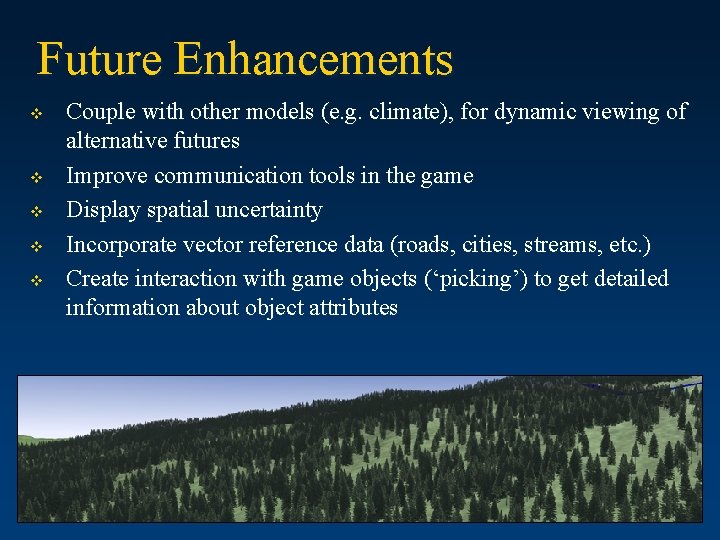
Future Enhancements v v v Couple with other models (e. g. climate), for dynamic viewing of alternative futures Improve communication tools in the game Display spatial uncertainty Incorporate vector reference data (roads, cities, streams, etc. ) Create interaction with game objects (‘picking’) to get detailed information about object attributes
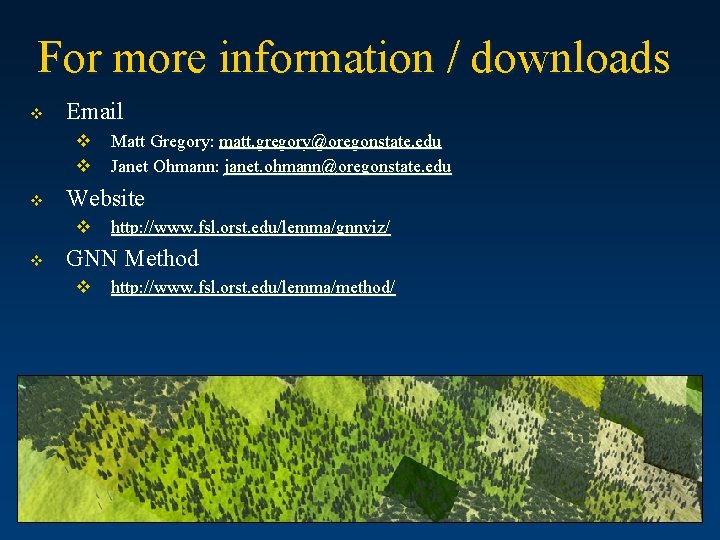
For more information / downloads v Email v v v Website v v Matt Gregory: matt. gregory@oregonstate. edu Janet Ohmann: janet. ohmann@oregonstate. edu http: //www. fsl. orst. edu/lemma/gnnviz/ GNN Method v http: //www. fsl. orst. edu/lemma/method/
- Slides: 5