
GMOs What they are how they are made
- Slides: 7
GMO’s What they are, how they are made, and the risks and benefits of Genetically Modified Organisms By: Jenna Knudtson
Intro to GMO’s • GMO: stands for Genetically Modified Organisms/Genetically Modified Foods • Foods made from organisms whose DNA has been specifically changed through genetic engineering • By 2002: >60% of processed food in US contained at least some GM ingredients
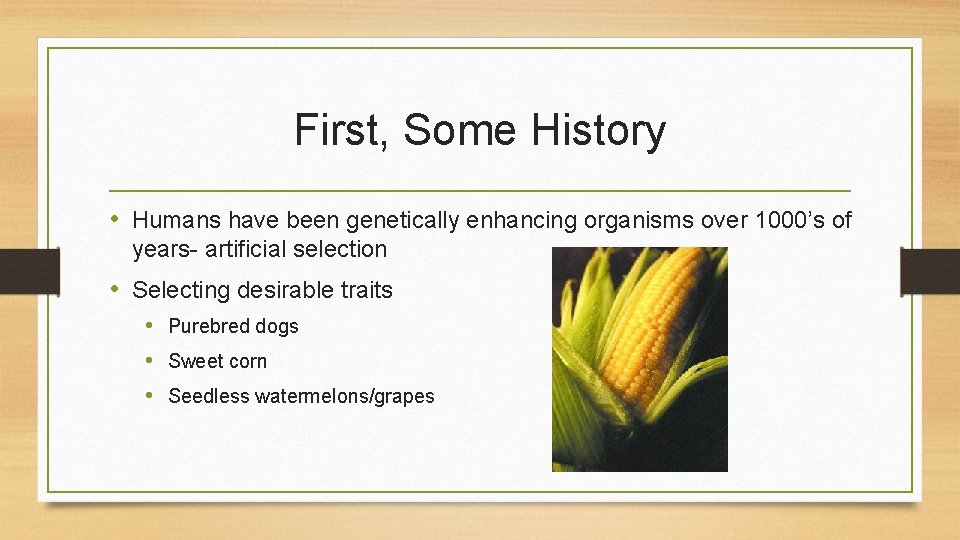
First, Some History • Humans have been genetically enhancing organisms over 1000’s of years- artificial selection • Selecting desirable traits • Purebred dogs • Sweet corn • Seedless watermelons/grapes
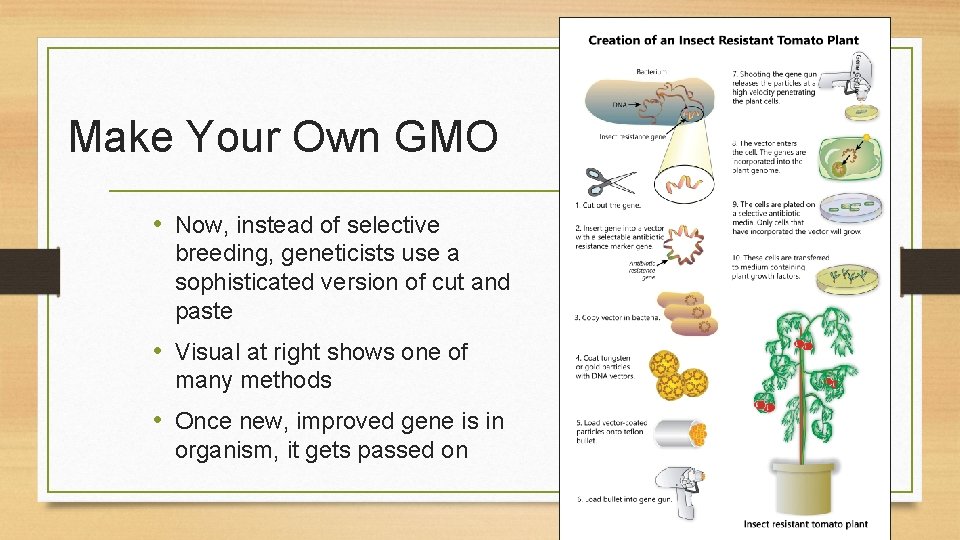
Make Your Own GMO • Now, instead of selective breeding, geneticists use a sophisticated version of cut and paste • Visual at right shows one of many methods • Once new, improved gene is in organism, it gets passed on
Risks • What would happen if GMO’s mixed with wild populations? • Although numerous scientific panels conclude eating GMO’s is safe, may be toxic or allergenic to certain people • Need to keep the old variety for genetic diversity • Possible evolution of insecticide-resistant “superbugs”
Benefits • Agriculture • produces larger, higher quality crops with less effort and expense • can reduce use of insecticides by making plants resistant to pests • add nutrients to food in regions where people don’t get enough of that nutrient • endure weather extremes • Medicine • • make safer and cheaper vaccines “edible” vaccines malaria resistant mosquitos gene therapy • Environment • biodegradable plastics
Sources http: //learn. genetics. utah. edu/content/science/gmfoods/ http: //www. nongmoproject. org/learn-more/ http: //www. britannica. com/EBchecked/topic/897705/geneticallymodified-organism-GMO