
GLYCOLYSIS The Beginning of Energy Production There are
GLYCOLYSIS The Beginning of Energy Production
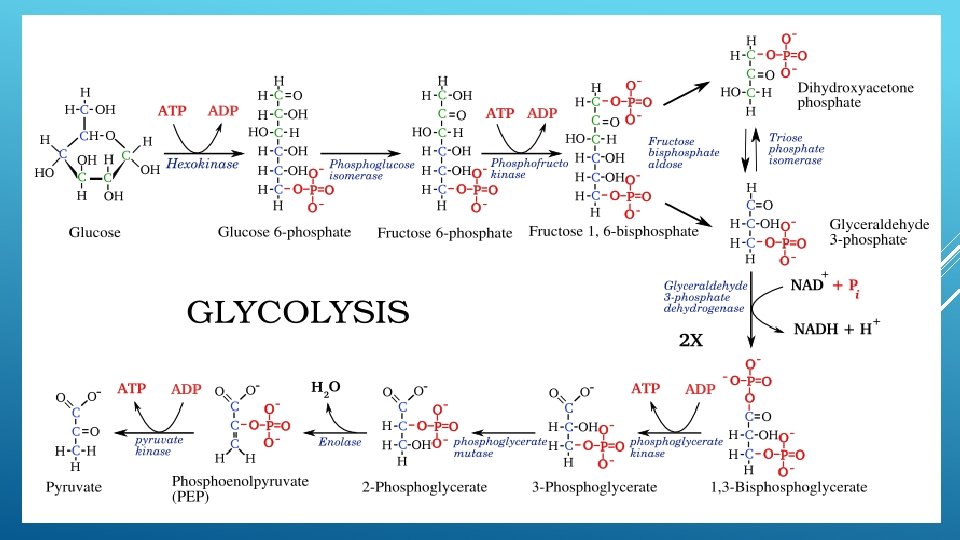
There are 10 steps to glycolysis Glycolysis takes place in the cytoplasm of the cell Each step is catalyzed by an enzyme Glycolysis has 2 phases: Energy Investment / Energy production The net result of glycolysis is 2 ATP, 2 NADH and 2 pyruvate molecules GLYCOLYSIS: OVERVIEW
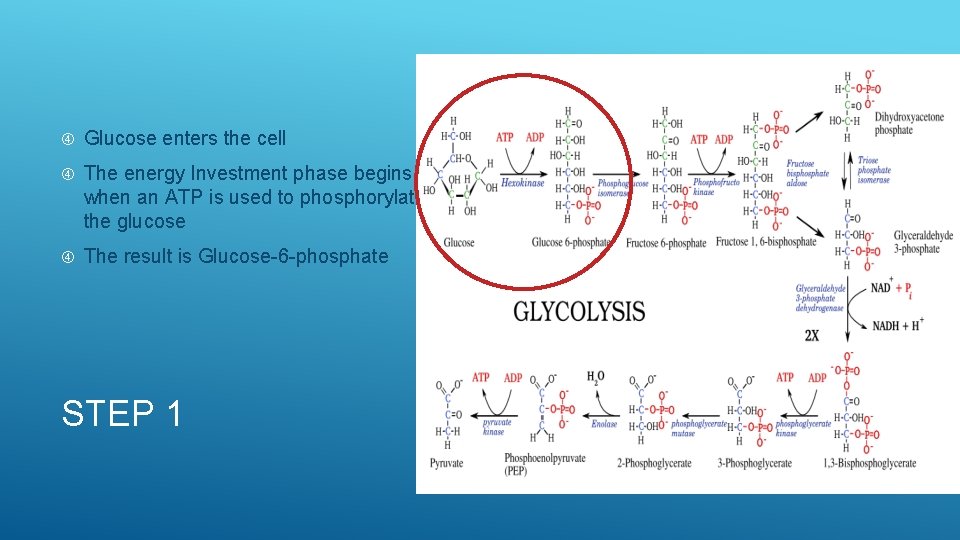
Glucose enters the cell The energy Investment phase begins when an ATP is used to phosphorylate the glucose The result is Glucose-6 -phosphate STEP 1
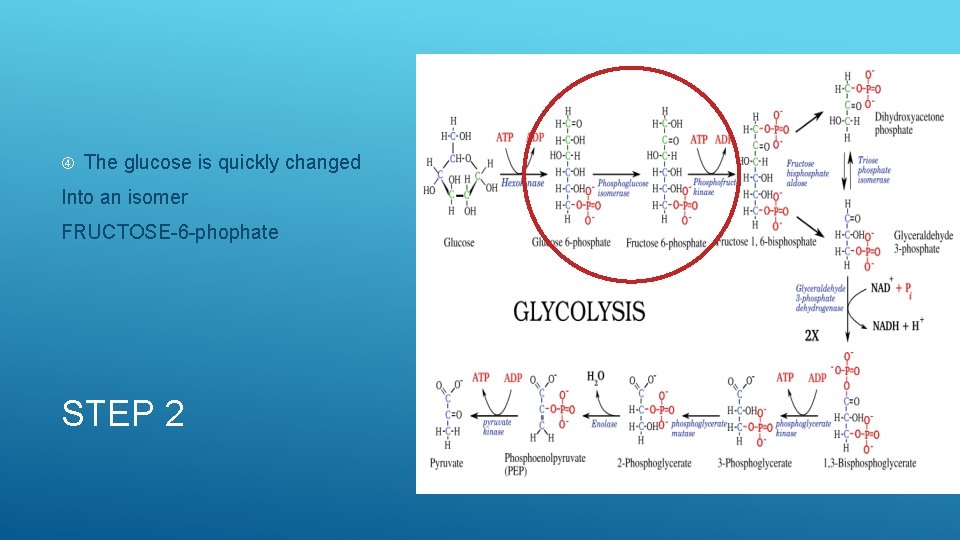
The glucose is quickly changed Into an isomer FRUCTOSE-6 -phophate STEP 2
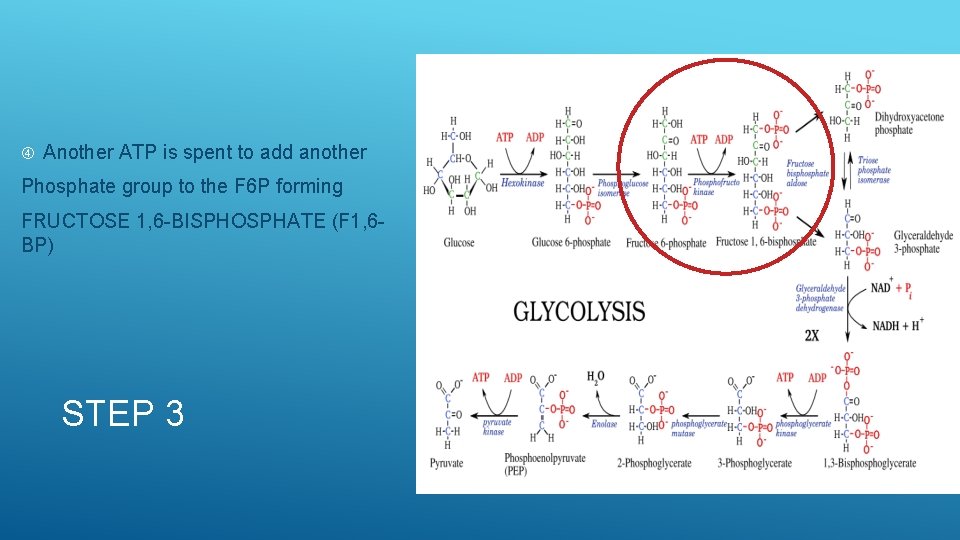
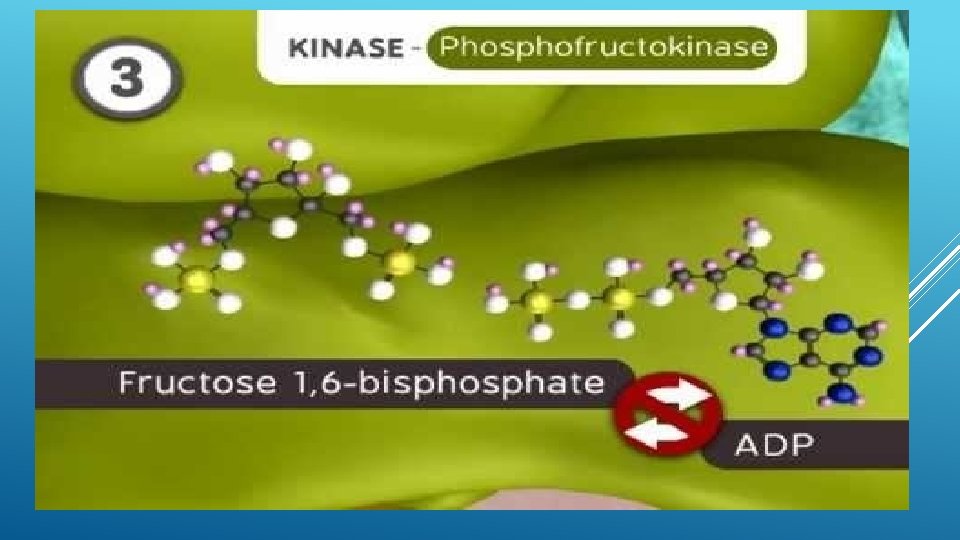
Another ATP is spent to add another Phosphate group to the F 6 P forming FRUCTOSE 1, 6 -BISPHOSPHATE (F 1, 6 BP) STEP 3

The fructose molecule is split into 2 3 carbon sugars. 1. Glyceraldyhyde-3 -phosphate (G 3 P)) 2. Dihydroxyacetone phosphate (DHAP) (TEMPORARY) STEP 4
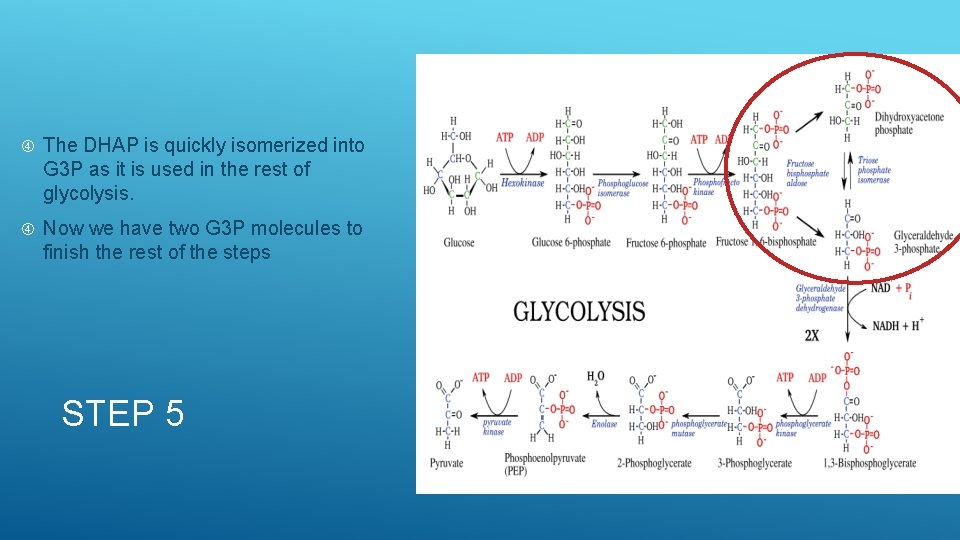
The DHAP is quickly isomerized into G 3 P as it is used in the rest of glycolysis. Now we have two G 3 P molecules to finish the rest of the steps STEP 5
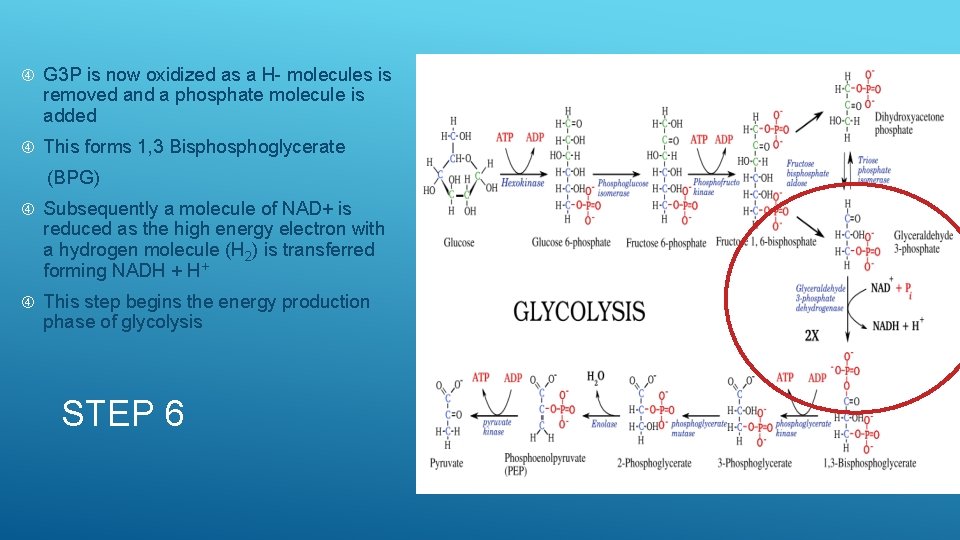
G 3 P is now oxidized as a H- molecules is removed and a phosphate molecule is added This forms 1, 3 Bisphoglycerate (BPG) Subsequently a molecule of NAD+ is reduced as the high energy electron with a hydrogen molecule (H 2) is transferred forming NADH + H+ This step begins the energy production phase of glycolysis STEP 6
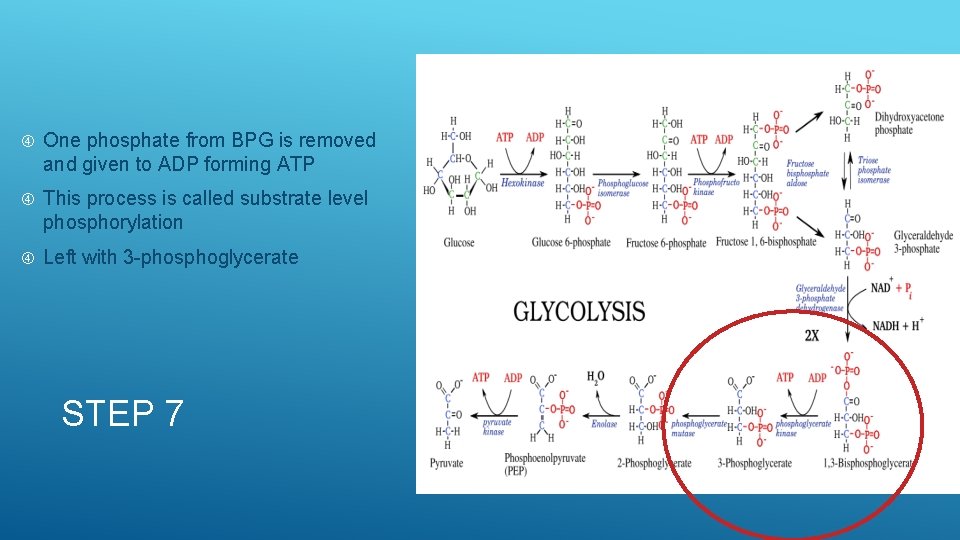
One phosphate from BPG is removed and given to ADP forming ATP This process is called substrate level phosphorylation Left with 3 -phosphoglycerate STEP 7
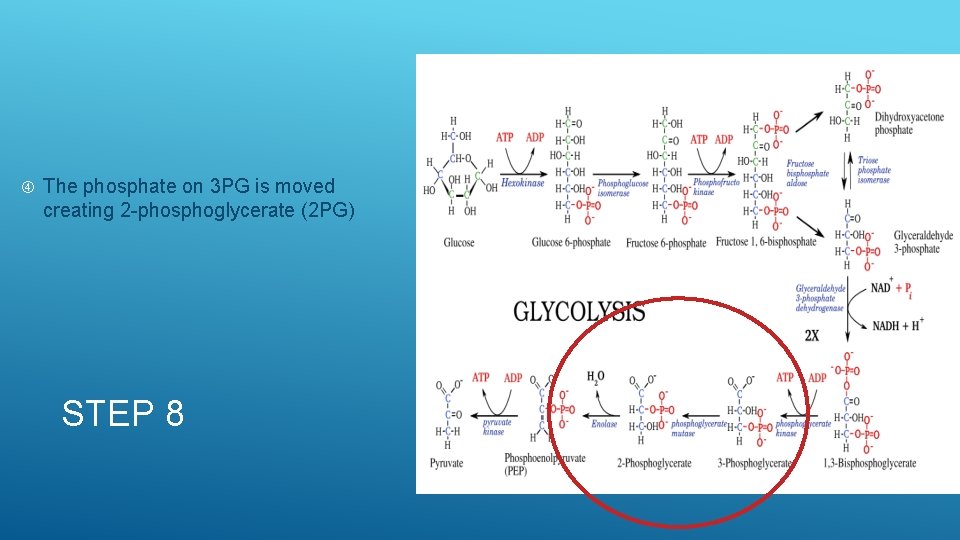
The phosphate on 3 PG is moved creating 2 -phosphoglycerate (2 PG) STEP 8
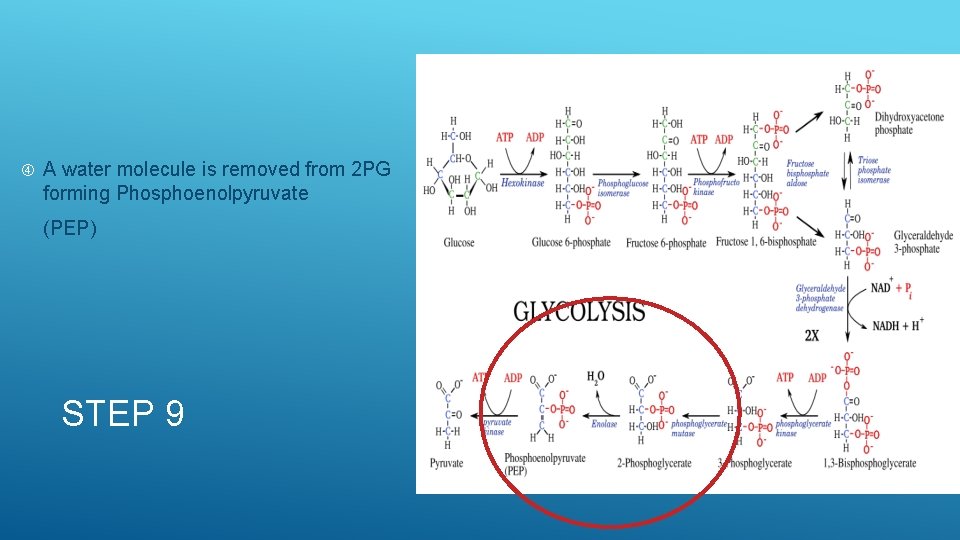
A water molecule is removed from 2 PG forming Phosphoenolpyruvate (PEP) STEP 9
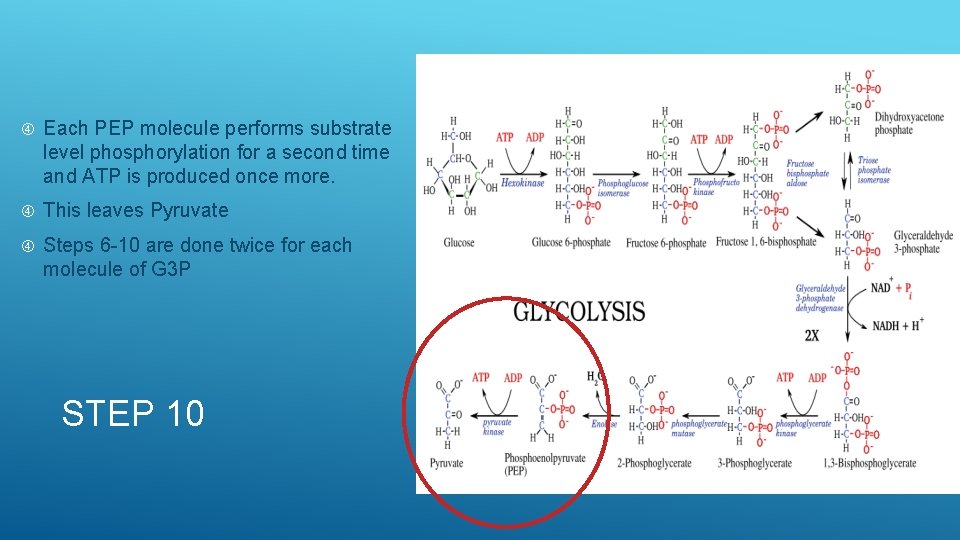
Each PEP molecule performs substrate level phosphorylation for a second time and ATP is produced once more. This leaves Pyruvate Steps 6 -10 are done twice for each molecule of G 3 P STEP 10
- Slides: 14