
Glycolysis Cellular Respiration and the Cell Aerobic Energy
Glycolysis, Cellular Respiration and the Cell Aerobic Energy Processes of the Cell
Five main forms of energy: o. Mechanical - associated with motion. o. Heat - internal motion of particles. o. Chemical - bonds atoms and ions together. o. Electromagnetic - moving electric charges. o. Nuclear - in the atomic nucleus. o. Nuclear fission o. Nuclear fusion
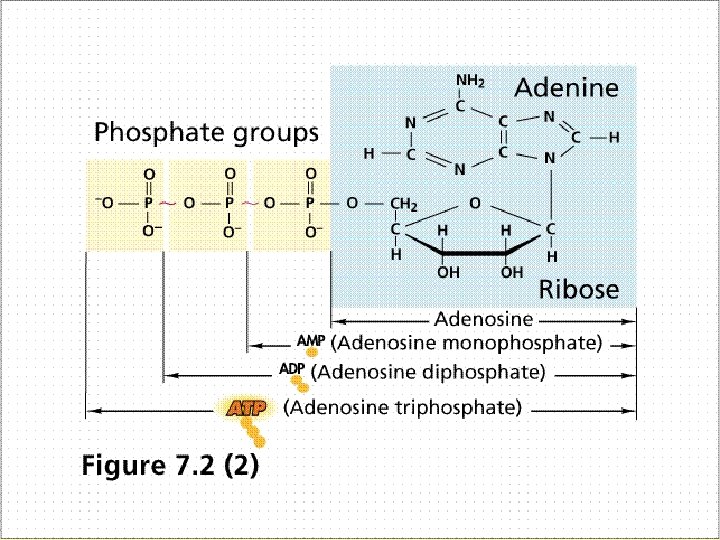
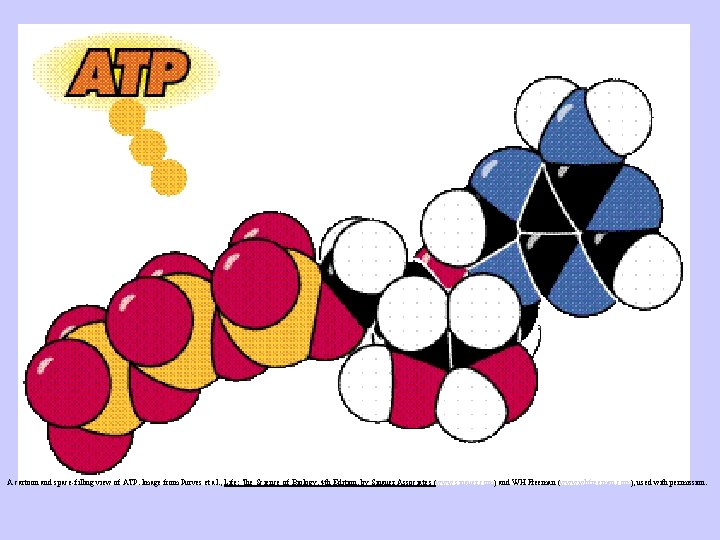
A cartoon and space-filling view of ATP. Image from Purves et al. , Life: The Science of Biology, 4 th Edition, by Sinauer Associates (www. sinauer. com) and WH Freeman (www. whfreeman. com), used with permission.
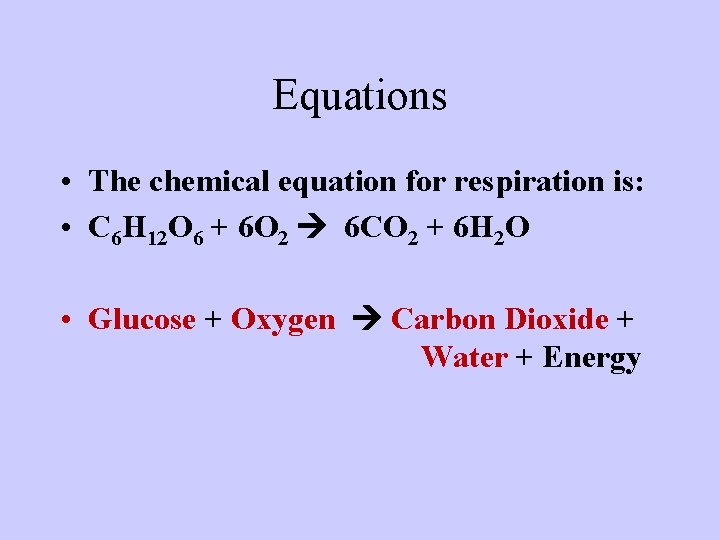
Equations • The chemical equation for respiration is: • C 6 H 12 O 6 + 6 O 2 6 CO 2 + 6 H 2 O • Glucose + Oxygen Carbon Dioxide + Water + Energy
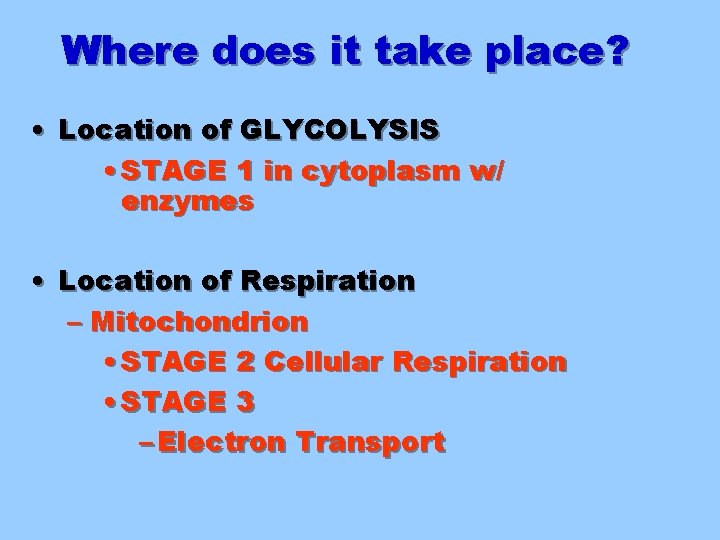
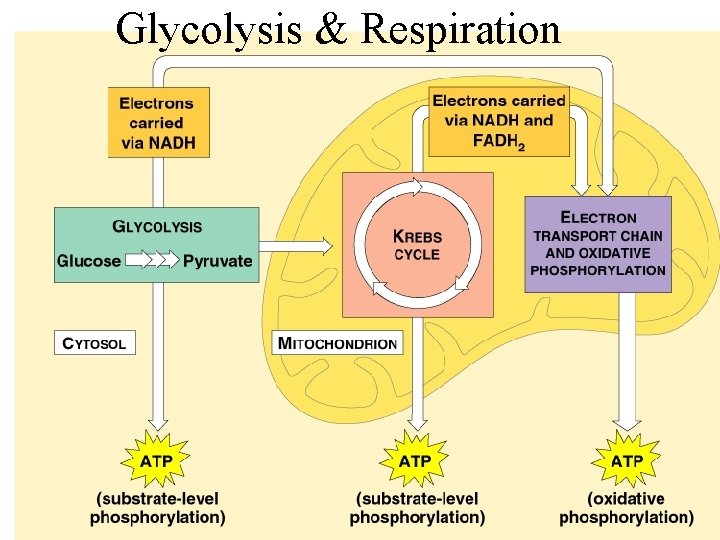
Where does it take place? • Location of GLYCOLYSIS • STAGE 1 in cytoplasm w/ enzymes • Location of Respiration – Mitochondrion • STAGE 2 Cellular Respiration • STAGE 3 – Electron Transport
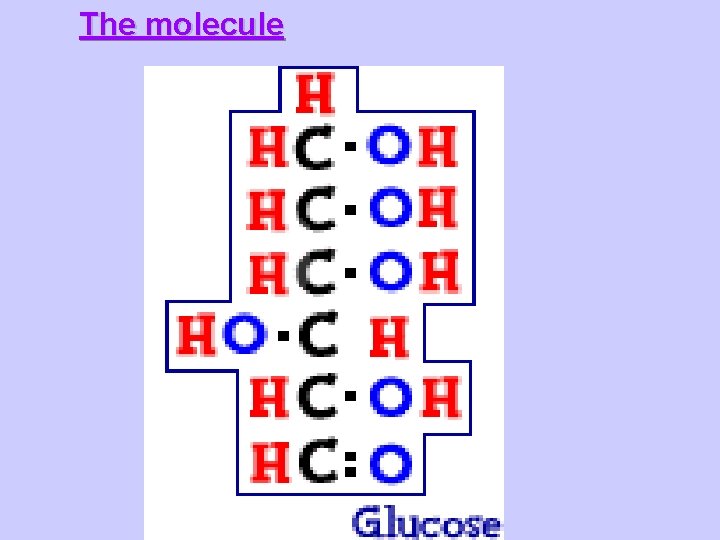
The molecule
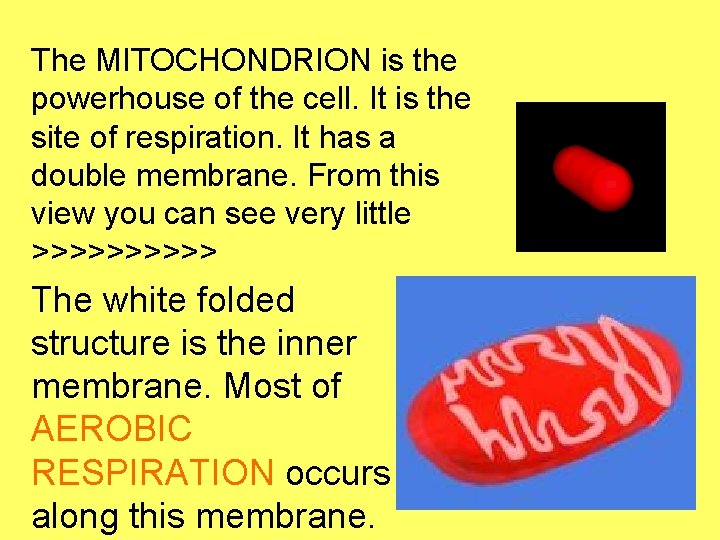
The MITOCHONDRION is the powerhouse of the cell. It is the site of respiration. It has a double membrane. From this view you can see very little >>>>> The white folded structure is the inner membrane. Most of AEROBIC RESPIRATION occurs along this membrane.
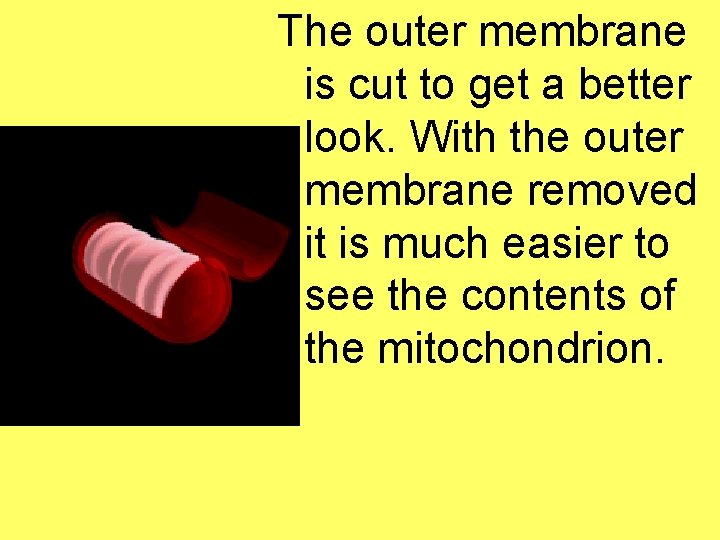
The outer membrane is cut to get a better look. With the outer membrane removed it is much easier to see the contents of the mitochondrion.
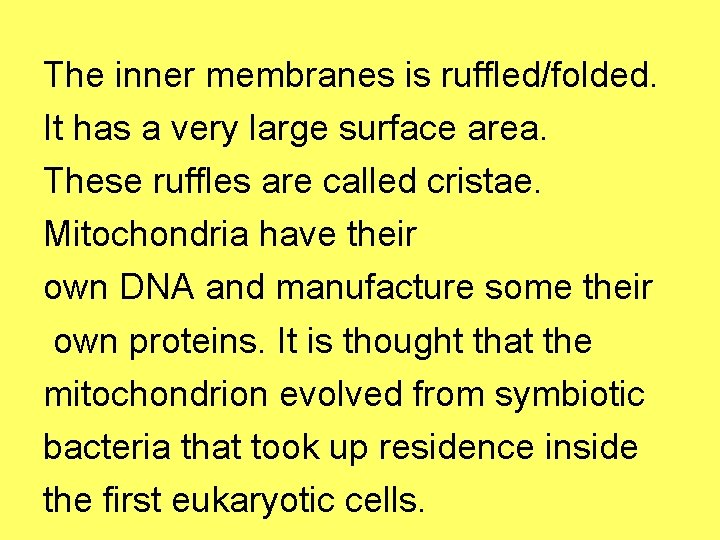
The inner membranes is ruffled/folded. It has a very large surface area. These ruffles are called cristae. Mitochondria have their own DNA and manufacture some their own proteins. It is thought that the mitochondrion evolved from symbiotic bacteria that took up residence inside the first eukaryotic cells.
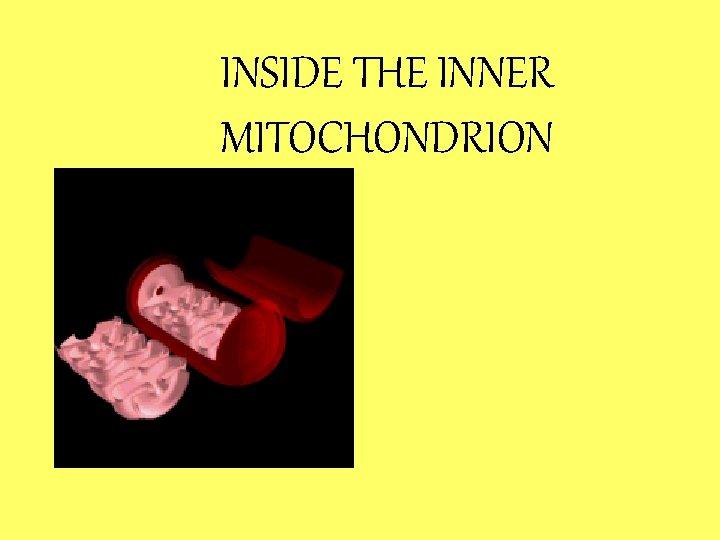
INSIDE THE INNER MITOCHONDRION
Glycolysis & Respiration
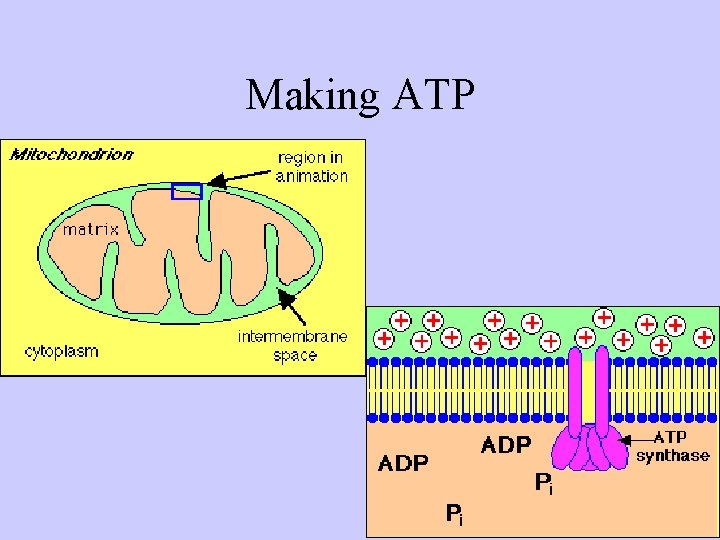
Making ATP
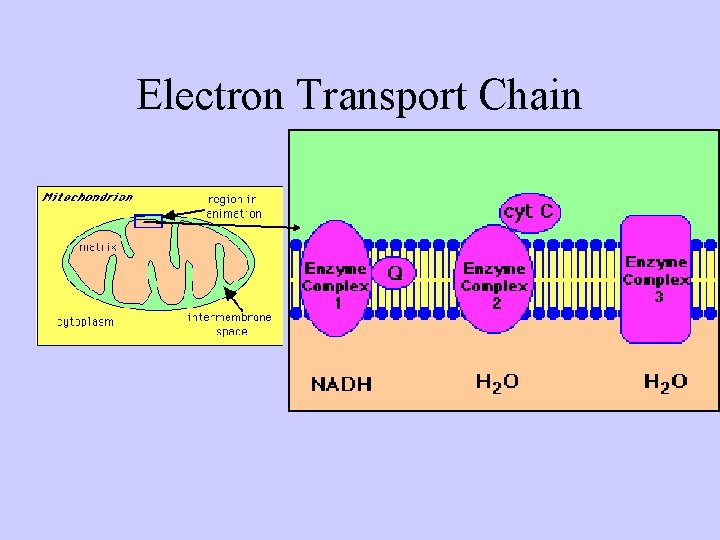
Electron Transport Chain
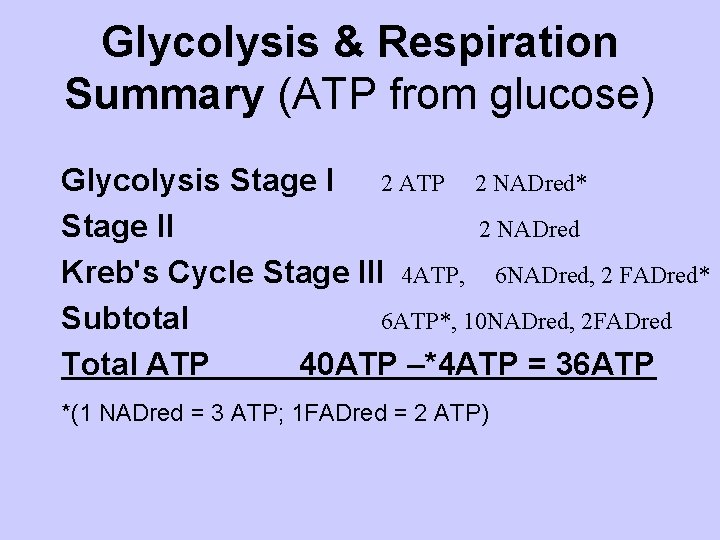
Glycolysis & Respiration Summary (ATP from glucose) Glycolysis Stage I 2 ATP 2 NADred* Stage II 2 NADred Kreb's Cycle Stage III 4 ATP, 6 NADred, 2 FADred* Subtotal 6 ATP*, 10 NADred, 2 FADred Total ATP 40 ATP –*4 ATP = 36 ATP *(1 NADred = 3 ATP; 1 FADred = 2 ATP)
- Slides: 15