
Glycogen metabolism Glycogen is the major storage of
Glycogen metabolism
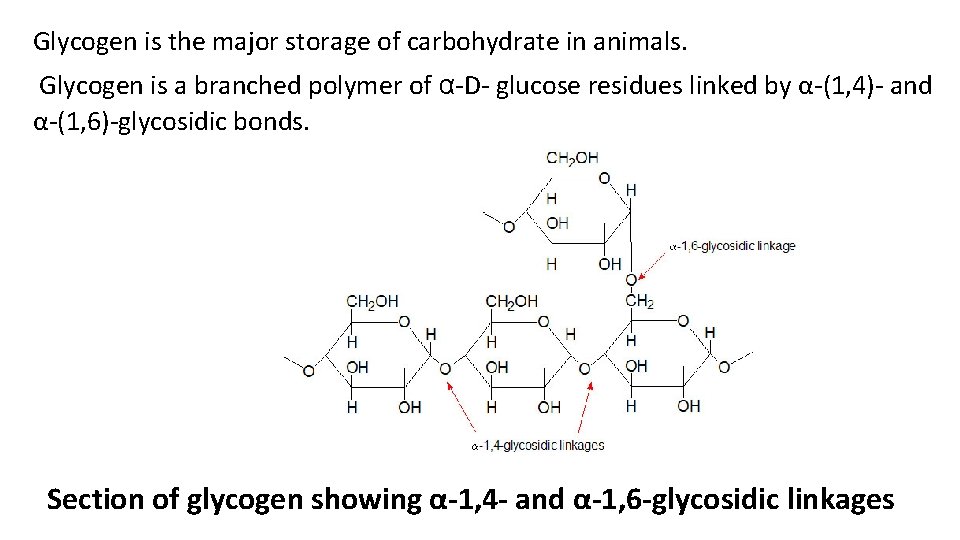
Glycogen is the major storage of carbohydrate in animals. Glycogen is a branched polymer of α-D- glucose residues linked by α-(1, 4)- and α-(1, 6)-glycosidic bonds. Section of glycogen showing α-1, 4 - and α-1, 6 -glycosidic linkages
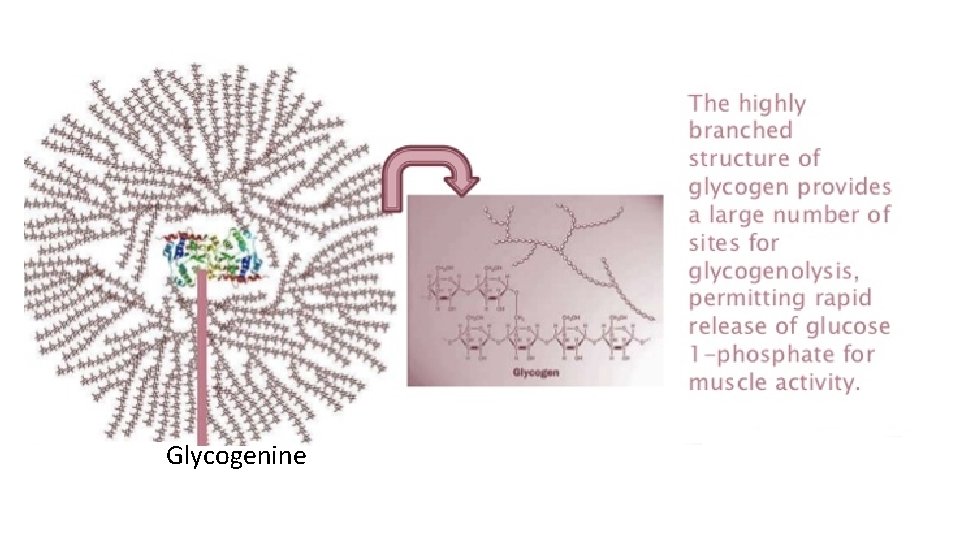
Glycogenine
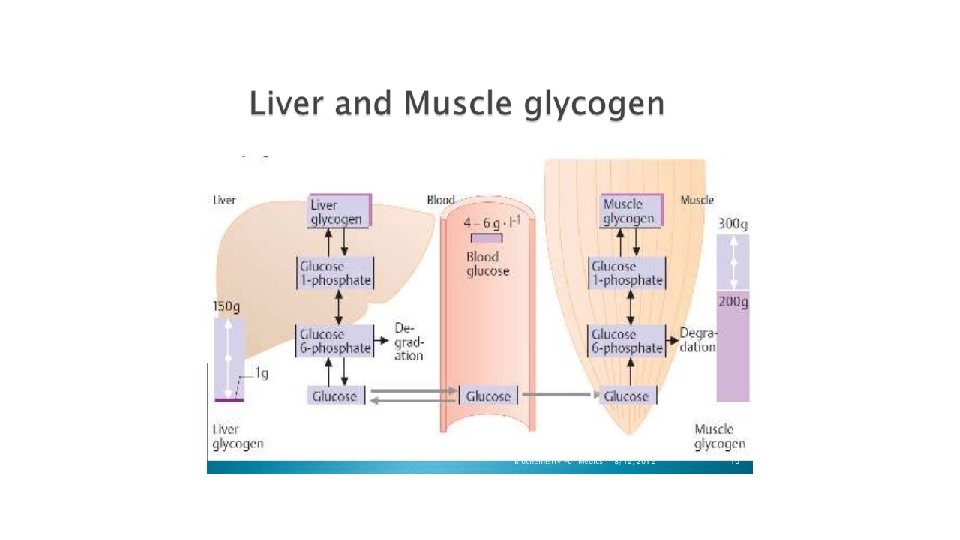
Glycogenesis • Glycogenesis is the synthesis of glycogen from glucose. It occurs mainly in liver and muscle. • Although the liver content of glycogen is greater than that of muscle. • Muscle glycogen provides a readily available source of glucose for glycolysis within the muscle. • Liver glycogen functions to store and export glucose to maintain blood glucose. • However, muscle glycogen is not generally available to other tissues, because muscle lacks the enzyme glucose-6 -phosphatase.
Steps of glycogenesis 1. Activation of glucose. 2. Initiation. 3. Elongation. 4. Glycogen branching. Activation of glucose • Synthesis of glycogen from glucose is carried out by the enzyme glycogen synthase. • This enzyme utilizes UDP-glucose as one substrate and the non-reducing end of glycogen as another. • UDP-glucose , the glucose donor in the biosynthesis of glycogen , is an activated form of glucose
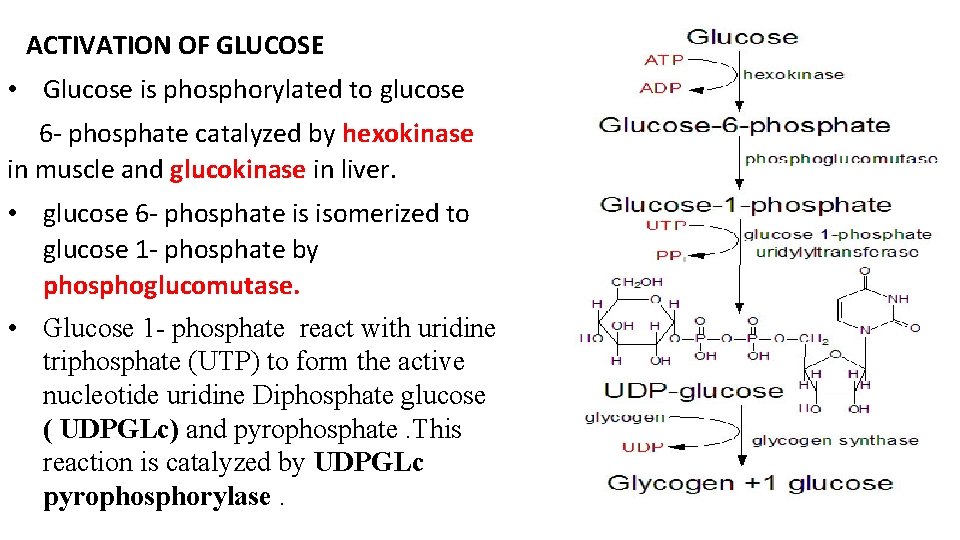
ACTIVATION OF GLUCOSE • Glucose is phosphorylated to glucose 6 - phosphate catalyzed by hexokinase in muscle and glucokinase in liver. • glucose 6 - phosphate is isomerized to glucose 1 - phosphate by phosphoglucomutase. • Glucose 1 - phosphate react with uridine triphosphate (UTP) to form the active nucleotide uridine Diphosphate glucose ( UDPGLc) and pyrophosphate. This reaction is catalyzed by UDPGLc pyrophosphorylase.
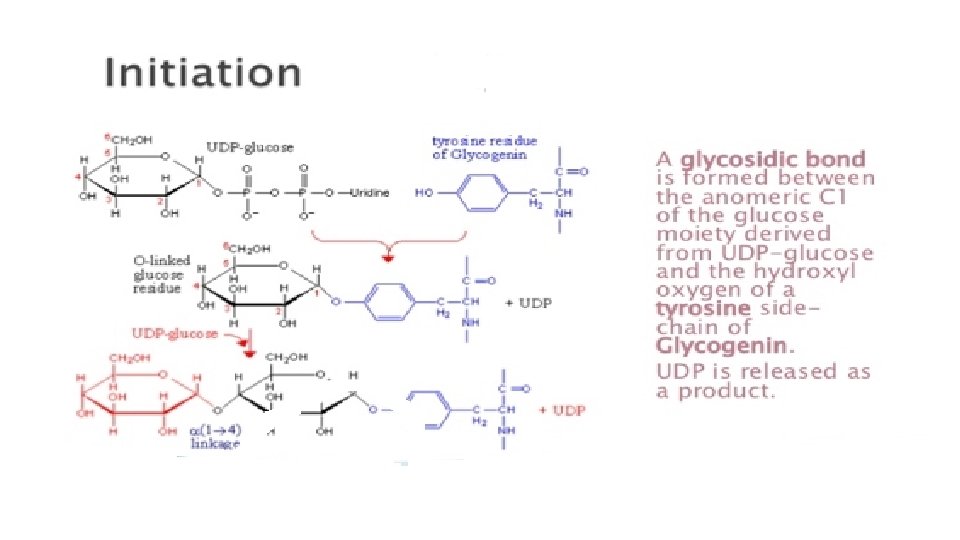
Initiation Glycogen synthase can add glycosyl residue only if the polysaccharide chain contain more than four residue. Thus glycogen synthesis require a primer . This primring function is carried out by a protein known as glycogenin that is glycosylated on a specific tyrosine residue by UDPGLs. Further glucose residues are attached in the 1→ 4 position(catalyzed by glycogenin itself) to form a short chain that is substrate for glycogen synthesis.
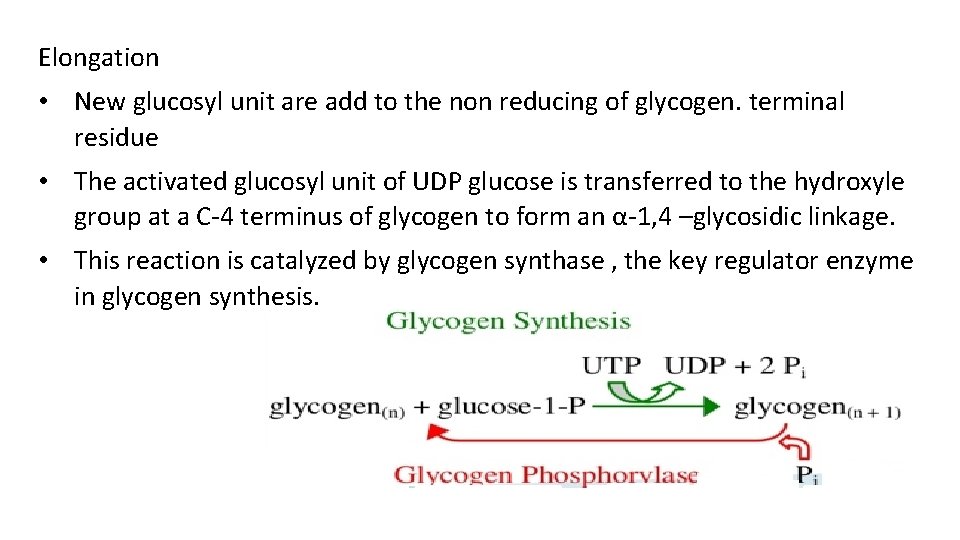
Elongation • New glucosyl unit are add to the non reducing of glycogen. terminal residue • The activated glucosyl unit of UDP glucose is transferred to the hydroxyle group at a C-4 terminus of glycogen to form an α-1, 4 –glycosidic linkage. • This reaction is catalyzed by glycogen synthase , the key regulator enzyme in glycogen synthesis.
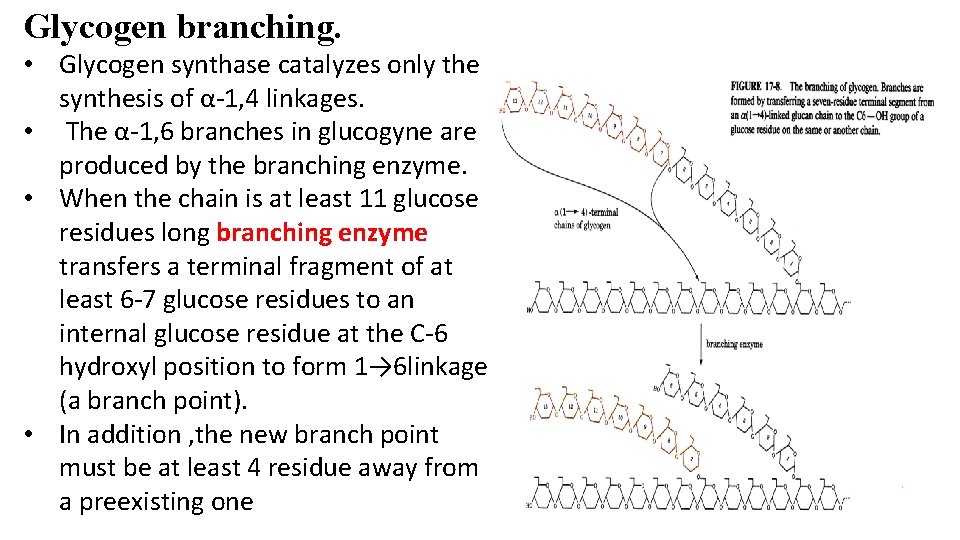
Glycogen branching. • Glycogen synthase catalyzes only the synthesis of α-1, 4 linkages. • The α-1, 6 branches in glucogyne are produced by the branching enzyme. • When the chain is at least 11 glucose residues long branching enzyme transfers a terminal fragment of at least 6 -7 glucose residues to an internal glucose residue at the C-6 hydroxyl position to form 1→ 6 linkage (a branch point). • In addition , the new branch point must be at least 4 residue away from a preexisting one
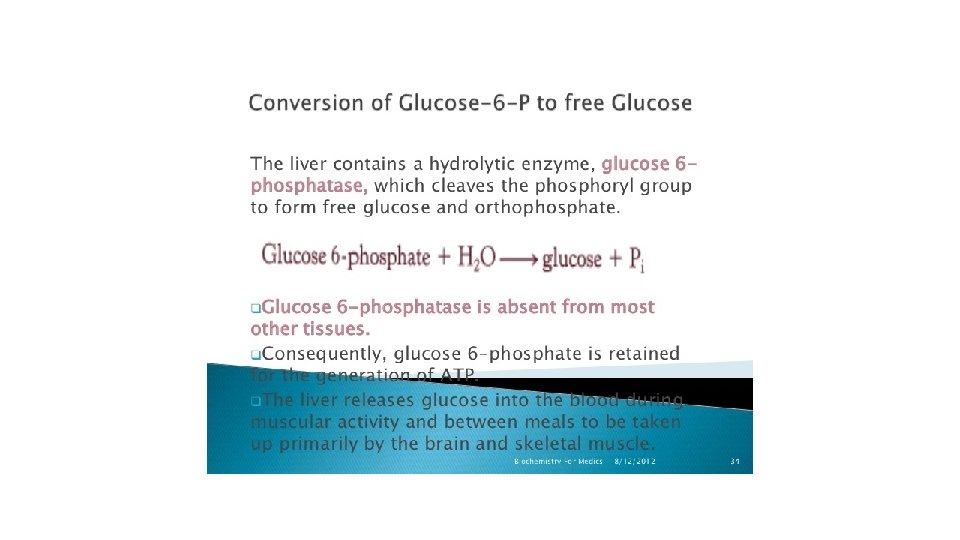
Glycogenolysis : Degradation of stored glycogen, termed glycogenolysis Different pathways of glycogen breakdown - In muscle: Glycogen → glucose-6 -phosphate (G 6 P) → glycolysis - In liver: Glycogen → G 6 P → glucose → bloodstream → various cells → glycolysis Because the muscle cells mainly consume glucose molecules whereas the liver cells mainly store the glucose molecules. Glycogen degradation consists of three steps: • The release of glucose 1 - phosphate from glycogen. • The remodeling of the glycogen substrate to permit further degradation • The conversion of glucose 1 - P to glucose 6 -P.
Glycogen breakdown requires three enzymes 1. Glycogen phosphorylase (simply call it phosphorylase) the key enzyme glycogen breakdown, cleaves its substrate and the addition of orthophosphate to yield glucose 1 -P. The cleavage of bond by the addition of orthophosphate is referred to as phosphorolysis. (Glycogen)n + Pi ↔ (glycogen)n-1 + G 1 P (n residues) (n-1 residues) This enzyme releases a glucose unit one by one until it reaches ~ five units (limit branch) from a branch point.
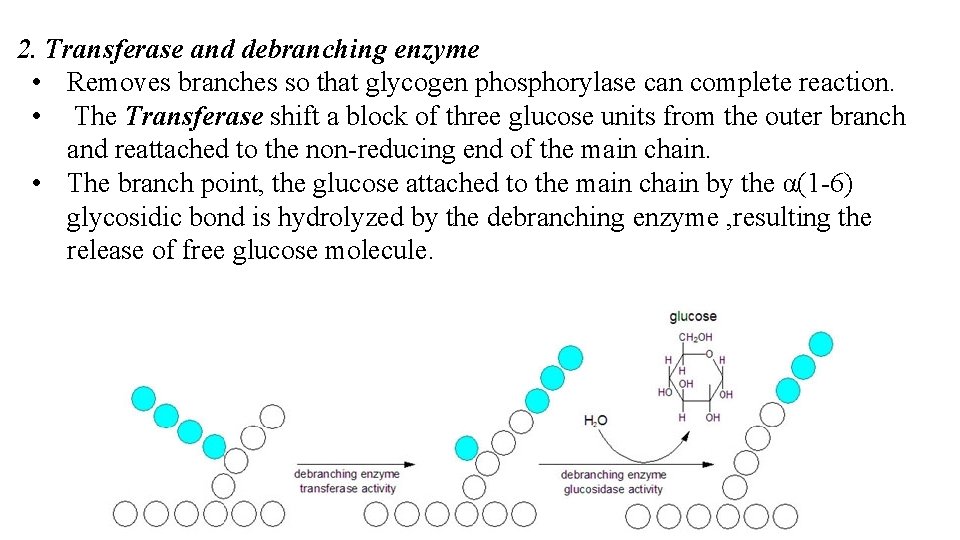
2. Transferase and debranching enzyme • Removes branches so that glycogen phosphorylase can complete reaction. • The Transferase shift a block of three glucose units from the outer branch and reattached to the non-reducing end of the main chain. • The branch point, the glucose attached to the main chain by the α(1 -6) glycosidic bond is hydrolyzed by the debranching enzyme , resulting the release of free glucose molecule.
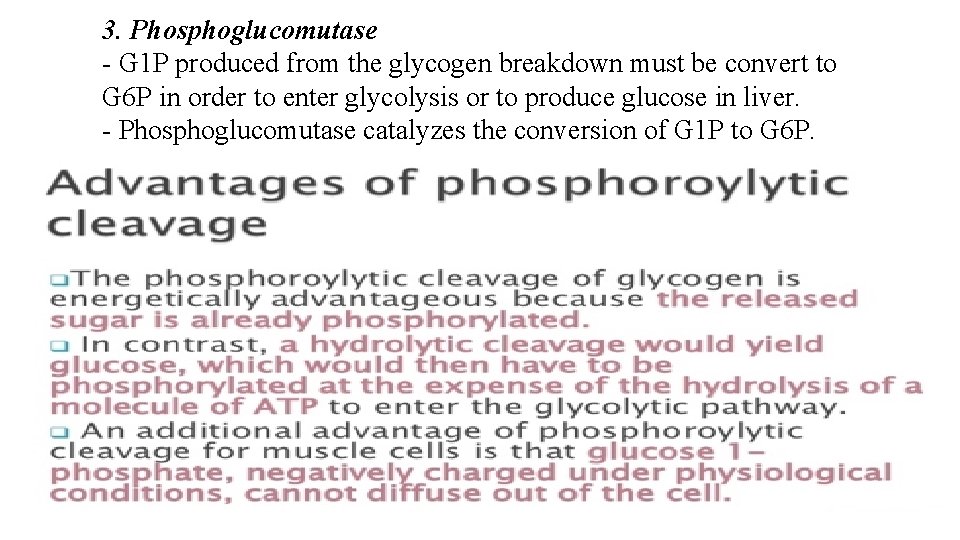
3. Phosphoglucomutase - G 1 P produced from the glycogen breakdown must be convert to G 6 P in order to enter glycolysis or to produce glucose in liver. - Phosphoglucomutase catalyzes the conversion of G 1 P to G 6 P.

- Slides: 17