
GLY 326 Structural Geology Lecture Stressed out The
- Slides: 29
GLY 326 Structural Geology Lecture Stressed out
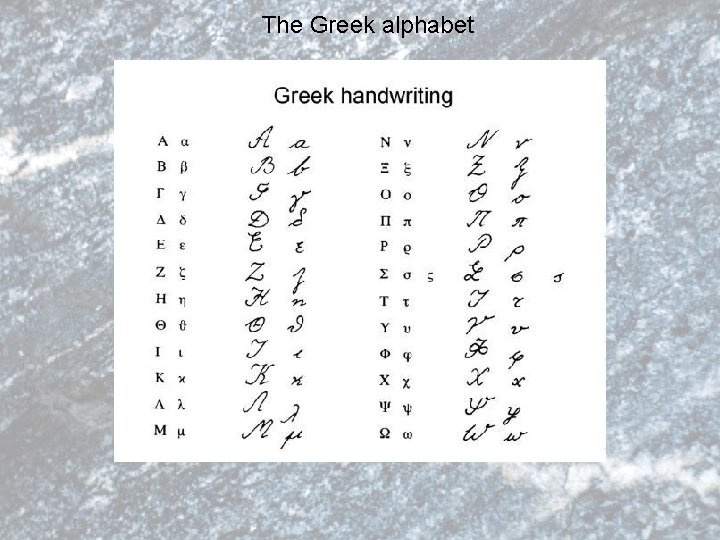
The Greek alphabet
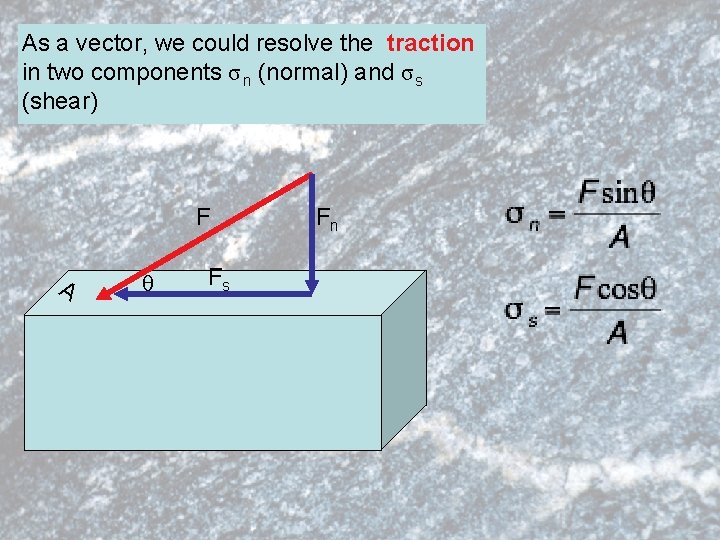
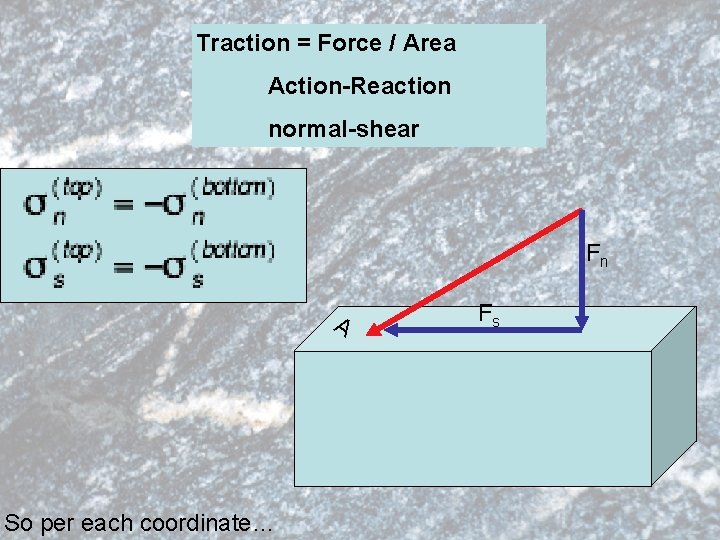
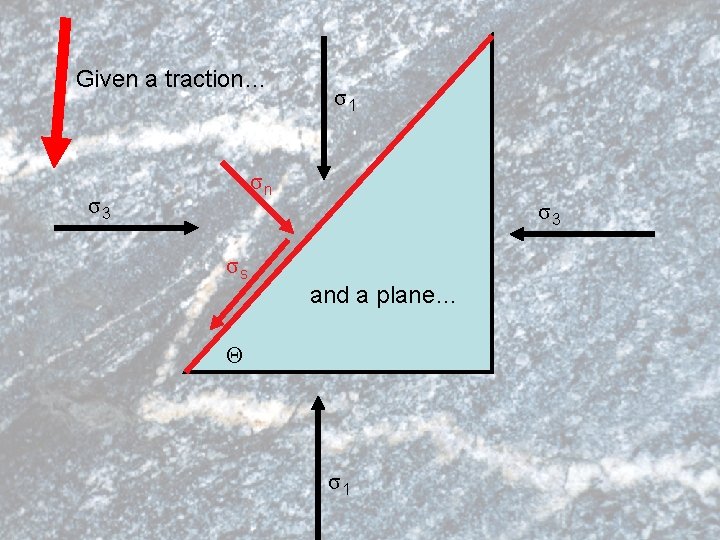
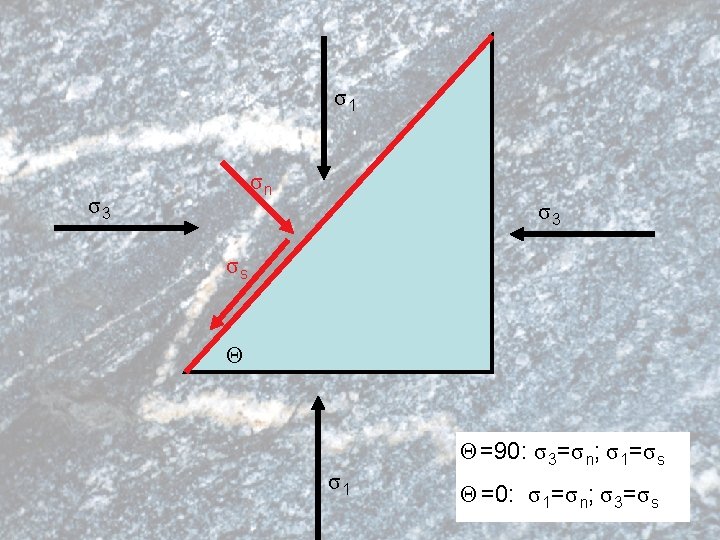
As a vector, we could resolve the traction in two components σ n (normal) and σ s (shear) F A θ Fs Fn
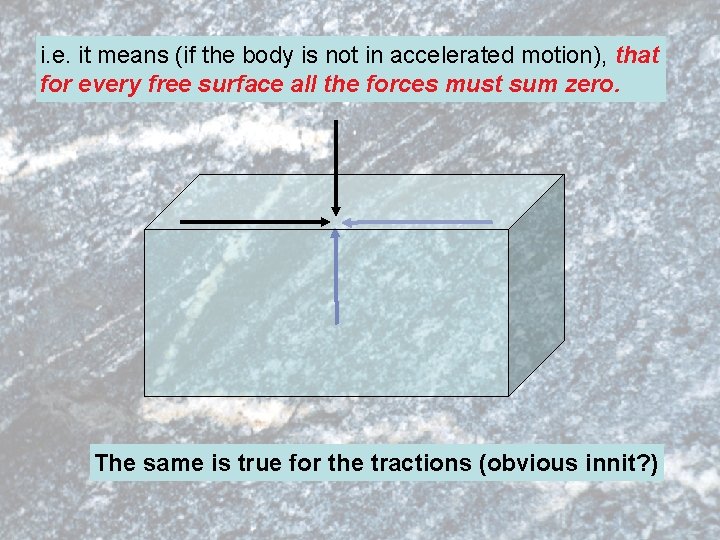
i. e. it means (if the body is not in accelerated motion), that for every free surface all the forces must sum zero. The same is true for the tractions (obvious innit? )
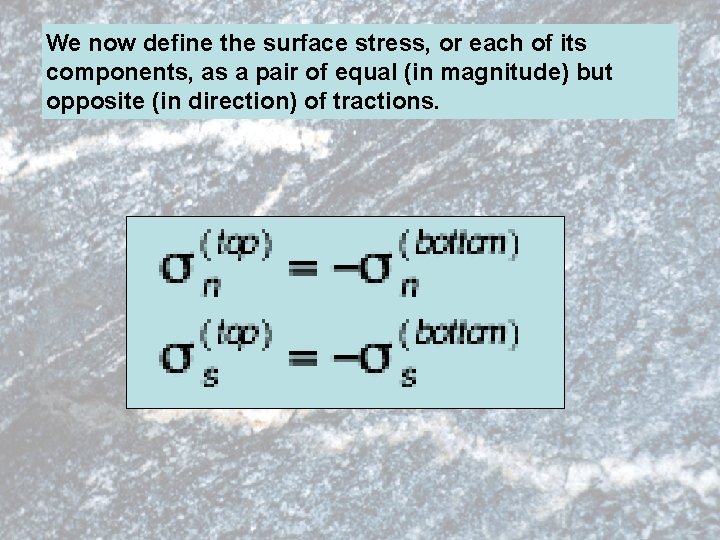
We now define the surface stress, or each of its components, as a pair of equal (in magnitude) but opposite (in direction) of tractions.
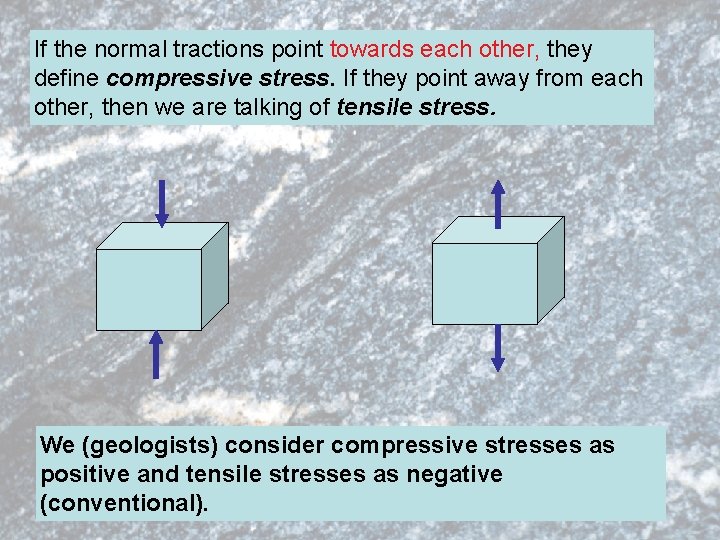
If the normal tractions point towards each other, they define compressive stress. If they point away from each other, then we are talking of tensile stress. We (geologists) consider compressive stresses as positive and tensile stresses as negative (conventional).
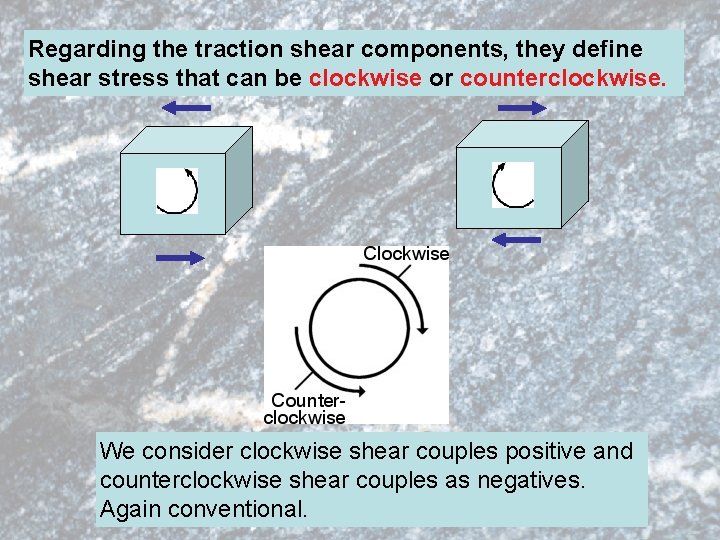
Regarding the traction shear components, they define shear stress that can be clockwise or counterclockwise. We consider clockwise shear couples positive and counterclockwise shear couples as negatives. Again conventional.
Traction = Force / Area Action-Reaction normal-shear Fn A So per each coordinate… Fs
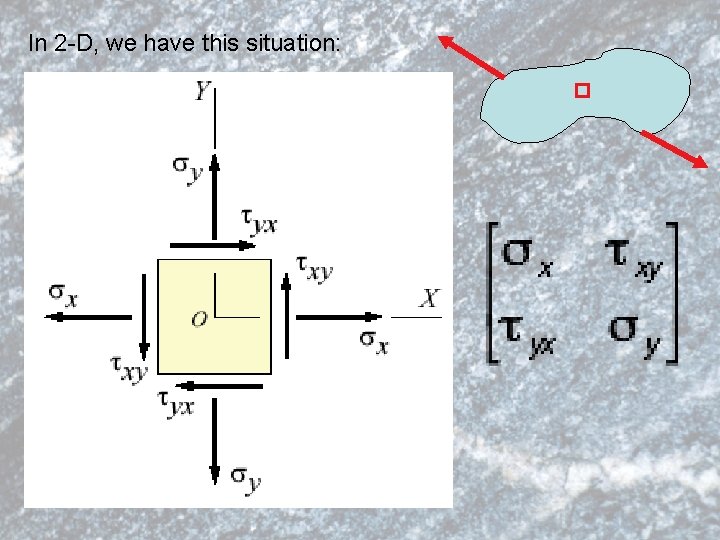
In 2 -D, we have this situation:
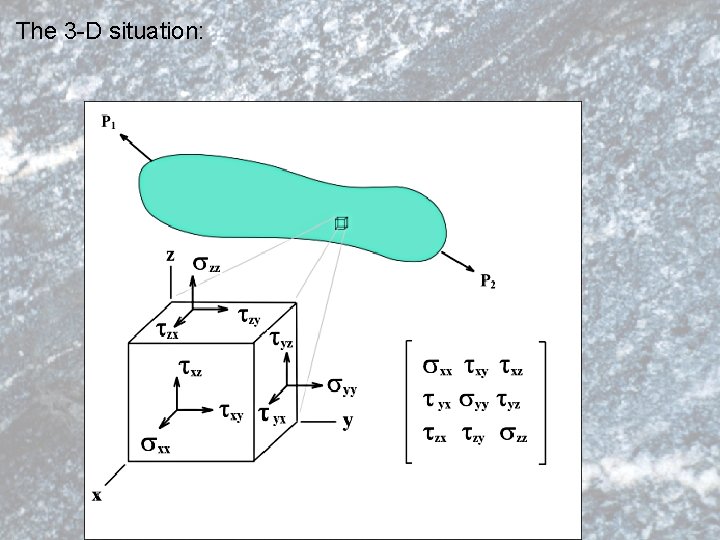
The 3 -D situation:
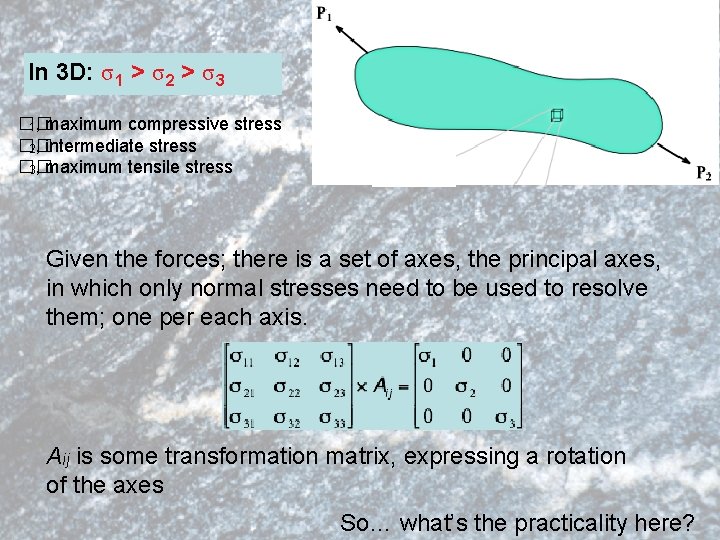
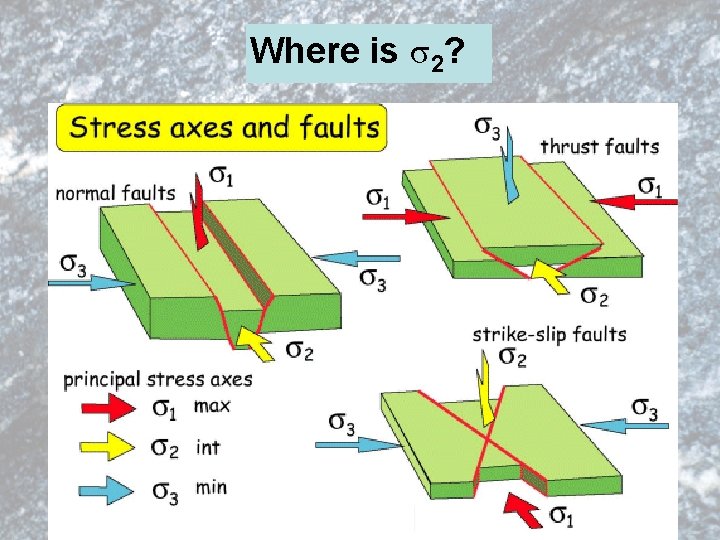
In 3 D: σ 1 > σ 2 > σ 3 �� 1, maximum compressive stress �� 2, intermediate stress �� 3, maximum tensile stress Given the forces; there is a set of axes, the principal axes, in which only normal stresses need to be used to resolve them; one per each axis. Aij is some transformation matrix, expressing a rotation of the axes So… what’s the practicality here?
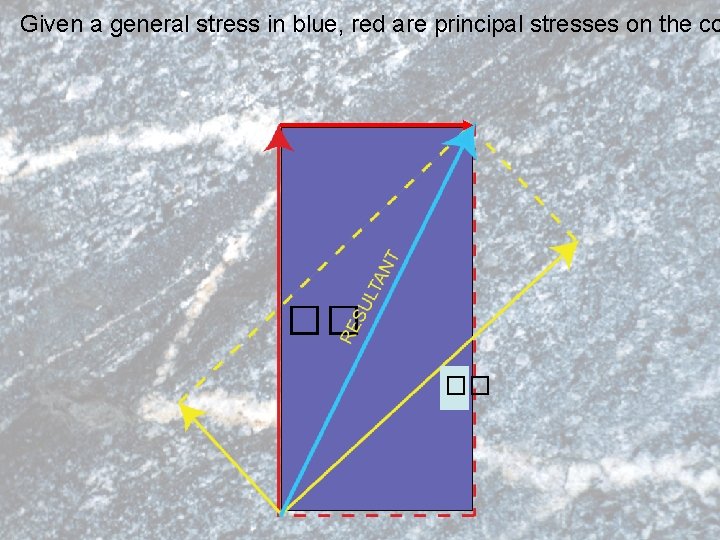
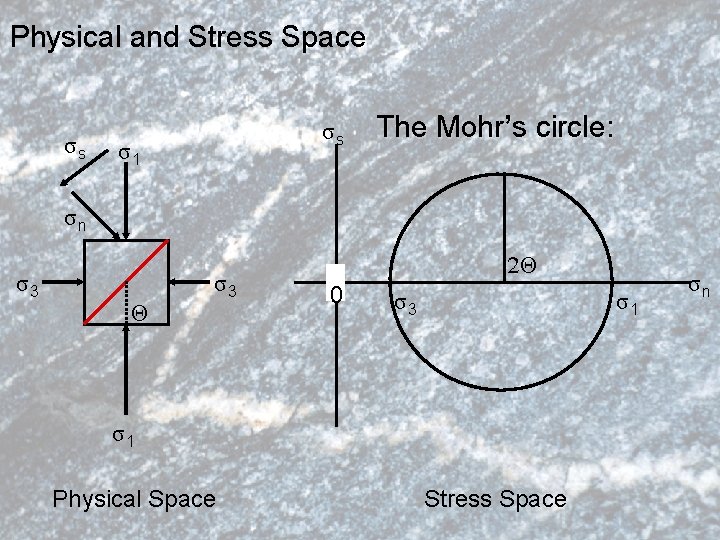
Given a traction… σ1 σn σ3 σs σ3 and a plane… Θ σ1
Given a general stress in blue, red are principal stresses on the co �� ��
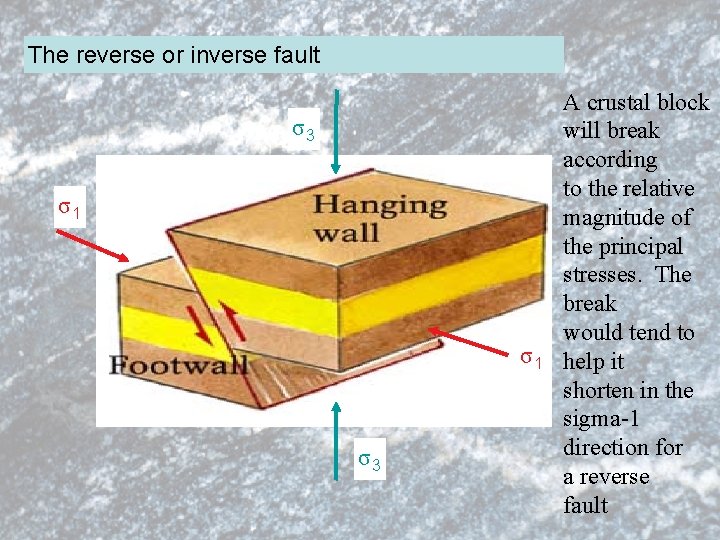
The reverse or inverse fault σ3 σ1 σ1 σ3 A crustal block will break according to the relative magnitude of the principal stresses. The break would tend to help it shorten in the sigma-1 direction for a reverse fault
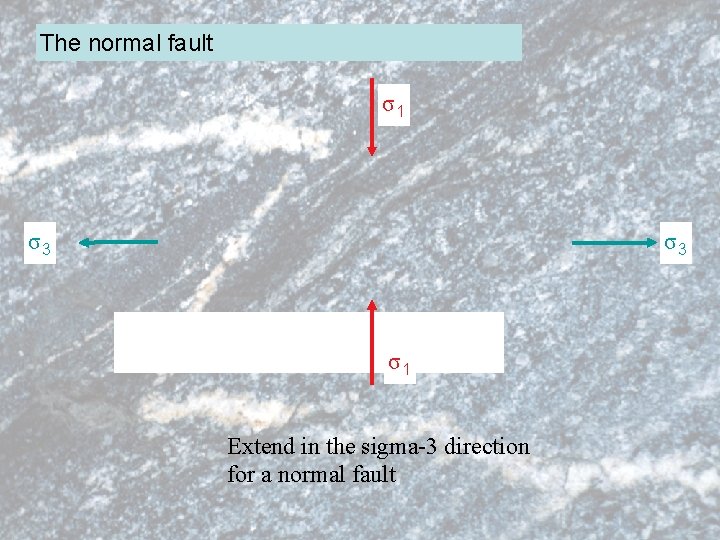
The normal fault σ1 σ3 σ3 σ1 Extend in the sigma-3 direction for a normal fault
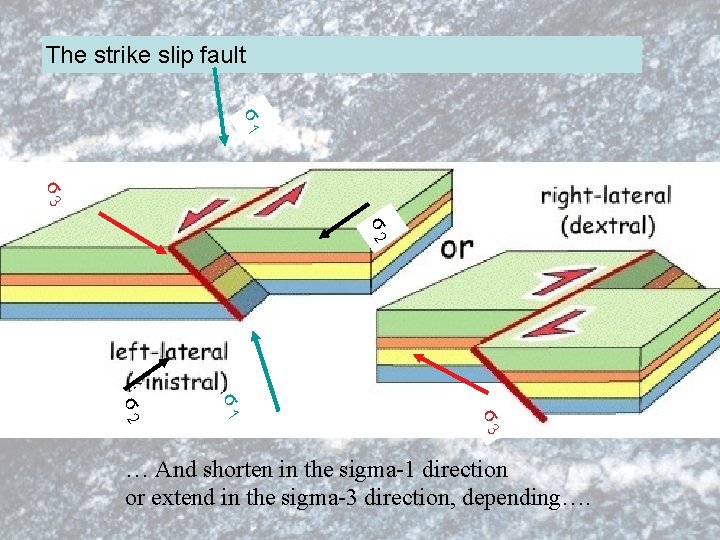
The strike slip fault σ1 σ3 σ2 σ3 σ1 σ2 … And shorten in the sigma-1 direction or extend in the sigma-3 direction, depending….
Where is σ 2?
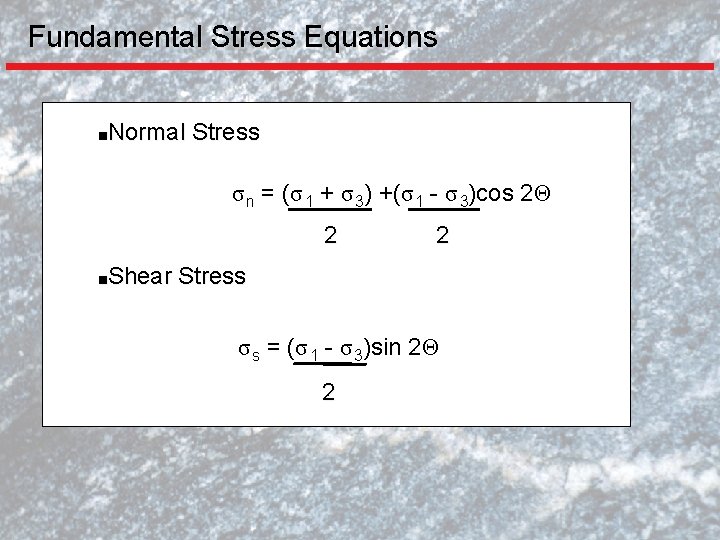
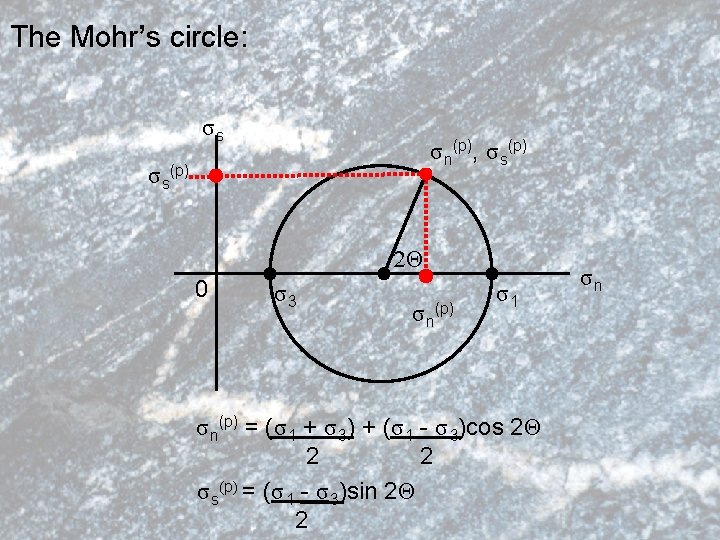
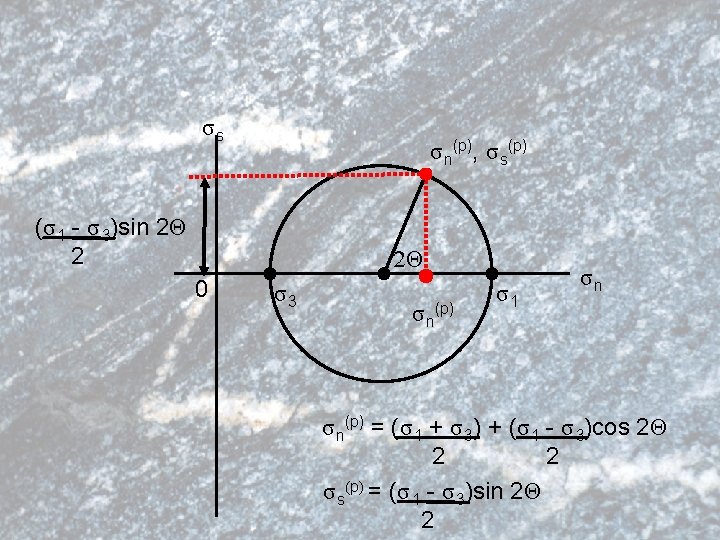
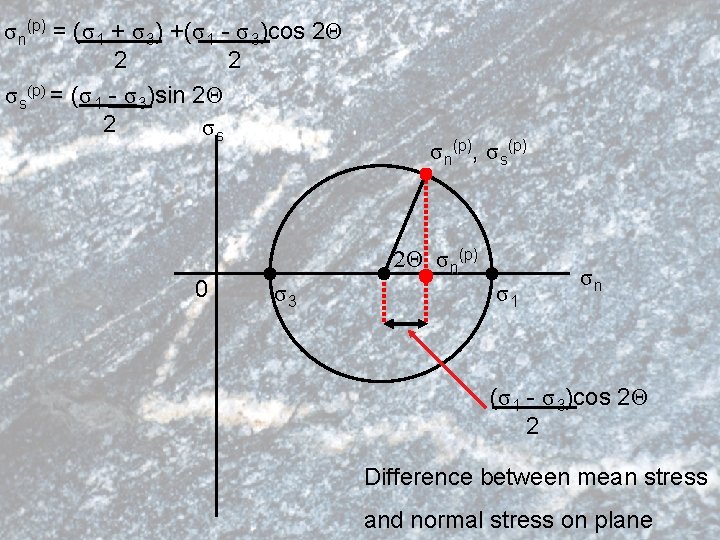
Fundamental Stress Equations ■Normal Stress σ n = (σ 1 + σ 3) +(σ 1 - σ 3)cos 2Θ 2 ■Shear 2 Stress σ s = (σ 1 - σ 3)sin 2Θ 2
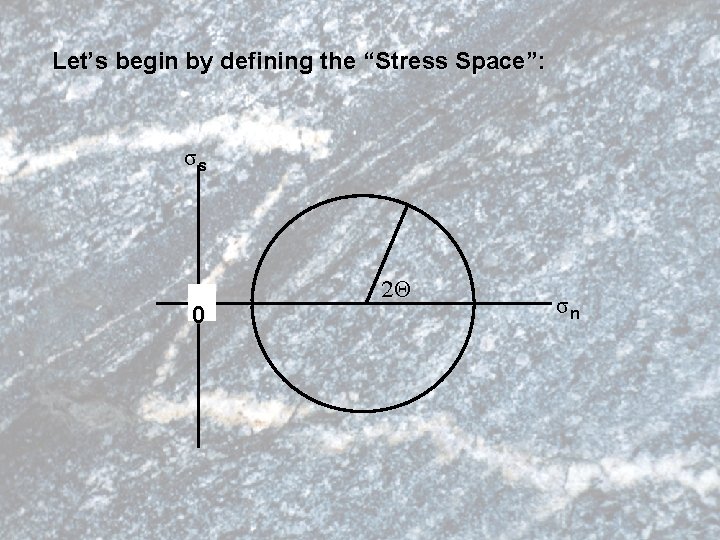
The Mohr-(Coulomb) circle
Let’s begin by defining the “Stress Space”: σs 0 2Θ σn
Physical and Stress Space σs σs σ1 The Mohr’s circle: σn σ3 Θ σ3 2Θ 0 σ3 σ1 σ1 Physical Space Stress Space σn
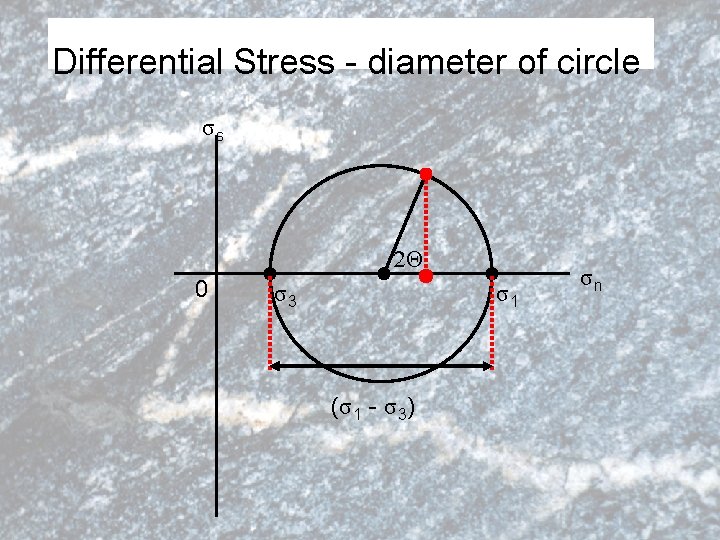
Differential Stress - diameter of circle σs 2Θ 0 σ3 σ1 (σ 1 - σ 3) σn
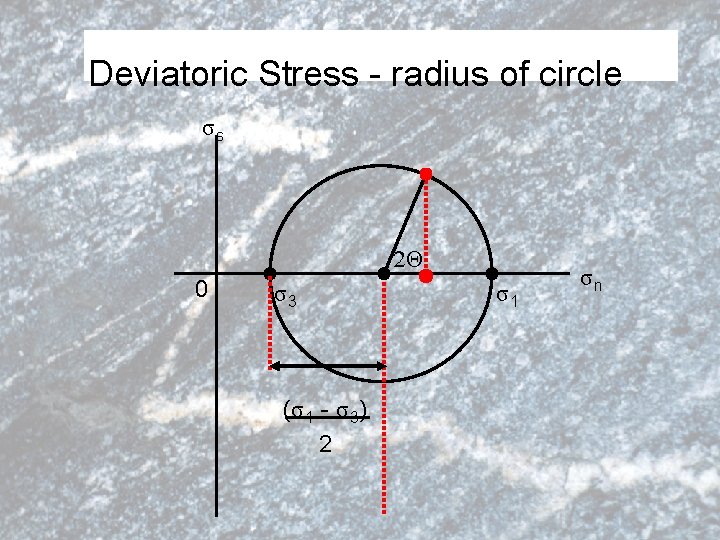
Deviatoric Stress - radius of circle σs 2Θ 0 σ3 (σ 1 - σ 3) 2 σ1 σn
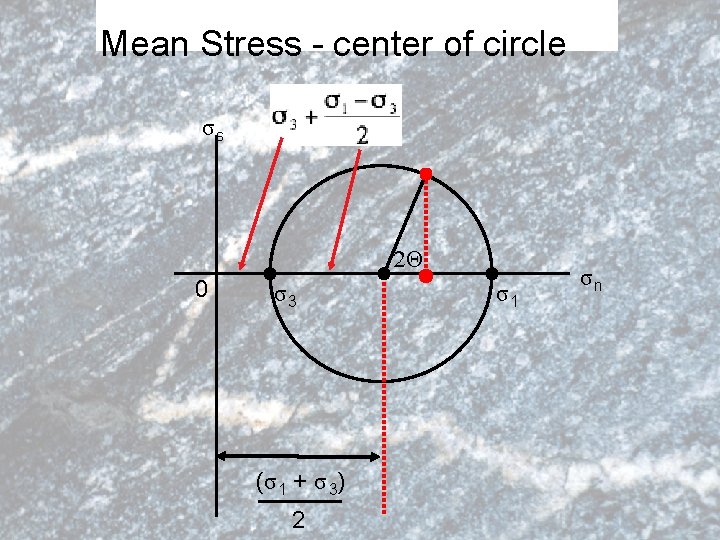
Mean Stress - center of circle σs 2Θ 0 σ3 (σ 1 + σ 3) 2 σ1 σn
σ n(p) = (σ 1 + σ 3) +(σ 1 - σ 3)cos 2Θ 2 2 σ s(p) = (σ 1 - σ 3)sin 2Θ 2 σs 0 σ n(p), σ s(p) 2Θ σ n(p) σ3 σ1 σn (σ 1 - σ 3)cos 2Θ 2 Difference between mean stress and normal stress on plane